young bodybuilders dying

Why are young bodybuilders dying so early

Brazilian bodybuilder and fitness influencer Melson Araujo recently shared a gym photo showing his impressive physique. Just a few hours later the 35 year old reportedly became ill at home and died suddenly.

The exact cause of his death has not been officially confirmed. However his passing has added to growing concerns about the number of young bodybuilders who have died unexpectedly in recent years.

Earlier this year 22 year old Brazilian bodybuilder Gabriel Ganley also died after suffering sudden cardiac arrest.

In 2024, two other Brazilian bodybuilders in their 30s and 40s also died from heart related problems including one who collapsed during a competition.

Similar cases have been reported around the world. American bodybuilder Dallas McCarver died in 2017 at the age of 26, while German fitness influencer Jo Lindner passed away in 2023 at the age of 30.

These deaths have raised an important question. why are some people who appear extremely fit and healthy dying at a young age?

A 2025 study published in the European Heart Journal examined nearly 20,000 amateur and professional bodybuilders who competed between 2005 and 2020.

Researchers found that professional bodybuilders were more than five times more likely to die from sudden cardiac arrest than amateur competitors.

The study recorded 121 deaths including 46 caused by sudden cardiac arrest. The average age at death was 45 years but for active competitors it was only 34.7 years.

Researchers believe several factors may increase the risk, including the use of performance enhancing drugs rapid weight loss before competitions and extremely intense strength training.

Another 2025 study from Denmark published in the journal Circulation followed 1,189 men who used anabolic steroids and compared them with nearly 60,000 men over 11 years.

The researchers found that steroid users had a nine times higher risk of developing cardiomyopathy a disease that weakens the heart muscle.

They also had about three times the risk of heart attack and heart failure.

Experts say anabolic steroids may also raise blood pressure speed up the build up of plaque in the arteries and change the structure of the heart.

Autopsy reports from several bodybuilders have shown that many had enlarged hearts and thicker heart walls especially in the left ventricle.

These changes can increase the risk of dangerous heart rhythm problems and heart failure.

One of the best known cases was Dallas McCarver, whose heart weighed 833 grams more than twice the normal weight of an adult male heart.

A 2022 review also found that many American bodybuilders had hearts that were much larger and thicker than normal.

In some cases even athletes in their 20s showed enlarged hearts thickened heart muscles, and serious coronary artery disease.
Similar Posts

  • |

    Walking through time: A personal journey inside Na…

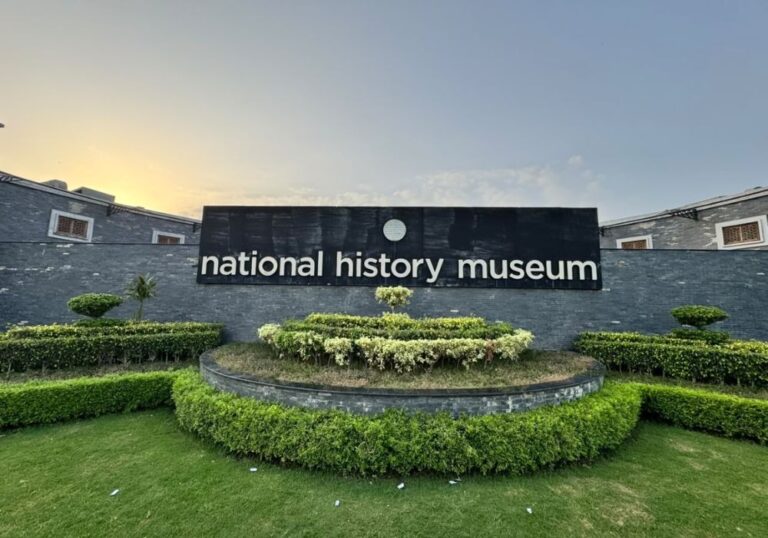
    The rain had just stopped when I reached Lahore’s National History Museum. The roads were quieter than usual, the air felt fresh and, for the first time in weeks, I wasn’t in a hurry. I had postponed this visit for years, ever since a brief stop during my internship at the Lahore Museum left me wishing for more time. This Sunday, I finally had it. I have also realised something over the past few weeks. Waiting for friends before exploring new places often means never going at all. So I decided to spend the afternoon on my own, following nothing except curiosity. As I entered the museum, Floor Supervisor Tabish welcomed me and arranged a guided tour with Muhammad Shamsher, a PhD scholar in History who also serves as one of NHM’s guides. His explanations never sounded like a lecture. Instead, he connected historical events with the people behind them, making every gallery feel like part of one continuing story. Growing up, I believed museums were places where objects sat behind glass while visitors quietly read information panels. That idea came from childhood visits to museums in Islamabad, Taxila and Harappa, and later from my internship at Lahore Museum. The National History Museum challenged that idea completely. Through digital displays, sound, projection and interactive exhibits, history became something to experience rather than simply observe. Every gallery encouraged visitors to slow down and become part of the story unfolding around them. One exhibit that caught my attention focused on the making of Minar-e-Pakistan. Like many Pakistanis, I had always admired the monument without knowing much about the person who designed it. The museum introduced architect Nasreddin Murat-Khan and displayed photographs that offered a glimpse into the creative process behind one of Pakistan’s most recognisable landmarks. It reminded me how often we celebrate monuments while forgetting the people who imagined them. The journey then moved towards Partition, where history became deeply personal. The restored railway carriage, once part of the North Western Railway, stood quietly inside the gallery. Visitors could step inside and experience a virtual reality presentation recreating the migration of 1947. I had watched countless documentaries and films about Partition, but sitting inside that carriage created an entirely different feeling. The sounds, voices and uncertainty surrounding the experience made history feel much closer than any textbook ever could. The museum then shifted from the birth of Pakistan to the challenge of building a new country. One gallery recreated the early government offices established after independence. I found myself studying old files, furniture and official records, imagining the enormous responsibility carried by those tasked with running a newly created nation. Nearby, early Pakistani passports were displayed inside glass cases. Different in design from today’s passports, they represented the same hope of a country beginning to define its identity. Another section I found especially engaging was Camera from the Past. Visitors could stand before a vintage-style camera and have their photograph taken, creating a small connection between the present and the past. The gallery also highlighted photographer Aziz Ahmed Azmi, whose images documented Pakistan’s early years. Looking at his work, I realised that photographs often become history long after the moment they capture has passed. Perhaps the gallery where I spent the most time was Popular Culture. Having studied Mass Communication with a specialisation in Theatre, Film and Television and continuing to work in journalism, I naturally found myself drawn towards the colourful Lollywood posters and displays celebrating Pakistan’s cinematic heritage. Reading about Azra, the country’s first colour film, and Zinda Laash, Pakistan’s first horror film, reminded me how rich our film history is, even if many younger audiences know little about it today. Before leaving, I also explored Husn-e-Hunar, an exhibition celebrating Pakistan’s traditional craftsmanship. Alongside literature, music and cultural displays, it served as a reminder that a nation’s identity is shaped not only by political events but also by its artists, craftsmen and storytellers. When I stepped back outside, I realised I had spent far longer inside the museum than I had planned. I didn’t leave with pages of notes or dozens of photographs. Instead, I left with a greater appreciation for how history can be presented when museums invite visitors to participate rather than simply observe. The National History Museum doesn’t just preserve Pakistan’s past. It encourages visitors to pause, ask questions and discover the stories that continue to shape the country today.

  • My traumatic transformation into a Lassi (butter milk) hydration unit

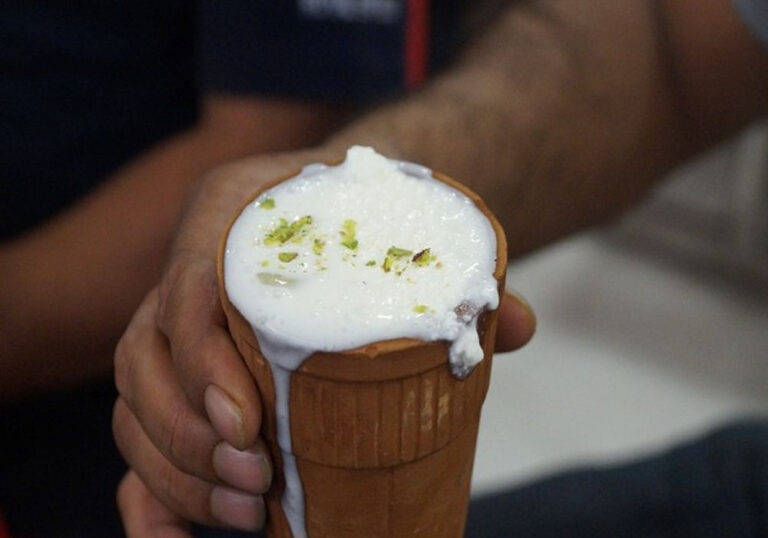
    So, once I tagged along with a buddy to his sister’s place in this super rural village. Lovely folks, honestly—total heart-eyes. My buddy’s brother-in-law? Instant BFF. We vibe) We arrive at the house … “Lassi lao!” We chill for a bit… Lassi lao!” Evening rolls in. My new friend goes, “Yo, let’s hit up the dera (aka Cow Central).” We get to the dera… “Lassi lao!” We wander around, side-eyeing cows and buffaloes like city tourists. Sit back down… “Lassi lao!” Dinner time? “Lassi lao!” Morning alarm: sunrise. Breakfast spread: butter, desi ghee (clarified butter) — fried parathas, eggs, village chicken — the whole “we’ll clog your arteries” buffet. Finish eating … “Lassi lao!” Me, finally snapping: “BRUH. TURN OFF THE LASSI TAP. I BEG YOU.” “Fine. Chai lao!” I bark. Brother-in-law, grinning: “Shah Ji, why you mad, bro? Lassi lao’s our Shah ji ritual!” (Shah ji = imaginary VIP? Idk. Village things.) Friend suddenly remembers I’m a city slicker. Whispers to his sister: “Y’all got… tea leaves?” Sister, deadpan: “We don’t ‘do’ tea leaves here. It’s never on the ration list.” They somehow scrape up tea leaves. I sip the chai… and immediately slam the cup down: “LASSI LAO!” The breakfast table ERUPTS. Everyone’s howling, chanting: “Lassi lao, oye! Lassi lao!”

  • Talking to yourself could be sign of intelligence

    Some habits are considered by people to be signs of foolishness or poor mental ability. In fact, many people associate such habits with a lack of concentration, poor discipline or mental decline. However, one such habit that may seem strange to others has been linked to intelligence in some research reports. Yes, the habit is talking to yourself which is often viewed negatively by people. According to research reports, if you have a habit of talking to yourself, it does not mean you are crazy. Instead, it could be a sign that you are more intelligent than other people. Although people may not generally view this behaviour positively, there is evidence suggesting that talking to yourself can benefit the brain. It may improve memory, boost confidence and help with concentration. A 2012 study found that people who talked to themselves were able to identify objects in pictures more quickly. Similarly, a 2023 study found a connection between self-talk and self-control or self-discipline. The study suggested that people who talk to themselves often have a better understanding of themselves. However, these benefits may occur when self-talk is practiced in moderation. Negative self-criticism, on the other hand, can have harmful effects. So, if you have a habit of talking to yourself, there is no need to feel embarrassed about it. This unusual habit may help you analyze details, improve concentration and sharpen your mind.

  • Faculty development: beyond classrooms 

    By Prof. Engr. Dr. Khuram Pervez Amber The persistent weaker linkage between industries and universities in Pakistan requires strategic interventions from all stakeholders. Pakistan cannot expect systemic industrial growth while its higher education institutions and industrial sectors operate in silos. Number of universities in Pakistan has dramatically increased over the past two decades. At current, there are nearly 280 universities in Pakistan which are producing thousands of graduates every year. But the concerns of industries remain valid that the graduates lack the necessary technical knowledge and skills which are required in the industries. These concerns of industries are particularly reported in disciplines such as engineering, computer science and the applied sciences, where employers frequently report a mismatch between academic preparation and industrial requirements. Although there are some valuable initiatives by the HEC, PEC, and NTC which include mandatory industrial internships of six to eight weeks for the engineering and technology students, the impact of such initiatives is limited due to multiple factors. Another initiative of HEC to strengthen university academia linkage is the establishment of the Office of Research, Innovation, and Commercialization (ORICs) in universities. However, the effectiveness of this initiative has not been successful at the desired level as in many universities, ORICs operate with limited staff and resources, while directors of ORICs are usually on additional charges. Expecting a small office alone to build industrial linkages for an entire university is unrealistic. Currently, out of nearly 260 universities, only 95 universities have established ORICs. In the recent ORIC ranking of HEC, only seven of 95 universities achieved the top category, i.e. “W” category. One of the major unexplored reasons behind this fragile linkage between industry and academia is the limited or no industrial exposure of university teachers. Most university teachers move directly from their bachelor’s degrees into master’s and PhD programs. Through this route, such individuals may become academically qualified teachers, but this route does not make them professionals having knowledge of industrial practices, industrial standards, and industry-oriented innovations. In many cases, a teacher teaches an industrial system which he/she has never experienced. This approach may clear theoretical concepts of students, but such students will certainly struggle when they would face real- life industrial problems after their induction in industry. So why do our university teachers require industrial exposure in their field of research? The answer is simple. A teacher with industrial exposure brings his industrial experience into the classrooms, laboratories, projects, and discussions on daily basis. Industrial experience of such teachers would not only improve the technical understanding of students about various industrial systems but also enhance students’ problem-solving skills. It would further help students to understand industrial expectations. So how could universities help their faculty members to get industrial experience? This could be achieved through implementation of structured industrial placement/professional development programs under ORICs for university teachers particularly working in engineering, technology and applied sciences faculties. Under this program, university teachers can spend six months to twelve months in an industry related to their field of interest/research on a turn-by-turn basis. During this period, such faculty members will keep receiving their monthly salaries as usual. So, what will be the major benefits of this model? There will be significant improvement in the pedagogical skills of faculty members as they will be teaching with practical examples, industrial case studies and real-world problem-solving approaches. During their placement in the industry, faculty members would make connections with the industrial experts/managers/engineers which would help them in future to supervise industry-relevant research, secure collaborative projects and contribute to technology transfer. They would identify operational challenges requiring research-based solutions. Upon returning to universities, they can transform these challenges into student projects, postgraduate research topics and consultancy opportunities. This would help create a healthier research culture focused on solving local industrial problems. University graduates will have problem solving skills that are required by industry. Over time, this model would help bridge the trust deficit that exists between academia and industry. Admittedly, implementing such a policy would not be easy. Challenges such as shortage of faculty, and increased teaching workloads are genuine challenges. There are also cultural barriers within academia, where industrial experience is often valued less than traditional academic achievements. However, these barriers are manageable. HEC and professional bodies such as PEC, and universities can jointly develop and implement structured industrial placement programs for faculty members. The industrial experience can be recognized within promotion criteria of faculty members, accreditation frameworks and quality assurance standards. In the nutshell, to produce industry ready graduates, the industrial exposure of university faculty members is indispensable. Their industrial experience will result in a stronger academia-industry linkage which is essential for economic growth, innovation and technological progress. Until universities and industries begin working together more meaningfully, Pakistan will continue producing degrees faster than opportunities. Prof. Engr. Dr. Khuram Pervez Amber (CEng, MEI, PE, FHEA) The writer is serving as Director QEC at Mirpur University of Science and Technology, AJ&K.

  • Whistling Past the Graveyard

    By Syed Hashim Abbas Bukhari  In the age-old debate about the pros and perils of Artificial Intelligence (AI), one of the main stances of the Luddites is the absence of emotions in AI thus making it ill equipped to handle situations requiring empathy and emotional intelligence. However, one could argue that this point of distinction between humans and AI is rapidly vanishing as we witness our younger generation increasingly suffering from the phenomenon of emotional desensitization. Let us take a walk through the realms of social media. When our country was fighting a war, the younger generation was engaged in its own meme war on social media, seemingly unaware of the seriousness and gravity of the situation. Whether the world was on the brink of World War 3, facing a new global pandemic or staring down the barrel of rocketing oil prices, the reaction of the younger generation showed alarming levels of emotional desensitization. Instead of intellectual debates, protests, or striving to find a solution, the younger generation indulges in creating memes designed to generate nothing more than likes, shares, and comments. According to researchers, emotional desensitization is a form of emotional numbing or habituation where a situation that triggered a strong feeling no longer affects you as intensely. This is becoming a rising area of concern for our elders who equate our response to these dire and serious situations as a lack of maturity and emotional sensitivity on our part. The argument presented over here is that owing to our access to endless streams of information our generation should be more emotionally evolved as compared to our predecessors. The reality, however, seems contrary to this belief, as our exposure to warfare, natural disasters, and other calamities increases, our levels of emotional sensitivity has seemingly taken a nosedive. The question that should be raised is whether we should be classified as emotionally desensitized or is it our generation just whistling past the graveyard. It is a basic human psychology that when we experience grief or trauma, which is too much to process, we use various coping mechanisms. For some of us it may be anger, humor, violence or isolation but we all have coping mechanisms enabling us to survive various emotionally charged experiences. A study of social behaviors reveals that with the passage of time we have changed our coping mechanisms. In the past humans used to display their emotional trauma or suffering through anger and sought comfort through social gatherings. In the case of our generation, social media has taken the place of social gatherings, and anger has been replaced with humor. Thus, the endless stream of memes, reels, and shorts on every emotionally charged event.  Our stance on mental health, gender equality, racism, climate change, and countless other previously ignored or snubbed issues prove us to be a more emotionally sensitive and mature generation. We are the generation that believe that actions speak louder than words. We may seem to be whistling past the various graveyards or making light of serious situations but we are the generation that is breaking down the glass ceiling, bringing down the walls of inequality, and trying to build a society that embodies the morals and values of justice, kindness, and integrity for all. With each new generation the prioritization of emotionally sensitive areas may change, the coping mechanisms may be adapted according to the changing environment, or ways to display emotions may evolve but the thing to understand is that we haven’t become emotionally disengaged or desensitized, we are only embracing our emotions in our own distinct way. As Hazrat Ali (AS) said: “Do not force your children to behave like you, for surely they have been created for a time which is different to your time.”

  • Poor diet harms liver and stomach

    Poor eating habits are becoming a major health concern in Pakistan with health experts warning that unhealthy food is contributing to a growing number of illnesses. According to a global survey around 2 billion people worldwide become sick each year because of poor quality or unhealthy food. Experts say countries in South Asia, Eastern Europe and parts of Africa are among the most affected. In Pakistan doctors say unhealthy diets are increasing the risk of several health problems including liver disease stomach disorders and heart disease. They estimate that about one in five people suffers from liver or stomach related illnesses linked to poor nutrition and unhealthy eating habits. Health experts also say that many young people are facing health issues at an early age. Around 70% of young adults reportedly experience back pain or joint pain which may be linked to poor nutrition unhealthy lifestyles lack of physical activity and long hours of sitting. Dr. Shiraz Malik said the human body needs a balanced supply of nutrients every day to stay healthy. He explained that natural and fresh foods provide the vitamins minerals proteins and energy the body needs to function properly. Regularly eating highly processed foods sugary drinks and meals high in unhealthy fats may increase the risk of long term health problems. Experts recommend including more fruits vegetables whole grains lean proteins and clean drinking water in daily meals. They also advise reducing the intake of fast food packaged snacks and sugary beverages. Along with a healthy diet doctors encourage people to stay physically active maintain a healthy weight and get regular medical checkups. These simple lifestyle changes can help lower the risk of many chronic diseases and improve overall health. Health specialists stress that while poor diet is an important risk factor many diseases are also influenced by genetics physical activity smoking alcohol use infections and environmental factors. They say improving food quality and adopting healthier daily habits can play an important role in protecting public health and reducing the burden of preventable diseases in Pakistan.

Leave a Reply

Your email address will not be published. Required fields are marked *