بلاگز

  • The Euphemism of Integration: Kashmir Seven Years Later

    By Ahmad Hassan “The convoluted wording of legalisms grew up around the necessity to hide from ourselves the violence we intend toward each other… Elaborate euphemisms may conceal your intent to kill, but behind any use of power over another the ultimate assumption remains: ‘I feed on your energy.’” When Frank Herbert wrote those words in his novel Dune Messiah, he observed that elaborate euphemisms are often used by the state to conceal the raw mechanics of power. In Pakistan, August 5 is observed as Youm-e-Istehsal to condemn the 2019 revocation of Article 370 and its supplementary provision, Article 35A. This act of the Indian government removed Kashmir’s separate constitution, its flag and its control over its own affairs. Last week marked seven years since that day. What began as a dramatic constitutional rupture has now, by design, become quietly normalized. Jammu and Kashmir joined India in 1947 on defined terms. The Maharaja handed over defence, foreign affairs and communications. Everything else stayed with the state. The United Nations later called for a plebiscite. It never happened. Instead, over decades, the protections that were supposed to stand in its place were worn down piece by piece, until August 5, 2019, when the government removed what remained in a single stroke. The method deserves more attention than it usually gets. Article 370 was not directly changed. First, the government reached for Article 367, which was intended to aid in the interpretation of the Constitution, and used it to redefine one phrase: “Constituent Assembly” became “Legislative Assembly.” Kashmir had no sitting assembly at the time, and the state was under President’s Rule. So, the government’s own appointee, the Governor, signed off on the change. India’s Supreme Court had already ruled, in 1959 and again in 1969, that Kashmir’s constitutional status could only be changed after the approval of the Constituent Assembly of Kashmir. When that body no longer existed, no institution had the standing to give that consent on Kashmir’s behalf. New Delhi decided that its own Governor could stand in for the people he had not been elected by. That is not consent. It is a government consenting to itself. The Indian government argued that Kashmiris had lived for decades under an insurgency that killed tens of thousands and emptied the Valley of its Pandit community in 1990. It left the region isolated from the investment and policing coordination. That argument would carry more weight if the method had matched it. What followed the revocation was not the language of integration. It was a total communications blackout, landlines and mobile networks and the internet all cut at once. Independent estimates put the troop presence at 600,000 to 800,000, roughly one soldier for every ten Kashmiris. Even pro-India politicians, former chief ministers among them, were placed under detention. Perhaps a security argument can justify counter-insurgency operations. It cannot by itself justify dissolving a state’s constitutional status, its legislature and its statehood in one move. That too with no elected Kashmiri voice given the chance to object. Jawaharlal Nehru warned Parliament about exactly this shortcut in 1952, while Article 370 was still being drafted. No clause in a constitution, he said, could substitute for the will of the Kashmiri people. Real integration, in his words, comes from the mind and the heart, not from a clause imposed from outside. Actually, there is a longer, quieter project behind the legal manoeuvre. Article 35A once barred outsiders from buying land or settling permanently in Kashmir. Since its removal, more than 3.2 million domicile certificates have gone to outsiders, most of them non-Kashmiri Hindus. This alarming thing is that wherever a disputed territory’s demographics are reshaped before its people are asked what they want, the eventual vote, if one ever comes, no longer reflects the population whose future was originally in question. None of this required an invading army, or an open declaration of intent. It required a redefined word, a signature from an appointee, and a great deal of time. The convoluted legalisms that Herbert warned about have become policy in Kashmir: development, integration, correction. Each euphemism has quietly done the work that an honest admission of purpose could never have achieved. Seven years on, Kashmir’s assembly has voted decisively against the BJP that carried out the revocation, and passed its own resolution demanding the restoration of its special status. New Delhi can easily ignore them. Yet, that very power to ignore an elected legislature proves, beyond any doubt, that the “consent” obtained seven years ago was always a legal fiction.


  • Sindh’s missing universe

    Since Ashura, the mothers of Sindh have been sitting in at Babarloi Bypass through suffocating heat and humidity, with one demand: return our missing and abducted children. For a mother, a child is her entire universe — and for years these women have lived in psychological anguish searching for theirs. Fazila Sarki of Thul vanished nearly seventeen years ago; her father named the local Wadero he says orchestrated it, yet she was never recovered. Priya Kumari of Sangrar is entering her fifth year missing — committees formed, updates promised, and still nothing, as if the earth or sky simply swallowed her. Sindh’s landlords and chieftains have built a parallel state, one that operates above the law. If not, why would fourteen children currently be missing, why would the soil be stained with young blood over trifles, why would mothers go blind from weeping and cemeteries keep expanding? Innocent young women are still declared Kari and honor-killed — denied even a ritual bath, shroud, or funeral prayer, sometimes dumped in rivers. The law exists on paper; hundreds of thousands of officials draw salaries and perks from public taxes to enforce it — yet ordinary people have no protection at any level. The papers are full of these stories daily. The law exists, but it is locked away in books. Are the hands meant to enforce it helpless, or simply indifferent? Sukkur Civil Hospital — the teaching hospital for Ghulam Muhammad Mahar Medical College, and once a lifeline stretching from Balochistan’s Sibi, Nasirabad, and Bhag Nari to Kandhkot-Kashmore, Shikarpur, and Ghotki — has sunk to the level of Shikarpur’s Rai Bahadur Udhodas Hospital. Department heads sit in name only; real control rests with a handful of favorites who have run these institutions into the ground. Road accidents are a daily occurrence on the highways, and while the Orthopaedic Department stays busy, its facilities inspire only regret. With Nasir Shah and veteran politician Khurshid Shah both present, this hospital ought to be a model for Northern Sindh — instead it is anything but. Law and order, and justice, are the pillars any civilized society rests on. Where they hold, life, property, and honor are protected, and social harmony follows. Where they fail, fear, distrust, and unrest take their place — and our own society is proof enough of that; little more needs saying. An educated person lifts not just himself but his society; where ignorance and social ills grow instead, it is education that has failed first. Healthcare here tells the same story: women give birth in Qingqi rickshaws, medicine is scarce, and families buy even a disposable syringe out of pocket — though the budget for it exists. Doctors draw government salaries while absent, some working in Qatar or Saudi Arabia, others running private clinics. A friend recently told me PPHI, on taking over a government health unit, found a stockpile of medicines for heart disease, diabetes, and stomach ailments — worth a fortune, and only months from expiry. What tyranny is greater than this: medicine sitting unused while the needy go without? It is nothing short of an atrocity against the public. Hunger, disease, unemployment, lawlessness, and ignorance have battered Sindh until its people’s capacity for critical thought is paralyzed. The state, along with conscious citizens, politicians, and the well-off, must turn to this crisis — urgently.

  • How to keep your inverter battery healthy

    Inverter batteries have become common in many homes especially in areas where power cuts are frequent.  However many people forget to maintain the battery properly.  Knowing when to check the water level and how much water to add can help keep a battery working well. Check the water level regularly In traditional lead acid batteries the water level slowly decreases with use.  That is why it is important to check it from time to time. If the inverter is used less often checking the battery every two to three months may be enough. With heavier use it may need to be checked more often. A very low water level can affect the battery’s internal parts and may reduce its lifespan. Watch for signs of low water If your inverter is giving less backup than before the battery feels unusually hot, or its performance keeps getting worse check its condition and water level.  However low water is not always the only reason for battery problems. If the issue continues have the battery checked by a professional. Add the right amount of water When adding water, check the level marked on the battery. The water should stay between the minimum and maximum lines. If the level is below the minimum mark add the required amount carefully.  Never fill the battery above the maximum level. Do not overfill the battery Adding extra water does not make a battery last longer.  Overfilling can cause the electrolyte to spill out and may damage nearby parts.  Always keep the water within the recommended level. Use distilled water Avoid using ordinary tap water in batteries that require topping up. Minerals and other substances in tap water can damage the battery over time. Distilled water is generally recommended but always follow the instructions provided by the battery manufacturer. Not every battery needs water Not all inverter batteries are the same.  Some are maintenance free and do not need to be opened or filled with water. Before opening a battery or adding anything to it check its type and read the manufacturer’s instructions. Be careful while Checking the battery Lead acid batteries can contain corrosive liquid so wear protective gloves and protect your eyes when handling them.  Keep cigarettes flames, and sparks away from the battery. If the battery is swollen, leaking or becoming extremely hot, do not try to open or repair it yourself. Contact a qualified technician. •Regular Maintenance •Can extend battery life •Taking simple care of your inverter battery can help maintain its performance. Check the water level when needed use the correct type of water keep the battery clean and follow the manufacturer’s instructions to help keep it in good condition.

  • Octopus clings to fisherman’s face

    A surprising video from the Philippines is going viral on social media after an octopus was seen clinging tightly to a fisherman’s face. In the video the octopus has wrapped several of its arms around the man’s face. https://www.instagram.com/reel/Db8hqV-jCoX/?igsh=MWFoNmNucmlzNW1ucQ== The fisherman can be seen struggling to remove it from his face. He tries several times to pull the octopus away but its strong suction cups make it difficult to free himself. After several attempts he slowly loosens the octopus’s grip and finally removes it. The fisherman then releases the octopus back into the water. Experts explain that an octopus has hundreds of suction cups on its eight arms. These help it hold onto different surfaces and objects firmly. The octopus may have reacted defensively because of the unusual situation and tried to protect itself by holding on tightly.

  • Star Anise tea benefits you should know

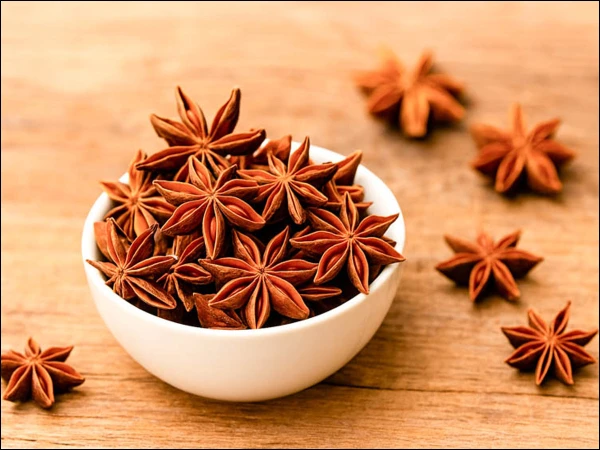
    Star anise is a popular spice used to add a rich smell and flavor to food.  It contains nutrients such as vitamins A, C and B vitamins, along with minerals like calcium and phosphorus. It can be used whole as a powder or in spice mixes. Some people also make tea from star anise and believe it may offer several health benefits. How to make star Anise tea Add one or two star anise pods to two cups of water. Boil the water until its color changes then cook it for about five more minutes. Strain the tea and drink it while warm. May help with breathing Star anise tea is traditionally used by some people when they have a blocked nose or mild breathing discomfort caused by dust and other particles.  Drinking a warm cup may help provide comfort. Hormonal health Some people also use star anise tea for hormonal balance especially among women. It is sometimes recommended in the morning but people with diabetes should avoid adding sugar. Joint discomfort Star anise tea is also used traditionally for joint pain and discomfort.  However there is not enough strong evidence to consider it a replacement for medical treatment. May soothe burning sensations Some people drink warm star anise tea before bed when they experience burning or discomfort in their hands and feet.  It may provide a soothing effect but more research is needed. Star anise tea should not be considered a cure for any disease. If symptoms are severe frequent or continue for a long time, it is better to consult a doctor.

  • Parents stress linked to giving children smartphones

    Many parents give smartphones to their children and a major reason behind this behaviour has now been identified. Parents who experience stress tend to give their children devices to keep them occupied or calm while also being less likely to enforce limits on screen time. A study conducted by the Center for Children and Families at Florida International University included 822 parents raising children between the ages of 4 and 8. The participants provided information through online surveys about their children’s behavior, parental stress and screen-time habits. The findings showed that parents tend to allow their children to use smartphones for longer periods when their children’s behaviour becomes difficult to manage. Researchers said parents should not hesitate to seek support for managing their own stress. They also advised parents to set limits on children’s screen time and provide them with purposeful, age-appropriate content. They emphasized that parents should establish appropriate boundaries and spend quality time with their children to promote a healthy environment. A considerable amount of research has been conducted on children’s excessive smartphone use. A study published in January 2026 explored links between online content and problems related to children’s development. Similarly, research published in BMC Public Health in October 2024 found that spending excessive time in front of screens can have negative effects on mental health. The risk of depression, anxiety, irritability and other problems was particularly higher among children aged 9 and 10. The research found that the more time children spent in front of screens, the more severe their symptoms of depression tended to be. According to the study, activities such as video chatting, watching videos and playing video games were associated with a greater increase in this risk.

  • From barren land to a garden of love

    A simple comment from his wife inspired a Chinese man to transform a barren valley into a huge garden filled with colorful flowers. The 80-acre valley is located in Chengdu, Sichuan Province China. Today it has become a beautiful flower filled home for Zhao Xiaolin and his wife, Yin Zai. A promise inspired by his wife Zhao got the idea in 2013 when his wife talked about her childhood memories in Beijing and shared how much she loved flowers. Her words inspired him to create a garden where she could enjoy flowers every day. He promised to turn the idea into reality. He had no gardening experience Zhao had no professional experience in gardening. Despite this, he sold his home bought land in a town called Zhuanlong and began learning how to grow flowers on his own. Over the years he collected seeds from different parts of China and other countries. He continued working on the land for more than a decade. From empty land to a flower paradise After years of hard work Zhao completely changed the landscape.  The area is now being described as one of the world’s largest hollyhock flower gardens. The garden is open to the public and contains more than 700 varieties of hollyhocks.  It is also home to around 150,000 lilies and 100,000 Chinese hibiscus plants. A love story that lasted 35 years Zhao says his wife and flowers are the two most important things that make his life beautiful. The couple has been married for 35 years and does not have children. They now share their life with several cats and dogs. Even after all these years they continue to exchange handwritten letters on birthdays and other special occasions. What started as a simple conversation about flowers eventually became a remarkable garden and a lasting symbol of their love.

  • Surprising benefits of day old roti

    Stale roti is usually less popular than fresh roti but experts say that properly stored roti from the previous day may have some possible health benefits. Research suggests that when cooked bread or roti cools down some of its starch changes into resistant starch.  A study found that roti stored for about 24 hours may contain more resistant starch than freshly made roti. This type of starch is digested differently from regular starch. May help control blood sugar Resistant starch is not fully broken down into glucose in the small intestine. Because of this eating cooled or day old roti may have a lower effect on blood sugar than fresh roti.  It may also help with better blood sugar control although more research is needed. May support digestion Resistant starch can support the growth of helpful bacteria in the large intestine.  If the roti is made from whole wheat flour its fiber content may also help improve digestion and reduce the risk of constipation. May keep you full longer The combination of fiber and resistant starch may help you feel full for a longer time. Day old roti can be part of a filling breakfast especially when eaten with foods such as yogurt, eggs or vegetables. A nutritious breakfast option Whole wheat roti contains fiber vitamins minerals and other useful nutrients.  When combined with other healthy foods it can be part of a balanced breakfast. Fresh roti is not necessarily less healthy It is important to remember that stale roti is not automatically healthier than fresh roti. Its nutritional value depends on the type of flour used how the roti was prepared and how safely it was stored. Most importantly leftover roti should be stored properly to prevent spoilage. If it develops an unusual smell taste mold or other signs of spoilage it should not be eaten.

  • Keeps you full for longer

    Garlic is not the only food with useful nutrients. Roti especially whole wheat roti can also provide important nutrients and may have some benefits when eaten after cooling. May help control blood sugar When cooked roti cools down some of its starch can change into resistant starch.  Research has found that roti kept for about 24 hours may contain more resistant starch than fresh roti. This type of starch is digested differently from regular starch and may help reduce the rise in blood sugar after a meal.  However more research is still needed. Good for digestion resistant starch can support healthy bacteria in the large intestine.  If the roti is made from whole wheat flour its fiber may also help prevent constipation and support better digestion. Keeps you full for longer The fiber and resistant starch in roti may help you feel full for a longer time.  Eating it with healthy foods such as yogurt eggs or vegetables can make it a more balanced breakfast. A nutritious breakfast option Whole-wheat roti contains fiber vitamins and minerals making it a useful part of a healthy and balanced breakfast. Important note Stale roti is not automatically healthier than fresh roti.  Its nutritional value depends on the type of flour how the roti is prepared and how safely it is stored. Always make sure stored roti is kept properly to avoid spoilage.

  • US warns consumers over recalled beef

    After recent food safety concerns involving cabbage and green peppers US officials have now warned consumers to avoid certain beef products imported from Argentina. The US Department of Agriculture’s Food Safety and Inspection Service (FSIS) has issued an alert for about 29,628 pounds of beef products imported from Argentina.  Consumers have been advised to check their meat carefully and avoid eating any affected products. According to food safety officials the beef entered the US market without going through the required inspection by the USDA. Federal authorities have therefore announced a recall of the affected meat. Where was the beef sold? The recall was started by Corte Argentino USA, LLC, a company based in Aventura Florida. Different boneless cuts of the affected beef were supplied to wholesalers and retailers in Florida and Texas. The meat was produced and supplied by a company in Argentina. It was shipped to the United States between May 15 and May 20, 2026.  The affected products may have use by or freeze by dates ranging from September 15 to September 20, 2026. What should consumers do? People who recently purchased beef from Argentina should check the meat stored in their refrigerator or freezer. Consumers should compare the product’s production date establishment number and shipping mark with the information provided in the recall notice. If the beef is part of the recalled products consumers should not eat it.  They should either throw it away in a sealed garbage bag or return it to the store for a refund. No illnesses reported so far Officials said there have been no confirmed reports of illness or health problems linked to the recalled beef so far. However anyone who becomes sick or is concerned about their health after eating the affected meat should contact a doctor. Recent food safety concerns The beef recall comes after other food safety warnings in the United States involving vegetables and peppers. Earlier concerns involved contaminated iceberg lettuce and jalapeño peppers imported from Mexico. Health authorities linked these foods to illnesses including Cyclospora infections and Salmonella which affected thousands of people and led to some hospitalizations. The latest recall is another reminder that consumers should check food safety alerts and carefully inspect recalled products before eating them.