بلاگز

  • Easy dandruff care tips for healthy hair

    Easy dandruff care tips for healthy hair. Along with proper hair care some simple home remedies may help manage dandruff. Neem Neem has been used for many years for skin and hair care. You can make a simple hair mask by mixing crushed neem leaves with yogurt.  Apply it to the scalp for about 20 minutes and then wash it off. Neem is known for its antifungal properties which is why neem oil and other neem based hair products are often used for scalp care. Amla Amla is another popular ingredient in traditional hair care. Mix amla powder with water to make a paste.  You can also add a few basil leaves. Apply the paste to your scalp for around 30 minutes and then wash your hair with a mild shampoo. Fenugreek seeds Fenugreek seeds are also commonly used for hair and scalp care. Soak the seeds in water overnight. Grind them the next morning to make a paste and apply it to your scalp. Leave it on for about 30 minutes before washing your hair properly. Choose the right shampoo If dandruff keeps coming back using an anti-dandruff shampoo may be more helpful than relying only on home remedies.  Regular hair washing can help remove excess oil dead skin and flakes from the scalp. Eat a balanced diet A healthy diet is also important for healthy hair and skin. Try to include enough protein, vitamins minerals and healthy fats in your daily meals. When should you see a Doctor? If dandruff becomes severe or causes intense itching redness sores or does not improve with anti dandruff shampoo it is better to consult a dermatologist. In some cases symptoms that look like ordinary dandruff may actually be caused by conditions such as seborrheic dermatitis eczema or another skin problem.

  • Human Capital Is Superior to Other Resources

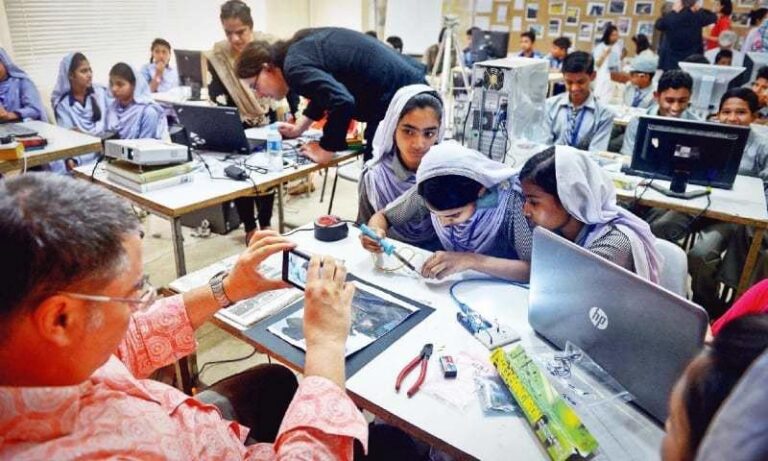
    By Dr. Naveeda Katper Human beings live in a world of countless needs and wants, but the resources available to meet those needs are limited. Food, shelter, education, health and a sense of belonging are among the basic requirements of life. Because resources are scarce, individuals, organizations and governments have to set priorities, make choices and use available resources wisely. Resources can broadly be divided into natural and human-made resources. Natural resources such as land, water, forests, minerals and energy come from nature. Human-made resources, including machines, buildings, technology and infrastructure, are developed by people using natural resources. Natural resources can be depleted, while human-made resources can depreciate through use and time. Human beings, however, are different from other resources. A person is not simply a consumer of resources. With education, training, health and appropriate opportunities, a person can develop knowledge and skills and become an important form of human capital. This is why human capital is often considered more valuable than other resources. Human beings discover, develop and manage resources. They create technology, improve production, solve problems and generate new ideas. Among the traditional factors of production—land, labour, capital and entrepreneurship—human effort remains central because it activates and combines the others. Education and skills are therefore essential for economic and social development. A person without education or employable skills may have limited opportunities to earn a stable income. A skilled person, on the other hand, can use available resources productively and create value for both themselves and society. Skills can take different forms. Hard skills include technical and professional abilities. Soft skills include communication, teamwork, discipline and problem-solving. Transferable skills can be applied across different occupations and workplaces. All of these can improve a person’s ability to participate productively in the economy. Developed economies provide useful examples of how investment in people can contribute to national development. Countries such as Finland, Norway, Singapore, Switzerland, Japan and South Korea have invested substantially in education, vocational training, technology and workforce development. Their experience shows that economic progress is not based only on natural resources or physical infrastructure. The knowledge, skills and productivity of people are equally important. Skills development should begin early in life. Children should not be taught only to memorise information. They should also be encouraged to ask questions, solve problems, make things, experiment and learn from mistakes. An education system that allows children to try, fail and try again can help develop confidence, creativity and practical thinking. Schools, vocational institutions and workplaces all have a role in this process. Young people need opportunities to connect education with practical skills. They should be able to understand how knowledge can be applied to real problems and employment opportunities. The challenge is particularly serious in developing and least-developed countries, where many people have limited access to quality education, technical training and decent employment. Weak educational systems, inadequate infrastructure and limited opportunities for formal employment can prevent large sections of the population from developing their full potential. The problem is not simply unemployment. It is also the gap between what people know and what the economy needs. Many young people complete some level of education but do not acquire the practical or technical skills required by employers. At the same time, businesses often struggle to find workers with the right skills. Pakistan faces a similar challenge. The country has a large and relatively young population, which can become an important economic advantage if the right investments are made. But population size alone does not create economic growth. A large population becomes an asset when people are healthy, educated, skilled and productively employed. The World Bank’s Human Capital Index has repeatedly highlighted the importance of investments in education, health and skills for Pakistan’s long-term economic prospects. Pakistan’s human-capital performance remains below that of many countries that have made stronger and more sustained investments in these areas. Improving the quality of education, expanding vocational training and increasing opportunities for productive employment should therefore be treated as national priorities. Formal education, however, should not be considered the only route to developing human capital. Many adults who did not receive adequate schooling can still acquire useful skills through vocational and technical training. Short courses in areas such as construction, agriculture, livestock, tailoring, information technology, electrical work, plumbing, mechanics, hospitality and other trades can provide people with opportunities to earn a livelihood. Such training should not remain concentrated in major cities. Local training centres and mobile skill programmes can take practical education to towns and villages. Community-level training can help women, young people and adults who cannot easily access conventional educational institutions. Pakistan can also benefit from stronger links between education and the labour market. Training programmes should be designed after identifying the skills actually demanded by local and national economies. Employers, educational institutions and government departments should work together to ensure that training leads to real opportunities rather than certificates alone. The private sector also has an important role. Businesses can provide apprenticeships, internships and on-the-job training. Young people can gain valuable experience when they are given opportunities to learn directly in workplaces. Human capital development should also include lifelong learning. Technology and the nature of work are changing rapidly. Skills that are valuable today may become less relevant tomorrow. Workers therefore need opportunities to update their knowledge and acquire new skills throughout their careers. The central lesson is simple: people should not be viewed merely as consumers of a country’s resources. With proper investment, they become producers, innovators, entrepreneurs, teachers, technicians, researchers and problem-solvers. They create value from resources that might otherwise remain underused. For Pakistan, this is both a challenge and an opportunity. The country’s young population can become a powerful economic resource if it receives quality education, healthcare, practical skills and meaningful employment opportunities. But if these needs are ignored, population growth can increase pressure on already limited resources. Human capital is therefore not a secondary concern. It is one of the foundations of sustainable development. Roads, buildings, machines, technology and natural

  • Why our brain repeats old choices

    Have you ever noticed that many people eat the same food for breakfast every day?  Even when they have many other options they often stick to what they already know. Scientists have been trying to understand why people repeat the same choices again and again.  A new study from TU Dresden University in Germany may have found the answer. Researchers analyzed data from more than 700 people from earlier studies.  They found that our past choices strongly influence the decisions we make later. According to the researchers when we choose something repeatedly it slowly becomes a habit.  Once it becomes familiar our brain tends to choose it again even when a better option is available. This habit of repeating past choices can affect many parts of daily life including shopping eating habits and everyday routines. The study suggests that many of our decisions are not completely new. Instead our brain often relies on what worked for us before and simply repeats the same choice.

  • Can you spot the hidden mistake?

    Online picture puzzles often challenge people to look closely and find something unusual.  One such puzzle has caught the attention of many people. In the picture a woman can be seen standing in a kitchen and washing dishes. At first everything looks completely normal. But there is actually a strange mistake hidden in the scene. The puzzle is a simple test of your observation skills. Can you spot what is wrong? Take a close look at the picture. If you cannot find the mistake here is the answer. Look at the tea kettle. Its spout is placed unusually low on the kettle.  A kettle designed like this would not work properly because the tea could not flow out normally. Did you spot the mistake before reading the answer?

  • Rabi ul Awwal to begin on August 15

    The moon for Rabi ul Awwal 1448 AH was not sighted in Pakistan. As a result the first day of Rabi ul Awwal will be on Saturday, August 15, while 12 Rabi ul Awwal will fall on Wednesday August 26. The Ministry of Religious Affairs has also issued an official notification. The Central Ruet-e-Hilal Committee held a meeting in Islamabad on Thursday to look for the new moon. The meeting was chaired by Committee Chairman Maulana Abdul Khabir Azad. Meetings of zonal Ruet-e-Hilal committees were also held in different parts of the country. After the meeting Maulana Abdul Khabir Azad announced that no reliable moon sighting was reported from anywhere in Pakistan. Therefore Rabi ul Awwal will begin on August 15. Rabi ul Awwal is the third month of the Islamic calendar and has special importance for Muslims. 12 Rabi ul Awwal is observed as Eid Milad-un-Nabi ﷺ across Pakistan. On this occasion people arrange gatherings Quran recitation, Naat sessions, and Durood-o-Salam. Mosques, homes and streets are also decorated. Religious scholars use the occasion to remind people about the life, character teachings and Sunnah of Prophet Muhammad ﷺ. They emphasize that the true message of the occasion is to follow his teachings and bring his good example into daily life.

  • Scientists discover mysterious black hole star in deep space

    Scientists claim to have discovered a fascinating cosmic mystery. According to them, it is a “black hole star” about the size of our solar system and glowing with extremely bright red light. An international team of researchers made the discovery using images captured by NASA’s James Webb Space Telescope (JWST) which revealed the mysterious red glow. The black hole star is located in the constellation Cetus, billions of light-years away from Earth. Scientists believe it may have formed around 660 million years after the Big Bang. It appears similar to a massive star but is estimated to release 100 billion times more energy than an ordinary star. Such enormous energy output has previously been associated with black holes rather than stars. Scientist Rohan Naidu of the Massachusetts Institute of Technology (MIT) who was part of the research team said that they had discovered an entirely new type of cosmic phenomenon. He explained that the object is shining with an amount of energy normally associated with black holes while at the same time displaying characteristics typically linked to stars. First observed by James Webb Space Telescope Scientists have been using the James Webb Space Telescope to study distant galaxies in the universe. Their interest in this phenomenon increased after the discovery of the galaxy Maisie’s Galaxy (CEERS 1) and other early-universe objects. In a study published in the journal Nature, researchers named the red-light phenomenon MAM-BH1. They said its completely red appearance and disappearance at specific wavelengths are so dramatic that it cannot easily be compared with other known cosmic objects. Computer simulations suggested that rather than being an extremely massive star, the object is actually a black hole that shines like a star. If the scientists’ interpretation is confirmed, it could indicate that many of the mysterious red dots observed across the universe may also be black hole stars. Rohan Naidu believes that these types of black hole stars could play an important role in the evolution of galaxies.

  • A glass of fruit juice may lift your mood

    Feeling stressed, low or unhappy from time to time is common.  A recent study suggests that adding a small glass of 100% fruit juice or a fruit smoothie to your daily diet may help improve your mood. Researchers from Newcastle University studied 42 people who normally ate very few fruits and vegetables.  The participants were divided into groups and followed for four weeks. The researchers then looked at changes in their diet and mood. The results showed that people who added a glass of natural fruit juice to their daily diet experienced better mood and lower levels of stress. Some people worry that fruit juice contains natural sugar and may be unhealthy. However during this short study researchers did not find any harmful effects on the participants physical health. Researcher Courtney Neal said that eating several portions of fruits and vegetables every day can be difficult for some people.  Having a small glass of 100% fruit juice or a smoothie can be an easy way to add more nutrients to the diet. Newcastle University lecturer oliver Shannon said the results were encouraging but more research is needed especially among people dealing with mental health problems. However this does not mean people should start drinking large amounts of juice. The study focused on small amounts of 100% fruit juice or smoothies while eating whole fruits and vegetables remains important. Experts also stress that depression is a complex mental health condition.  Fruit juice should not be considered a treatment for depression. Anyone experiencing long lasting sadness stress or loss of interest in daily life should speak with a doctor or mental health professional.

  • How to drink lassi without bloating

    Lassi is a popular summer drink in Pakistan. It feels refreshing and can help add fluids to the body.  However some people notice that drinking very cold lassi makes them feel bloated gassy, or heavy. One possible reason is that very cold drinks may temporarily affect the digestive process.  A sudden change in temperature can make the stomach work more slowly which may cause food to move through the digestive system at a slower pace. Another common reason is lactose a natural sugar found in milk and dairy products. Some people have difficulty digesting lactose.  When they drink lassi, they may develop gas stomach cramps bloating or discomfort. Lassi itself can be a healthy choice because yogurt contains probiotics which are helpful bacteria that support digestion.  The problem may occur when it is consumed in large amounts, made extremely cold or taken at an uncomfortable time. Drinking lassi immediately after a heavy meal may also make some people feel too full.  People who regularly experience bloating or gas after consuming dairy products may have difficulty digesting lactose. If you enjoy lassi but often feel uncomfortable afterward try drinking it at a moderate temperature instead of adding lots of ice. Keep the portion small and avoid adding too much sugar. You can also add mint or roasted cumin for extra flavor. People with sensitive digestion may prefer thin buttermilk which can be a lighter alternative. If dairy products regularly cause severe bloating, cramps or other digestive problems it is better to speak with a doctor to find out whether lactose intolerance or another digestive issue could be the reason.

  • Easy masala lassi recipe for summer

    Masala lassi is a refreshing and flavorful summer drink. It is a great choice for people who prefer salty and spicy flavors instead of sweet drinks.  It is easy to make at home and can be enjoyed on a hot day. Ingredients •1 cup yogurt •1 teaspoon roasted cumin •½ teaspoon chaat masala •½ teaspoon black pepper powder A few fresh coriander leaves •A few fresh mint leaves •Salt to taste •Water as needed •Ice cubes as needed How to make masala Lassi Add yogurt roasted cumin, coriander mint, chaat masala salt and black pepper to a blender. Blend until the mixture becomes smooth. Add a little water and blend again until all the ingredients are well mixed. You can also use a hand blender to get a smooth and creamy texture. Pour the lassi into a large jug. Add more water according to your preferred consistency then add some ice cubes and mix well. Pour into glasses and garnish with fresh coriander or mint leaves. Your homemade masala lassi is ready. Serve chilled and enjoy this refreshing drink on a hot summer day.

  • When dry skin may lead to infection

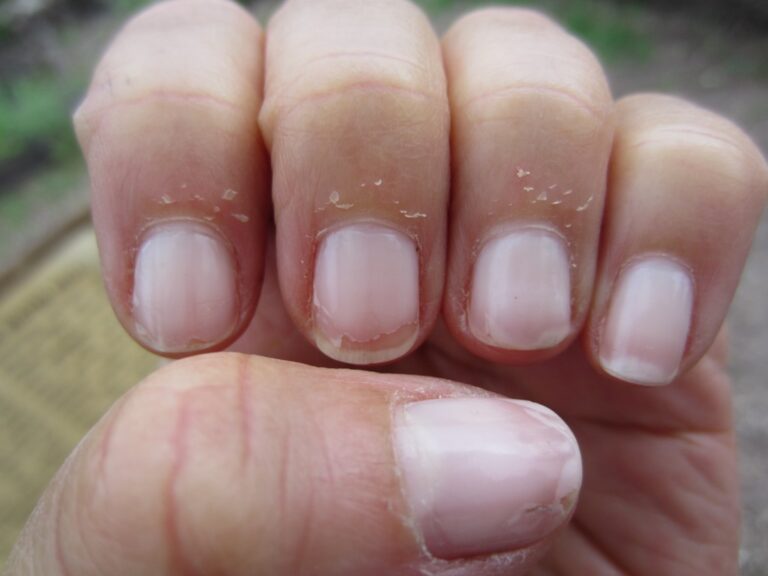
    Dry peeling skin around the nails is a common problem. It can be uncomfortable and may make simple daily tasks difficult.  This dryness can happen for several reasons including frequent hand washing harsh products and skin irritation. Why does skin  around the nails become dry? Frequent hand washing Washing your hands again and again can remove the skin’s natural oils.  If you do not use moisturizer afterward the skin around your nails may become dry and cracked. •Allergies and Irritation •Nail polish soaps detergents and other products may contain chemicals that irritate the skin.  This irritation can cause dryness peeling or redness. Nail Biting Biting your nails can damage the skin around them.  Small cuts may develop and increase the risk of irritation or infection. Lack of nutrients A poor diet may sometimes affect the health of your skin and nails.  A balanced diet with enough vitamins and minerals is important for healthy skin. Infection dry or damaged skin around the nails can sometimes become irritated or infected especially if it is picked or bitten. How can you  care for dry skin around the nails? •Use moisturizer Apply a good hand cream or moisturizer regularly especially after washing your hands.  This helps keep the skin soft and prevents cracking. •Aloe Vera Apply fresh aloe vera gel to the dry skin around your nails. It can help soothe and moisturize irritated skin. •Honey Apply a small amount of honey to your hands for 10–15 minutes then wash it off with lukewarm water. Honey can help keep the skin moisturized. •Cucumber Place fresh cucumber slices on your hands for about 15–20 minutes.  Then wash your hands with lukewarm water. •Olive oil Gently massage a little olive oil around your nails to help soften dry skin. After a few minutes wash your hands and apply moisturizer. Tip Avoid biting or pulling the peeling skin around your nails. If you notice severe pain  swelling pus or redness that does not improve  consult a doctor or dermatologist.