فیچرڈ

  • | |

    Sindh, Aga Khan University forge 5-year ties to ad…

    The Sindh Cabinet has approved a five-year partnership between the Department of Empowerment of Persons with Disabilities (DEPD) and the Aga Khan University’s Institute for Educational Development (AKU-IED). The Memorandum of Understanding was signed today at Chief Minister House, Karachi. Chief Minister Sindh Syed Murad Ali Shah, who witnessed the signing, called it “not merely an agreement” but “a solemn commitment to every child with disabilities in Sindh that their dreams matter, their potential is recognised, and their future will no longer be limited by barriers.” The partnership will establish an Inclusion and Special Educational Needs (SEN) Unit at AKU-IED, for training, research, and innovation that will house sensory rooms, therapy spaces and dedicated resource centres. The initiative aims to train more than 2,000 educators and, through them, reach an estimated half a million school children over the next five years. According to UNICEF, an estimated 96% of children with disabilities in Pakistan are out of school, with Sindh bearing a large proportion of this burden due to poverty, gender disparities, and limited functional accessibility. Overall, Sindh has 7.4 million out-of-school children, where disability acts as a major compounding barrier to attendance. “For too long, children with disabilities have been invisible in our education system,” said Mr Tuaha Ahmed Faruqui, Secretary of DEPD. “Today, we are making a promise to every family in Sindh that their children matter.” The initiative’s most ambitious commitment is workforce transformation. AKU-IED will deliver modular courses, Training-of-Trainers programmes, and certification pathways to more than 2,000 educators. Its Bachelor of Education degree will offer specialisation in inclusive education with monthly stipends. Beyond training, the collaboration establishes a province-wide research and advocacy agenda: baseline assessments, implementation evaluations, and annual policy commissions to inform government decisions. Biennial SEN conferences and policy seminars will convene experts and advocates, while public education campaigns will produce multimedia resources, toolkits, and community sensitisation initiatives to shift mindsets about disability inclusion. “This is not just an institutional milestone,” said Professor Farid Panjwani, Dean, AKU-IED. “It is a commitment to every child in Sindh who has been waiting for an education system that sees them, hears them, and empowers them.” The Government of Sindh will provide grant funding, while AKU-IED contributes expertise and institutional resources. The SEN Unit will develop a strategic roadmap designed to sustain impact well beyond the five-year term. President of the Aga Khan University, Dr Sulaiman Shahabuddin, saidid, “The true measure of an education system is whether it reaches those who have historically been left furthest behind. By preparing teachers and schools to educate children with special needs, this partnership will help to ensure that all our children have the opportunity to fulfill their potential.”

  • | |

    A 28-piece collection inspired by Lyari’s fo…

    Karachi: Movement, the Pakistani streetwear label behind the +92 collection with Wasim Akram and its capsule with Adeel uz Zafar, today announced LYARI – a 28-piece collection releasing on 31st July 2026 alongside an original anthem produced by Qasim Azhar, featuring Eva B and rappers from Lyari itself. Emerging as one of Pakistan’s most happening streetwear brands, Movement continues to build its collections through culture rather than trend. The LYARI drop is the largest release in the brand’s three-year history, and the first built entirely inside one place rather than about it. Lyari made Pakistani football. It made Pakistani rap. Its walls carry a mural tradition older than most of the city’s galleries, and its slang has travelled further than most of its people have. Very little of that reaches the screen. Movement’s position is simple: Lyari does not need defending. It has never needed anyone’s permission to be interesting. Rather than beginning with a mood board, the collection begins with the place itself – its grounds and the players who never left them, its studios and cyphers, its painters who work on shutters instead of canvas. Lyari’s own language runs through the collection, from phrases like “Lyari Dil Hai Jani” to the lettering, colours and hand-drawn graphic treatment inspired by the neighbourhood itself. The LYARI anthem is not just a campaign soundtrack. It is what the streets sound like when nobody is translating them. Recorded with Eva B alongside MCs who grew up in Lyari, the anthem is written in the language those streets are actually spoken in – the slang, the cadence, the humour and the pace of a place that moves fast and does not explain itself to visitors. Nothing on the record was softened for an outside ear. The anthem releases as a standalone record across Spotify, Apple Music, YouTube and all major streaming platforms today. The accompanying film was shot entirely on location in Lyari, with the people who live there appearing on camera instead of actors cast to represent them. The collection spans 28 pieces, designed with a simple benchmark: every garment should feel equally at home on a street in Lyari and on a shop floor in London without changing a single stitch.

  • | |

    Punjab finalises security and facilities for 983rd…

    LAHORE: The Secretary/Chief Administrator Auqaf Punjab, Dr. Ehsan Bhutta, has announced that the three-day celebrations marking the 983rd annual Urs Mubarak of Hazrat Ali Hajveri (RA), popularly known as Hazrat Data Ganj Bakhsh (RA), are commencing today (August 2–4) with profound reverence, bringing together hundreds of thousands of devotees from Lahore, across the country, and abroad. Speaking after personally visiting and conducting detailed inspections of the Milk Sabeel (Dhood Sabeel), the specially set up Marquee for pilgrims’ Langar, overall Langar distribution logistics, and the Smaa event arrangements, Dr. Bhutta stated that under the special directives of Chief Minister Punjab Maryam Nawaz Sharif and the continuous monitoring of Chief Secretary Punjab, the Auqaf Department, alongside DG Religious Affairs Punjab Hafiz Anees-ur-Rehman, district administration, and security agencies, has finalized foolproof security, traffic management, dedicated parking, clean drinking water sabeels, medical camps, ambulance services, control rooms, help desks, and separate facilities for women, senior citizens, and persons with disabilities to provide a peaceful spiritual environment. He highlighted that the three-day event will feature Quran recitations, Khatam-e-Khwajgan, Naat assemblies, spiritual Smaa sessions, Qawwali, Dhikr, academic conferences, and Qirat competitions attended by prominent scholars, Mashaikhs, and Qaris. Emphasizing that the saint’s timeless teachings preach divine love, peace, tolerance, and service to humanity, Dr. Bhutta reiterated the Punjab Government’s vision to transform Data Darbar into an exemplary model shrine equipped with modern amenities, strictly warning that no negligence will be tolerated in public facilities as facilitating millions of pilgrims is both a sacred honor and a primary duty for the Auqaf Department.

  • | |

    Punjab University rejects allegations, alleges sme…

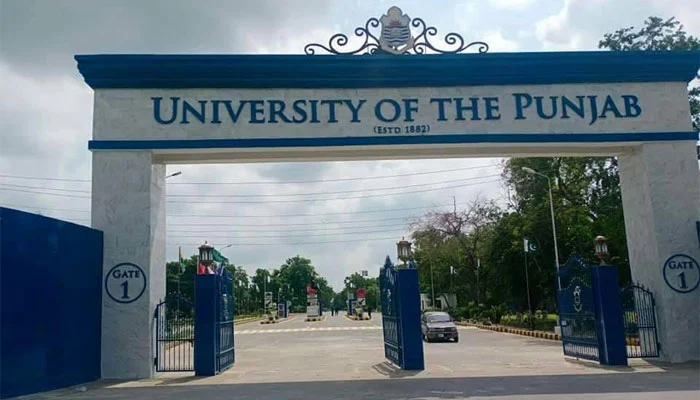
    LAHORE: Punjab University has strongly denied allegations recently levelled by two former female athletes, describing the claims as part of a coordinated campaign aimed at damaging the institution’s reputation during its ongoing admissions season. According to university spokesperson Dr. Khurram Shehzad, Punjab University has witnessed an unprecedented response to admissions this year, with more than 85,000 applications received for various academic programmes by July 31. The university also recorded its highest-ever participation in the entry test, while the application deadline remains August 4. He claimed that the institution’s success had prompted certain groups to launch what he termed a deliberate propaganda campaign. The spokesperson said the controversy involving the two former sports students stemmed from disciplinary issues rather than the serious allegations circulated on social media. He maintained that the matter originated after a dispute between members of the girls’ sports hostel and disagreements related to team selection. According to the university, the students were involved in repeated altercations with fellow athletes, prompting the hostel administration to initiate an inquiry. Pending the outcome of the investigation, the students concerned were instructed to vacate the hostel. However, the university alleged that they refused to comply and later became involved in another confrontation, after which police were called following an emergency complaint. The incidents led the hostel inquiry committee to hold emergency meetings and ultimately order the closure of the girls’ sports hostel. The university further stated that one of the former athletes was not selected for the baseball team because of disciplinary concerns rather than sporting performance. It alleged that she later threatened to leave the university if she was not included in the squad and voluntarily applied to withdraw her original academic documents. During the document collection process, the university claims she, along with another former student and several others, attempted to pressure the administration by threatening to release a video portraying an alleged suicide attempt if their demands were not met. Punjab University said both students voluntarily collected their academic documents and left the institution. It also claimed that one of them subsequently joined another university’s sports team while Punjab University went on to win the championship without her. The university said it possesses evidence supporting its position and confirmed that faculty members, staff, and female students from the Department of Sports have submitted a formal complaint to the cybercrime authorities against the two former athletes and individuals allegedly involved in what it described as an organised campaign against the institution. The administration condemned attempts to use former students for what it called vested interests and reaffirmed its commitment to protecting the university’s reputation through legal channels

  • | |

    Justice Akbar Dogar emerges, top performing judge …

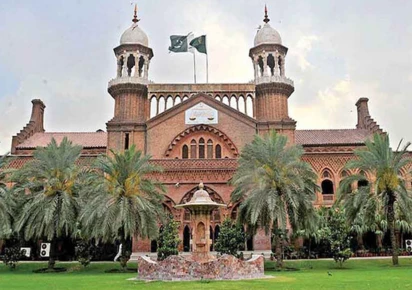
    Justice Sardar Ali Akbar Dogar has emerged as the highest-performing judge of the Lahore High Court during the judic ial summer vacations, disposing of the largest number of cases among all judges, according to the court’s weekly disposal report. The report, released on July 31, 2026, states that a total of 425 cases were decided at the Principal Seat of the Lahore High Court in Lahore between July 27 and July 31, 2026. According to the report, a Division Bench comprising Justice Mirza Waqas Rauf and Justice Sardar Ali Akbar Dogar disposed of 44 cases during the reporting period. Meanwhile, Justice Dogar, sitting as a Single Bench judge, disposed of an impressive 381 cases, making him the highest case-disposing judge during the vacation week. The report further reveals that the Single Bench disposed of 57 habeas corpus petitions, 33 pre-arrest bail applications, 27 post-arrest bail petitions, and 12 petitions seeking cancellation of bail. Justice Dogar also decided 32 petitions seeking the quashment of FIRs, 53 petitions relating to the registration of criminal cases, 63 petitions alleging police harassment, and 74 petitions concerning unlawful detention and illegal confinement. In addition, the court disposed of five petitions involving national identity cards and citizenship issues, while 14 cases of a religious nature were also decided during the same period. The Lahore High Court’s weekly report notes that the disposal statistics cover the period from July 27 to July 31, 2026. However, it also clarifies that the figures remain subject to official verification before being treated as final.

  • | |

    12,000 police deployed for Chehlum, Data Darbar Ur…

    LAHORE: Lahore Police have finalized an extensive security plan for the Chehlum of Hazrat Imam Hussain (AS) and the annual Urs of Hazrat Data Ganj Bakhsh (RA), deploying more than 12,000 officers and personnel across the provincial capital to ensure the safety of mourners and devotees. The arrangements were reviewed during a high-level meeting chaired by Capital City Police Officer (CCPO) Bilal Siddique Kamyana at the Capital City Police Headquarters. Senior police officials briefed the meeting on operational strategies and deployment plans for the two major religious events. According to the security plan, police will provide protection for 73 majalis and 34 mourning processions being held across Lahore to mark the Chehlum of Hazrat Imam Hussain (AS). Security measures have also been strengthened around the shrine of Hazrat Data Ganj Bakhsh (RA), where thousands of devotees are expected to participate in the annual Urs celebrations. CCPO Kamyana directed officers to implement strict security protocols at all entry and exit points, including the installation of walk-through gates, metal detectors, and barbed-wire barricades. He also instructed police personnel to maintain close coordination with procession organisers and the administration of Data Darbar to ensure smooth management of the events. He ordered supervisory officers to personally inspect security arrangements along procession routes, at imambargahs, and around the shrine, while emphasizing that all activities would be monitored in real time through the Punjab Safe Cities Authority surveillance network and central control rooms. The CCPO further instructed the traffic police to introduce a comprehensive traffic management plan with alternative routes to reduce inconvenience for commuters and facilitate the movement of mourners and visitors during the religious gatherings. The meeting was attended by senior police officers, including DIG (Administration) Imran Kishwar, Chief Traffic Officer Abdul Rahim Shirazi, SSP Investigation Muhammad Naveed, SP Security, and divisional SPs, who reviewed the operational readiness for the upcoming events.

  • | | | |

    Why Lahore sinks whenever it rains in the city? 

    The rain on July 22 almost sank most parts of Defence Housing Authority. Those low-lying areas of the city were also under water. And this happened as the city was lashed with 343 millimetres of rain for two days, according to the Provincial Disaster Management Authority (PDMA). That spell has gone and when you are reading these lines, the city is undergoing a second rain spell. Pakistan’s Meteorological Department has issued a fresh weather advisory, warning that another active monsoon spell is expected from July 29 to August 5 across much of the country. The department said rain, wind and thundershowers, along with scattered heavy to very heavy rainfall, may trigger urban flooding, flash floods and landslides in vulnerable areas. This will keep the residents of low-lying areas, mainly of Lahore’s south, and DHA on the toe. Reacting to this advisory, environmental activist Rafay Alam explained why cities like Lahore keep flooding every monsoon season, and what is really behind the crisis. He said the Met Department had already notified that rain would continue for two days and people were warned in advance that urban flooding would take place, not just in Lahore, but in several cities across Punjab, including Gujranwala and Sialkot. He then pointed to last year’s floods for comparison. “Those floods were caused by heavy rains in the northern areas of the country, which caused rivers to swell,” he said. On top of that, India had released water from the Pong Dam and Bhakra Dam. He said a gate at the Madhopur headworks also broke, causing water levels in the Ravi river to rise sharply. Alam said the situation today is different. The flooding happening now is not caused by river floods or dam releases. Instead, it is simply due to heavy rainfall occurring within Pakistan itself. He said that if people read the Met Department’s advisory carefully, the heaviest rain in the coming days is expected in the northern areas once again, not directly over Lahore. He advised people to check whether they live in low lying or high lying areas, since this makes a big difference during heavy rain. However, he said that the real issue lies in the sheer intensity of rainfall being recorded now. “Some areas have received around 150 millimetres of rain within just a few hours,” he said. He added that 20 or 30 years ago, when the drainage systems and infrastructure in these areas were built, climate change was never part of the planning. Nobody at that time imagined that such intense rainfall could happen within just a few hours. As a result, the old infrastructure simply cannot handle the kind of rain Pakistan is now experiencing. Dr Farid A Malik, a resident of Defence Phase 5, witnessed the entire flood attack first hand. He said that when he was growing up in the 1950s, 1960s and 1970s, rainwater never used to stand in Lahore. At that time, he said, the city was much smaller and the population was far lower, yet even then, the city did not face standing water after rainfall the way it does today. “Whenever the rain would stop, we children used to go out on our bicycles looking for standing water, just for fun. And there were really only two places where water would collect. One was near Shahdara, and another was near the Do Moriya Pul area close to the railway station. That area of Shahdara was a low lying area,” he said. He recalled that in the 1970s, when Zulfiqar Ali Bhutto’s government came into power, and the People’s Party had a lot of support from that area of Lahore at the time, the government promised that they would install pumps in Shahdara and set up a proper system to drain the water out. And they actually did this. Heavy duty pumps were installed in Shahdara, and they used to successfully drain the water out. Dr Farid said the sewerage system Lahore has today simply cannot handle rainwater, because the amount of water that comes with heavy rain is very large, and the system does not have the capacity to handle that much water. He explained there are two separate problems here. First, the underground sewerage system is not cleaned properly. The pipes, whether four feet wide or six feet wide, have become clogged with scaling inside them over time. So even though a pipe might be four or six feet in diameter, the actual open space left for water to pass through has shrunk down to just one or two feet, meaning the whole system does not flow properly. Second, even if the sewerage system was clean, it still cannot handle rainwater on top of regular sewage. For this reason, Lahore used to have separate storm drains, called nalas in Urdu, which carried rainwater away separately into the Ravi river. Because of this separate system, rainwater never used to accumulate in the city. He said this has changed because storm drains have been blocked, either through neglect or construction on top of them. “An entire market has been built on top of a storm drain along Hall Road,” he said, adding that similar encroachment has happened along the Ravi river itself. Last year, water that should have gone into the river ended up flowing into housing societies instead. Dr Farid also pointed out that when Lahore had open drains instead of an underground sewerage system, the drainage actually worked better. Since the city moved underground, cleaning has become irregular, flow has suffered, and pumping stations work only some of the time. He said Lahore’s expansion added to the problem, since new areas were given sewerage systems but no proper storm drain network for rainwater. DHA, he said, expanded in phases over the years without any master plan covering how sewage and rainwater would both be managed. Speaking about his own neighbourhood, Dr Farid said there is a pumping station near the Sui Gas Society area of Defence that pumps sewage water

  • | |

    Fazlur Rehman urges dialogue to end AJK crisis

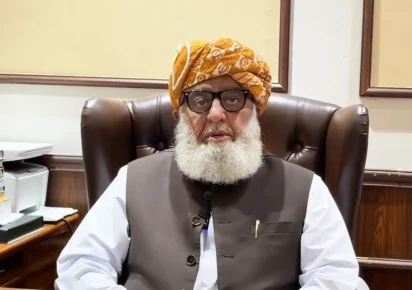
      Jamiat Ulema-e-Islam-Fazl (JUI-F) chief Maulana Fazlur Rehman has urged the federal government to address the ongoing unrest in Azad Jammu and Kashmir (AJK) through dialogue, stressing that reconciliation is the only path to a lasting solution. In a video message shared on the party’s X account on Saturday, Fazlur Rehman called on the government and state institutions to recognise the seriousness of the situation instead of responding with force. He said authorities should work to restore peace and stability rather than allowing further bloodshed. “The government and state institutions must understand the gravity of the crisis. Instead of turning our homeland into a place of violence, they should focus on healing divisions through meaningful dialogue,” he said. His remarks came after violent clashes were reported in Rawalakot between law enforcement personnel and protesters affiliated with the banned Jammu and Kashmir Awami Action Committee (JAAC). Reports circulating on social media claimed multiple casualties and injuries, with both security officials and the JAAC alleging loss of lives. Fazlur Rehman said the JAAC’s sit-in had continued for more than two months. He recalled that after tensions intensified on June 5, the committee had formally requested him to mediate between the protesters and the government. According to him, he accepted the role and remained in contact with both sides through JUI-F AJK chief Maulana Saeed Yousaf Khan and Sardar Kamran Azam Khan. The JUI-F chief expressed concern over the situation faced by residents of AJK, saying people expect their government to protect them rather than leave them living in fear. He alleged that women, children and families had endured months of insecurity while the authorities failed to address their concerns. He further claimed that force had been used against unarmed protesters and alleged that, according to the information available to him, the death toll had reached around 80 people. However, no official confirmation has been issued regarding that figure. Despite the violence, Fazlur Rehman appealed to the JAAC leadership and protesters to remain peaceful and avoid any action that could worsen the situation. He urged them to allow more time for mediation efforts, expressing hope that a fair and lasting political settlement could still be achieved. He also criticised the government’s approach, claiming that although the protesters had shown confidence in his mediation efforts, the authorities had not taken the initiative seriously and had instead relied on force rather than negotiations. Warning of wider implications, Fazlur Rehman said the movement had gained support across Kashmir as well as among Pakistanis and the Kashmiri diaspora, particularly in Europe. The recent violence has drawn condemnation from political parties and human rights organisations. The Human Rights Commission of Pakistan (HRCP) expressed deep concern over reports of deaths and injuries, stressing that maintaining law and order should never come at the expense of the right to life or the freedoms of peaceful assembly and expression. The commission called for a prompt, impartial and independent investigation into the incidents. Opposition parties, including PTI, also demanded an independent judicial inquiry into the clashes, while other political groups criticised what they described as the excessive use of force against protesters. The current dispute is linked to long-standing demands by the JAAC, which has been seeking constitutional and governance reforms in AJK. Among its key demands are the abolition of 12 reserved seats in the AJK Legislative Assembly allocated to Kashmiri refugees and the removal of the existing quota system. Although the government and the JAAC reached an agreement after protests last year to establish a high-level committee to review the issue of refugee seats, negotiations have since stalled. The JAAC continues to insist on abolishing the reserved seats, while the government remains opposed to the proposal.

  • | |

    Karachi receives light rain as PMD forecasts more …

      Parts of Karachi experienced light rain and drizzle on Saturday afternoon, bringing a welcome drop in temperatures and creating pleasant weather across the city. The Pakistan Meteorological Department (PMD) has predicted that this spell of wet weather will continue over the next two days, with additional rain and thunderstorms expected in different parts of the metropolis. Light showers and drizzle were recorded in several neighborhoods, including Surjani Town, Gulshan-e-Maymar, and various suburban areas. Residents enjoyed cooler conditions after the rainfall, while cloudy skies covered much of the city. According to the PMD, Karachi is expected to remain mostly cloudy, with chances of light to moderate rainfall accompanied by thunderstorms during the coming 48 hours. Earlier forecasts had also warned of windstorms and thunderstorm activity, particularly during the afternoon and evening. Meteorological officials explained that the weather pattern is being influenced by a low-pressure system that had previously developed into a depression but has now weakened into a low-pressure area. The system is currently located over southeastern Rajasthan in India. Although it has weakened, it continues to draw moisture-laden monsoon winds from both the Arabian Sea and the Bay of Bengal, resulting in widespread rainfall across different regions. At the same time, a separate westerly weather system is affecting northern parts of the country, further contributing to unstable weather conditions. The PMD warned that these combined weather systems are likely to trigger thunderstorms, gusty winds, and rainfall in several districts of Sindh. Authorities also cautioned that heavy downpours in some areas could lead to urban flooding, especially in low-lying localities where drainage systems may become overwhelmed. The department stated that rain accompanied by strong winds, thunderstorms, and windstorms was expected over the next three to six hours in several districts, including Tharparkar, Mithi, Umerkot, Mirpurkhas, Badin, Thatta, Sanghar, Tando Muhammad Khan, Tando Allahyar, Hyderabad, Matiari, Jamshoro, Shaheed Benazirabad, Ghotki, Khairpur, Jacobabad, Dadu, Larkana, Sukkur, and nearby areas. Residents in these regions have been advised to remain cautious and stay updated with official weather advisories. In response to the forecast, the Sindh government has placed all relevant departments on high alert to ensure preparedness for any weather-related emergencies. Adviser to the Chief Minister on Rehabilitation, Gyan Chand Essrani, directed the Provincial Disaster Management Authority (PDMA), Rescue 1122 teams, and mobile health units to maintain round-the-clock vigilance. He instructed all emergency response agencies to continuously monitor the situation and respond promptly to any incidents caused by heavy rainfall or flooding. To strengthen emergency preparedness, PDMA Sindh has deployed 50 specially equipped response vehicles fitted with dewatering pumps across the province. These vehicles are intended to quickly remove accumulated rainwater from flooded roads and residential areas. Of the total fleet, 10 vehicles have been stationed in Karachi, while 25 have been allocated to Hyderabad and Mirpurkhas divisions. The remaining 15 vehicles have been deployed in Sukkur and Larkana divisions to support emergency operations. Authorities have urged citizens to exercise caution during heavy rain, avoid unnecessary travel, and cooperate with emergency services to ensure public safety throughout the ongoing monsoon spell.

  • | |

    Iran issues fresh warnings as regional tensions es…

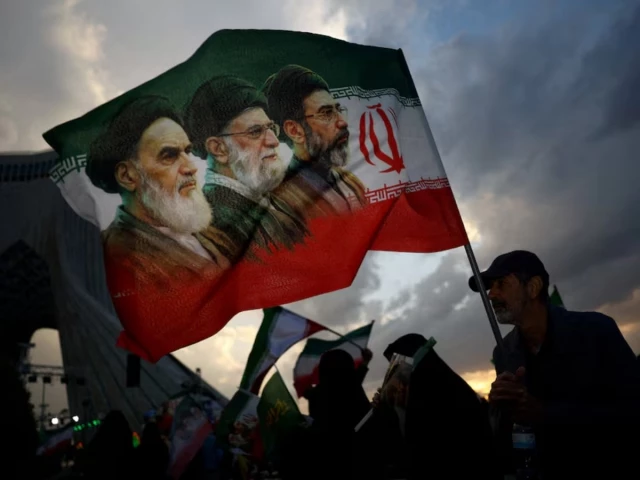
    Tensions across the Middle East intensified on Saturday as senior Iranian military and political officials issued strong warnings to the United States and its regional partners, while Kuwait reported intercepting drones it said were launched from Iran. Major General Abdollahi, commander of Iran’s Khatam al-Anbiya Central Headquarters, accused Washington of deliberately widening the regional conflict. In a statement shared on X and reported by Iranian state media, he alleged that the United States was pursuing a strategy aimed at expanding the war and increasing its influence across the Middle East. According to Abdollahi, the recent confrontation with Iran demonstrated that Washington was prepared to target the interests and resources of Muslim nations to achieve its objectives. He further claimed that the US was relying on the wealth, infrastructure, and strategic assets of regional countries to protect its military presence while reinforcing Israel’s security. The Iranian commander argued that the balance of power in the region had shifted in Iran’s favor, asserting that the United States and Israel failed to achieve their goals during the latest conflict. He also claimed they were now attempting to continue the confrontation through the territory of neighboring Muslim countries. Abdollahi urged regional governments to reconsider their cooperation with Washington, warning that nations acting as a “defensive shield” for the United States could eventually face the consequences of war. Separately, Iranian lawmaker Ebrahim Rezaei, a member of the parliament’s National Security Commission, warned that any future attack on Iran would have devastating consequences for the region. He claimed that such a conflict could reduce regional infrastructure to the “Stone Age” and cautioned against further military action. Meanwhile, Kuwait strongly condemned what it described as Iranian aggression after reporting drone attacks on key facilities. Kuwaiti authorities said their air defense systems detected and destroyed multiple hostile drones that entered the country’s airspace early Saturday. Officials stated that a government installation in northern Kuwait and civilian vehicles on Bubiyan Island sustained material damage from falling debris, although no casualties were reported. Kuwait’s Foreign Ministry described the attacks as a serious violation of the country’s sovereignty and said it reserved the right to take all necessary measures to protect its national security, interests, and critical infrastructure. Iran also warned that continued US maritime pressure could trigger broader consequences. Mohammad Bagher Zolghadr, secretary of Iran’s Supreme National Security Council, said ongoing American actions could ultimately lead to restrictions on the Strait of Hormuz and other strategic waterways, warning that such developments would have significant consequences for global energy markets and the wider economy. At the same time, Iranian Parliament Speaker Mohammad Bagher Ghalibaf declared that Iran had emerged victorious from the recent conflict but stressed that the country must strengthen its long-term stability and national resilience. He emphasized expanding the authority of Iran’s supreme leadership as a key step toward securing the country’s future. Elsewhere, maritime security concerns remained high. The UK Maritime Trade Operations (UKMTO) reported that a commercial tanker was struck by an unidentified projectile off the coast of Oman, damaging its engine room and leaving it temporarily unable to maneuver. Authorities are investigating the incident. In Yemen, the Houthi movement denied reports that it planned to charge commercial vessels for passage through the Bab al-Mandab Strait, insisting that its maritime transit services remain free. However, the group claimed that its blockade had already forced several Saudi oil tankers to reroute around Africa via the Cape of Good Hope, underscoring the continuing disruption to regional shipping routes.