فیچرڈ

  • | |

    Qul held for Ustad Noor Muhammad Nizami

    Dera Ghazi Khan: A large number of people from all walks of life attended the Qul ceremony of legendary qawwal Ustad Noor Muhammad Nizami, held in Taunsa Sharif. The renowned qawwal, who passed away on 6 August 2026 after battling lung complications since 5 July, was 86. Prayers were offered for the departed soul, and admirers paid tribute to his lifelong contributions to Qawwali and Sufi music. Born in 1940, Ustad Noor Muhammad was the torchbearer of a glorious seven-generation Qawwal legacy, rooted in the soil of Taunsa. His seventh forefather, Mian Ahmad, was brought from Mahaar Sharif to Taunsa by Khawajah Shah Sulaiman Taunsavi of the Chishti Order. For seven generations, his family has devoted their art to the shrine of Taunsa, offering soul-stirring Qawwali in service of the divine. Ustad Noor Muhammad began his musical journey at the tender age of seven, singing at shrine Mahmoodia Taunsa in the presence of Khawajah Nizamudin Taunsvi. His musical education was nurtured by his uncle, Ghulam Sarwar, who guided him in the classical traditions. He was a master of the Kaafi Thaath and Raag Darbari, and his renditions of Ghazal, Kaafi, and Qawwali captivated audiences for decades. From 1970 to 1974, he lent his voice to Radio Pakistan Multan, enriching the airwaves with his timeless artistry. He shared deep bonds with the members of the Sham Chaurasi and Patiala clans, who held him in the highest esteem as a friend and fellow maestro. Ustad Noor Muhammad Nizami leaves behind a grieving family—three sons, Mazhar Ali, Azhar Ali, and Imran Haider, who courageously carry forward his legacy, along with five daughters and a host of grandchildren. His voice may have fallen silent, but his spirit lives on in every note his sons sing and in the hearts of all who were blessed to hear him.

  • | | | |

    Makkah pact cements Pakistan-Türkiye-Saudi defenc…

    The newly signed defence agreement between Pakistan, Saudi Arabia and Türkiye marks a significant step towards formalising their longstanding security and strategic cooperation, while establishing a framework focused on collective defence and regional stability. The trilateral partnership brings together three countries with strong historical, political, economic and defence ties. Their cooperation has grown over decades and is now being shaped into a more structured security framework amid a rapidly changing regional environment. The agreement comes as conflicts, emerging security threats and evolving forms of warfare continue to reshape the strategic landscape. Supporters of the pact say closer coordination among the three countries can contribute to regional stability and strengthen their ability to respond collectively to security challenges. Focus on defence and deterrence The agreement has been described as defensive rather than offensive. Its central principle is collective security, under which an armed attack against one member is considered a threat to all three. The arrangement is aimed at strengthening deterrence and reducing the possibility of conflict by demonstrating that aggression against one country could trigger a coordinated response from the other two. The framework is not intended to target any particular country, according to the explanation of the agreement. Instead, it seeks to promote peace, stability and security through stronger defence cooperation. Complementary strengths Pakistan, Saudi Arabia and Türkiye bring different strategic capabilities to the partnership. Pakistan contributes extensive military experience and defence expertise, including experience in managing complex security challenges. Saudi Arabia brings its strategic position in the region, economic strength and political influence. Türkiye contributes advanced defence technology, a growing defence industry and substantial industrial capabilities. Together, these capabilities could provide the three countries with a broader platform for strategic coordination and defence preparedness. The partnership could also encourage greater cooperation in areas such as military coordination, intelligence sharing, defence technology and strategic planning. Pakistan’s regional role The agreement also highlights Pakistan’s expanding engagement with different regional and global actors. Islamabad maintains strategic and diplomatic relations with Saudi Arabia and Türkiye while also engaging Iran, China, the United States and other international partners. This network of relationships could allow Pakistan to play a constructive role in regional diplomacy and help facilitate communication among countries with differing interests. The effectiveness of the trilateral framework, however, will depend on how consistently the three countries translate the agreement into practical cooperation. Not a NATO-style alliance The partnership has also been described as not a Muslim NATO and not a mechanism for providing nuclear protection to its members. Instead, it is presented as a defensive arrangement designed to strengthen collective deterrence and security cooperation while supporting regional peace. The agreement effectively formalises much of the strategic cooperation that Pakistan, Saudi Arabia and Türkiye have developed over the years.

  • | |

    White Flowers Cover Site Where Bodies Found as Chonburi Governor Joins Public in Final Memorial for Diana and Roman; Russian Family Touched by Thai Kindness

    Huai Yai- On August 6th, 2026, the family of Diana and Roman, two Russian siblings killed in a shocking murder case in the Huai Yai Subdistrict, held a final memorial ceremony at the site where their bodies were discovered. Led by their mother, Mrs. Sharina Nasimova, the family gathered to mourn, offer merit to the […]

  • | | |

    Pakistan foreign exchange reserves rise in the fin…

      Pakistan’s foreign exchange reserves recorded a modest increase during the last business week of July, reflecting a slight improvement in the country’s external financial position. According to the latest figures released by the State Bank of Pakistan (SBP), the nation’s total foreign exchange reserves increased by approximately 32.5 million US dollars during the week ending 31 July. With this increase, Pakistan’s total foreign exchange reserves reached 22.47 billion US dollars. Although the weekly rise was relatively small, it is considered a positive development, as foreign exchange reserves play a vital role in maintaining economic stability, supporting international trade, and strengthening investor confidence. Higher reserves enable the country to meet its external debt obligations, finance imports, and manage fluctuations in the value of the Pakistani rupee. The SBP reported that its own foreign exchange reserves rose by 13.1 million US dollars taking the central bank’s holdings to 17.04 billion US dollars by the end of the reporting week. The increase indicates a gradual strengthening of the country’s official reserve position. Central bank reserves are particularly important because they are used to stabilize the foreign exchange market, ensure adequate liquidity for international transactions, and provide a financial cushion during periods of economic uncertainty. In addition to the improvement in the SBP’s reserves, the foreign exchange reserves held by Pakistan’s commercial banks also recorded an increase. According to the data, commercial banks’ reserves rose by 19.4 million US dollars bringing their total holdings to 5.43 billion US dollars. These reserves consist of foreign currency deposits and other external assets maintained by commercial banks to facilitate international trade, foreign currency transactions, and customer requirements. The combined increase in the reserves of both the State Bank and commercial banks contributed to the overall rise in the country’s foreign exchange holdings. While the increase may appear modest in comparison to the total volume of reserves, it demonstrates stability in Pakistan’s external financial sector during the reporting period. Foreign exchange reserves are closely monitored by investors, international financial institutions, and credit rating agencies because they provide an indication of a country’s ability to meet its international financial commitments. A healthy reserve position also supports economic confidence by reducing pressure on the exchange rate and helping the government manage external payment obligations more effectively. Pakistan’s foreign exchange reserves have experienced fluctuations over the past few years due to factors such as external debt repayments, import payments, remittance inflows, export earnings, and financial assistance from international partners. As a result, weekly changes in reserves are often influenced by routine external transactions, repayments, and foreign currency inflows. The latest increase in reserves suggests that Pakistan’s external account remained relatively stable during the final week of July. Economists note that sustaining and further improving reserve levels will depend on continued growth in exports, higher workers’ remittances, prudent fiscal and monetary policies, and the successful implementation of economic reforms. Maintaining adequate foreign exchange reserves remains essential for supporting macroeconomic stability, strengthening investor confidence, and ensuring the country’s ability to meet its international financial obligations in the months ahead.

  • | | |

    Bullet casing found near spot where Mir Raza Ali&#…

      Police investigating the death of a young man, Mir Raza Ali, have recovered a spent bullet casing from the area where his body was found in Karachi’s Gulistan-e-Jauhar neighborhood. The discovery is being treated as a potentially important piece of forensic evidence that may help investigators determine the circumstances surrounding the incident. According to police sources, the bullet casing has been collected and will be sent for forensic examination. Experts will conduct ballistic testing to determine the type of firearm from which the bullet was fired. Investigators hope the analysis will establish whether the casing can be linked to a specific pistol or any weapon previously used in other criminal cases. Officials said that forensic testing is a standard part of the investigation and could provide valuable clues regarding the events leading up to Mir Raza Ali’s death. If the casing matches a firearm recovered in the future or one already registered in forensic databases, it could help identify those responsible or provide investigators with new leads. Police sources stressed that it is still too early to reach any conclusions about the case. They cautioned against speculation, saying that the investigation remains in its initial stages and that all available evidence is being examined carefully. Authorities emphasized that no official determination has yet been made regarding the motive or the exact circumstances of the young man’s death. Investigators have also confirmed that the pistol believed to have been used in the incident has not yet been recovered. The search for the weapon is continuing, and police teams are working to locate it as part of the ongoing investigation. Recovering the firearm is considered a key objective, as it would allow forensic experts to compare it directly with the recovered bullet casing and establish whether the two are connected. In addition to the forensic examination, investigators are expected to continue gathering evidence from the crime scene and surrounding areas. Police may also review available surveillance footage, interview potential witnesses, and collect any additional material that could assist in reconstructing the sequence of events. Such investigative steps are commonly taken in cases involving suspicious deaths to ensure that all possible evidence is preserved and analyzed. Authorities have reiterated that the investigation is progressing and that further updates will be shared once forensic reports and additional evidence become available. Until then, police are urging the public to avoid drawing conclusions based on unverified information. The recovery of the bullet casing marks an important development in the investigation, but officials maintain that it represents only one piece of the overall evidence. The final findings will depend on forensic analysis, witness statements, and any additional evidence collected during the course of the inquiry. For now, investigators remain focused on uncovering the facts surrounding the death of Mir Raza Ali and determining whether any criminal involvement was responsible for the incident.

  • | | |

    CBFC orders cuts in Emraan Hashmi’s Awarapan 2 b…

    Bollywood actor Emraan Hashmi’s much-awaited film Awarapan 2 has officially received clearance from the Central Board of Film Certification (CBFC), but only after several significant edits were made. The film has been awarded a U/A 16+ certificate, allowing viewers aged 16 and above to watch it under parental guidance. The CBFC approved the film on August 5, 2026, with a final runtime of 140 minutes and 20 seconds. However, before granting certification, the board instructed the filmmakers to implement changes at nine different points throughout the movie. According to reports, the CBFC asked the makers to tone down violent sequences, remove certain objectionable words from both the audio and subtitles, and include mandatory health warnings related to smoking and drug use. The board also directed the filmmakers to display the Hindi title prominently and ensure that anti-smoking messages remain visible during scenes featuring tobacco use. In addition, the certification body required a warning related to child trafficking to be included in the film. Some action scenes were shortened to reduce the intensity of violence, while one particular sequence was reportedly cut by nearly 50 percent. A scene involving drug inhalation was also modified to comply with certification guidelines. The end credits were adjusted to better align with the background music. Overall, approximately four minutes of footage were removed, while another 20 seconds of content were altered. Despite these edits, the film’s official runtime remains unchanged at 140 minutes and 20 seconds. Directed by Nitin Kakkar, Awarapan 2 stars Emraan Hashmi alongside Disha Patani and Shabana Azmi in key roles. The film serves as the sequel to the 2007 hit Awarapan and continues the emotional storytelling of the original while introducing a darker, revenge-driven narrative. Produced by Vishesh Bhatt, the sequel also reunites composer Mithoon and lyricist Sayeed Quadri. Fans can look forward to refreshed versions of the iconic songs “To Phir Aao” and “Tera Mera Rishta,” along with several new tracks created specifically for the film. With the required CBFC changes now completed, Awarapan 2 is set for a theatrical release on August 14, 2026. The film is expected to attract both longtime fans of the original and new audiences eager to see Emraan Hashmi return to one of his most memorable franchises.

  • | | |

    PTI founder strong, reads the Quran and its transl…

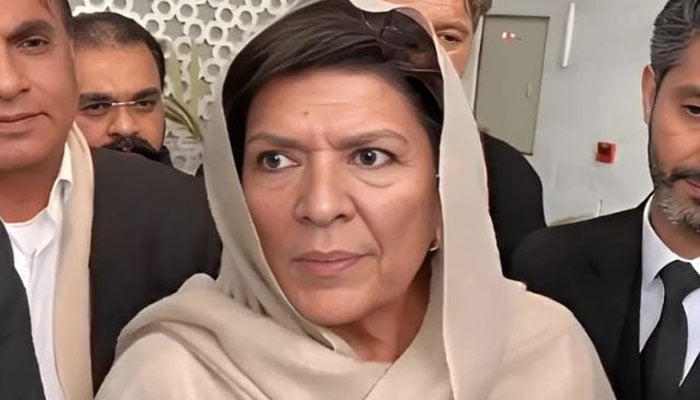
      ISLAMABAD: Aleema Khan, the sister of the founder of Pakistan Tehreek-e-Insaf (PTI), has said that her brother remains mentally and physically strong despite being in prison. Speaking to the media outside the Islamabad High Court on Thursday, she stated that the PTI founder continues to spend his time reading the Holy Quran along with its translation, describing this as a source of strength and resilience during his incarceration. Aleema Khan also raised concerns about her brother’s health, claiming that he has been experiencing vision problems for several months. According to her, the PTI founder informed his lawyer, Salman Safdar, back in December that he was having difficulty seeing and that there was an issue with one of his eyes. She suggested that despite bringing the matter to the attention of his legal counsel, adequate medical attention had not been provided. Speaking further about his conditions in custody, Aleema Khan alleged that the PTI founder’s access to reading material has been restricted. She claimed that prison authorities had confiscated his books, preventing him from continuing his regular reading routine. According to her, books have always been an important part of his daily life, and taking them away has made his time in prison more difficult. Despite these alleged restrictions, Aleema Khan insisted that the PTI founder has remained determined and steadfast. She said he continues to focus on reading the Quran and reflecting on its translation whenever possible, adding that his faith has helped him maintain a positive outlook while facing the challenges of imprisonment. Her remarks came as PTI leaders, supporters, and lawyers gathered outside the Islamabad High Court, where they continued to call for legal relief for the former prime minister. The media interaction attracted significant attention as party members expressed concern over the PTI founder’s health and prison conditions. Aleema Khan’s comments are the latest in a series of statements from the PTI leadership regarding the treatment of the party founder during his detention. Party officials have repeatedly voiced concerns about his medical care, access to books, and overall prison environment. They have urged the authorities to ensure that he receives appropriate healthcare and is granted facilities in accordance with prison regulations. The government and prison authorities have previously rejected or disputed several allegations made by PTI leaders regarding the former prime minister’s treatment in custody. However, the issue continues to remain a point of political debate, with PTI maintaining that its founder’s legal rights and well-being should be protected. As legal proceedings continue, Aleema Khan reiterated that her brother remains firm in his resolve. She concluded by saying that, despite the challenges he faces in prison, he remains spiritually strong through his regular recitation of the Holy Quran and reading of its translation.

  • | | |

    AJK PML-N chief rejects PPP rigging allegations, c…

    Pakistan Muslim League-Nawaz (PML-N) Azad Jammu and Kashmir (AJK) President Shah Ghulam Qadir has strongly rejected the Pakistan Peoples Party’s (PPP) allegations of election rigging, describing the claims as “baseless” and insisting that the election results genuinely reflect the will of the people. Addressing party office-bearers and workers from across Azad Jammu and Kashmir, as well as representatives of Kashmiri refugees from Indian Illegally Occupied Jammu and Kashmir (IIOJK) residing in Pakistan, Qadir congratulated supporters on what he described as a decisive electoral victory for the PML-N. He said the party was preparing to establish a stable government in AJK under the leadership of former Prime Minister Nawaz Sharif, Prime Minister Shehbaz Sharif, and Punjab Chief Minister Maryam Nawaz. According to Qadir, the upcoming government will focus on accelerating development projects and improving public welfare across the region. Highlighting the party’s previous tenure, Qadir said that infrastructure and development initiatives undertaken by the PML-N in AJK demonstrate its commitment to serving the people. He added that the party remains determined to address public concerns and deliver essential services at the grassroots level. With the final phase of polling in Rawalakot Division scheduled for August 10, Qadir appealed to party workers to maintain peace, cooperate with election authorities, and help ensure a smooth electoral process. He expressed confidence that voters in Rawalakot would extend their support to the PML-N, predicting a strong electoral performance in the division. Responding to criticism from opposition parties, Qadir reiterated that the elections in Mirpur Division, Muzaffarabad Division, and the 12 refugee constituencies reserved for Kashmiris from IIOJK settled in Pakistan were conducted in a free, fair, and transparent manner. He argued that the election results clearly demonstrated public confidence in the PML-N. Qadir also criticised the PPP, suggesting that the party should focus on addressing governance challenges in Sindh rather than questioning the electoral process in AJK. The meeting was attended by several senior PML-N leaders, including AJK Legislative Assembly member Raja Muhammad Riasat Khan, former minister Sardar Farooq Sikandar, Kashmir Council member Malik Muhammad Hanif, and other party officials, who congratulated Qadir on the party’s performance in the recently concluded phases of the AJK elections.

  • | | |

    US sees strong potential for agricultural technolo…

    The United States has underscored the potential for expanding agricultural technology cooperation with Pakistan, saying that greater adoption of American innovation could modernise the country’s farming sector while creating new opportunities for bilateral trade and investment. The remarks were made by US Chargé d’Affaires Natalie A. Baker during a Direct Line webinar organised by the Business Council for International Understanding (BCIU) in collaboration with the US Embassy in Islamabad, the US Department of Commerce, and the Government of Pakistan. The virtual event brought together American companies, Pakistani government officials, investors, and representatives from the agriculture industry to discuss future collaboration. Speaking at the webinar, Baker described agriculture as one of Pakistan’s most important economic sectors, contributing nearly one-quarter of the country’s gross domestic product (GDP) and supporting millions of livelihoods. She said Pakistan’s efforts to modernise agriculture present significant opportunities for American businesses to introduce advanced technologies and expertise. According to Baker, US companies can contribute in key areas such as precision agriculture, advanced irrigation systems, digital farm management, cold chain logistics, and modern food processing technologies. She noted that these innovations could help improve agricultural productivity, reduce resource wastage, and strengthen food security while creating commercial opportunities for both countries. The US diplomat also highlighted the growing trade relationship between the two countries, revealing that US exports to Pakistan exceeded $1.5 billion in agricultural and related goods during 2025. She described the webinar as part of the US Mission’s broader strategy to promote stronger economic cooperation and expand commercial ties with Pakistan. During the discussions, Pakistani officials outlined regulatory reforms and policy initiatives designed to facilitate greater imports of American agricultural products, including soybeans, cotton, and high-quality planting seeds. They also encouraged increased US investment in farm mechanisation, biotechnology, seed development, controlled-atmosphere storage, and food processing industries. Baker stressed that American investment offers benefits beyond financial capital by promoting technology transfer, workforce training, and long-term business partnerships. She said such collaboration can strengthen local expertise and contribute to sustainable economic growth in Pakistan’s agriculture sector. The webinar also served as a preview of the US Department of Commerce’s Certified Agricultural Technologies Trade Mission to Pakistan, scheduled for October 26–30. Baker invited American companies to explore investment opportunities in Pakistan’s agricultural technology and food processing sectors, reaffirming that supporting US businesses seeking to invest in Pakistan remains a key priority for the embassy.

  • | | |

    Uganda backs sending troops to planned Gaza peace …

    Uganda’s Parliament has approved a government proposal to deploy troops to a planned international peace and stabilisation force for Gaza, marking the country’s first commitment to the proposed multinational mission. The resolution was introduced by Uganda’s Minister of Defence and received parliamentary approval following debate among lawmakers. With the decision, Uganda joins Morocco, which has also announced its willingness to contribute troops to the proposed force. The Ugandan government has not publicly disclosed the diplomatic discussions or political considerations behind its decision. However, the move sparked debate in Parliament, with opposition members expressing concerns about the potential implications for Uganda’s foreign policy and regional relationships. Opposition lawmaker Hassan Kiromera questioned the mission’s objectives, asking which parties Ugandan troops would ultimately be expected to confront if deployed. He argued that the government should provide greater clarity regarding the mandate of the proposed force before committing military personnel. Defence Minister Jacob Oboth-Oboth defended the proposal, stating that the Uganda People’s Defence Forces (UPDF) possess extensive experience in international peacekeeping operations, including missions in Somalia and other conflict zones. He said that this experience would enable Ugandan troops to contribute effectively to efforts aimed at restoring peace and stability in Gaza. According to the report, the proposed Gaza International Stabilisation Force is expected to consist of approximately 20,000 personnel from multiple countries. The force is reportedly planned under a proposal associated with US President Donald Trump’s Board of Peace and would be commanded by US Major General Jasper Jeffers. The mission is intended to help maintain law and order in Gaza following the end of hostilities between Israel and Hamas. Reports indicate that the proposal was first introduced earlier this year as part of broader discussions on post-conflict governance and security arrangements in the territory. The development follows recent announcements regarding a reported agreement under which Hamas would disarm and Israel would gradually withdraw its military forces from Gaza. Under the reported framework, the international stabilisation force would be deployed after the phased Israeli withdrawal. However, uncertainty remains over the implementation of the proposed arrangement. Israeli officials have reportedly expressed serious security concerns after reviewing the reported agreement, arguing that certain provisions could pose risks to national security. As a result, questions remain about the timeline and conditions for the deployment of the multinational peace force despite Uganda’s parliamentary approval.