International

  • | | |

    Iraq orders investigation into alleged drone attac…

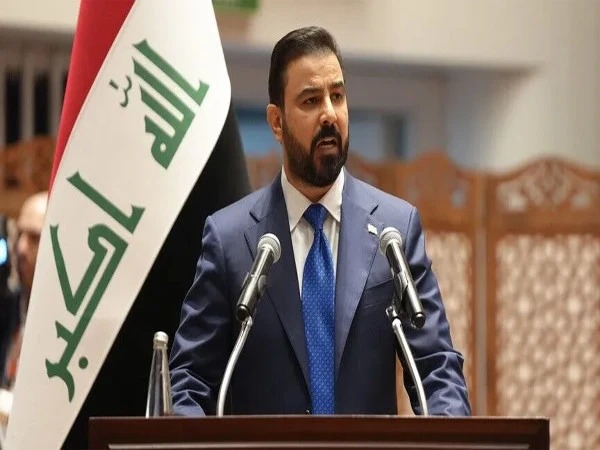
    The Iraqi government has launched an official investigation into allegations that drones used in attacks on Saudi Arabia were launched from Iraqi territory. The move follows information shared by Saudi authorities and reflects Baghdad’s commitment to ensuring its land is not used to threaten neighboring countries. According to a statement issued by the office of the Iraqi prime minister, Prime Minister Ali Al-Zaidi, who also serves as the Commander-in-Chief of the Iraqi Armed Forces, has instructed the relevant security agencies to conduct a comprehensive investigation into the reported drone incidents. The government said the investigation will examine all evidence and information provided by Saudi Arabia to determine whether Iraqi territory was used in planning or carrying out the attacks. Officials emphasized that the inquiry will be conducted thoroughly and that any individuals or groups found responsible will face legal action in accordance with Iraqi law. Baghdad reiterated its constitutional commitment to maintaining good relations with neighboring countries and stressed that it does not permit its territory to be used for attacks against friendly or brotherly nations. The statement underlined Iraq’s policy of respecting the sovereignty and security of regional partners while working to preserve stability across the Middle East. The Iraqi government also described its relationship with Saudi Arabia as strong and based on mutual respect and cooperation. Officials said they are determined to protect these ties and will not allow any actions that could damage bilateral relations or create unnecessary regional tensions. The investigation comes at a time when security concerns remain high across the Middle East. Governments in the region continue to cooperate on intelligence sharing and border security to address threats posed by cross-border attacks and other security challenges. By launching the investigation promptly, Iraqi authorities aim to clarify the circumstances surrounding the alleged drone attacks and demonstrate their commitment to accountability. The government has pledged to take appropriate legal measures if the investigation confirms that Iraqi territory was misused for hostile activities. The latest development also highlights the importance of regional cooperation in addressing shared security concerns. Iraq has reaffirmed that maintaining peaceful relations with neighboring states remains a key priority and that it will continue working with Saudi Arabia and other regional partners to promote stability, strengthen diplomatic ties, and prevent incidents that could escalate tensions in the region. The move follows information shared by Saudi authorities and reflects Baghdad’s commitment to ensuring its land is not used to threaten neighboring countries. According to a statement issued by the office of the Iraqi prime minister, Prime Minister Ali Al-Zaidi, who also serves as the Commander-in-Chief of the Iraqi Armed Forces, has instructed the relevant security agencies to conduct a comprehensive investigation into the reported drone incidents. The government said the investigation will examine all evidence and information provided by Saudi Arabia to determine whether Iraqi territory was used in planning or carrying out the attacks. Officials emphasized that the inquiry will be conducted thoroughly and that any individuals or groups found responsible will face legal action in accordance with Iraqi law. Baghdad reiterated its constitutional commitment to maintaining good relations with neighboring countries and stressed that it does not permit its territory to be used for attacks against friendly or brotherly nations. The statement underlined Iraq’s policy of respecting the sovereignty and security of regional partners while working to preserve stability across the Middle East. The Iraqi government also described its relationship with Saudi Arabia as strong and based on mutual respect and cooperation. Officials said they are determined to protect these ties and will not allow any actions that could damage bilateral relations or create unnecessary regional tensions. The investigation comes at a time when security concerns remain high across the Middle East. Governments in the region continue to cooperate on intelligence sharing and border security to address threats posed by cross-border attacks and other security challenges. By launching the investigation promptly, Iraqi authorities aim to clarify the circumstances surrounding the alleged drone attacks and demonstrate their commitment to accountability. The government has pledged to take appropriate legal measures if the investigation confirms that Iraqi territory was misused for hostile activities. The latest development also highlights the importance of regional cooperation in addressing shared security concerns. Iraq has reaffirmed that maintaining peaceful relations with neighboring states remains a key priority and that it will continue working with Saudi Arabia and other regional partners to promote stability, strengthen diplomatic ties, and prevent incidents that could escalate tensions in the region.

  • | |

    West Indies take first-innings lead 

      West Indies all-rounder Justin Greaves produced a sensational bowling performance, claiming five wickets for just 27 runs in 11 overs, to put his team in complete control after dismissing Pakistan for 282 in the first innings. His remarkable spell dismantled Pakistan’s lower order and ensured the hosts secured a 29-run first-innings lead, giving West Indies a significant advantage in the Test match. Greaves was well supported by the rest of the bowling attack. Veteran fast bowler Kemar Roach and pacer Shamar Joseph each picked up two wickets, while Jayden Seales contributed with one dismissal. Together, the West Indies bowlers maintained relentless pressure throughout Pakistan’s innings and prevented the visitors from posting a commanding total. Earlier in the day, Pakistan resumed their innings at 199 for 3, with captain Shan Masood and vice-captain Salman Ali Agha at the crease. The pair displayed patience and composure, frustrating the West Indies bowlers as they added 47 valuable runs for the fourth wicket. Their partnership helped Pakistan build a solid platform and raised hopes of a substantial first-innings total. Shan Masood continued his impressive form and reached a memorable century. The left-handed batter scored 109 runs from 184 deliveries, striking 12 boundaries during his well-crafted innings. It was the seventh Test century of his career and his first Test hundred against the West Indies. Masood’s innings was marked by discipline, determination, and excellent shot selection as he anchored Pakistan’s batting effort for most of the innings.   However, soon after Masood’s dismissal, Pakistan’s batting lineup suffered a dramatic collapse. Salman Ali Agha, who had provided useful support with 20 runs off 60 balls, was bowled by Shamar Joseph, triggering the downfall of the middle and lower order.   Justin Greaves then produced a devastating spell that completely changed the course of the innings. He first dismissed Aamir Jamal for 3 runs, followed by the wicket of debutant Ali Usman, who was out without scoring. Greaves then removed Mohammad Rizwan for 12 runs, leaving Pakistan in serious trouble. His disciplined line and length exposed the visitors’ lower-order weaknesses and prevented any meaningful recovery.   Pakistan eventually lost their remaining wickets in quick succession and were bowled out for 282. Despite Shan Masood’s excellent century, the visitors failed to capitalize on the strong start they had made earlier in the day, with the lower order unable to offer much resistance against the disciplined West Indies bowling attack. By securing a 29-run first-innings lead, West Indies gained an important psychological and tactical advantage in the match. The lead places the home side in a strong position as they prepare to bat in their second innings, while Pakistan will need an outstanding bowling performance to make a comeback. With momentum firmly on the hosts’ side, the contest has shifted in West Indies’ favor, setting up an intriguing battle in the remaining days of the Test match.

  • | | |

    Iran rejects US proposals over ‘Excessive Demands’

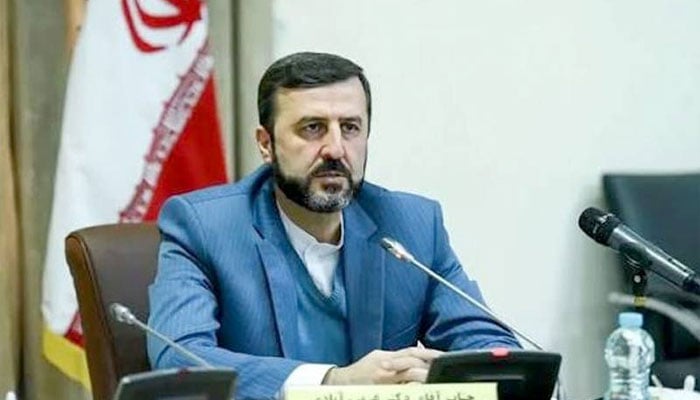
    Iran has rejected proposals put forward by the United States during indirect negotiations, Iranian Deputy Foreign Minister Kazem Gharibabadi said, citing what Tehran described as excessive and unacceptable demands from Washington. Speaking about the recent diplomatic contacts, Gharibabadi said the talks initially began in Islamabad through intermediaries. According to him, the US side presented a plan that included demands Iran could not accept, prompting the Iranian delegation to reject the proposal outright. Gharibabadi said Washington had warned that rejecting the plan would effectively end the negotiations and lead to the withdrawal of the US delegation. He added that the talks ultimately ended in exactly that manner, with the American delegation leaving the discussions. The Iranian deputy foreign minister stressed that Tehran neither insisted on continuing the negotiations nor asked the US delegation to remain at the table. He described Iran’s position as an example of what he called “dignified diplomacy,” arguing that Tehran would not compromise on what it considers its fundamental principles. Gharibabadi also discussed developments surrounding the Strait of Hormuz, a vital international shipping route. He said diplomatic discussions also took place in Oman after Iran moved to close the strait. According to the Iranian official, an Omani delegation proposed keeping a southern route open to allow ships to pass while Iran and Oman continued discussions. The proposal reportedly suggested that the route could later be closed depending on the outcome of the talks. However, Gharibabadi said Iran did not accept the proposal. He maintained that Iran had made its position clear from the beginning of the conflict and would not agree to arrangements that it believes undermine its stated principles. Gharibabadi further said Iran’s policy of keeping the Strait of Hormuz closed remains unchanged. He presented the decision as another example of Tehran’s approach to what he described as “dignified diplomacy,” signalling that Iran intends to maintain its position despite continued diplomatic efforts and international pressure.

  • |

    Trump warns Iran of fresh strikes as nuclear talks continue

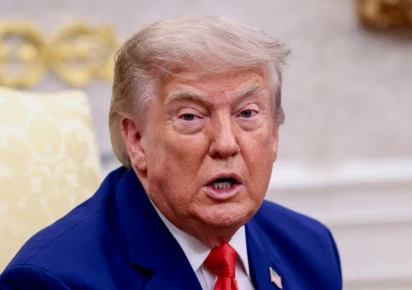
    US President Donald Trump said on Tuesday that discussions between the United States and Iran have been encouraging, but warned that Washington is prepared to launch additional strikes if Tehran fails to reach a new agreement. Trump said he would prefer to avoid further military action, particularly attacks on Iran’s civilian infrastructure such as bridges and power plants. However, he stressed that military action remains an option if diplomatic efforts collapse. “It’s a very delicate balance,” Trump said, adding that Iran understands the consequences of refusing to negotiate. According to the US president, the current position of the United States is strong, and Tehran is aware that Washington is prepared to act if no agreement is reached. Despite the warnings, Trump described the recent diplomatic contacts with Iran as “very good talks.” Trump’s comments came ahead of his scheduled meeting with Israeli Prime Minister Benjamin Netanyahu at the White House. The meeting follows joint US-Israeli military operations against Iranian targets earlier this year and is expected to focus on regional security and Iran’s nuclear programme. During the interview, Trump addressed reports that Netanyahu intends to discuss intelligence concerning Pickaxe Mountain, an underground fortified site believed to be connected to Iran’s nuclear activities. The facility is located near one of the country’s major nuclear installations and has drawn increasing international attention. Trump dismissed suggestions that he needed Netanyahu’s briefing on the matter, saying he was already fully informed about developments at the site. Referring to Netanyahu by his nickname “Bibi,” Trump said the Israeli leader wanted the United States to remain actively engaged. He added that if negotiations with Iran fail, the US would have no hesitation in targeting the facility, claiming it could be destroyed “very easily.” Meanwhile, Israeli Defence Minister Israel Katz claimed that US military aircraft have been operating from Israeli bases during recent strikes on Iran. In comments reported by Al Jazeera, Katz said American aircraft and refuelling planes departed from Israel to carry out attacks. He also accused Iran of directing its missile attacks at multiple countries while avoiding direct strikes against Israel. On the same day, Iran announced that Bushehr Airport in the country’s southwest has been rendered inoperable following US airstrikes. Government spokesperson Fatemeh Mohajerani said officials visited the airport and found extensive destruction, including a newly refurbished aircraft that was reportedly destroyed by a direct missile strike. She described the airport as effectively out of service. Mohajerani also said that airports in Iranshahr, Semnan and Bandar Abbas sustained damage during the attacks. In addition, the Bushehr Meteorological Centre was reportedly hit, while widespread destruction affected civilian infrastructure, including fishing boats, tourism businesses and other private property. According to the Iranian government, the strikes damaged 12 bridges, two tunnels, the main railway station in Bandar Abbas and several additional bridges in southern and northeastern Iran. Mohajerani further claimed that 350 government employees were killed during the conflict. Separately, Iranian Foreign Minister Abbas Araghchi held telephone conversations with Saudi Foreign Minister Prince Faisal bin Farhan and Omani Foreign Minister Badr Albusaidi on Monday evening. According to a statement released by Iran’s Foreign Ministry, the discussions focused on regional developments, the security of the Strait of Hormuz and the importance of strengthening diplomatic cooperation to promote stability in the Gulf. The talks came shortly after Saudi Arabia announced it had intercepted drones launched by Iran-backed groups operating in Iraq.

  • | | | |

    Pakistan-US relations strengthen as PM Shehbaz Sha…

    Prime Minister Shehbaz Sharif welcomed a bipartisan delegation from the United States Congress in Islamabad, reaffirming Pakistan’s commitment to strengthening bilateral ties and expanding cooperation across key economic and strategic sectors. The meeting underscored the growing momentum in Pakistan-US relations and highlighted the importance of continued dialogue between the two countries. The U.S. congressional delegation included Representatives Ryan Zinke and Michael Baumgartner. The meeting was also attended by Deputy Prime Minister and Foreign Minister Ishaq Dar, Foreign Secretary Ambassador Amna Baloch, and U.S. Chargé d’Affaires Natalie Baker. During the discussions, Prime Minister Shehbaz Sharif welcomed the visiting lawmakers and described their visit as a positive step toward deepening cooperation between Pakistan and the United States. He also congratulated the American people on the upcoming 250th anniversary of U.S. independence and conveyed his best wishes to President Donald Trump. The Prime Minister expressed appreciation for President Trump’s role in helping reduce tensions between Pakistan and India during the 2025 crisis. Referring to the ceasefire reached in May 2025, Shehbaz Sharif said diplomatic engagement helped prevent further escalation and contributed to regional stability. This reflects the Prime Minister’s stated position regarding the events. Highlighting future opportunities, Shehbaz Sharif said Pakistan is keen to enhance collaboration with the United States in trade, investment, agriculture, information technology, mining, minerals, and energy. He emphasized that stronger economic cooperation should remain a cornerstone of the bilateral partnership. The visiting U.S. lawmakers thanked the Prime Minister for the warm hospitality extended during their visit. They noted that President Trump’s positive relationship with Pakistan’s leadership has had a favorable impact on bilateral engagement. They also acknowledged Pakistan’s efforts to promote regional peace and stability. Both sides agreed on the importance of increasing exchanges between lawmakers from Pakistan and the United States. They said more frequent parliamentary visits could strengthen mutual understanding and support long-term cooperation. Following the meeting, Prime Minister Shehbaz Sharif hosted a reception for a delegation of U.S. corporate executives visiting Pakistan. The business delegation included representatives from the information technology, technology, energy, mining, manufacturing, and other industries. Addressing the gathering, the Prime Minister reiterated Pakistan’s commitment to building a stronger economic partnership with the United States. He encouraged American companies to explore investment opportunities in Pakistan and emphasized the valuable role of the Pakistani-American community in fostering closer ties between the two nations. The meeting reflects both countries’ interest in maintaining constructive diplomatic engagement while expanding cooperation in trade, investment, and regional stability.

  • | | |

    Kuwait’s foreign minister arrives in Pakistan on…

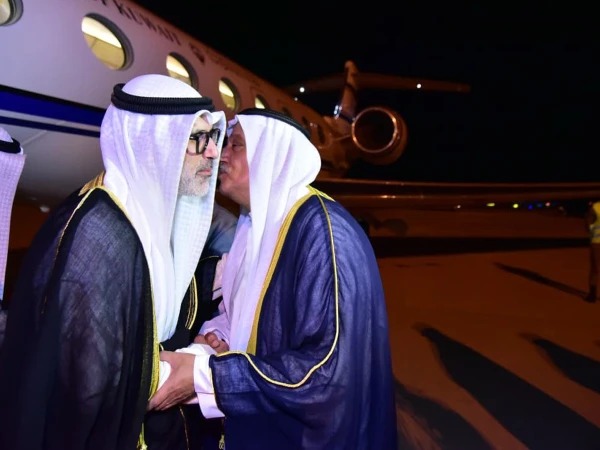
    Kuwait’s Foreign Minister, Sheikh Jarrah Jaber Al-Ahmad Al-Sabah, arrived in Islamabad on Tuesday for an official visit to Pakistan at the invitation of Deputy Prime Minister and Foreign Minister Ishaq Dar. The visit highlights the longstanding friendship and growing diplomatic cooperation between the two countries. According to Pakistan’s Ministry of Foreign Affairs, the Kuwaiti foreign minister received a warm welcome upon his arrival at Islamabad International Airport. Additional Secretary for the Middle East, Zahid Hussain, welcomed the distinguished guest on behalf of the Pakistani government. During the visit, senior officials from both countries are expected to hold high-level discussions on a wide range of bilateral, regional, and international issues of mutual interest. The talks will focus on strengthening political cooperation, expanding economic partnerships, enhancing trade and investment opportunities, and promoting collaboration in various sectors. The Foreign Office stated that the visit reflects the deep-rooted brotherly relations between Pakistan and Kuwait, built on a shared history, mutual trust, and close cooperation over the years. Both nations have maintained friendly diplomatic ties and regularly work together on regional and international platforms. Pakistan and Kuwait enjoy strong cooperation in labor, energy, investment, and defense, while a large Pakistani expatriate community continues to contribute significantly to Kuwait’s economy. The leadership of both countries has repeatedly expressed a commitment to further strengthening these ties through increased engagement and high-level exchanges. Officials believe the visit will provide an opportunity to review the progress made in bilateral relations and identify new areas for collaboration. Discussions are also expected to cover regional developments in the Middle East and South Asia, as well as other international issues of common concern. The official visit underscores the shared commitment of Pakistan and Kuwait to enhancing diplomatic relations, promoting economic cooperation, and expanding strategic partnerships. It also reaffirms both countries’ desire to deepen engagement through regular dialogue and continued collaboration for mutual benefit. The outcomes of the meetings are expected to contribute to stronger Pakistan-Kuwait relations and pave the way for future initiatives aimed at boosting trade, investment, and regional cooperation.

  • |

    Oman proposes gulf-backed plan to ease Strait of Hormuz tensions

      Oman has proposed a new framework for managing the strategically important Strait of Hormuz, with support from Gulf countries, according to a Gulf source and a Western diplomat who spoke to Reuters on Tuesday. The proposal includes a system under which ships using the waterway would be encouraged to make voluntary financial contributions rather than pay mandatory transit fees. The initiative is aimed at easing tensions and restoring stability in one of the world’s busiest maritime trade routes following months of disruption caused by the conflict involving the United States, Israel, and Iran. A senior Iranian official told Reuters that Tehran has not yet responded to Oman’s proposal, which is intended to provide a foundation for a broader agreement to ensure the safe movement of commercial vessels through the strait. The Strait of Hormuz is one of the most critical shipping lanes in the world, carrying around one-fifth of global oil and liquefied natural gas supplies before the conflict intensified. The route has become a focal point of regional tensions, with repeated incidents affecting international trade and energy markets. Meanwhile, US President Donald Trump said there had been “good talks” involving Iran but warned that military action could resume if diplomatic efforts fail to produce results. Trump recently halted a planned two-week US bombing campaign, marking another major shift in his administration’s approach toward the conflict. Despite his comments, Iranian officials continue to deny that Tehran is preparing to restart negotiations with Washington. Earlier this month, the United States launched a renewed military campaign aimed at reducing Iran’s influence over the Strait of Hormuz. Iran had effectively restricted access to the waterway following military strikes by the United States and Israel on February 28, allowing only Iranian vessels to move freely through the area. Although a temporary agreement between Washington and Tehran led to the partial reopening of the strait last month, the arrangement quickly fell apart in early July. According to reports, Iran fired on ships using a navigation channel that it does not officially recognize, reigniting concerns about maritime security and the uninterrupted flow of global trade. Iran has repeatedly stated that it wants to jointly oversee the Strait of Hormuz with Oman, which borders the opposite side of the narrow waterway. Tehran has also proposed charging vessels for navigation-related services. However, the United States argues that international ships should continue to enjoy unrestricted passage without being required to pay mandatory fees, maintaining that such charges would violate international law. Under the proposal put forward by Oman, Iran would not have exclusive authority over the strait. Instead, management responsibilities would be shared, and any payments made by vessels would be entirely voluntary rather than compulsory, according to the Gulf source and the Western diplomat familiar with the discussions. The proposed model is similar to the system used in Southeast Asia’s Strait of Malacca, where Indonesia, Malaysia, and Singapore invite shipping companies to make voluntary contributions. Those funds are used to support navigation safety, environmental protection, and search-and-rescue operations instead of functioning as mandatory transit charges. The Omani initiative is being viewed as a possible compromise that could reduce regional tensions, safeguard international shipping, and help restore confidence in one of the world’s most strategically significant maritime corridors.

  • | | |

    US rejects Iran’s Hormuz demands

    The United States has rejected Iran’s demands concerning the management and monitoring of maritime traffic in the strategically important Strait of Hormuz, with US officials saying that Tehran’s proposals have not received approval from Oman or the broader international community. American officials said the agreement under discussion focuses only on coordination between the countries involved and does not include any taxes, transit fees, or other financial charges. They described Iran’s demands as unnecessary and maintained that the proposed arrangement should remain limited to practical coordination aimed at facilitating the movement of vessels through the strategic waterway. The US officials’ remarks came after Iranian Deputy Foreign Minister Kazem Gharibabadi revealed that Tehran had proposed a joint monitoring mechanism with Oman for shipping activity in the Strait of Hormuz. According to Gharibabadi, Iran has suggested that each country should manage maritime traffic on its respective side of the strait. Under the proposal, Iranian authorities would oversee vessels and shipping movements in the section under Iran’s responsibility, while Oman would monitor traffic moving through the opposite side. Gharibabadi presented the proposal as an effort to improve coordination and maintain smooth maritime traffic through the strategically located waterway. The Iranian government has long emphasized the importance of regional countries taking greater responsibility for security and navigation in the Gulf and surrounding waters. However, US officials have challenged Iran’s position and said the demands made by Tehran do not form part of the limited coordination framework currently under discussion. They also indicated that neither Oman nor the wider international community has accepted Iran’s proposed conditions. The Strait of Hormuz plays a crucial role in global energy trade. The narrow waterway connects the Persian Gulf with the Gulf of Oman and the Arabian Sea, making it a key route for international oil and gas shipments. Any disruption or uncertainty surrounding navigation in the strait could have consequences for global energy markets, shipping costs, and regional security. The latest disagreement comes amid broader tensions between Iran and the United States over regional security and maritime activity. Tehran has repeatedly stressed its role in maintaining security in the Gulf, while Washington has continued to monitor developments in the area and protect freedom of navigation for commercial and international shipping. The dispute over the proposed arrangement highlights the continuing differences between the two sides over the management of maritime traffic in the Strait of Hormuz. While Iran views its proposal as a framework for shared regional oversight and coordination, the United States maintains that any agreement should focus strictly on coordination and should not impose additional demands, taxes, or fees on international shipping. The issue remains significant because of the strait’s importance to the global economy. Any escalation between Iran and the United States or disagreement over maritime access could draw international attention and raise concerns about the safety and uninterrupted movement of commercial vessels through one of the world’s most important shipping corridors.

  • | |

    Oil prices rise more than $2 amid falling US inven…

    Global crude oil prices climbed by more than $2 per barrel in the latest trading session, as a decline in US crude inventories boosted market sentiment and supported prices. According to Reuters, the rise came after traders responded to signs of tighter oil supplies in the United States. A drop in crude stockpiles often signals stronger demand or reduced availability, which can encourage investors to push prices higher. Oil prices had fallen in the previous session after tensions between Washington and Tehran showed signs of easing temporarily. However, the market regained momentum in the latest session as supply concerns returned to focus. Brent crude futures gained $2.71, or 3.2%, to reach $86.80 per barrel. Meanwhile, US West Texas Intermediate (WTI) crude futures rose $2.26, or 3.4%, to trade at $81.95 per barrel. Market participants continue to closely monitor developments in the Middle East, particularly any changes in US-Iran relations, as well as global supply conditions. Any renewed tensions in the region could further affect oil markets because of the Middle East’s importance to global energy supplies. Analysts also expect traders to keep an eye on upcoming inventory data and broader demand trends. A combination of falling stockpiles, geopolitical uncertainty and concerns over supply could continue to create volatility in international oil prices in the coming sessions.

  • | |

    Trump hails meetings with Netanyahu and Zelenskiy

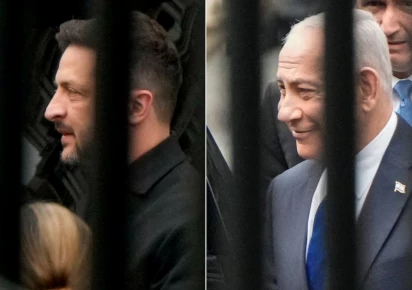
    US President Donald Trump said his recent meetings with Israeli Prime Minister Benjamin Netanyahu and Ukrainian President Volodymyr Zelenskiy went well, as the leaders visited Washington to attend a memorial service for Republican Senator Lindsey Graham. Trump met the two leaders separately and later shared brief comments on his social media platform, Truth Social. He said he discussed several important issues with both leaders but did not provide details about the conversations. Describing his meeting with Netanyahu as “very good,” Trump said the two sides discussed a range of significant matters. Netanyahu also called the talks “excellent.” The meeting came amid tensions over the conflict involving Iran and Israel. Trump had expressed frustration before meeting Netanyahu after details about the Israeli prime minister’s planned discussion points on Iran emerged publicly. Trump also held talks with Zelenskiy on strengthening Ukraine’s air defense capabilities and efforts to revive peace negotiations with Russia. The two leaders discussed plans for Ukraine to produce Patriot missile interceptors as Kyiv continues to seek greater military support. Zelenskiy described his meeting with Trump as “good,” while Trump said they discussed many issues and characterized the talks as successful. The meetings took place as the conflicts in the Middle East and Ukraine remain major international concerns, with diplomatic efforts continuing alongside ongoing military tension.