تازہ ترین

  • |

    Qatar and Pakistan advance mediation efforts as US and Iran pause direct military strikes

    Regional mediators led by Qatar and Pakistan have achieved significant progress in restoring negotiations between the United States and Iran following a three-day pause in direct military strikes, according to regional officials. The temporary lull comes after nearly two weeks of heavy bombardment triggered by Iranian actions in the Strait of Hormuz. While US President Donald Trump and Tehran have temporarily halted direct strikes against one another, scattered attacks by regional armed groups persist, including drone attacks targetting Saudi petroleum facilities by Iran-backed militias and Houthis, alongside drone interceptions over Jordan and Iraq. Talks facilitated alongside Oman are focusing on establishing a maritime management mechanism for the Strait of Hormuz to restore an interim ceasefire deal, although Iranian Foreign Ministry spokesperson Esmail Baghaei stated that no direct negotiations with Washington are taking place and that the waterway currently remains closed. Concurrently, US naval blockades against Iran persist, and global shipping through both the Strait of Hormuz and the Bab el-Mandeb strait remains constrained. Amid ongoing mediation, Israeli Prime Minister Benjamin Netanyahu is scheduled to meet US President Donald Trump in Washington to discuss the wider conflict, while Iranian officials have condemned a recent Ukrainian strike on an Iranian vessel in the Caspian Sea.


  • |

    New $35 million investment in Lahore unveiled in London 

    British-Pakistani business group One Homes has unveiled a new $35 million residential development in Lahore at a global keynote and media event held at The May Fair Hotel in London. The event marked the first official presentation of the development, revealing its architecture, interiors, residences and amenity programme ahead of an international launch across the UK, Europe and North America. One Edition marks the British developer’s return to Lahore following the success of One Canal Road, its flagship development in the city, which has now entered the handover phase. Designed by internationally acclaimed Miami-based architect Kobi Karp, One Canal Road established a new benchmark for premium residential development in Lahore and became one of the city’s most recognised addresses. Aqib Hassan, Chief Commercial Officer at One Homes, said: “One Canal Road proved what was possible. We came to Lahore as an international developer, built in the heart of the city and set out to create a new standard in the market.” The development became the foundation for a wider portfolio that now exceeds $435 million across Lahore and Islamabad. One Edition represents the next stage of that journey, shaped not by what has succeeded elsewhere, but by a deeper understanding of Lahore itself. “One Edition doesn’t try to imitate another city. It belongs here in Lahore. It feels like home,” Hassan added. “It’s modern living fused with a celebration of Lahore’s rich culture.” Located on Raiwind Road, approximately ten minutes from Lahore Ring Road, the development sits within an established residential corridor connecting residents to the wider city. Its position places it within convenient reach of leading schools and universities, healthcare, shopping destinations and major residential communities. One Edition has been conceived specifically for overseas Pakistanis, a community One Homes has developed deep expertise in serving across its portfolio. It is designed for those building lives around the world who want to remain connected to Lahore without compromising the quality, comfort and services they have come to expect. Kobi Karp returns as lead architect following his work on One Canal Road. His appointment reflects both the strength of that collaboration and the ambition of what follows. For One Edition, the design intent moves from import to interpretation, drawing on Lahore’s character to create a building that belongs to its city. London-based Jolie Design Studio has been appointed to lead the interiors, marking its first project in Pakistan. Known for a sensory-led philosophy that considers how spaces are lived and experienced, Jolie brings an approach centred on atmosphere, comfort and the details that shape daily life. Aqib said that the One Group has more than $435 million in projects under development across Lahore and Islamabad, with focus on overseas Pakistanis.

  • | |

    Miley Cyrus begins new chapter after signing with Atlantic records

    Miley Cyrus has officially signed with Atlantic Records, marking the beginning of a new era in her recording career after her recent tenure with Columbia Records, according to The Hollywood Reporter. The move signals a fresh chapter for the Grammy-winning singer-songwriter, who has continued to reinvent herself throughout her career, from her Disney Channel beginnings to becoming one of pop music’s most influential artists. Her latest label change follows the release of Something Beautiful through Columbia Records after an earlier stint with RCA Records. Atlantic Records has long been home to some of the industry’s biggest names, including Ed Sheeran, Bruno Mars, Cardi B, Charli XCX, Coldplay and Rosé. Cyrus now joins the label’s high-profile roster as it continues to represent many of the world’s leading recording artists, adding another globally recognized name to its extensive catalogue of talent. Her arrival also comes months after Ed Sheeran announced that he was leaving Atlantic Records and Asylum Records following a 15-year partnership. In a heartfelt message shared with fans, Sheeran emphasized that the decision was made on good terms, saying it was “not a disgruntled artist leaves record label type situation” and expressing his gratitude for the team that had supported his career throughout the years. His departure marked the end of one of the label’s most successful artist relationships. While no release date has been announced for Cyrus’ next musical project, she has already offered a glimpse into what fans can expect. In a recent interview, the singer revealed that she is working on a 10-song album exploring different forms of love, focusing on self-discovery, healing and human connection. She described the creative process as one of the most natural experiences of her career, saying she entered the studio with a clear artistic vision. Beyond music, Cyrus has also expressed an interest in returning to acting, revealing that she hopes to take on a compelling romantic role after spending recent years focused primarily on recording and performing. With a new record label, fresh creative ambitions and another album already taking shape, Miley Cyrus appears poised to enter another defining chapter of her career. The partnership with Atlantic Records not only marks a significant business move but also signals a new creative direction for one of contemporary pop music’s most enduring and adaptable artists, with fans eagerly awaiting what comes next. https://x.com/billboard/status/2081832043848053209?s=46

  • | | |

    PML-N clinches nine of 13 AJK seats

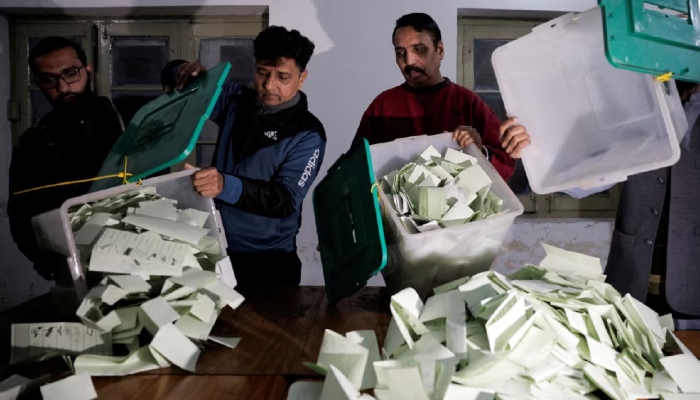
    The Pakistan Muslim League-Nawaz (PML-N) has secured a major victory in the first phase of the Azad Jammu and Kashmir (AJK) elections, winning nine of the 13 seats in the Mirpur division, according to preliminary results. The first phase of polling was held across the Mirpur division on Monday. The election was closely contested, particularly between the PML-N and Pakistan Peoples Party (PPP). However, the PML-N managed to establish a clear lead by winning most of the constituencies. Preliminary election results showed that the PML-N secured nine seats, while the PPP won four constituencies. The PML-N candidates emerged victorious in Dadyal, Khari Sharif, Barnala, Samahni, Bhimber, Nakyal, Sehnsa, Charhoi and Khuiratta. The party’s performance gave it a strong position in the division following an intense election campaign. The PPP, meanwhile, managed to win four constituencies. Its successful candidates secured the key Mirpur seat, two seats in Kotli and another constituency in Chakswari. Several constituencies witnessed closely fought contests. In LA-1 (Mirpur-I), PML-N candidate Azhar Sadiq secured victory after receiving 15,427 votes. His rival, Muhammad Afzal Shahid, received 9,832 votes. Another tight contest was witnessed in LA-5 (Mirpur-I), where PML-N’s Waqar Ahmed Noor defeated PPP candidate Chaudhry Pervaiz Ashraf. Noor secured 29,821 votes, while Ashraf received 29,100 votes. The PML-N candidate won the seat by a narrow margin of 721 votes. In LA-7 (Bhimber-III), PML-N candidate Tariq Farooq secured a more convincing victory. He received 37,613 votes, while former AJK prime minister Chaudhry Anwarul Haq finished second with 25,534 votes. The polling process was not without controversy. Reports of clashes and disturbances emerged from different areas during voting. Both the PML-N and PPP also exchanged allegations of electoral irregularities during the campaign and polling process. The AJK elections are being conducted in three phases due to security considerations. With the first phase now completed in the Mirpur division, attention has shifted towards the remaining constituencies. The second phase is scheduled for August 2. It will cover nine constituencies of the Muzaffarabad division as well as the 12 refugee constituencies. The third and final phase will take place on August 10. Polling will be held in 11 constituencies of the Poonch division.

  • | |

    Punjab approves martyrs’ package for 14 fallen p…

    Lahore: The Punjab government has approved comprehensive martyr compensation packages for the families of 14 police personnel who lost their lives while performing their duties, reaffirming its commitment to supporting the families of fallen law enforcement officials. The decision was taken during a high-level meeting chaired by Punjab Minister for Law Rana Muhammad Iqbal Khan at the Home Department. The meeting was attended by Home Secretary Dr Ahmed Javed Qazi, Additional Inspector General Imran Arshad, Additional Secretary (Police) Kanwar Anwar Ali Khan, DIG Welfare Mehboob Rashid and other senior officials. The minister directed the relevant authorities to ensure that all financial dues, housing benefits and other entitlements are provided to the families of the martyrs without delay. Approval was granted under three different martyr packages based on the circumstances of service and sacrifice. Package-1 was sanctioned for police personnel martyred in encounters with terrorists in Bhakkar and Layyah, including Constables Muhammad Shehbaz, Muhammad Faheem and Muhammad Asad Naseer. Under this package, the families of martyred constables will receive Rs10 million, a five-marla house and other benefits. Package-2 was approved for police officials who embraced martyrdom during duty in Bahawalnagar, Sargodha, Rajanpur, Faisalabad and Gujrat. The beneficiaries include Sub-Inspectors Shahid Parvez and Amir Rizwan, Constables Muhammad Nasir and Mirza Umar Aftab Baig, and Driver Constable Iftikhar Ahmed. Under this package, the families of martyred constables will receive Rs4 million, a five-marla house and additional benefits, while the families of martyred Assistant Sub-Inspectors will receive Rs5 million, a seven-marla house and other incentives. Package-3 was approved for police personnel martyred while on duty in Bahawalnagar, Dera Ghazi Khan, Rahim Yar Khan and Sahiwal. The approved beneficiaries include Sub-Inspector Muhammad Zaman Zia, Assistant Sub-Inspector Muhammad Bashir, Constables Muhammad Bismillah, Muhammad Ramzan, Tahir-ul-Zaman Siddiqui and Muhammad Waris. Under this package, the families of martyred constables will receive Rs3.5 million and other benefits, while the families of martyred Assistant Sub-Inspectors and Sub-Inspectors will receive Rs4 million along with additional concessions. Addressing the meeting, Rana Muhammad Iqbal Khan said the welfare and protection of the families of martyrs remains one of the Punjab government’s highest priorities. He pledged that no martyr’s family would be deprived of its rightful benefits, describing the fallen officers as the pride of the nation and the country’s true heroes who laid down their lives in the line of duty. The minister also vowed that terrorists responsible for killing police personnel would be brought to justice in accordance with the law. The meeting concluded with prayers for the elevation of the ranks of the martyrs.

  • | |

    Poor internet access threatens girls’ education …

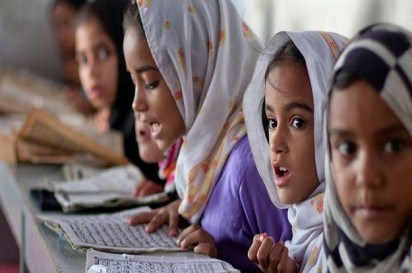
    PESHAWAR: Poor internet connectivity is creating serious problems for girls pursuing education in the merged districts of Khyber-Pakhtunkhwa. Students in remote areas often struggle to attend online classes. They also face difficulties downloading study material and submitting assignments. For 16-year-old Khadija Bibi from Kurram district, finding an internet signal has become part of her daily life. During the summer holidays, she often leaves her home and climbs a nearby hill. She carries her mobile phone with her. She stands on the rocky slope and searches for a stronger signal. She uses the limited connection to download lecture notes and complete academic tasks. She also tries to attend online classes from the hill. However, the weak network frequently disconnects. This causes her to miss lessons and submit assignments late. Khadija is a BS Computer Science student at Benazir Women University Peshawar. She said unreliable internet had become one of the biggest challenges in her education. She said students in remote areas were being left behind as education increasingly depended on digital technology. The problem is not limited to Kurram. Thousands of girls across the merged districts face similar difficulties. The region already has several major education challenges. Poverty remains a serious obstacle. Insecurity has also affected access to education. Many areas also lack proper schools and other educational facilities. The digital divide has added another challenge. Several schools in the merged districts either do not have computer laboratories or have laboratories without working computers. Some also lack internet connections. This prevents students from gaining basic computer skills. It also makes online education difficult. Official data highlights the wider education crisis in the region. Benazir Income Support Programme data shows that 66 per cent of children in North Waziristan are out of school. The rate stands at 63 per cent in Bajaur. It is 61 per cent in South Waziristan. Mohmand and Khyber each record an out-of-school rate of 51 per cent. Kurram and Orakzai each have a rate of 47 per cent. Girls face additional difficulties because of limited access to technology. The Khyber-Pakhtunkhwa Women Empowerment Policy 2026-2030 highlights the scale of the digital divide. According to the policy, only 11 per cent of women in the merged districts have access to the internet. The female literacy rate is also extremely low. It stands at only 17 per cent. Education and digital inclusion advocates say poor infrastructure is a major reason for the situation. Weak mobile networks make internet access unreliable. Many families also cannot afford smartphones or regular internet packages. Some girls have to borrow phones from family members. This makes it difficult for them to attend online classes regularly. Access to technology is also affected by social restrictions. In some communities, families remain concerned about girls using mobile phones and the internet. Concerns about online safety and social pressure often result in restrictions. Cultural norms can also limit girls’ access to digital technology. Experts say improving internet coverage alone will not solve the problem. Girls also need greater freedom to travel to schools, universities and training centres. Better transport facilities could help students reach educational institutions more easily. It could also improve access to vocational training and employment opportunities. Experts have urged the provincial government and telecommunications authorities to give greater attention to the merged districts. They say residents should receive reliable internet services similar to those available in settled areas. Improved digital infrastructure could transform educational opportunities for girls in remote communities. Reliable internet would allow students to attend online classes without travelling long distances. They could access digital libraries and educational resources. They could also develop computer skills and participate in online training programmes. For students like Khadija, internet access is more than a technological facility. It is directly linked to education and future opportunities. Without reliable connectivity, many talented girls may continue to struggle despite their willingness to study. Addressing the digital divide therefore requires investment in telecommunications infrastructure, schools, digital devices and affordable internet services. It also requires efforts to remove social barriers that prevent girls from using technology.

  • | | |

    PM to decide fate of refinery upgrade policy

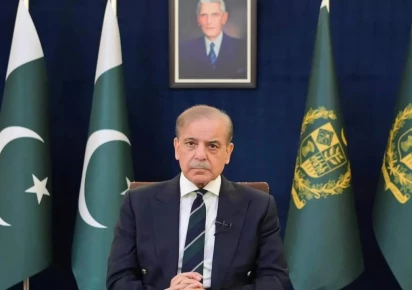
    Prime Minister Shehbaz Sharif is expected to address key issues facing Pakistan’s refinery sector today. The Cabinet Committee on Energy (CCoE) will review proposed changes to the Brownfield Refinery Policy.The policy was approved in 2023. It aims to encourage investment in the modernisation of existing refineries. The proposed changes could affect billions of dollars in planned refinery investments.The main dispute is over deemed duty protection. The government has proposed reducing it from 7.5 per cent to 5 per cent. Refinery companies have opposed the proposed cut. They say it could weaken the financial benefits offered under the policy.The industry also disputes the government’s position on delays in signing Upgrade Agreements. Officials say refineries failed to sign the agreements within the required period.Refinery representatives reject the claim. They say they had already accepted the draft agreements in 2024. According to industry officials, the companies were waiting for the government to arrange the formal signing process.They say the industry repeatedly contacted the Petroleum Division and other authorities to complete the process. The companies argue that the delay was caused by administrative issues on the government side.They therefore believe the incentives should not be reduced because of delays beyond their control. Deemed duty protection is a key part of the refinery upgrade package.The incentive is designed to encourage companies to invest in modernisation. The planned upgrades are aimed at increasing production of Euro-V compliant fuels.They are also expected to reduce furnace oil production. The projects could help improve Pakistan’s overall fuel mix.The refining sector has also faced additional financial pressure from changes in the tax system. The Finance Act 2024 moved several petroleum products from the zero-rated sales tax regime to the exempt category.The change affected the ability of refineries to adjust input sales tax. It also increased their unrecoverable tax costs.The Petroleum Division has acknowledged that the tax changes affected the financial viability of refinery upgrade projects. Officials said the prime minister is expected to review the major issues that have delayed the implementation of the policy since August 2023.The Petroleum Division has proposed limited amendments to make the policy operational. It has also recommended a committee to finalise the Upgrade Agreement.The committee would include senior officials from the Petroleum Division, Law Division and OGRA. A representative of the Special Investment Facilitation Council would also be included.OGRA, however, has reservations about signing the agreements. OGRA Chairman Masroor Khan has argued that the regulator should focus on its regulatory role.He believes OGRA should not become a party to commercial agreements. The refinery industry is now hoping for a decision that removes the remaining hurdles.Companies want the government to maintain the existing incentive structure. They say policy consistency is important for attracting investment.They also warn that changes to agreed incentives could discourage investors. A clear decision by the CCoE could help restart delayed refinery upgrade projects.The decision could also influence Pakistan’s fuel supply and long-term energy security.

  • | | |

    Wheat imports spark farmer anger

    The federal government’s decision to import one million tonnes of wheat has sparked strong criticism from farmers and agricultural experts. The move has raised concerns about Pakistan’s food policy and the country’s continued dependence on imported grain despite being a major wheat producer. Pakistan produces around 31 million tonnes of wheat annually. The crop covers nearly 40 per cent of the country’s cultivated area and remains a major part of the daily diet of millions of people. Punjab is the country’s largest wheat-producing province and contributes almost three-fourths of national production. Farmers and experts say the issue is not simply about wheat availability. They believe repeated imports are linked to weak planning, inaccurate crop estimates, poor storage facilities, post-harvest losses and inconsistent government policies. Population growth and changing weather patterns have also increased pressure on the wheat supply chain. Farmer organisations have strongly opposed the import decision. They say local growers are still struggling to sell their recently harvested wheat. Many farmers claim they are receiving prices below their production costs after spending heavily on seeds, fertiliser, pesticides, diesel and electricity. Growers fear that imported wheat could further reduce local prices. They argue that the government should first ensure that locally produced wheat is purchased at fair rates before turning to international markets. The controversy has also highlighted changes in Pakistan’s wheat procurement system. Under wider economic reforms linked to the International Monetary Fund programme, successive governments have reduced state intervention in agricultural markets. The aim is to limit government losses and encourage greater private-sector participation. The IMF has not directly ordered Pakistan to stop purchasing wheat from farmers. However, governments have moved away from the traditional procurement and support price system. Provincial authorities have also reduced wheat purchases, leaving farmers increasingly dependent on private traders. Farmers say the transition has not been properly managed. They argue that private buyers now have greater influence over prices because of weak market regulation. This has forced some growers to sell their wheat below production costs.

  • | | |

    UAE visa restrictions threaten Pakistan’s Gulfoo…

    Pakistani business leaders have raised concerns over reported difficulties in obtaining UAE visas, warning that the situation is disrupting trade, business travel and export activities. The restrictions are causing uncertainty among Pakistani exporters and traders who regularly travel to the UAE for commercial meetings, exhibitions and other business activities. Ismail Suttar, Founder and Chairman of the Salt Manufacturers Association of Pakistan, said Pakistani citizens were facing serious difficulties in obtaining UAE visas. He said the reasons for the reported restrictions had not been clearly communicated. Business representatives said the issue was particularly worrying for companies with established operations in Dubai. Several Pakistani businessmen have offices and long-standing commercial interests in the UAE. Some business owners have also reportedly faced difficulties travelling to the UAE to visit their families. Representatives of the business community said repeated visa rejections had created considerable uncertainty. A member of the Karachi Chamber of Commerce and Industry said the matter had been formally raised with UAE authorities. A letter was sent to the UAE consul general on June 11, followed by another communication on July 7. The business community says the visa situation could also affect Pakistan’s participation in major international exhibitions. Gulfood, one of the major food and beverage exhibitions held in Dubai, is a particular concern. Pakistani food companies are preparing for the upcoming event, but exporters fear that their sales teams may not receive visas. Business leaders say participation in such exhibitions is important for finding international buyers and expanding exports. Without visas, company representatives cannot display products, hold meetings or negotiate new deals. They warned that prolonged travel restrictions could affect Pakistan’s efforts to increase exports and strengthen commercial ties with international markets. Former Federation of Pakistan Chambers of Commerce and Industry Secretary General Shahid Anwar said visa conditions for Pakistanis differed across Gulf countries. He noted that some Gulf states had introduced measures that made travel easier for Pakistani citizens. Saudi Arabia has included Pakistan in a package-based tourist visa programme, while Kuwait has restored several visa categories for Pakistani nationals. According to Anwar, these developments indicate improving engagement in some bilateral relationships. The situation with the UAE, however, remains unclear. UAE authorities have maintained that there is no general visa ban on Pakistanis and that applications across different categories continue to be processed. Business representatives, however, say their experiences do not always match the official position. Rawalpindi Chamber of Commerce and Industry President Usman Shaukat said several chamber members with established businesses in the UAE were facing visa problems. Some businessmen have long-standing commercial links and property interests in the UAE. Despite this, they have reportedly struggled to obtain visas. The difficulties have resulted in cancelled meetings and missed international exhibitions, according to business representatives. They said the impact was being felt not only in Rawalpindi but also among business communities in Karachi, Lahore and other major commercial centres. Travel industry representatives have also reported a significant decline in movement between Pakistan and the UAE. Aviation consultant Wahid Mukhtar said travel to the UAE had been badly affected by visa difficulties. He said family and visit visa applications were also facing high rejection rates. He added that labour visa holders continued to travel, while holidaymakers were increasingly choosing destinations such as Azerbaijan and Tashkent. Qatar has also changed its visa arrangements for Pakistani travellers, according to travel industry representatives. The reported restrictions are also affecting Pakistanis travelling for medical and health-related activities. Masood Ahmed said some applicants below the age of 40 were facing difficulties in obtaining Dubai visas, even when they had supporting letters. He said older applicants were experiencing comparatively fewer problems. Some younger applicants had previously been approved when travelling with family during major health exhibitions. Business leaders have urged the Pakistani government to intervene diplomatically. They want Islamabad to engage with UAE authorities and seek clarity on the visa situation.

  • |

    Oil prices slide as US-Iran tensions ease

    Global oil prices declined by about 1% on Tuesday as investors assessed the possibility of a diplomatic breakthrough between the United States and Iran. Brent crude futures fell by 54 cents, or 0.6%, to $87.82 a barrel. US West Texas Intermediate crude dropped 66 cents, or 0.8%, to $81.95 a barrel. Both benchmarks had fallen by around 1% earlier in the session. They reached their lowest levels in more than a week. The decline came after US President Donald Trump said Washington was engaged in positive talks with Iran. He also indicated that a settlement could be possible. However, Trump warned that US strikes could resume if negotiations fail. Iran has also indicated that it would respond to further attacks. The possibility of diplomatic progress has reduced some concerns about disruptions to oil supplies from the Middle East. Analysts said the market remained highly uncertain. Any breakdown in negotiations could quickly push oil prices higher. Concerns about attacks by Yemen-based Houthi fighters have also influenced the market. Officials in Yemen have warned that the Houthis could seek to disrupt shipping through the Bab el-Mandeb Strait. The waterway is an important route for international energy shipments. Market analysts remain uncertain about whether the Houthis have the ability to impose a complete blockade. However, shipping activity in the Red Sea and nearby waters has already declined significantly. The Strait of Hormuz is another major concern for energy markets. It is a key route for global oil shipments. Recent data showed that oil and refined product exports through the strait had dropped sharply. Net exports averaged around 2.9 million barrels per day in the week ending July 24. The figure was nearly 5.9 million barrels per day during the previous week. The lower shipping volumes have added to concerns about global energy supplies. However, analysts said weaker demand was also preventing oil prices from rising further. Demand in Asia has been particularly affected. Slower consumption could reduce pressure on the global oil market. Investors are also watching US energy inventory data. A preliminary market survey indicated that US crude oil stocks probably declined last week. Gasoline inventories were also expected to fall. Distillate stocks, which include diesel and heating oil, were estimated to have increased. The market is now closely following developments in US-Iran talks. A successful diplomatic agreement could reduce fears about supply disruptions and support the normal flow of energy shipments. A breakdown in negotiations, however, could revive concerns over attacks and shipping disruptions.