تازہ ترین

  • | |

    Evergrande founder handed life sentence as court s…

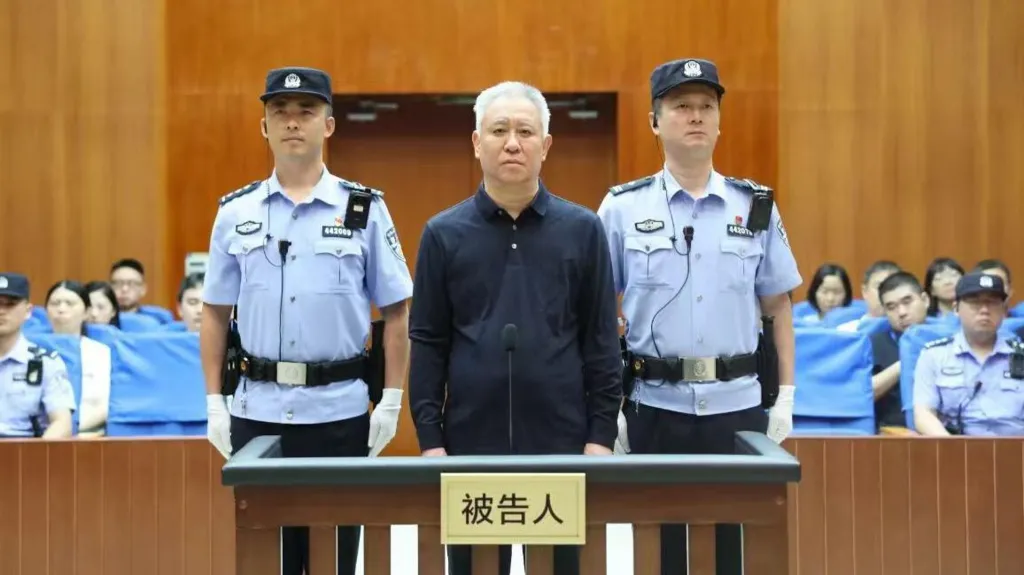
    The founder of Evergrande, the Chinese property giant whose collapse triggered a nationwide housing market crisis, has been sentenced to life in prison and stripped of all personal property. Hui Ka Yan pleaded guilty in April to multiple charges, including embezzling assets and corporate bribery. The Shenzhen Intermediate People’s Court also imposed fines totaling 15.82 billion yuan, roughly £1.73 billion or $2.35 billion, on his former companies over a range of offenses that included falsifying financial records and concealing debt. The sentencing marks a major turning point in the fallout from Evergrande’s collapse, which shook China’s property sector and inflicted heavy losses on investors and domestic banks alike. The court said Hui and his businesses seriously disrupted the Chinese property market, causing significant economic damage. Other former Evergrande executives, including Hui’s two sons Xu Zhijian and Xu Tenghe, received jail terms ranging from 22 months to 18 years, according to Chinese state media. Once ranked as Asia’s richest man, Hui has watched his fortune and influence collapse alongside his company. Also known as Xu Jiayin, he grew up in rural China raised by his grandmother before entering the property industry and founding Evergrande in 1996. He guided the company through a period of rapid expansion fueled by heavy borrowing, eventually building Evergrande into China’s largest real estate developer with a stock market valuation exceeding $50 billion, roughly £36.7 billion. At his peak, Hui held the distinction of being Asia’s wealthiest individual. The company suffered a major setback when Beijing introduced new measures in 2020 aimed at curbing debt across the property sector. As Evergrande struggled to keep up with interest payments, it began selling properties at steep discounts to stay afloat before ultimately collapsing in 2021. Court proceedings in April revealed that the company had taken in millions of dollars in pre sale funds from prospective homebuyers that were never used for the construction they were intended to finance. Instead, that money was redirected toward new development projects, leaving hundreds of housing projects unfinished. In March 2024, Hui was separately fined $6.5 million and banned for life from China’s capital markets after regulators found the company had overstated its revenue by $78 billion. Evergrande’s stock market value shrank by 99 percent before the company’s shares were delisted from the Hong Kong exchange in August 2025, ending more than fifteen years of trading. The company’s implosion is widely seen as a key trigger for the broader downturn in China’s property market that continues to weigh on the country’s economy. At its peak, Evergrande stood as the largest firm in an industry that accounted for roughly a third of China’s gross domestic product, serving as both a major driver of economic growth and a critical revenue source for local governments. The sector’s ongoing troubles have continued to pressure the world’s second largest economy, with several other major developers facing their own financial distress in the years since Evergrande’s fall.
  • | |

    Bessent tells allies to pick a side as US ramps up…

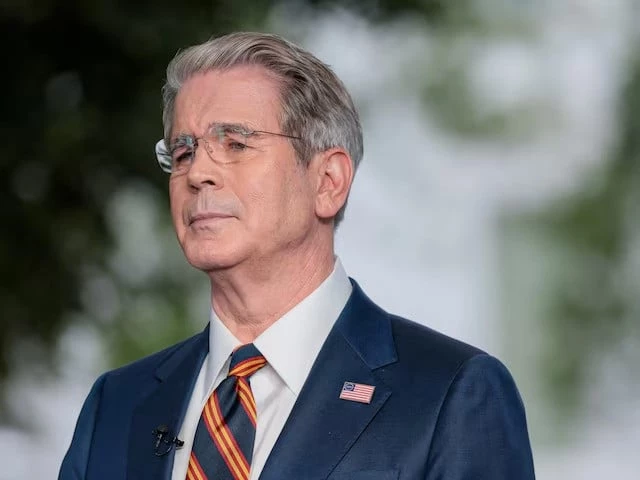
    US Treasury Secretary Scott Bessent has told Washington’s allies they must choose between backing or opposing the United States’ push to economically isolate Iran, as President Donald Trump moves to intensify pressure on Tehran. Bessent told a US broadcaster that the campaign would amount to the largest coordinated economic isolation effort in history, framing the choice facing allied nations as a binary one. Asked whether Washington intends to pressure China into joining the effort, Bessent said certain conversations are best conducted privately, while urging Beijing to align itself with the campaign. He said the administration’s plan to sharply escalate sanctions and economic pressure on Iran is ultimately designed to bring down the Iranian government, predicting the strategy would work and lead to the regime’s collapse. Bessent added that expanded economic pressure could actually lower the odds of the United States resuming large scale military action against Iran, arguing that a maximum pressure economic approach makes a return to major combat operations less likely. He said he plans to hold a press conference Monday to detail the administration’s next steps regarding Iran. Iran’s foreign ministry condemned the latest round of US sanctions, calling them a violation of international law and an attempt to undermine the country’s sovereignty. In a statement, the ministry said Washington had unveiled comprehensive economic sanctions despite previously claiming its measures targeted the government rather than ordinary Iranians. Tehran argued there is no legal or economic justification for the sanctions and described them as part of a broader US policy that threatens the international system and undermines rules governing relations between states. The ministry said the sanctions explicitly target Iranian citizens and institutions and represent a continuation of hostile American policy, adding that economic pressure functions as the flip side of military aggression. Iranian officials called the new measures a repeat of a strategy that has already failed and said the country would not bow to the pressure, vowing to defend its sovereignty and respond to what it characterized as hostile US actions. Separately, Egypt and Qatar emphasized the need for continued coordination toward a final, sustainable agreement to end the broader Middle East war while addressing the concerns of Gulf states, according to a statement from Qatar’s foreign ministry. The two countries discussed regional developments and diplomatic efforts aimed at reducing tensions and strengthening stability, and both underscored the importance of reopening the Strait of Hormuz and protecting the security and freedom of maritime navigation, calling uninterrupted trade through the waterway essential to both regional and global economic stability. Qatari Foreign Minister Sheikh Mohammed bin Abdulrahman bin Jassim Al Thani said traffic through the Strait of Hormuz needs to return to pre war conditions, adding that no party to the conflict should attempt to pressure or blackmail the other. Speaking at a press conference following talks in El Alamein, Egypt, he said the war’s consequences have been severe both within the Gulf region and beyond, and called for a return to how things stood before the conflict began, condemning any threats or obstacles standing in the way. Iran’s Revolutionary Guards warned separately that Saudi Arabia will be unable to contain Yemen’s Houthi movement as the group escalates attacks on the kingdom. A Guards spokesman said Saudi Arabia cannot stay safe from Houthi attacks, arguing that recent days have shown that the more the kingdom strikes, the more it gets hit in return. Iranian Foreign Minister Abbas Araghchi dismissed Trump’s economic threats as an attempt to distract American public attention from domestic financial troubles, including record debt levels and rising interest costs. He said Washington’s continued reliance on what he called failed policies would only produce further failures and further alienate the Iranian public, describing US economic pressure as a threat to the global economy and to national sovereignty more broadly. Deputy Foreign Minister Kazem Gharibabadi added that the US has shifted to what he called an economic war after failing to achieve results militarily, arguing that Washington’s need to compensate for miscalculations is driving it toward a bigger failure. Iranian Parliament Speaker Mohammad Bagher Ghalibaf, during a visit to Baghdad, met with Faiq Zaidan, president of Iraq’s Supreme Judicial Council, and blamed the United States for recent regional conflicts and disruptions to Gulf energy routes, while highlighting opportunities for deeper cooperation between Iran and Iraq. Separately, Iranian state media reported that authorities executed a man identified as Qaem Hosseini, a foreign national, over charges tied to his alleged role in nationwide protests in January, including accusations that he participated in events that led to the deaths of security force members. Trump underscored the stakes of the broader campaign in a social media post Wednesday evening, warning that any country allowing its financial institutions, businesses, airports or government entities to provide Iran with any kind of lifeline would face tremendous economic consequences. He promised what he called economic warfare and isolation on an unprecedented scale, though he offered few specific details. The war between the US and Iran, now in its sixth month, has killed thousands of people and drawn in countries across the Gulf, rattling global markets as Iran demonstrated its ability to disrupt shipping through the Strait of Hormuz, a waterway that carried roughly a fifth of the world’s traded oil before the conflict began. Two previous ceasefire agreements between Washington and Tehran, announced in April and June, both collapsed shortly after being reached, even as Israel has largely pulled back from direct fighting with Iran to focus its attacks on civilian infrastructure in Lebanon.

  • | |

    FBR imposes immediate advance sales tax on Gujranw…

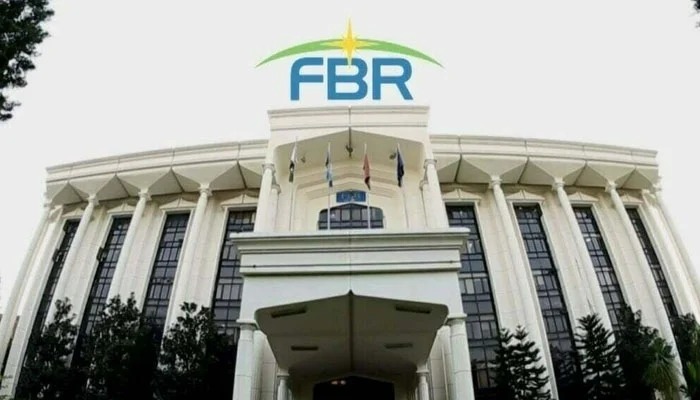
    The Federal Board of Revenue (FBR) has imposed an immediate advance sales tax on the steel mill sector in Gujranwala, directing electricity distribution companies to begin collecting the tax through power bills. According to the FBR, eligible steel mills will have to pay an additional Rs30 per unit in advance sales tax through their electricity bills. The tax collection has been ordered to begin immediately. The FBR issued a written directive to electricity distribution companies, instructing them to recover the applicable amount from steel mills falling within the scope of the new advance tax arrangement. The revenue authority has also released a list of steel mills that are subject to the advance sales tax. The move is expected to affect the operating costs of businesses included in the notified category. However, the FBR has clarified that steel mills importing a significant proportion of their raw materials will be exempt from the advance sales tax. According to the notification, mills that import 70% of their raw material will not fall under the new tax requirement. Electricity distribution companies have been directed to start collecting the advance tax immediately and submit a compliance report to the FBR by August 23. The decision represents another significant tax measure affecting Pakistan’s industrial sector. Collecting the tax through electricity bills provides the authorities with a direct mechanism for recovering the amount from eligible industrial units. For steel manufacturers, however, the additional Rs30 per unit could increase electricity-related operating expenses, particularly for mills with high energy consumption. The impact will depend on individual production levels, electricity usage and whether a particular mill qualifies for the exemption. The steel industry is an important component of Pakistan’s manufacturing sector, supplying products for construction, infrastructure and other industrial activities. Changes in taxation and energy costs can therefore have wider implications for production costs and market prices. The latest FBR directive also places responsibility on electricity distribution companies to ensure timely collection and reporting. Mills covered by the notification will need to account for the additional charge in their electricity bills as the new collection mechanism takes effect. The government’s decision comes as the FBR continues efforts to strengthen tax collection and broaden revenue measures. The implementation deadline of August 23 means the authorities are expected to monitor compliance closely over the coming days.

  • | | |

    PM Shehbaz’s dialogue offer remains open for PTI

    ISLAMABAD: Parliamentary Affairs Minister Tariq Fazal Chaudhry has urged Pakistan Tehreek-e-Insaf (PTI) to engage in dialogue with the government, saying Prime Minister Shehbaz Sharif’s invitation for talks remains on the table. Speaking in the Senate, Chaudhry said the government was ready to hold discussions with the opposition if PTI was serious about negotiations. He said opposition leaders could meet the prime minister or raise the matter in parliament. He also suggested that the opposition leader in the Senate could hold discussions with PML-N Senator Rana Sanaullah. Later, Chaudhry, Sanaullah and Law Minister Azam Nazeer Tarar met Senate Opposition Leader Allama Raja Nasir Abbas and National Assembly Opposition Leader Mahmood Khan Achakzai at Parliament House. Sanaullah said the meeting was linked to a letter written by Achakzai to Prime Minister Shehbaz. He said the government representatives had met the opposition leaders to discuss the prime minister’s response. The government and PTI have remained politically divided since the 2024 general elections. Disputes between the two sides have included demands for investigations into political protests, as well as issues concerning PTI founder Imran Khan’s health and continued detention. Meanwhile, the Pakistan Peoples Party (PPP) has also agreed to intensify political contacts with opposition parties. A senior PPP delegation is scheduled to meet Achakzai and Allama Nasir Abbas at the Opposition Leader’s Chamber in Parliament House on Tuesday. The meeting is expected to focus on parliamentary affairs and strengthening political engagement between the government-aligned PPP and opposition leadership. PPP leaders Sherry Rehman, Raja Pervez Ashraf, Saleem Mandviwalla and Naveed Qamar are expected to attend. Naveed Qamar said the talks would focus on strengthening parliament, improving coordination and reinforcing the role of parliamentary committees.

  • | |

    Pakistan takes charge of UN disarmament conference

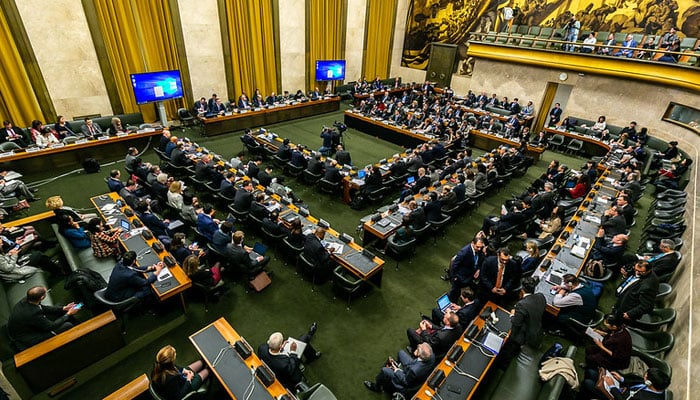
    Pakistan has assumed the presidency of the United Nations Conference on Disarmament (CD), taking a leading role in international discussions on arms control and global security. Additional Secretary for Arms Control and Disarmament Tahir Hussain Andrabi is representing Pakistan and will preside over the conference’s meetings during the presidency. Pakistan holds the final presidency of the CD’s 2026 session. It will therefore oversee the conclusion of the conference’s proceedings for the year and guide work on its annual report and the related resolution for the UN General Assembly’s First Committee. As part of the opening activities, Ambassador Andrabi chaired a meeting with former presidents of the conference for the 2026 session. He also held consultations with representatives of different regional groups. The Conference on Disarmament, headquartered at the United Nations Office in Geneva, is the principal multilateral forum for negotiating international disarmament and arms-control agreements. The forum has 65 member states, including countries that possess nuclear weapons. Its discussions cover some of the most sensitive issues affecting international peace and security. Key areas on its agenda include preventing a nuclear arms race, reducing the risk of nuclear war and stopping the weaponisation of outer space. The conference and its predecessor bodies have played a significant role in developing major international security agreements. These include the Biological Weapons Convention, Chemical Weapons Convention and Comprehensive Nuclear-Test-Ban Treaty. Pakistan’s presidency comes at a time when nuclear risks, arms competition and emerging security challenges remain major concerns for the international community. The Foreign Office said Pakistan’s leadership of the conference reflects international confidence in its diplomatic role and its continued engagement in multilateral arms-control efforts.

  • | |

    JI expands nationwide protest over fuel levy and i…

    ISLAMABAD: Jamaat-e-Islami (JI) held protest sit-ins in several major cities on Monday for the second consecutive day, intensifying its campaign against high petroleum levies, rising inflation and increased utility bills. The protests were organised in Karachi, Lahore, Peshawar and other cities across the country. The party said its demonstrations would continue until the government addresses its demands. Addressing a sit-in in Lahore, JI Emir Hafiz Naeemur Rehman described the protests as the beginning of a broader nationwide movement. He said the party had prepared a strategy to expand the campaign and expressed satisfaction with the participation in different parts of the country. JI leaders criticised the government over the growing financial burden on ordinary citizens. They argued that higher fuel-related charges have contributed to increased prices of essential goods and made household expenses more difficult to manage. In Karachi, a JI demonstration was held outside the Governor House. Party leaders accused the government of relying excessively on petroleum levies and taxes to generate revenue. JI Karachi women wing leader Javed Fahim called on the government either to withdraw what she described as unnecessary financial burdens or face stronger public resistance. She warned that the party could expand its sit-ins to major roads across Karachi if its demands were not accepted. JI Karachi Emir Monem Zafar Khan said the party’s demands included a reduction in fuel prices and a forensic audit of independent power producers (IPPs). He said controlling inflation should be among the government’s top priorities and argued that ordinary citizens were bearing the impact of rising fuel costs, electricity bills and prices of daily-use commodities. The protests come after the government recently increased the petroleum levy on diesel by Rs1 per litre, taking it to Rs77.28. The levy on petrol remained at Rs80 per litre, while the levy on kerosene was unchanged at Rs20.36 per litre. JI leaders said they would continue mobilising supporters across the country and would consider further expanding the protest movement if their demands were not met.

  • | |

    Law minister explains rules on Imran Khan’s pris…

    ISLAMABAD: Federal Law Minister Senator Azam Nazeer Tarar has defended the government’s position on meetings with Pakistan Tehreek-e-Insaf (PTI) founder Imran Khan in prison. He said matters that are pending before the courts should generally not be debated in parliament. However, he noted that the Senate was discussing such issues. Tarar made the remarks during a Senate session. Lawmakers were debating Imran Khan’s health and concerns over restrictions on meetings with him. The minister said cases related to the May 9 incidents and other cases involving Imran Khan were before the courts. He said the PTI founder and other individuals had filed appeals against decisions in their cases. According to Tarar, several legal matters remain pending before different judicial forums. He said the delay in deciding appeals and cases was a broader problem within the judicial system. The law minister pointed to delays in National Accountability Bureau (NAB) cases. He said some NAB appeals had remained undecided for as long as six years. He said Imran Khan’s petitions and applications were also pending before the relevant courts. Therefore, he argued, those matters should be addressed through the judicial process. Tarar also referred to the cases involving former prime minister Nawaz Sharif. He said Sharif had been convicted by the courts and later challenged the decisions through appeals. He added that relief was subsequently granted to Sharif by the judiciary itself. The minister said this showed that legal disputes should be settled through the courts. The Senate debate also focused on Imran Khan’s access to visitors in prison. Tarar said prison authorities had to follow the jail manual. He said the rules applied to all prisoners and could not be changed for one individual. He argued that if special permission was given to one prisoner, similar requests from other prisoners would also have to be considered. The minister said the government wanted a system in which everyone was treated equally before the law. He referred to the principle that the powerful and ordinary citizens should stand on the same footing. His remarks came after opposition lawmakers demanded that the Senate discuss Imran Khan’s health and the restrictions on meetings with him. Senator Raja Nasir Abbas had specifically called for a discussion on the PTI founder’s health. The issue has remained a major point of political disagreement between the government and PTI. The opposition has repeatedly raised concerns about Imran Khan’s health and access to family members, lawyers and political leaders. Tarar maintained that the government’s position was based on existing legal and prison procedures. He said pending court cases should not be settled through political debate.

  • | |

    ‘Fear and censorship cannot silence the public?…

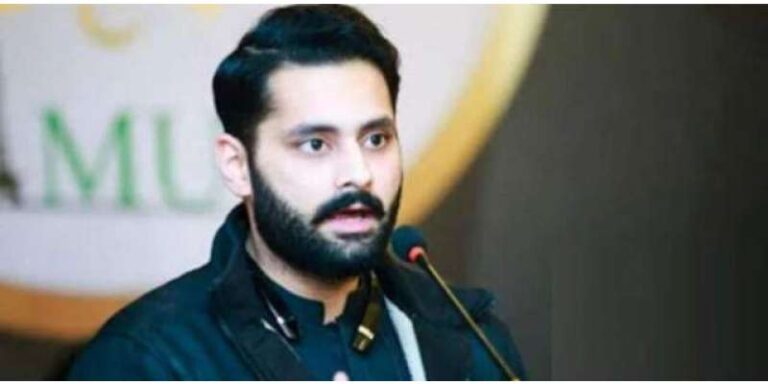
    Lawyer and social activist Jibran Nasir has criticised the country’s political and economic situation, alleging that pressure, censorship and coercive measures have failed to change public opinion about PTI founder Imran Khan. Speaking to anchorperson Ameer Abbas, Nasir said authorities had been unable to alter public sentiment toward Imran Khan despite what he described as years of pressure and attempts to control political discourse. He argued that if public opinion had genuinely changed, millions of people would not have voted for Imran Khan and his political movement in the February 8 general elections. Nasir questioned how the authorities could claim to change broader public thinking about the economy, Constitution and rule of law when they had not been able to change people’s views about a single political leader. He also criticised what he described as restrictions on political expression and media freedom. Nasir alleged that force, state pressure, censorship and arrests were being used to control political developments. According to Nasir, suppressing criticism does not resolve underlying public grievances. He said people who speak about alleged injustices are sometimes portrayed as creating unrest rather than being allowed to raise their concerns. He warned that continued reliance on pressure could increase frustration among citizens instead of resolving political differences. Nasir further claimed that people were now more aware of political developments and could not easily be persuaded through fear or restrictions. He said arrests, cases and harsh measures had not succeeded in changing the position of a significant section of the public. The lawyer maintained that political issues could not be permanently controlled through force. He called for greater space for political expression and a process through which public grievances could be addressed. His comments come amid continued political tensions between the government and PTI. The party has repeatedly raised concerns over the treatment of its leadership, legal cases against its members and restrictions on political activities.

  • | | |

    Gold prices rise further in Pakistan as global rat…

      KARACHI: Gold prices in Pakistan continued their upward trend on Monday, with the price of gold per tola increasing by Rs2,000, according to the All Pakistan Sarafa Gems and Jewellers Association. Following the latest increase, the price of one tola of gold reached Rs461,936 in the domestic market. The latest rise comes amid an increase in international gold prices, which have also strengthened in the global market. According to the association, the price of 10 grams of gold increased by Rs1,715, bringing the rate to Rs396,035. The continued rise in gold prices is likely to keep the precious metal attractive for investors and buyers who traditionally consider gold a store of value during periods of economic uncertainty. In the international market, gold prices also recorded an increase. The price of gold rose by $20 per ounce to reach $4,395 per ounce. The latest movement in domestic gold prices reflects the influence of international bullion rates, while local market conditions and currency fluctuations can also affect the price of gold in Pakistan. Gold remains one of the most widely followed commodities in the country, particularly among investors, jewellery buyers and households that use the precious metal as a form of savings. Changes in gold prices can therefore have a direct impact on consumers, particularly those planning to purchase jewellery for weddings and other important occasions. The increase of Rs2,000 per tola means that buyers will now have to pay more for the same quantity of gold compared with the previous rate. Similarly, the rise in the 10-gram price indicates continued upward pressure on the domestic bullion market. The international increase of $20 per ounce has also contributed to the positive movement in local prices. Global gold rates are closely watched by Pakistani traders because changes in international bullion prices can influence domestic market rates. Gold prices around the world are affected by several factors, including investor demand, inflation expectations, currency movements, interest rates, geopolitical developments and uncertainty in global financial markets. During periods of economic or political instability, investors often turn toward gold because it is traditionally regarded as a relatively safe asset. For Pakistani consumers, movements in gold prices can be particularly significant because jewellery represents an important form of household wealth and savings. A sustained increase in prices can make gold purchases more expensive, while existing gold holders may benefit from higher market valuations. Market participants are likely to continue monitoring international bullion prices as well as developments in the domestic currency market to determine the direction of gold prices in Pakistan in the coming days. The latest figures show that gold continues to trade at historically elevated levels in both domestic and international markets. With the international price now standing at $4,395 per ounce, any further movement in global rates could have an impact on prices in Pakistan. For now, the domestic market has recorded another increase, with one tola of gold priced at Rs461,936 and 10 grams at Rs396,035. Investors, jewellery traders and consumers will be closely watching the market for further changes, particularly as fluctuations in international gold prices and currency rates continue to influence the local bullion market.

  • | | |

    KP makes registration mandatory for street vendors

    PESHAWAR: The Khyber Pakhtunkhwa Assembly has passed the Street Vendors Protection Bill 2026, making registration and vending certificates mandatory for people operating carts and roadside stalls across the province. The new law is expected to provide legal protection to more than 140,000 street vendors for the first time. Under the legislation, individuals aged 14 years and above will be eligible to register as street vendors. All vendors will be required to complete registration and obtain a valid vending certificate. Registered vendors will receive a modern digital vending certificate containing a QR code. The certificate is intended to formally recognise vendors and provide them with legal protection while carrying out their businesses. The law provides protection against unjustified eviction and harassment. Government employees found harassing street vendors could face strict departmental action. The legislation also introduces penalties for members of the public or shopkeepers who harass vendors. A person found guilty could face a fine of up to Rs20,000 or imprisonment for up to one month. Vendors will also have the right to appeal if their vending certificates are suspended or cancelled. The law prohibits vendors from selling or transferring their vending certificates to another person. Anyone violating this provision could face a fine of up to Rs3,000. The legislation also highlights the economic contribution of street vendors to the province. According to the bill, vendors collectively generate more than Rs380 billion in economic activity every year. The informal vending sector is estimated to contribute around Rs130 billion annually to the national economy. The government expects that better regulation and management of the sector could generate an additional Rs2.5 billion to Rs5 billion in annual revenue. The new legislation aims to bring the informal vending sector under a formal regulatory framework while providing vendors with legal recognition and protection.