تازہ ترین

  • | |

    Parliament approves sweeping defence command chang…

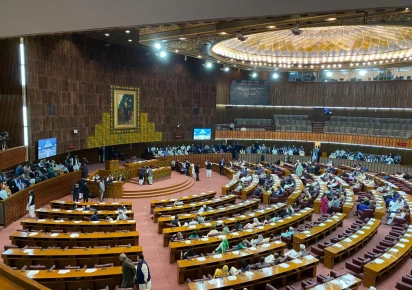
    Pakistan’s Parliament has approved legislation aimed at establishing a new legal framework for the country’s military command structure. The National Assembly and Senate passed the Defence Forces Act 2026 and amendments to the National Command Authority Act 2010 on Thursday. The legislation was approved despite strong opposition from opposition lawmakers, who objected to the speed at which the bills were brought before the Houses. Prime Minister Shehbaz Sharif attended the National Assembly session. The opposition later boycotted the voting process and walked out of the chamber in protest. The new Defence Forces Act provides a legal structure for the Defence Forces Headquarters. The headquarters will serve as a central institution for matters concerning national security, defence policy and coordination among the armed forces. Under the new framework, the Chief of Defence Forces will exercise operational command and control over the armed forces. The CDF will remain accountable to the federal government for matters related to command and control. The legislation also gives the CDF powers to improve coordination and integration among the Army, Navy and Air Force. The office will oversee joint operations, coordination and other matters involving the armed forces. The CDF will also have authority under relevant laws regarding the retirement, release and dismissal of military personnel, subject to constitutional provisions. The office will also be able to approve or reject resignations and retain personnel in service where permitted under the law. The federal government will frame rules and regulations needed to implement the new legislation. The CDF will also be authorised to issue orders and directions required to enforce the provisions of the Act. Parliament also approved amendments to the National Command Authority Act 2010. The changes replace references to the Chairman Joint Chiefs of Staff Committee with references to the Chief of Army Staff and Chief of Defence Forces. The legislation gives retrospective effect to key provisions from November 2025. The new laws are linked to changes introduced through the 27th Constitutional Amendment, which significantly altered Pakistan’s military command structure. Under the revised system, the Chief of Army Staff also serves as the Chief of Defence Forces. The office of Chairman Joint Chiefs of Staff Committee has been abolished under the new framework. The opposition strongly objected to the legislation being placed on the supplementary agenda. Opposition lawmakers said they had not been given sufficient time to examine the bills. Opposition Leader Allama Raja Nasir Abbas questioned the urgency of the legislation and called for more time for lawmakers to study the proposed changes. Mahmood Khan Achakzai also demanded that lawmakers be given at least a few days to review and debate the bills before voting. The government defended the procedure, saying parliamentary rules allow supplementary legislation to be introduced. Law Minister Azam Nazeer Tarar argued that the bills had already been examined and approved by the National Assembly. The cabinet had approved the draft legislation earlier in the day during a meeting chaired by Prime Minister Shehbaz Sharif in Islamabad. According to the government, the Defence Forces Act was necessary to provide administrative and legal arrangements for the office of the Chief of Defence Forces and its headquarters. The new framework also establishes the position of Commander of the National Strategic Command following the abolition of the CJCSC post. The commander is appointed by the prime minister on the recommendation of the army chief and CDF. The position carries a three-year term, with the possibility of another three-year term under the prescribed procedure.
  • | | |

    Fake spiritual guru arrested in Pune over alleged …

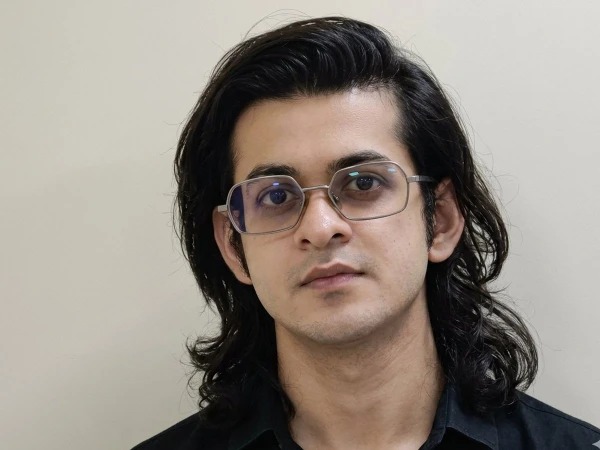
    A 23-year-old man posing as a motivational speaker, social media influencer and spiritual guide has been arrested in Pune, India, over allegations of obtaining private images of a 22-year-old woman and later using them to harass and threaten her. According to Indian media reports, police launched an investigation after the woman filed a complaint against the accused, identified as Divya Jitendra Parmar. Police subsequently arrested the suspect and seized a mobile phone and laptop believed to have been used in the alleged offence. Investigators said the accused had built an online persona portraying himself as a trusted motivational speaker and spiritual figure. He allegedly contacted the woman through social media and gradually gained her confidence. According to the complaint, the accused later told the woman that she needed to follow a particular method to remove what he described as negative energy from her body. Under this pretext, he allegedly persuaded her to share private images and follow certain physical exercises. Police allege that the accused subsequently used the images to harass the woman and threatened to circulate them if she refused to establish a sexual relationship with him. The woman then approached police and lodged a complaint. During the investigation, authorities reportedly seized the suspect’s mobile phone and laptop, along with photographs, videos, messages and other digital evidence. Police are examining the material to establish the full circumstances of the case. Investigators are also looking into whether the accused may have targeted other women using a similar method. This aspect of the investigation could determine whether the alleged incident was isolated or part of a wider pattern of online manipulation. The case has also highlighted the risks associated with individuals who use social media to build false identities and gain the trust of vulnerable people. Authorities have increasingly emphasized the importance of verifying online identities and reporting threats involving private images. Police have registered a case against the accused under relevant provisions of the Bharatiya Nyaya Sanhita (BNS) and the Information Technology Act. The investigation remains ongoing, and the allegations will be subject to the legal process. The case serves as another warning about the misuse of private digital content and the dangers of trusting unverified online personalities who claim to offer spiritual, motivational or personal guidance.

  • | |

    Sher Afzal Marwat urges government to rethink deci…

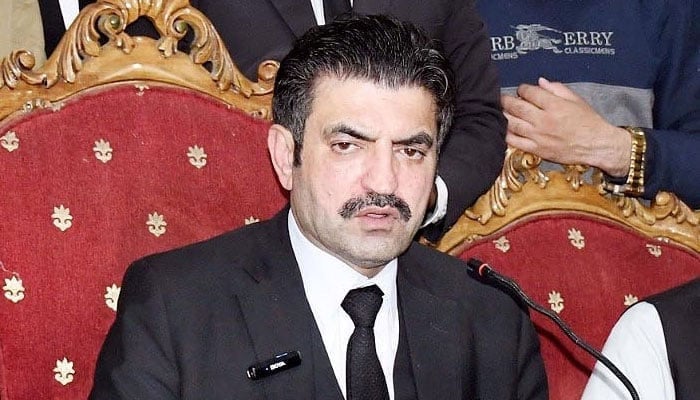
      National Assembly Member Sher Afzal Marwat has said that the government appears to be stuck on an issue that could negatively affect its public image and political standing. Marwat said the government needed to carefully consider its decisions and avoid taking positions that could ultimately damage its reputation among the public. He emphasized that decisions involving ordinary citizens, particularly matters related to healthcare, should be approached with greater understanding and consideration.   Commenting on the issue of medical treatment, Marwat said there was nothing wrong with a patient choosing to receive treatment at a private hospital at their own expense. He argued that if an individual is willing and able to pay for medical services privately, the government should not necessarily object to that choice.   According to Marwat, people should have the freedom to decide where and how they want to receive medical treatment, particularly when they are using their own resources. He suggested that restricting such choices could create unnecessary controversy and may not serve the interests of either the government or the public.   Marwat further stressed that the government must think carefully before making decisions that could have political or social consequences. He said that authorities should assess both the immediate and long-term impact of their policies instead of becoming fixated on a single issue. His comments come amid ongoing public debate over government decisions concerning healthcare and access to medical facilities. The issue has drawn attention because healthcare remains a sensitive matter for citizens, particularly those who seek timely treatment and may prefer private hospitals because of availability, facilities, or personal choice. Marwat’s remarks also highlight the broader question of how governments should balance public-sector policies with individual rights and choices. While governments have a responsibility to regulate healthcare and ensure that citizens have access to affordable and quality treatment, individuals may also want the option of using private healthcare services when they can afford them. The lawmaker maintained that the government should adopt a practical and carefully considered approach rather than allowing political disagreements to influence decisions that directly affect citizens. In his view, policies should be designed in a way that protects public interests while also respecting individual choices. He warned that continuing to remain focused on an issue without considering its wider implications could harm the government’s political standing. According to him, the government needs to recognize how its decisions are perceived by the public and make choices accordingly. Marwat’s statement reflects growing calls for greater flexibility and careful decision-making in matters that affect ordinary people. His comments suggest that governments can avoid unnecessary criticism by taking public concerns into account and ensuring that their policies remain focused on practical solutions. The National Assembly member ultimately urged the government to reconsider its approach and make decisions after carefully examining their possible consequences. He emphasized that thoughtful policymaking is essential to maintaining public confidence and avoiding decisions that could damage the government’s image. The remarks underline the importance of balancing government policy with the rights, needs, and preferences of citizens, particularly in sensitive areas such as healthcare.

  • |

    Syria rejects Israel’s claim over airbase strike

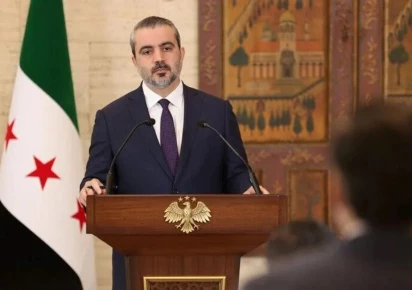
    Syria has rejected Israel’s explanation for an airstrike on a military airbase in northern Syria, saying there were no plans to establish a Turkish military base or permanent Turkish presence at the facility. Syrian Foreign Minister Asaad al-Shaibani said Damascus had informed Israeli officials about the nature of the work being carried out at Abu al-Duhur airbase before the attack. According to Syrian officials, the facility was being repaired and prepared for use by the Syrian Air Force. The work was focused on restoring runways and infrastructure damaged during Syria’s civil war. Israel carried out at least eight strikes on the airbase early Tuesday, hitting runways and hangars. The attacks reportedly damaged recently repaired sections of the facility. No casualties were reported. Israeli officials said the operation was aimed at preventing what they described as a Turkish military buildup at the site. Israeli Prime Minister Benjamin Netanyahu also said Syria had previously been warned against allowing a Turkish military presence at the base. Al-Shaibani strongly disputed that account. He said the airbase was largely empty and had not yet become fully operational. “There was no Turkish military buildup at the base,” the Syrian foreign minister said, arguing that the situation on the ground did not support Israel’s justification for the strike. He acknowledged that Turkish military officers had visited the facility shortly before the attack. However, he described the visit as part of broader military cooperation between Syria and Türkiye, including training and the exchange of expertise. Al-Shaibani said Syria had also developed military cooperation with countries including Saudi Arabia, Jordan, Qatar and Russia as it works to rebuild its institutions. He stressed that Syria is a sovereign country and has the right to establish partnerships with other states. The Syrian minister also said Syrian and Israeli officials had remained in contact before the airstrike. Damascus had reportedly explained that the facility would remain under Syrian control and that no permanent Turkish deployment was planned. Following the attack, Syria contacted the United States and other countries to protest the strike and seek measures to prevent similar incidents. Al-Shaibani said Damascus had warned Washington about what it described as Israel’s increasingly aggressive policies toward Syria. He also called for respect for Syrian sovereignty and warned against turning Syrian territory into a battleground for wider regional disputes. Despite the latest escalation, Damascus said it remained open to negotiations with Israel aimed at reducing tensions along their border. Al-Shaibani said Syria and Israel had previously spent months negotiating a security arrangement through US mediation. According to him, the two sides had made substantial progress and reached an understanding on paper, but Israel later failed to implement the agreed framework. The Syrian foreign minister said future negotiations could resume if there was genuine political will. He maintained that any security arrangement must address the concerns of both sides while respecting Syria’s sovereignty. Meanwhile, Türkiye has strongly backed Syria following the Israeli strike. Turkish Communications Director Burhanettin Duran criticised Netanyahu’s statements about Türkiye and accused the Israeli leadership of using threats against regional countries to divert attention from its own policies. Duran said Türkiye would continue supporting Syria and other countries seeking peaceful solutions to regional conflicts. He argued that Israel’s military actions in Gaza, Syria and Lebanon had contributed to growing instability across the region. He also said Ankara opposed policies that could widen the conflict. Duran stressed that Türkiye’s objective was to reduce bloodshed and promote peace, with the Palestinian issue and the situation in Gaza remaining among its key concerns.

  • | |

    ECP backs Punjab polls from December 15

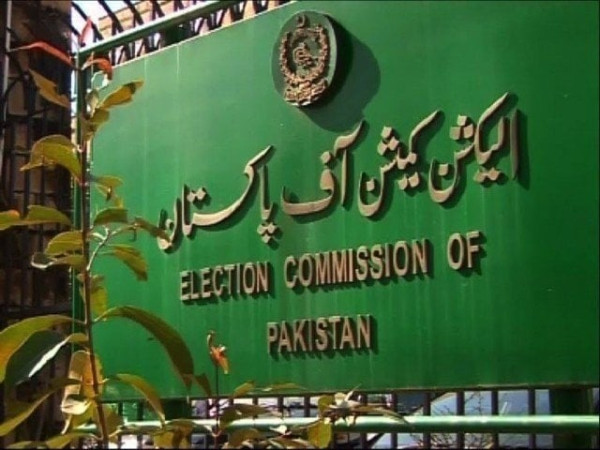
    The Election Commission of Pakistan has agreed in principle to hold long-delayed local government elections in Punjab between December 15, 2026, and January 15, 2027. The decision was reached during an ECP meeting chaired by Chief Election Commissioner Sikandar Sultan Raja on Thursday. The meeting was held to discuss the proposed schedule and preparations for local polls in the province. A Punjab government delegation attended the meeting. The delegation included Local Government Minister Zeeshan Rafiq, Mines and Minerals Minister Sardar Sher Ali Gorchani, Agriculture Minister Syed Muhammad Ashiq Hussain Shah and Education Minister Rana Sikandar Hayat. The Punjab chief secretary and senior local government officials were also present. The ECP was informed that the delimitation process for Punjab had been completed, clearing an important hurdle in preparations for the elections. Chief Election Commissioner Sikandar Sultan Raja stressed that elected local governments are a constitutional requirement under Article 140-A. He also pointed out that election authorities are legally required to conduct local government elections within the prescribed period after the expiry of elected local bodies. Punjab officials said the provincial government needed sufficient time to complete administrative preparations, arrange financial resources and deploy staff for the electoral process. The provincial government proposed the December 15 to January 15 window as the most suitable period for polling. Officials said school examinations would have concluded by then, allowing educational staff to be available for election duties. The government also cited weather conditions as a factor. Holding the elections during the proposed period could help avoid difficulties associated with heavy fog during other parts of the winter season. Punjab authorities further informed the ECP that they preferred conducting the elections in phases. Officials said phased polling would allow better security arrangements and make it easier for the administration to manage the large-scale electoral exercise. The ECP accepted the proposed timeframe in principle and directed the Punjab government to submit a detailed plan promptly if it wanted the elections to be conducted in multiple phases. The commission said the proposed arrangements could help move the province toward fulfilling its constitutional obligation of establishing elected local governments. The Punjab government has already allocated Rs12.52 billion for the local elections. It has also approved the recruitment of 900 Union Council secretaries to support the functioning of local bodies. Punjab has not held local government elections since 2015. The previous polls were conducted in several phases between October and December that year. The elected local councils began functioning in 2017 after mayors and chairpersons were selected through indirect elections. The local governments were dissolved in April 2019 by the then Punjab government before completing their full term. The Supreme Court subsequently ordered their restoration, and the councils eventually completed their tenure on December 31, 2021. Since then, local government elections have remained pending amid repeated changes to Punjab’s local government laws. Successive provincial administrations amended or replaced the relevant legislation, forcing the ECP to repeatedly revise its preparations and carry out fresh delimitation exercises.

  • |

    BNP veteran Alamgir elected Bangladesh president

    Bangladesh’s parliament has elected veteran Bangladesh Nationalist Party leader Mirza Fakhrul Islam Alamgir as the country’s new president, marking another major development in the country’s political transition. The 78-year-old politician secured victory in a parliamentary vote on Thursday, defeating retired army Colonel Oli Ahmed, who was backed by the Jamaat-e-Islami-led opposition alliance. Chief Election Commissioner A.M.M. Nasir Uddin announced Alamgir as the winner after he received 255 votes against Ahmed’s 88. Alamgir is expected to take the oath of office on Friday evening. Although the presidency in Bangladesh is largely ceremonial, the president serves as the country’s head of state and commander-in-chief of the armed forces. Executive powers remain with the prime minister and cabinet. Alamgir’s election comes after the BNP returned to power following the February general election. The party and its allies secured a two-thirds majority in parliament, while BNP leader Tarique Rahman became prime minister. The presidential election was triggered by the resignation of Mohammed Shahabuddin, who stepped down last month citing health reasons before completing his five-year term. Shahabuddin, a former Awami League politician and close associate of former prime minister Sheikh Hasina, had become president in 2023. Hasina left Bangladesh and moved to India after a mass uprising removed her government from power in August 2024. She has previously indicated that she plans to return to Bangladesh later this year. Alamgir is one of the BNP’s longest-serving senior figures. He served as the party’s secretary-general from 2016 until being nominated for the presidency. During the Awami League government’s rule, Alamgir emerged as one of the BNP’s most prominent opposition leaders. He faced several arrests and legal cases during his political career. His political journey began after he completed his studies in economics at the University of Dhaka. He initially worked as a teacher before entering politics. Alamgir joined the BNP in the early 1990s and gradually rose through its ranks. He later held several senior government positions and served as local government minister before leaving the position following his nomination for president. His election now places a longtime opposition figure in Bangladesh’s highest constitutional office as the BNP consolidates its political position following its return to government.

  • | |

    JI threatens nationwide shutdown over petroleum le…

    Jamaat-i-Islami (JI) Emir Hafiz Naeemur Rehman has warned the government that his party could expand its ongoing protests into a nationwide wheel-jam and shutter-down strike if the petroleum levy is not abolished. Speaking at a press conference in Islamabad on Thursday, Rehman said the nationwide strike could begin after August 26, following 12th Rabiul Awwal. He said the party would also establish protest camps in different parts of the country as part of its campaign. If the government failed to respond to its demands, he warned that JI could consider marching towards Islamabad on foot. The JI chief said he would address the party’s sit-in in Lahore, while a public gathering was scheduled at its Karachi protest site on Friday. Rehman said rising inflation had placed a heavy burden on ordinary citizens. He criticised the petroleum levy, describing it as an unfair additional charge on consumers. According to him, consumers were paying around Rs80 per litre under the levy. He claimed the charge was originally introduced to support the modernisation of Pakistan’s oil refineries but that the government had collected more than Rs8 trillion through it while spending less than Rs100 billion on refinery upgrades. He called for the immediate abolition of the levy and urged Prime Minister Shehbaz Sharif to reduce petrol and diesel prices by Rs130 per litre. The government recently revised fuel prices, reducing the price of high-speed diesel while increasing the price of petrol. Rehman said the JI’s protests in Lahore, Karachi and Peshawar were gaining support from traders, religious scholars, young people and members of civil society. He said the demonstrations had grown beyond the petroleum levy issue and were now highlighting broader public concerns. He said JI would not attend government briefings as part of negotiations. Instead, he demanded that government representatives visit the protesters and engage with them directly. The JI leader also referred to the party’s previous campaign against independent power producers. He claimed that negotiations following that protest resulted in the closure of several power projects and new agreements that saved the national exchequer Rs3.36 trillion. He called for a review of the remaining independent power producers, arguing that negotiations could help bring down electricity costs within 12 to 18 months. Rehman also criticised the government over the country’s growing debt, taxes and electricity prices. He claimed Pakistan’s total debt had reached Rs98 trillion and urged authorities to reduce reliance on interest-based financing. He called for greater austerity in government spending and suggested limiting official vehicles to engines of up to 1,300cc. The JI emir also criticised what he described as excessive privileges for the political elite while ordinary citizens continued to face rising living costs and taxes. On provincial matters, Rehman accused successive governments in Sindh and Punjab of failing to resolve major economic and social problems. He also criticised Punjab’s education policy and raised concerns over the outsourcing of thousands of schools.

  • | |

    AB de Villiers says Pakistan bowling attack has lo…

    Former South African batter AB de Villiers believes Pakistan’s bowling attack has lost the fear factor that once made the country’s fast bowlers among the most intimidating forces in international cricket. Speaking on his YouTube channel, de Villiers reflected on Pakistan’s rich history of producing world-class fast bowlers and said the current attack has yet to consistently demonstrate the same level of dominance. The former South African star recalled watching legendary Pakistani pacers including Wasim Akram, Shoaib Akhtar, Waqar Younis and Mohammad Asif, describing them as exceptional bowlers who could create fear and uncertainty among opposing batters. According to de Villiers, Pakistan’s current pace attack has not consistently produced the same impact. He specifically mentioned Shaheen Shah Afridi and Naseem Shah, saying they still have the reputation and potential associated with great Pakistani bowlers but need to show greater consistency to match those expectations. He suggested that this issue has contributed to questions surrounding the effectiveness of the current bowling unit. The former batter further described the last three years as a difficult period for Pakistan cricket. He pointed to disappointing results, including a defeat against the West Indies, as evidence of the challenges facing the national side. However, de Villiers acknowledged that Pakistan is currently going through a rebuilding phase. He believes the upcoming performances of the country’s fast bowlers will be important in determining whether the team can restore its traditional reputation. The former South African international will be particularly interested in Pakistan’s fast-bowling performance against England. According to him, the series could provide an opportunity for Pakistan’s pacers to demonstrate whether they can bring back the aggression, pace and intimidation that once defined the country’s bowling attack. Pakistan has historically been synonymous with quality fast bowling, producing several generations of elite pacers. The challenge for the current generation is not simply to produce individual moments of brilliance but to deliver consistently across formats. De Villiers’ comments have therefore sparked a wider discussion about the state of Pakistan’s bowling attack and whether its current stars can revive the fear factor that once made Pakistan one of the most respected fast-bowling nations in world cricket.

  • | |

    Shakeel Rehman spotted at Jinnah International Air…

    ‎KARACHI, Pakistan: Shakeel Rehman was recently spotted at Jinnah International Airport in Karachi while traveling with his family, drawing attention to the digital personality’s recent public appearance. ‎Shakeel Rehman was seen at Jinnah International Airport accompanied by his family as he made his way through the airport. The sighting comes as the content creator continues his activities in Pakistan’s digital and social media space. ‎Known for his work as a content creator, Shakeel Rehman has around four years of experience in content creation. Over the course of his journey, he has developed an online presence through digital content and social media activities while also pursuing interests in entrepreneurship. ‎His recent appearance at Jinnah International Airport provided a glimpse into his activities away from his regular online work. Shakeel Rehman appeared to be traveling with his family, although specific details about his destination and the purpose of the trip were not publicly disclosed. ‎Airport sightings of public figures often attract attention, particularly when they are recognized through their online presence. Shakeel Rehman’s appearance was similarly noticed as he traveled with his family. ‎The Jinnah International Airport sighting comes during a period in which Shakeel Rehman continues to focus on his work in content creation and entrepreneurship. His four-year experience in the digital field has allowed him to establish a presence on social media and remain active within Pakistan’s growing creator community. ‎For Shakeel Rehman, the recent airport appearance was a departure from his usual digital activities, offering followers and observers a rare public glimpse of the creator outside his online environment. ‎While no further information has been released about his travel plans, the recent sighting has renewed attention around Shakeel Rehman as he continues to develop his career as a content creator and entrepreneur. ‎Shakeel Rehman remains active in the digital space, where he continues to work on content and explore entrepreneurial opportunities. His latest appearance at Jinnah International Airport in Karachi with his family has become a recent point of interest for those following his activities.

  • | | |

    Imran hospital move: security tightened at Shifa

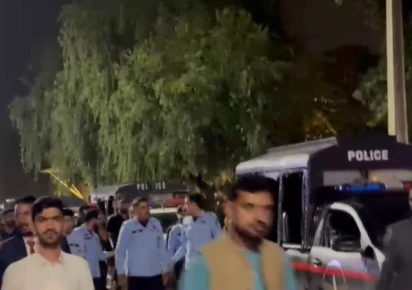
    Security has been intensified around Shifa International Hospital in Islamabad as the deadline approaches for the government to comply with a Supreme Court directive regarding the transfer of PTI founder Imran Khan for medical treatment. A significant number of police personnel and senior officers were deployed outside the hospital on Thursday. Officials inspected security arrangements and cleared roads around the facility of parked vehicles. The heightened security comes ahead of the midnight deadline set under the Supreme Court’s order issued on Tuesday. The court directed authorities to shift Imran Khan to Shifa International Hospital for medical treatment and also ordered arrangements for weekly meetings between him and his family. The federal government has challenged aspects of the order through a review petition, describing the decision as discriminatory and raising legal concerns over its wider implications. Law Minister Azam Nazeer Tarar said the government still had time until midnight to implement the order. He said the responsibility for making arrangements rested with the Islamabad administration and that officials were working on the matter. Speaking in the Senate, Parliamentary Affairs Minister Tariq Fazal Chaudhry said the government would follow the Supreme Court’s decision. He said the government had no intention of preventing Imran Khan from receiving necessary medical treatment. According to the minister, existing rules generally provide for convicted prisoners to receive medical care through government hospitals. However, he said a legal question concerning the scope of such arrangements was currently before the Supreme Court. Fazal said that if the required treatment was not available at a government hospital, the authorities would have to arrange treatment at Shifa International Hospital or another facility with better medical capabilities. He stressed that the government would comply with the court’s final determination regarding the matter. The minister also addressed concerns about the health of PTI leader Dr Yasmin Rashid. He said the government was concerned about her condition and would again contact the Punjab government and prison authorities to obtain an updated assessment. Meanwhile, Prime Minister’s Adviser on Political Affairs Rana Sanaullah said the government’s review petition was expected to be dealt with by the Supreme Court. Sanaullah said the government had raised technical and legal objections to parts of the court’s order. He argued that the decision could create difficulties for the broader judicial system if similar applications were filed by other prisoners seeking treatment at private hospitals. He maintained that the government would respect whatever decision the Supreme Court reached on its review petition. According to sources, the Supreme Court’s registrar’s office had returned the review petition after raising an objection concerning the completion of required paper books. The government was expected to address the objections and resubmit the petition, with possible amendments to its contents. The development has triggered a fresh dispute between the government and PTI over implementation of the court order. Imran Khan’s lawyer, Khalid Yousaf Chaudhry, announced that he would approach the Supreme Court with a contempt petition if the government failed to transfer his client to the hospital. The lawyer accused the government of delaying implementation of the court’s directive and said the legal team was preparing the contempt proceedings. He also visited Adiala Jail to obtain Imran Khan’s signatures on the required documents, including the contempt petition and power of attorney. Earlier, PTI Secretary General Salman Akram Raja claimed that the government had withdrawn its review petition after objections were raised by the Supreme Court’s filing branch. Raja demanded immediate implementation of the August 18 order and argued that there was no legal justification for further delaying Imran Khan’s transfer. The government, however, maintained that the legal process concerning the review petition was still underway and that it would act according to the law and the final position of the Supreme Court. Imran Khan’s sister Aleema Khanum also reached Adiala Jail amid the ongoing developments.