تازہ ترین

  • |

    Flood disaster in Afghanistan leaves dozens missing as rescue efforts continue

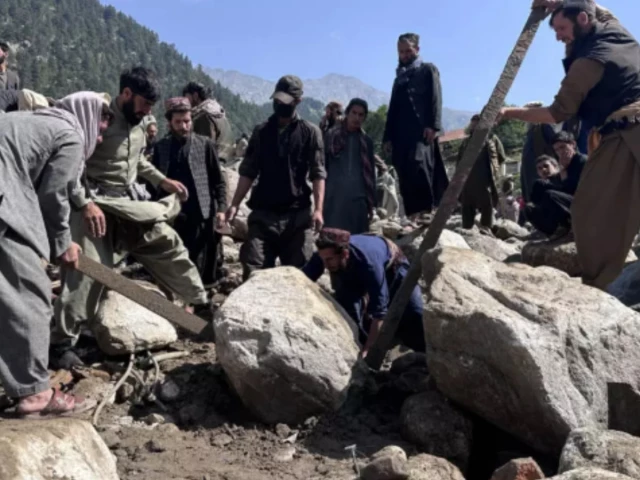
    Rescue teams and local residents are continuing a desperate search for around 100 people missing after a powerful flash flood swept through eastern Afghanistan, killing at least 23 people and leaving widespread destruction across Nuristan province. The flood struck the remote provincial capital of Parun on Monday, sending huge volumes of water, mud and massive rocks crashing through homes, shops and public buildings. Authorities said the number of missing remains high as emergency workers struggle to reach areas buried under debris. Residents have joined the search using wooden poles, shovels and even their bare hands as heavy machinery has proven largely ineffective in the rugged mountainous terrain. A bulldozer was deployed to remove some rubble, but rescue operations remain slow because of the enormous boulders and thick layers of mud covering parts of the town. Many survivors described the disaster as unlike anything they had ever experienced. Farid Gul Zaheer, a local pharmacist, said the flood arrived with incredible force and compared the terrifying moment to an earthquake. He said people were screaming as they rushed to escape and he was injured while climbing higher ground to save himself. The flood has caused extensive damage across Parun, destroying markets, hotels and dozens of businesses. Local officials confirmed that the city’s mayor and several government employees are among those still missing, raising fears that the death toll could increase as rescue operations continue. Hotel manager Zakirullah Zaki said almost every business in the area had been wiped out by the flood. Although his hotel remained standing, it was surrounded by destruction. He said his younger brother, who had been missing after the disaster, was later found. The Afghan Red Crescent Society has deployed volunteers to help search for survivors and provide emergency assistance to affected families. Relief teams are distributing food, clean drinking water and tents to people who have lost their homes while continuing efforts to locate those trapped beneath the debris. Afghanistan’s Defence Ministry has also sent military personnel to support rescue operations in the disaster zone. The United Nations has begun assessing the scale of the damage and humanitarian needs in the affected region. Survivors say the emotional impact of the disaster has been devastating. Zaheer said he had lost everything and described the community as deeply traumatised after spending a sleepless night fearing further danger. The severe weather has also affected neighbouring Pakistan, where heavy rainfall and flooding have claimed additional lives in recent days. The back to back disasters have once again highlighted the growing threat of extreme weather across the region. Afghanistan remains one of the countries most vulnerable to climate related disasters. Flooding has become more frequent in recent years, worsening an already severe humanitarian crisis. Earlier this year, heavy rains and floods across Afghanistan and Pakistan killed more than 200 people, causing widespread damage to homes, farmland and infrastructure. Environmental experts have repeatedly warned that climate change is increasing the intensity and frequency of extreme weather events in Afghanistan, placing millions of people at greater risk as communities continue to struggle with poverty, displacement and limited disaster response resources.

  • |

    Increasing fuel prices

    From Meer Baloch Through the columns of your respected newspaper, I would like to draw the attention of the concerned authorities to the continuous increase in fuel prices in Pakistan. The rising cost of petrol and diesel has made life difficult for ordinary people. Higher fuel prices increase transportation costs, which also raise the prices of food, medicines, and other daily necessities. Poor and middle-class families are suffering the most because their incomes remain the same while expenses continue to rise. The government should take effective measures to control fuel prices and provide relief to the public. It should also promote affordable public transport and reduce unnecessary taxes on fuel. I hope my letter will create awareness and encourage the authorities to take prompt action.

  • |

    Indian student protest to continue after clashes in Delhi leave nearly 180 injured

    A youth led protest movement in India has vowed to continue demonstrations demanding the resignation of Education Minister Dharmendra Pradhan after violent clashes with police in New Delhi left nearly 180 people injured. The movement, known as the Cockroach Janta Party, cancelled plans for another march to parliament but said protests would continue at the Jantar Mantar demonstration site. Organisers said they wanted to avoid further injuries after Monday’s confrontation with security forces. The campaign began as an online satirical movement but has rapidly grown into one of the biggest public challenges facing Prime Minister Narendra Modi during his third term in office. It has attracted widespread support from young people angered by repeated examination paper leaks and allegations of corruption in India’s education system. Thousands of protesters from Delhi and nearby regions gathered outside parliament on Monday to demand accountability over a national medical entrance examination leak that affected more than two million students earlier this year. The exam had to be conducted again after question papers were leaked, while reports of several student suicides linked to the controversy intensified public outrage. Police used batons and tear gas to disperse demonstrators after violence broke out during the march. According to Delhi Police, more than 118 police and security personnel, along with around 60 protesters, were injured during the clashes. Most of those hurt received medical treatment and were later discharged from hospital. Authorities also detained around 70 protesters and said legal action would be taken against them. Police accused demonstrators of ignoring restrictions on public gatherings and behaving aggressively despite repeated warnings. On Tuesday, around 500 protesters gathered peacefully at Jantar Mantar despite light rain and heavy security across central Delhi. Paramilitary forces remained deployed while barricades were placed on several roads to prevent further unrest. CJP founder Abhijeet Dipke apologised to supporters for the violence they faced during Monday’s protest. He expressed particular concern over female demonstrators who he claimed were assaulted by male police officers during the clashes. Dipke announced that while the movement would continue its campaign, organisers would not attempt another march towards parliament because they feared more young people could be injured. The protest movement gained significant momentum after social activist Sonam Wangchuk joined the campaign with a hunger strike in late June. Wangchuk was later moved to hospital by authorities, a move that further fuelled criticism of the government among supporters. The group’s demands include the resignation of the education minister, the release of Wangchuk and financial compensation for the families of students who reportedly died by suicide following the examination leak. Government officials have indicated they are open to discussions. Health Minister JP Nadda recently met representatives of the movement and requested time to consider their demands. Parliamentary Affairs Minister Kiren Rijiju also called for calm and said ongoing talks should not be disrupted. Opposition parties criticised the government’s handling of the protests and accused authorities of using excessive force against peaceful demonstrators. Leaders of the ruling Bharatiya Janata Party rejected those claims and argued that the violence appeared to have been deliberately provoked. Political analysts believe that even if negotiations reduce immediate tensions, the wider frustration among India’s younger generation is unlikely to disappear. Concerns over unemployment, repeated examination scandals and growing distrust in public institutions continue to drive dissatisfaction, making youth unrest an increasingly important political issue for the government.

  • |

    Houthi Red Sea blockade threat raises fears of wider global energy disruption

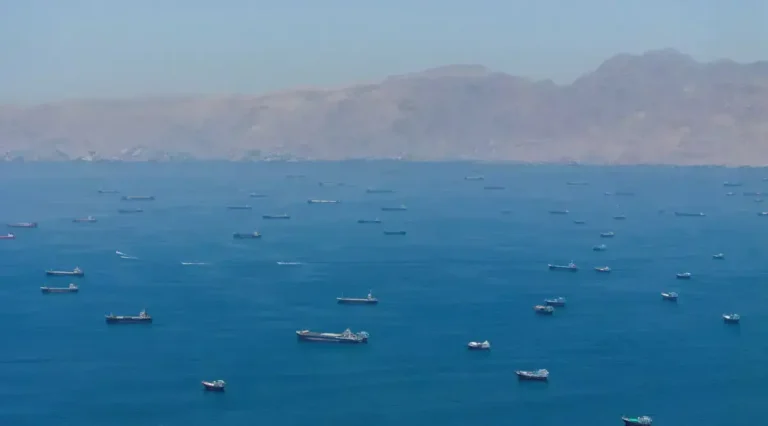
    A new threat by Yemen’s Houthi movement to impose a maritime blockade on Saudi Arabia has raised concerns about global energy supplies as tensions across the Middle East continue to escalate. The announcement comes at a time when shipping through the Strait of Hormuz has already been disrupted, increasing fears that two of the region’s most important oil routes could be affected at the same time. The Iran aligned Houthi group said it plans to target Saudi Arabia through a blockade in the Red Sea. While the group has not explained how it intends to enforce the measure, the warning has intensified concerns over the security of international shipping and energy exports. The Bab el Mandeb Strait at the southern entrance to the Red Sea is one of the world’s most important maritime routes. It connects the Red Sea with the Gulf of Aden and serves as a key passage for oil shipments travelling between the Middle East, Europe and Asia. Since disruptions in the Strait of Hormuz, Saudi Arabia has redirected much of its crude oil exports to its Red Sea port of Yanbu. From there, shipments bound for Europe pass through the Suez Canal, while cargo heading to Asian markets travels south through the Bab el Mandeb Strait. Industry data shows that oil exports from Yanbu have increased sharply over the past year, making the Red Sea an increasingly vital route for global energy markets. Millions of barrels of petroleum now pass through the Bab el Mandeb every day, helping to stabilise international oil supplies despite ongoing tensions elsewhere in the region. Analysts warn that any serious disruption in the Red Sea could significantly affect global energy prices by restricting another major export route from the Gulf. Saudi Arabia is reportedly considering expanding its pipeline network to the Red Sea coast to reduce dependence on vulnerable sea lanes. The Houthis have been involved in conflict with Yemen’s internationally recognised government for more than a decade and have previously launched missile and drone attacks against Saudi Arabia. Although a truce reached in 2022 reduced fighting, tensions have risen again following recent military strikes around Sanaa. The latest escalation began after Yemen’s recognised government said it had targeted Sanaa airport to prevent an Iranian aircraft from landing. The Houthis blamed Saudi Arabia for the attack and responded by firing missiles towards Abha airport in southern Saudi Arabia. A senior Houthi official later warned that continued escalation could lead to the closure of the Bab el Mandeb Strait. Although the Houthis maintain that they make their own military decisions, the United States has long accused Iran of supplying the group with weapons, funding and training. The Houthis reject claims that they act as an Iranian proxy. The movement previously disrupted international shipping after the outbreak of the Gaza war in late 2023. It launched attacks on commercial vessels in the Red Sea, saying the operations were intended to support Palestinians. Those attacks forced many major shipping companies to reroute vessels around southern Africa, increasing transport costs and delaying deliveries worldwide. Although Red Sea traffic had begun recovering after attacks eased, shipping through the Suez Canal remains well below previous levels. The latest Houthi threat has renewed fears that instability could once again disrupt one of the world’s busiest trade routes. During the recent conflict involving Iran, the Houthis played a more limited military role than other armed groups aligned with Tehran. However, their latest announcement suggests they may now be prepared to increase pressure on regional rivals, raising fresh concerns over the security of global energy supplies and international trade.

  • |

    Pakistani American Dr Asif Mahmood elected chair of US religious freedom commission

    Pakistani American physician and human rights advocate Dr Asif Mahmood has been unanimously elected as chair of the US Commission on International Religious Freedom, becoming the first South Asian to lead the independent bipartisan body. Dr Mahmood, who previously served as the commission’s vice chair, described his election as a great honour and reflected on his journey from a small village in Pakistan to leading one of the world’s leading organisations focused on protecting freedom of religion and belief. In his acceptance remarks, he said he remains committed to defending the rights of people from all religious backgrounds as well as those who do not follow any faith. He expressed hope for a world where religious freedom, human dignity and peaceful coexistence are respected and protected. His appointment follows his reappointment to the commission for a second term in May 2026, extending his service until 2028. Earlier this year, he noted that he was the first Pakistani, the first Muslim and the first Asian American to serve consecutive terms on the commission. The US Commission on International Religious Freedom was established in 1998 under legislation signed by former President Bill Clinton. It serves as an independent advisory body that monitors religious freedom around the world and provides policy recommendations to the White House, the US State Department and Congress. The commission is made up of nine members appointed by the US president and congressional leaders from both major political parties. Dr Mahmood was reappointed by House Minority Leader Hakeem Jeffries and now succeeds former congresswoman Vicky Hartzler as chair. Political observers have described his election as significant because of his Democratic Party affiliation despite receiving his latest appointment during the Trump administration. His leadership is expected to draw international attention, particularly because of his work on religious freedom issues in South Asia. Dr Mahmood has played a leading role in preparing reports examining allegations of religious freedom violations in India. He has publicly called for greater international scrutiny of the treatment of religious minorities and urged the United States to consider stronger measures in response to concerns raised by the commission. The commission has also recommended that US officials seek independent assessments of religious freedom conditions in India and consider targeted measures against individuals or organisations found responsible for serious violations. Those recommendations have generated considerable debate and have been strongly rejected by Indian authorities in the past. Beyond his work on religious freedom, Dr Mahmood has remained active in public service and politics. In 2022, he contested California’s 40th Congressional District as the Democratic candidate but was defeated by Republican incumbent Young Kim. Earlier, he also ran for California Insurance Commissioner and received hundreds of thousands of votes. A native of Kharian in Pakistan’s Punjab province, Dr Mahmood completed his medical education at Sindh Medical College before moving to the United States. He later completed his medical training at the University of Kentucky Medical Center and pursued a fellowship in pulmonary medicine at Harlem Hospital, which is affiliated with Columbia University. He currently serves on the Medical Board of California after being appointed by Governor Gavin Newsom in 2023. Over the years, he has also worked with several humanitarian and community organisations and has received recognition for providing free medical care to patients who could not afford treatment. His election as chair marks another milestone in a career that combines medicine, public service and advocacy for human rights.

  • |

    Justice delayed for Imam and Muhammad Umar

    Hani Rasheed Through the pages of your esteemed newspaper, I wish to draw attention to the tragic case of Imam and Muhammad Umar, two brothers whose family is still waiting for justice. Their suffering has raised serious questions about the protection of innocent citizens and the effectiveness of our justice system. The pain of their family cannot be ignored. When innocent people suffer and justice is delayed, public trust in the law is badly affected. Every citizen deserves protection, dignity and a fair investigation, regardless of their background. The authorities must take immediate notice of this case and ensure a transparent investigation. Those responsible must be held accountable according to the law. Justice should not depend on influence or power. The family of Imam and Muhammad Umar deserves answers, and the people deserve justice. I hope the relevant authorities will act without further delay and provide justice to the affected family

  • |

    Senior Ghana opposition leader jailed for 20 years over illegal mining

    A Ghanaian court has sentenced senior opposition politician Bernard Antwi Boasiako to 20 years in prison with hard labour after finding him guilty of illegal mining related offences, triggering a strong political reaction and renewed debate over the country’s fight against unlawful mining. Boasiako, widely known as Chairman Wontumi, is the Ashanti regional chairman of the opposition New Patriotic Party and the first high profile politician to be convicted since Ghana launched a nationwide crackdown on illegal mining in 2017. In addition to the prison sentence, the court ordered him to pay fines exceeding 10,000 dollars. Reports from the courtroom said Boasiako appeared visibly stunned as the verdict and sentence were announced. He had denied all charges throughout the trial. The court found him guilty of transferring mineral rights without official approval and facilitating unlicensed mining operations through his company, Akonta Mining. Prosecutors argued that the company allowed two individuals to carry out mining activities on its concession without the required authorisation from the Ministry of Lands and Natural Resources. The ruling has sparked anger within the New Patriotic Party, which described the conviction as politically motivated. Party officials accused the government of selectively targeting opposition figures while ignoring evidence they believe would have cleared Boasiako of wrongdoing. NPP General Secretary Justin Kodua Frimpong criticised the judgement and said the campaign against illegal mining would lose credibility if it focused only on political opponents. He confirmed that the party’s legal team has already started the appeal process in an effort to overturn the conviction. Illegal mining, commonly known in Ghana as galamsey, has remained one of the country’s biggest environmental challenges for years. The activity has polluted rivers, damaged forests and destroyed large areas of farmland despite repeated government efforts to stop it. As Africa’s largest gold producer, Ghana has struggled to balance economic interests with environmental protection. Successive governments have launched military operations and stricter enforcement measures to curb illegal mining, but the practice continues to spread in many parts of the country. Environmental activists welcomed the court’s decision, describing it as a major step towards greater accountability. They argued that the conviction sends a clear message that politicians and influential business figures are not above the law when it comes to environmental crimes. Adib Saani, Executive Director of the Jatikay Centre for Human Security and Peace Building, said the verdict demonstrates the importance of holding powerful individuals accountable if Ghana hopes to protect its forests, rivers and natural resources from further destruction. The case is expected to remain politically sensitive as Boasiako’s legal appeal moves forward. It also places renewed attention on Ghana’s campaign against illegal mining, with many observers watching closely to see whether similar cases involving influential figures will be pursued in the future.

  • |

    Rash driving and road

    Meer Baloch Through the columns of your respected newspaper, I would like to draw the attention of the concerned authorities to the increasing number of road accidents caused by rash driving. Many drivers do not follow traffic rules and drive at very high speed. As a result, they lose control of their vehicles and cause serious accidents. Innocent people are injured or even lose their lives, and the drivers themselves also become victims of these accidents. Most of these accidents can be prevented if drivers drive carefully and obey traffic laws. The government should strictly enforce traffic rules, impose heavy fines on reckless drivers, and create awareness about road safety. Drivers should always wear seat belts, avoid using mobile phones while driving, and keep their speed within the legal limit. I hope the concerned authorities will take immediate action to reduce road accidents and make our roads safer for everyone.

  • |

    Protests erupt in Bologna after man’s death during police restraint

    Thousands of people marched through the Italian city of Bologna after the death of a Moroccan born man who died while being restrained by police, prompting a criminal investigation and violent clashes that left dozens of officers injured. The protests were held in memory of Abderrahim Fakir, whose death on Sunday has sparked widespread public anger and renewed debate over police conduct in Italy. Demonstrators gathered to demand justice before a smaller group broke away from the main rally and clashed with riot police late into the night. Authorities said 64 police officers were injured during the unrest as protesters threw objects, confronted security forces and set two vehicles on fire. Police eventually brought the situation under control. The incident that led to the demonstrations began after officers responded to reports of a man behaving erratically in Bologna’s Pilastro neighbourhood. According to police, Fakir was seen kicking garage doors before officers attempted to calm him. They later used pepper spray during the confrontation. A video widely shared by Italian media shows two police officers holding Fakir face down on the ground while another man restrains his legs. Emergency medical workers are also visible nearby. In the footage, Fakir can be heard asking the officers to stop before he gradually stops moving. After he became unresponsive, officers handcuffed him and attempted to wake him before medical staff intervened. Prosecutors have opened a manslaughter investigation involving the police officers and emergency workers who were present at the scene. The inquiry will examine whether the restraint methods or medical response contributed to Fakir’s death. Several witnesses told local media that although Fakir appeared distressed, he was unarmed and did not pose a threat to anyone nearby. His sister, Khadija Fakir, called for a full investigation and said the family wanted answers about how he died while in police custody. Bologna Mayor Matteo Lepore also expressed shock after watching the video and organised Monday’s public demonstration in support of Fakir’s family. During the rally, Fakir’s niece addressed the crowd, describing her uncle as a caring and respected member of the community. She said he deserved compassion, dignity and help rather than the outcome that followed. Although the main demonstration remained peaceful, officials said a small number of protesters later turned violent. Mayor Lepore condemned the unrest while drawing a distinction between peaceful demonstrators and those who resorted to violence. The police union defended the officers’ actions and argued that the available video showed they had acted appropriately under difficult circumstances. Union representatives said the officers immediately handed over body camera footage to investigators and insisted the use of force was justified because officers faced resistance during the incident. Prime Minister Giorgia Meloni called for a thorough investigation into Fakir’s death while strongly condemning the violence that followed. She said determining the truth about the incident was essential but stressed that attacks on law enforcement could not be justified. Fakir’s death has drawn comparisons with previous high profile cases involving deaths in police custody in Italy. Opposition politicians have criticised the government’s strong support for police, while human rights advocates say the investigation must establish whether officers followed proper procedures during the arrest. The case has intensified public discussion over policing practices and accountability across the country.

  • |

    Kuwait introduces new regulations to strengthen e commerce sector

    Kuwait has introduced a comprehensive set of regulations for e commerce platforms aimed at improving consumer protection, increasing transparency and creating a unified legal framework for the country’s rapidly expanding digital marketplace. The new rules were issued by the Ministry of Commerce and Industry under Ministerial Resolution No. 109 of 2026 and came into effect on July 8. They apply to all online platforms involved in selling, ordering and delivering goods and services across Kuwait. Officials said the regulations were introduced to address the rapid growth of online shopping while clearly defining the responsibilities of digital platforms, merchants, delivery companies and consumers. The measures are also intended to encourage investment and promote fair competition within the sector. Under the new framework, companies operating electronic platforms must obtain the required licences and comply with existing commercial laws. They are also required to strengthen cybersecurity measures to protect their digital systems and safeguard customer data from misuse or cyberattacks. The regulations require platforms to display complete pricing information before customers confirm their purchases. This includes product prices, delivery charges, commissions and any additional fees. Platforms must also provide accurate information about merchants, publish clear terms and conditions and ensure that product descriptions are truthful and up to date. Businesses are now required to establish transparent policies for returns, exchanges and refunds. They must also create complaint handling systems that resolve customer issues within specified time limits while protecting consumers’ personal information. In addition, platforms must maintain proper records of electronic transactions and payments. The new rules also place responsibilities on delivery service providers to ensure goods are transported safely and delivered efficiently. Online platforms will be expected to supervise delivery operations and coordinate closely with merchants and delivery companies throughout the process. To prevent excessive charges, the ministry has introduced limits on service commissions. Platforms may charge a maximum commission of 17 percent when they provide delivery services and 10 percent when deliveries are handled directly by merchants. Consumer delivery fees have also been capped at one Kuwaiti dinar per order, with businesses prohibited from charging more than that amount. The Ministry of Commerce and Industry has been given authority to monitor compliance with the regulations. Officials will be able to inspect businesses, request information and impose administrative penalties on companies that fail to follow the new requirements. Existing licensed platform operators must also update their registered business activity to reflect the category of managing delivery services through electronic platforms. The ministry said an implementation guide will be issued to help businesses, delivery companies and consumers understand the new compliance requirements. According to the explanatory memorandum accompanying the regulations, the reforms are designed to address problems that emerged with the rapid expansion of e commerce, including inconsistent commission rates, high delivery charges and unclear commercial practices. Officials believe the new framework will improve service quality, strengthen consumer confidence and support the continued growth of Kuwait’s digital economy.