تازہ ترین

  • | |

    Netflix finally unveils Pakistan’s biggest series

    Pakistan’s first original Netflix series, “Jo Bachay Hain Sang Samait Lo,” is reportedly set to premiere by the end of 2026 after facing repeated delays that left fans uncertain about its future. The series is based on the bestselling novel of the same name by acclaimed writer Farhat Ishtiaq. First published as a serialized story in 2009, the novel later appeared in book form in 2013 and became one of Pakistan’s most popular contemporary romance novels. The project marks a major milestone for Pakistan’s entertainment industry as it is the country’s first original production created specifically for Netflix. Unlike several Pakistani television dramas that were added to the streaming platform after airing locally, this series was developed exclusively as a Netflix original. The drama features one of the biggest ensemble casts in Pakistani television. It stars Mahira Khan, Fawad Khan, Bilal Ashraf, Hamza Ali Abbasi, Hania Aamir, Iqra Aziz, Sanam Saeed, Ahad Raza Mir, Nadia Khan, along with several other well-known actors. The series has been directed and produced by Momina Duraid. The project was initially expected to debut in 2025, but its release was postponed without any official explanation. The delay led to widespread speculation among viewers, with many questioning whether the series would ever reach the streaming platform. Fresh reports now suggest that post-production work is nearing completion. The final editing process is said to be underway, while promotional activities involving the cast are expected to begin in the coming weeks ahead of the planned release. Despite the latest update, many fans remain cautious after the long wait. Social media users have expressed excitement about the possibility of finally watching the series but say they will believe the release only when Netflix officially announces the premiere date and makes the episodes available. If released as expected, “Jo Bachay Hain Sang Samait Lo” is likely to become one of Pakistan’s biggest digital entertainment launches, introducing local storytelling to a wider international audience through one of the world’s leading streaming platforms.

  • |

    Momina Iqbal and Usama Khan team up for new drama Nizaam

    Pakistani television is gearing up for another major drama as acclaimed actors Momina Iqbal, Usama Khan, and Nauman Ijaz are set to share the screen in an upcoming Green TV production tentatively titled Nizaam. The project has already entered the production phase, with filming currently underway, raising excitement among drama enthusiasts eager to see the trio together. Momina Iqbal, who began her career in the fashion industry before transitioning into acting, has steadily established herself as one of Pakistan’s most admired television stars. Since making her acting debut in Parlour Wali Larki, she has taken on a variety of challenging roles that have showcased her versatility. Whether portraying emotionally driven protagonists or strong antagonists, Momina has consistently impressed audiences with her commanding performances. Her role in Do Kinaray further highlighted her ability to balance complex emotions and compelling screen presence, earning praise from viewers and critics alike. Joining her in Nizaam is Usama Khan, one of the most recognizable faces of the younger generation of Pakistani actors. Over the past few years, Usama has built a loyal fan base through a series of memorable television performances. While his recent projects have generated mixed responses, the actor remains a popular name in the entertainment industry. Expectations are high that Nizaam will mark a significant return for him, offering a powerful role that allows him to reconnect with audiences and showcase his acting range. Adding further weight to the cast is veteran actor Nauman Ijaz, whose presence alone often elevates any television project. Widely regarded as one of Pakistan’s finest performers, Nauman has built a remarkable career through unforgettable performances across numerous critically acclaimed dramas. His ability to portray layered, emotionally rich characters has made him one of the industry’s most respected artists. In Nizaam, he is expected to play a pivotal role that will be central to the drama’s narrative. The upcoming serial is written by Fatima Faizan, whose previous work has received attention for its engaging storytelling and strong character development. With a fresh script and an experienced cast, the drama is expected to offer a gripping viewing experience that combines emotional depth with compelling performances. The project is being produced by Multiverse Production for Green TV, a channel that has gained recognition for presenting unique stories and high-quality productions in recent years. Although specific plot details have not yet been revealed, the collaboration between established stars and a talented creative team has already generated considerable anticipation. As filming progresses, viewers are eagerly awaiting more information about the storyline, supporting cast, and official release schedule. Given the popularity of its lead actors and the strong creative team behind it, Nizaam is already emerging as one of the most anticipated Pakistani television dramas expected to premiere in the coming season. Fans will be watching closely for further updates as the production moves toward its official launch.

  • |

    Asma Abbas faces criticism over boutique promotion outfit

    Veteran Pakistani actress Asma Abbas has found herself at the center of social media discussion after a promotional video for her clothing boutique drew criticism over her fashion choice. Known for her successful acting career, Asma Abbas has long been admired for her versatility and ability to portray a wide range of characters on television. Beyond acting, she has also explored singing and fashion design, keeping herself actively involved in creative pursuits throughout her career. In recent years, she has turned her attention to designing clothing and has been promoting her boutique through social media. In a recently shared promotional video, Asma Abbas appeared wearing a striped co-ord outfit from her own fashion collection while introducing designs available at her boutique. Although the video was intended to highlight her latest clothing line, much of the online conversation quickly shifted toward her personal styling instead of the collection itself. The outfit sparked a wave of mixed reactions across social media platforms. While some viewers appreciated her confidence and willingness to wear her own creations, many others expressed disappointment with the overall look. Several users commented that they did not find the design appealing, while others suggested the outfit did not suit her personality or appearance. Among the many comments circulating online, one user remarked that the outfit looked like something from a second-hand clothing market. Another suggested that people should dress in a way that complements their age and personality. A different commenter criticized the look by saying it did not present the actress in the best possible way. As is often the case with celebrity fashion, opinions remained divided. Supporters argued that fashion is subjective and that every designer has a unique creative vision. They also pointed out that public figures frequently face harsh criticism regardless of what they wear, especially on social media where opinions spread rapidly. Celebrity outfits have increasingly become a topic of discussion online, with fans and critics alike closely examining every public appearance. While some fashion choices receive widespread praise, others can quickly become the subject of debate, generating thousands of comments and reactions. Despite the criticism, Asma Abbas has not publicly responded to the comments surrounding her outfit. She continues to remain active on social media, where she regularly shares updates about her professional projects, television appearances, and fashion venture. Over the years, Asma Abbas has earned respect for her contributions to Pakistan’s entertainment industry and has built a loyal fan base through memorable performances in numerous television dramas. Her decision to expand into fashion reflects her passion for creativity beyond acting. The latest online debate once again highlights how celebrity fashion choices often become a talking point on social media, with audiences offering both praise and criticism. Whether admired or questioned, such moments continue to generate engagement and keep public figures in the spotlight.

  • |

    Saif Ali Khan shares behind-the-scenes details from Aap Ki Izzat

    Pakistani actor Saif Ali Khan, who gained recognition after appearing in the reality show Tamasha 4, is gradually making his mark in the television industry. A software engineer by profession, Saif has successfully balanced his career with his passion for acting and singing. He has also built a strong fan following on social media, where more than 466,000 people follow his updates. After making his acting debut in Aap Ki Izzat, the emerging star is now preparing for two more television projects. In a recent television interview, Saif Ali Khan spoke about his experience of playing a vegetable vendor in Aap Ki Izzat and revealed interesting details about filming one of the drama’s most talked-about train sequences alongside Urwa Hocane. Although his character appears to be an ordinary vegetable seller at first glance, Saif explained that the role carries much greater importance within the storyline. He said that the drama mainly revolves around four central characters, including Beena, Tabish, the character played by Sania Saeed, and his own role. According to the actor, he immediately understood the significance of the character after reading the script and believed it was much more than what audiences would initially assume. Saif added that viewers will gradually discover the true impact of his character as the story unfolds. He expressed confidence that every appearance of his character serves a meaningful purpose and contributes directly to the development of the plot. The actor also discussed his on-screen chemistry with Urwa Hocane, whose character Beena shares an important connection with his role. While fans have been curious about the direction of their relationship in the drama, Saif chose not to reveal any major details. He said he wanted audiences to experience the story without spoilers, adding that revealing too much in advance would take away the excitement. According to Saif, the relationship between Beena and Behram has several unexpected twists, and viewers will have to continue watching the drama to see how their journey unfolds. Speaking about one of the drama’s visually striking moments, Saif shared behind-the-scenes details about the train sequence that has attracted viewers’ attention. He revealed that the sequence was filmed during January under extremely cold weather conditions, making it one of the more challenging shoots for the cast and crew. The actor explained that although a real train and an actual railway station were used for filming, the train itself was stationary during production. Some portions of the sequence were later enhanced using chroma technology to create the illusion of movement and make the scenes appear more realistic on screen. Saif also praised the production team for their professionalism and dedication throughout the filming process. He credited the crew for carefully executing the technically demanding sequence and ensuring that the final result looked convincing despite the challenges involved. With Aap Ki Izzat introducing him to television audiences and more projects already in the pipeline, Saif Ali Khan continues to establish himself as one of Pakistan’s promising emerging actors. His latest comments have given fans an interesting glimpse into the hard work that goes into bringing dramatic scenes to life while also increasing anticipation for the upcoming episodes of the drama.

  • | | |

    SBP reserves climb to $17.26bn

    Pakistan’s foreign exchange reserves held by the State Bank of Pakistan (SBP) posted a slight increase during the week ending July 17. However, the country’s overall liquid reserves recorded a small decline as commercial banks’ holdings decreased. According to the latest figures released by the central bank, SBP’s foreign exchange reserves increased by $33 million, taking the total to $17.26 billion. The increase reflects a gradual improvement in the country’s external financial position. Despite the rise in the central bank’s reserves, Pakistan’s total liquid foreign exchange reserves slipped by $5.9 million to $22.67 billion. The decline was caused by a fall in the reserves held by commercial banks. Commercial banks’ net foreign exchange reserves dropped by $38.7 million, bringing their total holdings to $5.41 billion. As a result, Pakistan’s total foreign reserves now provide import cover for nearly 2.5 months, highlighting the need for further improvement in external inflows. The Pakistani rupee remained stable in the interbank market. It closed at Rs277.90 against the US dollar, compared with Rs277.91 a day earlier. The slight gain came as the US dollar also remained mostly steady in global markets despite continued geopolitical tensions. Meanwhile, gold prices in Pakistan declined sharply after international bullion prices fell by more than two percent. The price of 24-karat gold per tola dropped by Rs1,800 to Rs432,036. The price of 10 grams of gold fell by Rs1,543 to Rs370,401. Silver prices also moved lower, with the per tola rate declining by Rs33 to Rs6,370. The decline followed a strong rally in the previous trading session when gold prices had increased significantly in the domestic market. Internationally, gold prices fell after investors shifted their focus to rising oil prices and expectations that the US Federal Reserve may continue raising interest rates to control inflation. Spot gold traded near $4,047 per ounce, while US gold futures also recorded noticeable losses. Global energy markets remained under pressure as Brent crude oil climbed to around $100 per barrel. Rising tensions in the Middle East and concerns over disruptions to oil supplies supported higher crude prices. Analysts believe that increasing oil prices could push inflation higher around the world. This may encourage central banks, particularly the US Federal Reserve, to maintain a tighter monetary policy. Higher interest rates generally reduce the appeal of gold because the precious metal does not provide any interest or fixed return to investors. As borrowing costs increase, investors often shift towards interest-bearing assets.

  • | |

    SBP appoints 10 primary dealers for FY27

    KARACHI: The State Bank of Pakistan (SBP) has appointed 10 financial institutions as Primary Dealers (PDs) and two institutions as Special Purpose Primary Dealers (SPDs) for the fiscal year 2026-27. The appointments will strengthen the government’s domestic borrowing programme and support the country’s financial market. The government continues to rely heavily on domestic borrowing to finance its fiscal requirements. In this system, primary dealers play an important role by participating in government debt auctions and helping raise funds through Treasury Bills and Pakistan Investment Bonds. According to the central bank, United Bank Limited (UBL), National Bank of Pakistan (NBP), and Bank Alfalah secured the top three positions among primary dealers during the fiscal year 2025-26. Their rankings were based on overall performance in government securities auctions and market activities. The 10 institutions selected as Primary Dealers for FY2026-27 are United Bank Limited, National Bank of Pakistan, Bank Alfalah, Habib Bank Limited, Habib Metropolitan Bank, MCB Bank, The Bank of Punjab, Pak Oman Investment Company, JS Bank, and Citi Bank NA Pakistan Branch. The State Bank has also appointed the Central Depository Company of Pakistan Limited (CDC) and the National Clearing Company of Pakistan Limited (NCCPL) as Special Purpose Primary Dealers for the new fiscal year. The appointments were made after evaluating applications submitted by financial institutions under the eligibility criteria laid down in the Primary Dealer System Rules. The central bank had invited applications for the new fiscal year through a circular issued earlier this year. Primary dealers are responsible for purchasing government securities directly from the central bank during auctions. They then distribute these securities among commercial banks, financial institutions and other investors. Their participation ensures that government borrowing operations continue without disruption. These institutions also play an important role in the secondary market by providing liquidity and facilitating the buying and selling of government securities. Their presence helps improve market efficiency and contributes to transparent price discovery. The role of primary dealers has become increasingly important as Pakistan continues to depend on domestic sources to meet its financing needs. Through their participation in debt auctions, they help the government raise funds while supporting stability in the country’s financial system.

  • | | |

    Audit reveals Rs47bn electricity overbilling

    A government audit has uncovered an alleged Rs47 billion electricity overbilling scandal, raising serious concerns over billing practices by power distribution companies (DISCOs). The findings were presented before a subcommittee of the Public Accounts Committee (PAC), where officials said inflated electricity bills were issued to hundreds of thousands of consumers. Audit officials informed the committee that 278,649 consumers received excessive electricity bills in a single month. According to the findings, the overbilling involved nearly 904 million electricity units, creating a major financial burden for households and businesses across the country. The audit report stated that the Lahore Electric Supply Company (LESCO) accounted for the largest share of the overbilling, with consumers allegedly charged around Rs45 billion beyond actual consumption. The Peshawar Electric Supply Company (PESCO) was identified as the second-largest contributor, with overbilling estimated at Rs1.56 billion. Officials told lawmakers that the inflated bills were mainly caused by incorrect meter readings and misuse of authority by field staff responsible for recording electricity consumption. They alleged that overbilling was used to hide electricity theft, transmission losses and inefficiencies within the distribution system. Consumers who regularly paid their bills were reportedly charged extra, while refunds were usually made only after formal complaints were submitted. The Power Division informed the committee that reforms are being introduced to improve the billing system. Smart electricity meters and transformer-based metering technology are being installed in different regions to reduce human error and improve transparency. Officials said these measures have already helped reduce complaints of overbilling in areas where the new system has been implemented. Members of the Public Accounts Committee expressed concern over the scale of the issue and questioned how many similar cases had gone unnoticed. They said the reported figures likely represent only the cases detected through audits, while many more consumers may have suffered from incorrect billing without being aware of it. Lawmakers highlighted the financial difficulties faced by ordinary citizens because of inflated electricity bills. They said many families had been forced to borrow money or sell personal belongings to pay their electricity charges, adding that such practices have increased public frustration over rising utility costs. The committee was also informed that disciplinary action had been taken against officials found responsible for irregularities. According to the management of LESCO, stronger anti-theft operations and stricter monitoring have significantly reduced electricity theft and eliminated overbilling in its service area. Several officers, including an executive engineer and multiple sub-divisional officers, have been dismissed over misconduct. During the same meeting, another audit report highlighted alleged financial irregularities in the Hyderabad Electric Supply Company (HESCO). The report claimed that Rs1.06 billion was misappropriated through payments made to ghost employees and retired staff, with investigators pointing to possible collusion among officials involved in financial administration.

  • | |

    Pakistan’s UN envoy hits back at India in Se…

    Pakistan’s Counsellor at the United Nations, Saima Saleem, strongly criticised India during a meeting of the UN Security Council. She accused New Delhi of violating international law, ignoring UN Security Council resolutions and pursuing policies that threaten regional peace and stability. In her address, Saleem said it was contradictory for India to present itself as a supporter of peace while, according to Pakistan, it continues to violate international law and fail to implement UN Security Council resolutions related to the Kashmir dispute. She also alleged that India has pursued aggressive policies toward neighbouring countries and has been involved in activities that undermine regional security. The Pakistani diplomat highlighted what she described as a clear difference between the situations in Azad Jammu and Kashmir (AJK) and Indian Illegally Occupied Jammu and Kashmir (IIOJK). She said people in AJK enjoy political freedoms, while residents of IIOJK continue to face restrictions, arrests and alleged human rights violations. Saleem said the denial of basic rights in the disputed territory cannot be ignored. She stressed that political freedom and the suppression of civil liberties cannot be viewed as the same. According to her, the people of Jammu and Kashmir continue to possess an inalienable right to self-determination under relevant UN resolutions. She further stated that Jammu and Kashmir is not an integral part of India and cannot be treated solely as its internal matter. She said India’s position does not change the internationally recognised status of the dispute and called for implementation of the relevant UN Security Council resolutions. The Pakistani representative also said that India had originally taken the Kashmir issue to the United Nations and is now distancing itself from the resolutions adopted by the Security Council. She maintained that the dispute remains on the UN agenda and requires a peaceful resolution in accordance with international law. Referring to the Indus Waters Treaty, Saleem criticised India’s decision to suspend the agreement. She said the move violates international legal obligations and warned that water should never be used as a political or military tool. She described the Indus River system as a lifeline for millions of people and stressed that international agreements must be respected. She also alleged that terrorism networks linked to India have expanded beyond the region. In addition, she claimed that the rise of Hindutva ideology has contributed to increasing Islamophobia in India and accused the Indian government of promoting discriminatory policies against Muslims.

  • |

    Pakistan begins Commonwealth Games 2026 campaign with hopes pinned on Arshad Nadeem

    GLASGOW: The 2026 Commonwealth Games have officially begun in Glasgow and will continue until August 2, bringing together nearly 3,000 athletes from 74 countries to compete across multiple sporting disciplines. Pakistan has sent a 36-member contingent, including 20 athletes, along with coaches and officials, to participate in this year’s event. The national team will compete in six sports: athletics, boxing, judo, gymnastics, lawn bowls and swimming. Pakistan’s biggest medal hope is Olympic javelin champion Arshad Nadeem, who will defend his Commonwealth Games title. Having achieved historic success for Pakistan on the international stage in recent years, Arshad is widely regarded as the country’s strongest contender for a gold medal. In athletics, Pakistan will be represented by Arshad Nadeem, Faiqa Riaz, Ansar Abbas, Muhammad Akhtar, Muhammad Ismail, Muhammad Yasir and Noreen Hussain. The boxing squad includes Afzal Khan, Fatima Zahra, Malaika Zahid, Qudratullah and Samama Rehman. Shah Hussain Shah will compete in judo, while Shehzad Ali will represent Pakistan in gymnastics. In lawn bowls, Maqsood Waseem Khan and Muhammad Ayub Qureshi will compete, while Hamza Asif, Hareem Malik, Jehanara Nabi and Muhammad Ahmed Durrani will represent Pakistan in swimming. Sports analysts believe Pakistan’s brightest medal prospect is Arshad Nadeem in the men’s javelin throw. If he performs at his best, he is considered a leading favourite to win gold. Pakistan could also challenge for medals in boxing, although the competition is expected to be tough. In judo, Shah Hussain Shah is viewed as another strong contender, given Pakistan’s previous success in the sport at the Commonwealth Games. In gymnastics, lawn bowls and swimming, the main objective for Pakistani athletes will be to reach the final rounds and achieve personal best performances. Overall, experts believe Pakistan has the potential to win one to three medals, with the strongest possibility being a gold medal through Arshad Nadeem. A standout performance in boxing or judo could further improve the country’s medal tally. As the Games get underway, Pakistani fans will be closely following Arshad Nadeem, whose achievements have made him one of the country’s most celebrated athletes and an inspiration for the next generation of sportsmen and women.

  • |

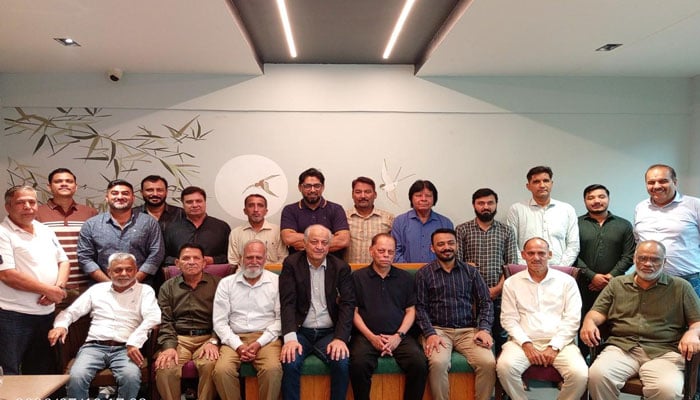
    Nadeem Omar re-elected Karachi cricket chief

    Nadeem Omar has been re-elected as President of the Regional Cricket Association (RCA) Karachi, securing a third consecutive term after being elected unopposed. His latest victory extends his leadership of Karachi’s regional cricket body for another three years. The election concluded with a unanimous result, as the Nadeem Omar panel secured all 15 votes cast by eligible voters. With the clean sweep, Omar completed a hat-trick of victories, having now won the presidential election for the third time in a row. The election also saw Ali Hussain elected as Secretary of the Regional Cricket Association Karachi. Like Omar, he received all 15 votes and will serve a three-year term. Following the announcement of the results, the newly elected president and secretary thanked the club representatives, voters and members of their panel for expressing confidence in their leadership. They described the unanimous support as a sign of trust from Karachi’s cricket community. Nadeem Omar said his team would continue working to strengthen cricket across the city. He pledged to promote transparency, merit and accountability in the administration of regional cricket while ensuring that decisions are made in the best interest of the game. He said one of the administration’s top priorities would be the development of young cricketers through improved coaching programmes, better facilities and increased opportunities at the grassroots level. He added that identifying and supporting talented players from local clubs would remain a key focus during the next three years. Ali Hussain also reaffirmed the new administration’s commitment to improving the overall structure of cricket in Karachi. He said efforts would be made to enhance coordination with clubs, organise competitive tournaments and create a stronger pathway for emerging players to progress to higher levels of the game. The newly elected leadership stressed that all stakeholders, including clubs, coaches, players and cricket organisers, would be taken on board to strengthen the regional cricket system. They said cooperation among all parties would help improve standards and produce more talented cricketers for domestic and international competitions. Speaking after his re-election, Nadeem Omar said the victory belonged not only to him but to every club and cricket enthusiast who had placed their confidence in his leadership