National

  • | |

    Khawaja Asif hails Sialkot Medical City project

    Defence Minister Khawaja Muhammad Asif has said that Sialkot urgently needed a medical city. He said the project would help improve healthcare facilities for people in the city and nearby areas. Addressing the inauguration ceremony of Sialkot Medical City, Khawaja Asif praised the business community for supporting the project. He also appreciated the role of the Sialkot Chamber in making the initiative possible. The minister said Sialkot had been facing a major healthcare gap. He said patients often had to travel to Lahore when serious medical emergencies occurred in the city. According to Khawaja Asif, the new medical city will help reduce the need for patients to travel to Lahore. It will also provide better healthcare services closer to the people of Sialkot. He said the project was an important development for the city. He hoped that the medical facilities would further improve the quality of healthcare available to local residents. Khawaja Asif also spoke about major road projects in the region. He said another lane would be added to the Lahore-Sialkot Motorway. He said the Kharian Motorway would be completed before the other project. He added that better road links would further improve connectivity between Sialkot and other parts of Punjab. The defence minister recalled that he had received a positive response when the motorway proposal was presented. He said major road networks had connected several cities and towns with each other. He said the route from Shahdara to Rawat had created stronger links between different urban centres. Such projects, he added, were important for trade, travel and economic activity. Khawaja Asif also highlighted the growing importance of Sialkot International Airport. He said the airport was no longer serving only the people of Sialkot. He said people from Jhelum and Gujrat were also using the airport. Residents of Azad Jammu and Kashmir were also travelling through the facility, he added. The minister credited Sialkot’s business community for many of the city’s major development projects. He said local traders and industrialists had made significant contributions to the city’s growth. Khawaja Asif said the Sialkot business community had established high standards. He added that these standards were recognised internationally. He said the success of Sialkot showed what could be achieved through cooperation between the business community and public institutions. He stressed that continued development could further strengthen the city’s position as an important economic and industrial centre.

  • | | |

    Pakistan targets $1.5bn hybrid rice market in Chin…

    Pakistan has a major opportunity to increase its hybrid rice exports to China and could potentially secure exports worth up to $1.5 billion, according to industry experts. The opportunity has emerged as China looks for alternative sources of non-Basmati rice amid a decline in rice trade with India. Pakistani exporters believe the changing market conditions could allow the country to expand its presence in China. Shahzad Ali Malik, founding chairman of the Rice Exporters Association of Pakistan (REAP) and CEO of Guard Agricultural Research and Services, said Pakistan should move quickly to take advantage of the situation. He said Pakistan had a competitive edge because local farmers already grow Chinese hybrid rice varieties. With a coordinated strategy between the government and private sector, Pakistan could significantly increase its exports to the Chinese market. China is expected to remain one of the world’s largest rice importers. Its rice import demand for 2025-26 has been estimated at around 3.1 million tonnes. India had previously been an important supplier of non-Basmati rice to China. However, changes in Chinese import requirements and non-tariff restrictions have affected Indian rice shipments. This has created an opening for other suppliers. Pakistan is considered well placed to benefit because it already produces both Basmati and non-Basmati rice. Pakistan also has surplus stocks of several non-Basmati varieties. These include Chinese hybrid rice and IRRI varieties that are used in China for food processing and strategic food reserves. The hybrid rice segment offers particular potential. Pakistan uses hybrid seed parent lines imported from China. This could make it easier for Pakistani producers and Chinese buyers to maintain compatibility in varieties and quality standards. Pakistan also has an advantage in the non-GMO segment. Industry representatives believe this could strengthen the country’s position as Chinese buyers become more selective about imported rice. The Pakistan-China Free Trade Agreement could further support exports. Existing trade links and CPEC-related logistics may also help Pakistani exporters reduce transportation time and improve their competitiveness. The changing market could benefit both exporters and farmers. Lower competition from India may increase demand for Pakistani rice and could improve prices. Chinese buyers may also seek long-term contracts and assured supplies. Such arrangements could provide farmers with greater market certainty and encourage investment in rice production. However, industry experts say Pakistan must improve its export systems to take full advantage of the opportunity. The government and private sector will need to work together on contract farming, seed quality, certification and food safety requirements. Chinese authorities have strict standards for food safety and pesticide residues. Pakistani exporters will therefore need to ensure that rice consistently meets the required specifications. Seed companies can also play an important role. Improved hybrid seeds could increase yields per acre while helping farmers produce rice of consistent quality. Logistics will be another key factor. Industry representatives believe Pakistan’s ports and CPEC-linked infrastructure could help shorten delivery times and reduce costs. Rice is one of Pakistan’s most important export commodities and ranks second after textiles. An increase in rice exports could generate additional foreign exchange and provide greater economic opportunities for farmers, particularly in Punjab and Sindh. Malik estimated that Pakistan could increase its overall rice exports to around $5 billion within three to five years if the necessary planning, investment and policy support are provided. He also proposed establishing a Pakistan-China Rice Export Task Force. The proposed body could include rice exporters, seed companies and relevant government authorities. The task force could develop a long-term export strategy, coordinate with Chinese buyers and address regulatory and logistical challenges.

  • | |

    Balochistan lawmakers condemn Nushki killings

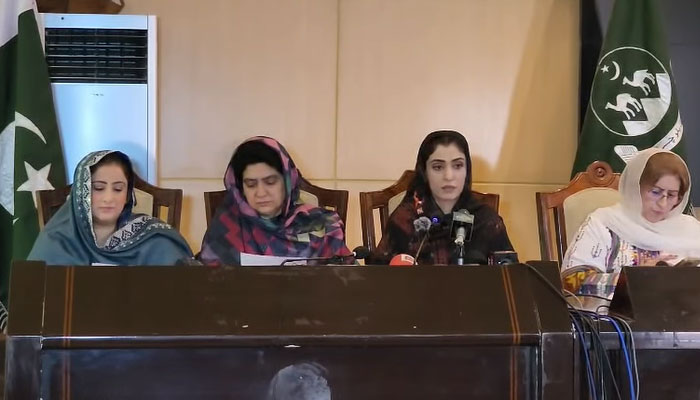
    Women parliamentarians in Balochistan have strongly condemned the killing of a mother and daughter in Nushki. The victims were reportedly killed after militants entered their home. The lawmakers described the incident as deeply tragic. They said the attack was also against Baloch traditions and social values. They expressed concern over the targeting of civilians, especially women. Speaking at a press conference in Quetta, Balochistan government adviser Meena Majeed said the victims were identified as Bibi Hanifa and Hafsa. She alleged that the two women were killed by militants linked to what the authorities describe as Fitna al-Hindustan. Majeed questioned why the mother and daughter were targeted. She asked what their crime was. She said ordinary Baloch citizens were now facing threats from militants. She also expressed concern about the targeting of women. Majeed said the government and security forces were continuing operations against militants in the province. She assured that those involved in the Nushki attack would be identified and brought before the law. She said the government would continue efforts to protect civilians. Balochistan Assembly Deputy Speaker Ghazala also condemned the incident. She said women parliamentarians would not remain silent over the killing of the mother and daughter. Ghazala stressed that women must be protected everywhere. She said their safety should remain a priority under all circumstances. Provincial Education Minister Raheela Durrani also expressed strong concern over the incident. Durrani questioned the message being sent about Balochistan when women were targeted and killed. She said such incidents damage the image of the province and create fear among local communities. The women lawmakers said violence against civilians could not be tolerated. They called for effective action against those responsible for the killings. They also stressed the need for stronger security measures to protect women and other vulnerable citizens. The lawmakers expressed solidarity with the victims’ families. They said the government and security institutions must ensure that those responsible for the attack face justice.

  • Punjab Police’s Gujranwala division faces media communication gaps

    GUJRANWALA: Punjab Police’s Gujranwala division has a public relations setup in place, but journalists covering the region say the system is failing at the most basic task providing timely and accessible official information. Journalists covering police affairs across Gujranwala division say contacting the concerned PRO for the police version of an incident has become a frustrating exercise, with calls and messages frequently going unanswered. The problem becomes more serious when reporters are working on developing stories involving arrests, FIRs, police encounters, alleged misconduct or other sensitive matters where the police version is essential before publication. According to journalists, the issue is not simply about the availability of press releases. The police communication mechanism largely revolves around a WhatsApp group where official information is circulated, but there is little effective two-way communication when journalists need clarification or an immediate response. “Information is posted in the group, but when a journalist needs to ask a question or verify an incident, getting a response is often difficult,” said a journalist covering police affairs in the division. Another journalist said the communication gap had become particularly noticeable during breaking incidents, when reporters need the official version within minutes rather than hours. The frequent changes of PRO officials have further complicated the situation, journalists say. According to them, PROs are changed so frequently that journalists are often left uncertain about whom to approach for official comments. “By the time a working relationship develops with one PRO, another officer is assigned the responsibility,” a journalist said. The situation raises questions about the effectiveness of the PRO system itself. A police public relations officer is not merely responsible for forwarding press releases; the position also serves as a communication bridge between the police department and the media. When that bridge fails to function, journalists can be left with incomplete information while the police department risks losing an opportunity to present its official position. The problem is particularly important in a region where police operations regularly generate public interest. Arrests, encounters, recoveries, FIRs and allegations against police personnel all require timely verification and an official response. Journalists say the regional police command should establish a stable and clearly accessible media contact mechanism instead of relying primarily on a WhatsApp group for communication. The Punjab Police authorities and senior officers of Gujranwala division should also review the frequent changes in PRO assignments and assess whether the existing arrangement is delivering the level of media coordination expected from a major regional police formation. Without timely communication, the PRO system risks becoming a one-way information desk rather than the professional media liaison mechanism it is supposed to be.

  • | |

    Goods transporters defer nationwide strike for 40 …

    Goods transporters have announced a 40-day postponement of their nationwide strike following talks with government representatives in Karachi. The negotiations were held at the Governor House in Karachi. Sindh Governor Nihal Hashmi, Karachi Mayor Murtaza Wahab, Federal Minister for Communications Abdul Aleem Khan and All Pakistan Goods Transporters Association President Malik Shahzad attended the meeting. Speaking at a press conference after the talks, Malik Shahzad said transporters had decided to postpone the strike after receiving assurances from the government. He said the transporters had been on a nationwide strike for the past nine days. According to him, the Sindh government assured them that the parking issue would be addressed. Shahzad said the government had also sought 15 days to review the mechanism for determining petroleum prices. The issue of whether fuel prices should be revised every 15 days or once a month would be examined, he added. He said Federal Minister Abdul Aleem Khan had assured the transporters that a committee would be formed to review toll taxes and consider reducing the charges. The transporters were also assured that 10-wheeler vehicles would be allowed to carry an appropriate weight, Shahzad said. He added that the federal and provincial governments had already resolved some of their concerns. Other issues require decisions at the cabinet level, he said. Shahzad said meetings of the relevant committees would continue. He expressed hope that the government would fulfil its commitments. He clarified that the transporters were not ending their strike permanently. Instead, they were postponing it for 40 days. He warned that the transporters could resume protests if the government failed to implement the assurances given during the negotiations. Federal Minister for Communications Abdul Aleem Khan said the government had addressed the transporters’ issues that could be resolved immediately. He said some demands required formal procedures, which the government would complete. Several committees had been formed to work on the remaining issues, he added. Aleem Khan also criticised the condition of the Karachi-Hyderabad road. He said the existing road could not properly be described as a motorway. He announced that work on a new motorway from Sukkur to Hyderabad and onward to Karachi would begin this year. The minister said the government wanted to avoid decisions that could create unnecessary disputes. Sindh Governor Nihal Hashmi said the regional situation was currently unusual and had significant economic implications. He said the economic effects of conflicts were being felt not only in Pakistan but across the world. He added that the prime minister and the field marshal were making efforts to ensure that the impact on the public remained manageable. Hashmi said the government and transporters had listened to each other during the negotiations. Both sides, he added, agreed that they were prepared to make sacrifices for the country. Karachi Mayor Murtaza Wahab said the authorities had spent the entire day trying to resolve the issues raised by transporters. He said the Sindh government would take action on matters falling under its jurisdiction. Wahab stressed that the authorities wanted to resolve disputes through dialogue rather than confrontation.

  • PSB, ACTIVIT sign MoU to promote sports, health and youth development

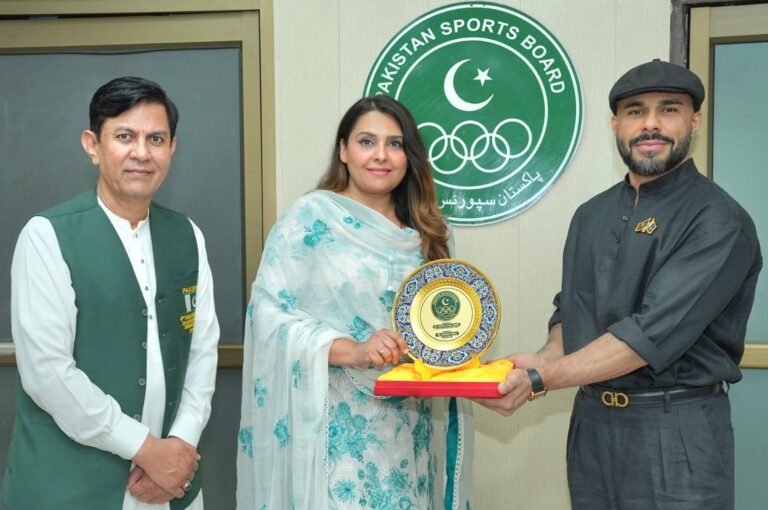
    The Pakistan Sports Board (PSB) Coaching Centre Lahore and ACTIVIT have signed a Memorandum of Understanding (MoU) aimed at promoting sports, improving health and wellness, and creating sustainable opportunities for athletes through long-term collaboration. The agreement was signed by PSB Coaching Centre Lahore Director Noorish Sabah and ACTIVIT CEO and Director of National Hospital Lahore, Rd. Rizwan Aftab Ahmed. Under the partnership, ACTIVIT will sponsor annual sports events organised by the PSB Coaching Centre Lahore on the occasion of Independence Day, ensuring regular competitions while providing greater support to athletes and youth development initiatives. Speaking at the signing ceremony, Noorish Sabah described the partnership as a significant step towards strengthening sports development in pakistan. She expressed her gratitude to Rd. Rizwan for supporting the Jashn-e-Azadi Celebrations 2026, saying that his sponsorship, including logistical support and winning prizes, made the national celebrations more meaningful and memorable for athletes and participants. She said the collaboration reflected a shared commitment to nurturing sporting talent, promoting healthy lifestyles and empowering Pakistan’s youth. “I am grateful to Rd. Rizwan for his valuable contribution to the cause of sports and youth development. People like him are not only a national treasure but also a true inspiration for all of us who believe in supporting the national cause and contributing to Pakistan at every possible level. We look forward to working together on many more impactful initiatives in the years ahead.” Rd. Rizwan described the agreement as an important milestone in expanding grassroots sports and strengthening the role of the PSB Coaching Centre Lahore. He emphasised the importance of maintaining an active lifestyle and working towards physical and overall well-being. “Healthy minds and healthy bodies are the foundation of a strong nation. Our academies can become beacons of education, inspiring young people to embrace sports, make healthier choices and build disciplined, productive lives,” he said. The MoU marks a shared vision to use sports as a powerful force for health, discipline, unity and youth empowerment, while creating more opportunities for young athletes to discover their potential and contribute positively to Pakistan’s future.

  • | | |

    Pakistani Squash player Sana Bahadur wins Australi…

      Pakistan’s squash player Sana Bahadur has achieved a notable victory by winning a squash tournament held in Melbourne, Australia. Her impressive performance in the competition has added another achievement to Pakistan’s growing presence in international squash. The tournament featured players competing for the title in a highly competitive environment. Sana Bahadur progressed through the event with strong performances and eventually secured her place in the final, where she faced Australia’s Rachael Greena. The final match provided an exciting contest between the Pakistani player and her Australian opponent, with Sana demonstrating confidence, determination and excellent control throughout the game. In the final played in Melbourne, Sana Bahadur defeated Rachael Greena by a score of 3–1 to claim the championship title. The victory reflected Sana’s ability to perform under pressure and maintain her composure during an important international match. Despite facing a home player, Sana remained focused and produced a strong performance that enabled her to take control of the contest. Winning an international tournament in Australia is a significant accomplishment for Sana Bahadur and represents an encouraging development for Pakistani squash. Pakistan has historically produced some of the world’s finest squash players, and the country has a long and distinguished tradition in the sport. Players such as Jahangir Khan and Jansher Khan established Pakistan as a major force in international squash, inspiring generations of young athletes to take up the sport. Sana’s victory can therefore be viewed as part of the continuing efforts of Pakistani squash players to compete successfully on international platforms. Success in overseas tournaments is particularly important for emerging players because it provides valuable experience against competitors from different countries and helps them improve their rankings and confidence. The Melbourne tournament also offered a valuable opportunity for players to gain international exposure and compete for prize money. The total prize purse for the event was $3,000. Although the financial reward was relatively modest compared with major international squash competitions, winning the title remains an important achievement for Sana because of the competitive experience and recognition associated with the victory. For Pakistan, achievements such as Sana Bahadur’s success are important in encouraging young athletes and highlighting the country’s potential in squash. International victories can also motivate aspiring players to pursue professional careers in the sport and demonstrate that Pakistani athletes can compete successfully against international opponents. Sana Bahadur’s triumph in Melbourne is therefore more than just a tournament victory. It is a testament to her hard work, preparation and determination. By defeating Australia’s Rachael Greena 3–1 in the final, she successfully brought the championship title to Pakistan. The achievement is expected to provide Sana with greater confidence as she continues her squash career. It also offers a positive moment for Pakistani squash fans, who continue to look forward to seeing new players emerge and represent the country on international courts. With her Melbourne victory, Sana Bahadur has made a strong statement about her potential and added another encouraging chapter to Pakistan’s squash story.

  • Ghee and cooking oil shortage feared amid tanker strike

    Karachi – Another food crisis is emerging in the country as concerns grow over a possible shortage of ghee and cooking oil. Cooking oil and ghee are essential for preparing food but the country is now facing the risk of a shortage of these important food items. Chairman of the Edible Oil Tankers Association, Bakhtawar Khan said that edible oil tankers have been on strike for the past 10 days. Bakhtawar Khan warned that if the strike continues, the supply of edible oil could be disrupted potentially resulting in a ghee and cooking oil crisis across the country. He demanded that 10-wheeler tankers be allowed an appropriate load weight. He said that their 10-wheeler edible oil tankers have a capacity of 60 tonnes and that carrying this load does not damage the vehicles. The Chairman of the Edible Oil Tankers Association called for the restrictions to be lifted and demanded that their issues be resolved at a meeting scheduled to be held at the Governor House today. He warned that if their concerns are not addressed, the strike will continue.

  • | |

    ‘I’ll lead from the front’: Sohail Afridi vo…

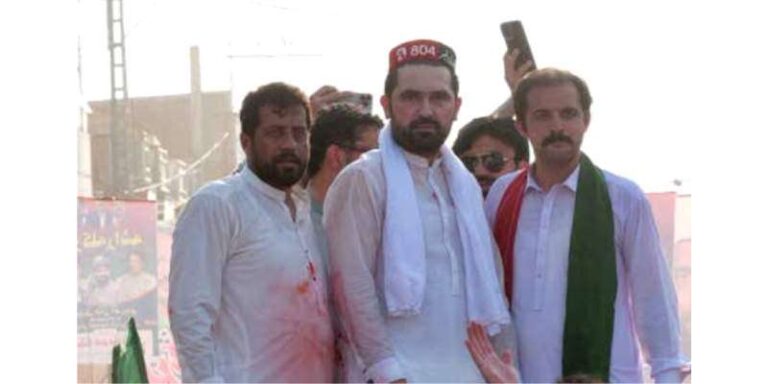
    Khyber Pakhtunkhwa Chief Minister Sohail Afridi has announced a major march towards Islamabad on September 27, saying he will personally lead the protest demanding the release of PTI founder Imran Khan. Addressing a public gathering in Bannu on Sunday, Afridi urged supporters not to be afraid and said more than two million people would take part in the planned demonstration. “I will be at the front of the march for Imran Khan’s release,” Afridi said, assuring supporters that he would stand with them throughout the protest. He called on people to remain determined and claimed that a large turnout would make it difficult for authorities to stop the protesters. He also said that those who use oppression are often afraid when confronted by a large public movement. The chief minister also criticised the federal government, alleging that the people of Khyber Pakhtunkhwa had repeatedly been used as “scapegoats” in the past. He accused the authorities of treating the province as an experimental ground and said his administration was independent in making decisions. Speaking about law and order, Afridi said maintaining peace was a shared responsibility. He assured police personnel that his government stood firmly behind them and was providing funds for modern weapons and improvements to police infrastructure. Afridi also compared the current security situation with the period between 2018 and 2022, when Imran Khan was prime minister. He claimed that there had been peace and stability across the region during that period and said terrorism had not been a major threat. According to Afridi, violence and terrorism have returned to the province, with southern districts, particularly Bannu, among the worst affected areas. He held the federal government and those he alleged were responsible for bringing it to power accountable for the deteriorating security situation.

  • | |

    Pakistani Mountaineer Sohail Sakhi’s body shifte…

    The body of Pakistani mountaineer Sohail Sakhi, who lost his life in a tragic avalanche accident on Broad Peak, has been transported to Skardu by an Army Aviation helicopter. Sohail Sakhi was among the climbers caught in a devastating avalanche that struck Broad Peak in the early hours of July 31. The incident occurred during the night between July 30 and 31, when a massive avalanche swept across the mountain, leaving 10 mountaineers missing, including nine foreign climbers. Following the accident, rescue and recovery efforts were launched in the difficult and dangerous conditions of the Broad Peak region. The mountain, located in the Karakoram range of Gilgit-Baltistan, is one of the world’s highest peaks and is known for its challenging terrain, extreme weather and unpredictable climbing conditions. Sohail Sakhi was among the climbers who could not survive the disaster. His body was recovered from the mountain and later transported to Skardu, an important hub for mountaineering expeditions in the region. The use of an Army Aviation helicopter helped facilitate the transfer of the body from the remote mountainous area. The tragedy has caused grief among the mountaineering community in Pakistan and abroad. Broad Peak attracts climbers from different parts of the world every year, but the extreme environment can make rescue operations extremely challenging. Avalanches, sudden changes in weather, freezing temperatures and difficult terrain pose serious risks even to experienced mountaineers. The July 31 incident involved 10 missing climbers, nine of whom were foreign nationals. Rescue teams and authorities continued efforts to locate and recover those affected by the avalanche. The recovery operation was complicated by the harsh weather and the dangerous conditions at high altitude. The bodies of seven climbers who died in the accident had already been transported to their respective countries. Their repatriation was carried out after recovery operations and the completion of necessary procedures. The transfer of Sohail Sakhi’s body to Skardu marks an important step in the process of returning the deceased Pakistani climber to his family. Further arrangements will be made for the transportation of his body to his hometown, where his family and friends are expected to receive him. The incident once again highlights the risks associated with high-altitude mountaineering in the Karakoram. Despite advances in climbing equipment, communication systems and rescue technology, climbers continue to face life-threatening dangers when attempting some of the world’s highest and most difficult peaks. Sohail Sakhi’s death is a significant loss for Pakistan’s mountaineering community. His passing has drawn attention to the courage and determination of climbers who undertake expeditions in some of the most challenging environments on Earth. Authorities and rescue teams remain focused on recovery and repatriation efforts following the Broad Peak avalanche. The tragedy serves as a reminder of the unpredictable nature of high-altitude expeditions and the importance of safety, weather monitoring and coordinated rescue operations in mountainous regions.