National

  • | |

    Islamic World can unite like NATO, says Hafiz Tahi…

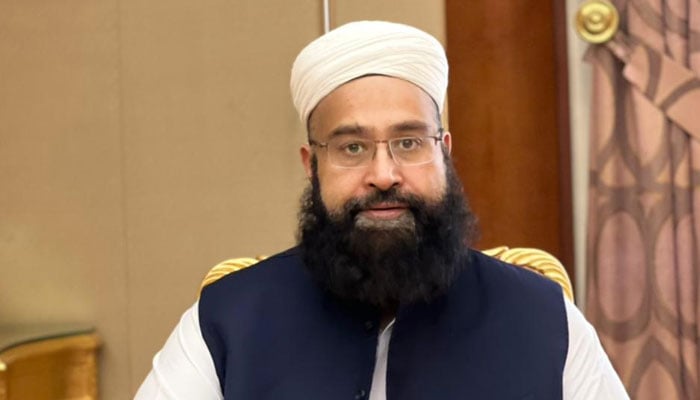
      Chairman of the Pakistan Ulema Council, Hafiz Tahir Mahmood Ashrafi, has said that the Muslim world has the potential to unite and cooperate in a manner similar to the North Atlantic Treaty Organization (NATO). Speaking at a press conference in Lahore, Hafiz Tahir Mahmood Ashrafi emphasized the importance of unity and collective efforts among Muslim countries. He said that the Islamic world could work together more effectively if countries focused on common interests and strengthened cooperation among themselves. Ashrafi said that religious scholars have an important role to play in safeguarding Pakistan and promoting peace, stability and unity within society. According to him, the role of the ulema is particularly important at a time when the country faces various social, political and security challenges. He stressed that religious scholars should contribute to strengthening harmony among people and discouraging divisions based on sectarian, political or social differences. He said that unity and consensus were essential for the stability and progress of Pakistan. The Pakistan Ulema Council chairman also spoke about the registration of religious seminaries across the country. He said that around 22,000 seminaries had already completed their registration. He described the development as an important step toward bringing religious institutions into a more organized framework. Ashrafi maintained that cooperation between the government, religious scholars and religious institutions could help address several challenges facing the country. He said that seminaries and their scholars could play a constructive role in promoting education, social responsibility and national cohesion. Referring to the wider Muslim world, Ashrafi suggested that Islamic countries could establish stronger mechanisms for collective cooperation. He pointed to NATO as an example of countries working together for shared security and strategic interests. In his view, Muslim-majority countries also have the potential to develop stronger cooperation if they demonstrate unity and mutual understanding. He said that the Muslim world possesses significant human, economic and strategic resources, but greater coordination is needed to make these strengths more effective. Cooperation among Muslim countries, he added, could help them address common challenges and protect their collective interests. Ashrafi further emphasized that Pakistan’s stability depends not only on government institutions but also on the positive contribution of religious scholars and other segments of society. He called on the ulema to continue playing their role in promoting peace, tolerance and national unity. He reiterated that the Pakistan Ulema Council believes in unity and consensus rather than division. According to him, differences of opinion can exist, but they should not become a source of conflict or weaken the country. The remarks come amid continuing discussions about the role of religious institutions and scholars in Pakistan’s social and national affairs. The registration of seminaries has remained an important issue, particularly in relation to regulation, documentation and the integration of religious education with broader national objectives. Ashrafi’s comments also highlight the importance of cooperation among Muslim countries at a time when the Islamic world faces a range of political, economic and security challenges. He argued that greater unity could provide Muslim countries with a stronger collective voice in international affairs. Concluding his remarks, Hafiz Tahir Mahmood Ashrafi reaffirmed his belief in unity, cooperation and consensus. He said that religious scholars, educational institutions and ordinary citizens all have a role to play in strengthening Pakistan and promoting harmony across society.
  • | |

    Shahid Afridi’s missing Pet Dog found safe, form…

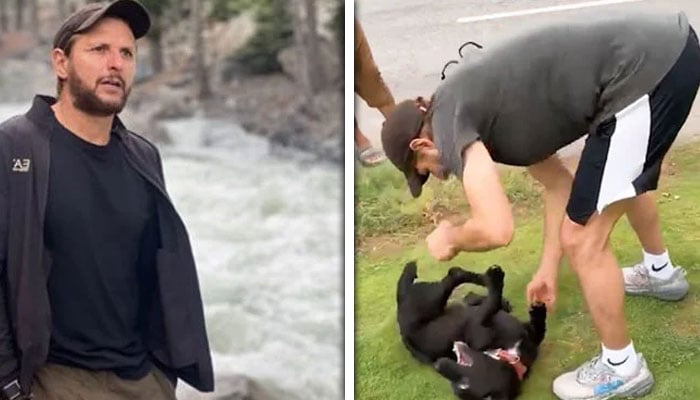
    Former Pakistan cricket captain and star all-rounder Shahid Khan Afridi has announced that his pet dog, which went missing in Islamabad a day earlier, has been found and safely returned home. Afridi shared the good news on social media, expressing his happiness and relief after being reunited with his beloved pet. The former captain had earlier appealed to the public for help after his dog disappeared in Islamabad. In his initial post on X, formerly known as Twitter, Afridi informed his followers that his pet dog was missing and requested people to help locate it. He explained that the dog was not simply a pet but had been raised as a member of his family. Afridi also shared the emotional history of the animal, revealing that the dog had survived a serious illness when it was only 30 days old. Despite facing severe health complications at such a young age, the dog recovered and became an important part of the family. The disappearance of the pet caused concern for the former cricketer, who turned to social media to seek assistance from the public. His appeal quickly attracted attention from his followers and social media users, many of whom shared and supported his post in an effort to help locate the missing dog. The former Pakistan captain later returned to social media with an update that brought relief to those who had followed the situation. He announced that his dog had been found and had safely made it back home. Sharing the positive news, Afridi thanked everyone who supported his appeal and helped spread the message about his missing pet. He expressed his gratitude to the people who shared his post and contributed to the search. Afridi said that the support he received from the social media community played an important role in the safe return of his dog. He thanked all those who stood by him and helped amplify his message during the difficult situation. The incident highlights how social media can be used not only for entertainment and communication but also to mobilize communities during emergencies and personal difficulties. Afridi’s large following helped his appeal reach a wider audience, increasing the chances of locating the missing pet. For Afridi, the return of the dog was particularly meaningful because of the strong bond he shares with the animal. Having cared for it since a very young age and watched it recover from a serious illness, he considers the dog a member of his family. The former captain’s emotional response also drew attention from fans who expressed happiness over the dog’s safe return. Many social media users welcomed the news and congratulated Afridi after he confirmed that the pet was back home. Shahid Afridi, one of Pakistan’s most popular cricketers, has remained active on social media and frequently interacts with his supporters. His latest post once again demonstrated the strong connection between the former cricketer and his followers. With the dog now safely back home, Afridi thanked the online community for its support and assistance. He said the outcome would not have been possible without the collective efforts of people who shared and supported his appeal. The former captain can now breathe a sigh of relief after what had been an anxious search for a much-loved member of his family.

  • |

    Maj Gen (R) Dr. Rajih Al-Baqami needs to go beyond defence diplomacy

    ISLAMABAD: For the second consecutive time, the Kingdom of Saudi Arabia has appointed a career military veteran as its ambassador to Islamabad, inaugurating a compelling new chapter in Pakistan-Saudi defense diplomacy. The recent designation of Major General (R) Dr. Rajih bin Tami Al-Baqami as the Saudi envoy comes at a pivotal geopolitical juncture. Smaller Gulf states like Qatar, Bahrain, and particularly Kuwait are increasingly turning their strategic gaze toward Riyadh for defense assurances. In response, Saudi Arabia has conspicuously integrated Pakistan into the its defensive calculus, both specifically within the Gulf and more broadly across the Middle East. This deepening collaboration signifies the beginning of the end of an era characterized by blind, unilateral reliance on the United States for regional security. Whether through multinational maritime security coalitions or trilateral defense pacts, Riyadh has unequivocally positioned Islamabad as a trusted strategic partner. Crucially, while Washington has not been entirely excluded from the new arrangements, the table that once seated only the US now accommodates Pakistan and Turkey’s president states that more seats will soon be filled. His hint is for Egypt. Turkey is playing a big game and Egypt is part of his plans for Sahel and Middle East. Moreover, Saudi Arabia has extended its supportive hand to facilitate Pakistan’s major defense agreements with Somalia, further expanding Islamabad’s footprint in Riyadh’s sphere of influence. This rapidly evolving landscape demands an exceptionally shrewd Saudi diplomat in Islamabad, given that intellectual powerhouses like the United States are unlikely to passively observe these seismic shifts in the affluent Gulf region. One could argue that defense diplomacy has cycled back to the fervor of the 1970s but the stark difference is that the towering strategic minds of that era, such as Zulfikar Ali Bhutto, Ardeshir Zahedi, and Henry Kissinger, are no longer among us and on the other hand China of today is 100 times more important than China of 1970s. However, Crown Prince Mohammed bin Salman has proven himself uniquely adept at this high-stakes game. Without jeopardizing ties with Washington, he has fortified relations with Beijing to an unprecedented degree; in fact, Riyadh is now expanding its commercial and strategic footprint with China more aggressively than with the US. According to the Saudi Foreign Ministry, Dr. Al-Baqami is among eight newly appointed ambassadors who recently took their oath before the Crown Prince in Jeddah. Despite this formal announcement, frequent winner of government awards for his services in journalism, Saleh Zaafir, curiously attributed the news to his “sources.” Meanwhile, leading AI chatbots and search engines like ChatGPT, DeepSeek, and Gemini draw a blank regarding the nature of Dr. Al-Baqami’s specific postings in Saudi diplomatic missions London and Jordan, which strongly suggests a classified, defense-oriented portfolio. Dr. Al-Baqami hails from the warrior Al-Baqami tribe, a lineage renowned for its formidable resilience and esprit de corps. Yet, a note of caution is urgently warranted. Misleading and unrealistic commentary regarding Saudi-Pakistan defense pacts has become rife. These agreements will not automatically neutralize Pakistan’s internal existential threats, specifically, the escalating bureaucratic corruption and spiraling crime rates. The historical precedent is sobering: the practice of deploying military officers to diplomatic roles is ancient, tracing back to the Roman and Byzantine empires, yet it has no inherent correlation with a nation’s prosperity or moral standing. Napoleon formalized this tradition in the pre-WWI era, but French military envoys failed to stave off famine and destitution in France. Subsequently, professional foreign ministries emerged, and bureaucrats, much like termites, consumed diplomacy from the inside, burying interstate relations beneath classified files. When opacity became the norm, civil society rebelled, giving rise to digital media and public diplomacy, a trend recently taken to extremes by former US President Donald Trump. For the new Saudi ambassador, public diplomacy will prove a formidable challenge. Although several Saudi-funded media outlets operate in Pakistan, they have largely been hijacked by populist scribes who have reduced them to ashes of sensationalism. Reclaiming these platforms from the clutches of journalistic mediocrity must be an immediate priority. Dr. Al-Baqami’s predecessor, Nawaf bin Malik Al-Maliki, a retired Saudi Navy officer, remained in Islamabad for nearly twelve years. Pakistan’s navy has historically played a pivotal role in the formation and training of the Saudi Naval Forces. Al-Maliki initially arrived as defense attaché in 2014, the very year MBS ascended to a high office before being appointed Defense Minister in 2015. When MBS became Crown Prince in 2017, Al-Maliki assumed the ambassadorship. He retained this position for a decade indicating that he was a trusted confidant of the Crown Prince. Intriguingly, Al-Maliki’s next posting is Algeria—a nation where military dominance permeates business and governance, ensnaring the country in poverty and bloodshed. As Algeria remains a Saudi ally, it is premature to forecast the trajectory of his new mission. To conclude, one can only hope that Major General (Retd) Dr. Rajih Al-Baqami’s tenure in Pakistan transcends the narrow confines of defense diplomacy. The true test of his legacy will lie in revitalizing public diplomacy, fostering people-to-people connections, and navigating the intricate socio-political fabric of Pakistan with the same dexterity he brings to the strategic chessboard.

  • |

    Prices of 52 new medicines likely to be fixed soon

    ISLAMABAD: An important development has emerged regarding the prices of 52 new medicines approved by the Drug Regulatory Authority of Pakistan (DRAP) for life-saving treatment. The prices of the 52 new life-saving medicines are likely to be fixed this month. Sources said that a meeting between Prime Minister Shehbaz Sharif, the Health Minister and DRAP officials has been scheduled. According to sources, the Prime Minister will meet with the Ministers for Health and Finance and the CEO of DRAP tomorrow. The meeting will include a briefing on hardship cases and the pricing of 52 new medicines. Sources said the purpose of the meeting is to seek the Prime Minister’s support regarding the 52 new medicines and pending hardship cases. The newly approved medicines are intended for the treatment of serious conditions including cancer, diabetes, haemophilia, autoimmune disorders, critical-care conditions, severe infections, blood disorders and emergency medical conditions. The DRAP Policy Board and Pricing Committee have already approved the 52 new medicines while the Cabinet Drug Pricing Committee approved them on July 24. Sources said that the Cabinet Pricing Committee and DRAP have also determined the maximum prices for the new medicines. Meanwhile, hardship cases involving around 100 medicines for various diseases are still pending. Sources said that once approval is granted by the Cabinet, DRAP will issue an official notification regarding the prices of the new medicines.

  • | |

    Ex-army chief Qamar Bajwa undergoes Dubai check-up

    Former Chief of Army Staff General (retd) Qamar Javed Bajwa has been shifted to the United Arab Emirates for further medical examination and treatment. Family sources said Bajwa is currently in the UAE. He travelled abroad after completing his initial treatment in Pakistan. The former army chief was examined by a team of specialist doctors in Dubai. The doctors carried out a detailed medical check-up. According to family sources, Bajwa’s condition has improved considerably after the medical examination. However, the results of some important medical tests are still awaited. Doctors will review the remaining reports before giving their final recommendations. His further treatment and return to Pakistan will depend on the doctors’ advice. Family sources said Bajwa will stay in the UAE for a few days. He will remain with his son during his stay in the country. A final decision about his return to Pakistan will be taken after the doctors review all his medical reports. His family is also awaiting the doctors’ further instructions. Bajwa had suffered serious injuries around four and a half months ago. He reportedly slipped and fell at his residence. The accident caused injuries to his head and back. He was immediately shifted to Combined Military Hospital (CMH) Rawalpindi for treatment. The former army chief remained admitted to the hospital for around three weeks. He received treatment under the supervision of military doctors. At the time, the Inter-Services Public Relations (ISPR) officially confirmed that Bajwa had been injured after falling at his residence. The military’s media wing said he was receiving treatment at CMH Rawalpindi. His condition was monitored by doctors during his stay at the hospital. After completing his initial treatment in Pakistan, Bajwa later travelled to the UAE for further medical assessment. His current stay in the UAE is expected to continue until doctors complete their assessment. The results of the pending tests will help determine the next course of treatment. Family sources have not provided a specific date for his return to Pakistan. They said the decision will be made after consultation with doctors. General (retd) Qamar Javed Bajwa served as Pakistan’s Chief of Army Staff from November 2016 to November 2022. He retired from the position after completing his tenure in November 2022.

  • Viral video raises questions over staff availability at DHQ Hospital Tank

    TANK: A video circulating on social media showing the Children’s Ward of District Headquarters Hospital Tank has raised serious questions about the availability of medical staff and administrative supervision at the hospital. In the video, an attendant of a patient can be heard speaking in Pashto and claiming that he brought his patient to the Children’s Ward but, despite waiting for two hours, neither a doctor nor a nurse was present. The video also shows an apparently empty counter and beds in the Children’s Ward, prompting concerns among citizens regarding the functioning of the hospital, availability of medical staff and timely provision of treatment to patients. However, the claims made in the video could not be independently verified. The patient’s attendant also questioned elected representatives, saying that people had voted for MNAs and MPAs with the expectation that healthcare facilities in the area would improve, asking who would now be responsible for improving the condition of the hospital. Following the circulation of the video on social media, citizens and social circles have expressed concern and called for immediate action by the relevant authorities. Public representatives and social activists have urged the Chief Minister Khyber Pakhtunkhwa, Chief Secretary and senior health authorities to conduct an immediate and surprise inspection of DHQ Hospital Tank. They demanded that the attendance of doctors, nurses and other medical staff, duty rosters and the availability of healthcare facilities in all wards be thoroughly reviewed. The citizens further called for the hospital to be made fully functional in practical terms rather than merely being upgraded on paper, with the presence of medical staff ensured in all wards and patients provided timely, quality and dignified healthcare services.

  • | |

    Two labourers killed, Three injured in Quetta road…

    A Quetta IED blast killed two labourers and injured three others in the Wali Tangi area of Quetta district on Sunday, according to police officials. Police said unidentified attackers planted an improvised explosive device (IED) along the roadside and detonated it remotely when a pickup carrying a contractor and four labourers passed through the area. The incident occurred around 30 kilometres from Quetta. The victims were reportedly travelling to Wali Tangi for construction work related to tube wells. The powerful explosion badly damaged their vehicle. All five people were initially injured and transported to Civil Hospital Quetta, where two later succumbed to their injuries. Police and Frontier Corps personnel quickly reached the blast site, cordoned off the area and launched a search operation to identify and arrest those responsible. In a separate incident in Killi Raisani on the outskirts of Quetta, unidentified armed men shot dead former Afghan army commander Haji Hazrat Ullah, also known as Rorad Achakzai. Police said motorcycle-riding attackers targeted him while he was travelling through the area. The latest violence comes amid growing security concerns in Balochistan, where recent figures indicate a sharp rise in fatalities.

  • | | |

    AJK reserved seats election: Polling set for Augus…

    The AJK reserved seats election will be held on August 24, with the Azad Jammu and Kashmir Election Commission announcing the schedule for polling in the Legislative Assembly. According to the notification, voting will take place at the AJK Assembly from 10am to 1pm. The reserved seats include five for women, one for Ulema-e-Deen or Mashaikh, one for Jammu and Kashmir state subjects living abroad, and one for technocrats and other professionals. Candidates will be able to submit their nomination papers on August 20 between 9am and 2pm. The returning officer will subsequently scrutinise the papers and publish the list of valid candidates. Appeals against decisions on nomination papers can be filed on August 21. The Chief Election Commissioner will hear the appeals on August 22, while candidates can withdraw their nominations before 2pm on August 23. The AJK Assembly has 53 members, including 45 directly elected members and eight members elected through reserved seats. However, polling on seven directly elected seats could not take place because of law and order concerns. As a result, the reserved-seat election will initially be conducted by the 38 directly elected members elected so far. The development comes as AJK’s three-phase electoral process continues amid political and security challenges.

  • | | |

    Goods transporters postpone nationwide strike for …

    The goods transporters strike has been postponed for 40 days after the government and representatives of the transport industry made progress in resolving several key demands. All Pakistan Goods Transport Ittehad President Malik Shehbaz Awan announced the decision on Sunday, saying the strike was being deferred in the “broader national interest”. He said some demands had already been addressed, while issues requiring cabinet approval would be considered within 15 to 20 days. A major concern for transporters is the government’s daily adjustment of petrol and diesel prices. The association has called for fuel prices to be revised on a fortnightly or monthly basis instead. Transporters also received assurances that overloading would be controlled according to legal axle-load limits. Discussions will continue on withholding tax and other industry-related issues. Awan said the Sindh government had agreed to shift truck operations to a new truck stand within a year. He also claimed that six of the association’s eight demands concerning Punjab had been accepted. Sindh Governor Nihal Hashmi and Federal Minister for Communications Abdul Aleem Khan welcomed the development and stressed continued dialogue. The 40-day postponement gives both sides an opportunity to resolve the remaining disputes and avoid further disruption to Pakistan’s goods transportation network.

  • | |

    Activist urges President to withdraw Civil awards …

      ISLAMABAD: Pakistani citizen and activist Ashba Kamran has formally written to President Asif Ali Zardari, calling for the immediate withdrawal of national civil awards announced by the government on August 14, 2026, for serving bureaucrats, federal secretaries and ministers. In her letter addressed to the President, Kamran argued that awarding national honours to salaried bureaucrats and ministers for carrying out their routine official responsibilities amounts to a violation of the Constitution and relevant laws. She maintained that government officials should not receive national awards merely for performing duties for which they are already appointed and paid. According to the letter, Kamran had previously raised similar concerns with the Presidency in August 2025 and had sent a formal reminder regarding the issue. However, she claimed that despite the earlier communication, the administration once again took what she described as an unconstitutional step by including serving government officials among the recipients of civil awards announced on August 14 this year. The activist cited constitutional and legal provisions to support her position. Referring to Article 259(2) of the Constitution of Pakistan, she argued that national awards are intended to recognise exceptional achievements, including acts of bravery, distinguished services by members of the armed forces, academic distinction and extraordinary and selfless public service. She further maintained that the concept of “public service” in the context of national honours should refer to exceptional and self-sacrificing contributions rather than the routine responsibilities performed by bureaucrats and ministers in their official capacities. Such responsibilities, she argued, are already compensated through regular salaries and official benefits. Kamran also referred to the Decorations Act, 1975, and other relevant laws governing national civil awards. According to her interpretation, these legal provisions do not permit civil honours to be linked simply to an individual’s administrative position, seniority or government employment. The letter further raised concerns about a potential conflict of interest. Kamran argued that granting national awards to serving government officials for routine administrative work could encourage a culture of favouritism and preferential treatment. She called for greater transparency and adherence to established legal standards when selecting recipients of national honours. The activist also invoked Article 5(2) of the Constitution, which establishes the obligation to obey the Constitution and the law. She argued that this obligation applies to every citizen, including the head of state and government officials. Kamran presented two key demands in her letter. First, she called for an administrative order to immediately withdraw the awards granted to serving bureaucrats and ministers included in the August 14, 2026 list where the honours were allegedly awarded for performing their routine official responsibilities. Second, she urged the Cabinet Division to issue clear instructions preventing officials who are merely performing their regular administrative and governmental duties from being eligible for future nominations for national civil awards. A copy of the letter was also sent to the Cabinet Secretary and the Cabinet Division in Islamabad for consideration and appropriate action. The matter has raised questions about the criteria used for selecting recipients of national honours and the distinction between exceptional public service and the routine responsibilities associated with government positions.