National

  • | | | |

    Three powers, one shield? What the pact means

    Pakistan, Saudi Arabia and Türkiye have formalised their long-standing strategic and defence ties through the newly signed Makkah Joint Defence Agreement, establishing a framework for closer military coordination and collective security. The agreement was signed during a trilateral summit in Makkah attended by Prime Minister Shehbaz Sharif, Saudi Crown Prince Mohammed bin Salman and Turkish President Recep Tayyip Erdogan. The pact has attracted comparisons with established military alliances. However, analysts say its stated purpose is not to create a new military bloc or target any particular country. Instead, it provides an institutional structure for defence cooperation that has developed between the three nations over several decades. A formal structure for longstanding ties Pakistan and Türkiye have maintained close political and military relations for decades, while Islamabad and Riyadh have developed extensive defence, diplomatic and economic cooperation. The new agreement is viewed as an attempt to bring these existing relationships under a formal trilateral framework. It is designed to provide a more structured mechanism for consultations, military coordination and strategic cooperation. Why the agreement was signed now The agreement comes amid growing security challenges across the Middle East and wider region. Analysts say conflicts, changing military technologies and emerging security threats have encouraged countries with shared strategic interests to strengthen their defence coordination. The trilateral arrangement is intended to improve collective preparedness and provide a coordinated response to potential threats while supporting regional stability. What the defence pact provides A central element of the agreement is the principle of collective security. Under the framework, aggression against one member is to be treated as a threat to all three countries. The arrangement is expected to encourage greater military coordination, intelligence cooperation, strategic consultations and defence planning. Closer institutional links could also allow the three countries to coordinate their military capabilities and improve their ability to respond to security challenges. Different strengths, shared security interests Each country brings different capabilities to the partnership. Pakistan contributes a large and experienced military, operational expertise and extensive experience in counterterrorism and conventional defence. Saudi Arabia brings significant economic resources, regional influence and political weight. Türkiye adds its growing defence industry, military technology and manufacturing capabilities. Analysts believe these complementary strengths could make the partnership more effective while allowing the three countries to develop greater strategic self-reliance. Pakistan’s diplomatic role The agreement also comes as Pakistan seeks to strengthen its role as a regional diplomatic actor. Islamabad maintains relations with Saudi Arabia, Türkiye, Iran, China and the United States, giving it channels of communication with several major regional and global powers. Analysts argue that Pakistan’s diplomatic engagement, alongside its military capabilities, could help it contribute to regional crisis management and dialogue. What the pact does not mean Despite comparisons with NATO and other military alliances, analysts stress that the agreement is not described as an offensive alliance. It is also not presented as a pact directed against a particular country, a so-called “Muslim NATO”, a nuclear deterrence arrangement or a religious military bloc. Instead, the three countries have presented it as a defensive framework focused on collective security, deterrence, military cooperation and regional stability. The long-term effectiveness of the agreement will depend on sustained political coordination and the willingness of all three governments to implement its commitments.
  • | |

    PML-N vows to deliver on Kashmir promises

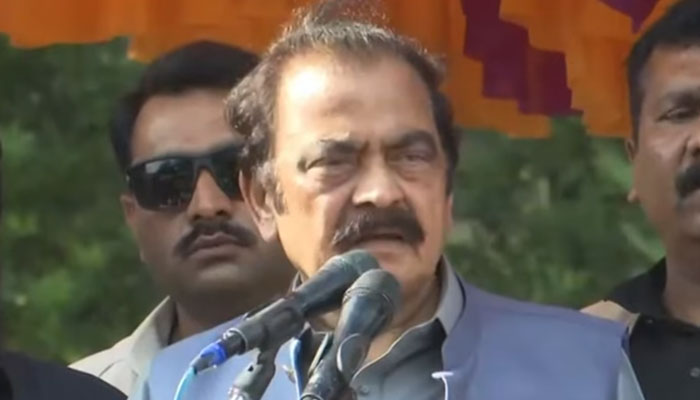
    Pakistan Muslim League-Nawaz (PML-N) leader and Prime Minister’s Adviser on Political Affairs Rana Sanaullah said the time has come to fulfill the commitments made to the people of Azad Jammu and Kashmir (AJK), following the party’s strong performance in the region’s elections. Addressing an election rally in Haveli, Rana Sanaullah said the people of AJK had already expressed their confidence in PML-N through their vote. He stated that the party had secured 24 seats in the elections, surpassing the 23-seat threshold required to form the government in the Legislative Assembly. He described the electoral process as one of the fairest and most transparent in AJK’s history, saying voters had placed their trust in former prime minister Nawaz Sharif and the party’s development agenda. According to him, PML-N now carries the responsibility of honoring every promise made during the election campaign. Rana Sanaullah said AJK witnessed significant progress whenever PML-N governed both Pakistan and the region. He pledged that the party would launch a new phase of development if it formed the next government, adding that projects similar to those introduced in Punjab would also be implemented across AJK to improve infrastructure, public services, and economic opportunities. He said the party remains committed to accelerating development, strengthening institutions, and improving the quality of life for the people of Kashmir. Meanwhile, Federal Minister for Kashmir Affairs and Gilgit-Baltistan Amir Muqam also addressed the gathering and praised the resilience of residents living along the Line of Control (LoC). He said the people of the border areas have made extraordinary sacrifices in defending the country and deserve continued recognition and support. Amir Muqam said the PML-N leadership has consistently stood with the people of Kashmir and remains committed to safeguarding their interests while pursuing policies aimed at development, stability, and prosperity in the region.

  • Senate questions authorities over years of neglect at Mazar e Quaid  

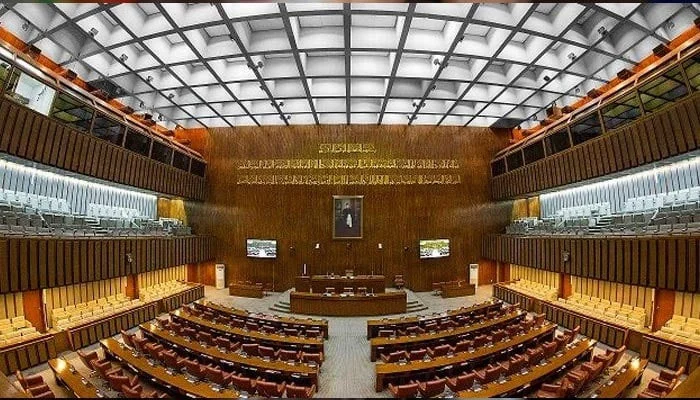
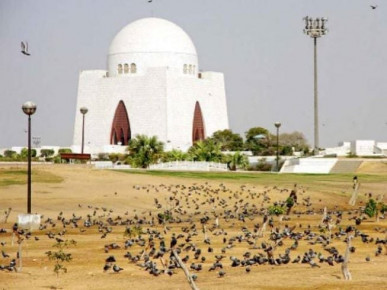
    Islamabad: The Senate Sub Committee on National Heritage and Culture has raised serious concerns over the condition of Quaid e Azam’s Mausoleum, questioning the slow maintenance work, damaged boundary walls, cleanliness issues and security arrangements at one of Pakistan’s most important national monuments. The issue came under discussion during a meeting of the Sub Committee held at Parliament Lodges, Islamabad, under the chairmanship of Senator Syed Waqar Mehdi. The meeting was held to review progress on earlier recommendations regarding administrative, renovation and development matters of Quaid e Azam’s Mausoleum and its surrounding areas. Senator Syed Waqar Mehdi expressed concern over wall chalking and the poor condition of the boundary wall around Mazar e Quaid. He directed the concerned authorities to start urgent renovation work. Federal Secretary for National Heritage and Culture Mr. Asad Rehman Gillani informed the Committee that the boundary wall had not received proper maintenance since 2017 and assured that the issue would be addressed soon. Senator Bushra Anjum Butt also expressed dissatisfaction over the lack of attention given to the national heritage site and questioned why such an important symbol of Pakistan was not receiving the required priority from relevant authorities. The Committee reviewed several operational issues including security, electricity and water supply. Mr. Asad Rehman Gillani informed the Committee that some problems had already been resolved, while remaining matters would be completed at the earliest. The meeting was attended by Senator Bushra Anjum Butt and Senator Sarmad Ali through Zoom. Representatives of the Quaid e Azam Mazar Management Board also participated. Officials from K Electric, Karachi Metropolitan Corporation, Sindh Solid Waste Management Board, Karachi administration and police authorities also attended the meeting. The Committee directed authorities to improve security arrangements at the Mausoleum by installing CCTV cameras across the premises and ensuring deployment of sufficient police personnel. Senator Syed Waqar Mehdi also directed that a complete security plan should be prepared before reopening the Mausoleum for the general public, including deployment of a Special Security Unit. During the discussion, the Committee also raised concerns regarding individuals involved in drug abuse found inside the Mausoleum premises. SSP East Karachi informed the Committee that such individuals are usually granted bail within two to three days after legal proceedings and are later referred to the Edhi Foundation for rehabilitation. Senator Syed Waqar Mehdi also highlighted financial concerns regarding the maintenance of Mazar e Quaid. He observed that the Government of Sindh currently carries the financial responsibility for maintaining the Mausoleum and suggested that other provinces, Gilgit Baltistan and Azad Jammu and Kashmir should also contribute annually towards its maintenance and operational expenses. The Committee expressed dissatisfaction over incomplete sanitation work around the Mausoleum. Officials informed that general waste had been removed, but construction debris was still present in surrounding areas. Senator Syed Waqar Mehdi directed immediate removal of all remaining waste and debris. The Committee also took notice of coordination issues among government departments and expressed displeasure over the absence of the Director General Karachi Development Authority from the meeting. To improve coordination, Senator Syed Waqar Mehdi directed all concerned departments to create a dedicated communication group where updates regarding Mazar e Quaid improvement work could be shared quickly. He also instructed officials to provide before and after pictures of development and maintenance activities. The Committee further directed that one Member of the National Assembly and one Senator from Karachi should be included in the Quaid e Azam Mazar Management Board. It also recommended including the President of Karachi Chamber of Commerce and Industry in the Board to improve public and business sector involvement. The Sub Committee will hold another follow up meeting after August 14 to review the progress of all departments and assess whether the required improvements have been completed.

  • |

    Senate pushes Rs617m gas project for 42 Ghotki villages

    Islamabad: After years of waiting, 42 villages located near the Badar Gas Field in District Ghotki are finally moving towards receiving natural gas as the Senate Petroleum Sub Committee pushed authorities to act on a long delayed promise linked to the Prime Minister’s Directive of 15 September 2003 and Supreme Court directions. The Sub Committee, convened by Senator Jam Saifullah Khan, expressed concern over the continued delay in providing gas facilities to villages located within five kilometres of gas producing fields. The Committee directed relevant departments and companies to ensure that previous commitments are converted into practical work without further delay. The meeting was attended by Senators Manzoor Ahmed Kakar and Haji Hidayatullah Khan along with senior officials from the Petroleum Division, Finance Division, Oil and Gas Regulatory Authority, Sui Southern Gas Company Limited, Sui Northern Gas Pipelines Limited, Oil and Gas Development Company Limited, Pakistan Petroleum Limited, Mari Energies and other stakeholders. During the meeting, the Sub Committee decided to give top priority to the gasification project for the remaining 42 villages near Badar Gas Field, District Ghotki. The estimated cost of the project is Rs617 million. The Special Secretary Petroleum Division, Finance Division officials and Chairman OGRA assured the Committee that Rs200 million would initially be released from the allocated Rs1 billion funds to start the project immediately. Managing Director Sui Southern Gas Company Limited informed the Committee that the company would provide its share of funding and begin technical planning, engineering work and procurement activities. It was decided that project activities would begin within ten days after the release of initial funds. The Committee was informed that remaining funds required for completing the project would be arranged without interruption. The Petroleum Division and Finance Division assured the Committee that financial issues would not become a reason for further delay. The Sub Committee also reviewed the wider issue of gas supply to villages located within five kilometres of gas producing fields across Pakistan. Officials informed the Committee that new policy guidelines are being prepared to implement the Prime Minister’s Directive and Supreme Court instructions regarding gasification of eligible villages. The Petroleum Division was directed to present a complete implementation plan in the next meeting. The plan will include details about funding arrangements, responsibilities of different organizations, district wise schedules and clear completion timelines for all remaining eligible villages across the country.

  • | |

    Karachi roads blocked as JI protests fuel levy

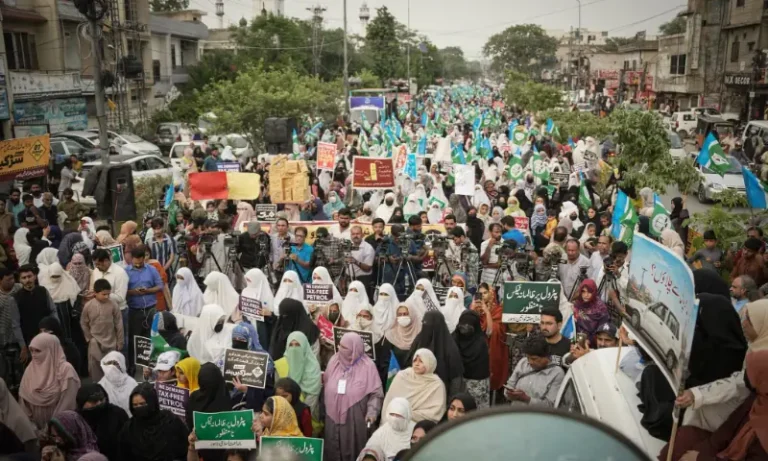
    Traffic was disrupted across several major parts of Karachi on Friday as Jamaat-i-Islami (JI) workers staged sit-ins against the federal petroleum levy. The protests were part of a nationwide campaign announced by the party. JI had said it would hold demonstrations at hundreds of locations across the country by blocking major roads. Karachi traffic police issued an advisory warning motorists about congestion, temporary diversions and partial road closures in several areas. Major routes affected included areas around Mazar-i-Quaid, Numaish Chowrangi, Saddar, Sharea Faisal, Shahrah-i-Pakistan, UP Mor, Power House Chowrangi, Defence Housing Authority, Sea View, Shahrah-i-Orangi, Hub River Road, Super Highway and National Highway. The traffic police advised citizens to avoid the protest-hit areas where possible and use alternative routes. Commuters were also asked to allow additional time for their journeys. According to updates shared by JI Karachi, protesters blocked the road connecting Sharea Faisal with Natha Khan. The Super Highway and Hub River Road were also affected. Another road connecting the Sharea Faisal Nursery Bus Stop with the airport was reportedly blocked as protesters gathered at the designated locations. The demonstrations prompted criticism from the Sindh government. Provincial government spokesperson Sadia Javed said the petroleum levy was a federal issue and questioned why Karachi’s residents were facing difficulties because of the protest. She accused the JI of using the demonstrations for political gains instead of addressing public issues through relevant constitutional forums. Javed said road blockades were affecting the daily lives of millions of Karachi residents and raised concerns about the movement of ambulances and patients during the disruptions. She urged the party to raise its objections in Parliament and other relevant forums rather than blocking roads. The government spokesperson also warned protesters against damaging public property or taking the law into their own hands. The demonstrations were not limited to Karachi. JI workers also gathered in Lahore, Islamabad, Quetta and Peshawar as part of the nationwide campaign. In Islamabad, protesters reportedly blocked Srinagar Highway near Golra Mor while attempting to march towards Chungi 26. Several locations across Sindh also witnessed demonstrations, including Thatta, Matiari, Tando Allahyar and Shikarpur.

  • |

    Senate questions FBR over Rs1,120bn tax-exempt imports

    Islamabad: The Senate Sub Committee has raised serious questions over the Federal Board of Revenue’s failure to provide complete records related to Rs1120 billion worth of tax exempted imports in former FATA and PATA regions, while also seeking detailed tax information from major tobacco companies including Pakistan Tobacco Company and Philip Morris Pakistan Limited. The matter came up during a meeting of the Senate Sub Committee convened by Senator Saifullah Abro at Parliament House. The Committee was reviewing press freedom concerns, cigarette smuggling networks, tax evasion issues and possible misuse of duty exemption systems. At the beginning of the meeting, Pakistan Federal Union of Journalists President Afzal Butt raised concerns regarding remarks made about a private channel reporter during an earlier Committee meeting. Senator Saifullah Abro assured that the Committee respects every citizen and considers the media an important partner in highlighting national issues. He stated that the Committee would continue working on matters related to illegal tobacco trade and economic losses faced by the country. At the beginning of the meeting, Pakistan Federal Union of Journalists President Afzal Butt raised concerns regarding remarks made about a private channel reporter during an earlier Committee meeting. Senator Saifullah Abro assured that the Committee respects every citizen and considers the media an important partner in highlighting national issues. He stated that the Committee would continue working on matters related to illegal tobacco trade and economic losses faced by the country. The main focus of the meeting shifted towards the Federal Board of Revenue’s pending information regarding tax exempted areas. The Committee noted that raw materials worth Rs1120 billion entered tax exempt regions between 2018 and 2026 under exemption arrangements. Members expressed concern that manual tracking systems and a lack of automated verification could create risks of illegal movement of goods into taxable markets. The Committee once again directed FBR to provide complete details of consumption certificates issued against the Rs1120 billion imports and submit tax related information for the tobacco sector, especially regarding Pakistan Tobacco Company and Philip Morris Pakistan Limited. During the meeting, officials also discussed investigations into cigarette theft cases and illegal activities in the tobacco sector. The Federal Investigation Agency briefed the Committee about cigarette theft cases in Peshawar, Khyber Pakhtunkhwa. The Committee also reviewed the investigation regarding senior officials and a tax charge sheet issued against Deputy Commissioner Inland Revenue Fahim Rashid in connection with Paramount Tobacco Company. Another serious matter discussed was the theft of 2,828 cigarette cartons from an FBR warehouse. The cartons were reportedly valued at Rs25 crore. The Committee directed FBR to prepare clear Standard Operating Procedures for registering, handling and managing seized goods to prevent such incidents in the future. The Committee also examined concerns related to cigarette smuggling and tax losses, stressing that illegal trade not only affects government revenue but also creates unfair competition for legal businesses. The meeting also discussed government advertisement spending and tobacco industry media campaigns. The Committee reviewed information provided by the Press Information Department and Pakistan Electronic Media Regulatory Authority and stressed the need for greater transparency in advertisement payments and media related spending. The meeting was attended by Senators Umer Farooq, Muhammad Talha Mehmood and Dilawar Khan as well as senior officials from the Ministry of Interior and Narcotics Control, Ministry of Information and Broadcasting, Press Information Department, FBR Inland Revenue, Customs, FIA, National Cyber Crime Investigation Agency and other relevant departments. Senator Saifullah Abro directed all concerned institutions to provide the required information and continue cooperation with the Committee. The Committee made it clear that investigations into tax exemptions, tobacco sector irregularities and smuggling networks would continue until complete records and explanations were provided.

  • |

    Pakistan raises power tariff by Rs0.75 per unit

    Pakistan’s power regulator has approved a Rs0.75 per unit increase in electricity prices for consumers across the country under the monthly fuel cost adjustment mechanism. According to a notification issued by the National Electric Power Regulatory Authority (NEPRA), the revised tariff applies to the June 2026 monthly fuel cost adjustment. The increase will also affect consumers of K-Electric, with the additional charges appearing in August electricity bills. Earlier, the Central Power Purchasing Agency (CPPA) had requested a Rs1.20 per unit increase for June’s adjustment. However, after reviewing the proposal, NEPRA approved a lower increase of Rs0.75 per unit. The latest adjustment follows another tariff hike announced for May, when electricity prices increased by Rs0.34 per unit under the same monthly adjustment mechanism. Monthly fuel cost adjustments allow authorities to revise electricity tariffs based on fluctuations in fuel prices and the cost of power generation. These revisions can either increase or reduce consumer bills depending on changes in generation expenses.

  • “We broke wall of fear today”: Swat peace rally defies suicide attack

    SWAT: Hundreds of people gathered in Swat on Friday for a peace rally to condemn the recent suicide bombing in Kabal and to demand lasting peace in the region. Tribal elders from the Swat Qaumi Jirga, political leaders, and local residents joined the demonstration, sending a clear message that violence would not stop them from raising their voices for peace. Speaking at Nishat Chowk in Mingora, participants said they would continue to come out onto the streets until peace is fully restored. They declared that suicide attacks and acts of terrorism would not force them into silence. Addressing the rally, speakers said Pashtun regions have suffered from terrorism for more than four decades. They urged the state to review its security policies and ensure the people of the region can live in peace and safety. The speakers expressed deep sorrow over the loss of lives in the Kabal suicide bombing, describing the attack as an attempt to sabotage peace and destabilize the region. They said such efforts would no longer succeed. They also said the bombing was intended to frighten people and discourage participation in the peace movement, but insisted the public would not be intimidated. “We broke the wall of fear today,” participants said. “We will keep coming out until our dream of peace becomes a reality.” Mukhtiar Khan Yousafzai, a leader of the Swat Qaumi Jirga, said terrorists wanted to create fear so that their supporters could achieve their goals. “Around 20 people were martyred in this attack, but even if a thousand people were killed, the people of Swat would still stand up for peace,” he said. Former Mingora City Mayor Shahid Ali said a single terrorist attack damages the economy of the entire Khyber Pakhtunkhwa province, especially its tourism industry. He said Swat is a valley blessed with natural beauty and valuable resources, which, according to him, are targeted by those who want instability. He added that families, including children, would continue to join peaceful demonstrations because they would never accept a return to violence. Speakers also recalled the sacrifices made by the people of Swat for Pakistan’s stability, saying many families lost their homes and livelihoods during years of conflict. They stressed that the people were no longer willing to endure another period of unrest. Authorities put strict security measures in place for the rally. Walk-through gates were installed at entry points, and a heavy police presence was deployed throughout the venue.

  • |

    Global food prices hit three-year high in July

    Global food prices reached their highest level in three years in July. The United Nations Food and Agriculture Organization (FAO) said global food prices rose significantly due to weather conditions and the Iran-US war reaching a three-year high. The FAO Food Price Index tracks monthly changes in international prices of major food commodities. According to the index, global food prices rose to 131.1 points in July compared with 130.3 points in June. This was the highest level recorded since January 2023. The FAO’s chief economist had told a news agency in recent days that the world was once again facing food price inflation due to the wars in Iran and Ukraine as well as the El Niño climate phenomenon which can affect crop production. El Niño is a climate pattern in which a large part of the Pacific Ocean becomes unusually warm contributing to an increase in global temperatures. According to the international organization, wheat prices increased by 5.8% resulting in an overall 3.4% increase in commodity prices. Wheat exports through the Black Sea were affected while rising temperatures disrupted crop production in major wheat-growing regions. The FAO Vegetable Oil Price Index increased by 2% reaching its highest level since June 2022. Vegetable oil prices rose due to the Iran war and increased demand for biodiesel. Sugar prices increased by 5.6% amid weather-related concerns in Europe and Asia. However, meat prices declined by 2.8%.

  • |

    Lahore crime rate declines, DIG Faisal Kamran says

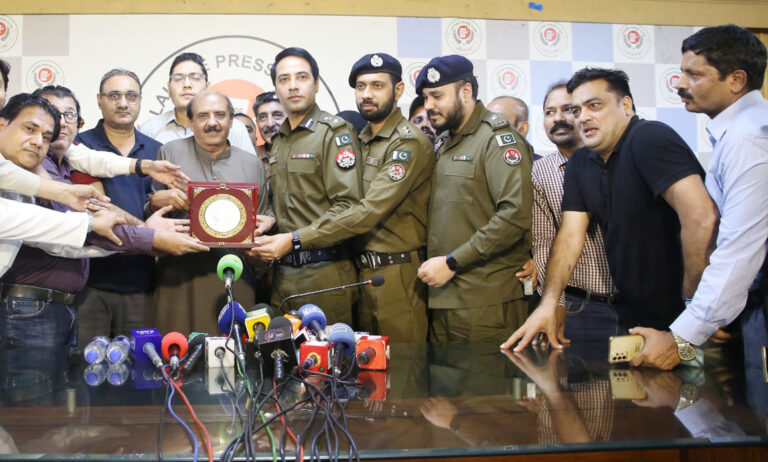
    LAHORE: DIG Operations Lahore Faisal Kamran visited the Lahore Press Club and attended the “Meet the Press” programme as the chief guest. President Lahore Press Club Arshad Ansari, Senior Vice President Salman Qureshi, General Secretary Afzal Talib, Joint Secretary Imran Sheikh, Finance Secretary Salik Nawaz, Governing Body members Syed Sajjad Kazmi, Sarmad Farrukh Khawaja, Asad Mahmood, Syed Badr Saeed and Kamran Khan, along with office-bearers of the Crime Reporters Association and senior journalists, attended the event. Welcoming the distinguished guest, Lahore Press Club President Arshad Ansari said that the police and journalists had a close working relationship and both professions were jointly striving to eliminate crime from society. He appreciated the tireless efforts and policies of DIG Operations Faisal Kamran, saying that they had contributed to a decline in the crime rate in Lahore. Speaking to the media, DIG Operations Faisal Kamran said that in June 2023, as many as 9,149 incidents used to be reported in a single month, whereas the number had now come down to around 900 calls. He said tackling crime in any major city was a major challenge, adding that metropolitan cities such as New York also faced numerous challenges in this regard. He said that the Safe City, CCD and Lahore Police had worked jointly to control crime. Safe City’s assistance was sought in tracing reported incidents, he added. He said that Lahore had witnessed a decline in its crime index compared with 380 cities around the world. Faisal Kamran said that in 2026, major events including Basant, Ramazan, Sehri, Eid shopping and other public events, as well as Eid-ul-Azha and Muharram-ul-Haram, were held peacefully. Lahore Police continued to perform its duties during all these events, he added. The DIG Operations said that, besides these measures, the accountability system within the police had also been strengthened. “Wherever there is corruption, I will take strict action,” he said. He said that in 2023, Rs3.6 million had been provided for the welfare of police personnel, whereas Rs60 million had so far been provided for their welfare. He further stated that during the past two and a half years, he had personally heard the grievances of 55,050 people at open courts, adding that 70 to 80 per cent of the complainants had expressed satisfaction with the resolution of their complaints. The DIG Operations said that an MoU had also been signed between Lahore Police and the legal fraternity under which free legal assistance was being provided to deserving and underprivileged people. He added that Lahore Police was also taking strict action against usury and illegal money-lending. At the conclusion of the programme, Lahore Press Club President Arshad Ansari and representatives of the Crime Reporters Association presented commemorative shields and bouquets to DIG Operations Lahore Faisal Kamran.