National

  • | |

    PTI holds nationwide protests to mark three years

      Supporters of Pakistan Tehreek-e-Insaf (PTI) staged demonstrations across Pakistan on Wednesday to mark three years since former prime minister Imran Khan was first taken into custody. One of the largest gatherings was held outside Lahore’s Aiwan-e-Adl, where members of the Insaf Lawyers Forum, along with party leaders, lawyers and supporters, demanded Khan’s release and called for an end to the legal cases against him. The Lahore protest took place on Upper Mall, outside the court complex, where participants waved party flags and chanted slogans in support of the jailed PTI founder. Demonstrators maintained that the cases filed against Imran Khan were politically motivated and urged authorities to withdraw all charges. They insisted that the legal proceedings were intended to prevent him from participating in politics, an allegation that both the government and state institutions have consistently denied, maintaining that the judicial process is independent and conducted in accordance with the law. Several senior PTI leaders, including Salman Akram Raja, Ali Aijaz Butta, Rehan Dar and Shaukat Basra, addressed the gathering. During their speeches, they called for Imran Khan’s immediate release and vowed that the party would continue its campaign until he was freed and all cases against him were resolved. Protesters repeatedly chanted slogans demanding his release and described the demonstrations as peaceful expressions of public support. The Lahore rally formed part of a nationwide protest campaign announced by PTI to coincide with the anniversary of Khan’s imprisonment. Similar demonstrations were organised in different cities across Pakistan, while overseas PTI supporters also held rallies in several countries to express solidarity with the former prime minister and draw attention to his continued detention. Imran Khan has remained in prison since August 2023, when he was convicted in a corruption case. Since then, he has faced several additional prosecutions and convictions, including cases involving corruption allegations, the disclosure of official secrets and marriage-related legal matters. Khan and his party have consistently rejected all accusations, describing them as politically driven. The government, however, maintains that the cases are being handled through an independent legal process and rejects claims of political interference. Wednesday’s demonstrations were the latest in a series of protests organised by PTI following Khan’s arrest. The party has repeatedly demanded his release and called for fresh general elections. Previous protests have at times faced restrictions imposed by authorities, while some demonstrations have also witnessed incidents of violence and clashes. Separately, PTI leader Shaukat Basra alleged that journalist Natiq Rehan was assaulted by Punjab Police while reporting on the Lahore protest. According to Basra, the journalist was attacked despite performing his professional duties. Punjab Police did not immediately issue a response to the allegation. A day before the nationwide protests, Amnesty International issued a statement urging Pakistani authorities to safeguard Imran Khan’s fundamental rights as his detention entered its third year. Isabelle Lassee, the organisation’s Acting Regional Director for South Asia, expressed concern over what Amnesty described as the denial of a fair trial, prolonged solitary confinement, and restrictions on family visits, legal representation and medical care. The human rights organisation also called on the authorities to respect the right to peaceful assembly and avoid arbitrary action against demonstrators. It further urged that Imran Khan and his wife, Bushra Bibi, be granted regular access to their families, legal counsel and appropriate medical treatment in accordance with international human rights standards.

  • | | |

    Gold Prices surge by Rs10,000 per tola in Pakistan

      Gold prices in Pakistan witnessed a dramatic increase on Wednesday, with the price of 24-karat gold rising by Rs10,000 per tola, marking one of the biggest single-day jumps in recent months. The sharp increase has pushed the domestic gold market to a new record level, adding to concerns among consumers, investors, and jewellery traders about the continued rise in precious metal prices. According to the All Pakistan Gems and Jewellers Association (APGJA) the price of one tola of gold has climbed to Rs437,936 following the latest increase. The association also reported that the price of 10 grams of 24-karat gold rose by Rs8,573 reaching Rs375,459 The latest surge reflects the ongoing volatility in both domestic and international bullion markets. Gold prices have remained under the spotlight in recent weeks due to global economic uncertainty, fluctuations in currency exchange rates, and increased investor demand for safe-haven assets. Although the association did not specify the exact reason behind the latest increase, analysts believe that a combination of rising international gold prices and the depreciation of the Pakistani rupee has contributed significantly to the record-high rates. The steep rise in gold prices is expected to have a major impact on Pakistan’s jewellery market. Many consumers traditionally purchase gold for weddings, gifts, and investment purposes. However, with prices reaching unprecedented levels, experts believe that demand for gold jewellery may decline as buyers postpone purchases or opt for lighter and more affordable designs. Jewellers have also expressed concerns that the continued rise in prices could slow business activity, particularly during the ongoing wedding season. Higher costs may discourage customers from making large purchases, affecting retailers and manufacturers across the country. At the same time, investors who view gold as a secure store of value may continue to buy the precious metal despite the rising prices. Financial experts note that gold often performs well during periods of economic uncertainty, inflation, and geopolitical tensions. As investors seek safer assets, demand for gold increases, driving prices higher in international markets. Since Pakistan imports gold and its domestic prices are closely linked to global trends and exchange rate movements, local prices often rise in response to international developments. The record increase also highlights the broader economic challenges facing Pakistan, where inflation and currency fluctuations continue to influence the prices of imported goods and commodities. Consumers are already coping with higher living costs, and the latest jump in gold prices adds another burden for those planning to invest in or purchase the precious metal. Market observers will closely monitor future movements in international bullion prices and the value of the Pakistani rupee to assess whether gold prices continue their upward trend or stabilize in the coming days. Until then, buyers and traders are expected to remain cautious as the market adjusts to the latest record-breaking increase.

  • | |

    Islamiat tops Grade 9, 10 failure list

    The Board of Intermediate and Secondary Education (BISE) Peshawar has released the results of the 2026 annual examinations for Grades 9 and 10. The results show that Islamiat was the subject in which the highest number of students failed in both classes. According to the official statistics, a total of 97,950 students appeared in the Grade 9 annual examinations. Out of these, 57,847 students successfully passed and were promoted to Grade 10. The remaining students could not qualify for promotion after failing to meet the required passing criteria. The examination data also highlighted students’ performance across different subjects. Among all the subjects, Islamiat recorded the highest failure rate, making it the most challenging subject for students in both Grade 9 and Grade 10 this year. The results have drawn attention to the need for improved teaching methods and better academic support in the subject. Education experts believe schools, teachers, and parents should work together to identify the reasons behind the poor performance and help students strengthen their understanding of Islamiat before future examinations. The BISE Peshawar annual examination results provide an overview of students’ academic performance across the province and are expected to help education authorities assess areas where additional support and reforms may be required to improve overall learning outcomes.

  • | |

    Bodies of Nirmal Purja, three teammates recovered …

    SKARDU: Rescue teams have recovered the bodies of celebrated British-Nepali mountaineer Nirmal Purja and three members of his expedition from Broad Peak after a difficult recovery mission, the Alpine Club of Pakistan (ACP) confirmed. The recovery operation was carried out in extremely challenging weather and terrain. The bodies of Purja, Chinese climber Zhong Wang, and Nepali climbers Nima Sherpa and Kilu Sherpa were successfully brought to Broad Peak Base Camp. The tragic incident occurred on July 30, when an avalanche struck the 10-member international expedition while climbing Broad Peak, one of the world’s highest mountains. Contact with the team was lost immediately after the avalanche. Purja’s company later confirmed that there were no survivors from the expedition. Despite the successful recovery of four bodies, three climbers remain missing. The Alpine Club of Pakistan said search efforts would continue whenever weather and mountain conditions permit. The organization reaffirmed its commitment to locating the remaining climbers so their families can receive closure. Earlier, the bodies of three other expedition members—an American woman, an Omani woman and a Nepali climber—were airlifted from the mountain to Skardu. However, the bodies of two Nepali nationals and one Pakistani climber have yet to be recovered. The deaths have deeply affected the global mountaineering community. Fellow climbers and mountaineering organizations have paid tribute to the victims, describing the loss as a major blow to high-altitude climbing. The Alpine Club of Pakistan said arrangements are being made to return the recovered bodies to their families. The organization expressed hope that the recovery would provide some comfort to the bereaved families and allow the climbers to be laid to rest with dignity.

  • | |

    Federal government freezes ad hoc relief allowance…

    The federal government has decided to keep the 2023 and 2024 ad hoc relief allowances unchanged for its employees, maintaining the existing rates while also outlining the allowance structure for newly appointed staff. According to a notification issued by the Ministry of Finance, the Ad Hoc Relief Allowance-2023 will remain frozen at the level applicable on June 30, 2023, and will not be revised until further instructions are issued. Under the current arrangement, employees in Grades 1 to 16 will continue to receive an allowance equal to 35% of their basic pay, while officers in Grades 17 to 22 will receive 30% of their basic pay under the 2023 relief allowance. The ministry has also announced that the Ad Hoc Relief Allowance-2024 will remain frozen at the rates applicable on June 30, 2026. Employees in Grades 1 to 16 will continue to receive 25% of their basic pay, whereas those in Grades 17 to 22 will receive 20% of their basic pay. The decision means there will be no increase in these allowances until further notice, although eligible employees will continue receiving them at the existing rates. The notification also provides guidance on the applicable allowance rates for newly recruited federal government employees, ensuring uniform implementation across government departments. The Finance Ministry said the revised pay and allowance framework will remain effective unless amended through a future government notification.

  • | |

    Relative held after toddler dies in alleged assaul…

    Police have arrested a close relative after a one-and-a-half-year-old girl died during treatment following an alleged sexual assault in Karachi’s Qayyumabad area. According to police officials, the incident came to light after an emergency call was received, prompting officers to reach the scene and begin an investigation. Family members told investigators that the suspect, who is a close relative of the child, had taken the toddler outside for a walk. When she was brought home, she was reportedly in critical condition. The child was immediately shifted to a hospital, where she later succumbed to her injuries despite medical efforts to save her. A doctor involved in the case said the initial medical assessment indicated signs consistent with sexual assault. However, authorities said the final cause and nature of the injuries will be determined after the completion of the medico-legal examination and forensic reports. Following the preliminary investigation, police arrested the suspect from his residence in Karachi. The accused remains in custody, and investigators are questioning him as part of the ongoing probe. Law enforcement officials said evidence is being collected and statements from family members and other witnesses are being recorded. Further legal action will depend on the findings of the medical and forensic examinations. The child’s funeral prayers were offered before she was laid to rest at a local cemetery in Karachi. Police said the investigation is continuing and assured that the case will be pursued in accordance with the law. The incident has drawn widespread concern, with calls for a thorough investigation and strict action against anyone found responsible.

  • | |

    Sindh restores Saturday holiday for schools

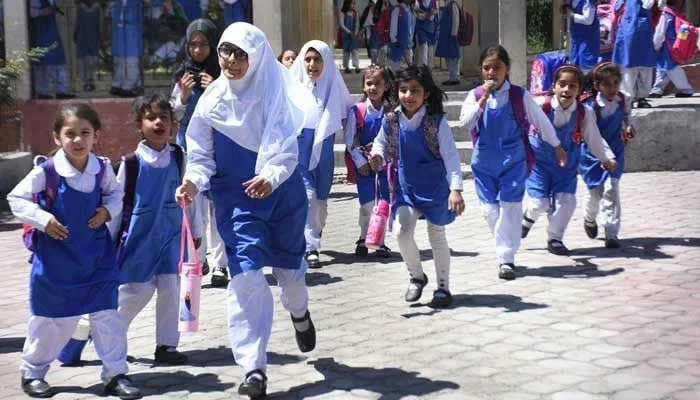
    The Sindh government has revised the weekly schedule for schools, restoring Saturday and Sunday as official weekly holidays for all public and private educational institutions across the province. According to the School Education and Literacy Department, the updated schedule has been approved by the chief secretary and will be implemented in all government and privately managed schools. Under the new arrangement, schools will operate five days a week, from Monday to Friday. To compensate for the reduced number of working days and ensure timely completion of the academic syllabus, daily teaching hours will be extended by one additional hour. Officials said the revised timetable aims to maintain the pace of academic activities while providing students and teachers with a two-day weekend. The latest decision replaces an earlier directive issued last month, under which all public and private schools in Sindh had been instructed to observe a six-day working week from August 1, with classes scheduled from Monday to Saturday. The change comes shortly after educational institutions resumed classes following the two-month summer vacation, which lasted from June 1 to July 31. Education authorities said the revised schedule will apply uniformly across the province and schools have been directed to implement the updated working days and teaching hours accordingly.

  • | |

    Press freedom across South Asia

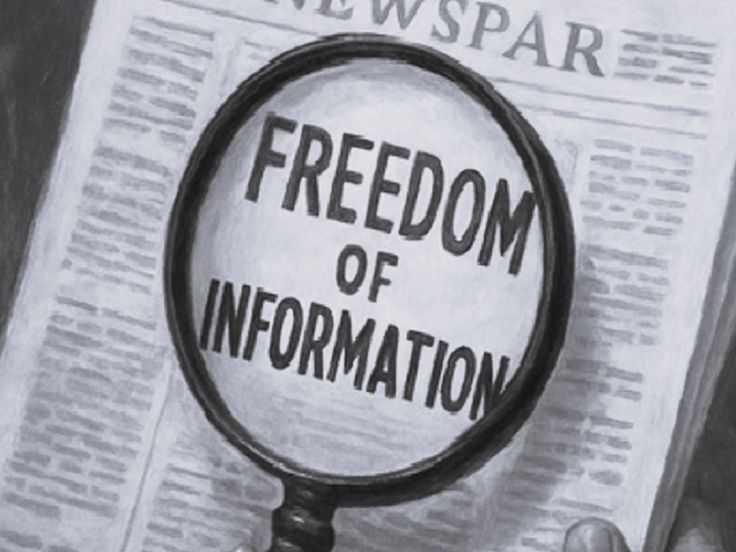
    Press freedom across South Asia faces significant structural constraints. Media environments throughout the region share a common historical legacy often relying on inherited colonial-era penal codes alongside modern cybersecurity legislation. However, the legal frameworks and regulatory instruments used to govern the press vary across neighboring countries. Comparative Analysis by Country  Pakistan Pakistan Electronic Media Regulatory Authority (PEMRA), Prevention of Electronic Crimes Act (PECA), and administrative policy frameworks like the Foreign Media Facilitation Guidelines. Media regulation in Pakistan relies heavily on administrative controls, licensing restrictions, and broad content advisories prohibiting coverage of sensitive political or national security subjects. While constitutional protections exist under Article 19, exceptions based on glory of Islam, national defense, and public order give authorities broad latitude to issue blackout orders, manage foreign correspondents’ mobility through No Objection Certificates (NOCs), and impose structural pressure on broadcast networks.  India Information Technology Rules (2021), Digital Personal Data Protection (DPDP) Act, and the Unlawful Activities Prevention Act (UAPA). While India possesses a large and diverse private media market, journalists increasingly face legal scrutiny under broad national security and anti-terror legislation. Amendments to digital media laws allow central authorities to demand the takedown of online content deemed harmful to state interests. Furthermore, criminal defamation suits and restrictions on access to conflict areas (such as Jammu & Kashmir) remain common mechanisms of regulatory pressure. Bangladesh Cyber Security Act (CSA)—which replaced the controversial Digital Security Act (DSA) and state information ministry directives. For years, non-bailable clauses in cybersecurity statutes were widely criticized by media watchdogs for chilling investigative reporting on corruption or state officials. Following recent political transitions, draft media reform policies have been introduced, though press operations remain tightly monitored during periods of political volatility and public unrest.  Sri Lanka Online Safety Act, Prevention of Terrorism Act (PTA), and Official Secrets Act. Sri Lanka’s regulatory framework expanded significantly with the passage of the Online Safety Act, which created a government-appointed commission with sweeping powers to classify online content as false statements and order its removal. Critical reporting regarding state response to economic crises or wartime history continues to face legal and physical friction in sensitive provinces. Nepal: Press Council Act and National Mass Communications Policy. Nepal consistently ranks highest in South Asia on global press freedom indices, supported by a constitution that explicitly guarantees press rights without prior restraint. However, challenges persist regarding local government transparency, criminal defamation provisions, and proposed social media regulation bills that civil society groups fear could introduce licensing hurdles for digital outlets.  Afghanistan Direct directives issued by the Ministry for the Propagation of Virtue and the Prevention of Vice and the Ministry of Information and Culture. Following the political shift in 2021, independent journalism in Afghanistan has faced near-total suppression. Women journalists are largely banned from broadcasting, international news services face widespread blocking, and all local reporting is subject to strict pre-publication censorship. Common Trends Across the Region Across South Asia, governments are increasingly shifting control from traditional print/broadcast regulators toward cybersecurity, online safety, and data protection laws to monitor digital newsrooms and independent creators. Constitutional guarantees of free speech throughout South Asia uniformly contain broad public order and national defense exceptions, which states routinely cite to enforce reporting restrictions during regional crises. Beyond direct legal action, states across the region frequently utilize non-judicial levers such as withholding state advertising funds, slow-walking accreditation, or requiring special travel permits to shape editorial stances.

  • | |

    Maryam says PML-N remains most popular party

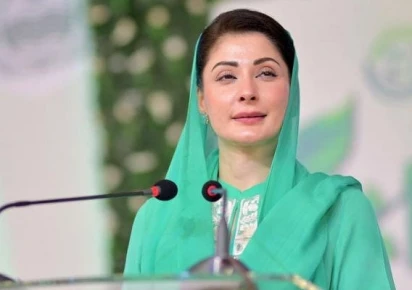
    LAHORE: Punjab Chief Minister Maryam Nawaz has said the Pakistan Muslim League-Nawaz (PML-N) continues to enjoy strong public support in Punjab, across Pakistan and in Azad Jammu and Kashmir, attributing the party’s popularity to its development agenda and governance. She made the remarks during a meeting with Members of the Punjab Assembly, Asif Malik and Zafar Abbas Khan, who discussed political developments, constituency matters and ongoing development projects in Khushab. During the meeting, the lawmakers briefed the chief minister on issues being faced by residents of their constituency. Maryam assured them that the provincial government would take steps to resolve public problems and continue implementing development initiatives across the district. The lawmakers congratulated the chief minister on the party’s performance in Azad Jammu and Kashmir and appreciated the Punjab government’s decision to introduce electric bus services in Khushab. They also thanked her for providing electric buses to Azad Jammu and Kashmir, saying the initiative had improved public transport and benefited thousands of commuters. Maryam said Punjab was leading the country in development and governance, adding that improvements had been made in multiple sectors, including public services and law and order. She expressed confidence that the province and the country would continue progressing under the leadership of PML-N President Nawaz Sharif. The lawmakers praised the provincial government’s development record, saying the electric bus service had become a popular facility for daily passengers travelling between General Bus Stand Khushab, Garot Chowk, Mitha Tiwana and Mangwal. Separately, on the occasion of Police Martyrs Day, the chief minister paid tribute to police personnel who lost their lives in the line of duty. She praised their sacrifices in the fight against terrorism, extremism and crime, and acknowledged the courage and resilience of their families. Maryam said the Punjab government was committed to supporting the families of fallen police officers by providing educational opportunities, healthcare, housing and other welfare facilities for their children. She added that the government was strengthening the Punjab Police by providing modern weapons, improved communication systems, protective equipment and bulletproof vehicles to enhance law enforcement capabilities.

  • | | |

    Pakistan imposes new restrictions on foreign media

    Pakistani authorities have exposed regulatory measures governing foreign media operations in the country. The strategy has triggered an alarm among press freedom advocates, legal observers, and media personnel. Under the newly issued Foreign Media Facilitation Guidelines, journalists representing international organizations will no longer be permitted to travel or cover news events outside three major metropolitan hubs without explicit prior authorization from the government. The regulations come at a delicate juncture marked by escalating political instability, public demonstrations, and security crackdowns across key regions including recent demonstrations connected to heightened tensions in Kashmir and subsequent enforcement actions in urban centers like Lahore. Critics argue that by constraining the scope of international newsgathering precisely when accurate coverage is most vital, the state risks deepening information voids and exacerbating the spread of unverified claims. Key Requirements of the New Media Framework Administered through the External Publicity Wing of Pakistan’s Ministry of Information, the updated regulatory policy establishes procedural hurdles for international news agencies. Foreign correspondents, local staff, contributors, and freelance journalists working for international outlets must secure an official No Objection Certificate (NOC) before traveling to conduct reporting assignments outside Islamabad, Karachi, and Lahore. Regions requiring prior approval now explicitly cover all provincial territories, sensitive border zones, and Pakistan-administered Kashmir. The framework provides no defined processing timeframe for NOC applications, leaving reporting teams facing unpredictable delays and potential administrative holds. The Ministry reserves the authority to suspend or revoke official media accreditation if reporting is judged to run counter to the country’s national sovereignty, ideology, or public safety phrasing that legal analysts describe as intentionally open-ended. Backlash from Analysts and Rights Groups The enactment of these guidelines has drawn sharp rebuke from political commentators, civil society organizations, and international press watchdogs, who view the move as part of a systematic contraction of independent journalism within the country. Former senator and political commentator Mustafa Nawaz Khokhar highlighted the grave consequences of curtailing foreign news organizations, warning that restricting legitimate press operations ultimately undermines public trust. These guidelines are tantamount to choking international media in an increasingly shrinking space, Khokhar noted, emphasizing the vital role global news outlets play when local media environments face structural pressure. The public looks at the international media for independent reporting. Placing restrictions simply creates more room for disinformation and the spread of fake news.   Rights groups including the Pakistan Federal Union of Journalists (PFUJ) and international watchdogs have echoed these concerns. They’re pointing out that advance the requirement of government permission for routine reporting effectively grants authorities veto power over what news reaches the global audience. Broader Context of Press Freedom in Pakistan Pakistan’s media environment has historically operated in a complex space balancing constitutional guarantees of free speech against national security laws. However, media analysts note that state oversight of both traditional print/broadcast journalism and online digital spaces has tightened significantly in recent years. The introduction of the new foreign media guidelines coincides with broader legislative shifts aimed at regulating online speech and social media platforms. Observers express concern that administrative barriers, combined with strict digital laws, could leave remote or politically sensitive areas completely cut off from independent news coverage. By limiting foreign journalists’ mobility primarily to the capital and two largest economic centers, field reporting from rural regions, border zones, and conflict-affected territories will become exceptionally difficult to conduct legally. Implications for International Coverage As international newsrooms adapt to the new framework, news gathering strategies across South Asia are likely to face operational friction. Bureau chiefs and correspondents report that unpredictable NOC processing times make time-sensitive breaking news coverage outside major cities nearly impossible to guarantee.   Without direct on-the-ground access for independent journalists, global news consumers may increasingly have to rely on official statements or unverified social media updates during crises. For a country navigating complex domestic politics and delicate international relations, press freedom advocates warn that restricting the lens through which the world views Pakistan could backfire, isolating the nation’s political discourse and fostering an environment where misinformation thrives unchecked.