National

  • | | | | |

    Iran condemns Ukraine’s Caspian Sea strike as te…

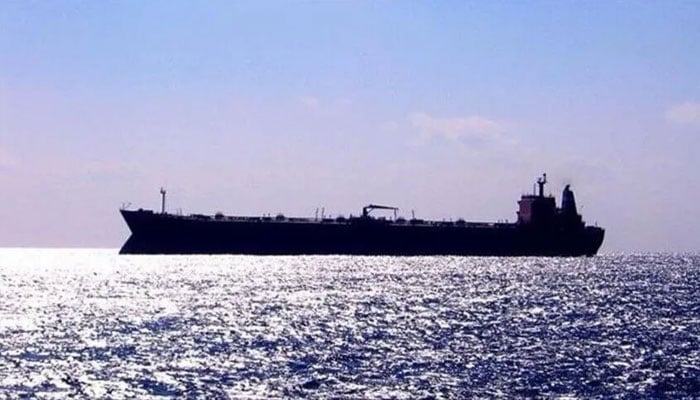
    TEHRAN: Iran has strongly condemned a Ukrainian attack on an Iranian commercial vessel in the Caspian Sea, saying the incident killed one sailor and injured another, and warning that the strike could further widen the Russia-Ukraine conflict. Iran’s Foreign Ministry said the vessel was hit early Saturday, causing an explosion that resulted in the casualties. Tehran described the incident as an “act of aggression” and said the attack violated the principles of the UN Charter. Iran also summoned Ukraine’s chargé d’affaires to formally register its protest over the incident, according to reports. The diplomatic move underscored Tehran’s growing concern over what it described as the expansion of the Ukraine war into areas far beyond the main battlefield. The Iranian ministry said Tehran had never intervened in the Russia-Ukraine conflict and warned that the attack could contribute to the spread of insecurity and violence. It also said Iran would not hesitate to defend its national interests and security, holding Ukraine responsible for what it called the consequences of its actions. The Ukrainian account, however, presents a different picture. Ukrainian President Volodymyr Zelensky said Ukrainian forces had targeted a Russian warship and vessels allegedly being used to transport military cargo linked to Iran in the Caspian Sea. Kyiv has accused Moscow of supporting Iran and has increasingly focused on supply routes connected to Iranian military assistance. The Caspian Sea has become an increasingly sensitive strategic area amid the wider regional and international tensions. Any expansion of military operations there could carry diplomatic consequences for Iran, Ukraine and Russia. For Tehran, the reported death of an Iranian sailor has added a new layer of tension to an already volatile international situation. For Kyiv, strikes against vessels suspected of carrying military-related cargo are part of efforts to disrupt support networks linked to Russia and Iran. The incident now raises questions over whether the confrontation will remain limited to diplomatic protests or lead to further escalation between Tehran and Kyiv.

  • | | |

    Economists urge SBP to hold rate at 11.5%

    Economists have recommended that the State Bank of Pakistan (SBP) keep its policy rate unchanged at 11.5% at its upcoming monetary policy meeting on July 27. The recommendation comes as inflation has started to ease, but underlying price pressures remain high. Analysts believe the economy is also recovering unevenly, leaving limited room for another increase in borrowing costs. A recent economic assessment showed that headline inflation fell to 11.1% in June. However, core inflation remained elevated. Urban core inflation stood at 8.7%, while rural core inflation was recorded at 7.9%. Economists said much of the current inflationary pressure is coming from food, energy, transport and government-controlled prices. These factors cannot be addressed effectively through interest-rate changes alone. They also warned that a recent increase in the Sensitive Price Indicator (SPI) requires close monitoring. The development could indicate that the decline in inflation has not yet become firmly established. Financial market indicators also support maintaining the current policy rate. Short-term Treasury bill yields remain close to the SBP’s existing rate, while the overnight interest rate is also broadly aligned with the current monetary policy stance. However, yields on longer-term Treasury bills have increased. The six-month yield reached 11.80%, while the 12-month yield rose to 11.99%. Economists said the movement reflects some caution about the medium-term economic outlook. The assessment noted that Pakistan’s economic recovery has gained momentum but remains uneven. Large-scale manufacturing continues to face challenges, while there are no strong signs of excessive demand that would require another rate hike. Economists warned that raising the policy rate further could increase borrowing costs for businesses and consumers. It could also discourage investment and slow economic activity without directly tackling the supply-side factors behind current inflation. Pakistan’s external position has improved in recent months. Higher foreign exchange reserves, strong remittance inflows and relative stability in the exchange rate have reduced immediate pressure on the economy. Despite these improvements, risks remain. The country continues to face a sizeable merchandise trade deficit and upcoming external debt repayments. Heavy dependence on imported energy also leaves Pakistan vulnerable to international oil price fluctuations. A sharp rise in global oil prices could increase transportation and energy costs in Pakistan. It could also widen external pressures and trigger another round of inflation. Persistent core inflation is another major concern. If underlying price pressures remain high, inflation expectations could become difficult to control. This could delay any reduction in interest rates or force the central bank to consider tighter monetary policy. A weakening exchange rate could create additional pressure by making imports more expensive. It could also affect foreign exchange reserves and increase imported inflation. Economists have therefore advised the SBP to closely monitor private-sector borrowing, lending rates, monetary growth and the difference between short- and long-term interest rates. For now, the indicators favour maintaining the policy rate at 11.5%. However, economists say the central bank should remain ready to adjust its stance if inflation, oil prices, exchange-rate pressures or external financing risks deteriorate.

  • | | |

    Ravi, Chenab face rising flood threat as Punjab ba…

    Floodwaters have spread across large parts of Punjab as heavy monsoon rains continue to put pressure on drainage systems and rivers. The Ravi and Chenab rivers are expected to rise further over the next 24 hours, raising concerns about flooding in several districts. Around 400 square kilometres of land has reportedly been affected by water in areas including Sheikhupura, Muridke, Gujranwala, Narowal, Sambrial and Pasrur. Standing crops, livestock and infrastructure have suffered damage in several locations. Officials said the situation has become particularly difficult because several drains are carrying water well beyond their normal capacity. In some areas, the scale of flooding has created extensive stretches of standing water across roads and agricultural land. The Ravi River has also recorded a significant increase in its flow. Water discharge at Shahdara in Lahore was reported at around 22,000 cusecs, while the flow at Balloki rose to nearly 87,000 cusecs. Officials attributed the sharp increase to heavy rainfall and additional water entering the river through drains. Authorities warned that the situation could take several days to improve. The recovery will depend heavily on weather conditions and whether further heavy rainfall occurs. The Chenab is currently experiencing medium-level flooding at several points, while the Ravi remains at lower levels in some locations. However, forecasts indicate that both rivers could reach medium to high flood levels within the next 24 hours. The Chenab is being closely monitored at Marala, Khanki and Qadirabad. The Ravi is also under watch at Balloki and Sidhnai. Other major rivers are being monitored at key stations as authorities assess the impact of rising water levels. With more rain forecast, district administrations have been placed on high alert. Officials in Lahore, Gujranwala, Sheikhupura, Sialkot, Narowal and Khanewal are reviewing emergency plans and strengthening flood-monitoring arrangements. In Lahore, officials inspected areas around the Hudiara Drain following heavy rainfall. Teams reviewed drainage operations and monitored the movement of rainwater in affected areas. Authorities also inspected vulnerable points and drainage channels to identify blockages that could worsen urban flooding. Officials have been directed to clear choking points and improve the flow of water. In Nankana Sahib, senior administration officials reviewed the flood situation and emergency response arrangements. Areas affected by river erosion were inspected, while evacuation, rescue and relief plans were also assessed. Khanewal officials inspected Sidhnai Headworks and several flood protection sites. They reviewed the condition of protective embankments and assessed preparedness measures in case river levels rise further. Authorities have urged district administrations to remain vigilant as the next 24 hours could prove critical. Rescue, evacuation and relief teams are being kept ready in vulnerable areas.

  • | |

    Malik Imran Khalil, Asif Butt elected unopposed as…

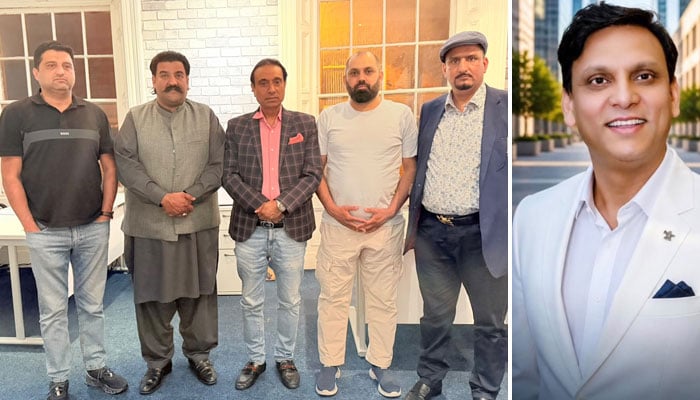
    LONDON: Pakistan Tehreek-e-Insaf (PTI) has completed its 2026 intra-party elections in the United Kingdom, with Malik Imran Khalil elected unopposed as President of PTI UK. According to the official results issued by the PTI Overseas Election Commission, Rizwan Naseer was elected Senior Vice President, Faheem Malik became Information Secretary, Inamul Haque was chosen as Additional General Secretary, and Shagufta Akhtar was elected Women Secretary. Expressing gratitude after his election, Malik Imran Khalil thanked party members for unanimously backing his panel. He said the overwhelming support reflected the confidence of party workers and pledged to work for strengthening the organisation across the UK. In the North West chapter, Asif Butt was also elected unopposed as President, while his Junoon panel secured all key positions without contest. Chaudhry Bilal Gujjar was elected General Secretary, Rizwan Naseer became Senior Vice President, Suleman Ali Shah was chosen as Information Secretary, and Sanobar Zafar was elected Women Secretary. Asif Butt secured the PTI North West presidency for a third consecutive term. Thanking party supporters for their continued trust, he reaffirmed his commitment to strengthening the party and said the organisation would continue its political campaign for the release of PTI founder and former prime minister Imran Khan.

  • | | |

    Govt accelerates FBR reforms to build transparent,…

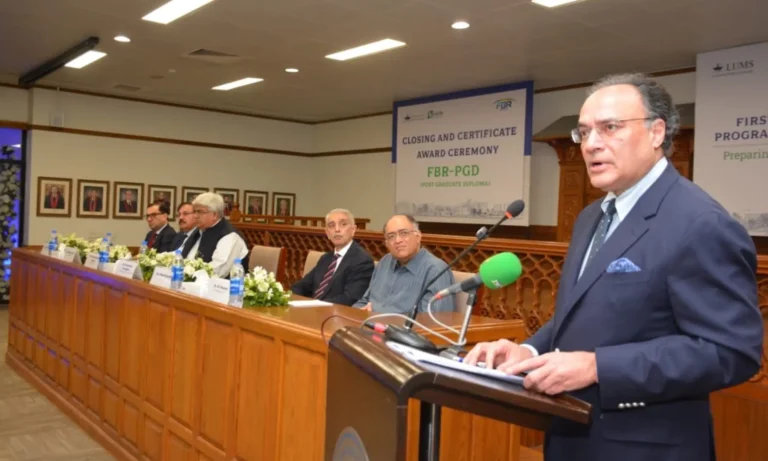
    LAHORE: The federal government has intensified efforts to modernise Pakistan’s tax system by accelerating reforms in the Federal Board of Revenue (FBR), expanding the cashless economy and integrating advanced digital technologies to improve transparency and tax compliance. Speaking at the certificate distribution ceremony for the FBR’s Postgraduate Diploma Programme at Lahore University of Management Sciences (LUMS), Finance Minister Muhammad Aurangzeb said the government is committed to creating a taxpayer-friendly and transparent financial system that supports long-term economic growth. He said reforms are being implemented simultaneously in tax policy and tax administration, with a new operational model being introduced in the FBR to improve efficiency, accountability and public trust. The minister added that Prime Minister Shehbaz Sharif is personally overseeing initiatives aimed at documenting the economy, broadening the tax base and promoting digital financial transactions. Aurangzeb revealed that authorities have uncovered major sales tax evasion cases, resulting in higher tax collections and increased revenue for the national exchequer. He stressed that modern digital tools, integrated databases and artificial intelligence will play a central role in strengthening tax administration and bringing the FBR in line with international standards. Calling on tax officials to continuously upgrade their skills, the finance minister said restoring taxpayers’ confidence and protecting national resources remain among the institution’s highest priorities. He expressed confidence that ongoing reforms would improve the business environment and ensure the benefits of economic reforms reach ordinary citizens. FBR Chairman Muhammad Rashid Langrial also addressed the ceremony, highlighting the importance of professional training and capacity building for tax officers. He said the organisation is focused on developing a modern, transparent and efficient tax system capable of meeting Pakistan’s evolving economic needs.

  • | | |

    Monsoon rains, floods disrupt life across Pakistan

    Monsoon rains and flooding have disrupted daily life in several parts of the country, with rising water levels and overflowing streams causing damage and cutting off road links. In Mianwali, the rising water level of the Indus River caused a protective embankment to breach, allowing floodwater to enter nearby residential areas. Meanwhile, low-level flooding continues along the Ravi River. In Dadu, rising water levels in the Gaj River have cut off road access to more than 10 villages, leaving residents facing difficulties in travelling and accessing essential supplies. Heavy rain is also continuing in Nangarparkar, Tharparkar, where more than 150 millimetres of rain has been recorded over the past two days. The Pakistan Meteorological Department has also released rainfall figures for Karachi, showing that several parts of the city received rain overnight. In Gilgit-Baltistan, rain in Chilas and surrounding areas has caused streams and waterways to swell, raising concerns about further disruption. The Astore Valley Road has remained closed for the past six days, creating shortages of essential food and other supplies in affected areas. The Meteorological Department has forecast heavy rain in parts of Sindh and southern Punjab today. Authorities have advised residents in vulnerable areas to remain cautious as further rainfall could worsen the flooding situation.

  • | |

    PTI social media faces internal differences, group…

    ISLAMABAD: Pakistan Tehreek-e-Insaf (PTI) Secretary General Salman Akram Raja has acknowledged that the party is facing internal differences and grouping, saying that the lack of contact with party founder Imran Khan for the past nine months has made decision-making much more difficult. In a post on X, Salman Akram Raja said that, for the first time in the party’s history, there has been no contact with Imran Khan for nine months. He said that issues and disputes that were previously resolved within minutes through the party founder’s guidance now become the subject of long discussions. His remarks suggest that the absence of the jailed PTI founder has created a leadership gap, allowing disagreements within the party to become more visible. Raja also admitted that PTI had faced what he described as a “planned campaign” to weaken the party during this period. According to him, efforts were made from within the party to create problems, but senior leaders remained united and resisted those attempts. “I am grateful to Imran Khan’s senior colleagues who stood firm against these failed attempts,” he said. The PTI secretary general also claimed that another challenge comes from social media, where he said three different groups are active against the party’s interests. According to Raja, the first group consists of people who are formally linked to the media teams of PTI’s political opponents. The second group, he said, includes people within PTI who are seeking party positions and view certain leaders as obstacles to their ambitions. His statement is being seen as a rare public acknowledgment that internal rivalries and competition for positions exist within the party. Raja said the third group includes sincere PTI supporters who genuinely want Imran Khan’s release and the party’s success. He described them as passionate young people and older supporters who may not be fully aware of all developments. He argued that while emotional slogans are easy to raise, developing and following an effective political strategy requires patience, understanding and careful planning. Referring to calls for immediate action, Raja said that a political revolution cannot be achieved simply by gathering “one truck and 20,000 to 30,000 people.” He stressed that successful movements require well-thought-out strategies rather than emotional decisions. He added that every PTI worker wants Imran Khan to be released as soon as possible, but said the party must adopt practical and successful methods instead of relying on slogans alone. Raja’s comments come at a time when PTI has faced repeated speculation about internal divisions, disagreements over strategy and criticism exchanged on social media by supporters of different leaders. While he blamed external forces for trying to weaken the party, his remarks also indicate that internal competition, differences over leadership and disagreements about political strategy have become significant challenges for PTI during the prolonged absence of direct communication with its founder. His statement is likely to fuel further debate about unity within the party as it continues to navigate political and organisational challenges.

  • | |

    Ghazi University, Chinese academy sign MoU for agr…

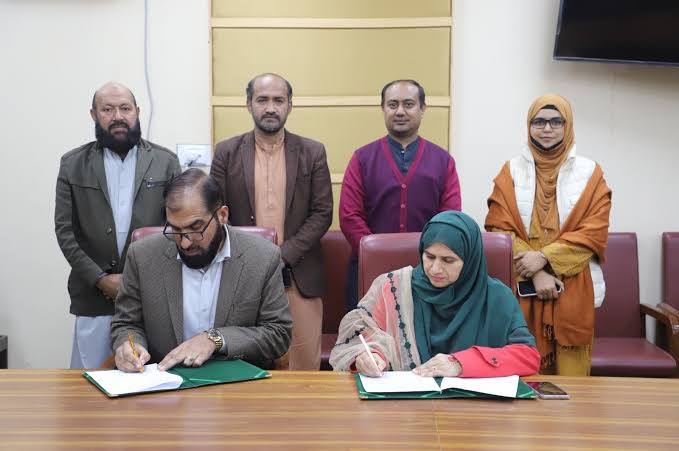
    By MIR HUNBAL BIRMANI DG Khan: Ghazi University has formally signed a Memorandum of Understanding (MoU) with the Chinese Academy of Agricultural Sciences (CAAS), China, establishing a strategic partnership aimed at advancing agricultural research and academic excellence.The agreement was officially signed by Dr. Muhammad Asif (Registrar, Ghazi University) and Dr. Zahoor Hussain on behalf of Ghazi University, alongside Prof. Dr. Xiaohui Zhang and Prof. Dr. Haiping Wang representing CAAS According to details , Department of Horticulture at Ghazi University, Dera Ghazi Khan, successfully organized a comprehensive one-day international workshop attended by scientists from china titled “Sustainable Vegetables Production Under Changing Climate” to address the growing challenges posed by global climate fluctuations on agricultural security. Registrar of Ghazi University, Dr. Muhammad Asif, who underscored the immense value of the event in enhancing the technical capacity and research aptitude of the university’s faculty members and senior students in attendance. The workshop’s core highlight featured keynote addresses delivered by a delegation of distinguished international agricultural scientists from the Chinese Academy of Agricultural Sciences (CAAS) in Beijing, China. The visiting panel included Prof. Dr. Xiaohui Zhang, Prof. Dr. Haiping Wang—Director, Chief Scientist of the Department of Vegetable Germplasm, and Curator of the National Vegetable Germplasm Resources Bank—and Dr. Jiangping Song, also a scientist and curator at the institution. During the technical sessions, these experts presented advanced, climate-resilient strategies tailored to modern horticultural demands, focusing on improved cultural practices, vegetable forcing techniques to optimize growth cycles, and controlled greenhouse production systems designed to maintain high yield quality despite extreme weather conditions. An interactive question-and-answer session was also part of the workshop, providing attendees with a valuable opportunity to engage directly with the keynote speakers and clarify complex concepts. The event concluded with a vote of thanks from Dr. Zahoor Hussain, Chairperson of the Department of Horticulture, who expressed deep gratitude to the honorable international guests, administration, and participants for contributing to the event’s success. Ultimately, the workshop served as a vital academic platform for knowledge transfer and scientific exchange, strengthening bilateral ties between Pakistani and Chinese agricultural researchers while setting a clear path forward for sustainable vegetable cultivation in the region. Ghazi University has formally signed a Memorandum of Understanding (MoU) with the Chinese Academy of Agricultural Sciences (CAAS), China, establishing a strategic partnership aimed at advancing agricultural research and academic excellence. The agreement was officially signed by Dr. Muhammad Asif (Registrar, Ghazi University) and Dr. Zahoor Hussain on behalf of Ghazi University, alongside Prof. Dr. Xiaohui Zhang and Prof. Dr. Haiping Wang representing CAAS. This bilateral agreement lays the groundwork for joint research initiatives, faculty and student exchange programs, and the provision of specialized scholarships. Additionally, the collaboration will focus on hosting joint workshops, technical training sessions, and capacity development programs designed to build expertise and strengthen global academic cooperation in agricultural sciences.

  • | |

    16 militants killed in Balochistan operation

    Security forces have killed 16 militants during intelligence-based operations in several areas of Balochistan, according to security sources. The operations are being carried out under Operation Al-Azm following a series of terrorist attacks in the province. Authorities said several militant hideouts and ambush positions were destroyed during the ongoing action. Security personnel also recovered weapons, ammunition and explosive material from the targeted locations. Operations are continuing in areas including Killi Kundi Umrani, Khad Kocha and Mastung, where security forces are targeting militant networks blamed for recent attacks. The latest operations followed an attack on the Mangi Dam Police Station, after which security forces launched a separate campaign named Operation Shaban. The security situation in Mastung also came under renewed focus after unidentified armed men attacked a vehicle on a national highway. A district and sessions judge and his security guard were killed in the attack, while an additional sessions judge and another person were seriously injured. Security sources said counterterrorism operations would continue across Balochistan until militant infrastructure is dismantled and law and order is restored. The state refers to militants linked to the banned Balochistan Liberation Army (BLA) and other groups operating in the province as Fitna al-Hindustan. Chief of Defence Forces and Chief of Army Staff Field Marshal Syed Asim Munir recently reiterated the military’s determination to eliminate militant networks in Balochistan. He said targeted operations against Fitna al-Khawarij and Fitna al-Hindustan would continue until terrorism and those supporting it were eliminated. The latest operation comes amid a broader rise in militant violence in Pakistan, particularly in Balochistan and Khyber-Pakhtunkhwa. A United Nations Security Council assessment has also highlighted continuing threats from militant groups in the region. The report pointed to attacks claimed by the BLA against Pakistani security forces and infrastructure linked to the China-Pakistan Economic Corridor. The UN assessment also raised concerns about militant groups obtaining modern weapons and equipment through cross-border smuggling and illegal markets. It noted the reported use of advanced rifles, night-vision equipment, thermal imaging systems, sniper weapons and drones by the Tehreek-e-Taliban Pakistan. The report further cited assessments that the BLA and TTP have maintained coordination in some areas, including through shared resources and training networks.

  • | |

    Azma Bukhari mocks PPP over Lahore rally

    Punjab Information Minister Azma Bukhari has criticised the Pakistan Peoples Party (PPP) over its recent political gathering in Lahore. She also extended birthday wishes to former president and PPP leader Asif Ali Zardari. In a statement, Bukhari said Zardari should be thankful that he had been spared the embarrassment of another poorly attended gathering at Minar-e-Pakistan. Her remarks came after the PPP announced a Lahore gathering to mark Zardari’s birthday. Bukhari questioned the decision to organise the event in Lahore. She said holding a gathering with a large number of empty chairs would be disrespectful to Zardari. She also criticised those who advised the PPP leadership to hold the event in Lahore. She said the party should review the advice it receives from its provincial leadership. Bukhari claimed that the Governor House Punjab had a large number of empty chairs during the gathering held the previous night. She claimed around 2,000 chairs had been arranged for the event. However, she alleged that only around 150 people were present. The minister used the reported attendance to question the PPP’s political standing in Punjab. She said the party’s poor position in the province was partly linked to the information being provided to its leadership. According to Bukhari, some party leaders are giving senior leadership inaccurate reports about the party’s popularity and political strength. She said such reporting could prevent the PPP leadership from understanding the actual situation on the ground. Bukhari also criticised the PPP’s Punjab leadership for what she described as misplaced priorities. She alleged that the provincial leadership was more focused on the Punjab government than on strengthening the PPP itself. The minister said the party should focus on expanding its political presence and improving its organisational structure in Punjab. She argued that greater attention to party affairs could have prevented the PPP from reaching its current political position in the province. Bukhari’s comments reflect the continuing political rivalry between the ruling Punjab setup and opposition parties in the province. The PPP has traditionally maintained a political presence in Punjab. However, its influence in the province has faced challenges from major political parties. The latest exchange also highlights the importance of public gatherings for political parties. Large rallies are often used to demonstrate public support and organisational strength. Bukhari’s criticism focused heavily on the reported attendance at the Lahore event. She suggested that the number of participants did not match the scale of the arrangements. The PPP has yet to publicly respond to all of Bukhari’s allegations.