National

  • | |

    Mohsin Naqvi’s statement reflects personal o…

    Director General of Inter-Services Public Relations (ISPR) Lieutenant General Ahmed Sharif Chaudhry on Friday said Pakistan’s security depends on effective governance, stressing that terrorists must either surrender under the Constitution and the law or face continued military action. Speaking at a media briefing in Rawalpindi, the military spokesperson said Interior Minister Mohsin Naqvi’s recent remarks about the country’s governance system reflected his personal opinion and declined to comment further. However, he emphasized that good governance remained essential for ensuring national security and long-term stability. The DG ISPR said the National Action Plan continued to enjoy consensus among all major political parties and noted that most of its objectives, including countering extremism, disrupting terror financing and strengthening institutions, relied on strong governance. He added that Pakistan’s growing population made administrative efficiency more important than ever and said citizens had the right to effective governance. Over 40,000 Counterterrorism Operations Conducted Providing an update on security operations, Lt Gen Chaudhry said security forces had carried out 40,348 intelligence-based operations across Pakistan so far in 2026. He said 2,084 confirmed terrorists had been killed during these operations, averaging nearly 194 operations and 10 militant deaths every day. He added that the highest number of operations had been conducted in Balochistan, while 1,971 operations were carried out in Khyber Pakhtunkhwa. According to the military spokesperson, 819 people, including security personnel and civilians, embraced martyrdom during counterterrorism efforts this year, while 28 suicide attacks were recorded nationwide. He also alleged that Afghan nationals were involved in recent terrorist attacks in Tank and Karachi. No Negotiations With Armed Militants The DG ISPR made it clear that there would be no negotiations with armed militant groups. He said militants had only two options: surrender under the Constitution and the law or face continued action by security forces. Explaining the concept of a “hard state,” he said it did not refer to military rule but rather to a country where every individual is equal before the law and all matters are resolved through constitutional and legal mechanisms. Balochistan Facing Coordinated Propaganda Addressing the security situation in Balochistan, Lt Gen Chaudhry said a deliberate campaign was underway to create a false perception that the province was in crisis. He said the Constitution required every citizen to remain loyal to the state and argued that rights should always be accompanied by responsibilities. The DG ISPR alleged that certain elite groups and tribal leaders opposed social progress because they wanted to preserve the existing power structure. He said the state would continue engaging directly with the people of Balochistan instead of those seeking to obstruct development. Highlighting development initiatives, he said Gwadar now had modern healthcare facilities, educational institutions, industrial free zones and major infrastructure projects. He added that Balochistan’s per capita budget allocation exceeded Rs75,000, making it the highest among Pakistan’s provinces. He also said terrorists deliberately targeted labourers, teachers and development projects to slow the province’s progress. Missing Persons and Regional Security On the issue of missing persons, the military spokesperson said the Commission of Inquiry on Enforced Disappearances had received 10,901 cases, of which 9,372 had already been resolved. He stressed that every reported case required proper identification and verification. The DG ISPR further claimed that following what he described as Pakistan’s success during Operation Marka-e-Haq, hostile elements had shifted their focus toward destabilising Balochistan. He alleged that India and the Afghan Taliban regime shared an agenda of supporting terrorism against Pakistan.
  • | |

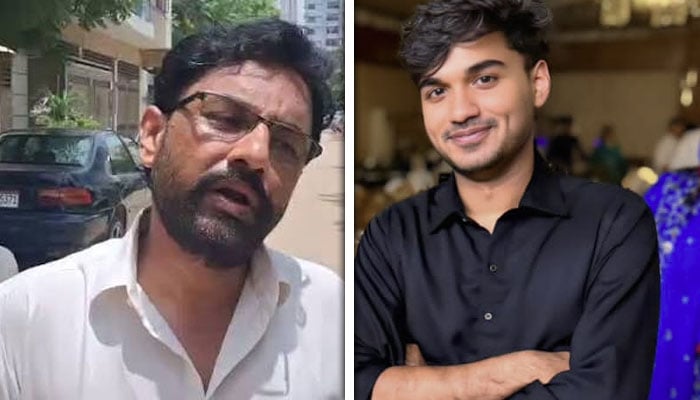
    Father mourns son killed before wedding day

    The father of murdered Karachi resident Mir Raza Ali Khan has revealed that his son was eagerly preparing for his wedding, which was scheduled to take place on August 30, describing the tragedy as devastating for the family. Speaking to the media, the grieving father said Mir Raza left home on the morning of July 28 for work but never returned. When repeated attempts to contact him failed because his phone was switched off, the family filed a missing person’s report at the local police station the same day. He said the family later traced his last known location through an online ride-hailing service. Upon reaching the location, they found police officials from Gulistan-e-Jauhar already present. According to the father, police informed the family that an unidentified body had been recovered earlier that morning. Although the victim’s face was unrecognizable, the clothes matched those worn by his son, confirming his identity. The bereaved father said Mir Raza had never shared any concerns about business disputes or personal problems with the family, leaving them shocked and searching for answers behind the killing. Mir Raza Ali Khan, a resident of Karachi’s PECHS area, was found dead in Gulistan-e-Jauhar. Police are continuing their investigation to determine the circumstances surrounding his abduction and murder.

  • | |

    KP CM visits Hangu, vows support for martyrs’ fa…

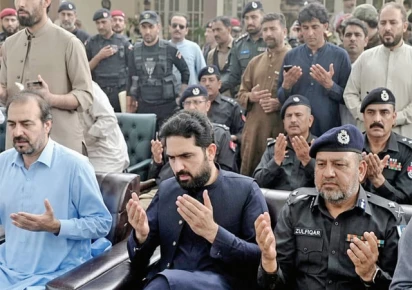
    Khyber Pakhtunkhwa Chief Minister Muhammad Sohail Afridi visited Hangu on Thursday to meet the families of police officers who lost their lives in the recent terrorist attack on Khazana Check Post. The chief minister offered Fateha for the deceased officers and prayed for the elevation of their ranks. He paid tribute to the policemen, calling them national heroes who sacrificed their lives while protecting the country and its people. Afridi assured the bereaved families that the provincial government would continue to support them through the difficult period. He pledged comprehensive financial and institutional assistance and said the government would use all available resources to ensure the long-term welfare of the martyrs’ families. After returning to Peshawar, the chief minister chaired a high-level meeting to assess the law and order situation across the province. Provincial Information Minister, Special Assistant to the Chief Minister on Home Affairs, Chief Secretary, Additional Chief Secretary (Home), Inspector General of Police and other senior officials attended the meeting. Officials briefed the meeting on the security situation, particularly in the southern districts, and discussed recent developments, ongoing operations and emerging security challenges. Afridi directed the authorities to utilise all available resources to combat terrorism and establish lasting peace in the province. He stressed the need for a coordinated, intelligence-based strategy to strengthen public security and effectively counter militant threats. Meanwhile, police personnel killed in Wednesday’s terrorist attack in Hangu were laid to rest after funeral prayers at Police Lines Hangu. The ceremony took place with full state honours and was attended by senior civil and police officials, including Police Training College Hangu Commandant Shaukat Abbas, Deputy Commissioner Basir Ali Rahman and local elders.

  • | |

    Mild earthquake jolts parts of Karachi

    A mild earthquake was recorded in Karachi on Friday evening, with tremors felt across several parts of the city. The shaking caused brief panic among residents, although no casualties or damage were reported. According to the Pakistan Meteorological Department (PMD), the earthquake measured 2.9 on the Richter scale. The seismic event originated at a depth of 10 kilometres, with its epicentre located within Karachi. The PMD said the earthquake struck at 6:01 pm, and its relatively shallow depth allowed tremors to be felt in different neighbourhoods. Authorities said there were no immediate reports of injuries or damage to buildings or infrastructure. Residents in several areas experienced light shaking, but the situation remained calm after the tremors subsided. Officials continue to monitor seismic activity and have advised the public to remain alert while assuring that no emergency situation has been reported following the low-intensity earthquake.

  • | |

    SBP reserves fall $229m, gold prices rise

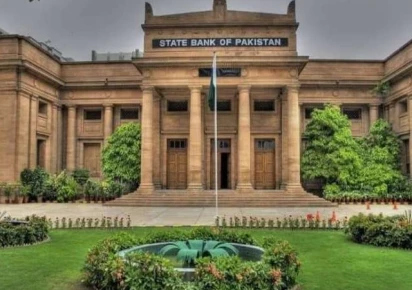
    The State Bank of Pakistan’s (SBP) foreign exchange reserves fell by $229 million in the week ending July 24, 2026, to $17.03 billion, mainly due to external debt repayments. Pakistan’s total liquid foreign exchange reserves stood at $22.4 billion during the week. The SBP held $17.03 billion, while commercial banks maintained net reserves of around $5.4 billion. Meanwhile, the Pakistani rupee edged up against the US dollar, closing at Rs277.81 in the interbank market on Thursday compared with Rs277.82 a day earlier. The dollar remained stable in early Asian trading after the US Federal Reserve kept interest rates unchanged. Gold prices in Pakistan also increased, following gains in international markets. The All-Pakistan Gems and Jewellers Sarafa Association said the price of 24-carat gold rose by Rs1,000 to Rs427,436 per tola. The price of 10 grams increased by Rs857 to Rs366,457. Internationally, spot gold gained 0.8% to $4,098.98 per ounce, while US gold futures for August delivery rose 1.4% to $4,097.70. The Federal Reserve maintained its current interest rates on Wednesday, while softer US inflation data reduced market expectations of a rate hike in September. Analysts, however, warned that the ongoing conflict in the Middle East could put renewed pressure on inflation. Silver prices moved lower in the domestic market, declining by Rs76 to Rs6,215 per tola. Interactive Commodities Director Adnan Agar said the gold market remained range-bound. Bullion traded between $4,028 and $4,120 before settling near $4,107, which he described as a “danger zone.”

  • | | |

    LPG becomes costlier from August

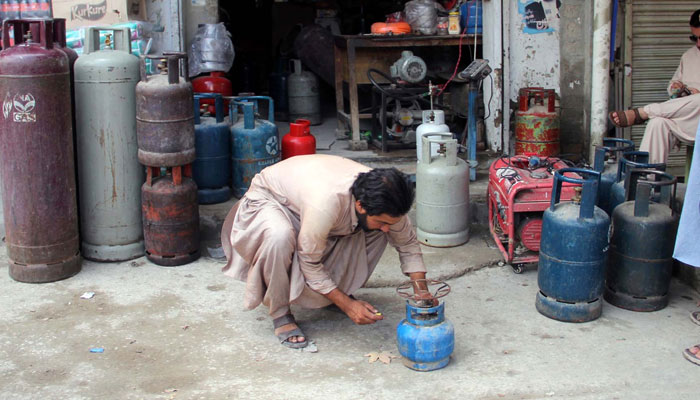
    The Oil and Gas Regulatory Authority (Ogra) has increased the price of liquefied petroleum gas (LPG) for August, raising the cost for both domestic and commercial consumers across Pakistan. According to an official notification issued by Ogra, the price of LPG has been increased by Rs12.89 per kilogram, taking the new official rate to Rs254.32 per kg for the month of August. The regulator also revised the price of the standard 11.8-kilogram domestic LPG cylinder, which will now cost Rs3,000.92 following the latest increase. The revised prices will come into effect for the entire month of August under Ogra’s monthly pricing mechanism. The increase is expected to place an additional financial burden on households that rely on LPG for cooking and heating, particularly in areas without access to natural gas. Commercial users, including restaurants, hotels and small businesses that depend on LPG, are also likely to face higher operating costs. Ogra reviews LPG prices every month based on prevailing market conditions and other relevant pricing factors before issuing revised rates through official notifications. Consumers are expected to pay the updated prices from the beginning of August unless further revisions are announced by the regulator.

  • | |

    Karachi lawyers halt court proceedings over allege…

    KARACHI: Lawyers in Karachi have announced a boycott of court proceedings and barred police personnel from entering the City Courts following an alleged assault on a former member of the Karachi Bar Association’s Managing Committee at Gulbahar Police Station. The Karachi Bar Association (KBA) lawyers shut the main entrances of the City Courts, preventing both police officials and members of the public from entering the court premises. The move came as lawyers protested what they described as the mistreatment of their colleague. The lawyers also stopped police personnel from entering the City Courts and called for a complete boycott of judicial proceedings. Their protest disrupted routine legal activities across the court complex. As a result of the strike, authorities did not bring prisoners from jails to the City Courts for scheduled hearings. The boycott also brought regular court operations to a standstill, leaving several cases and judicial proceedings suspended. The lawyers have taken the action in response to the alleged violence against their former Managing Committee member and are demanding action over the incident.

  • |

    Mustafa Kamal calls for more administrative units

    MULTAN:Federal Minister for Health Mustafa Kamal has once again called for the creation of additional administrative units in Pakistan, arguing that the country’s existing governance structure is no longer capable of effectively addressing its growing challenges. Speaking at a ceremony in Multan, Kamal said Pakistan currently operates through a federal government and four provinces, but the system needs major restructuring to improve governance and service delivery. He said Pakistan is larger than around 180 countries in terms of population and administrative needs, making it necessary to consider creating more administrative units to ensure better management and development. Reflecting on his political career, Kamal said he became Karachi’s mayor 21 years ago and was elected as a member of the provincial assembly 12 years ago. He added that political leaders often remain caught up in a continuous race without fully understanding whether the existing system is delivering the desired results. The federal minister also focused on the country’s healthcare challenges, saying that simply constructing more hospitals would not solve Pakistan’s health crisis. He pointed out that hospitals across the country remain overcrowded, while the government must focus more on preventive healthcare and improving public health infrastructure. Kamal said effective healthcare begins with measures such as ensuring adequate gaps between births and completing childhood vaccination schedules. He warned that a large number of children remain vulnerable to waterborne diseases due to inadequate sanitation and unsafe water supplies. He also highlighted the lack of an effective sewage treatment system in Pakistan, saying poor sanitation continues to contribute to the spread of preventable diseases. He stressed the need to address the root causes of health problems instead of relying solely on hospitals and medicines after people fall ill. Discussing population growth and maternal health, Kamal said Pakistan’s birth rate stands at around 3.5 percent, while the population growth rate is approximately 2.5 percent. He claimed that around 11,000 mothers die every year in the country, describing the situation as a serious public health concern. The minister said Pakistan also faces a major shortage of trained nurses. According to him, the country needs around 900,000 nurses, while international demand for Pakistani-trained nursing professionals could reach 2.5 million. He said the government should focus on developing professional skills so that trained workers can contribute to the national economy and earn valuable foreign exchange for the country. Kamal also addressed concerns surrounding medicine prices and availability. He clarified that the federal health minister alone does not have the authority to decide whether medicine prices should increase or decrease. He said the Drug Regulatory Authority of Pakistan (DRAP) has deregulated the prices of certain medicines, while decisions regarding price reductions fall within the broader domain of the federal cabinet. He added that a cabinet committee is currently examining the issue of reducing medicine prices. The minister further pointed out that although Pakistan manufactures a large number of medicines locally, the pharmaceutical industry still relies heavily on imported active pharmaceutical ingredients (APIs). He said shortages of some medicines have also created difficulties for patients, with certain drugs disappearing from the regular market and becoming available through agents at significantly higher prices. Kamal’s remarks came a day after Interior Minister Mohsin Naqvi also called for the creation of new administrative units, describing such reforms as essential for the country’s development. Addressing an event in Islamabad, Naqvi reportedly said the existing system had failed to deliver effectively and argued that new administrative units or provinces could provide a way forward. The repeated calls from senior federal ministers for additional administrative units have renewed debate over whether Pakistan needs a major restructuring of its administrative and governance framework to improve public service delivery, strengthen local administration and address the growing demands of its expanding population.

  • | |

    Population boom demands governance reset: DG ISPR

    Director General of Inter-Services Public Relations (DG ISPR) Lieutenant General Ahmed Sharif Chaudhry on Friday said Pakistan’s rapid population growth requires a serious review of the country’s governance and administrative structure to ensure it continues to meet the nation’s needs. Speaking at a news conference, the military spokesperson noted that Pakistan’s population had increased from around 70 to 80 million in 1972 to nearly 250 million today, while the country’s administrative framework had largely remained unchanged. He said such a significant rise in population made it necessary to assess whether the existing system was still capable of delivering effective governance and public services. The DG ISPR stressed that improving governance was essential for national security and stability, adding that unresolved issues indicated the need for reforms. However, he emphasized that any changes to the administrative structure must be introduced through constitutional and democratic processes. He said the decision on governance reforms or administrative restructuring should reflect the aspirations of the people rather than individual opinions. Lt Gen Chaudhry also highlighted that Pakistan’s youth now make up the largest segment of the population and urged political leaders to focus on improving governance while guiding the public through constructive political dialogue. He reiterated that lasting solutions to the country’s governance challenges could only be achieved through constitutional means and in accordance with the will of the people.

  • | | |

    PM orders digital overhaul of oil sector

    Prime Minister Shehbaz Sharif on Friday directed the Oil and Gas Regulatory Authority (Ogra) to implement a modern digital monitoring system across Pakistan’s oil and gas sector to improve transparency, eliminate hoarding and curb profiteering. The directive was issued during a high-level meeting chaired by the prime minister to review Ogra’s institutional reforms and measures aimed at strengthening the regulator’s performance. The prime minister said the government was committed to protecting public money and would not allow anyone to exploit consumers or manipulate the country’s energy system for personal gain. He instructed authorities to accelerate Ogra’s reform process and ensure that the government’s institutional reform agenda was implemented effectively across the organisation. Shehbaz Sharif also directed officials to develop a comprehensive digital tracking mechanism for fuel movement, using the Federal Board of Revenue’s modern tracking system as a model. He said the system should closely monitor the transportation of petroleum products from ports and refineries to fuel stations across the country. The prime minister stressed that digital oversight of the entire fuel supply chain would help improve transparency, reduce irregularities and strengthen regulatory enforcement. To improve Ogra’s institutional capacity, he called for the induction of qualified professionals from the private sector with strong reputations and relevant expertise. He also ordered the restructuring of the authority, saying appointments to all positions should be made through a transparent and merit-based process. Shehbaz Sharif assured officials that the federal government would provide all necessary professional and technical support to ensure the successful implementation of Ogra’s reform and restructuring programme. During the meeting, the Ogra chairman briefed participants on the regulator’s current performance, key challenges and the progress of its reform agenda. The meeting was attended by Deputy Prime Minister Ishaq Dar, Law Minister Azam Nazeer Tarar, Petroleum Minister Musadik Malik, Planning Minister Ahsan Iqbal’s representative Ahad Cheema, Information Minister Attaullah Tarar, IT Minister Shaza Fatima Khawaja, Minister Ali Pervaiz Malik, Special Assistant to the Prime Minister Tariq Bajwa and other senior government officials.