National

  • | |

    Bilawal demands transparent AJK election process

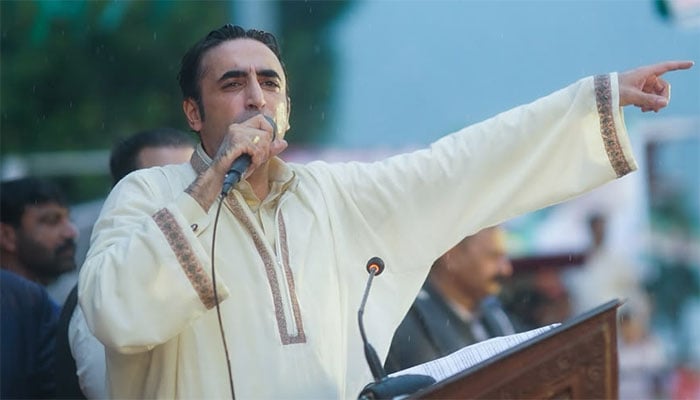
    Pakistan Peoples Party (PPP) Chairman Bilawal Bhutto Zardari has called for a fair and transparent electoral process in Azad Jammu and Kashmir (AJK), saying the Election Commission’s duty is to protect the people’s vote rather than support any political party. In a statement regarding the first phase of the AJK elections, Bilawal said the credibility of the entire electoral process would depend on ensuring justice and transparency at the initial stage. He urged the Election Commission to address all complaints related to alleged rigging and irregularities before August 2 through open hearings. He also demanded that polling station results and election records be made available to the public to remove doubts and increase confidence in the process. The PPP chairman said his party was not seeking anyone’s favour or special treatment. He said the demand was only for the right to participate in clean, transparent and impartial elections. Bilawal emphasized that the Election Commission should remain neutral and perform its constitutional responsibilities without any pressure. He said the institution’s main responsibility was to safeguard the mandate given by voters. He added that protecting the people’s vote was essential for strengthening democracy and ensuring that the voices of Kashmir’s residents were properly represented. The PPP leader’s statement came amid political discussions over the first phase of the AJK elections, with parties raising concerns and demanding a transparent mechanism to address electoral complaints.

  • | |

    ECP begins Islamabad local polls preparations

    The Election Commission of Pakistan (ECP) has started the delimitation process for holding local government elections in Islamabad. The commission said the formal process will begin on August 1, 2026, and will continue until October 13, 2026. The delimitation of constituencies is a major step before announcing the election schedule. An ECP spokesperson said that after the completion of the delimitation process and publication of the final constituencies, the commission will consult the federal government regarding the date for Islamabad’s local government elections. The spokesperson also shared updates about local government elections in Punjab and Khyber Pakhtunkhwa. In Punjab, delimitation authorities have been directed to submit their decisions to the relevant committees by August 7. The final delimitation list for the province will be published on August 17. The ECP said it is fully prepared to conduct local government elections in Punjab after completing all necessary legal requirements and consultations. Regarding Khyber Pakhtunkhwa, the commission said delimitation has been completed in 23 districts, while work is continuing in seven more districts. The spokesperson said the ECP held discussions with the Khyber Pakhtunkhwa chief secretary and local government secretary on July 14 about the election schedule. Provincial authorities were given additional time after requesting support for completing arrangements. The commission said recent amendments to the Khyber Pakhtunkhwa Local Government Act created legal issues that affected the delimitation process. The ECP informed the provincial government about these concerns and sought cooperation to resolve the matter. The spokesperson said the commission has faced delays in local government elections because federal and provincial governments often change local government laws close to election dates. He said the ECP has repeatedly completed delimitation exercises and prepared election schedules, but changes in legal frameworks affect the process. The commission recommended that major changes to local government laws and boundaries should be completed at least one year before elections. It said this would help ensure a smooth and timely electoral process.

  • | |

    Over 4,000 cops to secure AJK elections in Rawalpi…

    More than 4,000 police personnel will be deployed in Rawalpindi division to ensure security during the Azad Jammu and Kashmir (AJK) Legislative Assembly elections on August 2. Police officials have prepared a detailed security plan for polling in four constituencies of the division, including Attock, Jhelum, Chakwal and Murree. A total of 4,029 police officers will be assigned duties at 175 polling stations. The polling stations have been divided into three categories according to their security requirements. Category A includes highly sensitive stations, Category B covers sensitive locations, while Category C consists of normal polling stations. Rawalpindi Regional Police Officer Babar Sarfraz Alpa said providing voters with a safe and peaceful environment is the top priority. He added that all available resources would be used to ensure free and transparent elections. He said strict monitoring would be carried out at sensitive polling stations. Additional patrolling and surveillance measures would remain active throughout the polling process. Police officials will also monitor suspicious activities, illegal weapons and any violations of the election code of conduct. Legal action will be taken against individuals involved in disrupting the electoral process. In Rawalpindi district, more than 3,100 police personnel and 200 traffic police officials will be deployed at 100 polling stations. These stations are located in different areas, including Rawalpindi city, Taxila, Wah Cantt, Gujar Khan, Kallar Syedan and Kahuta. Among the 100 polling stations, 18 have been declared highly sensitive, 45 sensitive and 37 normal. Security arrangements have also been made for the safe transportation of polling materials. City Police Officer Hassan Mushtaq Sukhera said the police would ensure implementation of the Election Commission’s rules and maintain law and order until the completion of the election process. The AJK elections are being conducted in phases due to security concerns. Authorities have increased security measures after previous election-related tensions and allegations of irregularities.

  • DG NAB Lahore hears public complaints at monthly open court

    Lahore – Director General NAB Lahore, Mirza Faran Baig chaired the monthly Open Court (Khuli Kachehri) where he met members of the public, listened to their concerns firsthand and directed the relevant officers to ensure the timely resolution of complaints. A total of 1,200 people attended the open court, the majority of whom were victims of various housing societies and fraud-related cases. More than 350 affectees of Al Jalil Garden and Al Noor Orchard also participated in a special session held during the event where they were given a detailed briefing on the latest progress in their cases. DG NAB Lahore informed the participants about the ongoing investigations, legal proceedings and efforts being made to restore their legitimate rights. Most of the other complaints received were related to Sarmayadari, Prime Zone, Future Vision, Mid City, Khayaban-e-Amin, Palm Vista, Gatwala Faisalabad, Omega Residencia, Metro City, Shadman Enclave, Century Venture 1, Elite Town, New Lahore City and Pak Arab Housing Scheme. The affectees appreciated NAB Lahore’s transparent communication and expressed confidence in the institution’s efforts. During the open court, DG NAB Lahore accompanied by senior officers reviewed each complaint in detail and issued directives to the relevant departments for prompt and effective action. In line with the Chairman NAB’s vision of combating corruption and protecting the public from exploitation, DG NAB Lahore Mirza Faran Baig reaffirmed the Bureau’s commitment to taking strict legal action against individuals involved in corruption and defrauding the public, in accordance with the law.

  • | | |

    Murad rejects Naqvi’s proposal for new admin…

    KARACHI: Sindh Chief Minister Murad Ali Shah has strongly rejected Interior Minister Mohsin Naqvi’s proposal for creating new administrative units, calling it an outdated idea that the people of Sindh would never accept. Speaking to reporters in Bhit Shah on Friday, Murad said he had heard the interior minister’s statement but was unsure what exactly he was referring to. He said if Mohsin Naqvi believes the current governance system has failed, he is free to present proposals, but the idea of creating new administrative units is an old suggestion that has already been debated. The chief minister said Sindh is the land of Sufi traditions and its people would not support such a move. He stressed that any proposal affecting the province should reflect the will of its people. Murad also pointed out that different political parties are governing different parts of the country. He noted that Punjab is ruled by the Pakistan Muslim League-Nawaz (PML-N), Balochistan has a coalition government, Sindh is governed by the Pakistan Peoples Party (PPP), while Khyber Pakhtunkhwa is under the Pakistan Tehreek-e-Insaf (PTI). Commenting on the country’s youth, Murad said young people are Pakistan’s future and will lead the nation in the years ahead. He rejected any negative remarks about them, saying the youth are a valuable national asset and should be encouraged rather than criticised.

  • | |

    Supreme Court orders early hearing of Imran’s me…

    ISLAMABAD: The Supreme Court on Friday accepted a chamber appeal filed by former prime minister and Pakistan Tehreek-e-Insaf (PTI) founder Imran Khan. The court directed that his petition be fixed for hearing before a Supreme Court bench at the earliest. Imran Khan has requested the court to order his transfer from Adiala Jail to Islamabad’s Shifa International Hospital for medical treatment. He has also sought permission for regular meetings with his family members, personal physicians and legal counsel. In addition, he wants his medical reports to be shared with his family. The appeal challenged an earlier decision by the Supreme Court Registrar, who had returned the petitions after raising objections. The Registrar’s Office said the petitions were incomplete because they did not include a signed power of attorney. During Friday’s proceedings, Advocate Uzair Karamat Bhandari appeared before Chief Justice Yahya Afridi in chambers on behalf of Imran Khan. After hearing the arguments, the chief justice declared the Registrar’s objections ineffective and directed the legal team to submit a signed power of attorney. The Registrar’s Office was also instructed to assign a regular case number to the petition so it could be listed for hearing without unnecessary delay. The Supreme Court further ordered that a separate petition filed by Imran Khan’s sister, Dr Uzma Khan, should be heard together with his own case. In the appeal, Imran Khan argued that the Registrar had exceeded his administrative powers by deciding the maintainability of the petition. His legal team maintained that such questions should be decided by judges because they involve constitutional and legal interpretation rather than administrative scrutiny. The petition also requested that Imran Khan be examined by doctors of his own choice. The names included Dr Khurram Mirza, Dr Asim Yusuf, Dr Faisal Sultan and Dr Samina Niazi. It further asked the court to order his immediate transfer to Shifa International Hospital for a detailed medical examination and treatment. The petition also sought uninterrupted access to his personal doctors, family members and lawyers during his imprisonment and treatment. Dr Uzma Khan has also challenged an Islamabad High Court ruling that refused to order Imran Khan’s transfer to Shifa International Hospital. She also questioned the decision denying his family access to his medical information and visits by his personal physicians. In her petition, Dr Uzma said Imran Khan and his wife are currently imprisoned in Adiala Jail, while his two sons live abroad. She said she is his closest immediate family member in Pakistan and, as a medical doctor, is deeply concerned about his health. She argued that she has the legal standing to pursue the case on his behalf. Imran Khan has remained in custody since August 2023. He is serving a 14-year prison sentence in the £190 million Al-Qadir Trust corruption case. He is also receiving treatment for right central retinal vein occlusion (CRVO), an eye condition that was diagnosed earlier this year. His medical treatment has become a major political issue in recent months. Opposition leaders have repeatedly accused the government of failing to ensure proper medical care and denying him access to his personal doctors. They have also demanded his transfer to Shifa International Hospital

  • Sindh announces August 4 school holiday

    The Sindh government has announced a public holiday for all public and private educational institutions on Tuesday, August 4, 2026 in observance of the Chehlum of Hazrat Imam Hussain (RA). According to the Sindh School Education Department an official notification has been issued confirming that all government and private schools across the province will remain closed. Public and private colleges will also observe the holiday. The order applies to all educational institutions in Sindh, and the department has instructed school and college administrations to fully follow the notification. Every year the Sindh government declares a holiday for the Chehlum of Hazrat Imam Hussain (RA). This year’s announcement has been made in advance so that students parents and teachers can plan their schedules accordingly. It is important to note that educational institutions in Sindh are scheduled to reopen on August 3, 2026, after the summer vacation, before closing again the following day for the Chehlum holiday.

  • IISAT, Gujranwala police sign MoU to support police families

    GUJRANWALA: The International Institute of Science, Arts & Technology (IISAT), Gujranwala, and the Regional Police Office (RPO), Gujranwala, signed a Memorandum of Understanding (MoU) to strengthen cooperation in higher education, student development and community engagement. The agreement aims to expand educational opportunities for police families while encouraging greater interaction between students and law enforcement through awareness and outreach programmes. Under the MoU, IISAT Gujranwala will offer special admission and tuition fee concessions to the children of serving, retired, deceased and martyred police officers and officials serving under the Regional Police Office, Gujranwala. The concessions will be available across the institute’s academic programmes, making quality higher education more accessible to eligible students. Officials said the initiative reflects a shared commitment to recognising the services and sacrifices of police personnel by supporting the educational aspirations of their families. Beyond financial assistance, the partnership will focus on promoting civic responsibility among students through a series of awareness activities. As part of the collaboration, officials from the Regional Police Office will conduct educational sessions on traffic laws, road safety, responsible driving practices and the procedures for obtaining driving licences. The planned programmes are intended to equip students with practical knowledge that can contribute to safer roads and improved public awareness of traffic regulations. Interactive discussions and engagement sessions between students and police officers will also be organised to encourage dialogue and foster mutual understanding. According to officials, the initiative seeks to bridge communication gaps between young people and law enforcement institutions while promoting respect for the rule of law and responsible citizenship. They said direct interaction with police officials would help students better understand the role of law enforcement in maintaining public safety and community welfare. Representatives of both institutions described the agreement as an important step towards building long-term cooperation in areas extending beyond academics. They noted that educational institutions and public sector organisations can play complementary roles in preparing socially responsible citizens and strengthening community ties. The MoU was signed on July 30, 2026, at IISAT Gujranwala in the presence of officials from both organisations. Speaking on the occasion, representatives from IISAT and the Regional Police Office expressed confidence that the collaboration would benefit students as well as police families by creating new educational opportunities and enhancing awareness of civic responsibilities. The partnership is expected to serve as a model for future collaborations between educational institutions and public service organisations, reinforcing the connection between education, community service and public safety while contributing to the development of informed and responsible citizens.

  • 2 police personnel martyred in terrorist attack in Dera Ismail Khan

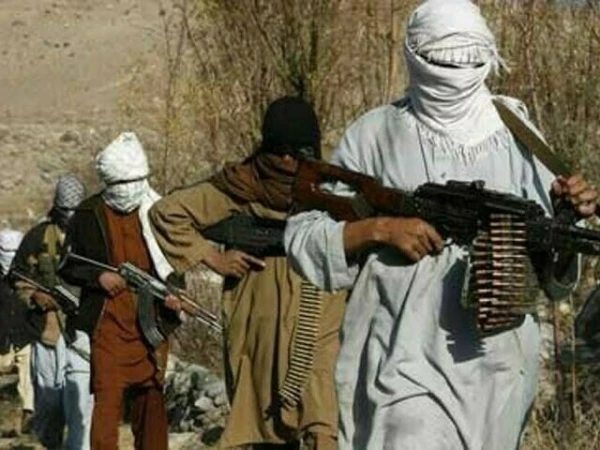
    DERA ISMAIL KHAN: Two police personnel, including an Assistant Sub-Inspector (ASI), were martyred in an attack by suspected militants in the Shah Alam Mor area within the jurisdiction of Choudhwan Police Station, while an armoured personnel carrier (APC) of Daraban Police also came under attack in a separate incident. No casualties were reported in the APC attack. According to Regional Police Officer (RPO) Dera Ismail Khan Ghulam Mubashir Maken, unidentified armed men attempted to stop two motorcycle riders in the Choudhwan area last night. When they did not stop, the assailants opened fire, killing a civilian identified as Adnan. Following the incident, local residents blocked Daraban Road in protest on Sunday morning. Police held negotiations with the protesters and succeeded in reopening the road for traffic. While returning after the negotiations, four Choudhwan police personnel travelling on two motorcycles came under a sudden attack near Shah Alam Mor. The militants opened indiscriminate fire on the policemen, resulting in the martyrdom of ASI Faqeer Muhammad, a resident of Jhok Sikandar Paroa, and Head Constable Wazir Khan. Heavy police contingents rushed to the scene after receiving information about the attack, while local residents also reached the area to assist the police. The attackers fled after the firing. Police and security forces subsequently launched a search operation in the surrounding area. In a separate incident, the police party accompanying the SHO of Choudhwan Police Station and an APC of Daraban Police, led by APC in-charge Abid Hussain, came under fire from militants at Darazinda Mor while returning after the protest. The police retaliated, forcing the attackers to flee. No loss of life was reported in the incident. Police and security forces immediately reached the site and launched a search operation to track down the attackers. Martyrs Laid to Rest with Full State Honours The funeral prayers of martyred police personnel ASI Faqeer Ahmed and Head Constable Wazir Ahmed were offered at Ejaz Shaheed Police Lines in Dera Ismail Khan with full official honours. Station Commander Brigadier Muhammad Abu Bakar, RPO Ghulam Mubashir Maken, DPO Ziauddin Ahmed, Deputy Commissioner Hikmatullah Wazir, SP CTD Iftikhar Ali Shah, senior civil and police officers, Pakistan Army officers, government officials, local elders, civil society representatives and the families of the martyrs attended the funeral. A smartly turned out police contingent presented a guard of honour to the martyrs, whose bodies were wrapped in the national flag. Senior officials and other participants laid floral wreaths on the coffins and offered prayers for the elevation of the martyrs’ ranks, the security of Pakistan and lasting peace. After the funeral, RPO Ghulam Mubashir Maken and DPO Ziauddin Ahmed met the families of the martyrs and expressed their condolences and solidarity. The RPO said the martyrs were an asset to the nation and a source of pride for the police department, adding that their sacrifices would always be remembered. He vowed that the blood of the martyrs would not go in vain and that the elements involved in the Shah Alam Mor attack would be arrested and brought to justice at the earliest. He said action would also be taken against their facilitators without discrimination. Ghulam Mubashir Maken said Dera police would continue performing its duties with full force, professional commitment and national spirit until the menace of terrorism was completely eliminated. He added that efforts to maintain peace and protect the lives and property of citizens would continue.

  • 32 dead as gas blast rips through Quetta coal mine

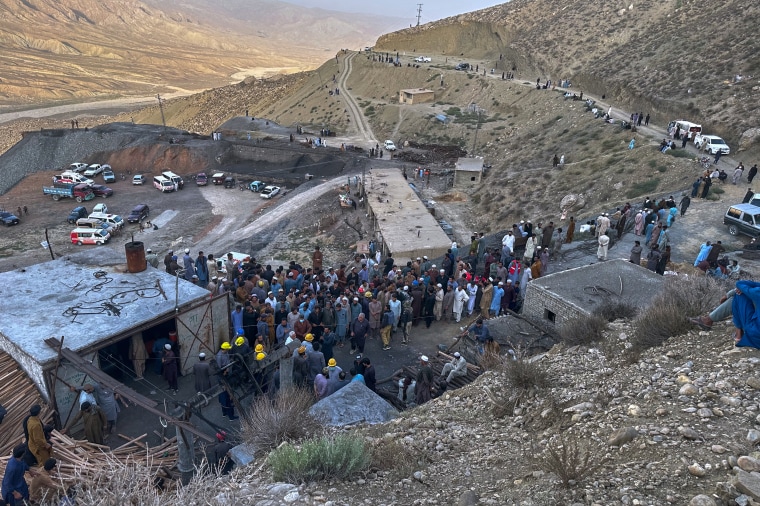
    At least 32 bodies were recovered overnight from two coal mines in the Sorange coalfield near Quetta after a methane gas explosion tore through the site. The search for two more miners continued on Friday, an official told Dawn. The explosion took place on Thursday at a private coal mine in the Sorange coalfield, about 30 kilometres northeast of Quetta. The methane gas blast set off a fire, caused the mine to collapse, and also affected a nearby mine. Chief Inspector of Mines Balochistan Muhammad Atif told Dawn that 34 miners were inside the two mines at the time of the explosion. He said that so far 32 bodies had been recovered from both mines, and that the operation to recover the remaining two miners was continuing in the mine where the explosion originally took place. Officials said the explosion happened on Thursday afternoon while 24 miners were working around 4,000 feet underground in the first mine. A fire broke out soon after the blast, causing parts of the mine structure to collapse. The sound of the explosion was heard across a wide area of Sorange. A second, nearby mine was also badly affected. Twelve miners were working inside this mine when the explosion occurred. Mining engineers and workers built alternative routes to reach both affected mines, but large amounts of methane gas along with the ongoing fire made it extremely difficult to reach the bodies and the miners still trapped deep underground. Provincial Minister for Mines and Minerals Mir Shoaib Nosherwani announced that the provincial government will pay Rs500,000 in compensation to the family of each miner who died, and Rs300,000 to every injured worker. He said an inquiry into the incident would also be carried out. This is not the first such tragedy in the region. In June, three people were injured when explosive material used in mining accidentally went off in Quetta division’s Khanuzai area. In April, at least five coal miners were killed in two separate accidents in the Bolan and Duki coalfield areas. Meanwhile, Khyber Pakhtunkhwa’s Shangla district is mourning the loss of 28 young coal miners who died in the blast, including 23 residents of a single village, Mian Kaly. The Shangla Coal Mine Workers Association said that almost every household in Mian Kaly is now grieving the loss of a family member. Abid Yaar, president of the association, said Mian Kaly has become the centre of repeated coal mine tragedies. He said that of the 28 deceased workers from Shangla district, 23 were from Mian Kaly, also known as Pir Abad, two were from Kana, and one each came from Bada and Gata Bely Baba. He said the victims were between 17 and 25 years old, and many belonged to the same families, being cousins or close relatives. He added that several of the dead were orphans whose fathers had also died in earlier coal mine accidents. Yaar alleged that the tragedy was caused by negligence on the part of the mine administration and a lack of basic safety measures. He claimed there was no proper ventilation system in the government run mine, which led to the deadly gas explosion. He said this was not just an accident but a lifelong trauma for the families, orphans, widows and mothers who lost their loved ones. He said these young men had gone to work in the mine only to earn a living and support their families back home. He also said that Shangla lacks factories and other skilled job opportunities, which forces young people to risk their lives in dangerous coal mines just to make ends meet. Family members of the victims criticised the government for failing to arrange ambulances to transport the bodies home. They said they had to bring the remains back in a van at their own expense. According to the Shangla administration, one body arrived on Friday evening, with the rest expected to arrive later that night and early Saturday morning. Three of the miners who died in the tragedy were brothers.