title Story

  • | | |

    12 militants killed in Balochistan intelligence op…

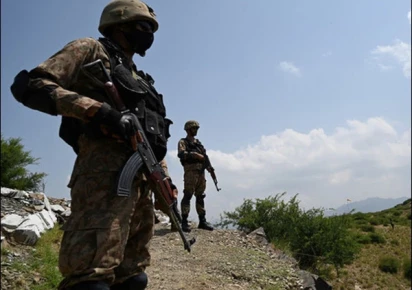
    Pakistan’s security forces killed 12 suspected militants during two intelligence-based operations carried out in separate districts of Balochistan as part of the ongoing counterterrorism campaign, the Inter-Services Public Relations (ISPR) said on Thursday. According to the military’s media wing, the operations were conducted on August 5 and 6 in Washuk and Mastung districts under the third phase of Operation Rad-ul-Fitna, which targets militant groups allegedly backed by hostile foreign elements. The ISPR said the first operation was launched on August 5 after intelligence agencies detected the movement of six suspected militants in Washuk district. Security forces swiftly moved to the area and engaged the suspects in a targeted operation. Following an exchange of fire, all six militants were killed. A second intelligence-based operation was conducted on August 6 in Mastung district after security forces received information about the presence of armed militants. The ISPR said another six suspected militants were killed during an intense firefight. Security personnel also destroyed a militant hideout during the operation. The military stated that both operations were based on credible intelligence and were part of continuous efforts to eliminate militant networks operating in Balochistan. It added that security forces carried out the missions with precision, preventing the militants from escaping. According to the ISPR, the operations form part of Pakistan’s broader counterterrorism strategy being implemented under Azm-e-Istehkam, the national security initiative approved by the Federal Apex Committee under the National Action Plan. The military reaffirmed that Pakistan’s armed forces, together with law enforcement agencies, will continue intelligence-led operations across the country to eliminate terrorism and dismantle militant infrastructure.

  • | | |

    Pakistan backs Iran-US dialogue, Hormuz progress k…

    ISLAMABAD: Pakistan has expressed hope that progress on the Strait of Hormuz issue will create momentum for renewed dialogue between Iran and the United States, reaffirming its commitment to supporting diplomatic efforts aimed at easing tensions in the region. Speaking at the weekly media briefing on Thursday, Foreign Office spokesperson Tahir Andrabi said Pakistan expects the implementation of the Islamabad Reconciliation Framework to advance through consensus on the Strait of Hormuz, paving the way for technical-level talks between Tehran and Washington. He said Pakistan supports the resumption of negotiations between Iran and the United States and will continue to play a constructive diplomatic role alongside regional partners. According to the spokesperson, Pakistan, Qatar, Oman, and other friendly countries remain engaged in coordinated efforts to promote peace and stability, with Oman playing a particularly positive role in efforts related to the Strait of Hormuz. Andrabi also confirmed that Iran’s foreign minister has been invited to visit Pakistan, while noting that the National Assembly Secretariat would clarify whether an invitation has also been extended to the Speaker of the Iranian Parliament. On the situation in Gaza, the spokesperson said lasting peace requires not only the disarmament of Hamas but also Israel’s withdrawal from the occupied territories. He stressed that Israel must fulfill its international obligations and end its military presence in Gaza. Responding to questions about the possible deployment of an international peacekeeping force in Gaza, Andrabi said it was too early to discuss such a proposal. He added that Pakistan would examine any formal plan if it is presented through appropriate international channels. Commenting on political developments in Bangladesh, the spokesperson reiterated that Pakistan does not interfere in the internal affairs of other countries and declined to comment on statements made by Bangladesh’s former prime minister. He also strongly condemned recent attacks on commercial vessels in the Bab el-Mandeb Strait, describing them as violations of international law and threats to maritime security. Andrabi reaffirmed Pakistan’s commitment to supporting the safety of global trade routes and said defense cooperation between Pakistan and Saudi Arabia would continue.

  • | | |

    FO rejects India’s criticism of AJK elections

    Pakistan’s Foreign Office (FO) has strongly rejected India’s criticism of the ongoing Azad Jammu and Kashmir (AJK) legislative elections, saying New Delhi has neither the legal standing nor the moral authority to question the democratic process in the region. Speaking at the weekly media briefing on Thursday, Foreign Office spokesperson Tahir Andrabi dismissed remarks made by India’s Ministry of External Affairs (MEA), which had described the AJK elections as a “farce.” He termed India’s comments baseless, politically motivated and an attempt to undermine a democratic process being conducted under the constitutional and legal framework of Azad Jammu and Kashmir. Andrabi said the elections are taking place in a peaceful, transparent and orderly manner despite security challenges, reflecting the democratic aspirations and political will of the people of AJK. He added that Pakistan remains committed to ensuring a free and fair electoral process in the region. The spokesperson said India’s criticism comes as the seventh anniversary of New Delhi’s August 5, 2019 decision to revoke the special constitutional status of Indian Illegally Occupied Jammu and Kashmir (IIOJK) is being observed. He maintained that those unilateral measures violated international law, relevant United Nations Security Council (UNSC) resolutions and India’s own international commitments. He reiterated Pakistan’s position that Jammu and Kashmir remains an internationally recognised disputed territory, whose final status should be determined through a UN-supervised plebiscite in accordance with relevant UNSC resolutions and the wishes of the Kashmiri people. Andrabi also accused India of attempting to divert global attention from alleged human rights violations and restrictions on political freedoms in occupied Kashmir. He said references to casualty figures and other claims made by Indian authorities cannot overshadow concerns raised by the international community over the situation in the region. Responding to another question regarding India’s reaction to Deputy Prime Minister and Foreign Minister Ishaq Dar’s recent remarks on Youm-e-Istehsal, Andrabi described the Indian statement as an effort to justify its policies in occupied Kashmir. He alleged that a heavy military presence, strict security laws and demographic changes continue to affect the Muslim-majority character of the territory. He further claimed that development projects promoted by India cannot replace the Kashmiri people’s right to self-determination

  • | | |

    Imran Khan’s sons renew concerns over father…

    The sons of former prime minister Imran Khan have once again expressed concern over their father’s health, saying they have been unable to receive reliable information about his condition due to continued restrictions on family access. Speaking in an interview with an international news outlet, Kasim Khan and Sulaiman Khan said they have not been allowed to communicate with their father for several months and claimed that his family, lawyers and personal doctors have also been denied regular access. Kasim said the family has remained in the dark about Imran Khan’s health throughout his imprisonment. He referred to an Islamabad High Court order that directed authorities to facilitate regular phone calls, but claimed the arrangement has not been effectively implemented. The brothers, who were interviewed in London, also said they have been trying to travel to Pakistan but have faced difficulties related to travel documentation. According to them, their National Identity Cards for Overseas Pakistanis (NICOPs) have expired, while visa-related issues have prevented them from visiting their father. The Ministry of Information, however, rejected the allegations, maintaining that the brothers possess NICOPs and therefore do not require visas to enter Pakistan. The ministry described their claims as misleading and said an administrative matter should not be turned into a political issue. The government did not comment on the brothers’ claim that their identity cards had expired. Asked whether Imran Khan might reach a political understanding with the government, both sons expressed doubt. Sulaiman said his father would be unlikely to agree to any arrangement that did not also address the situation of other political prisoners. Kasim added that the family’s inability to obtain updated medical information made it difficult to assess his father’s current health. The brothers also criticised the legal cases against the former prime minister, insisting the allegations were politically motivated. Kasim urged the international community to pay attention to the situation, claiming that his father remained imprisoned despite enjoying widespread public support. Imran Khan has been in prison since August 2023 after being convicted in the Toshakhana case. He is also serving a sentence in the £190 million corruption case and continues to face several other legal proceedings, including cases linked to the May 9 riots. His health has remained a point of dispute between the government and the opposition since he was diagnosed earlier this year with central retinal vein occlusion (CRVO), an eye condition affecting vision. Opposition leaders and members of his family have repeatedly demanded access for his personal doctors and called for his transfer to a private hospital for further treatment.

  • | | |

    Karachi Court orders Mir Ali Raza’s exhumation

    KARACHI: A judicial magistrate’s court in Karachi has approved a plea seeking the exhumation of businessman Mir Ali Raza’s body, directing the Sindh Health Secretary to immediately constitute a medical board to oversee the process. The Judicial Magistrate (East) announced the decision on Thursday after reserving its verdict following arguments from both sides. The court instructed the relevant authorities to complete the exhumation as soon as possible to facilitate a fresh medical examination. During the hearing, counsel for the petitioner argued that the police had no legal grounds to object to the exhumation, maintaining that the procedure would be carried out under the supervision of the Police Surgeon and the Medical Legal Officer (MLO), as required under the law. The lawyer further informed the court that the Police Surgeon had identified several deficiencies in the initial post-mortem report. According to the submissions, no X-rays were conducted, the exact cause of death was not conclusively established, and the report was allegedly prepared on assumptions rather than comprehensive medical findings. The court questioned how such an order could be passed without first issuing notice to the investigating officer. In response, the government prosecutor stated that the prosecution had no objection to the exhumation, describing the matter as one involving the search for the truth in a human life. The petitioner’s counsel argued that notifying the investigating officer at this stage could unnecessarily delay the proceedings and affect the timely collection of forensic evidence. After noting the prosecution’s no-objection stance, the court accepted the family’s application and directed the Health Secretary to form a medical board without delay. The board will supervise the exhumation and carry out the necessary medical examination to help determine the cause of death more accurately. The case has drawn public attention following questions raised by the deceased’s family over the circumstances surrounding Mir Ali Raza’s death and the quality of the initial forensic investigation. The court’s decision is expected to pave the way for an independent medical review, with the findings likely to play a significant role in the ongoing investigation. Authorities are now expected to begin the legal and administrative process required to carry out the exhumation under official supervision.

  • | | |

    Trump says US has ample weapons, ammunition stockpiles

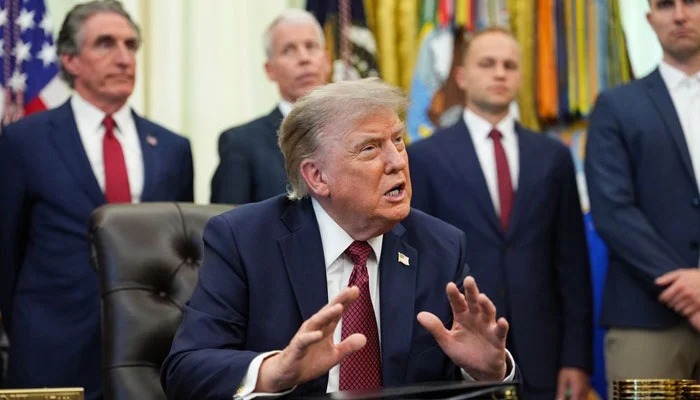
    US President Donald Trump has said the United States possesses extensive stockpiles of weapons and ammunition, dismissing concerns about shortages during recent military operations. In a statement, Trump said the country is continuing to manufacture weapons on a large scale while also procuring additional supplies as needed. He added that defense companies are building a record number of plants and factories to strengthen America’s military production capacity. Trump also warned that those responsible for leaking what he described as “treasonous statements” would be identified and face lengthy prison sentences. His remarks came after reports in the US media claimed that he had questioned Defense Secretary Pete Hegseth over alleged shortages in US weapons stockpiles during the conflict with Iran. According to the reports, the issue had limited Washington’s military options against Tehran. The reports stated that Trump raised the matter during a Cabinet meeting held at Camp David in Maryland last week, where he reportedly sought an explanation from Hegseth about the significant decline in ammunition reserves. However, US officials have denied the media reports, rejecting claims that the country faced a critical shortage of weapons or that military options against Iran were constrained because of depleted stockpiles.

  • | | |

    Ishaq Dar offers special prayers for Pakistan in M…

    Medina: Pakistan’s Deputy Prime Minister and Foreign Minister Ishaq Dar visited the Prophet’s Mosque (Masjid an-Nabawi ﷺ) in Madinah, where he offered prayers and prayed for Pakistan’s peace, prosperity and continued progress during his official visit to Saudi Arabia. According to Pakistan’s Foreign Office, the deputy prime minister paid his respects at the Roza-e-Rasool ﷺ and offered Salam. He also performed voluntary (Nafl) prayers at the Prophet’s Mosque, one of Islam’s holiest sites, where millions of Muslims from around the world gather every year to worship and seek spiritual blessings. The Foreign Office said Dar made special prayers for Pakistan’s economic development, national stability and the well-being of its people. He also prayed for unity, peace and prosperity across the Muslim world, expressing hope for harmony and progress among Islamic nations. As part of his visit to Madinah, Dar also travelled to Jabal Uhud, a site of immense historical and religious significance in Islamic history. He visited the resting place of Hazrat Ameer Hamza (RA), the beloved uncle of Prophet Muhammad ﷺ and one of the most revered martyrs of the Battle of Uhud, where he offered prayers and paid his respects. The visit reflects the spiritual aspect of Dar’s Saudi Arabia trip while highlighting Pakistan’s longstanding religious and diplomatic ties with the Kingdom. Senior Pakistani officials traditionally visit Islam’s holy sites during official engagements in Saudi Arabia, where they offer prayers for the country and the wider Muslim Ummah. The Foreign Office noted that Dar’s prayers focused on Pakistan’s future, asking for sustained peace, economic growth and national prosperity. His visit to the Prophet’s Mosque and other sacred sites also underscored the importance of faith and spiritual reflection alongside official diplomatic engagements. The visit comes at a time when Pakistan continues to seek economic stability and stronger cooperation with friendly countries, while reaffirming its commitment to unity and the welfare of the Muslim Ummah.

  • | | |

    Imran Khan marks three years in jail

    Former prime Minister Imran Khan has completed three years in prison after his arrest in the Toshakhana case. He was taken into custody on August 5, 2023, shortly after a court convicted him in the case. Following his arrest, he was shifted from his residence in Zaman Park, Lahore, to District Jail Attock under strict security arrangements. Imran Khan remained at Attock Jail for one month and 21 days. During that period, security around the prison was tightened, while legal proceedings related to multiple cases against him continued in different courts. On September 26, 2023, the Islamabad High Court ordered his transfer from Attock Jail to Adiala Jail in Rawalpindi. Since then, he has remained detained at the facility, where he continues to face legal proceedings in several cases. Under the Pakistan Prison Rules, the former prime minister has been provided better-class facilities because of his status as a former head of government. He is being housed in a separate compound consisting of seven cells inside Adiala Jail. The designated area is secured and managed in accordance with prison regulations. During his three years in custody, Imran Khan has reportedly faced a number of health-related issues, including physical complications that have required medical attention from time to time. His legal team has on several occasions raised concerns about his health and requested appropriate medical care, while prison authorities have maintained that medical facilities are being provided in line with the law. Despite remaining behind bars, Imran Khan continues to be a central figure in Pakistan’s political landscape. Court hearings in various cases involving the former prime minister are ongoing, while his party, Pakistan Tehreek-e-Insaf (PTI), continues to pursue legal and political efforts regarding his release.

  • | | |

    PM heads to Saudi Arabia for key talks

    Prime Minister Shehbaz Sharif is scheduled to leave for Saudi Arabia today on a two-day official visit, aimed at strengthening bilateral ties and discussing key regional developments. According to sources, the prime minister will hold a meeting with Saudi Crown Prince Mohammed bin Salman during the visit. The two leaders are expected to discuss the longstanding relationship between Pakistan and Saudi Arabia, with particular focus on enhancing cooperation in areas of mutual interest. Regional security and the evolving situation in the Middle East are also expected to feature prominently in the talks. The meeting is likely to include an exchange of views on matters affecting regional peace, stability and broader strategic cooperation between the two countries. The visit is seen as part of ongoing high-level engagements between Islamabad and Riyadh, reflecting the close diplomatic, political and economic partnership shared by the two countries.

  • | | | |

    Iran, Oman move closer to Hormuz shipping agreement

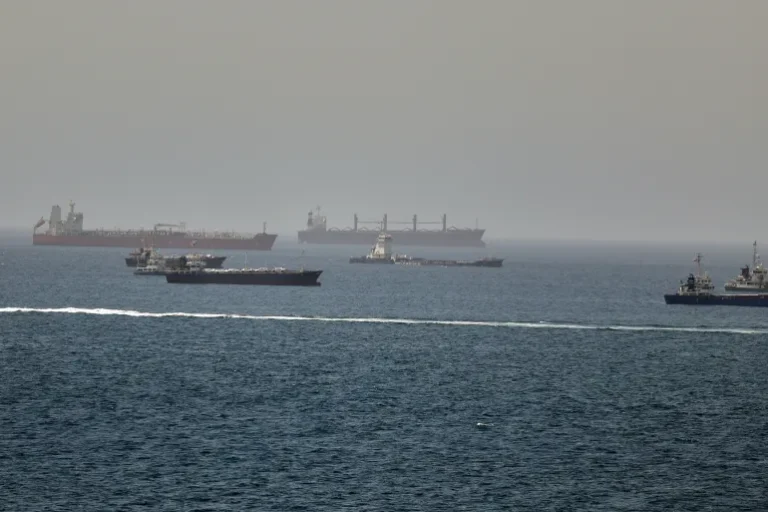
    TEHRAN: Iran and Oman have reached a preliminary understanding on the geographic coordinates of a proposed shipping route through the Strait of Hormuz, marking progress in negotiations aimed at regulating navigation through one of the world’s most strategically important waterways. Iranian Foreign Ministry spokesperson Esmaeil Baghaei said discussions between Tehran and Muscat had advanced positively and that both sides had agreed on the geographical framework of the proposed route. He added that a joint statement outlining the key points of the understanding was in its final stages and could be issued if the process is not disrupted by external factors. Despite the progress, Baghaei emphasised that the agreement alone would not automatically guarantee security in the Strait of Hormuz. He noted that ensuring stability in the region would require broader cooperation and continued diplomatic engagement. According to regional officials familiar with the negotiations, the proposed arrangement would give Iran a greater role in overseeing vessels entering the Gulf through the strategic waterway. However, several technical and operational issues still need to be resolved before any final agreement can be implemented. The Strait of Hormuz remains one of the world’s busiest energy transit routes, carrying a significant share of global oil and gas exports. Any changes to shipping arrangements in the area are closely watched by international markets due to their potential impact on global trade and energy supplies. Officials involved in the negotiations described the talks as constructive, while indicating that further consultations would continue before a formal announcement is made. Both Iran and Oman have maintained that dialogue remains the preferred path for addressing issues related to maritime navigation and regional stability.