US-Israel War on Iran

  • | | |

    Israeli strikes kill 11 in southern Lebanon, Hezbo…

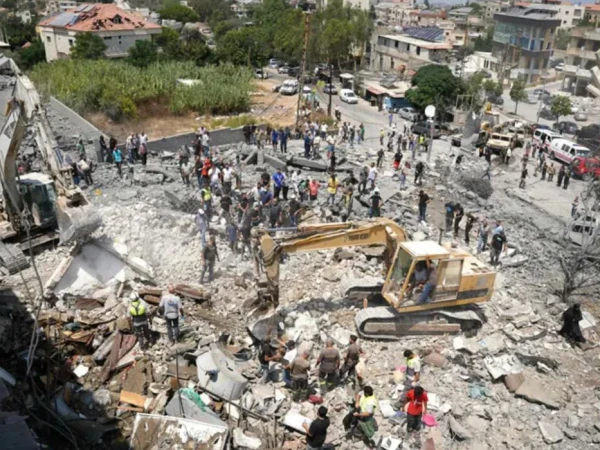
    BEIRUT: Southern Lebanon has been plunged into renewed uncertainty after Israeli airstrikes killed at least 11 people, including three children, and injured 19 others, in the deadliest such escalation since the June ceasefire between Israel and Hezbollah. The strikes hit the towns of Ansar and Deir al-Zahrani on Saturday, according to Lebanese authorities. In Ansar, an airstrike on a residential home killed seven people, while another attack in Deir al-Zahrani killed four and wounded several others. Rescue workers and local residents rushed to the damaged sites, searching through rubble for survivors and recovering bodies. Lebanon’s Health Ministry confirmed the casualty figures, while reports said women and children were among those killed. The attacks have raised fresh concerns about the durability of the ceasefire and the possibility of another escalation along the Israel-Lebanon border. Israel said its military operations targeted Hezbollah infrastructure and were carried out in response to attacks that had seriously wounded three Israeli soldiers. The Israeli military also said a senior Hezbollah commander was among those targeted. Israeli officials maintained that Hezbollah activity in the area posed a continuing threat. Lebanese leaders strongly condemned the strikes. President Joseph Aoun described the attacks as a dangerous message at a time when Lebanon and Israel are preparing for another round of US-backed direct negotiations. He warned that repeated violations of the ceasefire could undermine diplomatic efforts aimed at restoring stability. Prime Minister Nawaf Salam also denounced the attacks, stressing that the women and children killed in Ansar were not military targets. He called on Israel to halt what he described as dangerous escalation. The strikes have also put Hezbollah’s position under renewed scrutiny. The group condemned the Israeli attacks and vowed to deliver an “appropriate response”, warning that continued violations could not go unanswered. Hezbollah also criticised the Lebanese government’s negotiations with Israel and called for a tougher position. The latest violence comes as Lebanon faces a delicate political and security challenge. A US-backed framework announced in June was intended to reduce hostilities, address Hezbollah’s weapons and facilitate an Israeli withdrawal from parts of southern Lebanon. Instead, continued attacks and retaliatory actions have kept the region on edge. For residents of southern Lebanon, the latest strikes have brought back memories of prolonged conflict. With civilians once again caught between military operations and political disputes, fears are growing that the fragile ceasefire could give way to a much wider confrontation. The coming days may prove critical. Any Hezbollah retaliation could trigger further Israeli military action, while continued diplomatic efforts face the difficult task of preventing the latest bloodshed from becoming the beginning of another cycle of violence.
  • | | |

    Oil prices surge as US-Iran talks falter and suppl…

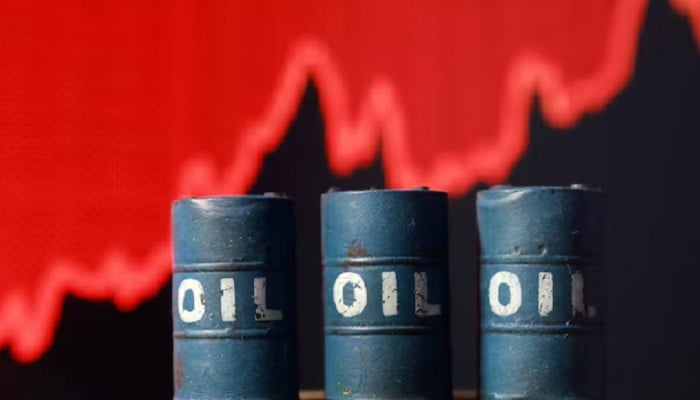
    Global oil prices climbed on Friday as stalled efforts to end the conflict involving Iran heightened concerns over possible disruptions to crude supplies. Markets remained focused on developments in the tense US-Iran negotiations, with traders also weighing the risk of further military and economic escalation. Brent crude futures rose 1.45 per cent to $88.33 a barrel, while US West Texas Intermediate crude gained 1.26 per cent to $82.27. Both benchmarks were on course for substantial weekly gains as uncertainty surrounding regional oil supplies continued to influence trading. Concerns intensified after the United States indicated that economic pressure on Iran could be increased, including the possibility of extending a naval blockade. Analysts warned that any significant escalation in the conflict could cause a much sharper increase in energy prices by threatening supplies from the region. Market strategist Kyle Rodda of Capital.com said geopolitical uncertainty remained a major obstacle for financial markets despite otherwise supportive economic conditions. Investors have so far absorbed considerable uncertainty without demanding substantially higher risk premiums, but analysts cautioned that this balance could change quickly if tensions worsen. Rising crude prices also weighed on European equities, which ended the week lower and broke a four-week run of gains. In the United States, major stock indexes also declined, with the Dow Jones Industrial Average falling 0.14 per cent, the S&P 500 losing 0.19 per cent and the Nasdaq Composite dropping 0.39 per cent. Meanwhile, the US dollar weakened after disappointing retail sales data reduced expectations of another Federal Reserve rate increase. The softer dollar provided support to gold, with spot gold advancing 0.69 per cent to $4,380.03 an ounce. Currency markets also remained focused on Japan, where the yen edged higher against the dollar amid speculation that the Bank of Japan could raise interest rates as early as September. The currency nevertheless remained close to the 160-per-dollar level, which traders believe could prompt further intervention from Japanese authorities. Investors are now watching the next developments in US-Iran relations closely. A breakthrough in negotiations could ease pressure on energy markets, while any major escalation could trigger a renewed surge in oil prices and broader financial market volatility.

  • | | |

    Iran demands Qatar probe over missing pilots

    TEHRAN: Iran has asked Qatar to allow an Iranian military fact-finding team to enter the country to investigate the fate of pilots Tehran says went missing after an incident involving Iranian aircraft, adding another layer of tension to already strained regional relations. Iranian military official Mohammad Baqerzadeh, commander of the Armed Forces General Staff’s Committee for the Search for Missing Persons, said an Iranian Air Force expert team had been waiting for months to travel to Qatar, according to Iranian media. Baqerzadeh accused Qatari authorities of repeatedly delaying the investigation and called on the International Committee of the Red Cross to intervene in the case. Qatar, however, has rejected Iran’s claim that it is holding Iranian pilots. Doha said its search-and-rescue teams recently recovered the remains of one pilot after Iranian aircraft entered Qatari airspace in March and failed to respond to repeated attempts to establish contact. Qatari authorities said they had contacted Tehran to coordinate the transfer of the remains and invited Iranian officials to examine details of the search-and-rescue operation. Qatar said it had not received a response. The dispute comes as Tehran continues to focus heavily on the security of the Strait of Hormuz, one of the world’s most important energy shipping routes. Iran says air defence capacity survived war Separately, an Islamic Revolutionary Guard Corps official claimed that more than 85 per cent of Iran’s air-defence production capacity survived the recent conflict. According to Iranian media reports, the official said attacks on military production facilities had not significantly reduced the production or delivery of missiles and air-defence systems. He also claimed that production in some areas had increased and that Iran’s operational air-defence capabilities were now stronger than at the beginning of the fighting. The claims could not be independently verified. Hormuz shipping talks continue Iran has also announced progress in negotiations with Oman over new shipping routes through the Strait of Hormuz. Foreign Ministry spokesman Esmaeil Baghaei said Tehran and Muscat had reached an agreement on a shipping-route map following weeks of technical discussions. The negotiations began after a memorandum of understanding was signed in June to develop safer navigation arrangements. Foreign Minister Abbas Araghchi stressed that the technical talks with Oman should not be confused with negotiations over reopening the waterway. He said existing maritime routes were no longer functional and that Iran and Oman were working on a temporary route that could eventually become permanent. Tehran links security to US actions Iranian officials continue to insist that the full restoration of security in the strait depends on an end to what Tehran describes as US military pressure, threats and a naval blockade. Deputy Foreign Minister Kazem Gharibabadi also declared that the Strait of Hormuz would remain under Iranian control, while accusing Washington of suffering strategic setbacks. The statements underline the widening gap between Iran and the United States over the strategic waterway, despite technical discussions between Iran and Oman aimed at facilitating maritime navigation. Hezbollah commander reportedly killed Meanwhile, tensions have also continued along Iran’s regional front. Israel’s military said it killed Abu Hassan Alaa, described as a senior Hezbollah commander, in a strike in southern Lebanon. The Israeli army said the attack targeted a Hezbollah headquarters in the Ansar area. Hezbollah had not immediately commented on the claim. The developments show how multiple disputes remain intertwined across the region, from missing military personnel and air-defence claims to the sensitive question of shipping through Hormuz. For Tehran, however, control and security of the strait remain central. While Iran and Oman appear to be making technical progress on navigation arrangements, Iranian officials continue to maintain that any broader reopening of the waterway will depend on wider political and security conditions.

  • | | |

    Iran claims victory on military, political fronts

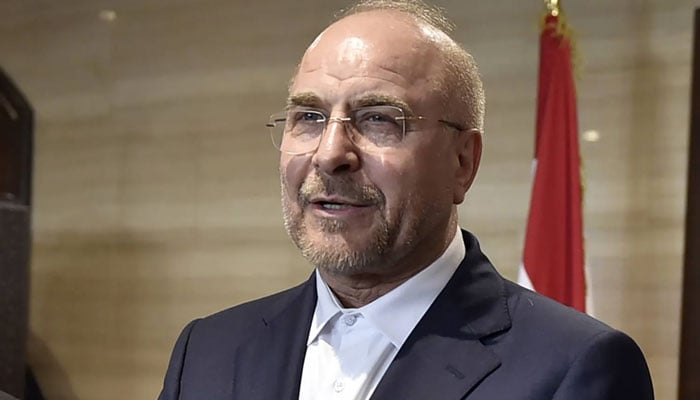
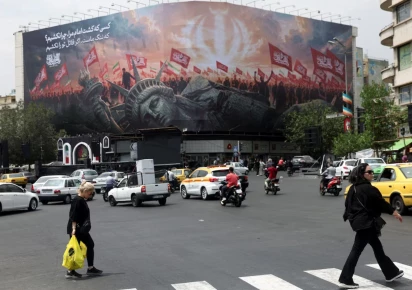
    Iranian Parliament Speaker Bagher Ghalibaf has claimed that Iran has emerged victorious on both the military and political fronts of the ongoing conflict. Speaking about the situation, Ghalibaf said Iran was facing what he described as an unjust war imposed by the United States and Israel. He said the Iranian nation was confronting the conflict with courage and determination. According to Ghalibaf, Iran had successfully resisted pressure on both the military and political fronts. Ghalibaf said the Iranian people had remained united despite the challenges created by the conflict. He praised their resistance and said the nation had shown that it could withstand pressure from powerful opponents. His remarks came after the General Staff of the Iranian Armed Forces said that Iran would not retreat until the United States and Israel were completely defeated. The Iranian military leadership said resistance had become part of the mindset of Iran’s younger generation. It claimed that the legacy of resistance had been passed from one generation to another. According to the Iranian Armed Forces, the country’s new generation had remained firm in the face of what it described as the world’s most powerful military forces. The military leadership also said Iran would continue its struggle to protect what it called its legitimate rights. It said Tehran would not abandon its position until the opposing side surrendered. The Iranian Armed Forces further accused the United States of continuing its aggression to expand its influence and establish dominance in the region. Iranian officials have repeatedly presented the conflict as a struggle against foreign aggression. They have also stressed the importance of national unity and resistance in facing military and political pressure.

  • | |

    Gulf allies reportedly lose confidence in Trump over Iran war

    Several US allies in the Gulf are reportedly becoming increasingly frustrated with President Donald Trump over what they see as a lack of effective diplomacy to end the war between the United States and Iran. According to a report by The Washington Post, officials from Arab, European and US circles said governments in Saudi Arabia, the United Arab Emirates, Qatar, Kuwait and Bahrain were growing increasingly concerned about the Trump administration’s approach to the conflict. The report said Gulf allies were particularly worried that the Trump administration had failed to advance the diplomatic efforts needed to achieve a peaceful settlement with Iran. According to the newspaper, some Gulf states have also started discussing whether continuing to host major US military bases on their territory remains in their national interest. Three current US officials and a former American diplomat reportedly told the Washington Post that the debate had intensified after months of war and continued missile and drone attacks by Iran and groups allied with Tehran. The officials said some Gulf countries were questioning how beneficial it was to host large US military installations while also facing potential security risks linked to the conflict. One senior Gulf official was quoted as saying that Trump had started the war while Gulf countries were paying the price. Despite the growing frustration, Gulf states continue to regard Washington as a major security partner and an important supplier of military equipment. The United States maintains major military facilities in Qatar and Bahrain. These bases have long played an important role in Washington’s military presence and security strategy in the region. However, the reported dissatisfaction is prompting some Gulf governments to consider alternative security arrangements. Some countries have also started exploring other options to reduce their dependence on the United States for defence and regional security. The recent mutual defence agreement between Saudi Arabia, Türkiye and Pakistan has also attracted attention in this context. A senior European official reportedly described the agreement as a signal to Washington. According to the official, the so-called Makkah defence agreement indicates that Gulf countries may no longer want to rely exclusively on the United States for their security. The development reflects growing concerns among some US allies about the consequences of the Iran conflict. While Gulf states continue to maintain close relations with Washington, the war has encouraged discussions about diversifying their security partnerships. The reported shift could have wider implications for US influence in the Gulf. Any reduction in reliance on American military protection could encourage regional countries to strengthen defence cooperation with other partners.

  • | | | |

    Trump welcomes Makkah joint defence agreement

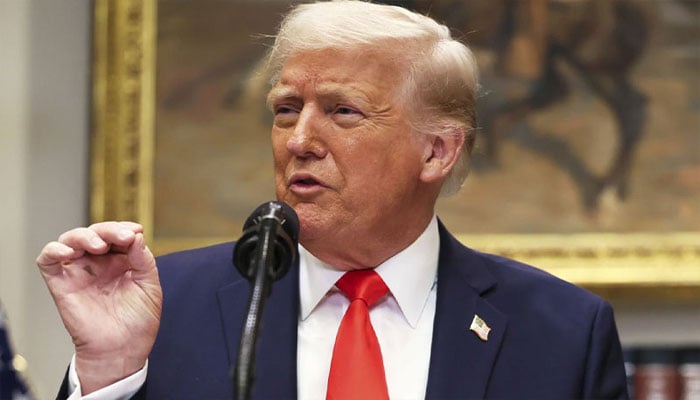
    US President Donald Trump has welcomed the joint defence agreement signed by Saudi Arabia, Pakistan and Türkiye. He described the development as a positive step towards greater unity in the Middle East. In a statement, Trump said he was pleased to see Saudi Arabia, Türkiye and Pakistan sign the Makkah Joint Defence Agreement. He said the agreement could help the three countries strengthen their ability to protect themselves against security threats. Trump said the agreement reflected growing cooperation among countries in the region. He added that the Middle East was becoming more united. According to him, stronger cooperation would allow countries to defend themselves more effectively. Saudi Arabia, Pakistan and Türkiye recently signed the joint defence pact. The agreement aims to increase cooperation between the three countries in defence and security matters. Under the agreement, an armed attack against any one of the three countries will be treated as an attack against all three. This provision is intended to create a stronger collective defence mechanism. The pact is also aimed at improving coordination between the armed forces of Saudi Arabia, Pakistan and Türkiye. The countries are expected to enhance their defence cooperation and work together in dealing with potential threats. The agreement comes amid growing security concerns in the Middle East and wider regional tensions. The three countries have maintained close political and strategic ties and have expressed interest in expanding cooperation in various fields. The Makkah agreement is expected to provide a framework for deeper defence coordination. It could also lead to greater military cooperation, joint planning and closer security coordination among the three countries.

  • | | |

    Trump cuts military drills with South Korea over I…

    WASHINGTON: US President Donald Trump has expressed frustration with South Korea after Seoul declined to join Washington’s campaign against Iran, ordering the Pentagon to reduce joint military exercises with Seoul. Trump said he recently asked South Korea’s president whether the country wanted to participate in efforts to denuclearise Iran, but received a blunt response: “No, thank you.” The US president said he instructed Defence Secretary Pete Hegseth to cut back the military exercises with South Korea. Although the drills had already begun, Trump said it was too late to cancel them completely and criticised the decision to proceed with exercises he considers costly. The Ulchi Freedom Shield exercise began on Monday and is scheduled to continue through Aug 27. About 18,000 South Korean troops are taking part, with training focused on cyber and drone threats. Trump also argued that the exercises send an “inappropriate and hostile” message to North Korea. He pointed to his relationship with North Korean leader Kim Jong Un, saying Pyongyang had not posed a threat to the United States during his presidency and had maintained a respectful attitude. The decision has raised questions about the future of the US-South Korea alliance. Washington and Seoul regard joint military exercises as a crucial part of maintaining readiness and deterring North Korean aggression. Trump’s latest comments suggest the alliance could face pressure as his administration reshapes US military commitments and seeks stronger allied support for its Middle East policies. South Korea has proceeded with the scheduled exercises, while the move to scale them back could fuel debate over regional security and Washington’s long-term commitment to the Korean peninsula.

  • | | |

    Iran announces $30,000 reward for capturing or kil…

    TEHRAN: Iran has announced a $30,000 reward for anyone who kills or captures a US servicemember and hands them over to Iranian authorities, in a striking escalation of rhetoric amid continuing tensions between Tehran and Washington. Iranian Army chief Maj Gen Amir Hatami announced the reward, saying it had been introduced after what he described as a large number of public requests to participate in the confrontation with the United States. Under the reported scheme, a person who kills or captures a US soldier and hands the servicemember to Iranian authorities would receive $30,000, or the equivalent of about 5 billion Iranian tomans. Hatami reportedly said the reward would be doubled if the action was carried out by a woman. The announcement comes as tensions between Iran and the United States remain high. Tehran has repeatedly demanded that American forces leave the region, while Washington has maintained a significant military presence across the Middle East. Despite the threat, there are no known US ground forces permanently deployed inside Iran. Reports indicate that American personnel entered Iranian territory in April during a rescue operation following the crash of a US aircraft. Hatami also issued a warning over the Persian Gulf, Gulf of Oman and Strait of Hormuz, saying American forces would not be allowed to return. His comments came after US President Donald Trump made controversial statements concerning the strategic waterway. The Strait of Hormuz remains a major flashpoint because it is one of the world’s most important energy shipping routes. Any further escalation around the passage could have consequences well beyond the region, particularly for global oil markets. The latest Iranian announcement adds another provocative dimension to an already tense confrontation, raising concerns over the safety of US personnel and the possibility of further escalation across the Middle East.

  • | |

    Iran prepares 40th-day mourning events for Ayatollah Ali Khamenei

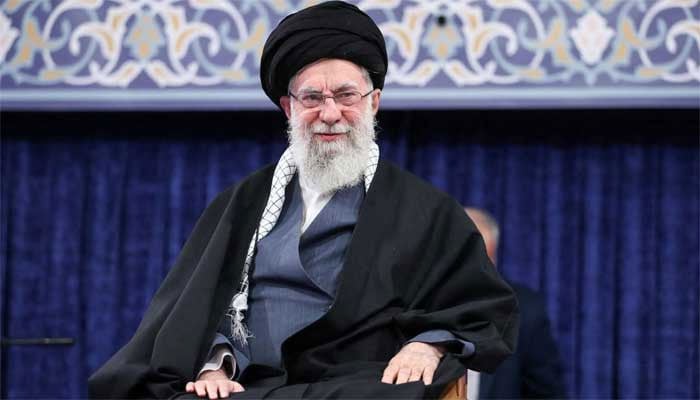
    Iran has begun preparations for 40th-day mourning and commemorative ceremonies for former Supreme Leader Ayatollah Ali Khamenei following his burial. Special events will take place in Tehran, Qom, Mashhad and other Iranian cities to mark the occasion. Iran’s current Supreme Leader and Ali Khamenei’s son, Mojtaba Khamenei, will oversee the ceremonies. According to reports, Ali Khamenei’s funeral and mourning ceremonies began on July 4 and continued across several Iranian cities. Officials also held commemorative gatherings in five major cities across Iran and Iraq — Tehran, Qom, Najaf, Karbala and Mashhad. Authorities later buried the former supreme leader in Mashhad. Millions of mourners from Iran and other parts of the world reportedly attended the funeral ceremonies. Senior delegations from several countries, including Saudi Arabia, Pakistan, Russia, China and Türkiye, also travelled to Iran to attend the events and convey condolences. Iranian authorities said Ali Khamenei died on February 28, the first day of US and Israeli air strikes on Iran. His death marked a major political transition for the country. Following his death, his son Mojtaba Khamenei assumed the position of Iran’s Supreme Leader. The upcoming 40th-day ceremonies are expected to draw large crowds and provide another major occasion for supporters to pay tribute to the former leader. The events in Tehran, Qom and Mashhad are also expected to carry considerable political and religious significance as Iran continues to adjust to its new leadership under Mojtaba Khamenei.

  • | |

    Iran, Oman reach deal on Strait of Hormuz shipping routes

    Iran and Oman have reached an agreement on a proposed shipping route map for the strategically important Strait of Hormuz following weeks of technical negotiations, Iranian officials said on Saturday. Iranian Foreign Ministry spokesman Esmaeil Baghaei said the two countries had made significant progress in talks aimed at establishing safer navigation routes through the waterway. The negotiations began around three months ago under an agreement signed in June. Baghaei said the proposed route was developed through coordination between Iran’s foreign ministry and its defence, security and environmental authorities. He added that Tehran and Muscat were still discussing some remaining issues, including the wording of a joint statement. The spokesman stressed that the arrangement was a bilateral agreement between Iran and Oman and was intended to facilitate the safe movement of commercial vessels while respecting the sovereignty of both countries. However, Tehran has made clear that the full restoration of normal shipping through the Strait of Hormuz depends on broader developments involving the United States. Baghaei said Iran wanted an end to what it described as US military threats, naval restrictions and violations of previous commitments before normal commercial traffic could fully resume. Iranian Foreign Minister Abbas Araghchi separately said negotiations with Oman over the waterway were continuing. He described the discussions as separate from the wider diplomatic dispute between Tehran and Washington. Araghchi also rejected the description of an earlier agreement as a simple 60-day ceasefire. He said the understanding was aimed at ending the war, while the 60-day period was intended for negotiations toward a final settlement. He said Qatar and Pakistan were continuing to exchange messages with Iran but stressed that Tehran had not yet decided to resume direct negotiations with Washington. Iranian Deputy Foreign Minister Kazem Gharibabadi also rejected claims that the United States could take control of the Strait of Hormuz. He said Iran remained in charge of decisions concerning the waterway and dismissed statements suggesting that the strait could become US territory. The Strait of Hormuz is one of the world’s most important energy corridors, connecting the Persian Gulf with the Gulf of Oman. A prolonged disruption to shipping through the waterway has raised concerns over global energy supplies and fuel prices. The latest developments come amid continuing tensions between Iran, the United States and Israel. Shipping through the strait remains significantly below normal levels, while diplomatic efforts to end the wider conflict have yet to produce a lasting settlement. US President Donald Trump has meanwhile urged Americans to accept higher fuel prices while the conflict continues, arguing that confronting Iran was necessary to prevent it from obtaining a nuclear weapon. The dispute has already pushed global oil prices higher, while rising fuel costs in the United States have added to inflationary pressures.