US-Israel War on Iran

  • | | |

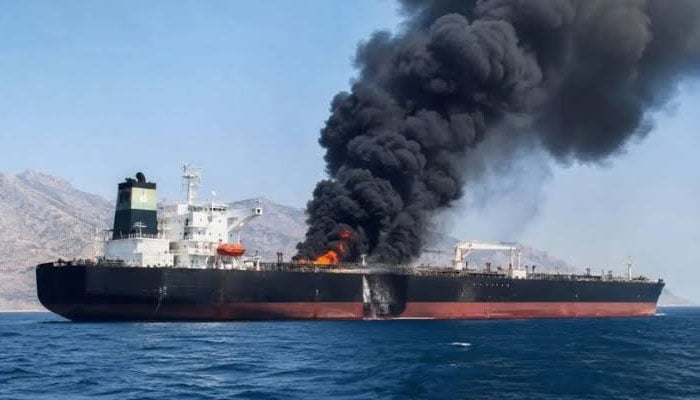
    Oil tanker hit near Oman coast, engine room damage…

    MUSCAT: A commercial oil tanker came under attack off the coast of Oman on Saturday after being struck by an unidentified weapon, raising fresh concerns over maritime security in one of the world’s busiest energy shipping corridors. According to the United Kingdom Maritime Trade Operations (UKMTO), the incident occurred approximately 11 nautical miles northeast of Lima, a coastal area in Oman. The organization said the vessel was hit by an unknown weapon, causing damage to its engine room. The impact reportedly left the tanker without propulsion, forcing the crew to deal with a loss of control while emergency procedures were initiated. Despite the damage, no casualties or injuries have been reported, and all crew members are believed to be safe. Authorities have not yet identified the source of the attack or disclosed the identity and flag of the vessel. Maritime security agencies are closely monitoring the situation as investigations continue. The latest incident comes at a time of heightened tensions across regional waters, where commercial vessels have increasingly faced security threats. Shipping companies operating in the Gulf and nearby sea lanes have been urged to remain vigilant and follow updated security guidance while transiting through the area. The waters surrounding Oman, particularly routes connecting the Gulf of Oman and the Arabian Sea, are vital for global energy supplies, carrying millions of barrels of crude oil and petroleum products every day. Any disruption in these sea lanes has the potential to affect international shipping and energy markets. Maritime analysts say even isolated attacks can increase insurance costs, delay cargo movements and intensify concerns among global shipping operators. Omani authorities and international maritime organizations are expected to release further details once the investigation progresses. Meanwhile, commercial vessels in the region continue to receive security advisories as officials assess the circumstances surrounding the latest attack.

  • | | | |

    Iran warns of Strait of Hormuz closure as regional tensions escalate

    TEHRAN: Iran has warned that continued US pressure in regional waters could force the closure of the Strait of Hormuz and other strategic maritime routes, as military and diplomatic tensions across the Middle East continue to intensify. Mohammad Bagher Zolghadr, Secretary of Iran’s Supreme National Security Council, said continued US actions in the region could have serious consequences for global shipping and energy supplies. According to Iranian state media, he warned that any further escalation could affect not only the Strait of Hormuz but also other key maritime chokepoints. He said such developments would have a significant impact on the global economy, international energy markets and trade, while also increasing political pressure within the United States. Meanwhile, Kuwait announced that its air defence systems intercepted drones launched from Iran early Saturday. The Kuwaiti military said the drones were successfully engaged before causing damage and confirmed that no casualties or destruction had been reported. Residents were advised to follow official safety instructions as authorities monitored the situation. In Yemen, the Houthi movement denied reports that it planned to charge commercial vessels for passing through the Bab al-Mandab Strait. The group’s Humanitarian Operations Coordination Center said no decision had been taken to impose transit fees and stressed that safe passage through the waterway remained free. The Houthis also urged shipping companies not to make payments to unauthorised individuals claiming to represent Yemeni authorities. The clarification came after reports suggested the group was considering introducing charges following its declaration of a maritime blockade targeting Saudi Arabia. Separately, the Houthis claimed that eight Saudi oil tankers had been forced to reroute around the Cape of Good Hope instead of using the Bab al-Mandab Strait. The group said the diversions were a result of its maritime blockade, although the claim has not been independently verified. Maritime security concerns also increased after a commercial tanker was struck by an unidentified projectile near the coast of Oman. The UK Maritime Trade Operations (UKMTO) said the projectile damaged the vessel’s engine room, leaving it unable to manoeuvre. No casualties or environmental damage were reported, while an investigation into the incident is underway. Iranian Foreign Minister Abbas Araghchi said Tehran is working with Oman to establish practical mechanisms for managing navigation through the Strait of Hormuz. During a telephone conversation with British Foreign Secretary Ed Miliband, Araghchi said outside interference would only worsen the regional situation and complicate efforts to maintain maritime stability. The British foreign secretary reiterated London’s support for diplomacy and said the United Kingdom was not involved in any war with Iran. He stressed that dialogue remained the best path to reducing tensions in the region. Meanwhile, reports from US media suggested that Washington and Israel are considering possible strikes on Iran’s energy infrastructure. According to the reports, discussions have focused on targeting energy facilities if diplomatic efforts fail. However, no final decision has been officially announced. Iranian officials responded by warning that the country has prepared plans to retaliate against any future military action targeting its territory. They said any attack would receive a strong response against strategic interests in the region.

  • | |

    Trump halts Iran strike, pushes for deal

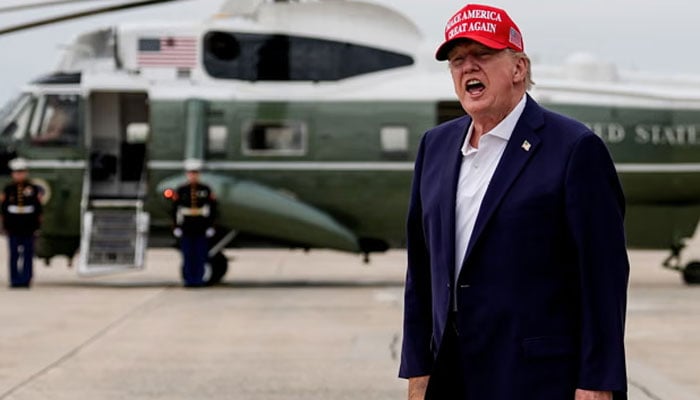
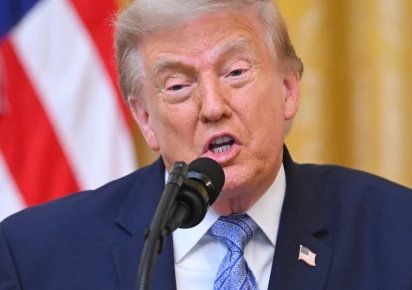
    US President Donald Trump has announced that he is postponing plans for a new military strike against Iran, saying he is giving diplomacy another opportunity to resolve tensions over Tehran’s nuclear programme and restore navigation through the Strait of Hormuz. In a statement posted on his social media platform, Trump said Iran, along with other countries in the Middle East, had requested additional time to finalize an agreement aimed at reopening the strategic waterway and addressing international concerns over Iran’s nuclear activities. Trump said he had agreed to suspend military action for the time being, provided that negotiations lead to a rapid and meaningful agreement. He added that the decision was made in the interest of regional stability, global security and the future prosperity of Iran. He also claimed that Israel supports the diplomatic approach, although Israeli officials had not publicly commented on the statement. Despite the temporary pause, tensions remain high across the region. Iranian officials warned that any military action by the United States or its allies would trigger an immediate and decisive response. Tehran maintained that it would defend its sovereignty against any form of aggression. Iranian Foreign Minister Abbas Araqchi held separate telephone conversations with senior officials from Pakistan, Türkiye and Saudi Arabia to discuss the rapidly evolving regional situation. During the talks, he warned that any attack on Iran would have serious consequences for regional peace and stability. Araqchi also stressed that Iran would respond proportionately if the United States, Israel or any regional country participated in military action against Iranian territory. The discussions focused on preventing further escalation and encouraging diplomatic efforts to avoid a wider conflict. Meanwhile, Saudi Crown Prince Mohammed bin Salman also held talks with President Trump to seek clarification on Washington’s plans regarding Iran. Although officials confirmed that the conversation took place, no further details were released. Iranian media affiliated with the country’s security establishment warned that attacks on Iran’s energy infrastructure could result in retaliatory strikes against oil and gas facilities across the Gulf region. The warning has heightened concerns among energy producers and international markets. President Trump acknowledged that negotiations remain difficult and admitted that his confidence in reaching an agreement has weakened. However, he said his administration continues to pursue diplomatic engagement before considering further military action. Senior US officials remain involved in efforts to secure a negotiated settlement. The conflict has already had a significant impact on global energy markets. Fighting between US, Israeli and Iranian forces has disrupted regional stability and increased uncertainty over international oil supplies. The Strait of Hormuz remains one of the world’s most important shipping routes for crude oil exports. Continued security threats have reduced commercial shipping through the passage, raising concerns over global energy supplies and increasing pressure on oil prices. Analysts say prolonged instability in the Gulf could further affect international markets if diplomatic efforts fail. Rising oil prices have already placed additional economic pressure on many countries dependent on imported energy. Regional security concerns have also expanded beyond the Strait of Hormuz. Maritime authorities reported separate incidents involving commercial vessels near Oman, including damage to a tanker after it was struck by an unidentified projectile. Another vessel reported a nearby explosion but escaped without damage.

  • | |

    Iran warns of global fallout from attacks on infrastructure

    Iranian Supreme Leader Ayatollah Seyyed Ali Khamenei’s senior adviser, Mohammad Mokhber, has issued a strong warning that any attack on Iran’s critical infrastructure could trigger consequences far beyond the immediate military confrontation and potentially threaten the broader international order dominated by the United States and its Western allies. In a statement, Mokhber said the United States approached conflicts primarily through the lens of military power and strategic calculations, while Iran, in his view, responded according to what he called the “logic of history.” He argued that Tehran’s response to any attack would not necessarily remain confined to conventional military targets or the battlefield. Mokhber warned that strikes against Iranian infrastructure could have significant political, economic and geopolitical repercussions. He claimed that such attacks could destabilise the wider international system and challenge the global order that Western powers had developed over the past 250 years. According to the senior adviser, Iran would view attacks on its infrastructure as a major escalation rather than an isolated military action. He suggested that any attempt to damage Iran’s essential infrastructure could produce consequences across multiple areas, potentially affecting global economic networks, international trade and the strategic balance between major powers. Mokhber further argued that the current global system depends on several key pillars, including political leadership, economic institutions and international markets. He warned that if these pillars were seriously weakened or collapsed, the consequences would extend well beyond the countries directly involved in a conflict. He said that once the foundations of what he described as the existing global order begin to break down, there would be no stable command centre for its leadership and no functioning market structure to support what he characterised as the exploitation of global resources. His remarks appeared to suggest that Iran could seek to challenge the wider systems that support US influence if its own territory and infrastructure came under attack. The warning comes amid heightened tensions between Iran and the United States and growing concerns about the possibility of a broader regional confrontation. Any direct strikes on critical infrastructure could increase the risk of further escalation and draw additional countries into the conflict, depending on the scale and nature of the response. Mokhber’s comments also reflect Tehran’s longstanding position that military pressure against Iran could produce consequences that extend beyond the immediate region. Iranian officials have repeatedly warned that attacks on the country could trigger responses affecting wider strategic and economic interests. At the same time, Mokhber’s statement presents Iran’s potential response as part of a broader geopolitical struggle over the future of the international system. By invoking the historical development of the global order, he sought to frame the issue not simply as a dispute between Iran and the United States but as a confrontation that could have implications for the existing balance of global power. His remarks are likely to attract attention amid continuing concerns over regional stability and the possibility that attacks on strategic infrastructure could lead to an unpredictable chain of events. While Mokhber did not provide specific details about what measures Iran might take, his warning conveyed a clear message that Tehran considers attacks on its infrastructure a red line with potentially far-reaching consequences. The statement underscores the growing importance of infrastructure and economic networks in modern conflicts, where the impact of military action can extend beyond traditional battlefields. Damage to energy facilities, transportation networks and other critical systems can affect national economies and international markets, making infrastructure attacks a particularly sensitive issue in periods of heightened geopolitical tension.

  • | | |

    Iran rejects 60-day deadline in US MoU, blames Was…

    TEHRAN: Iran has rejected claims that a 60-day deadline had expired under its memorandum of understanding (MoU) with the United States, saying the agreement never imposed a fixed deadline on Tehran and that its decisions would be guided by national interests and security. Iranian Foreign Ministry spokesman Esmaeil Baqaei made the remarks during a press briefing on Monday as the period referenced in discussions between Tehran and Washington came to an end. “There is no such thing as a 60-day deadline in the text of the MoU,” Baqaei said, according to Iran’s semi-official ISNA news agency. He stressed that Iran would not formulate its policies under pressure, ultimatums or externally imposed time limits. According to Baqaei, the agreement provided a 60-day window for negotiations focused on two key issues — sanctions relief and Iran’s nuclear programme. He said the period could have been extended if the two sides failed to reach an outcome. However, Tehran argues that the understanding became irrelevant after what it described as widespread US violations of the agreement. Baqaei said no talks were ultimately launched under the framework because of Washington’s alleged actions. The MoU was signed on June 18 following weeks of diplomatic efforts aimed at easing the wider Middle East conflict and reopening the strategically important Strait of Hormuz. The waterway is a major route for global energy shipments, making any disruption there a concern for international markets. Tensions later escalated, with Iran accusing the United States of breaching the understanding. Hostilities resumed on July 7, when Iranian forces attacked commercial shipping in the Strait of Hormuz, including a Qatari liquefied natural gas tanker. The United States subsequently carried out several waves of strikes against Iranian military targets. The conflict also expanded beyond the Gulf, with Yemen’s Houthi rebels imposing a naval blockade affecting Saudi Arabia and adding pressure on another vital regional shipping route. Missing pilots Baqaei also raised the issue of three Iranian pilots whose fate remains disputed. Tehran says the pilots went missing during an operation targeting the US Al Udeid Air Base in Qatar in March. Iran now considers the missing men prisoners until their fate is clarified. Qatar, however, denies holding them and says it previously invited Iranian officials to receive details about search-and-rescue operations. Oil spill dispute The Iranian spokesman also blamed US military operations for environmental damage in Gulf waters and called for Washington to be held responsible. Iran recently demanded compensation over an oil slick that reached Qeshm Island, affecting beaches and mangrove areas. Tehran has blamed a foreign vessel for the spill, while outside reports have raised questions over the circumstances surrounding the incident. With diplomacy stalled and tensions continuing around the Strait of Hormuz, Iran’s latest statement signals that Tehran is unwilling to accept Washington’s interpretation of the MoU or negotiate under a deadline.

  • | | |

    Houthis claim two hypersonic missiles fired at Mok…

    SANAA: Yemen’s Houthi group has claimed it launched two hypersonic ballistic missiles towards the strategically important Mokha port on the Red Sea coast, adding to growing security concerns around one of the world’s busiest maritime routes. According to Turkey’s Anadolu Agency, the Yemeni military said the two missiles were fired towards Mokha port and the surrounding Red Sea area. However, there was no immediate independent confirmation of whether the missiles reached their intended targets or were intercepted before impact. No casualties or material damage were immediately reported following the alleged missile launches. Mokha, located on Yemen’s western coastline, is an important port area overlooking the Red Sea. The region has remained highly sensitive amid continuing tensions and repeated missile and drone attacks linked to the wider Middle East conflict. The latest claim is likely to raise fresh concerns over maritime security in the Red Sea, where attacks on commercial shipping have previously disrupted international trade and forced some vessels to consider longer alternative routes. The Houthis have repeatedly used missiles and drones in attacks around the Red Sea, saying their operations are connected to the broader regional conflict. Such incidents have drawn international attention because the waterway is a major passage for cargo and energy shipments between Asia, Europe and other global markets. For now, key details surrounding Monday’s alleged attack remain unclear, including the exact type of missiles used, their intended targets and whether any interception took place. The Houthi claim has not been independently verified, and further information from Yemeni authorities or other sources is expected to clarify what happened. With tensions already high across the region, the reported launch underscores the continuing risks facing ports and shipping lanes along the Red Sea.

  • | | | |

    Trump warns Oman over Strait of Hormuz

    US President Donald Trump has warned Oman that Washington could launch an attack if Muscat interferes with US efforts in the Strait of Hormuz, according to comments he made in an interview with US media. Trump said the United States would take military action if Oman obstructed American operations in the strategically important waterway. His remarks mark another escalation in Washington’s warnings toward Oman, following a similar threat he reportedly made in May. The US president also said his administration had established a direct, behind-the-scenes communication channel with Iran’s Islamic Revolutionary Guard Corps (IRGC). He did not provide further details about the nature or purpose of those contacts. Trump also sought to underline the scale of America’s military capabilities, saying the United States still has extensive weapons stockpiles. He claimed that the amount of weaponry the US has used so far represents only a small fraction of its available reserves. “We have a lot of weapons left,” Trump said, while indicating that Washington still possesses large quantities of medium-range weapons. The Strait of Hormuz remains a critical global energy route, making any potential military confrontation in the area a major concern for international markets and regional security. Any disruption to shipping through the strait could affect global oil supplies and trigger wider economic and geopolitical repercussions.

  • | |

    Iran says US-Israel attacks damaged 100 commercial aircraft

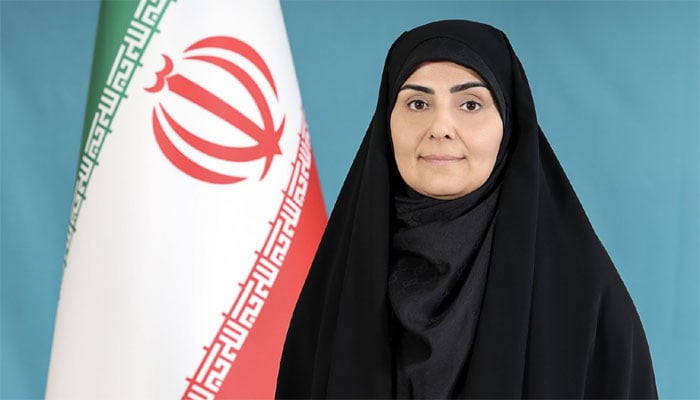
    Iranian Minister of Roads and Urban Development Farzaneh Sadegh has claimed that Iran lost around 100 commercial aircraft during the US-Israeli attacks on the country. She made the remarks during a press conference in Tehran, according to Iranian media. Sadegh said the aviation sector suffered major losses during the conflict. She said airports and other important infrastructure were targeted during the attacks. She added that Iran Air continued operating Hajj flights despite the difficult circumstances. According to the minister, the airline used eight aircraft to operate the flights during the conflict. Sadegh said the damage was not limited to the aviation sector. She claimed that electricity and water facilities were also targeted. Several other key infrastructure installations were reportedly affected. Despite the attacks, transport services continued to operate in several parts of the country. The minister said railway services remained active during the conflict. Road transport also continued. Port operations were also maintained despite the security situation. Sadegh further claimed that the United States and Israel attacked around 400 cities across 25 Iranian provinces. She said the attacks caused extensive damage to civilian and commercial infrastructure. According to her, around 100,000 commercial and residential units were damaged during the conflicts imposed on Iran. The Iranian minister described the damage as extensive. She said the country’s transport infrastructure faced serious pressure during the fighting. The aviation sector was among the areas affected by the conflict. Damage to aircraft and airport infrastructure created additional challenges for domestic and international air travel. Despite these difficulties, Iranian authorities said essential transport operations continued. Railway networks, roads and ports remained operational during the conflict. The Iranian government has repeatedly accused the United States and Israel of targeting civilian infrastructure. Washington and Tel Aviv have presented their own justifications for military operations against Iran.

  • | |

    Iran rejects 60-day deadline for talks with US

    The 60-day deadline set under the memorandum of understanding between the United States and Iran for negotiations has expired. Iran has rejected the existence of any such deadline, saying the memorandum did not include a condition requiring Tehran to conclude negotiations within 60 days. Iranian Foreign Ministry spokesman Esmail Baghaei said Iran does not make decisions under pressure from deadlines or ultimatums. Baghaei said the 60-day period mentioned in the Islamabad memorandum was related to negotiations on lifting sanctions and resolving the nuclear issue. He further said talks did not even begin because the United States violated the memorandum. The Iranian spokesman also said Pakistan and Qatar were continuing efforts to reduce tensions between Iran and the United States. He said there were no other mediators involved in the process. Baghaei blamed what he described as illegal US actions for insecurity in the Strait of Hormuz. He added that Iran was working with Oman on mechanisms to ensure safe navigation and shipping through the strategic waterway. The remarks come as tensions between Tehran and Washington remain high, with diplomatic efforts continuing to prevent further escalation in the region.

  • | | |

    Israel strikes southern Lebanon, Hezbollah Command…

    BEIRUT: A fragile ceasefire in southern Lebanon is facing another major test after Israeli strikes killed at least 11 people, including civilians, according to Lebanese officials and international media reports. Israel said the attacks targeted Hezbollah positions and claimed to have killed a senior commander. The Israeli military said it had targeted Hezbollah infrastructure in southern Lebanon and claimed that a Hezbollah commander, identified in reports as Abu Hassan, was killed. Israeli officials have described the strikes as a response to Hezbollah activity in the area. Lebanese officials, however, said civilians were among those killed in the attacks. Reports said three children and two women were among the victims, while several others were wounded. One of the strikes reportedly hit a home in the village of Ansar, where members of the same family were killed. The latest violence comes despite a ceasefire intended to prevent a renewed escalation between Israel and Hezbollah. The continued strikes have raised fresh fears that the fragile truce could unravel. Lebanon’s leadership has condemned the attacks, warning that continued military action could undermine efforts to restore stability along the border. The escalation also comes amid unresolved disputes over Hezbollah’s weapons and Israel’s military presence in southern Lebanon. With tensions still high, residents in affected communities remain fearful that another cycle of violence could begin.