US-Israel War on Iran

  • | | |

    CIA doubted Iran threat behind Trump plane switch

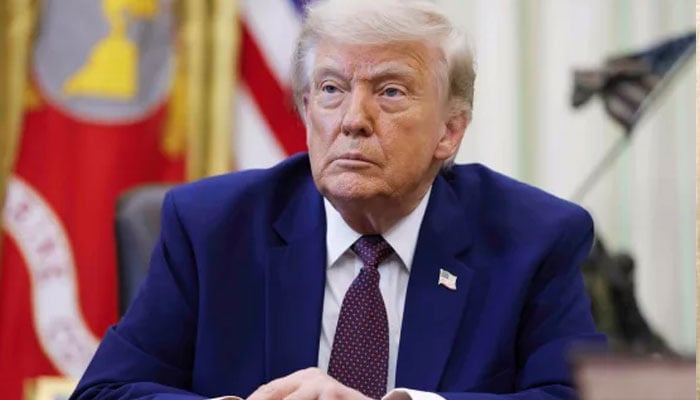
    WASHINGTON: US intelligence officials had doubts about the credibility of an alleged Iranian threat against President Donald Trump that triggered an extraordinary security operation during his departure from Türkiye last month, according to a Washington Post report. The revelation adds a new twist to the dramatic episode in which Trump was secretly moved from an aircraft at Ankara airport and flown to Britain aboard a smaller military jet while another aircraft was used as a decoy. The Washington Post, citing current and former US officials familiar with the intelligence, reported that CIA analysts did not consider information provided by Israel sufficiently compelling. The analysts reportedly communicated their reservations to officials in the Trump administration. The intelligence was described by one US official as Israeli-derived rather than US-generated and assessed with “low confidence”, according to the report. The CIA has declined to comment publicly. Despite the doubts, the US Secret Service decided that the potential danger justified extraordinary precautions. Trump’s security team has faced several serious incidents during his presidency and officials have stressed that they were unwilling to take unnecessary risks. The unusual operation unfolded after Trump attended the NATO summit in Ankara on July 8. According to reports, the president was initially expected to leave Türkiye aboard Air Force One. Instead, he was covertly transferred to a C-32A military aircraft through an airport catering truck. Trump and a small group of close aides then travelled to Britain’s Mildenhall air base, with fighter jets providing protection. Meanwhile, the regular presidential aircraft continued as part of a carefully planned deception. The operation has attracted considerable attention because it involved not only a change of aircraft but also secrecy from journalists and some senior officials travelling with the presidential delegation. The Washington Post reported that close Trump aides Dan Scavino, Natalie Harp and Walt Nauta accompanied him during the covert transfer, while no Cabinet officials did. The White House has defended the decision, saying Trump faces numerous threats, including threats linked to Iran, and that the Secret Service’s primary responsibility is protecting the president. Trump himself said the decision to use another plane was made by the Secret Service and that he followed its instructions. Reuters also reported that US officials considered the threat serious enough to warrant the covert aircraft switch. The intelligence dispute has nevertheless raised broader questions about the information shared between Israel and Washington. Some current and former US intelligence officials reportedly believe Israeli reporting can sometimes be intended not only to warn American leaders but also to influence policy decisions. The episode comes amid heightened tensions between Washington, Israel and Iran, making intelligence assessments particularly sensitive. It also highlights the difficult balance between acting quickly on potential threats and determining how reliable those threats actually are. For the Trump administration, the incident has now become more than a story about an unusual plane switch. It has raised questions about intelligence credibility, presidential security and the influence of foreign-provided information on US decision-making.

  • | | | |

    US and Iran agree to extend 60-day ceasefire

    ISLAMABAD: The United States and Iran have agreed in principle to extend their 60-day ceasefire, according to a Turkish news agency report citing Pakistani government sources. The report said both Washington and Tehran had informed mediators of their willingness to prolong the truce. The two sides are also exchanging messages to determine the length of the proposed extension, according to the report. The current ceasefire is due to expire on August 17. Mediators have been informed that both countries are prepared to continue the pause in hostilities. According to international media reports, the United States and Iran signed a 14-point memorandum of understanding on June 17. The agreement established a 60-day period for maintaining the ceasefire and completing negotiations aimed at bringing a permanent end to the conflict. The memorandum also included arrangements for keeping the Strait of Hormuz open to commercial shipping during the ceasefire. However, disagreements over the interpretation of several provisions have continued to create tensions between Washington and Tehran. Both sides have repeatedly accused each other of violating the terms or spirit of the understanding. The proposed extension could provide additional time for diplomatic efforts and negotiations aimed at addressing the outstanding issues between the two countries. Mediators are expected to remain engaged as Washington and Tehran work to settle the duration and other details of the extended ceasefire.

  • | | | |

    Iran rejects talks on ceasefire extension

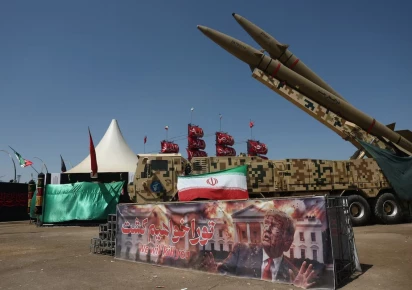
    Pakistan is making diplomatic efforts to help extend the ceasefire between the United States and Iran, as the current truce is scheduled to expire on Sunday, August 16. Sources said Islamabad is trying to use the understanding reached under the Islamabad Memorandum of Understanding to encourage both sides to maintain the ceasefire and return to negotiations. According to the sources, mediators believe additional time is needed to bridge differences between Washington and Tehran. Diplomatic efforts are therefore continuing to prevent the situation from deteriorating after the current ceasefire period ends. However, an Iranian senior official gave a different assessment of the situation. The official said there have been no discussions between Iran and the United States regarding an extension of the ceasefire. Iran has maintained that Washington must return to the agreement and honour its previous commitments. Tehran has also demanded a clear and credible timeline for the implementation of those commitments before any further understanding can be reached. Meanwhile, US President Donald Trump has made strong statements about the strategic Strait of Hormuz. Trump claimed that the United States now has complete control over the vital waterway and said Iran has limited options to challenge the American naval blockade. The Strait of Hormuz remains a major international shipping route and plays a crucial role in global energy supplies. Any prolonged disruption in the waterway could have serious consequences for oil and gas markets and international trade. Iranian military officials have warned that a renewed US offensive could lead to a wider confrontation. An Iranian military spokesman said energy transmission networks, power plants and infrastructure connected to the global internet could become targets if American military action resumes. The warning has raised concerns that any collapse of the ceasefire could expand the conflict beyond conventional military targets and affect critical infrastructure. Meanwhile, Turkish President Recep Tayyip Erdogan has expressed hope that additional countries will join the Makkah Defence Agreement. He indicated that broader participation could strengthen regional security cooperation. In another development, US Central Command said a Panama-flagged cargo vessel attempting to breach the naval blockade was disabled after a US helicopter fired a missile at the ship. The incident has further highlighted the risks facing commercial shipping in the region amid continuing tensions between Washington and Tehran. Separately, Japanese Prime Minister Sanae Takaichi discussed the situation with Iranian President Masoud Pezeshkian in a telephone conversation. Takaichi called for the Strait of Hormuz to be reopened once negotiations between Iran and the United States reach a successful conclusion.

  • | | |

    Iran says US military weaker as Hormuz crisis deep…

    TEHRAN: Iran has intensified its rhetoric against the United States as attacks on commercial shipping and stalled peace efforts deepen uncertainty over the future of the war, with Tehran warning that the strategically vital Strait of Hormuz will remain closed unless Washington accepts its conditions. Mohammad Reza Naqdi, an adviser to the commander of Iran’s Islamic Revolutionary Guard Corps, said in an interview with PBS that the US military had proved “weaker than what we perceived” during the five-month conflict. Naqdi said Iran had gained valuable battlefield experience during the war and claimed Tehran would continue to emerge victorious. “The longer this war lasts, the more experience we gain,” he said, arguing that Iranian forces had learned how to confront the US military through direct experience. His comments came as maritime traffic through the Strait of Hormuz dropped sharply. Shipping data showed only eight vessels were tracked through the waterway on Tuesday, below a 10-day average of about 12 and the lowest daily figure since August 5. Before the conflict, the strait typically handled around 130 to 140 vessels a day. The slowdown has heightened fears over global energy supplies because Hormuz is a crucial route for oil and liquefied natural gas shipments. The International Maritime Organization has previously warned of serious risks to vessels and seafarers operating in the area. Shipping attacks raise fresh alarm Tensions also spread to other maritime chokepoints. Four crew members were reportedly killed in a suspected Houthi attack on a cargo vessel in the Bab el-Mandeb Strait, while two Yemeni rescuers were also killed, according to reports cited in the source material. The US military separately said an MH-60 helicopter fired two Hellfire missiles at a Panama-flagged cargo ship after the vessel allegedly ignored warnings linked to a blockade of Iranian ports. Maritime sources said the incident occurred off Pakistan in the Gulf of Oman. The attacks have added to concerns that the conflict could disrupt shipping routes connecting the Gulf with the Red Sea and beyond. Iran sets conditions for reopening Hormuz Iranian security official Mohsen Rezaei said the Strait of Hormuz would not reopen unless Washington agreed to Tehran’s demands, including the release of frozen Iranian assets and an end to conflicts across the region. Iran’s parliament is also preparing legislation that would restrict military and commercial vessels from countries Tehran considers hostile from entering the Gulf without Iranian authorisation. The proposed law is intended to strengthen Iran’s control over the strategically important waterway. US President Donald Trump, meanwhile, has continued to combine threats with suggestions that negotiations could eventually produce a settlement. He has claimed the United States has control over the Strait and warned Iran against further escalation. Oil markets have already reacted to the uncertainty. Brent crude rose 1.4 per cent to $88.91 a barrel, while US crude gained 1.3pc to $83.20. Pakistan seeks diplomatic space Amid the worsening security situation, Pakistan has continued diplomatic engagement with Tehran. Interior Minister Mohsin Naqvi visited Iran and met President Masoud Pezeshkian, with both sides stressing the importance of strengthening bilateral political, economic, trade, cultural and security ties. Pezeshkian praised Pakistan’s commitment to closer relations and said Tehran was ready to expand cooperation with Islamabad. Naqvi said his visit was aimed at following up on understandings reached between the two countries and accelerating implementation of existing agreements. With military rhetoric rising, shipping routes under pressure and negotiations at an apparent impasse, the Strait of Hormuz remains at the centre of a crisis whose consequences could extend far beyond the Middle East.

  • | | | |

    Trump reveals why Secret Service changed his plane

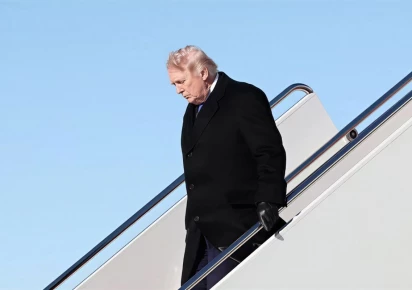
    WASHINGTON: US President Donald Trump has confirmed that his surprise plane switch during his departure from Turkey last month was carried out on the advice of the Secret Service, amid concerns over a potential threat linked to Iran. Trump said the aircraft he had initially been expected to travel on could have faced a “greater risk,” adding that he does not trust Iran. His remarks came after reports revealed that his departure from Ankara following the NATO summit involved an elaborate security operation. According to reports, Trump publicly boarded Air Force One in front of cameras, creating the impression that he would fly out of Turkey on the presidential aircraft. However, he was later secretly transferred to a smaller C-32A military aircraft. The move was reportedly carried out using an airport catering truck to conceal his transfer. Journalists and some White House staff reportedly remained under the impression that Trump was aboard Air Force One. Reporters were also instructed to keep their window shades closed, adding to the secrecy surrounding the operation. Trump said he followed the Secret Service’s instructions when the aircraft change was made and did not challenge the security decision. The unusual operation reportedly stemmed from heightened concerns over Iranian threats against the US president. Trump’s latest comments have now confirmed key details of the previously undisclosed flight arrangement. The episode has drawn attention because of the extraordinary measures used to conceal the president’s movements. It also highlights the heightened security concerns surrounding Trump amid continuing tensions between Washington and Tehran. For a president whose movements are normally tracked closely by the media and security officials, the covert transfer from one aircraft to another remains one of the most unusual presidential travel episodes of the year.

  • | | | |

    Israeli raids, settlement plans deepen West Bank t…

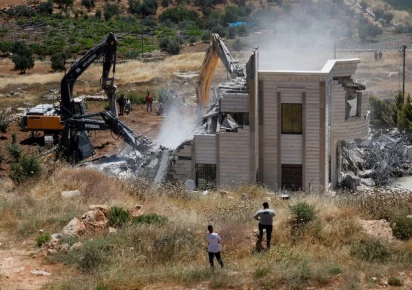
    RAMALLAH: Tensions across the occupied West Bank intensified on Monday as Israeli forces reportedly destroyed water pipelines, detained Palestinians and ordered families to leave their homes ahead of a planned demolition. While a new settlement plan near Jerusalem raised fresh concerns over the expansion of Israeli settlements. The latest developments have added to growing pressure on Palestinian communities already facing restrictions on movement, damage to agricultural land and disruptions to basic services. Palestinian human rights activist Aref Daraghmeh said Israeli forces destroyed water pipelines in the Atouf and Ras al-Ahmar areas of Tubas governorate. The areas, located in the northern Jordan Valley, have experienced repeated military operations in recent months. According to Daraghmeh, agricultural land has been cleared, water networks damaged and artesian wells filled in, causing significant losses for farmers who depend on the land and water supplies for their livelihoods. The destruction of water infrastructure has particular significance in the Jordan Valley, where Palestinian farming communities rely heavily on limited water resources. Brothers detained during raid In another operation in the northern Jordan Valley, Israeli forces detained two Palestinian brothers in the Ein al-Hilweh area, according to local sources cited by Anadolu. Meanwhile, Israeli troops raided the village of Tell, southwest of Nablus, and ordered residents to leave several homes ahead of the planned demolition of a house belonging to Palestinian Farouq Ramadan. Ramadan was killed on July 24 during an attack in the village, according to Palestinian sources. They said he had disarmed and killed one of the attackers before being shot dead. Three other members of his family were also killed and four Palestinians were injured during the incident, the sources said. Near Ramallah, agricultural land east of Jaljaliya village was also set on fire, Palestinian official news agency Wafa reported. Palestinian civil defence crews later brought the blaze under control. Village council head Osama Nazmi said an Israeli outpost had been established in the area about a year ago and that Palestinian homes belonging to residents from nearby Al-Mazraa Al-Sharqiya had subsequently been seized. New settlement plan raises alarm At the same time, Palestinian officials said Israel had advanced plans for a new settlement containing approximately 650 housing units south of Jerusalem. The Palestinian Jerusalem Governorate said Israel’s District Planning and Building Committee had deposited the plan for the proposed “Nofei Rachel” settlement. The project would cover approximately 27 dunams, or 6.7 acres, near Palestinian homes, according to the governorate. Palestinian authorities warned that the consequences would extend beyond the construction of the housing units, arguing that the development could affect Palestinian movement, urban growth and the ability of local communities to expand. They described the plan as part of a broader Israeli policy of expanding settlements and restricting Palestinian development. Israeli rights organisation Ir Amim separately said Israel had advanced three major settlement projects involving more than 3,400 housing units in East Jerusalem in recent weeks. The developments have renewed international concerns about settlement expansion. The United Nations and most countries regard Israeli settlements established in territory occupied since 1967 as illegal under international law. Critics say continued settlement construction threatens the possibility of establishing a viable Palestinian state alongside Israel. West Bank caught in wider conflict The latest events come as the Israeli-Palestinian conflict continues to reverberate across the region. According to figures cited by Palestinian authorities, violence in the West Bank has intensified alongside the wider war that began after the October 2023 Hamas attack on Israel. The situation has also drawn attention to the issue of Palestinian remains held by Israel. Report: Israel holds 1,700 Palestinian bodies Israel is holding the remains of around 1,700 Palestinians for possible use in future exchanges, Israeli newspaper Haaretz reported, citing two unnamed sources familiar with recent discussions within Israel’s security establishment. According to the report, Shin Bet chief David Zini supports retaining the bodies in case Israeli citizens are captured or disappear in the future. The Israeli military is also reportedly supportive of the position. Haaretz reported that most of the remains are believed to belong to Palestinians from Gaza who participated in the October 7, 2023 attack on Israel or subsequent fighting. However, the newspaper also reported that some of the bodies belong to Palestinians who were not involved in combat. The issue has raised legal questions inside Israel. Legal experts cited by Haaretz questioned whether authorities have the power to retain the remains of Palestinians who have not been proven to have taken part in fighting. The Palestinian National Campaign for the Retrieval of Martyrs’ Bodies and Disclosure of the Fate of the Missing said in October 2025 that Israel was holding around 1,500 bodies of Palestinians from Gaza at the Sde Teiman military facility in southern Israel. A crisis extending beyond borders The developments in the West Bank are unfolding against the backdrop of the devastating Gaza conflict. Palestinian health authorities say tens of thousands of Palestinians have been killed and injured since October 2023, while much of Gaza’s infrastructure has been destroyed or severely damaged. The reported destruction of water pipelines in the West Bank, the proposed settlement expansion and the continued disputes over Palestinian remains highlight how the conflict affects not only major political centres but also ordinary families, farmers and communities. For Palestinians living in areas such as Tubas, Nablus and the outskirts of Jerusalem, the immediate concerns are often deeply personal: access to water, the safety of their homes, the ability to farm their land and the uncertainty of what another military raid may bring. As settlement plans move forward and military operations continue, hopes for a reduction in tensions remain overshadowed by developments that are reshaping the landscape of the occupied West Bank.

  • | | |

    Trump claims US controls Iran’s finances 

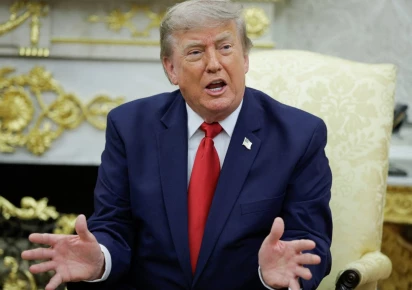
    WASHINGTON: US President Donald Trump has claimed that Washington has control over Iran’s financial resources as the conflict between the United States and Iran continues. In an interview, Trump said the US was effectively acting as a banker for Iran. He claimed Washington had control over a large amount of Iranian money. Trump also described Iran’s economic situation as extremely difficult. He alleged that the country was facing very high inflation and that its currency had lost much of its value. The US president further claimed that Iran was struggling to pay its soldiers and suggested that the economic pressure could become increasingly difficult for Tehran to sustain. Trump outlined several possible approaches toward Iran. He said Washington could maintain the current economic pressure, launch further military action or rely more heavily on financial measures. He said his main objective in the conflict was to prevent Iran from acquiring a nuclear weapon. Trump also claimed that US military action had stopped Tehran from obtaining such a capability. Qatar urges reopening of Strait of Hormuz Meanwhile, Qatar said talks between Iran and Oman on arrangements for reopening the Strait of Hormuz had reached an advanced stage. Qatari Foreign Ministry spokesman Majed Al-Ansari said the negotiations had reached a critical point. He expressed hope that the strategically important waterway would reopen as soon as possible. Qatar said it supports diplomatic efforts aimed at reducing tensions and resolving the dispute. Iran and Oman have been discussing legal and technical arrangements for the resumption of maritime traffic through the strait. Shipping activity in the area has been disrupted following the military confrontation between Iran and the United States. Tehran has linked the reopening of the waterway to the resolution of disputes surrounding what it describes as US violations of a June memorandum of understanding. Araghchi says US sought negotiations Iranian Foreign Minister Abbas Araghchi has claimed that Washington eventually sought negotiations with Tehran after initially demanding Iran’s unconditional surrender. Speaking during a televised press conference, Araghchi said the US had initially taken a hard-line position but later sought talks. He claimed that the change demonstrated Iran’s ability to withstand military and political pressure. Araghchi also said Iran had surprised countries around the world by resisting the United States. The Iranian foreign minister said Washington had support from Israel and several Western countries during the conflict. He also discussed the situation with German Foreign Minister Johann Wadephul during a telephone conversation. According to Iranian state media, Araghchi told his German counterpart that the insecurity in the Strait of Hormuz was the result of US and Israeli military actions against Iran. He briefed Wadephul on Iran’s discussions with Oman regarding the creation of a safe route for maritime traffic through the strategic waterway. The two officials also discussed bilateral relations and wider regional and international developments. Araghchi called on the international community to hold Washington accountable for what he described as the security and economic consequences of the disruption in the Strait of Hormuz. He maintained that lasting security in the waterway would require an end to what Tehran considers US military aggression, maritime restrictions and violations of previous commitments.

  • | | |

    Trump says US controls Strait of Hormuz

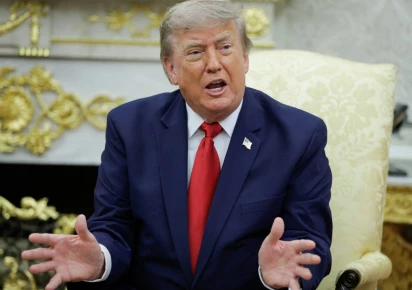
    US President Donald Trump has claimed that the United States is now controlling the Strait of Hormuz. Trump said the US Navy had cleared the entire waterway of naval mines. He made the remarks while speaking to reporters at the Oval Office. The Strait of Hormuz is a major international shipping route. It is also an important passage for global energy supplies. Any disruption in the area can affect international trade and energy markets. Trump was asked about the next steps following recent talks with Iran. However, he declined to provide details about what the United States would do next. The US president also indicated that Washington could increase pressure on Iran. He did not give specific details about what further action could be taken. Trump has also announced plans to seek compensation from Iran. The demand is linked to Americans who were killed or injured in various conflicts involving Iran. He had earlier said that Iran should provide compensation to the families of those killed aboard the US Navy destroyer USS Cole. Trump said his administration was seeking compensation for people who had been killed or wounded in different conflicts. He argued that Iran should be held responsible for the losses. According to Trump, Iran had not previously demanded compensation during earlier negotiations or discussions at different levels. He said Tehran had now unexpectedly raised such a demand. Trump said his decision to seek compensation from Iran would be made in response to the Iranian demand. The latest statements come as tensions between Washington and Tehran remain high. Trump has continued to signal that the United States is prepared to take further action if necessary. However, he did not reveal whether the US would pursue additional military or diplomatic measures.

  • | |

    Iran names battle-tested commanders

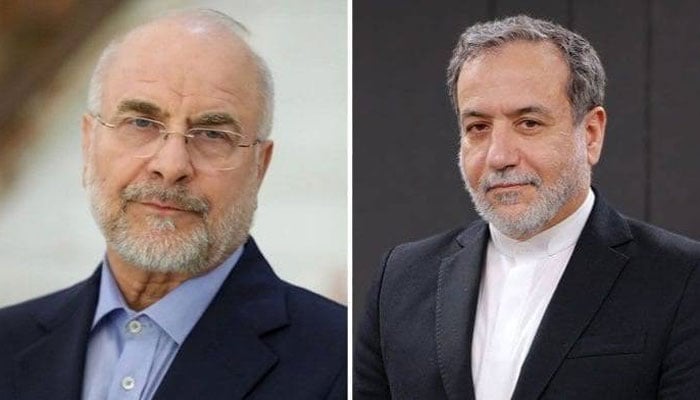
      Iranian Foreign Minister Abbas Araghchi and Parliament Speaker and senior negotiator Mohammad Bagher Ghalibaf have defended the country’s latest military appointments, saying the newly selected commanders bring extensive battlefield experience to their new positions. Their comments came after Supreme Leader Mojtaba Khamenei approved the appointment of six senior military commanders to key positions within Iran’s armed forces and the Islamic Revolutionary Guard Corps (IRGC). In a post on his Telegram channel, Araghchi said the six commanders had demonstrated their capabilities during the two recent wars imposed on Iran. He described their combat experience as an important factor behind their selection for senior military roles. Ghalibaf also welcomed the appointments, according to a statement carried by Iranian state media. He specifically highlighted General Ahmad Vahidi, saying Vahidi led the IRGC during the recent 40-day war and gained significant operational experience during the conflict. Ghalibaf said the IRGC should continue its mission while drawing on the guidance and direction of Supreme Leader Mojtaba Khamenei. He also stressed the importance of maintaining the force’s capabilities and experience as Iran faces continued regional security challenges. The latest appointments cover some of Iran’s most influential military positions. They include the chief and deputy chief of staff of the Armed Forces, the commander and deputy commander of the IRGC, the commander of the IRGC Navy, and the commander of the Basij paramilitary force. Iranian officials have presented the appointments as part of an effort to place experienced military figures in strategic command positions. The emphasis on commanders with recent battlefield experience also reflects the security pressures Iran has faced during the latest period of regional conflict. The appointments are expected to shape Iran’s military leadership and operational strategy in the period ahead, particularly as Tehran continues to deal with heightened tensions and evolving security challenges across the region.

  • | | | |

    Trump reportedly left Türkiye on secret flight amid Iran threat

    US President Donald Trump reportedly left Türkiye on a military aircraft during a covert security operation last month. The move was allegedly made because of an Iranian assassination threat. According to a report citing US officials and people familiar with the operation, Trump initially boarded the older Air Force One aircraft in Ankara. Television cameras were present as he departed. Minutes later, however, Trump was reportedly moved to a smaller Air Force C-32A aircraft. The transfer was allegedly carried out using an airport catering truck. The unusual operation was designed to keep Trump’s actual location hidden. The report said the information was not shared publicly. Some journalists and even members of the White House staff were also reportedly unaware of the change. Trump had travelled to Ankara for a NATO summit held on July 7 and 8. The reported security threat emerged during his visit. The operation reportedly took place shortly after US forces resumed strikes against Iran. The strikes followed the collapse of negotiations between Washington and Tehran. White House Communications Director Steven Cheung defended the security arrangements. He said the aircraft being used as Air Force One had been equipped with advanced security measures. Cheung said the president faced threats from several enemies of the United States. He added that the administration was using all available measures to protect him. The reported security operation comes as tensions between the United States and Iran remain high. Trump has continued to leave open the possibility of stronger military action against Tehran. Oil prices rise amid escalation fears Global oil prices also climbed sharply as markets reacted to Trump’s latest comments on Iran. Brent crude rose around 5% on Monday. It reached about $87.70 per barrel, its highest level in nearly two weeks. US West Texas Intermediate crude also gained around 5.1%. It reached approximately $82.20 per barrel. The rise came after Trump said the United States still had the option of taking stronger action against Iran. Trump told reporters that Washington had the capability to pursue a major escalation if it decided to do so. His comments increased uncertainty over efforts to end the conflict. They also raised concerns about the future of shipping through the Strait of Hormuz. Trump has claimed that the strategic waterway is open and fully under US control. However, he acknowledged that Iran could still attempt to interfere with maritime traffic. Iran has taken a different position. Tehran has reportedly demanded that the US lift its blockade before it agrees to fully restore the waterway’s operations. The Strait of Hormuz is one of the world’s most important energy routes. Large volumes of crude oil and liquefied natural gas pass through the waterway. Any prolonged disruption could therefore put further pressure on global energy prices. Oil prices were also supported by reports of attacks involving energy infrastructure in Saudi Arabia and a tanker operated by Abu Dhabi National Oil Company. Meanwhile, US crude reserves remained under pressure. Stocks in the Strategic Petroleum Reserve fell below 300 million barrels last week. The reserve was reported at around 298.7 million barrels. It was the lowest level recorded since 1983.