देश-विदेश

  • | |

    Australian court denies India exclusive claim over…

    The Federal Court of Australia has thrown out an appeal by India’s Agricultural and Processed Food Products Export Development Authority seeking to register Basmati as a certification trademark for rice in the country, a ruling Pakistan’s Ministry of Commerce welcomed in a statement issued Wednesday. The Indian authority, known as APEDA, had originally applied to register Basmati as a certification trademark for rice sold in Australia. A delegate of the Australian Registrar of Trade Marks rejected that application on December 22, 2022, finding that the word Basmati could not distinguish rice certified by APEDA from Basmati rice legitimately grown and sold by other producers. APEDA then appealed the decision to the Federal Court of Australia, which has now upheld the original rejection. Pakistan’s commerce ministry said the ruling confirms its longstanding position that Basmati functions as a geographical indication tied to a historically recognized growing region spanning parts of both Pakistan and India, rather than a term any single country can claim exclusively. The ministry noted that the original registrar’s decision had already acknowledged that Basmati rice is grown in Pakistan as well, and that Pakistani traders hold an equally legitimate claim to use the name. By dismissing APEDA’s appeal, the ministry said, the Federal Court affirmed those earlier findings. The ministry added that the Australian court also ordered APEDA to cover the respondent’s legal costs, either through agreement or a formal assessment. Islamabad described the ruling as a significant setback to Indian efforts to secure exclusive international rights over the Basmati name. The ministry said no single national authority can claim sole ownership of the term while excluding producers and exporters who have an equally valid right to use it, adding that Pakistan has consistently pushed back against Indian attempts to monopolize the Basmati name and has worked with relevant institutions and industry stakeholders to protect the interests of the country’s growers, millers and exporters. According to the ministry, the outcome safeguards the commercial and intellectual property interests of Pakistan’s Basmati sector and preserves the right of Pakistani producers to market authentic Basmati rice in the Australian market. Officials said they intend to keep protecting Basmati as a core part of Pakistan’s agricultural heritage and export identity, pursuing similar protections in other foreign jurisdictions on the basis of the rice variety’s historical origin, established reputation and distinctive qualities. Commerce Minister Jam Kamal Khan praised ministry officials and other stakeholders involved in the case, calling the ruling an important win for Pakistan’s agricultural heritage, commercial interests and export identity. India and Pakistan have long disputed the origins of Basmati rice, which both countries grow extensively. The rice traces its roots to the Punjab region, which was split into East Punjab, now part of India, and West Punjab, now part of Pakistan, following partition in 1947. In 2006, the European Union formally recognized Basmati as a joint product of both countries under its special geographical indication rules.

  • | |

    State Department report calls for greater civilian…

    The US State Department said Wednesday that Pakistan needs to strengthen civilian oversight of public finances to improve fiscal transparency, releasing findings that highlighted persistent gaps in how the country discloses key financial information. The department’s assessment described fiscal transparency as a core component of effective public financial management, noting that it allows citizens to understand how government revenues and tax dollars are spent. That visibility into budgets, the report said, gives citizens the tools they need to hold their governments accountable. The findings arrive weeks after Pakistan’s National Assembly passed an 18.8 trillion rupee Finance Bill for 2026 to 2027 in June, which included a defence budget of 3 trillion rupees, with at least 335 billion rupees coming from provincial contributions. In its 2026 Fiscal Transparency Report on Pakistan, the State Department said the country continues to fall short in disclosing important financial data, particularly around debt obligations and the budgets of military and intelligence agencies. The report found that Pakistan’s government did not publish its executive budget proposal within a reasonable timeframe and made only limited information available on debt obligations, including debt held by major state owned enterprises. It further noted that military and intelligence budgets remain outside the scope of adequate parliamentary or civilian oversight. The assessment also pointed to areas of progress. During the review period, the report said, Pakistan’s government made its enacted budget and end of year financial reports widely and easily accessible to the public, including through online platforms. It found that publicly available budget documents offered a substantially complete picture of most planned government expenditures and revenues, including revenue generated from natural resources. The report described the information contained in the budget as generally reliable and subject to audit by the country’s supreme audit institution, which it said meets international standards of independence. Audit reports, the department noted, are published within a reasonable period and contain substantive findings. It also found that the government has specified, and largely followed in practice, clear legal criteria and procedures for awarding natural resource extraction contracts and licenses, while making basic information about such awards publicly available. The report added that Pakistan’s sovereign wealth fund operates under a sound legal framework and that the government publishes accessible information on public procurement contracts. Among its recommendations, the State Department urged Pakistan to make its executive budget proposal available to the public within a reasonable timeframe, disclose more detailed information on government debt, including debt tied to state owned enterprises, and bring military and intelligence agency budgets under parliamentary or civilian oversight. Responding to questions about the report during a weekly press briefing, Foreign Office spokesperson Tahir Andrabi acknowledged that the report had been released the previous day. He said Pakistan adheres to internationally recognized best practices around fiscal transparency, budgeting and financial disclosure, while also operating within its own constitutional, legislative and regulatory frameworks. Andrabi noted that Pakistan remains engaged in an ongoing International Monetary Fund program centered on structural reform and improved fiscal management. He said the country has completed three IMF reviews so far, adding that the reform measures taken under the program have drawn broad recognition, including credit rating upgrades from three international rating agencies as well as positive assessments from the IMF itself.

  • |

    British driver sets hydrogen vehicle speed record at 654 km/h

    British driver and former Royal Air Force pilot Andy Green has set a new world land-speed record using a hydrogen-powered vehicle. According to foreign media reports, 64-year-old Andy Green drove the hydrogen-powered vehicle at 406 miles per hour (654 km/h) at the Bonneville Salt Flats in Utah, USA making it the fastest speed ever achieved by a vehicle of this type. According to the report, the HydroMax is equipped with two hydrogen engines that generate a combined 1,600 horsepower. 20-year-old record broken The new HydroMax vehicle more than doubled the previous world record of 185.5 miles per hour, set in 2004 by a hydrogen-combustion vehicle. Twenty years ago at the same location, the same company’s diesel-powered vehicle, DieselMax set a world record by reaching 350 miles per hour (563 km/h). Only person to break sound barrier on land Andy Green has already made history in motorsports. In 1997, he drove the jet-powered ThrustSSC to a speed of 763 miles per hour (1,228 km/h) breaking the sound barrier on land. Andy Green remains the only person to have broken the sound barrier in a land vehicle.

  • | |

    Iranian photojournalist Yalda Moayeri sentenced to…

    An Iranian court has reportedly sentenced prominent photojournalist Yalda Moayeri to 15 years in prison in absentia, in a case involving allegations of activities against Iran and working in the interests of Israel and the United States. According to reports, the case was brought under an Iranian espionage-related law introduced in 2025. The allegations reportedly include giving interviews to foreign media outlets and providing photographs to organizations allegedly connected with the United States and Israel. Authorities also accused Moayeri of using her journalistic work and material published online to advance what they described as the interests of Israel and the United States. However, Reuters reportedly noted that the contents of the court documents could not be independently verified. The court handed down the 15-year sentence while Moayeri was not present at the proceedings. She has reportedly been given 10 days to appeal the decision. In addition to the prison sentence, the court ordered the confiscation of her cameras, mobile phones and other electronic equipment. The ruling also reportedly restricts her from participating in cultural and media activities, holding public office and posting on social media. Moayeri has disputed the circumstances of the proceedings. She said she was unable to attend the trial because she had not received formal notification about the hearing. According to her account, when she went to Tehran’s Revolutionary Court, she was not given complete case documents, while a colleague had to copy details of the charges by hand. The photojournalist also said Iranian security forces raided her Tehran home in February and confiscated her mobile phone, laptop, cameras and other equipment. A press freedom organization reported that personnel affiliated with the Islamic Revolutionary Guard Corps searched her home on February 3 and seized electronic devices. Moayeri has previously faced legal action in Iran because of her journalistic work. She was arrested in September 2022 while covering nationwide protests that followed the death of Mahsa Amini in police custody. Her arrest occurred during the protests that became associated with the “Woman, Life, Freedom” movement. She was released on bail in December 2022. She has continued documenting political developments and protests in Iran. In early 2026, her photographs from protests were published by the French newspaper Le Monde, while reports indicated that authorities subsequently searched her home and continued legal proceedings against her. The latest sentence has drawn attention because of its potential implications for press freedom and the ability of journalists to document events in Iran. The case remains subject to appeal, while independent verification of the Iranian court’s allegations remains limited.

  • | | |

    Kangana Ranaut clarifies ‘Cockroach’ and ‘Gu…

    Indian actress and BJP Member of Parliament Kangana Ranaut has clarified her controversial remarks involving the words “cockroach” and “gutter” after facing strong criticism on social media. Kangana said her comments were not directed at the entire younger generation. Instead, she claimed that she was referring to specific individuals and certain women while discussing social issues and the importance of responsibility alongside personal freedom. Her earlier remarks triggered a significant reaction online after she criticized the way some young Hindu women expressed their freedom. In that context, she reportedly used the phrase “Generation Gutter,” leading critics to accuse her of making a sweeping statement about young people. Speaking to Indian news agency ANI, Kangana explained that her comments were made in the context of protests at New Delhi’s Jantar Mantar over the alleged NEET-UG paper leak. She stressed that she was not making a general statement about all young people. According to Kangana, she had specifically referred to certain people or some women, and it was therefore unfair to interpret her comments as an attack on the entire younger generation. She also addressed her controversial reference to a “cockroach.” Kangana argued that if someone describes themselves as a cockroach, saying that cockroaches come from a gutter should not be considered offensive. The actress said that she does not consider herself a cockroach. If someone told her that she lived in a gutter, she would reject the claim. However, she questioned why the reference would be considered offensive if a person themselves used the term “cockroach” to describe their identity or behavior. Kangana further rejected the interpretation that she had compared all young people to a gutter. She said that discussing problems such as drug use, betting, gambling or dark-web activities among a particular section of young people does not mean that the entire younger generation should be viewed in the same way. She questioned why comments about a specific group or certain women were being presented as a generalized criticism of all young people. The clarification comes amid continuing debate over the responsibilities that accompany personal freedom, particularly among young people. Kangana maintained that her intention was to highlight certain behaviors and social problems rather than criticize an entire generation. The controversy has once again drawn attention to Kangana’s outspoken public statements, which frequently generate strong reactions online and in political and entertainment circles. By clarifying her comments, the actress has sought to distance herself from the interpretation that she was labeling the entire younger generation as “gutter” or making a blanket criticism of young people.

  • | | |

    West nile virus cases rise in Israel as two people…

    A mosquito-borne disease has resurfaced in Israel, with 13 people reportedly diagnosed with West Nile fever this year and two deaths recorded. According to reports, Israel’s Ministry of Health has confirmed the presence of mosquitoes carrying the West Nile virus in several areas where cases have been identified. The disease is primarily transmitted to humans through the bite of infected mosquitoes. Israel’s Ministry of Environmental Protection said mosquitoes carrying the virus were detected in the Menashe Regional Council, Ramat Hasharon and Eilat. Health officials explained that West Nile virus is generally transmitted through mosquitoes that become infected after feeding on birds carrying the virus. The infected mosquitoes can subsequently transmit the virus to humans through bites. Professor Sigal Sadeski, head of the Public Health Division, said that West Nile fever is mild in most cases and many infected people may not develop noticeable symptoms. However, the infection can become serious in some patients. Health experts warn that the virus can affect the nervous system and, in severe cases, lead to complications such as encephalitis or meningitis. The risk of severe illness is reportedly higher among people over the age of 60 and those who already have underlying health conditions. Investigation Underway Israeli authorities have launched epidemiological investigations to determine how and where the affected individuals were exposed to infected mosquitoes. Officials are also examining whether cases reported in different locations are connected and are attempting to identify areas where infected mosquitoes may have come into contact with people. The discovery of infected mosquitoes has also increased the importance of mosquito surveillance and control measures in the affected areas. Environmental authorities are expected to monitor mosquito populations and take steps aimed at reducing the risk of further transmission. Previous Outbreak in 2024 Israel also experienced a significant outbreak of West Nile virus in 2024. According to an Israeli report submitted to the World Organisation for Animal Health, 916 human cases had been confirmed by September 2024, with 71 deaths reported. The latest cases have renewed concerns about the seasonal spread of West Nile virus and the potential risks posed by infected mosquitoes. While most infections are mild or may cause no obvious symptoms, severe neurological complications can occur in a small proportion of patients. Health authorities are therefore continuing surveillance and investigating the latest infections to better understand the spread of the virus. The current outbreak highlights the importance of mosquito-control measures, particularly during periods when mosquito activity is high. Authorities are expected to continue monitoring affected areas and investigating possible sources of transmission.

  • | | |

    BTS member V reveals hearing problem he has faced …

    BTS member V, whose real name is Kim Taehyung, has revealed that he has been dealing with a hearing problem for the past two and a half years. The South Korean singer shared the personal health update with fans during a live broadcast on Weverse alongside fellow BTS member Jungkook, following the group’s return to activities after completing their mandatory military service. During the conversation, V explained that there is a significant difference in his hearing ability between his two ears. He reportedly said that if the hearing ability in his left ear is considered 100, his right ear is currently around 30. V also indicated that he is receiving treatment for the hearing issue. His revelation came as a surprise to many fans, who had not previously been aware of the extent of the problem. The live session took place after BTS performed two consecutive sold-out shows at M&T Bank Stadium in Baltimore, United States. V and Jungkook spoke to fans directly following the concerts and shared updates about their experiences during the group’s ongoing tour. Jungkook also discussed a health issue during the broadcast. The singer said he has been performing despite experiencing significant pain in his legs during the tour. According to Jungkook, the pain in his shin has reached a level where there is concern about the possibility of a stress fracture. Despite the discomfort, he said he often wanted to run and move freely while performing on stage, but the pain sometimes prevented him from doing so. The health disclosures from both members have attracted attention from BTS fans around the world, particularly as the group has returned to major live performances following their military service. All seven BTS members have now completed their mandatory military service in South Korea and resumed group activities. The group made its comeback with the album “ARIRANG” and subsequently launched a global music tour. V’s revelation about his hearing has added a personal dimension to the group’s comeback, as the singer continues performing while undergoing treatment. Fans have expressed concern and support for the singer as he manages the condition alongside BTS’s demanding international schedule. The latest update also highlights the physical demands placed on performers during major global tours, with both V and Jungkook discussing health challenges while continuing to appear on stage for fans.

  • |

    Mysterious Cat cutouts installed to scare rare Owls in Florida

        A strange wildlife-related incident has emerged from Cape Coral, Florida, where cat cutouts have reportedly been installed on two vacant plots of land in an apparent attempt to scare away rare burrowing owls. Wildlife experts believe the unusual measure may have been taken to prevent the owls from settling on the properties before construction work begins. The incident has drawn attention because burrowing owls are a protected species in Florida and are considered an important part of the state’s wildlife ecosystem. According to local volunteers, six fake cat cutouts were placed on one of the vacant plots near a burrowing owl’s nest. The life-sized images appear to have been positioned deliberately to create the impression that cats are present in the area. The two plots were recently sold, and wildlife advocates believe the new owners may have adopted the unusual tactic in an effort to discourage additional owls from establishing burrows on the properties. The owners are reportedly preparing the land for future construction, making the presence of protected birds a potential concern. Burrowing owls live underground and are known for making their homes in burrows rather than trees. Unlike many other owl species, they spend considerable time on the ground and around their burrows. Their unusual lifestyle makes them particularly vulnerable to predators, human activity and changes to their habitat. Cats are among the major predators of burrowing owls. As a result, wildlife experts believe the cat cutouts may have been placed on the plots to make the birds feel threatened and encourage them to leave the area. However, the unusual method has raised concerns among wildlife conservationists. In Florida, burrowing owls receive special protection under federal law. Interfering with their burrows, disturbing the birds or attempting to remove them without the required authorization can be illegal. Wildlife conservation volunteers have expressed concern that property owners are taking extreme measures to protect their land from protected species instead of working with relevant authorities and wildlife experts. Conservation groups have emphasized that landowners should seek appropriate guidance before carrying out construction or other activities in areas occupied by burrowing owls. Since the species is legally protected, property owners may be required to obtain permission before disturbing their habitat or taking actions that could affect the birds. The incident has also highlighted the broader challenges faced by wildlife in rapidly developing areas. As vacant plots are sold and developed, animals that have established habitats on the land can come into conflict with construction plans. Conservationists say that protecting wildlife requires balancing development with legal and environmental responsibilities. Volunteers working for wildlife protection organizations have urged residents to take greater responsibility for safeguarding the rare birds. They have specifically appealed to residents to keep their pet cats indoors so that they do not pose a threat to burrowing owls and other vulnerable wildlife. The unusual sight of fake cats on vacant plots has therefore become more than a curious local incident. It has drawn attention to the continuing struggle between property development and wildlife conservation in Florida. Wildlife advocates hope that greater public awareness, responsible pet ownership and cooperation with conservation authorities can help protect burrowing owls and ensure that the rare species continues to survive in its natural habitat.

  • | | | |

    Iran rejects talks on ceasefire extension

    Pakistan is making diplomatic efforts to help extend the ceasefire between the United States and Iran, as the current truce is scheduled to expire on Sunday, August 16. Sources said Islamabad is trying to use the understanding reached under the Islamabad Memorandum of Understanding to encourage both sides to maintain the ceasefire and return to negotiations. According to the sources, mediators believe additional time is needed to bridge differences between Washington and Tehran. Diplomatic efforts are therefore continuing to prevent the situation from deteriorating after the current ceasefire period ends. However, an Iranian senior official gave a different assessment of the situation. The official said there have been no discussions between Iran and the United States regarding an extension of the ceasefire. Iran has maintained that Washington must return to the agreement and honour its previous commitments. Tehran has also demanded a clear and credible timeline for the implementation of those commitments before any further understanding can be reached. Meanwhile, US President Donald Trump has made strong statements about the strategic Strait of Hormuz. Trump claimed that the United States now has complete control over the vital waterway and said Iran has limited options to challenge the American naval blockade. The Strait of Hormuz remains a major international shipping route and plays a crucial role in global energy supplies. Any prolonged disruption in the waterway could have serious consequences for oil and gas markets and international trade. Iranian military officials have warned that a renewed US offensive could lead to a wider confrontation. An Iranian military spokesman said energy transmission networks, power plants and infrastructure connected to the global internet could become targets if American military action resumes. The warning has raised concerns that any collapse of the ceasefire could expand the conflict beyond conventional military targets and affect critical infrastructure. Meanwhile, Turkish President Recep Tayyip Erdogan has expressed hope that additional countries will join the Makkah Defence Agreement. He indicated that broader participation could strengthen regional security cooperation. In another development, US Central Command said a Panama-flagged cargo vessel attempting to breach the naval blockade was disabled after a US helicopter fired a missile at the ship. The incident has further highlighted the risks facing commercial shipping in the region amid continuing tensions between Washington and Tehran. Separately, Japanese Prime Minister Sanae Takaichi discussed the situation with Iranian President Masoud Pezeshkian in a telephone conversation. Takaichi called for the Strait of Hormuz to be reopened once negotiations between Iran and the United States reach a successful conclusion.

  • |

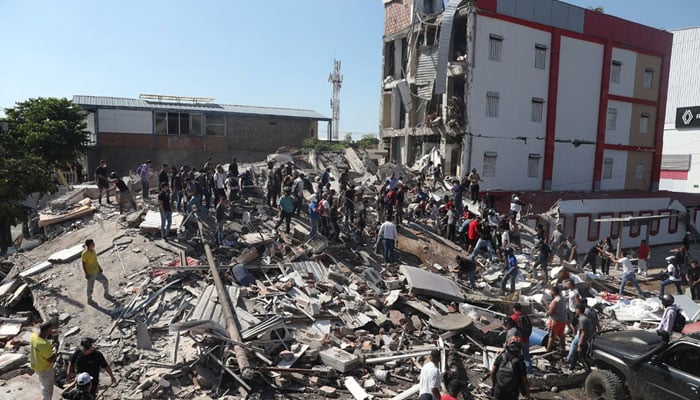
    Death toll rises to 254 after powerful Colombia earthquake

    The death toll from a powerful earthquake that struck western Colombia on Monday has risen to 254, according to foreign media reports, as rescue teams continue searching through devastated areas for survivors. The 7.4-magnitude earthquake caused widespread destruction across the affected region, with dozens of buildings collapsing and significant damage reported to infrastructure. Several communities remain without electricity and access to essential services, making rescue and relief operations increasingly difficult. Colombian authorities have warned that the full scale of the disaster may not become clear for several days. Rescue workers are still assessing damaged areas, while officials are working to determine the exact number of casualties and the extent of property damage. The earthquake also disrupted basic services in several affected communities, leaving residents struggling to access electricity and other necessities. Emergency teams have been deployed to assist victims, search damaged buildings and provide immediate relief to people who have lost their homes. Officials expect the death toll and damage estimates to change as rescue crews reach areas that remain difficult to access. Authorities have urged residents to remain cautious and follow emergency instructions as assessments and relief efforts continue. The 7.4-magnitude tremor stands among the most destructive earthquakes to hit western Colombia in recent years, causing severe damage and a major humanitarian challenge for local authorities.