doctors reject fbr
| |

Doctors reject FBR POS system, warn of public prot…

Islamabad: The Pakistan Medical Association Punjab has warned the Federal Board of Revenue that doctors could launch legal action, protests and even withdraw medical services if the proposed Point of Sale system is imposed on private healthcare establishments.

PMA Punjab President Dr Kamran Saeed Sheikh said the medical community was ready to fight the issue through courts, public protests, banners and awareness campaigns if its concerns were not addressed. He said the doctors could also consider token strikes or withdrawal of services.

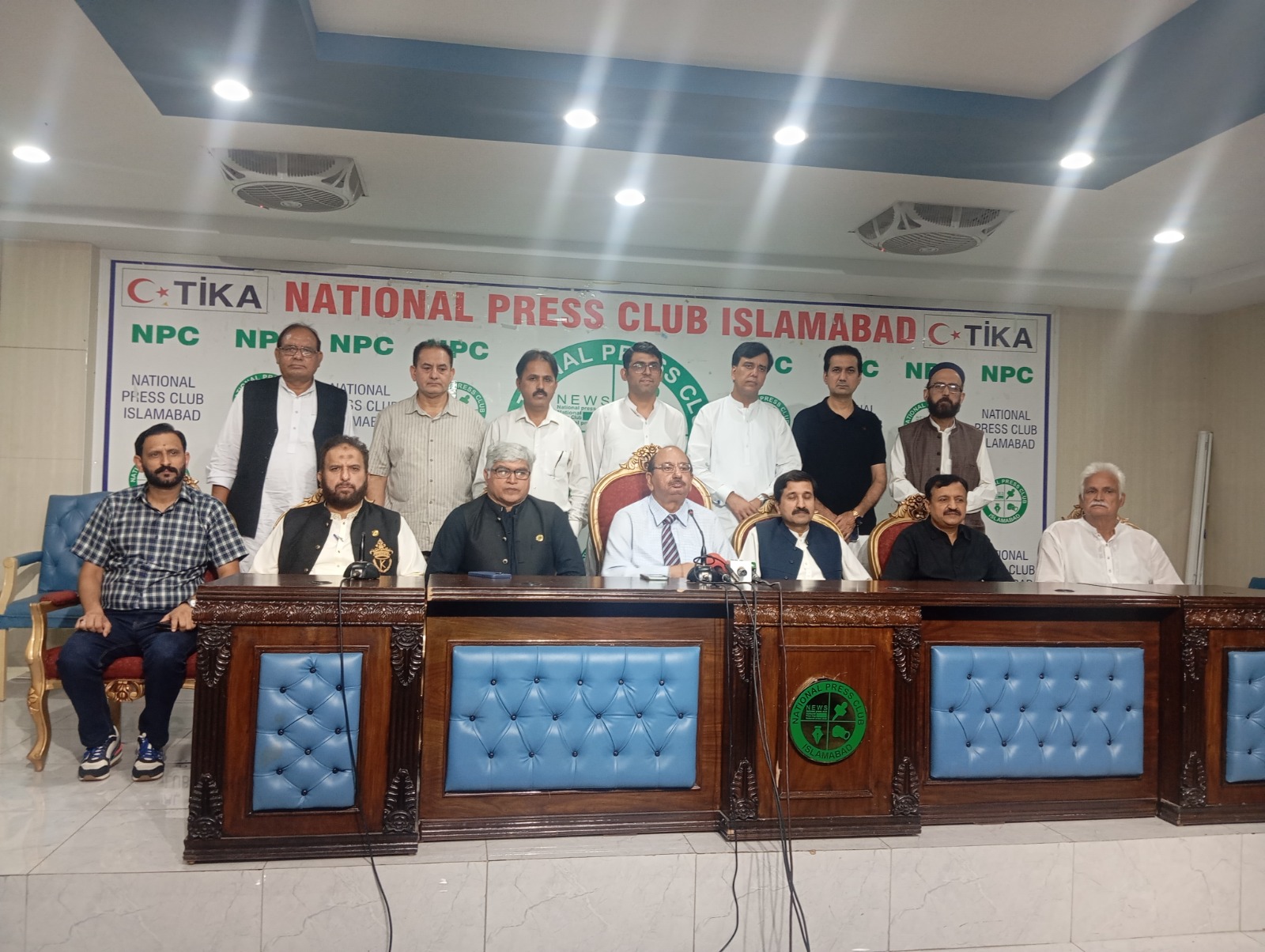
The warning came during a press conference at the National Press Club, where the PMA Punjab provincial council met in Islamabad. Doctors from different parts of Punjab discussed the FBR initiative concerning POS systems and the requirements linked to Section 175C.

Dr Kamran Saeed Sheikh said doctors were not refusing to pay taxes. He stressed that the medical profession should not be treated like an ordinary business because healthcare is an essential public service. According to Dr Kamran Saeed Sheikh, the proposed system could create additional technical and financial difficulties for doctors and ultimately increase the cost of healthcare for ordinary patients.

He also raised concerns about patient privacy. He said information about a patient’s illness, visits and expenses must remain confidential and should not be exposed through systems that could allow unnecessary access or monitoring.

The PMA Punjab president said private healthcare providers were already paying taxes on several areas, including electricity, equipment, water, gas and buildings. He argued that adding more technical requirements could take doctors away from their main responsibility of treating patients.

Dr Kamran Saeed Sheikh also warned that doctors were already leaving Pakistan and that healthcare establishments in some areas were closing rather than opening. He said further administrative pressure could make the situation worse. The PMA leadership said it had already held two meetings with the FBR and had also sent written communications explaining its position. According to Dr Kamran Saeed Sheikh, the discussions had not produced the result the doctors wanted.

He said the medical community was prepared to keep all legal and democratic options open. “We will fight legal battles, go to court and protest,” Dr Kamran Saeed Sheikh said during the briefing. He also warned that doctors could come onto the streets and consider withdrawal of services if the issue was not resolved.

Dr Maqsood Zahid, President Elect of PMA Punjab, also questioned whether POS technology was suitable for medical services. He argued that healthcare was different from selling ordinary products because doctors provide services that can be required at any time, including emergencies during the night.

He said doctors could not stop treating an emergency patient simply because a machine was not working or an internet connection had failed. Dr Maqsood Zahid said many patients also receive treatment without paying the full amount. Some patients receive services at half rates, while others are treated free of charge. He questioned how such cases would be properly reflected through a system designed mainly around payment records.

He gave the example of a hospital in Mian Channu, Khanewal, where doctors reportedly deal with many patients without charging them. He said that out of 100 patients, around 60 could be treated without receiving even a single penny, making a simple payment based system difficult to apply to real medical practice.

The doctors also argued that medical treatment cannot be measured in the same way as the sale of a retail product because the cost and complexity of treatment can change from patient to patient. Dr Maqsood Zahid said the medical community was willing to discuss a suitable tax formula with the government if a system could be designed according to the realities of medical practice.

The PMA representatives said doctors across the country were being represented in discussions on the issue. They said representatives from Sindh, Khyber Pakhtunkhwa, Balochistan, Karachi, Islamabad and Punjab had participated in consultations.

The PMA also raised the problem of smaller clinics in remote areas. Doctors argued that poor internet services, electricity problems, shortage of technical workers and maintenance costs could create serious difficulties for clinics outside major cities.

Dr Muzaffar Niazi said doctors would not accept a situation in which the medical profession was treated like a normal retail business. He said doctors were prepared to pursue legal action, demonstrations, public awareness campaigns and other forms of protest.

The PMA leadership also stressed that it was not against taxation itself. Dr Maqsood Zahid said doctors were law abiding citizens and accepted that taxes were necessary to run the country.

The main demand was for the government to develop a system that recognised the special nature of healthcare and did not place unnecessary financial and administrative pressure on doctors or patients.

The PMA Punjab had already formally raised the issue with the FBR. In a letter dated January 20, 2025, Dr Kamran Saeed Sheikh, President PMA Punjab, asked the FBR Chairman to defer the installation of POS systems in private healthcare establishments.

The letter warned that additional administrative, technical and financial requirements could increase the cost of healthcare and reduce the time available for doctors to provide medical treatment. It also pointed to problems such as unreliable electricity and internet services, shortage of technical staff and difficulties faced by small and medium sized clinics.

PMA Punjab also warned in the letter that additional pressure on private healthcare could discourage young doctors and female doctors from starting private practices in remote and less developed areas and could contribute to further brain drain from Pakistan.

The letter was also copied to the President of Pakistan, Prime Minister, Governor Punjab, Federal Minister for Finance and Revenue, Chief Minister Punjab, Speaker Punjab Assembly, provincial health ministers and the Chairman Punjab Health Care Commission.

The PMA leadership has now made clear that the dispute is no longer limited to a technical discussion over a machine. Doctors say the issue involves taxation, patient privacy, the cost of healthcare and the ability of small clinics to continue providing services.

If the disagreement remains unresolved, the doctors have indicated that the next phase could move from meetings and letters to court action, demonstrations and a wider protest campaign.

Similar Posts

  • | |

    Katie Holmes makes rare comment about boyfriend Ja…

    Katie Holmes has offered a rare glimpse into her personal life by publicly acknowledging her relationship with New York-based artist Jason Bard Yarmosky. Known for keeping her private life away from the spotlight, the actress surprised fans by making one of her first public comments about her boyfriend after the couple recently stepped out together in New York City. (people.com⁠) The Dawson’s Creek alum, who has long maintained a low-profile approach to romance, spoke warmly about Yarmosky while attending a recent event. Although Holmes kept her remarks brief, she described the artist as someone she deeply admires and appreciates. Her comments quickly caught attention because the actress rarely discusses her relationships publicly. (people.com⁠) Holmes and Yarmosky were first linked earlier this year after they were photographed together on several occasions around New York City. The pair later made public appearances at art-related events, fueling speculation that their connection had grown stronger. Despite increased public interest, Holmes has largely remained silent about the relationship, choosing instead to focus on her career and family life. (usmagazine.com⁠) Jason Bard Yarmosky is a contemporary artist known for his emotional and thought-provoking paintings and mixed-media works. Based in New York, he has exhibited his art in galleries across the United States and has earned recognition for exploring themes of identity, family, and human connection. His artistic background appears to align with Holmes’ own passion for creativity and storytelling. (jasonbardyarmosky.com⁠) Holmes has always preferred to keep her personal relationships private, especially after years of intense media attention. Since her highly publicized marriage and divorce from Tom Cruise, the actress has carefully balanced her public career with her private life. In past interviews, she has emphasized the importance of protecting her personal space and maintaining a sense of normalcy for her daughter, Suri Cruise. (people.com⁠) Fans have praised Holmes for finding happiness while staying true to her values. Her recent remarks about Yarmosky, though brief, offered a rare and genuine insight into a relationship that appears to be built on mutual respect and shared interests. As Holmes continues to work on new acting and directing projects, her subtle acknowledgment of Yarmosky suggests that she is comfortable letting the public see a small part of her personal happiness. For admirers of the actress, it was a refreshing moment that highlighted a softer, more personal side of one of Hollywood’s most private stars.

  • | |

    Pakistan paid Rs6,405 billion to IPPs in capacity …

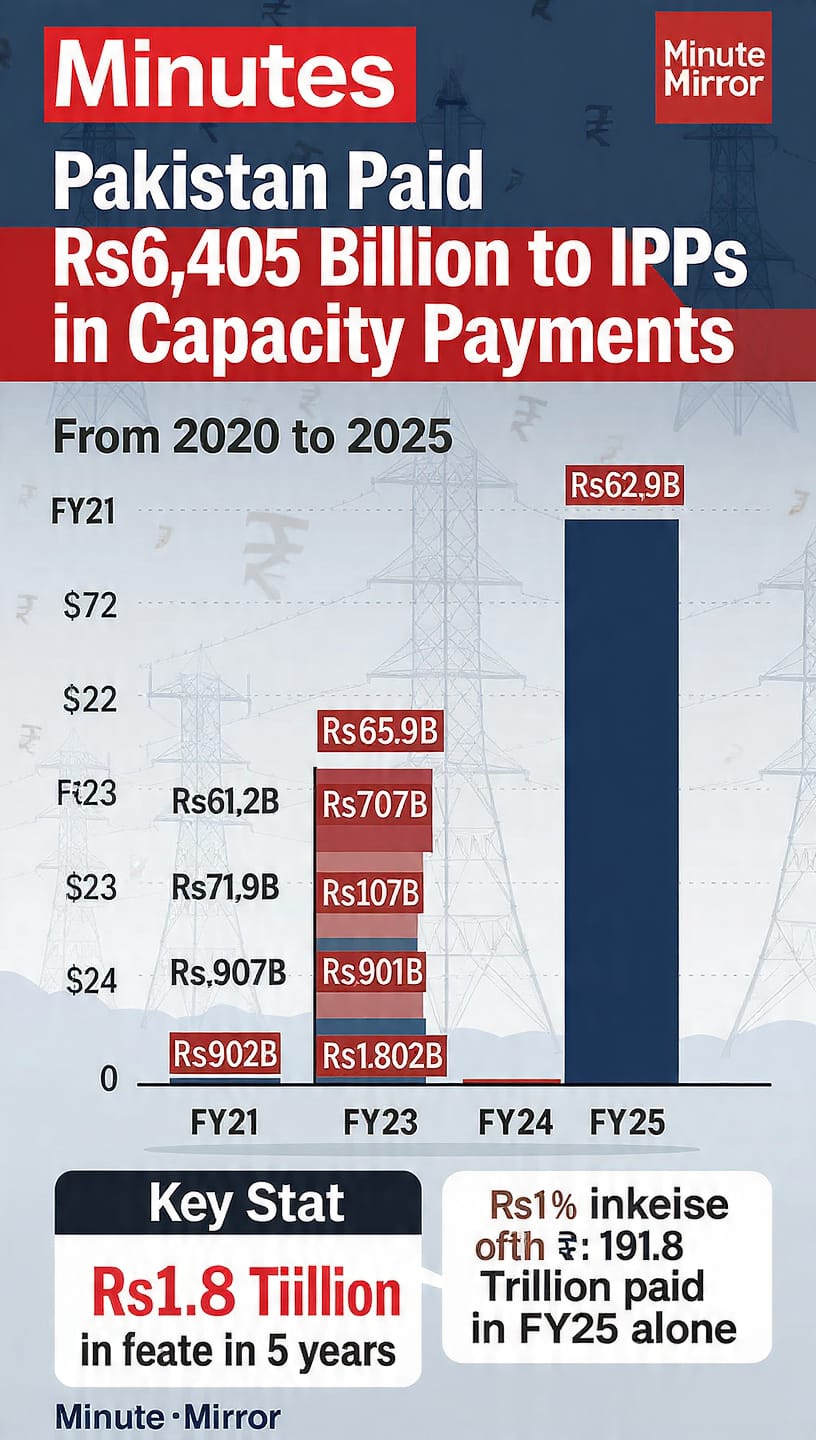
      ISLAMABAD: Pakistan’s federal government paid a total of Rs6,405 billion to Independent Power Producers (IPPs) in capacity payments between 2020 and 2025, the National Assembly has been informed, highlighting the growing financial burden associated with the country’s power sector. According to a written response submitted by Federal Minister for Energy Awais Ahmad Leghari, capacity payments increased significantly during the five-year period despite government efforts to renegotiate power purchase agreements and reduce electricity costs. The figures presented to the National Assembly show that capacity payments rose from Rs613.9 billion in FY2020-21 to Rs1,807 billion in FY2024-25. This represents an increase of approximately 194% over the period. The government paid Rs613.9 billion in capacity charges during FY2020-21. The amount increased to Rs775.9 billion in FY2021-22 before rising sharply to Rs1,307 billion in FY2022-23. Capacity payments reached their highest level during FY2023-24, when the government paid around Rs1.902 trillion to IPPs. Although the amount declined slightly in FY2024-25 to Rs1.807 trillion it remained almost three times higher than the amount paid in FY2020-21. Capacity payments are charges made to power producers for keeping their generating plants available to supply electricity, regardless of whether the full generation capacity is actually utilised. These payments are part of the contractual arrangements between the government and IPPs and have frequently been identified as one of the factors contributing to Pakistan’s expensive electricity system and growing circular debt. Responding to questions in the National Assembly, Energy Minister Awais Ahmad Leghari said the government has taken several measures to reduce the financial pressure created by existing power agreements. According to the minister, a government task force has terminated power purchase agreements with six IPPs, while agreements with several other producers have also been revised. The objective of these measures is to reduce electricity costs and limit the financial burden on the national power sector. The Ministry of Energy estimates that the changes made to the agreements could result in savings of approximately Rs4.3 trillion over the remaining life of the contracts. Leghari also clarified that payments made to power producers are based on tariffs determined by the National Electric Power Regulatory Authority (Nepra) and the terms agreed under the relevant power purchase agreements. He rejected the impression that generators were receiving payments outside the approved contractual and regulatory framework, stating that there were no additional payments beyond the applicable arrangements. Despite the government’s renegotiation efforts, the figures show that capacity payments continue to represent a major financial obligation for Pakistan. The Rs1.807 trillion paid in FY2024-25 alone demonstrates the scale of the challenge facing the country’s power sector. The government’s efforts to terminate and revise agreements are expected to provide substantial savings in the coming years. However, reducing capacity payments and addressing the broader issues of electricity pricing, power utilisation and circular debt remain critical challenges for Pakistan’s energy sector.

  • |

    Gold prices edge lower in Pakistan as global rates decline

    KARACHI: Gold prices recorded a modest decline in Pakistan on Saturday, with the domestic market following a slight downward movement in international bullion rates. According to data released by the All Pakistan Sarafa Gems and Jewellers Association, the price of gold fell by Rs500 per tola, bringing the price to Rs459,936 per tola. The association reported a corresponding decline in the price of 10 grams of gold. The rate for 10 grams was reduced by Rs429, settling at Rs394,320. The decrease in domestic gold prices came as international bullion rates also moved lower. In the global market, gold fell by $5 per ounce to $4,375 per ounce. Market participants closely monitor international gold prices, currency movements and domestic demand when determining bullion rates in Pakistan. Changes in the international market can have a direct impact on local prices, particularly when combined with fluctuations in the exchange rate. Gold remains a popular investment and savings instrument in Pakistan, where consumers and investors closely track daily changes in bullion prices. Jewellery demand, inflation expectations and movements in global financial markets can also influence local buying and selling activity. The latest reduction, however, was relatively limited, indicating that the domestic bullion market remained broadly stable despite the decline in international prices.

  • | |

    Internet services restored in AJK after six weeks

    Internet services have started to return to Azad Jammu and Kashmir (AJK) after remaining suspended for nearly six weeks. The restoration process has begun in phases, with partial internet connectivity restored in the Mirpur Division. According to official sources, the Pakistan Telecommunication Authority (PTA) initiated the restoration of internet services following directives from the federal government. The decision comes after a prolonged suspension that had disrupted daily life across the region. Internet services had been suspended throughout Azad Kashmir since June 5 because of concerns over the law and order situation. During the shutdown, residents were unable to access online communication, digital banking, educational platforms and many government and business services. The suspension also affected students, traders, freelancers and people who rely on the internet for work and communication. Sources said the restoration is being carried out gradually to ensure that security concerns are addressed while communication services are resumed. Mirpur Division is the first region where internet access has started to function again, while authorities are expected to expand the restoration process to other districts in the coming days. The prolonged internet shutdown had sparked concern among citizens and political leaders. Many people demanded the restoration of digital services, saying the suspension had created serious difficulties for businesses, educational institutions and the general public. Pakistan Peoples Party (PPP) Chairman Bilawal Bhutto Zardari had also called on the government to restore internet services in Azad Kashmir. He urged the authorities to end the suspension, emphasizing that uninterrupted internet access is essential for communication, economic activity and public convenience.

  • |

    Sonu Nigam explains why he will not discuss NEET protests publicly

    Sonu Nigam has addressed his decision to stay silent on the NEET protests, after a video of his reaction went viral online. The clip had sparked mixed reactions among fans and critics alike. Back in July, a video circulated showing Nigam being asked about the ongoing student protests during a media interaction. He appeared visibly uncomfortable, responding briefly before stepping away from the question entirely. The moment triggered widespread discussion on social media, with some users questioning why he chose not to comment. Nigam has now clarified his reasoning in a new interview with Bombay Times. He explained that every discussion has its own appropriate time and setting. According to Nigam, he has followed one clear rule throughout his career, staying focused strictly on the purpose of whatever event he’s attending. He said that after three decades of working in Mumbai, he’s learned to always stick to the agenda of a given occasion. Nigam added that he avoids letting conversations drift toward unrelated topics during press interactions. At the time of the viral video, Nigam was attending an event honouring the late singer Pankaj Udhas. He felt discussing an unrelated political issue there would have been inappropriate given the occasion’s purpose. He said bringing up politics during a tribute dedicated to his mentor felt disrespectful to him personally. For Nigam, staying on-topic was not avoidance, but a matter of basic professional etiquette. Nigam also revealed a personal commitment he’s made regarding public commentary. He said he promised his father he would never comment on issues he doesn’t fully understand or have proper knowledge of. He clarified that this does not mean he avoids speaking up altogether. Nigam pointed to past instances where he’s taken clear public stances, including issues like loudspeaker regulations at religious sites and royalty rights for performing artists. He said he has taken plenty of stands throughout his career and has played a role in pushing for real systemic changes. Nigam maintained that silence on one particular issue doesn’t reflect indifference, but rather a conscious choice about when and where to speak. Reactions to his explanation have remained divided, with some praising his restraint and others still critical of his initial response.

  • | |

    Suicide bombing at Kabal Police Station kills 14, injures 20 in Swat

    SWAT: At least 14 people, including five police personnel and nine civilians, were killed and 20 others injured in a suicide bombing at the main gate of Kabal Police Station in Swat district on Sunday. According to Malakand Regional Police Officer (RPO) Syed Fida Hassan Shah, the attacker attempted to enter the police compound but was intercepted by security personnel stationed at the entrance. Prevented from gaining access, the suicide bomber detonated his explosive vest at the main gate. Police said the 20 injured include 14 police personnel and six civilians. The wounded were shifted to nearby hospitals, where several are reported to be in critical condition. The RPO said the police compound houses Kabal Police Station, Kabal Police Lines, a public facilitation center, and several other government offices. He noted that the casualties could have been significantly higher had the attacker succeeded in entering the compound. Following the blast, police and other law enforcement agencies cordoned off the area and launched a search operation, while investigators began collecting forensic evidence from the scene. Police officials said the severed head of the suspected suicide bomber has been recovered, and investigators are working to establish his identity and determine the circumstances surrounding the attack. Local sources said a public demonstration calling for peace was underway at nearby Kabal Chowk when the explosion occurred. Authorities have not yet confirmed whether the protest was linked to or affected by the attack. An investigation into the incident is ongoing. An emergency has been declared at the Saidu Group of Teaching Hospitals following the suicide blast in Kabal, Swat. All doctors, nursing staff, and paramedics have been placed on high alert to ensure the timely treatment of those injured in the attack. Hospital authorities said every effort is being made to provide the best possible medical care to the victims. Medical Superintendent Dr. Muhammad Saleem Khan, along with other senior officials, is personally overseeing the emergency response and monitoring the situation. The Saidu Hospital administration has appealed to the public to donate blood to help meet the urgent needs of the injured. Citizens have also been requested to avoid unnecessary visits to the hospital during the emergency to prevent overcrowding and allow medical teams to carry out their work efficiently. Hospital officials said the situation is being closely monitored, and emergency medical services remain fully operational.

Leave a Reply

Your email address will not be published. Required fields are marked *