fatima zahra makes
|

Fatima Zahra makes history with Commonwealth medal

Islamabad: Pakistan’s rising boxing star Fatima Zahra has created history by guaranteeing the country’s first medal at the 2026 Commonwealth Games after a commanding 5-0 victory over Jordan Wilson of New Zealand in the women’s 60kg quarter-final.

Fatima delivered another dominant performance to book her place in the semi-finals, ensuring at least a bronze medal for Pakistan.

She began her campaign with an impressive opening-round victory over Real Ebuoha of Lesotho, where the referee stopped the contest early after Fatima completely outclassed her opponent.

With back-to-back dominant wins, Fatima has emerged as one of Pakistan’s standout athletes at the Games. Her remarkable achievement also makes her the first Pakistani woman in history to win a boxing medal at the Commonwealth Games.

The historic feat marks a major milestone for women’s boxing in Pakistan and is expected to inspire a new generation of female athletes across the country.

Similar Posts

  • |

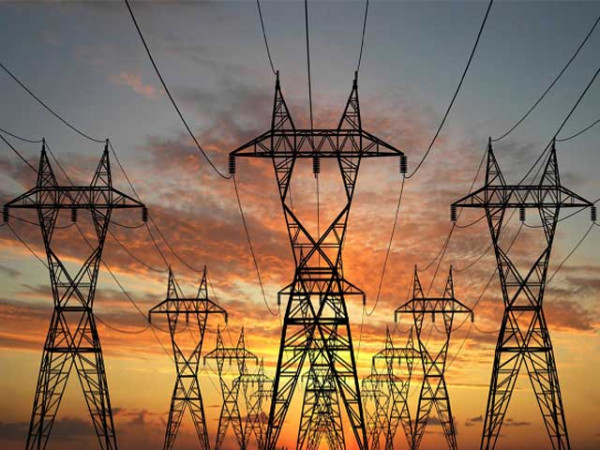
    NEPRA seeks Rs34bn recovery from power consumers as industrial sector opposes tariff hike

    ISLAMABAD: The federal government has proposed recovering around Rs34 billion from consumers of distribution companies (Discos) and K-Electric through the quarterly tariff adjustment (QTA) for April-June 2026, translating into an estimated increase of Rs1.34 per unit. The proposed adjustment has been attributed largely to higher capacity-related costs resulting from a decline in electricity consumption during the quarter. However, representatives of the industrial sector have strongly opposed the proposed increase, arguing that businesses are already facing high electricity costs and cannot absorb another financial burden. The National Electric Power Regulatory Authority (NEPRA) held a public hearing on Wednesday to examine the QTA request, during which representatives of industries, power distribution companies and the government presented their positions. Initially, the power distribution companies had requested an adjustment of Rs23.031 billion for the second quarter of fiscal year 2026 under the QTA mechanism. The amount was later revised upward to Rs33.778 billion. According to the figures presented before NEPRA, the largest component of the proposed adjustment is related to capacity charges, amounting to Rs46.280 billion. Variable operation and maintenance costs account for another Rs4.936 billion. The calculation also includes a negative adjustment of Rs13.517 billion related to Use of System Charges (UoSC) and the Market Operator Fee (MOF), which partially offsets the overall increase. Similarly, Rs3.040 billion has been included to account for the impact of transmission and distribution losses on monthly Fuel Charges Adjustments (FCA). A further negative adjustment of Rs21.175 billion has been made under the incremental consumption package. The distribution companies have also claimed Rs14.211 billion for costs relating to Small Power Producers (SPPs) and Captive Power Producers (CPPs) that they say remained unrecovered. Industrial sector voices concern During the hearing, industrial representatives raised strong objections to the proposed QTA adjustment, warning that another increase in electricity prices could further weaken the competitiveness of Pakistan’s manufacturing sector. Rehan Javed, Aamir Sheikh and Tanveer Barry conveyed their concerns to NEPRA officials in the presence of representatives from the Ministry of Energy and the distribution companies. The representatives argued that industries were already operating under considerable cost pressures and that any additional increase in electricity tariffs would raise production expenses and make it more difficult for local businesses to compete in domestic and international markets. Tanveer Barry, representing the Karachi Chamber of Commerce and Industry (KCCI), particularly questioned the sharp rise in capacity-related charges. According to Barry, capacity charges had increased from around Rs36 billion in the first quarter to more than Rs50 billion in the period under review. He said the increase could ultimately translate into a much larger financial burden for consumers. He estimated that the combined impact could place an additional burden of approximately Rs3.50 per unit on consumers, depending on the final adjustment approved by the regulator. Barry also pointed out that eight distribution companies had reported positive capacity charges, while three had recorded negative adjustments. He urged NEPRA to examine the calculations and underlying reasons for the variations before approving any additional burden on consumers. Lower electricity demand Officials of the Peshawar Electric Power Company (Pesco) told the hearing that electricity consumption had fallen by approximately five per cent during the period under review. They attributed much of the decline to weaker demand from domestic and commercial consumers. Increasing adoption of solar energy was also cited as one of the factors reducing demand from residential consumers. NEPRA Member Maqsood Anwar Khan questioned Pesco officials about whether load-shedding was also being carried out in areas where consumers regularly paid their electricity bills. The Pesco representatives acknowledged that load-shedding was taking place. Maqsood Anwar Khan observed that interruptions in electricity supply could themselves contribute to lower electricity sales, as consumers would naturally use less grid electricity when supply was unavailable. Solarisation becomes key point of debate The growing use of solar power also featured prominently during the hearing. The NEPRA member noted that the expansion of solar generation had provided relief to the national electricity system by reducing daytime demand from the grid. He observed that without the contribution of solar energy, pressure on the power system and the need for daytime load management could have been considerably greater. He further noted that increasing solarisation was shifting the pattern of load-shedding, with pressure becoming more visible during night-time hours when solar generation was unavailable. The NEPRA member also disagreed with the assertion that solarisation alone was responsible for a decline in electricity sales, maintaining that the impact of rooftop and distributed solar generation should be assessed in a broader context. Industry questions capacity payments Industrial representatives also questioned why consumers should continue to shoulder substantial capacity payments when many areas were still experiencing load-shedding. Barry argued that consumers were effectively being asked to pay for electricity generation capacity while not receiving uninterrupted power supply. He further raised concerns about capacity payments being made to older and relatively inefficient power plants. According to him, the under-utilisation of generating units was contributing to higher capacity-related costs and ultimately increasing the price of electricity for consumers. The industrial sector also questioned whether the dispatch of power plants was fully aligned with the Economic Merit Order (EMO), arguing that deviations from the merit order could contribute to unnecessary costs. The representatives called on NEPRA to undertake a detailed review of the QTA calculations before reaching a final decision. They urged the regulator to defer the proposed increase, warning that higher electricity costs would place additional pressure on industries, increase production expenses and potentially undermine Pakistan’s export competitiveness. NEPRA is expected to examine the claims and objections raised during the public hearing before determining the final quarterly tariff adjustment applicable to consumers.

  • |

    PDMA issues high alert as heavy monsoon rains claim lives, trigger flooding across country

    Lahore: The Provincial Disaster Management Authority (PDMA) has issued a 24-hour high alert as torrential monsoon rains continue to batter large parts of Pakistan, resulting in loss of life, widespread flooding and extensive damage to homes and infrastructure. In Punjab, at least eight people were killed and 37 others injured after roofs and walls collapsed during heavy rainfall. Four fatalities were reported in Gujranwala, while a child drowned in an underpass in Kamalia after being swept away by accumulated rainwater. Three more people lost their lives in separate roof collapse incidents in Pakpattan and Sahiwal. Torrential rains inundated streets, residential neighbourhoods and commercial areas in Sialkot, while low-lying areas of Faisalabad were submerged, major roads were flooded and traffic was severely disrupted. A woman and a young girl were also injured after the roof of a house collapsed in Faisalabad. Heavy showers were also reported in Wazirabad, Kamalia, Hafizabad, Pindi Bhattian, Bhera, Sargodha, Bhakkar, Layyah and Dera Ismail Khan, leaving roads and streets submerged. The Pakistan Meteorological Department (PMD) has warned of flash floods in hill torrents and seasonal streams, while urban flooding remains a significant concern in Gujranwala, Sialkot, Narowal, Okara and Sahiwal over the next 48 hours. According to official rainfall data, Gujranwala received 142 millimetres of rain, followed by Mandi Bahauddin with 133 millimetres, Narowal with 95 millimetres, Sialkot with 85 millimetres and Hafizabad with 70 millimetres. In Lahore, two people were killed and two others, including a woman and a young child, sustained injuries when the roof of a house collapsed in (Kot Babu Khan) Raiwind. The roof, reportedly constructed with wooden beams, gave way during the heavy downpour. Rainfall was also recorded across several areas of Lahore, including Lahore High Court, Kalma Chowk, Mall Road, Ring Road, Model Town, Hamdard Chowk, Gulshan Ravi and Samanabad, where the highest rainfall of 4.2 millimetres was recorded. In Khyber Pakhtunkhwa, at least 14 people have lost their lives and 19 others have been injured in rain-related incidents. The victims include six children and two women. According to the PDMA, six houses were completely destroyed, while 22 others sustained partial damage. Gilgit-Baltistan Chief Minister Amjad Hussain visited the National Disaster Management Authority (NDMA), where NDMA Chairman Lieutenant General Inam Haider briefed him on preparedness measures and the risks associated with the ongoing monsoon season. Authorities also reported low-level flooding in the Jhelum, Sutlej, Ravi and Chenab rivers, although water levels remain within their channels. PMD official Dr. Irfan Virk said the weather advisory issued for July 18-25 had already warned of widespread monsoon activity. He said heavy rainfall is expected to continue over the next two days, particularly in Mansehra, Upper and Lower Dir, Swat, Chitral, Battagram, Kohistan, Peshawar, Swabi, Mardan, Kurram, Kohat, Karak and Dera Ismail Khan. Officials said the current weather system is expected to persist over central Pakistan for another two days before gradually weakening. Citizens have been advised to remain vigilant, avoid unnecessary travel to flood-prone areas and follow official safety advisories due to the continued risk of flooding, structural collapses and other rain-related hazards.


  • | | | |

    Iran targets US bases across Gulf

    The conflict between Iran and the United States intensified on Wednesday after Iran claimed it carried out a new wave of drone attacks on US military bases in Jordan, Bahrain and Kuwait. The latest attacks marked another major escalation in the ongoing regional conflict that has continued for months. Iranian military officials said attack drones targeted Al-Azraq Air Base in Jordan, Sheikh Isa Air Base in Bahrain and Camp Doha in Kuwait. According to Iranian authorities, the strikes focused on military warehouses, logistics facilities, aircraft maintenance centers and ammunition depots used by US forces. Jordan confirmed that its air defense systems intercepted several missiles and drones after they entered the country’s airspace. Officials said four missiles were destroyed while two landed in remote desert areas. No casualties or property damage were reported. Air raid sirens also sounded in Jordan’s southern port city of Aqaba. Videos circulating on social media showed smoke rising over the area. Authorities urged residents to remain alert but confirmed that the situation was under control. Bahrain’s military said its air defense systems successfully intercepted several incoming aerial threats after warning sirens were activated across the country. Officials did not report any casualties or major damage. Iran also claimed it launched a large number of drones against Camp Doha in Kuwait. Iranian media said the attack targeted US ammunition storage sites and military logistics equipment. Kuwait had not issued an official response at the time of reporting. The latest attacks came only a day after Iran launched missile strikes against US-linked military facilities in Jordan and Bahrain, increasing fears that the conflict could spread further across the Gulf region. Meanwhile, US Secretary of State Marco Rubio said Washington remains prepared to negotiate with Iran if Tehran shows genuine willingness to engage in serious talks. Speaking during a regional meeting in Manila, Rubio said the United States continues to support diplomacy but believes Iran is not currently committed to meaningful negotiations. He warned that Iran must not be allowed to threaten international shipping through the Strait of Hormuz. Rubio said any attempt to control one of the world’s busiest shipping routes would create a dangerous precedent and threaten global trade. The security situation has already affected international energy markets. Global oil prices climbed again as fears grew over possible disruptions to oil supplies from the Gulf. Brent crude traded above $91 per barrel, while fuel prices also increased in international markets. The crisis worsened after Yemen’s Houthi movement announced a naval blockade targeting Saudi Arabia. The move forced several oil tankers carrying Saudi crude to change their routes in the Red Sea because of growing security concerns. French shipping company CMA CGM announced an emergency surcharge on cargo shipments starting August 1. The company said the worsening security situation around the Strait of Hormuz has significantly increased fuel and transportation costs. At the same time, US forces carried out another round of airstrikes inside Iran. American military officials said the strikes targeted command centers, drone storage facilities, aircraft hangars, logistics sites and maritime capabilities. The operation marked the 11th consecutive night of US military attacks. Iranian media reported explosions in Tehran, Bushehr, Chabahar, Konarak and parts of Ilam province. Officials said a missile strike damaged an electrical substation supplying power to the Bushehr nuclear power plant. Electricity was restored after several hours, and authorities reported no casualties. US President Donald Trump said 18 American service members have been killed since the conflict began, including four who died in recent Iranian attacks on US military bases in Jordan and Iraq. He said the United States would continue protecting its forces and allies in the region. Iran also claimed it targeted infrastructure linked to a major American technology company operating in Bahrain. However, the claim has not been independently verified. The conflict began in late February following US and Israeli strikes on Iran. Since then, military operations have expanded across several countries in the Middle East. Despite ongoing mediation efforts by regional countries, including Pakistan, no ceasefire agreement has been reached

  • | | | |

    Trump says Hormuz reopening near, warns Iran of consequences

    US President Donald Trump has said the Strait of Hormuz could reopen “very soon” as diplomatic efforts with Iran continue, while warning that Tehran would face a strong military response if negotiations fail. Speaking during an interview with Fox News, Trump expressed optimism about the ongoing talks, saying discussions had made significant progress. He claimed Iranian representatives had requested negotiations at a time when the United States was preparing for a large-scale military operation. According to Trump, Washington agreed to engage in dialogue after receiving signals from Tehran that it was willing to negotiate. He stressed that the United States remains committed to preventing Iran from acquiring nuclear weapons and said abandoning the talks would have serious consequences. The US president said negotiators spent the entire day in discussions and described the atmosphere as positive. He added that a successful agreement could help restore normal shipping through the Strait of Hormuz, one of the world’s most important energy routes. Trump also suggested that reopening the strategic waterway would ease pressure on global energy markets. He said lower oil prices could eventually translate into cheaper fuel costs for consumers and urged energy companies to reduce gasoline prices if market conditions improve. Speaking later to reporters in California, Trump said developments with Iran were moving in the right direction and indicated that greater clarity on the negotiations could emerge within the next 48 hours. Diplomatic efforts are reportedly being supported by regional mediators, including Oman and Qatar. Discussions are focused on restoring safe maritime navigation through the Strait of Hormuz while reducing tensions between Washington and Tehran. However, Iranian officials have maintained that progress depends on an end to US threats and continued respect for Iran’s sovereignty. The Strait of Hormuz is a vital global shipping lane through which a significant share of the world’s oil and liquefied natural gas exports passes. Any disruption to traffic through the waterway has immediate consequences for international energy markets and global trade. Financial markets reacted positively to reports of progress in the negotiations. Oil prices declined while Asian stock markets advanced on expectations that a diplomatic breakthrough could reduce regional tensions and restore uninterrupted shipping. Meanwhile, reports from Israel indicated growing concern over Washington’s diplomatic approach. Some Israeli officials reportedly believe the United States is prioritising a negotiated settlement with Iran, although no official Israeli government statement has confirmed those claims.

  • | |

    Rain fails to dampen Khalistan referendum turnout …

    INDIANAPOLIS: A large number of members of the Sikh community participated in a Khalistan referendum held in Indianapolis, Indiana, despite rainy weather, as organizers called for the creation of an independent Sikh state. The event was organized by Sikhs for Justice, with participants travelling from different cities and states across the United States. Organizers said voting continued despite the rain, with women and children also among those attending. Polling was scheduled to remain open until 6pm, after which organizers were expected to announce the final turnout. Pro-Khalistan slogans were raised during the event, while some participants also expressed support for Kashmir’s independence. Ghazala Habib, chairperson of Friends of Kashmir, addressed the gathering and said she was the only non-Sikh speaker to speak from the stage. Vikramjit Singh, a representative associated with the Khalistan Referendum Campaign, said the initiative was launched in 2020 but faced disruptions because of the COVID-19 pandemic. He said the first voting event under the campaign was held in London on October 31, 2021, attracting thousands of Sikh participants. According to Singh, subsequent voting events were organized in countries including the United Kingdom, Australia, Switzerland, Italy and Canada. He said Canada hosted three events in Toronto, two in Vancouver and another in Calgary, while the United States has held voting in San Francisco, Los Angeles, Washington, DC and now Indianapolis. Singh claimed that nearly two million Sikhs worldwide had participated in the campaign so far. However, the figure could not be independently verified. He accused the Indian government of committing historical injustices against Sikhs, citing the 1984 attack that damaged the Akal Takht and subsequent violence against the Sikh community, as well as what he described as the exploitation of Punjab’s economic resources. Singh said supporters of the movement wanted to pursue their demand through peaceful and democratic means. He called for a formal referendum in Punjab whose outcome, according to him, would have legal and political effect for all parties. Organizers said details of the Indianapolis vote and the next stage of the campaign would be announced after polling concludes. The campaign is expected to hold another referendum in Canada on October 18, although the specific city has not yet been confirmed.

  • | |

    Ayat Noor case sparks outrage after tragic Haripur discovery

    Haripur has been shaken by the tragic death of a young girl, Ayat Noor, whose disappearance ended in a heartbreaking discovery. The case has once again raised serious concerns about child safety and the growing fear among parents who worry about the dangers their children may face. According to the details shared about the case, Ayat Noor had been missing for 14 days. During that time, her father reportedly searched tirelessly for his daughter, hoping that she would be found alive and brought home safely. His search, however, ended in devastating circumstances when Ayat’s body was discovered in a well on the 15th day. Police reportedly confirmed that the child had been sexually assaulted and murdered. The horrifying nature of the case has left the local community deeply disturbed, while the death of such a young child has sparked renewed calls for stronger measures to protect children from abuse and violence. For Ayat’s family, the tragedy has brought unimaginable grief. Her father is reportedly struggling to come to terms with the loss of his daughter and is now seeking justice for the child. His pain has also become a symbol of the anguish experienced by families who lose loved ones to violent crimes. Police have arrested three suspects in connection with the case. According to the information circulating about the incident, the suspects have allegedly confessed to their involvement. Their reported demeanor after the arrests has further angered and disturbed people, many of whom believe that anyone responsible for such a brutal crime must face strict legal consequences. Ayat’s final journey has also drawn emotional attention from people in Haripur and beyond. Images and accounts surrounding her funeral have reportedly left the public heartbroken, particularly the sight of her grieving father seeking justice for his daughter. The case has once again brought the issue of child abuse into public discussion. Many parents are expressing fear and frustration, saying that repeated reports of violence against children have made them increasingly concerned about their children’s safety. For ordinary families, the thought that a child could become a victim of such a crime is deeply frightening. Social media users have also expressed anger and helplessness following the incident. One person compared Ayat’s case with another child abuse case, writing, “Aizal did not get justice in Karachi and now we have Ayat in Haripur.” Another user prayed for divine intervention, saying, “May Allah send a miracle to deal with these criminals.” Others turned their attention to society as a whole, questioning how such tragedies continue to happen and whether enough is being done to prevent crimes against children. One reaction read, “We are all wrong who can’t stop this.” The outrage surrounding Ayat Noor’s death reflects a wider demand for accountability and effective protection for children. People are now waiting for the investigation and legal proceedings to establish the full circumstances of the crime and determine responsibility. For Ayat’s grieving family, however, no punishment can undo the loss of their beloved child. What they seek now is justice, accountability and assurance that her death will not simply become another forgotten case. Her tragic story has left Haripur mourning and has once again forced society to confront the devastating consequences of child abuse and violence.

Leave a Reply

Your email address will not be published. Required fields are marked *