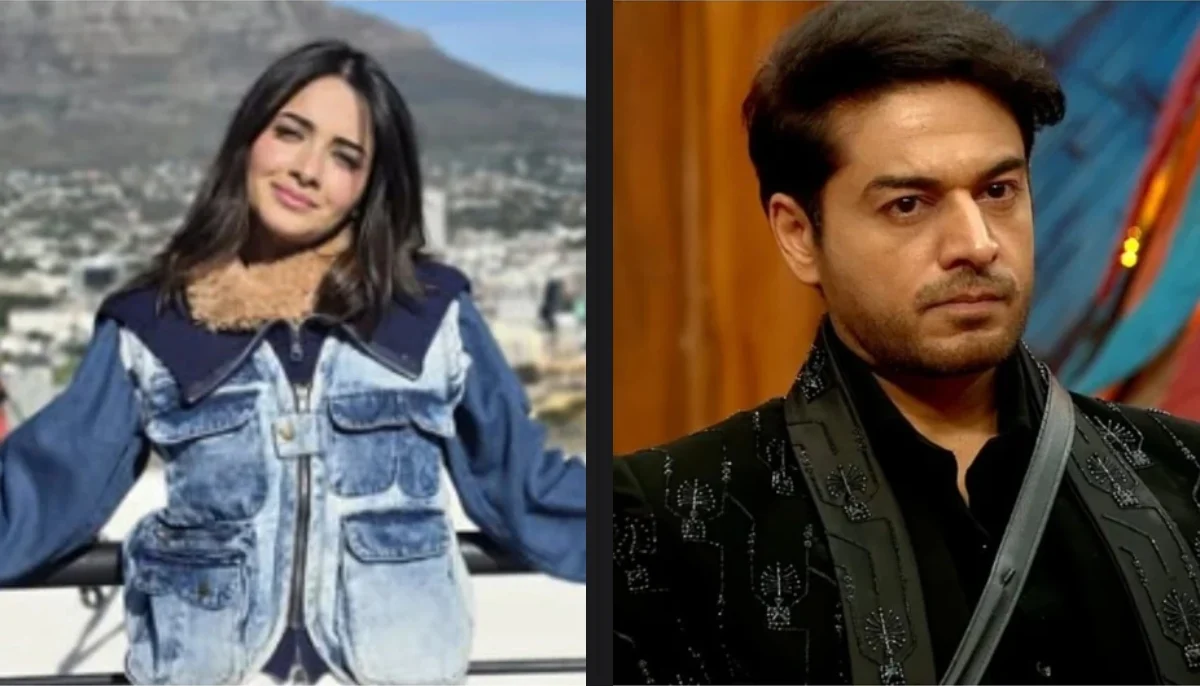
gaurav khanna accused
|

Gaurav Khanna accused of bullying by ‘Khatron Ke Khiladi 15’ contestant

Rohit Shetty is making his return as host of Khatron Ke Khiladi after a two-year break. The upcoming season is already generating buzz among fans of the stunt-based reality show.

According to the makers, this season will raise the bar for the entire franchise. Filming recently wrapped in Cape Town, South Africa. The team shot a fresh set of high-intensity action sequences during the schedule.

The new season will also come with an updated format. It will mix familiar faces with fresh contestants. The idea, according to the makers, is to keep the competition unpredictable right until the end.

Amid the excitement around the new season, one contestant has made some sharp comments about co-star Gaurav Khanna. “I think Gaurav Khanna is one person I would not want to meet,” she said.

She went on to accuse Khanna of repeatedly targeting her during tasks on the show. Her claim is that whenever a group of contestants failed at a challenge, Khanna would single her out more than the others. She recalled him making comments like calling her weak or accusing her of giving up too easily.

The contestant also reflected on how reality television can change people. She said the environment tends to bring out a different version of a person’s personality. Because of this, she admitted she is not entirely sure whether Khanna behaves the same way off camera as he does on the show.

Her comments have already started making rounds online. Fans and viewers have taken note, with many curious to see how this dynamic unfolds once the season begins airing.

Khatron Ke Khiladi has long been known for testing contestants both physically and mentally. Given the show’s demanding format, tensions between participants aren’t unusual. However, direct allegations like these tend to draw extra attention before a season even premieres.

With Rohit Shetty back in the host’s chair and the show promising bigger stunts this time around, all eyes are now on how the new season handles both its action sequences and the interpersonal dynamics between its contestants.

For now, fans will have to wait for the official premiere to see how these tensions, if any, play out on screen.

Similar Posts

  • | |

    Rain triggers flooding, power outages in twin citi…

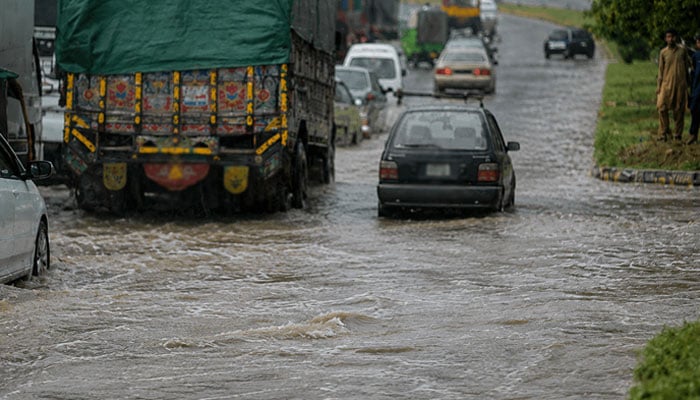
    Heavy rain, strong winds and thunderstorms lashed Rawalpindi and Islamabad on Saturday. The downpour disrupted routine life in several parts of the two cities. Several areas of Islamabad faced waterlogging after the heavy rainfall. Underpasses in the G-6 sector were filled with rainwater. The accumulation of water caused difficulties for motorists and pedestrians. The situation was also reported to be severe in Chatta Bakhtawar. Roads and streets were submerged under rainwater. Several streets gave the appearance of ponds. Rainwater also entered residential houses in the area, creating problems for residents. The heavy rain also affected electricity supply in different parts of Rawalpindi and Islamabad. Several areas experienced power disruptions as the weather conditions deteriorated. Rawalpindi authorities declared a rain emergency following the heavy downpour. The Water and Sanitation Agency (WASA) activated its teams to deal with the situation. Staff members were deployed to affected areas. Heavy machinery was also moved to different locations. The equipment was being used to remove accumulated rainwater and keep major roads and routes clear. The Pakistan Meteorological Department has forecast more rain in several parts of the country. Islamabad, Punjab, Khyber Pakhtunkhwa, northeastern Balochistan, Gilgit-Baltistan and Kashmir are expected to receive rain. The Met Office has warned that some areas may receive heavy rainfall. The intense rain could increase the risk of flooding in streams and rain-fed waterways. Authorities have also been advised to remain alert in vulnerable areas. Urban flooding may cause further disruption if heavy rain continues. Meanwhile, the water situation in the Indus River has also become a concern. Medium-level flooding has been reported at Kalabagh. Water inflow at Kalabagh was recorded at around 397,000 cusecs. The rising water level has increased pressure on river management authorities. Low-level flooding has also been reported at several major water reservoirs and barrages. These include Tarbela Dam, Chashma Barrage, Taunsa, Guddu and Sukkur Barrage. Despite the flooding at these locations, the overall situation in the country’s other rivers remains normal. The Flood Forecasting Division in Lahore said there was no major flood situation in the remaining rivers.

  • | |

    Islamabad set to become medical tourism hub

    The Special Investment Facilitation Council (SIFC) is accelerating plans to establish Pakistan’s first luxury medical tourism model centre in Islamabad, with the aim of capturing a greater share of the rapidly growing global medical tourism market. Pakistan is seeking to benefit from the global medical tourism industry, estimated to be worth around $144 billion, while the country currently accounts for only about 0.5% of the market. The initiative gained momentum after plastic and cosmetic surgeon Dr Muhammad Salman Khan approached the SIFC Secretariat seeking up to 25,000 square feet of land or a built-up facility for a five-star luxury medical centre with room for future expansion. In his proposal, Dr Khan said cosmetic surgery and dentistry together account for around 35% of global medical tourism activity. He argued that Pakistani specialists can provide international-standard services at significantly lower costs than those charged in countries such as Turkey, the United States and the United Kingdom. The SIFC subsequently convened a high-level meeting at its secretariat on August 5. Representatives from the Capital Development Authority (CDA), Jinnah Medical Complex and medical professionals participated in the meeting. According to the meeting minutes, Dr Salman presented a phased plan for the project. The initiative would initially introduce premium “Med Suites” in Islamabad, followed by a dedicated medical tourism centre and eventually the development of a comprehensive Islamabad Medical City. Participants identified several advantages that could help Pakistan compete in the international medical tourism sector. These include significantly lower treatment costs, a large pool of qualified medical specialists and a sizeable overseas Pakistani community that could form an initial customer base for the proposed services. The meeting also highlighted the distinction between aesthetic tourism and broader medical tourism. Officials agreed that establishing a dedicated luxury aesthetic tourism centre in the federal capital could help create the foundation for a new high-value industry. The proposed facility could attract thousands of international patients to Pakistan and generate valuable foreign exchange for the country. Islamabad was considered a suitable location because of its relatively secure environment, scenic surroundings and high-quality residential infrastructure. The proposed model would combine specialised medical services with a five-star hospitality experience for patients and their accompanying family members. The meeting concluded with several directives to move the proposal forward. The CDA was asked to arrange a follow-up meeting within a week involving Dr Salman Khan, the CDA chairman and other relevant stakeholders to examine the proposal in detail. Medical experts were also directed to prepare a comprehensive investment, commercial and financial feasibility study for the proposed project at the Jinnah Medical Complex. Separately, the SIFC was asked to arrange meetings between leading medical specialists and representatives of major five-star hotels in Islamabad. The discussions will assess commercial interest and examine the practical feasibility of developing dedicated medical tourism facilities. The project has now entered an initial implementation phase, with several government institutions involved in evaluating the proposal.

  • |

    Unesco reports 2.4 million Afghan girls barred from secondary education under Taliban rule

    Roughly 2.4 million Afghan girls have been systematically denied access to secondary education since the Taliban regained power in 2021, the United Nations Educational, Scientific and Cultural Organisation (Unesco) announced, urging an immediate end to the policy. The UN agency noted that the number of girls excluded from high school has grown by 200,000 over the past year and warned that the figure could reach nearly four million by 2030 if the restrictions remain in place. Afghanistan remains the only country in the world where female students are formally prohibited from attending school beyond the primary level. The current restrictions mark a stark reversal of educational progress achieved over the preceding two decades. In 2001, female enrolment was severely limited, but by 2021, nearly one million girls were actively attending secondary schools across the country. Beyond human rights concerns, Unesco highlighted the severe long-term economic fallout, estimating that the prohibition on female education and employment could cost the Afghan economy $9.6 billion (£7.5 billion) by 2066. The wider educational landscape in Afghanistan faces critical systemic strain. More than half of primary-school-aged children are out of school entirely, and over 90 per cent of 10-year-olds are unable to read basic text. Infrastructure deficits, including widespread shortages of clean drinking water, sanitation, and heating, alongside recurrent natural disasters continue to exacerbate the ongoing crisis.

  • | |

    ATC extends Mushtaq Ahmad’s remand by four d…

    An Anti-Terrorism Court (ATC) in Islamabad has extended the physical remand of former Jamaat-e-Islami senator Mushtaq Ahmad and his co-accused, Daniyal, by four more days in connection with a case linked to a protest over the situation in Azad Jammu and Kashmir (AJK). The two accused were produced before the court after completing an earlier three-day physical remand. During the hearing, the prosecution sought a 30-day remand, arguing that investigators still needed additional time to recover a vehicle and weapons allegedly connected to the case. According to prosecutors, the investigation remains incomplete because the alleged recoveries have not yet been made. They requested extended custody to continue the inquiry. After hearing arguments from both sides, the court rejected the request for a 30-day remand and instead approved a four-day extension in police custody. The case was registered at Islamabad’s Shalimar Police Station under charges related to a protest concerning recent unrest in Azad Jammu and Kashmir. Mushtaq Ahmad’s legal team has previously claimed that he was detained after attempting to enter AJK to express solidarity with people affected by recent violence in the region. They alleged he was stopped by security personnel at Azad Pattan Bridge, denied entry into AJK and later taken into custody by Punjab Police while returning to Islamabad. Following his release from the earlier detention, Mushtaq Ahmad announced plans to organise a peaceful gathering in Islamabad to express solidarity with the people of Kashmir. He invited political activists, students, journalists and members of the Kashmiri community to participate in the event. The case comes amid heightened political tensions following recent protests in Azad Jammu and Kashmir, where clashes reportedly resulted in casualties and injuries, drawing criticism from several political parties and human rights groups.

  • | |

    Pakistan’s military tightens grip on Islamis…

    Munir’s family background feeds into this shift as well. He is the son of an imam and considers himself a devout, conservative Muslim, and religious identity remains deeply woven into Pakistan’s state institutions. Even so, he has pushed the country toward international engagement through cryptocurrency partnerships, foreign investment deals, a mediating role in the conflict between the United States and Iran, and a mutual defence pact with Saudi Arabia. Data shared with a foreign news agency by the Armed Conflict Location and Event Data Project, a group that tracks conflict incidents worldwide, shows the scale of the shift. Pakistan averaged more than seven blasphemy related riots or attacks annually between 2021 and 2024, but recorded only one such incident over the past twelve months. Economic pressure appears to have played a significant role in prompting the crackdown. Two Pakistani government sources said officials grew alarmed during the summer of 2025 that rising hostility from fundamentalist groups toward France and other European countries threatened to jeopardize a European Union duty waiver covering Pakistani exports. Nearly a third of Pakistan’s total exports go to the EU, and losing that preferential access could have dealt a severe blow to the national economy. Neither the European Commission nor Pakistan’s commerce ministry responded to requests for comment on the matter. Washington has added its own pressure over religious freedom concerns. The US Commission on International Religious Freedom, a government watchdog, recommended last year that Pakistan be placed back on a list of countries of particular concern due to its blasphemy laws, a designation Islamabad has firmly rejected. Analyst Abdul Basit of Singapore’s S. Rajaratnam School of International Studies said worsening insurgent violence in Balochistan and Khyber Pakhtunkhwa, Pakistan’s two most mineral rich provinces, likely added urgency to Munir’s campaign, particularly since he has pitched foreign investment in the country’s mining sector to American officials over the past year. Basit noted that religious groups have lost favor within the state’s priorities, though he cautioned that the militias driving these regional insurgencies are not formally tied to the newly banned Islamist organizations, even if both draw recruits from the same pool of young, radicalized men. Elizabeth Threlkeld, who directs the Stimson Center’s South Asia program, said the open question going forward is whether Pakistan can sustain this level of focus over time. Crackdown targets country’s largest fundamentalist movement The largest of the groups swept up in the crackdown, Tehreek e Labbaik Pakistan, built its identity around the slogan “Death to blasphemers” before authorities banned it late last year. Many of its leaders now sit in jail, its mosques have been sealed shut and its financial accounts frozen. A previously undisclosed government document that laid the groundwork for the ban argued the organization had become a serious threat to Pakistan by damaging both domestic stability and the country’s standing internationally. A spokesperson for the group pointed to a statement it issued last year describing the ban as illegal and unconstitutional. The move against Tehreek e Labbaik follows earlier crackdowns on groups such as Lashkar e Taiba and Jaish e Muhammad, which Pakistan pursued under pressure from the Financial Action Task Force, the international body that monitors terrorism financing. Basit linked the newest crackdown to a period of internal reflection within Pakistan over its historical backing of the Afghan Taliban, whom Islamabad now blames for stoking Islamist insurgencies against the Pakistani state from across the border. The Taliban government in Kabul has dismissed that accusation as baseless, and a spokesperson for its foreign ministry declined to comment further, describing Pakistan’s crackdown as an internal matter. For Pakistan’s Christian, Shia and Ahmadi communities, the change in atmosphere has been dramatic. In the past, suspects in blasphemy related killings, including police officers, were sometimes greeted with rose petals or celebratory receptions, and individuals accused of burning churches or minority mosques often received public praise. Blasphemy remains a capital offense under Pakistani law, and even a rumor of an accusation has historically been enough to spark riots or lynchings. Human rights organizations say victims’ families have rarely obtained justice, since judges and lawyers have often been too frightened to take on such cases. Officer Malik said everyone who confronted the crowd during last month’s incident in Karachi felt genuine fear. The Christian family targeted that day was eventually moved to safety, and an initial investigation has since found the accusations against them to be false. Group’s military links trace back a decade Tehreek e Labbaik formed in 2015 while its founder was imprisoned for shooting and killing a Pakistani provincial governor in 2011 over his support for a Christian woman accused of blasphemy. That gunman, a former police bodyguard, was later convicted and executed months after the group’s founding. Analysts have long suspected the group’s creation received at least tacit support from Pakistan’s military establishment, including its intelligence services, as a tool to keep civilian governments and mainstream political parties in check. Following violent riots led by the group in 2017, then army chief General Qamar Javed Bajwa referred to its protesters as the country’s own people. Pakistan’s Supreme Court later ordered the military and intelligence agencies to stay out of politics but stopped short of directly tying them to the organization. Analysts and former officials say the effects of years of tolerance for the group will not disappear simply because of a ban, and that the shock felt by its supporters could still trigger backlash. Ihsan Ghani, who served as Pakistan’s counter terrorism chief during the 2017 riots, said he worries the group could resurface at full strength if its usefulness to the state changes again. He compared decades of state backed nurturing of the movement to something that cannot simply be switched on and off at will. Within Pakistan’s minority communities, the sudden shift still feels fragile. One of the Christian women rescued during last month’s incident in Karachi said she and her family are now physically safe, but admitted the fear has not fully faded.

  • |

    Trump saves toddler from stage tumble, can’t resist a Biden dig

    President Donald Trump found himself in a viral moment after a sweet interaction with a toddler took an unexpected turn. What started as a heartwarming scene at a Nevada event ended with a jab at former President Joe Biden. The moment unfolded when Trump invited Sandra and Brad, a couple from Las Vegas, onstage along with their two children. They were there to help promote his “no tax on tips” plan and his Trump Accounts proposal. As Sandra began addressing the crowd, their toddler suddenly bolted toward the edge of the stage. Trump reacted quickly, reaching out and pulling the child back to safety before anything could go wrong. Once the child was secure, Trump did not miss the chance for a joke. He remarked that he did not want the boy ending up like Biden and falling off the stage, a line that got the audience laughing. That was not the only memorable part of the appearance. Later, Sandra told Trump her son had something he wanted to say to him. Trump turned his full attention to the boy, clearly enjoying the moment. According to Fox News, the toddler leaned into the microphone and thanked Trump for his “Trump Account.” The crowd responded with loud applause. It was Trump’s Biden joke, though, that really took off online. Clips of the moment spread fast across social media, drawing a mix of reactions from viewers. Some found it genuinely funny. One user called it the funniest thing they’d heard all year, praising Trump’s sense of humour. Another agreed, saying the president has real comedic timing. Not everyone was amused, though. One critic questioned why Trump seems so fixated on bringing up Biden and Obama at nearly every public appearance. Whether people found it charming or grating, the moment has kept Trump in the headlines yet again, this time for something a little lighter than usual.

Leave a Reply

Your email address will not be published. Required fields are marked *