king takes badly

HM The King Takes Badly Burned Husky ‘Molly’ Under His Royal Patronage

BANGKOK – In a remarkable turn of events that has captured the nation’s attention, His Majesty the King has granted royal patronage to a severely burned Siberian Husky named Molly, accepting the two-year-old female as a patient under his care following a horrific act of animal cruelty in Songkhla province. The Royal Secretary is scheduled to transport the injured dog to Bangkok this Friday to receive advanced medical treatment, according to an announcement from the Watchdog Thailand Foundation.

Their Royal Majesties The King and Queen of Thailand Visit Phuket for King’s Cup Regatta

Molly’s ordeal began on the morning of February 12 when she disappeared from her home in tambon Phawong of Muang district. Her owner, identified only as Somchai, launched an urgent online appeal asking the public to help locate his beloved pet. The search concluded tragically three days later on February 15 when someone contacted him about a dog matching Molly’s description found in devastating condition near a house in the area. The animal had sustained severe burns covering most of her body, with evidence suggesting someone had deliberately doused her with petrol and set her on fire.

A subsequent examination at a local veterinary clinic revealed the full horror of her injuries, with medical staff determining she had suffered severe level-5 burns. The damage extended deep into her muscle tissue, and by the time she was discovered, her wounds had already turned septic, creating a life-threatening medical emergency. Molly was initially transferred to the animal hospital at Prince of Songkhla University, where veterinarians worked tirelessly to stabilize her condition.

As of Thursday, Molly remained in critical condition, battling sepsis and requiring blood transfusions alongside constant, vigilant medical monitoring. The severity of her injuries and the apparent deliberate nature of the attack sparked outrage across social media platforms, with countless users calling for harsh punishment for the perpetrator to serve as a deterrent against such acts of cruelty. Somchai has filed a formal complaint with local police, who have launched an investigation to identify and prosecute those responsible for the attack.

Celebrations Held for His Majesty the King’s Birthday Anniversary

The announcement of royal patronage brought an emotional response from Molly’s grateful owner, who took to Facebook to express his profound appreciation. “It is an immeasurable royal benevolence, beyond anything we could ever repay. Long live His Majesty the King,” he wrote, capturing the sentiments of animal lovers across Thailand who have followed Molly’s story with concern and hope for her recovery. The royal intervention ensures Molly will now receive the highest standard of medical care available as she continues her fight for survival.

-Thailand News (TN)
Similar Posts

  • Thailand Steps Up Nipah Virus Watch, No Domestic Cases Found

    BANGKOK – Thailand is intensifying health screenings for international arrivals following reports of a Nipah virus outbreak in India, though no cases have been detected within the kingdom. Prime Minister Anutin Charnvirakul announced on Sunday, January 25, 2026, that enhanced precautionary measures are being implemented due to the absence of a cure or vaccine for […]

  • Influencer Pimrypie Takes 10 Million Baht Loss on Durian Sales, Sparks National Debate

    BANGKOK — Popular Bangkok-based influencer Pimradaporn “Pimrypie” Benjawattanapat has accepted losses of more than 10 million baht after staging a 100-baht durian sales campaign aimed at helping Thai farmers clear excess supply, an initiative that has sparked both praise and sharp criticism while igniting a parliamentary debate over agricultural pricing. A Breakthrough Skincare from Young […]

  • | |

    Khawaja Asif says Mir Raza case exposes compromise…

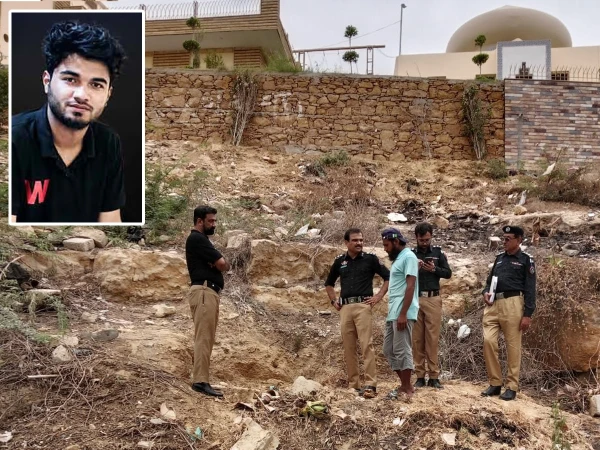
    Defence Minister Khawaja Asif has criticised the Sindh government over the investigation into the Mir Raza case. He said the developments emerging from the case suggest that the entire system had been compromised. In a social media post, Asif said continued attention was needed to ensure that the matter was investigated properly. He warned that any previous attempts to settle or cover up the issue should not be repeated. The defence minister also called for those who allegedly tried to conceal facts in the case to be exposed. His remarks came as questions continued to be raised over the handling of the Mir Raza case. The case has attracted attention because of conflicting information and concerns about the progress of the investigation. Meanwhile, the Sindh government has decided to establish a judicial commission to investigate the Mir Raza murder case. Sindh Home Minister Zia Lanjar said the provincial government wanted justice for Mir Raza’s family. He said a new committee had also been formed to examine the matter. Lanjar said the authorities would allow the judicial commission or the court to determine how conflicting reports should be dealt with. The government’s decision to form a judicial commission is expected to provide another forum for examining the circumstances surrounding the case. It may also help clarify conflicting accounts and determine responsibility based on the available evidence.

  • Thai Doctor Struck By A Intoxicated British Motorcyclist In Koh Phangan Dies

    SURAT THANI, Thailand — A prominent Thai medical specialist has died after sustaining severe brain injuries in a hit-and-run collision on Pha-ngan Island, allegedly caused by a heavily intoxicated British motorcyclist. Dr. Theerasuk Kawamatawong, 53, passed away following a prolonged coma, marking a tragic conclusion to the incident that occurred last month in Surat Thani […]

  • |

    Google’s $15bn India data centre faces green bac…

    VISAKHAPATNAM: Google’s ambitious $15 billion data centre investment in India is facing mounting resistance from environmental groups, residents and legal activists, turning what was expected to be a landmark technology project into one of the country’s most closely watched development disputes. The massive project, being developed in partnership with Indian billionaire Gautam Adani’s group, is under construction in Tarluvada near the coastal city of Visakhapatnam in Andhra Pradesh. Touted as Google’s largest-ever investment in India, the facility is expected to strengthen the company’s cloud computing and artificial intelligence infrastructure while generating an estimated 188,000 jobs. However, critics argue that the economic benefits could come at a significant environmental cost. Water concerns spark protests In recent weeks, environmental activists have intensified protests against the project, warning that the data centre could worsen water shortages in a city already struggling to meet daily demand. Demonstrators, including schoolchildren, have marched through Visakhapatnam carrying banners reading “We Cannot Drink DATA”, while others painted handcuffs over Google’s logo to symbolise what they describe as the environmental consequences of unchecked technological expansion. At a public awareness gathering attended by local campaigners, members of the environmental organisation Green Visakha outlined plans for neighbourhood campaigns and beach demonstrations aimed at increasing public awareness. Raja Rama Mohan Roy, founder of Green Visakha, argued that development should never come at the expense of local communities. “Development should not be at the cost of the livelihood of the people,” Roy said, pointing to government figures showing that Visakhapatnam currently receives around 410 million litres of water daily, despite requiring approximately 480 million litres. Water rationing has become a regular feature of life for the city’s 2.5 million residents, raising concerns about future demand. Legal battle gains momentum Opposition to the project has now reached the courts. India’s Andhra Pradesh High Court this week directed the state government to respond to allegations raised by environmental group Jal Biradari (Water Community), which claims the project could place additional pressure on regional water resources. The court is scheduled to hear the public interest litigation again on August 24. Meanwhile, three additional petitions have been filed before India’s National Green Tribunal by the Human Rights Forum. The petitioners argue that authorities approved the project without conducting sufficient environmental assessments regarding water usage and ecological impacts. Environmental groups are questioning the government’s reported commitment to provide guaranteed water supplies for the project over the next two decades while many residents continue experiencing periodic shortages. Wildlife under threat? Another major concern centres on the project’s location. According to campaigners, the construction site lies only about 860 metres from the Kambalakonda Wildlife Sanctuary, a protected forest known for its biodiversity and home to species including leopards, pangolins, spotted deer and numerous bird species. Activists fear continuous construction, heavy machinery and increased industrial activity could disturb wildlife through noise, habitat disruption and increased human presence. The Andhra Pradesh government, however, insists the development complies with all legal requirements and maintains that the sanctuary is located at a safe distance under existing regulations. Google also said it intends to minimise environmental impacts by installing sound-dampening technologies designed to reduce noise pollution around the facility. Government and Google defend project Despite growing criticism, Andhra Pradesh authorities continue to describe the project as transformational for the state’s economy. Officials rejected accusations that environmental clearances were rushed or that local drinking water resources would be diverted for industrial use. In a statement, the state government acknowledged citizens’ right to protest but said many claims circulating about the project were “incorrect and misleading.” It added that authorities remain willing to examine legitimate concerns and provide clarification where necessary. Google has similarly defended the project, stating that construction will comply fully with Indian environmental regulations. The company said it plans to use advanced air-cooling technology, significantly reducing dependence on water compared with conventional cooling systems used by many data centres. Google also stressed that sustainability remains a key part of its global operations and that the Visakhapatnam facility would be designed to protect local water resources while supporting India’s rapidly expanding digital economy. Global debate over data centres The controversy reflects a broader international debate over the environmental footprint of modern data centres. As demand for artificial intelligence, cloud computing and digital services continues to surge, technology companies worldwide are investing billions in new infrastructure. Yet these facilities often require enormous amounts of electricity and cooling, placing additional pressure on local water and power supplies. Similar concerns have emerged across the United States and Europe, where communities have challenged large-scale data centre developments over resource consumption, environmental sustainability and their impact on nearby residents. For Google, the Andhra Pradesh project represents a major strategic investment in one of its fastest-growing markets. But with legal challenges pending and public protests gathering momentum, the future of the project may depend not only on engineering and investment, but also on the company’s ability to convince local communities that technological progress can coexist with environmental protection.

  • | |

    Unforgiving July’s heatwaves in the U.S.

    According to a landmark report released by the National Oceanic and Atmospheric Administration (NOAA), the United States just experienced the single hottest month in modern history. Throughout July, atmospheric heat domes locked across vast stretches of the country. The heatwaves drove mean temperatures in the Lower 48 states to an unprecedented average of 76.9 degrees Fahrenheit (24.9 degrees Celsius). This mark sits an incredible 3.3 degrees Fahrenheit above the 20th-century norm, effectively surpassing the legendary heatwaves of July 1936 during the Dust Bowl and July 2012. The data underscores an extraordinary, nationwide thermal surge. Record-breaking conditions spared virtually no region, with all 48 contiguous states logging temperatures well above their long-term monthly averages. States in the Mountain West, the Southwest, the Northern Plains, and the Southeast bore the brunt of the extreme conditions. Across the country, over 600 monthly high-temperature records fell or were matched. 13 individual states logged a July that ranked among their top five hottest ever recorded. Wyoming stood out at the epicenter of the continental heat peak, registering its warmest month on record with temperatures soaring 5.1 degrees Fahrenheit higher than historical baselines. While intense afternoon conditions pushed daytime maximum temperatures to an average of 89.5 degrees Fahrenheit, ranking as the sixth-warmest daytime average in 132 years of record-keeping. Meteorologists emphasize that nighttime behavior represented the most dangerous aspect of this climatic event. Overnights offered almost no thermal relief, as minimum temperatures averaged 64.2 degrees Fahrenheit across the nation. This smashed the previous overnight low-temperature record set in July 2022 by a staggering 0.7 degrees Fahrenheit. Climatologists point out that uncomfortably warm nights are one of the most definitive signatures of human-driven climate change. High concentrations of greenhouse gases trap outgoing longwave radiation close to the Earth’s surface long after sunset. The physiological and infrastructural consequences of these elevated nighttime floors were felt severely across North America. When overnight temperatures fail to cool sufficiently, human bodies, livestock, and urban infrastructure lose their ability to recover from daytime heat stress. The sustained thermal stress strained municipal power grids, triggered localized water delivery alerts, and contributed to scores of heat-related illnesses and hospitalizations. In several western jurisdictions, compounding factors such as lingering droughts and severe heat domes fueled destructive wildfires, while critical water reservoirs like Lake Mead dipped toward critical levels.   Interestingly, temperature patterns across non-contiguous states diverged sharply from the mainland. Hawaii recorded near-average daytime conditions while Alaska experienced its coolest July since 2008, accompanied by record rainfall in regions around Anchorage. However, across the Lower 48, the pattern remained stubbornly hot and generally dry. As federal forecasters look ahead, climate projections suggest that the thermal pressure will persist, with above-average temperatures expected to hold firm across much of the central and southern United States well into late summer.

Leave a Reply

Your email address will not be published. Required fields are marked *