iran defiant strait
| |

Iran defiant on strait as Trump tells Americans to accept high gas prices

NEW YORK, US – Iran called on the US to accept defeat while President Donald Trump blasted Iran as “evil” and urged Americans to brace for continued high fuel prices.

The comments suggested the warring parties remained far apart, with progress toward peace talks and oil tanker traffic through the strategic Strait of Hormuz waterway both halted.

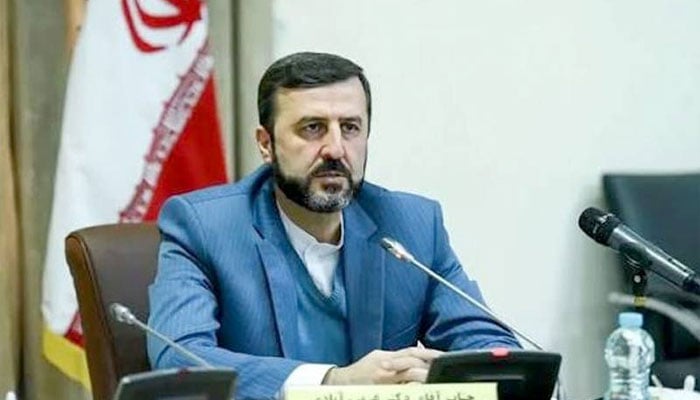
“This strait will be opened and closed only under Iran’s command, and so long as you do not accept the reality of defeat and stop indulging in fantasies, Iran will continue to enforce the blockade,” Iran’s Deputy Foreign Minister Kazem Gharibabadi said in a post on X early Saturday, showing little urgency toward restoring prewar trade.

“The Strait of Hormuz cannot be seized by a tweet or an aircraft carrier, by issuing an order or by delivering an election speech,” he said.

One out of every five barrels of the world’s oil exports passed through the strait before the US and Israel launched the war on February 28.

Trump on Friday urged Americans to accept slightly higher gasoline prices while the conflict with Iran continues.

At a political rally in Garden City, New York, Trump said paying “a tiny little bit more for your gasoline” is worth the cost of ensuring “a very evil country” could not have a nuclear weapon, one of the president’s stated rationales for the war.

In a trend that has fueled inflation and disappointed voters, the average U.S. price of a gallon of gasoline was about $4.08 on Friday, according to the American Automobile Association. That’s up 29% from $3.16 a year earlier.

Only two vessels passed through the Strait of Hormuz on Friday, according to analysis from ship-tracking firm Kpler: a grain ship entering Iranian waters and an empty dry bulk ship going the other direction. A separate empty liquefied petroleum products tanker was sailing into the Gulf via the strait, the data showed. There were no crude oil shipments visible.

Some ships may cross the strait undetected with their transponders off, but the figures are nowhere near the more than 130 ships that traversed it daily before the war.

Those that dare navigate the strait without Iranian permission risk missile or drone strikes. The United Arab Emirates’ Abu Dhabi National Oil Company said two of its vessels were attacked transiting the strait on Thursday evening, then the Emirati state news agency WAM reported another vessel came under attack on Friday.

Iran labels its enforcement of strait traffic a blockade, while the U.S. uses the same term for its threat against Iranian vessels leaving their ports.

“What we’re doing is a great service for the world, not only for ourselves … and we’re really doing a great job,” Trump said, adding that a 260-day deployment by a U.S. aircraft carrier supporting the war effort was “not nearly long enough.”

With a ⁠tentative June deal to end the war in tatters, there was no sign that the U.S. or Iran planned to resume peace talks.

Iranian Foreign Minister Abbas Araqchi said no decision has yet been made to restart negotiations with the United States, the ​Iranian Student News Agency reported on Saturday. Mediators Qatar and Pakistan were in contact with Iran and exchanging messages, but this did not amount to negotiations, the agency said.

Economic toll

Higher fuel prices have collided with a Trump campaign promise to lower energy costs, and Democrats are seeking to make economic fallout of the Iran war an issue in the November midterm elections.

The virtual closure of the strait helped raise crude oil futures another $1 a barrel on Friday. Benchmark Brent LCOc1 and West Texas Intermediate CLc1 futures were on track for weekly gains of 6.0% and 5.4%, respectively.

Gharibabadi said Tehran would not be intimidated by threats or a show of force. But there were signs of an economic toll on Iran.

In remarks broadcast on state television, Iranian President Masoud Pezeshkian blamed high inflation on a U.S. blockade of Iranian ports and sanctions on Iran’s oil exports.

Trump and Treasury Secretary Scott Bessent each pledged to inflict more financial damage on Iran. Bessent told Newsmax’s “Rob Schmitt Tonight” program on Thursday that announcements of more measures against Iran were coming next week.

The latest attacks by Yemen’s Iran-backed Houthis renewed concerns about a widening regional war. Yemen’s internationally recognized government said the Houthis fired six ballistic missiles at the Red Sea port of Mocha on Friday, killing four civilians.

Separately, the Houthi-run SABA news agency cited a military source as saying the group had targeted an Aramco facility in the Saudi city of Najran with a drone. – Rappler.com

Similar Posts

  • |

    Cross-party US legislators introduce resolution demanding prompt elections in Caracas

    A bipartisan group of US senators has introduced a resolution urging the swift organisation of free, transparent elections in Venezuela. The measure comes seven months after the American intervention that removed former President Nicolas Maduro and placed Vice President Delcy Rodriguez in charge as acting president. Spearheaded by Republican Senator Ted Cruz and Democratic Senator Jeanne Shaheen, the proposal demands the immediate release of political detainees and measures to protect political figures from violence or state retribution. The resolution highlights growing Congressional dissatisfaction with the current diplomatic stance of the White House, which lawmakers argue has failed to move the interim administration in Caracas toward establishing democratic processes. The action arrives as formal talks between the interim government and select opposition factions prepare to open without the inclusion of prominent opposition leader and Nobel Peace Prize laureate Maria Corina Machado. Machado, currently living in exile following post-election repression, has signaled intentions to return home to assist with national recovery following severe earthquakes, despite reluctance from Washington officials who argue her return could destabilise the fragile political environment. Senatorial leadership emphasised that restoring elected governance remains vital to regional security, cross-border cooperation, and international democratic norms.

  • | | | |

    Iran claims destruction of three US F-35 jets

    The conflict between Iran and the United States intensified on Thursday after Iran’s Islamic Revolutionary Guard Corps (IRGC) claimed it destroyed three US F-35 fighter jets during a missile attack on Jordan’s al-Azraq airbase, a key facility used by American forces. According to the IRGC, the attack was carried out in retaliation for a US strike on Iran’s Qeshm Island that allegedly killed members of a civilian family. Iranian officials claimed several ballistic missiles struck aircraft maintenance facilities at the base, destroying three F-35 fighter jets and severely damaging three others. The IRGC also alleged that several US military personnel and technical staff were killed in the attack. No independent confirmation of these claims has been provided by US or Jordanian authorities. The latest exchange came after the United States launched fresh overnight strikes targeting multiple locations in Iran, including Bushehr, Qeshm, Bandar Abbas, Kish and Abadan. Iranian media reported that residential areas on Qeshm Island were hit, killing three members of one family and injuring two children. Iran’s Revolutionary Guards also announced that three of their personnel were killed in separate US missile attacks, vowing retaliation against what they described as American aggression. Meanwhile, Jordan said its air defence systems intercepted and destroyed five Iranian missiles heading toward its territory, marking the fourth consecutive day of missile interceptions. Authorities reported no casualties or damage. Iraq also sought to distance itself from the growing conflict. A military spokesperson stated there was no evidence that recent regional attacks had been launched from Iraqi territory, while stressing that only official security forces would be responsible for the country’s defence and security. Iran’s Foreign Ministry said discussions with Omani officials aimed at reducing tensions remain ongoing in Tehran. Iranian officials blamed the continued closure of the Strait of Hormuz and disruptions to global shipping on US and Israeli military operations, insisting that foreign military actions had created instability in one of the world’s most important energy corridors. The IRGC also claimed two oil tankers attempting to pass through the Strait of Hormuz turned back after a fire broke out on one vessel. The group warned the strategic waterway would remain closed while military pressure against Iran continued. Elsewhere, Iran condemned recent US and Saudi air strikes inside Iraq, calling them violations of Iraqi sovereignty and international law. The attacks reportedly targeted Iran-aligned groups operating in the country. The United Nations expressed growing concern over the escalating hostilities. UN Secretary-General António Guterres urged all parties to end military operations immediately and return to diplomatic negotiations, warning that continued escalation could further destabilise the Middle East.

  • Drone Strikes US-Owned Gas Tanker in Egyptian Port

    DAMIETTA, Egypt – On Wednesday evening, an unidentified drone struck a US-owned gas tanker at Egypt’s Damietta Port. The attack on the Energos Winter caused a massive fire that quickly spread to another vessel. Emergency teams evacuated the crews safely without injuries, but the incident threatens global energy supplies. This surprising attack occurred at a […]

  • | | |

    Iran rejects US proposals over ‘Excessive Demands’

    Iran has rejected proposals put forward by the United States during indirect negotiations, Iranian Deputy Foreign Minister Kazem Gharibabadi said, citing what Tehran described as excessive and unacceptable demands from Washington. Speaking about the recent diplomatic contacts, Gharibabadi said the talks initially began in Islamabad through intermediaries. According to him, the US side presented a plan that included demands Iran could not accept, prompting the Iranian delegation to reject the proposal outright. Gharibabadi said Washington had warned that rejecting the plan would effectively end the negotiations and lead to the withdrawal of the US delegation. He added that the talks ultimately ended in exactly that manner, with the American delegation leaving the discussions. The Iranian deputy foreign minister stressed that Tehran neither insisted on continuing the negotiations nor asked the US delegation to remain at the table. He described Iran’s position as an example of what he called “dignified diplomacy,” arguing that Tehran would not compromise on what it considers its fundamental principles. Gharibabadi also discussed developments surrounding the Strait of Hormuz, a vital international shipping route. He said diplomatic discussions also took place in Oman after Iran moved to close the strait. According to the Iranian official, an Omani delegation proposed keeping a southern route open to allow ships to pass while Iran and Oman continued discussions. The proposal reportedly suggested that the route could later be closed depending on the outcome of the talks. However, Gharibabadi said Iran did not accept the proposal. He maintained that Iran had made its position clear from the beginning of the conflict and would not agree to arrangements that it believes undermine its stated principles. Gharibabadi further said Iran’s policy of keeping the Strait of Hormuz closed remains unchanged. He presented the decision as another example of Tehran’s approach to what he described as “dignified diplomacy,” signalling that Iran intends to maintain its position despite continued diplomatic efforts and international pressure.

  • |

    5.8-magnitude earthquake hits Japan

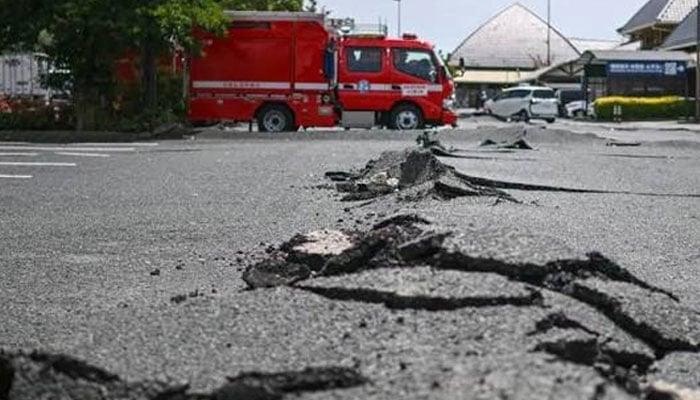
    A 5.8-magnitude earthquake struck Japan’s main island of Honshu, sending tremors through parts of the eastern coastal region and causing minor injuries and temporary disruptions to train services. According to the German Research Centre for Geosciences (GFZ), the earthquake occurred at a depth of around 78 kilometres near the eastern coast of Honshu. The relatively deep location of the quake helped limit the severity of its impact, although residents in several areas reported feeling strong shaking. Japanese authorities said several people suffered minor injuries following the tremors. Some railway services were also temporarily suspended as officials carried out safety checks on tracks and infrastructure. Authorities continued to assess whether the earthquake caused any structural damage or other disruptions. The Japan Meteorological Agency urged residents to remain cautious and stay alert for further seismic activity. The agency said another earthquake measuring below magnitude 5 could occur in the region during the following week. Japan lies along the Pacific Ring of Fire, one of the world’s most seismically active zones, and experiences frequent earthquakes of varying intensity. Authorities regularly advise residents to keep emergency supplies ready and follow official instructions during and after seismic events. Officials have not reported any major damage from the latest earthquake, but monitoring of the affected areas remains underway.

Leave a Reply

Your email address will not be published. Required fields are marked *