pac flags rs19bn
| |

PAC flags Rs19bn BISP payment irregularities

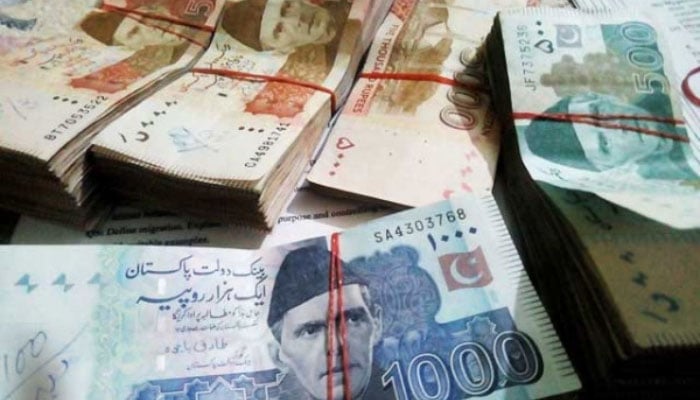
A subcommittee of the Public Accounts Committee (PAC) has raised concerns over financial irregularities in the Benazir Income Support Programme (BISP) after audit officials revealed that more than Rs19 billion was paid outside the beneficiaries’ respective provinces or districts.

The meeting was chaired by subcommittee convener Moeen Aamir Pirzada. Members reviewed a series of audit objections related to BISP covering the financial years from 2010-11 to 2022-23.

During the briefing, audit officials informed the committee that payments worth over Rs19 billion had been made in locations different from the beneficiaries’ registered districts or provinces. The audit team said the transactions required further scrutiny to determine whether they resulted from administrative weaknesses, verification gaps or possible misuse of the programme.

Committee members expressed concern over the findings and stressed the need for stronger monitoring and accountability in the country’s largest social welfare programme. They said public funds intended for deserving families must be distributed through a transparent and well-monitored system.

The subcommittee examined the audit observations in detail and sought explanations from the relevant BISP officials regarding the irregular payments. Officials were asked to clarify how such payments were processed and whether adequate checks were in place to prevent similar cases.

The committee also discussed measures to improve the verification process, strengthen oversight and ensure that future payments are made only to eligible beneficiaries through proper channels. Members emphasized that any financial irregularities should be investigated thoroughly and those responsible should be held accountable.
Similar Posts

  • | |

    Sanam Jung celebrates daughter Alaiza’s second birthday

    Pakistani actress and television host Sanam Jung recently celebrated the second birthday of her younger daughter, Alaiza, with a charming fairytale-themed gathering. Sanam, who is currently visiting Pakistan, marked the special occasion with family members. The celebration featured a beautiful Rapunzel-inspired theme, creating a colourful and magical setting for the birthday girl. The venue was decorated with pastel balloons, a castle-style backdrop and Rapunzel’s signature sun emblem. A specially designed cake was also prepared for the occasion. The birthday cake featured a tower-inspired design decorated with flowers and butterflies. Matching cupcakes added to the themed arrangements. Sanam Jung and her daughters, Alaya and Alaiza, also dressed according to the theme. Sanam’s sisters joined the celebrations and wore matching Rapunzel-inspired outfits. The family shared several memorable moments from the celebration, giving fans a glimpse of the colourful birthday setup. Sanam Jung is a familiar face in Pakistan’s television industry. She has worked as both an actress and morning-show host and has appeared in several popular dramas. Her acting credits include Dil-e-Muztar, Alvida, Qaraar, Pyari Mona, Dhoka and Mere Humdam Mere Dost, among others. She has also built a large following on social media, where she regularly shares glimpses of her professional and family life. Sanam currently lives in the United States with her husband, Qassam, and their two daughters, Alaya and Alaiza.

  • |

    Pakistan announces 20-man squad for FIH Hockey World Cup 2026

    ISLAMABAD: Pakistan has officially unveiled its 20-member national squad and team management for the FIH Men’s Hockey World Cup 2026, signaling the country’s determination to make a strong impression on hockey’s biggest stage after securing qualification for the prestigious tournament. The Pakistan Hockey Federation (PHF) announced the squad on Wednesday, blending experienced international campaigners with a promising group of emerging young talents. The selection reflects the federation’s strategy of balancing experience with youth as Pakistan aims to revive its rich hockey legacy on the world stage. Squad The announced squad includes Waqar, Muhammad Abdullah, Muhammad Sufyan Khan, Moeen Shakeel, Abdul Waheed Ashraf Rana, Abdul Hanan Shahid, Zakariya Hayat, Arshad Liaqat, Adil Latif, Ahmed Nadeem, Ghazanfar Ali, Imad Shakeel Butt, Muhammad Hamaduddin Anjum, Rehman Abdul, Afraz, Umar Mustafa, Abu Bakar Mahmood, Ali Raza, Abdul Matan, and Muhammad Imad. Goalkeepers Among them, Waqar and Ali Raza have been named as the team’s two goalkeepers, entrusted with guarding Pakistan’s goal against some of the world’s strongest attacking sides. The Pakistan Hockey Federation also announced the complete support staff for the global event. Muhammad Owais Qarni will serve as team manager, while experienced Dutch coach Bob Johan Veldhof will lead the side as head coach. He will be assisted by British coach Christopher John Bowen and Pakistani assistant coach Adnan Zakir. Ashraf Sultan has been appointed as the team’s video technician to provide technical and tactical analysis throughout the tournament. PHF President Mohyuddin Ahmad Wani expressed complete confidence in the selected squad, saying the players have the talent, commitment and determination to compete at the highest level of international hockey. He extended his best wishes to both the players and the support staff, urging them to represent Pakistan with pride and passion. Wani also appealed to fans across the country to stand behind the Green Shirts and encourage them as they prepare for one of the sport’s biggest competitions. Pakistan, one of the most successful nations in hockey history, will be looking to regain its place among the world’s elite after qualifying for the World Cup. The upcoming tournament offers a valuable opportunity for the Green Shirts to showcase their progress and reignite hopes of restoring Pakistan’s former glory in international hockey. With a refreshed squad, experienced coaching staff and growing public support, expectations are rising that Pakistan can produce a memorable campaign at the FIH Men’s Hockey World Cup 2026.

  • | | |

    Govt raises fuel prices as petrol pump strike thre…

    The federal government has increased the prices of petrol and high-speed diesel, while petrol pump owners have announced a nationwide strike after failing to reach an agreement with the government over the newly introduced daily fuel pricing system. Under the latest notification, the price of high-speed diesel (HSD) has increased by Rs7.15 per litre, rising from Rs360.06 to Rs367.21. The price of petrol has also been increased by Rs4.93 per litre, taking it from Rs315.80 to Rs320.73. The revised prices came into effect on July 22. The increase follows the government’s decision to replace the previous fortnightly fuel price adjustment system with a daily pricing mechanism. Under the new policy, petroleum prices can now change every day depending on international oil prices and fluctuations in the exchange rate. The new pricing mechanism has been strongly opposed by petrol pump owners and fuel dealers. They argue that daily price revisions are difficult to implement and create financial uncertainty for retailers across the country. After negotiations with government officials failed, the All Pakistan Petrol Pumps Owners Association (APPPOA) announced an indefinite nationwide strike beginning at midnight on Wednesday. The association said petrol pumps across Pakistan would remain closed until the government accepts its demands. Association leaders said discussions with the Petroleum Ministry failed to resolve major issues, including dealer profit margins and the implementation of daily fuel pricing. They insisted that the current system is not practical for petrol station operators and would create serious operational challenges. The Petroleum Retailers Association has also expressed support for the strike, raising concerns about possible disruptions in fuel supplies if the dispute continues. Meanwhile, the All Pakistan Petroleum Dealers Association (PPDA) is expected to decide whether it will formally join the protest. The association has called a meeting of its executive committee to discuss the situation and determine its future course of action. PPDA officials said they had already shared their concerns with the Oil and Gas Regulatory Authority (OGRA). According to the association, the regulator requested additional time to present the dealers’ concerns to the government before any final decision is made. Fuel dealers believe daily price changes make it difficult to manage inventories, update fuel prices, and maintain smooth business operations. They argue that the previous fortnightly pricing system provided greater stability and reduced uncertainty for both retailers and consumers. The government, however, maintains that the daily pricing mechanism will ensure that domestic fuel prices more closely reflect changes in global oil markets. Officials believe the new system will improve transparency and allow quicker adjustments to international price movements.

  • | | |

    US forces thwart Iranian missile barrage as region…

    WASHINGTON: A fragile pause in hostilities between the United States and Iran came to an abrupt end on Tuesday after Iranian forces launched multiple ballistic missiles toward US military positions in the Middle East, according to the US military. The US Central Command (CENTCOM) said the missiles were fired by Iran’s Islamic Revolutionary Guard Corps (IRGC) in what it described as a surprise attack. In a statement posted on X, CENTCOM reported that all incoming missiles were successfully intercepted, preventing any reported damage or casualties. However, it did not disclose the exact locations that were targeted. The latest exchange marks a renewed escalation after several days of relative calm. Both countries had refrained from military action over the weekend following nearly two weeks of intense conflict, during which the United States carried out nightly strikes on Iranian positions while Tehran responded with repeated missile and drone attacks against US allies across the Gulf region. The recent confrontation traces back to mid-July, when Iran targeted several commercial vessels in the Strait of Hormuz, triggering a sharp rise in regional tensions and prompting a sustained military response from Washington. The temporary ceasefire had raised hopes for diplomacy, with US President Donald Trump stating there was a strong possibility of progress in negotiations aimed at ending the conflict. The lull in fighting also contributed to a decline in global oil prices, reflecting growing market optimism that the crisis could be contained. Tuesday’s missile launch, however, signals that tensions remain high, casting fresh uncertainty over diplomatic efforts and raising concerns about the potential for another round of military escalation in the Middle East.

  • | |

    PM Shehbaz Sharif reviews implementation of nation…

      Prime Minister Shehbaz Sharif chaired a high-level meeting to review the implementation of Pakistan’s National Integrated Digital Policy Framework, with discussions focusing on strengthening digital governance, expanding the digital economy, and improving public services through modern technology. During the meeting, the prime minister directed the relevant authorities to take immediate steps to make the facilities of the National Data Center, “Sky 47,” available to all federal government institutions. He emphasized that the initiative would serve as a cornerstone of Pakistan’s digital transformation strategy and significantly improve the efficiency of government operations. Shehbaz Sharif said the National Data Center would function as a centralized platform for storing and managing data from all government institutions. He explained that maintaining a unified data infrastructure would eliminate the need for individual departments to establish separate data centers, resulting in substantial savings of public resources while ensuring greater coordination and improved data security. The prime minister highlighted the role of the Pakistan Digital Authority in leading the country’s digital transformation. He said the authority was providing an effective direction for the delivery of government services and citizen-centric facilities. According to him, the implementation of the National Digital Vision would play a key role in building a modern, integrated, and technologically advanced society capable of meeting future challenges. Appreciating the progress made so far in promoting digital governance, the digital economy, and digital public services, Shehbaz Sharif instructed officials to strengthen international partnerships under the National Integrated Digital Policy. He stressed the importance of increasing collaboration with global technology partners and ensuring Pakistan’s effective representation at international digital forums to benefit from global expertise and innovation. The prime minister further directed that the National Digital Vision should be implemented across multiple sectors, including healthcare, agriculture, public utilities, housing, and small and medium-sized enterprises (SMEs). He noted that the adoption of digital technologies in these sectors would improve service delivery, enhance efficiency, and provide citizens with faster, more reliable, and transparent access to government services. He also instructed authorities to accelerate efforts to provide better digital facilities to the public without delay. According to the prime minister, the introduction of a Digital ID system would allow citizens to access multiple government services through a single, integrated platform. This initiative is expected to simplify administrative procedures, reduce paperwork, improve transparency, and make public services more accessible for people across the country. The meeting also decided that a session of the National Digital Commission would be convened in the near future. The commission will engage provincial governments and other key stakeholders to ensure coordinated implementation of the National Digital Policy across Pakistan. Officials said the collaborative approach would help align federal and provincial initiatives while accelerating the country’s digital transformation agenda. Several senior cabinet members and government officials attended the meeting, including Minister for Planning Ahsan Iqbal, Minister for Economic Affairs Ahad Cheema, Finance Minister Muhammad Aurangzeb, Commerce Minister Jam Kamal Khan, Law Minister Azam Nazeer Tarar, Information Minister Atta Tarar, National Health Minister Mustafa Kamal, Federal Minister for Information Technology Shaza Fatima Khawaja, Minister of State Bilal Azhar Kayani, and State Bank of Pakistan Governor Jameel Ahmad, along with other senior officials. The meeting reaffirmed the government’s commitment to creating a digitally connected Pakistan by modernizing public administration, strengthening the digital economy, and ensuring that technology-driven services improve the daily lives of citizens while supporting sustainable economic growth.

  • |

    Govt increases petrol by Rs1.09, HSD by Rs2.42

    The government on Thursday increased the prices of petrol and high-speed diesel (HSD) by Rs1.09 and Rs2.42 per litre, respectively, passing on the impact of fluctuating global oil prices amid ongoing Middle East tensions. Following the revision, petrol will retail at Rs336.15 per litre, while HSD will cost Rs393.04 per litre. The government continues to levy Rs110 per litre in taxes and duties on petrol and Rs96 per litre on diesel. The Petroleum Division’s notification said the new prices would be applicable for July 31 (Friday). The diesel price has come down from a peak of Rs520.35 recorded on April 3, after beginning its upward trajectory from Rs281 per litre when the US-Iran war broke out on February 28. Similarly, petrol had peaked at Rs458.41 on April 3 after rising from Rs266 in the first week of March. Earlier, Petroleum Minister Ali Pervaiz Malik announced that fuel prices would now be fixed on a daily basis due to fluctuations in international market prices following renewed hostilities between Iran and the US. The government had been announcing weekly revisions since early March, alongside conservation measures amid possible oil supply disruptions due to the ongoing conflict in the Middle East. In April, the federal government also announced targeted relief measures to provide subsidised fuel. The petroleum minister stated that the cabinet and the prime minister had decided to give the Oil and Gas Regulatory Authority (OGRA) the responsibility of deciding fuel prices on a daily basis based on international market trends. The daily pricing decision was rejected by the All Pakistan Dealers Association, which said it would consider a protest plan this week. Petrol is mainly used in private transport, small vehicles, rickshaws and two-wheelers, and changes in its price affect the middle and lower-middle classes. Similarly, diesel price changes impact the public at large, as it is primarily used in the heavy transport sector, power plants and large generators. Petrol and HSD are the major revenue earners, with monthly sales of about 700,000 to 800,000 tonnes, compared to just 10,000 tonnes of monthly demand for kerosene.

Leave a Reply

Your email address will not be published. Required fields are marked *