• | | |

    No date finalised for renewed US-Iran talks, sources say

    Efforts to revive direct negotiations between the United States and Iran are continuing through diplomatic channels, but no date or venue has been finalised for the next round of talks, according to informed sources. The sources said discussions are ongoing with the help of mediators from Pakistan and Qatar, who are working with both Washington and Tehran to arrange a fresh round of negotiations aimed at reducing tensions and restoring dialogue after months of conflict. Officials familiar with the process said there is currently no scheduled meeting between American and Iranian negotiators in Islamabad. They added that both Islamabad and Doha remain possible venues for future talks, although no final decision has been made. According to the sources, Pakistan’s Interior Minister Mohsin Naqvi is expected to visit Tehran in the coming days to discuss diplomatic efforts and explore ways to help restart negotiations between the two countries. Diplomatic contacts between the two sides have reportedly continued despite recent hostilities, with mediators exchanging messages in an effort to revive dialogue under the Islamabad Memorandum of Understanding signed earlier this year. The sources said both countries are expected to begin with indirect discussions through mediators before moving to direct negotiations. The initial phase is likely to focus on maintaining the current reduction in hostilities and building mutual confidence rather than addressing Iran’s nuclear programme. One of the main issues expected to dominate future discussions is the Strait of Hormuz, a strategically important waterway through which a significant share of the world’s oil supply passes. Mediators are reportedly working on proposals to ensure safe maritime navigation and reduce tensions in the Gulf. Meanwhile, Iran’s Foreign Ministry said there are currently no direct negotiations taking place with the United States. Iranian officials confirmed that Tehran is engaged in discussions with Oman regarding a temporary maritime route through the Strait of Hormuz but stressed that these talks should not be interpreted as an agreement to fully reopen the strategic waterway. Iran also maintained that any broader agreement would depend on changes in the regional security situation and an end to what it described as continued US pressure. Regional tensions remained high as Iranian media reported that the country’s Revolutionary Guard had shot down a US MQ-9 Reaper drone over the Strait of Hormuz. Separately, several oil tankers reportedly changed their shipping routes to avoid potential security threats near the Bab al-Mandab Strait, increasing transportation costs for energy shipments. At the same time, Israel launched military exercises involving naval and ground forces, saying the drills had been planned in advance. Israeli forces also continued military operations in southern Lebanon, while cross-border tensions remained elevated despite an existing ceasefire. US President Donald Trump recently said he had postponed a planned military strike against Iran after receiving requests from regional countries to allow more time for diplomacy. He expressed hope that negotiations could eventually lead to agreements on the Strait of Hormuz and broader regional security issues.

  • | |

    Italy’s fourth summer heat wave peaks as rec…

    Italy’s fourth heat wave of the summer reached its most intense point on Monday, with a record 25 cities placed under red heat alerts as temperatures climbed above 40 degrees Celsius in parts of the country, according to local media reports. Italy’s Health Ministry raised the number of cities under its highest heat risk warning from 23 on Sunday to 25 on Monday, marking the highest total recorded so far this summer. Only Reggio Calabria and Messina avoided the red alert designation, though both remained under yellow level warnings. The Po Valley and central regions of the country are experiencing the harshest conditions, while inland areas and Sardinia could also see temperatures exceed 40 degrees Celsius. In parts of central and northern Italy, overnight temperatures are expected to stay above 25 degrees Celsius, a pattern meteorologists have described as super tropical nights. The central province of Terni recorded a temperature of 41 degrees Celsius on Sunday. Experts have linked the extreme heat to a persistent African anticyclone combined with continued warming of the Mediterranean Sea, where surface temperatures have reached or surpassed 30 degrees Celsius across much of the basin. Meteorologist Lorenzo Tedici of iLMeteo.it said the accumulated heat is expected to fuel atmospheric instability, warning of strong afternoon thunderstorms forming over the Alps and Apennines. Italy’s Civil Protection Department has issued yellow alerts for heavy rainfall along the Apennine mountain range stretching from Umbria to Calabria, as well as in inland areas of Sicily. Tedici said a genuine shift away from the hottest phase of summer 2026 is unlikely before at least mid August. Authorities have also flagged an elevated risk of wildfires, placing Sicily and Emilia Romagna under orange alerts as the heat wave continues to grip the country. The extreme temperatures fit a broader pattern of intensifying summer heat across southern Europe in recent years, as scientists have repeatedly linked rising Mediterranean sea temperatures and more frequent heat waves to long term climate trends affecting the region’s weather systems.

  • | |

    Israeli court halts Ben-Gvir plan to place crocodi…

    An Israeli court has temporarily blocked National Security Minister Itamar Ben-Gvir’s plan to install crocodiles around Ketziot Prison in southern Israel’s Negev desert, where Palestinian detainees from Gaza are being held, according to Israeli media reports on Monday. Israeli authorities had already begun digging trenches around the section of the prison holding Palestinians detained from Gaza over alleged involvement in the events of October 7, 2023. Under the plan championed by Ben-Gvir, crocodiles would be placed inside these trenches as a security measure. Israel’s public broadcaster reported that the Jerusalem District Court issued a temporary injunction on Sunday evening after the animal rights group Let the Animals Live filed a legal petition challenging the plan, which has the backing of the National Security Ministry and the Israel Prison Service. Judge Avraham Rubin ordered authorities to halt any action based on a decision by Environmental Protection Minister Idit Silman to classify crocodiles as tended wild animals, a legal designation that would have permitted their transfer to and use at the prison facility. According to the broadcaster, the ruling followed an administrative petition the organization filed against Silman, Ben-Gvir and the Israel Prison Service just hours earlier. The temporary order will stay in place until authorities file their formal response, which the court expects by mid August. The dispute centers on a decision Silman made on July 15 that was designed to allow crocodiles to serve as what officials described as a deterrent and security measure inside prisons. The petition filed against the plan argues that the decision effectively strips crocodiles of protections normally applied to wild animals by removing the licensing and oversight mechanisms that would otherwise govern their care and control. Let the Animals Live told the broadcaster that the Israel Prison Service had already started infrastructure work, including digging a canal around the prison, and said the National Security Ministry had set aside 21 million shekels, or roughly 6.9 million dollars, to fund the pilot project. The group said the decision was made without adequate legal authority and disregarded expert and legal warnings about risks to the animals themselves, to the public and to the surrounding environment. Officials have not yet submitted the government’s formal position to the court, though a response is expected as part of the proceedings tied to the injunction request. Representatives from Let the Animals Live and the Environmental Justice and Animal Rights Clinic at Tel Aviv University said the court’s order prevents irreversible construction work from moving forward for now and protects the animals’ welfare while they continue pursuing a permanent cancellation of the plan. Since taking office in late 2022, Ben-Gvir has overseen a broader tightening of detention conditions for Palestinian prisoners, including measures involving food deprivation, denial of medical care, mistreatment and prolonged isolation. Palestinian and Israeli human rights organizations report that approximately 9,500 Palestinian prisoners, including women and children, are currently held in Israeli facilities under harsh conditions, with dozens reported to have died as a result of starvation, mistreatment and medical neglect.

  • Healthy weight may protect male fertility study

    Male infertility is becoming a growing health concern around the world and new research suggests that excess body fat may be one of the reasons behind the rising number of cases. A study from Aarhus University found that higher levels of body fat can negatively affect male reproductive health and reduce fertility. The researchers followed 1,058 young men, who were about 18 years and 9 months old when the study began. They measured body fat body weight and muscle mass to understand how body composition affects fertility. According to the researchers a healthy body fat percentage for men is generally between 8% and 19%, while 20% or higher is considered elevated. The study found that men with higher body fat had on average a 23% lower sperm count than those with healthier body fat levels. The researchers also found that excess body fat may disrupt hormones that play an important role in sperm production and overall reproductive health. Hormonal changes caused by obesity can reduce both sperm  quality and fertility. Experts say maintaining a healthy weight through regular exercise a balanced diet enough sleep and stress management can support both overall health and reproductive health. Avoiding smoking limiting alcohol and managing long term medical conditions may also help improve fertility. The findings were published in the journal Human Reproduction. The study supports earlier findings from the World Health Organization, which reported in 2023 that about 17.5% of adults worldwide experience infertility at some point in their lives. The WHO also noted that infertility affects people in high middle and low income countries making it a global public health challenge. Researchers say that while infertility can have many causes keeping body fat at a healthy level may be an important step in protecting male fertility and improving reproductive health.

  • PML-N wins key refugee seat in Gujrat’s political backyard

    GUJRAT: Pakistan Muslim League-Nawaz (PML-N) candidate Chaudhry Zeeshan Younas has officially won the LA-38 (Jammu-V) seat in the Azad Jammu and Kashmir (AJK) Legislative Assembly elections, a result that is being viewed as politically significant in Gujrat, where the Pakistan Muslim League-Q (PML-Q) maintains a strong political foothold. According to the official results, Zeeshan Younas secured 13,652 votes, defeating the Pakistan Muslim League (AJK) candidate Chaudhry Akbar Ibrahim, who polled 9,523 votes. The constituency is one of the 12 refugee seats reserved for Jammu and Kashmir refugees residing in different districts of Punjab. The outcome has generated considerable political discussion in Gujrat as LA-38 falls within the political sphere of NA-63, represented in the National Assembly by PML-Q leader Hussain Elahi. The district is widely regarded as one of the strongest political bases of the Chaudhry family, with PML-Q also holding representation in the Punjab cabinet. During the election campaign, Hussain Elahi personally led the campaign for Chaudhry Akbar Ibrahim, addressing public meetings, corner gatherings and mobilising party workers across the constituency. Senior PML-Q leaders remained actively engaged in an effort to retain the seat. In response, the PML-N launched an extensive campaign led by Divisional President Chaudhry Abid Raza, District President Nawabzada Tahir-ul-Mulk, and Youth Wing Coordinator Chaudhry Ali Warraich, who remained active throughout the campaign by organising corner meetings, interacting with voters and coordinating election activities. Political analysts believe the result carries significance beyond the AJK elections, as it reflects the continuing political rivalry between PML-N and PML-Q in Gujrat. Despite PML-Q’s longstanding influence in the district and its representation in both the National Assembly and the Punjab government, PML-N managed to secure a convincing victory in the refugee constituency. Polling for LA-38 was held as part of the second phase of the AJK Legislative Assembly elections, during which voting took place on 21 constituencies. Of these, 12 refugee seats represent Jammu and Kashmir refugees settled in various districts of Punjab, while the remaining seats are located in Azad Jammu and Kashmir. Following the announcement of the official results, PML-N workers celebrated the victory in different parts of Gujrat, describing it as an important political achievement in a district traditionally considered a stronghold of PML-Q. Political observers believe the result is likely to further intensify competition between the two parties in future electoral contests. The Election Commission of Azad Jammu and Kashmir has released the official results, confirming Chaudhry Zeeshan Younas as the returned candidate from LA-38 (Jammu-V).

  • Senate orders probe into customs seizure of 11 trucks

    Islamabad: The Senate Sub Committee on Interior and Narcotics Control ordered an investigation into an alleged media campaign against committee members following a previous meeting on a customs seizure case. The committee also raised serious questions regarding the handling of seized goods, legal procedures and possible weaknesses in the customs monitoring system. The committee, convened by Senator Saifullah Abro, directed the Federal Investigation Agency (FIA) to conduct an impartial inquiry into TV channels and media platforms accused of running targeted coverage against Senate members after the committee discussed the seizure of 11 loaded trucks on the motorway. The committee stated that after the previous meeting held on July 20, 2026, an official handout was issued and circulated on different media platforms which allegedly targeting the Chairman of the Senate Standing Committee on Interior and other members. Taking notice of the matter, the committee directed the Member FBR to personally examine the handout issued by the FBR media wing and identify the officials responsible for preparing and issuing the material. The FIA was instructed to complete a detailed inquiry and submit a report to the committee regarding the alleged campaign. During the meeting, the committee also raised serious questions about the seizure of 11 trucks and the legal process Customs authorities followed. Senators questioned whether Customs had proper jurisdiction over the motorway operation, stating that motorway operations primarily fall under other relevant authorities while Customs provides assistance when required. The committee expressed concern over different valuation figures linked to the seized trucks, pointing out a major difference involving Rs 22 crore. The owners of the transport company and steel company were directed to provide complete details regarding the matter. The committee also questioned the FIR’s registration in the case and asked why 11 truck drivers were produced before the court after a delay of six days. Members directed the inspector responsible for preparing the FIR to appear before the committee and explain the legal basis and details mentioned in the case. The Deputy Collector of Customs was also asked to explain why certain names mentioned during the site presence were not included in official reports. The Inspector General Motorway Police informed the committee that a Memorandum of Understanding exists between Motorway Police and Customs, allowing operational support for stopping suspicious vehicles. The committee also raised concerns over the system of issuing Consumption Certificates and questioned why manual certificates were still being issued despite official digital procedures. The Convener asked Customs officials whether physical inspections were conducted before issuing such certificates. Officials informed the committee that they did not always conduct physical verification visits and often relied on available information and administrative authority. The committee expressed dissatisfaction with the explanation and stressed the need for stronger verification mechanisms. Another major issue discussed was the handling of tax exempted imports. The committee examined details related to approximately Rs 1,120 billion worth of imports in tax exempted areas and stated that the information provided was incomplete. Officials were directed to provide a detailed breakdown of goods imported, their movement and their sale in local markets under the 2025 and 2026 quota registration system. The committee said that weaknesses in customs monitoring could create opportunities for smuggling, tax losses and misuse of exemptions. Members emphasized that customs posts, dry ports and revenue institutions must operate with greater transparency and accountability. The committee reaffirmed that it would continue investigating issues related to smuggling networks, anti narcotics controls, seized assets and possible revenue leakages.

  • | |

    NCLEX programme under fire: only 7 nurses pass out…

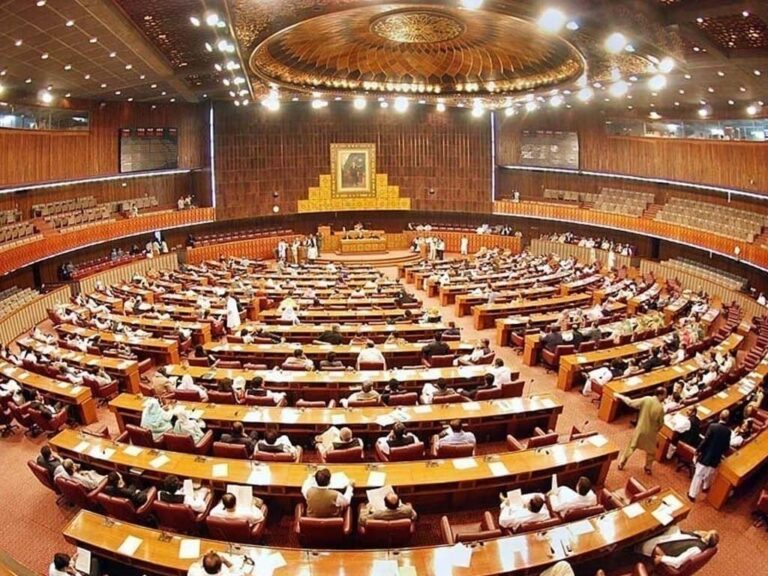
    Islamabad: A Government backed programme designed to help Pakistani nurses qualify for international jobs came under strong questioning in the National Assembly after lawmakers raised concerns over the transparency, student selection and results of the NCLEX Nursing Training Programme. The National Assembly Standing Committee on Federal Education and Professional Training questioned how a Rs 150 million programme selected its training partner and why only seven nurses had cleared the NCLEX exam out of 500 trainees so far. The committee supported opportunities for Pakistani nurses to work abroad but demanded complete transparency regarding the programme’s planning, the selection of the implementing partner, and the use of public money. The issue was discussed during the 25th meeting of the committee, where members reviewed the performance and implementation of the NCLEX Nursing Training Programme launched by the National Vocational and Technical Training Commission (NAVTTC). NAVTTC Executive Director Muhammad Amir Jan informed the committee that before this initiative, Pakistani nurses had to travel to countries such as Dubai, Bahrain, Turkey and Thailand to appear in the NCLEX examination. He said that with support from SIFC, NAVTTC was given responsibility to bring the examination system to Pakistan for the first time through Pearson VUE during 2024 and 2025. Officials informed the committee that the programme was designed to train 500 nurses. The training phase has been completed, 182 nurses have applied for the NCLEX examination and seven nurses have successfully cleared the test. However, members questioned the low success rate and asked whether the programme was producing the expected results. One committee member pointed out that seven successful candidates out of 500 trainees represented a very small percentage and questioned whether the programme needed improvements before more public funds were spent. NAVTTC officials defended the programme, saying that NCLEX is a difficult international examination and nurses who pass the test still require additional time before moving abroad for employment. Officials said nurses might need eight to eighteen months after passing the exam before they can travel for work opportunities. The committee also raised questions about the selection of the implementing partner, the Institute of Contemporary Studies. Members questioned whether a public advertisement was issued before selecting the organisation or if other institutions were given an opportunity to compete. They said programmes funded through public money must follow transparent procedures to maintain public confidence. NAVTTC officials explained that the programme was developed under an industry led model and was based on a proposal received from the Pakistan Nursing and Midwifery Council. They said such programmes do not always follow open advertisement procedures because they are based on specific industry requirements. However, members questioned whether a government body could recommend a specific private organisation without a competitive process. The committee also raised concerns about the role of the Pakistan Nursing and Midwifery Council. Members noted that in previous discussions, representatives of the council had stated they were not fully aware of the nurse selection process and training arrangements. NAVTTC officials responded that the council had formally approached NAVTTC for the project and that decisions taken by government bodies should be accepted by all stakeholders involved. Financial matters also came under discussion. NAVTTC informed the committee that the total project cost was Rs 150 million and that Rs 87 million had been released so far. Officials clarified that the remaining funds would be released only after achieving agreed results under a performance-based payment system. They said a bank guarantee was also available to protect government funds. The committee also questioned the quality and locations of the training centres. MNA Dr Shazia Sobia Aslam Soomro raised concerns about some training locations, including Matta in Swat, and asked how proper facilities and monitoring were ensured in those areas. NAVTTC officials responded that Khyber Medical University conducted training in Matta and promised to provide complete details of nurses trained there. Questions were also raised about trainer qualifications. Members asked how individuals with nursing degrees could provide NCLEX preparation training. Officials explained that trainers must themselves be NCLEX qualified according to programme requirements. The committee further discussed the selection of nurses for training. NAVTTC officials said their role was to set eligibility criteria, not directly select candidates. They explained that under the pay for success model, the training provider selects participants because the provider is responsible for results. At the conclusion of the meeting, the committee decided to invite the Pakistan Nursing and Midwifery Council in the next session to clarify the selection process of nurses and the appointment of the training partner. Chairperson Mahtab Akbar Rashdi said that every concern must be properly addressed because public funds were involved and the programme was created to provide international opportunities for Pakistani nurses.

  • Senate seeks action to protect Pakistan’s historical archives

    Islamabad: Pakistan’s historical records and national documents came under Senate focus as lawmakers raised concerns over the protection, preservation and possible illegal movement of valuable archival material. The Senate Standing Committee on Delegated Legislation reviewed new rules for the National Archives and called for stronger measures to protect important historical documents from damage, smuggling and misuse. The committee, chaired by Senator Naseema Ehsan, examined the draft National Archives Rules and Archival Material Preservation and Export Control Rules during a meeting at Parliament House. Officials informed the committee that under the proposed rules, documents of major national importance would be officially declared archival material after 25 years. This step would provide stronger legal protection and help prevent the illegal removal of historical records from Pakistan. The committee stressed that old documents are not just papers but a valuable record of the country’s history, identity and national memory. Members emphasized the need to create awareness among young people about protecting historical records. The committee directed that the draft National Archives Research and Reference Rules 2026 should be finalized after considering members’ recommendations. Chairperson Senator Naseema Ehsan also directed the Cabinet Division to consult provincial governments before finalizing the rules to develop a coordinated system across Pakistan. During the meeting, officials briefed the committee about efforts to modernize the National Archives of Pakistan. Officials informed the committee that around nine million archival documents have already been digitized and the next phase will focus on making these records available to the public through an online electronic library. The committee appreciated the digitization project but stressed that strong cybersecurity and data protection measures must be included to protect digital records from misuse or unauthorized access. Officials informed the committee that a Rs 285 million modernization project is underway to improve fire safety systems, lighting and environmental controls at the National Archives. However, officials highlighted a shortage of skilled archivists due to low salaries and limited career opportunities in the field. The committee recommended cooperating with universities and academic institutions to introduce specialized courses in archival preservation and improve professional opportunities for experts. The committee also reviewed rules related to the preservation, exhibition and export control of archival material owned by both government institutions and private individuals. Members welcomed the introduction of a licensing system aimed at controlling the illegal movement of historical records outside Pakistan. The committee expressed particular concern over archival collections held in provincial areas and stressed the need for their digitization and proper preservation through cooperation with provincial authorities. The chairperson directed that the legal framework should include stronger penalties for smuggling archival material. The committee also called for disaster management plans to protect historical records from floods, fires and other natural risks. During the meeting, officials also briefed the committee on the progress of the Balochistan Child Protection Commission. The committee was informed that the Balochistan Cabinet had approved Child Protection Rules 2026, while legislation related to child marriage was under consultation. The Ministry of Human Rights informed the committee about the lack of rehabilitation facilities for children affected by drug dependency and support centres for girls abandoned by their families. The committee stressed the need for awareness campaigns about safe social media use among children and encouraged parents to play an active role in protecting children online. Senator Naseema Ehsan appreciated the steps taken for child protection and emphasized that continuous efforts are required to safeguard children’s rights.

  • How to remove shower head Limescale

    If the water coming from your shower has become weak or sprays unevenly limescale buildup inside the shower head could be the reason. Experts say a simple citric acid solution is one of the easiest and most effective ways to restore normal water flow. Limescale forms when minerals such as calcium and magnesium commonly found in hard water collect inside the tiny holes of the shower head. Over time these deposits reduce water pressure block the spray nozzles, and can shorten the life of the fixture. To clean it experts recommend mixing 2–3 tablespoons of citric acid with warm water. Remove the shower head if possible and soak it in the solution for 30 minutes to one hour. After soaking gently scrub the nozzles with an old toothbrush and rinse thoroughly with clean water. If the shower head cannot be removed pour the citric acid solution into a plastic bag and secure it around the shower head with a rubber band so the nozzles remain fully submerged. After soaking remove the bag scrub away any remaining deposits and rinse well. Experts say this method helps dissolve stubborn limescale improves water pressure restores an even spray pattern and can extend the lifespan of the shower head. To prevent future buildup clean your shower head at least once a month wipe it dry after use whenever possible and consider installing an anti-limescale or water softening filter if you live in an area with hard water. Regular maintenance can keep your shower working efficiently and reduce the need for costly replacements.

  • What do different colours on Google Maps mean?

    Google Maps is a highly useful navigation app. Although users may occasionally encounter some issues, it generally provides accurate directions for most routes. Over the years, Google Maps has undergone many changes and received several new features to improve the user experience. One of its most prominent features is the use of different colours to indicate traffic conditions. Google Maps uses various visual indicators to show different types of roads, highways, underground tunnels, railway tracks and other features. At the same time, specific colours are used to help drivers understand the traffic situation in a particular area. Basic colours on Google Maps Roads and highways are generally displayed as gray lines. There are some differences, however. Light gray is used for streets and smaller roads while dark gray is used for major roads. Railway lines are also shown in light gray but they are represented by thin lines so users can identify them as train tracks. When it comes to traffic conditions, users can turn on the traffic layer through the Layers button in Google Maps. Green indicates that traffic is moving smoothly and that there is little or no congestion. Yellow and orange indicate that vehicles are moving but at slower-than-normal speeds meaning you may experience some delays. Yellow indicates slightly heavier traffic while orange indicates more significant congestion. Red is primarily a warning colour indicating heavy traffic in an area and potentially longer travel times. It may mean that you could encounter a traffic jam. Light red indicates heavy traffic while dark red signals very heavy traffic or significant congestion. Blue is not related to traffic. Instead, it indicates route guidance. Dark blue is used for the preferred or selected route while light blue is used to show alternative routes.