
• | |

    AJK rejects firing allegations against forces

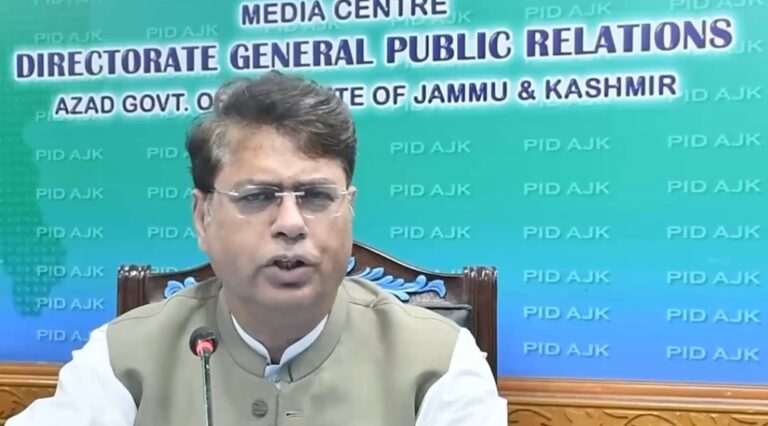
    The Government of Azad Jammu and Kashmir (AJK) has strongly rejected allegations that security forces opened fire on protesters or were responsible for civilian deaths during the recent unrest in Rawalakot, describing the claims as false, unverified and part of an organised disinformation campaign. Responding to a report by the BBC on the recent incidents, the AJK government said armed members of the banned Joint Awami Action Committee opened fire on security personnel in Rawalakot, resulting in the deaths and injuries of several officers. It also alleged that the attackers set multiple vehicles on fire during the violence. According to the government, security forces acted only to maintain law and order and enforce the law, insisting that civilians were not deliberately targeted during the operation. The AJK government cited information from the police spokesperson, who said seven security personnel were killed and 143 others were injured in firing allegedly carried out by armed members of the banned Joint Awami Action Committee. It further claimed that the banned group has a history of violent activities. According to the statement, attacks carried out in 2024 and 2025 resulted in the deaths of four security personnel and left hundreds of others injured. The government also said two individuals arrested on July 28 and 29 were under investigation. It alleged that one of the suspects claimed a reward of Rs10 million had been offered for the killing of each Ranger, raising questions about the possible funding of the group. According to the statement, verified videos show armed individuals linked to the banned Joint Awami Action Committee using modern weapons and firing during the unrest. The AJK government maintained that law enforcement agencies carried out their constitutional responsibilities with restraint and professionalism. It insisted that no action was taken against peaceful civilians and that operations were conducted solely to restore public order. The government also categorically denied allegations of indiscriminate firing, the use of snipers or claims that bodies of victims were withheld from their families. It further alleged that the banned Joint Awami Action Committee had previously been involved in blocking roads, stopping or burning cargo vehicles and disrupting the supply of essential goods. According to the statement, law enforcement agencies made efforts to keep roads open and ensure the uninterrupted movement of essential supplies. The AJK government added that the Joint Awami Action Committee has been declared a banned organisation under the Anti-Terrorism Act and said all legal proceedings against the group are being carried out in accordance with the law.
  • | | |

    Nawaz urges unity between government, military

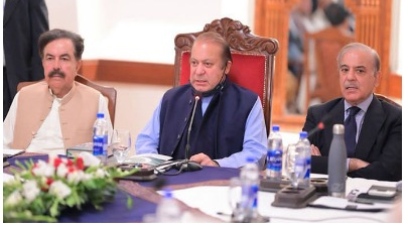
    Pakistan Muslim League-Nawaz (PML-N) President Nawaz Sharif has urged party leaders to avoid any actions or statements that could create the impression of differences between Prime Minister Shehbaz Sharif’s government and Chief of Army Staff Field Marshal Syed Asim Munir. According to sources, Nawaz Sharif told senior party members that Pakistan is currently facing significant economic, political and security challenges, making it essential to maintain national stability and institutional harmony. The development came after senior PML-N leaders reportedly conveyed their reservations to Nawaz Sharif regarding recent remarks made by Interior Minister Mohsin Naqvi about the country’s system. Sources said Nawaz Sharif advised party leaders to exercise restraint and avoid public statements that could fuel unnecessary controversy or create the perception of tensions between key state institutions. He stressed that the country’s national interest requires close coordination and mutual understanding among institutions, particularly at a time when Pakistan is confronting multiple internal and external challenges. According to the sources, Nawaz Sharif emphasised that maintaining harmony between the civilian government and the military leadership is essential for political stability, effective governance and addressing the country’s pressing issues. He urged party leaders to remain focused on national priorities and act responsibly in their public engagements.

  • |

    Walking through time: A personal journey inside Na…

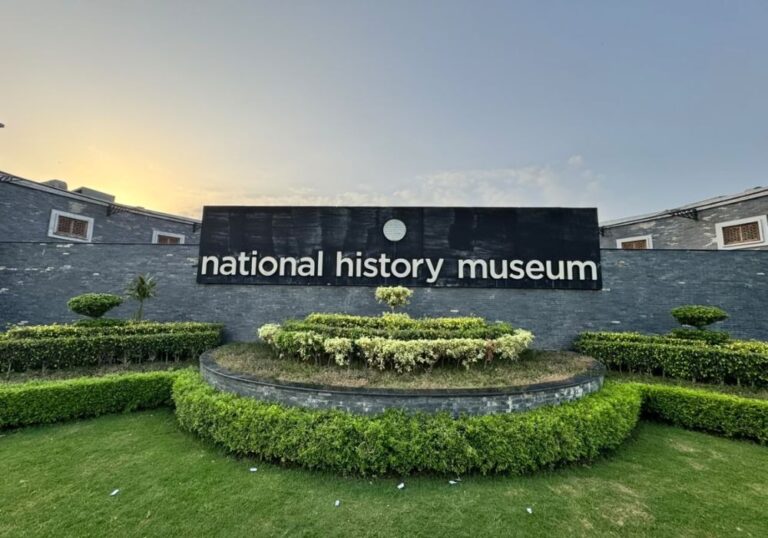
    The rain had just stopped when I reached Lahore’s National History Museum. The roads were quieter than usual, the air felt fresh and, for the first time in weeks, I wasn’t in a hurry. I had postponed this visit for years, ever since a brief stop during my internship at the Lahore Museum left me wishing for more time. This Sunday, I finally had it. I have also realised something over the past few weeks. Waiting for friends before exploring new places often means never going at all. So I decided to spend the afternoon on my own, following nothing except curiosity. As I entered the museum, Floor Supervisor Tabish welcomed me and arranged a guided tour with Muhammad Shamsher, a PhD scholar in History who also serves as one of NHM’s guides. His explanations never sounded like a lecture. Instead, he connected historical events with the people behind them, making every gallery feel like part of one continuing story. Growing up, I believed museums were places where objects sat behind glass while visitors quietly read information panels. That idea came from childhood visits to museums in Islamabad, Taxila and Harappa, and later from my internship at Lahore Museum. The National History Museum challenged that idea completely. Through digital displays, sound, projection and interactive exhibits, history became something to experience rather than simply observe. Every gallery encouraged visitors to slow down and become part of the story unfolding around them. One exhibit that caught my attention focused on the making of Minar-e-Pakistan. Like many Pakistanis, I had always admired the monument without knowing much about the person who designed it. The museum introduced architect Nasreddin Murat-Khan and displayed photographs that offered a glimpse into the creative process behind one of Pakistan’s most recognisable landmarks. It reminded me how often we celebrate monuments while forgetting the people who imagined them. The journey then moved towards Partition, where history became deeply personal. The restored railway carriage, once part of the North Western Railway, stood quietly inside the gallery. Visitors could step inside and experience a virtual reality presentation recreating the migration of 1947. I had watched countless documentaries and films about Partition, but sitting inside that carriage created an entirely different feeling. The sounds, voices and uncertainty surrounding the experience made history feel much closer than any textbook ever could. The museum then shifted from the birth of Pakistan to the challenge of building a new country. One gallery recreated the early government offices established after independence. I found myself studying old files, furniture and official records, imagining the enormous responsibility carried by those tasked with running a newly created nation. Nearby, early Pakistani passports were displayed inside glass cases. Different in design from today’s passports, they represented the same hope of a country beginning to define its identity. Another section I found especially engaging was Camera from the Past. Visitors could stand before a vintage-style camera and have their photograph taken, creating a small connection between the present and the past. The gallery also highlighted photographer Aziz Ahmed Azmi, whose images documented Pakistan’s early years. Looking at his work, I realised that photographs often become history long after the moment they capture has passed. Perhaps the gallery where I spent the most time was Popular Culture. Having studied Mass Communication with a specialisation in Theatre, Film and Television and continuing to work in journalism, I naturally found myself drawn towards the colourful Lollywood posters and displays celebrating Pakistan’s cinematic heritage. Reading about Azra, the country’s first colour film, and Zinda Laash, Pakistan’s first horror film, reminded me how rich our film history is, even if many younger audiences know little about it today. Before leaving, I also explored Husn-e-Hunar, an exhibition celebrating Pakistan’s traditional craftsmanship. Alongside literature, music and cultural displays, it served as a reminder that a nation’s identity is shaped not only by political events but also by its artists, craftsmen and storytellers. When I stepped back outside, I realised I had spent far longer inside the museum than I had planned. I didn’t leave with pages of notes or dozens of photographs. Instead, I left with a greater appreciation for how history can be presented when museums invite visitors to participate rather than simply observe. The National History Museum doesn’t just preserve Pakistan’s past. It encourages visitors to pause, ask questions and discover the stories that continue to shape the country today.

  • Why do car turn signals click?

    When you turn your car left or right you hear the familiar click-click sound from the turn signal. At the same time the arrow on the dashboard flashes to show the signal is working. Even though cars have become much more advanced this sound has stayed the same for many years. But have you ever wondered why? Turn signals first appeared in cars in the late 1930s. In older vehicles the clicking sound came from a thermal flasher. When the driver switched on the turn signal electricity heated a small metal strip.  As it bent from the heat it completed an electrical circuit and turned the signal lights on. The metal quickly cooled returned to its original shape and broke the circuit turning the lights off. This heating and cooling cycle repeated over and over making the lights flash. The movement of the metal strip created the well known clicking sound. As technology improved car makers replaced the old thermal system with electromagnetic and later electronic systems controlled by computer chips.  These newer systems no longer need moving metal parts to flash the lights. However most modern cars still play the click click sound on purpose. Manufacturers keep it because drivers are used to hearing it and the sound reassures them that the turn signal is working correctly even though it is no longer mechanically necessary.

  • | |

    Pakistan’s IT exports hit record $4.6 billio…

    KARACHI: Pakistan’s information technology (IT) sector achieved a historic milestone in the fiscal year 2025-26, with IT and IT-enabled services (ITeS) exports reaching a record $4.6 billion, marking an impressive 21 percent increase from the previous year’s $3.81 billion. Although the sector narrowly missed the government’s $5 billion export target, the achievement reinforces Pakistan’s position as one of the country’s fastest-growing export industries and strengthens its long-term goal of reaching $10 billion in IT exports by FY2028-29. Industry experts believe the strong performance reflects the steady expansion of Pakistan’s digital economy, driven by a growing pool of skilled professionals, rising demand for remote services, improved internet infrastructure and favourable tax incentives. However, they also caution that the sector must overcome structural challenges and shift towards innovation-led growth to sustain momentum. Pakistan is home to more than 600,000 IT professionals and freelancers, alongside tens of thousands of registered software and IT-enabled services companies operating from major technology hubs in Karachi, Lahore and Islamabad. Secondary cities such as Faisalabad, Sialkot and Sukkur are also emerging as important contributors to the country’s digital workforce. Software development, business process outsourcing (BPO), enterprise technology services, call centres and freelancing remain the backbone of Pakistan’s IT exports. Meanwhile, demand for advanced services including artificial intelligence (AI), cybersecurity, cloud computing, automation and digital consulting is expanding rapidly as global businesses seek specialised technology solutions. The United States continues to be Pakistan’s largest export destination for IT services, followed by the United Kingdom, the Gulf region, Europe, Canada and several Asian markets. Experts say significant opportunities remain untapped in Saudi Arabia, the UAE, Qatar, Germany, Japan, South Korea, Australia, Africa and Central Asia, particularly in high-value technology sectors. Industry leaders stress that Pakistan must diversify both its export markets and service offerings. They argue that relying mainly on traditional software development and low-cost outsourcing will limit future growth, while greater investment in AI-powered solutions, enterprise software, cybersecurity and digital transformation services can significantly increase export earnings. Freelancers have also emerged as a major force in Pakistan’s digital economy, contributing an estimated $1.1 billion, or roughly a quarter of total IT exports, during FY2025-26. Online platforms have enabled thousands of professionals to access global clients, creating new employment opportunities and boosting foreign exchange inflows. Beyond export revenues, the sector continues to generate employment, with thousands of technical positions available across the country. The expansion of remote work has also increased opportunities for women and professionals living outside major urban centres. Experts believe the next phase of growth depends on moving beyond providing outsourced services to creating globally competitive technology products and intellectual property. They argue that Pakistan must position itself as a producer of innovation rather than simply a destination for low-cost software development. The country’s AI ambitions are also gaining momentum. Under the National AI Policy 2025, Pakistan plans to establish AI centres of excellence, launch dedicated funding programmes, expand public-sector AI adoption and train around one million people in AI-related skills by 2030. New AI hubs are also being developed to support startups and accelerate innovation. International partnerships are expected to play a key role in this transformation. Pakistan has strengthened technology cooperation with China through joint AI and IT initiatives and recently became a founding member of the World Artificial Intelligence Cooperation Organisation (WAICO). At the same time, interest from the United States has grown, with American investors pledging more than $20 million for Pakistan’s technology sector during a recent investment conference. Connectivity has also improved through expanded submarine cable capacity, cross-border fibre links and stronger cloud infrastructure, making it easier for local companies to deliver digital services worldwide. Despite the progress, industry stakeholders warn that policy uncertainty, foreign exchange restrictions, internet disruptions, energy costs, weak intellectual property protection and limited access to global payment systems continue to hinder faster growth. They believe addressing these challenges while promoting innovation and AI-driven technologies will be essential if Pakistan hopes to transform its record-breaking IT industry into a global technology powerhouse.

  • Death toll in Kabal suicide bombing rises to 17; Chief Minister, IGP visit Swat, JIT announced

    SWAT: The death toll from the suicide bombing at the main gate of Kabal Police Station in Pakistan’s northwestern Swat district has risen to 17 after two more injured victims succumbed to their wounds, officials said on Monday. The deceased include seven police personnel and 10 civilians, while more than 23 injured people remain under treatment at various hospitals. Funeral prayers for the victims were offered before they were laid to rest in their native villages. Markets across Kabal remained completely shut as residents observed a day of mourning. Police have registered a First Information Report (FIR) against unidentified terrorists at the Counter Terrorism Department (CTD) Police Station in Kabal. The case includes charges of murder, attempted murder, and terrorism-related offences under Pakistan’s Anti-Terrorism Act. Preliminary investigations indicate that the suicide bomber used between six and eight kilograms of explosives. Inspector General of Police (IGP) Khyber Pakhtunkhwa Zulfiqar Hameed paid an emergency visit to Swat following the attack. He visited the injured police personnel and civilians receiving treatment at Saidu Sharif Teaching Hospital, inquired about their condition, praised their courage, and wished them a speedy recovery. The IGP also directed doctors and medical staff to ensure the best possible treatment for the injured. Additional Inspector General CTD, Regional Police Officer Malakand, and District Police Officer Swat accompanied him during the visit. Later, the IGP chaired a high-level security meeting at the Regional Police Office Malakand to review the overall law and order situation in the region and assess the progress of the investigation into the attack, including efforts to identify the perpetrators and their facilitators. Officials informed the meeting that the suicide bomber had been identified and that investigators were using modern forensic and technological methods to expedite the probe. The IGP instructed authorities to ensure the swift arrest of everyone involved and bring them to justice. Speaking to reporters, Zulfiqar Hameed announced that a Joint Investigation Team (JIT) would be constituted to investigate the bombing. He said the families of the fallen police personnel would receive the full martyrs compensation package. He added that stringent security arrangements had already been in place due to potential threats and that police officers displayed exceptional bravery by preventing the suicide bomber from reaching the main target, thereby averting even greater casualties. He reaffirmed that terrorists would not be allowed to regroup and said police continue to receive modern weapons, equipment, and operational support. Meanwhile, Khyber Pakhtunkhwa Chief Minister Muhammad Suhail Khan Afridi arrived in Swat along with Special Assistant for Home Tariq Saeed, Chief Secretary Shahab Ali Shah, and the provincial police chief. The chief minister met the families of the victims, offered condolences, and prayed for the departed. He also visited the injured at Saidu Sharif Teaching Hospital and directed hospital authorities to ensure they receive the best available medical care. The chief minister later chaired a high-level meeting on the security situation in Swat, where he was briefed on the bombing, the region’s overall security environment, and the ongoing counterterrorism operations. Addressing the meeting, Afridi said the people and police of Khyber Pakhtunkhwa were paying the price for what he described as the federal government’s flawed security policies. However, he stressed that the sacrifices made by police personnel and innocent civilians in the fight against terrorism would not go in vain. He called for unity among the public, police, and all political and religious stakeholders to defeat terrorism, describing the current campaign as a decisive phase in eliminating the threat. The chief minister said the provincial government was providing all necessary resources to the Khyber Pakhtunkhwa Police and the Counter Terrorism Department (CTD), including a Rs20 billion allocation to strengthen the police force’s operational capacity. Reaffirming his government’s commitment to restoring peace, Afridi expressed confidence that Khyber Pakhtunkhwa would overcome the security challenge and declared that the 2026–27 fiscal year would be a year of peace, development, and prosperity for the province.

  • | |

    Tarar rejects PPP allegations, urges acceptance of…

    Federal Information Minister Attaullah Tarar has rejected the Pakistan Peoples Party’s (PPP) allegations of rigging in the Azad Jammu and Kashmir (AJK) Legislative Assembly elections, saying the claims are baseless and unsupported by credible evidence. Speaking at a media briefing in Islamabad, Tarar said political parties have the right to raise concerns about elections, but such allegations should be backed by concrete proof rather than speculation or political statements. He urged the PPP to accept the election results with political maturity and respect the democratic mandate of the people. The minister said political point-scoring is common during election campaigns, but parties should focus on serving the public instead of making accusations without evidence. He maintained that the election results reflected the will of the people and should be accepted by all stakeholders. Responding to criticism from Sindh Information Minister Sharjeel Inam Memon, Tarar questioned the basis of the PPP’s allegations and asked the party to present evidence if it believed electoral irregularities had occurred. He said making serious accusations without proof damages the democratic process and undermines public confidence in institutions. Tarar said the people of Azad Jammu and Kashmir voted for the party that presented a stronger development agenda and remained committed to public welfare. According to him, the Pakistan Muslim League-Nawaz (PML-N) centred its election campaign on development projects, better public services and addressing the needs of the people, which earned the confidence of voters. He also advised the PPP to review its own governance performance instead of blaming others for its electoral defeat. He said political parties should learn from election results and strengthen their public outreach rather than questioning the democratic process without evidence. The information minister said the AJK elections were conducted through a complete democratic process. He noted that voters actively participated in election rallies, corner meetings and polling, reflecting the public’s confidence in the electoral system. Tarar recalled that Prime Minister Shehbaz Sharif had congratulated the PPP after its victory in the Gilgit-Baltistan elections, describing it as an example of democratic values, political tolerance and respect for the public mandate. He said all political parties should demonstrate the same spirit by accepting election outcomes gracefully. The minister added that the PML-N leadership, including party president Nawaz Sharif and Prime Minister Shehbaz Sharif, ran a united and well-organised campaign in AJK. He said the coordinated campaign and focus on development helped the party secure widespread public support. His remarks came after PPP leaders announced that they would challenge the AJK election results through constitutional and legal forums, alleging widespread irregularities during the polling process. The PPP has demanded investigations and re-elections in constituencies where it believes electoral violations took place.

  • | |

    Newcastle complete signing of goalkeeper Lukas Hornicek from Braga

    Newcastle, currently without a permanent manager, announced Monday that they have signed Czech Republic goalkeeper Lukas Hornicek from Portuguese club Braga. Hornicek has agreed to a five year contract after Newcastle triggered his 30 million euro release clause, a fee equivalent to roughly 25.7 million pounds or 34.6 million dollars. He becomes the club’s fifth signing of the summer transfer window. The 24 year old, who is expected to challenge Nick Pope for the starting goalkeeper role, described the past few days as an emotional experience since first learning of the move, and said he is thrilled to have completed the transfer. He said he is aware of Newcastle’s reputation as a major football city, pointing to the roughly 52,000 fans who fill St James’ Park and create an atmosphere he said pushes the team in every match, adding that he is eager to play in front of them. Newcastle sporting director Ross Wilson said Hornicek has firmly established himself as one of the top young goalkeepers in Europe. The signing comes during a turbulent period for the club. Eddie Howe stepped down as Newcastle manager last week after five years in charge, following a difficult campaign that saw the team finish 12th in the Premier League. The club has also faced a challenging summer transfer window on other fronts. Italy midfielder Sandro Tonali has completed a move to Tottenham, while England forward Anthony Gordon has departed for Barcelona. Captain Bruno Guimaraes has also been strongly linked with a switch to Premier League champions Arsenal. Newcastle will open their Premier League season at home against Liverpool on August 23.

  • | |

    Auqib Nabi earns maiden India call-up as replacement for injured Jasprit Bumrah

    Right-arm pacer Auqib Nabi has been added to India’s squad for the upcoming two-match Test series against Sri Lanka, replacing injured fast bowler Jasprit Bumrah. The series begins in Galle on August 15, followed by a second Test in Colombo on August 23. It marks India’s first assignment in the World Cup Test Championship cycle since a 2-0 home defeat to South Africa in 2025. Auqib, a tall right-arm quick from Jammu and Kashmir, earns his first national call-up after strong performances in domestic cricket. He topped the wicket-taking charts in India’s premier first-class competition, the Ranji Trophy, across the past two seasons. He played a central role in Jammu and Kashmir’s historic Ranji Trophy title win, taking 60 wickets in 17 innings during that campaign, an effort that earned him the player of the tournament award. He also featured for India A against Sri Lanka A during a recently concluded tour, picking up six wickets across two four-day matches. Should he make his Test debut in the upcoming series, Auqib would become the first cricketer from Jammu to represent India in the format. Across his first-class career, Auqib has taken 162 wickets in 43 matches at an average of 18.63, including four ten-wicket hauls in a match and 16 five-wicket innings hauls. Bumrah, meanwhile, has been ruled out after failing to recover in time from a left knee injury sustained during the ODI series against England. He had originally been named in India’s squad for the Sri Lanka tour before the setback. His workload has been closely monitored since he suffered a back injury during the 2024-25 Border-Gavaskar Trophy series in Australia, and the recent ODI series against England marked his first appearance in the format since the 2023 World Cup final. India’s updated squad for the Sri Lanka Tests reads: Shubman Gill (captain), KL Rahul (vice-captain), Yashasvi Jaiswal, Rishabh Pant (wicketkeeper), B Sai Sudharsan, Dhruv Jurel (wicketkeeper), Ravindra Jadeja, Kuldeep Yadav, Manav Suthar, Mohammed Siraj, Prasidh Krishna, Gurnoor Brar, Auqib Nabi, Devdutt Padikkal and Saransh Jain.

  • New drug treatment Center opens in Karachi

    Karachi: Sindh Health Minister Dr. Azra Fazal Pechuho has inaugurated a new Opioid Agonist Maintenance Therapy (OAMT) Center at Jinnah Hospital to help people recovering from drug addiction. Speaking to the media the minister said the center will support people in gradually overcoming addiction and returning to a healthy normal life. Patients will receive medical treatment regular health monitoring counseling and rehabilitation services under one roof. Dr. Pechuho said the facility will be staffed by experienced doctors and trained healthcare workers who will closely monitor patients throughout their recovery. She also stressed the need to speed up HIV screening so that more cases can be detected early and  treated without delay. Commenting on reports of a patient’s death at Jinnah Hospital the health minister said that every loss of life is deeply tragic. If negligence was involved she said a full and transparent investigation must be carried out to identify those responsible. She added that no patient’s death should ever be treated as unimportant and strongly condemned any remarks that appeared to downplay such incidents.