• |

    Mill’s “On Liberty” in the era of censorship

    In his 1859 political treatise On Liberty, Victorian philosopher John Stuart Mill issued this timeless warning. The greatest threat to humanity is not monarchical despotism, but the tyranny of the majority enforced through state power. The Harm Principle At the heart of Mill’s philosophy lies the Harm Principle. The radical assertion that authority can only be legitimately exercised over a member of a civilized community against their will to prevent harm to others. Beyond this minimal threshold, individual autonomy over mind, body, and speech must remain absolute. Re-reading Mill today reveals a truth. His warnings are no longer abstract political theory. They provide a precise mirror for contemporary state overreach. This overreach is illustrated by the erosion of civil liberties in Indian-administered Kashmir and the systemic suppression of media outlets like Al Jazeera. The Harm Principle and the Disfranchisement of Kashmir Mill argued that suppressing individual self-determination degrades both the citizen and the state. In Kashmir, the unilateral revocation of constitutional autonomy, prolonged blackouts, and detentions of political leaders represent a case of majoritarian coercion. A state strips millions of their basic political rights under the justification of order or national integration. So, it violates the core of Millian liberty: consent and self-governance. Mill cautioned against treating entire populations as passive subjects incapable of directing their own political destiny. By denying Kashmiris the freedom to assembly, political self-expression, and uninhibited digital communication, state machinery replaces organic democratic engagement with enforced compliance. In Mill’s framework, a government that fears the peaceful political expression of its people reveals the fragility of its own moral authority. Ban on Al Jazeera Mill’s second chapter, dedicated to freedom of thought provides the intellectual critique of state censorship. He argued that silencing an opinion is a unique crime against humanity because it presumes the state possesses infallibility. Even if an perspective is deemed antagonistic, banning it deprives the public of testing truth against error. This principle directly challenges the recent enforcement of the Al Jazeera Law, under which the Israeli government shut down the Qatari broadcaster’s local operations, confiscated equipment, and blocked access to its platforms. Citing national security threats, state authorities effectively declared themselves the sole arbiters of acceptable news coverage. Mill would argue that invoking national security to silence reporting—especially during conflicts where independent oversight is most vital—is a classic instrument of state self-protection, not public safety. When a state decides which facts citizens and the international community are allowed to hear, it undermines the very foundation of a free society. Why Mill Matters Today   On Liberty remains an indispensable framework because it demonstrates that liberty is not a luxury granted by governments, but an essential condition for truth and justice. Whether in the militarized silence enforced upon Kashmir or the legislative bans silencing journalists, the modern state increasingly employs legal mechanisms to enforce conformity. Mill reminds us that a society that trades fundamental liberties for state-defined security ultimately preserves neither.
  • | | |

    Pakistan defeat South Korea to clinch test series …

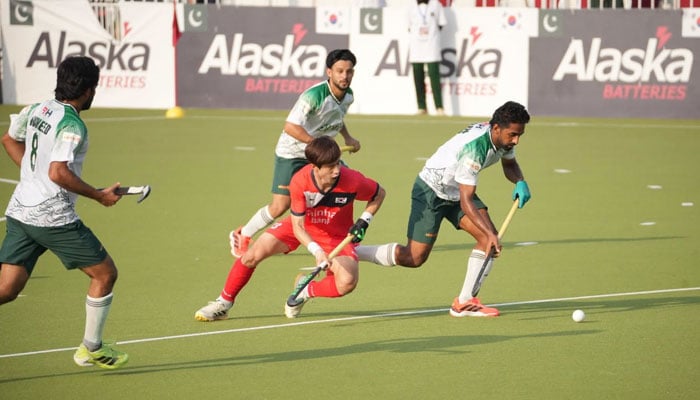
      ISLAMABAD:Pakistan’s national hockey team continued its impressive run by defeating South Korea in the third match of the four-Test series, securing an unassailable 3-0 lead and sealing the series with one game still to be played. The third Test, played at the Nasir Bunda Hockey Stadium in Islamabad, turned out to be an exciting contest filled with momentum shifts, dramatic goals, and a spirited comeback by the home side. Pakistan displayed resilience and determination, recovering from two separate deficits before claiming a memorable victory in front of the home crowd. South Korea made the stronger start and took the lead in the opening quarter. Their early pressure paid off in the 11th minute, when Lim Deun found the back of the net with a well-taken goal, giving the visitors a 1-0 advantage. Pakistan attempted to respond before the end of the first quarter but was unable to create a clear scoring opportunity. The second quarter saw Pakistan dominate possession and launch several attacks on the Korean goal. The hosts earned promising opportunities and repeatedly tested the opposition’s defence, but they failed to convert their chances into goals. South Korea remained organised at the back and successfully protected its narrow lead. As a result, neither side managed to score during the second quarter, and the visitors went into halftime leading 1-0. Pakistan finally restored parity in the third quarter when Hayat scored an important equaliser, lifting the spirits of both the players and the spectators. However, the celebrations were short-lived as South Korea responded quickly. Kim scored to put the visitors back in front, allowing Korea to end the third quarter with a 2-1 advantage. The fourth and final quarter produced the most thrilling action of the match, with a total of four goals scored. Pakistan came out with renewed energy and determination, pressing aggressively in search of another equaliser. Their persistence paid off as they erased South Korea’s lead and brought the match level once again. The visitors briefly regained the advantage by scoring another goal to make it 3-2 increasing the pressure on the Pakistani side. However, Pakistan refused to give up. During the final ten minutes, the home team produced an outstanding display of attacking hockey, dominating possession and creating multiple scoring opportunities. Pakistan’s relentless pressure eventually overwhelmed the Korean defence. The hosts not only equalised once more but also scored the decisive winning goal, completing a remarkable comeback. The Pakistani defence then held firm in the closing moments to preserve the lead until the final whistle, sealing another impressive victory. With this win, Pakistan secured a commanding 3-0 lead in the four-match Test series, ensuring the series title before the final fixture. The result reflects the team’s growing confidence and consistency, providing a major boost as it continues preparations for upcoming international competitions. Following the match, Pakistan Hockey Federation President Mohiuddin Wani distributed awards to the players in recognition of their performances. The ceremony was also attended by two legendary figures of Pakistan hockey, Olympians Samiullah and Hassan Sardar, who were present as special guests and applauded the team’s fighting spirit and successful series-winning performance.

  • Why Airplane seats must stay upright

    Anyone who has traveled by plane has heard the announcement. “Please return your seat to the full upright position.” Many passengers think it is just a routine instruction but it is actually one of the most important safety rules in aviation. Behind this simple request are years of scientific research safety testing and efforts to save lives. Air travel is one of the safest ways to travel.  However aviation experts say that takeoff and landing are the most critical parts of any flight. Most aircraft accidents happen during these two stages because the plane is close to the ground giving pilots very little time to react if something goes wrong. That is why airlines strictly enforce safety rules during these moments including asking passengers to keep their seats fully upright. Although an airplane seat may look simple it is an important part of the aircraft’s safety system. According to aviation safety standards seats go through tough crash tests before they are approved for use. Engineers place crash test dummies in the seats and simulate accidents to make sure the seats can protect passengers during a strong impact. These safety tests are performed only when the seat is in the upright position. In this position the seat frame locking system and floor attachments work together to provide the best protection. A reclined seat has not been tested to the same safety standard. Seat belts are also designed to work best when passengers are sitting upright. Airplanes use a lap belt that is meant to rest across the strong hip bones. In a sudden stop or impact the force is directed to these bones helping reduce the risk of serious internal injuries. If the seat is reclined the body moves into a different position.  During a crash or heavy turbulence a passenger may slide under the seat belt. This is known as “submarining.” When this happens the belt can press against the stomach instead of the hips increasing the risk of injuries to the abdomen and spine. There is another simple reason as well. When a seat is reclined, the passenger’s head and upper body travel a greater distance before stopping during a sudden impact. This extra movement can increase the force of the collision and lead to more serious injuries. Safety is not only about surviving an accident. It is also about getting everyone out of the aircraft as quickly as possible. International aviation rules require an airplane to be evacuated within 90 seconds even if some emergency exits cannot be used. A reclined seat can block the person sitting behind from leaving quickly. In an emergency even a few seconds of delay can make a big difference. That is why cabin crew always check that every seat is upright before takeoff and landing. Many people wonder why airlines allow passengers to recline their seats during the flight if it is considered a safety issue. The answer is simple. Once the aircraft reaches cruising altitude the risk of an accident becomes much lower. At that stage airlines allow passengers to recline their seats for comfort. However as soon as the plane begins its descent or prepares for takeoff the safety rules come into effect again. Most flights end safely and many passengers may never realize why this rule is so important.  But aviation safety is based on being prepared for unexpected situations. Even small precautions can help save lives. So the next time a flight attendant asks you to return your seat to the upright position remember that it is not just a routine announcement. It is a safety measure backed by years of research testing and real world experience.

  • | |

    Finding Macbeth among the cul-de-sacs

    There is a persistent cultural myth that high art requires crumbling castles, stormed heaths, or the frantic pulse of a metropolitan center. Suburbia, by contrast, is frequently dismissed as a landscape of cultural vacuum. The locality is defined instead by the hypnotic hum of lawnmowers, identical mailboxes, and the predictable choreography of the morning commute. Yet, to truly understand the works of William Shakespeare, one might argue that the quiet cul-de-sac is precisely where his characters feel most alive. Far from being an ivory-tower exercise, reading the Elizabethan canon against the backdrop of modern suburban life reveals a shocking truth. The human heart remains unchanged. It battles with the exact same ambitions, fears, and frailties that obsessed the playwright over four centuries ago. Shakespeare’s Macbeth Consider the iconic image of Macbeth encountering the three witches on a desolate heath. It’s a scene immortalized in classical art where armored men on horseback reel back in shock from supernatural prophets. On the surface, this imagery feels light-years away from a suburban subdivision. And yet, the psychological anatomy of Macbeth’s descent is intensely domestic. The internal dialogue of unchecked ambition, the quiet rationalization of moral compromise, and the creeping dread of consequences do not require a Scottish throne room. They can happen just as easily across a kitchen island or inside a quiet home office late at night. The weird sisters whispering prophecies of greatness are mirrored in modern life by the relentless cultural pressures to achieve. King Lear’s Misjudgment of His Children When we open a volume of Shakespeare, the distance between the sixteenth-century stage and the twenty-first-century lawn collapses. The suburban environment with its heavy emphasis on conformity and respectability provides a testing ground for tragedy. Iago’s subtle manipulations and toxic envy find their modern equivalents in politics, gossip, and the quiet resentments behind closed doors. King Lear’s tragic misjudgment of his children echoes in the universal anxieties of aging, and the desperate search for legacy. The stakes may appear smaller. They’re measured in property values and school districts rather than kingdoms and crowns but the emotional resonance is identical. Reading Shakespeare in Suburbia Furthermore, reading Shakespeare in suburbia changes how we interact with our immediate surroundings. It strips away the sterile academic intimidation that often turns classical literature into a chore to be checked off a syllabus. Instead, the verse becomes a lens through which the mundane details of daily existence are rendered extraordinary. The polite wave to a neighbor takes on a layer of complex subtext; the solitary evening walk under streetlights feels heavy with introspection. We begin to recognize that our neighbors are not merely background characters in a quiet life, but complex individuals harboring their own private comedies and tragedies.    Immutable Patterns of Human Behavior Ultimately, literature serves as a mirror. The suburban landscape offers a surface polished to a clear, sometimes uncomfortable reflection. Shakespeare did not write merely about royalty or historical epochs. He wrote about the immutable patterns of human behavior. By bringing his texts into the quiet corners of modern domestic life, we bridge the gap between antiquity and the everyday. We discover that drama is not something reserved for history books or theatrical stages, but an inescapable part of being human, waiting to be noticed right outside our front doors.

  • | | | |

    Pakistani folklore

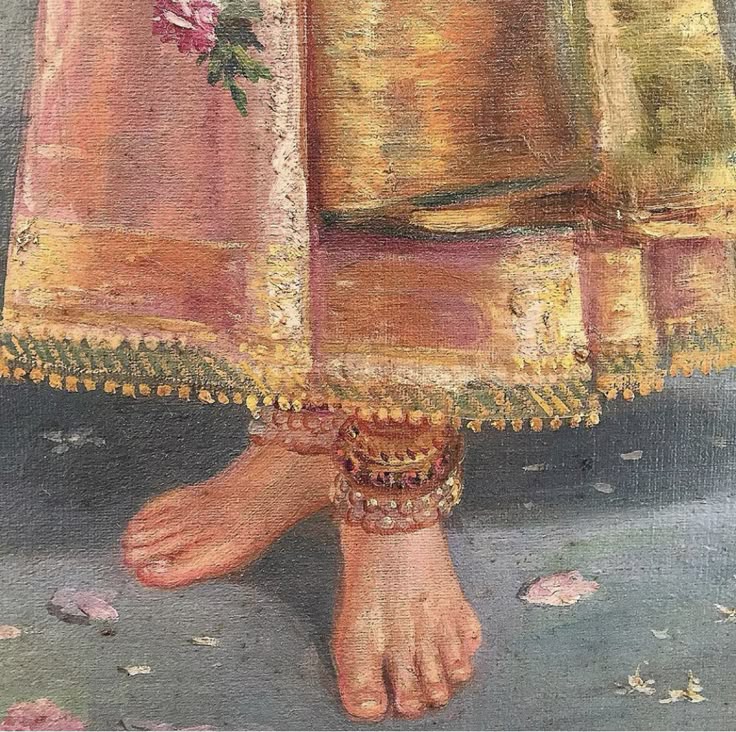
    Pakistani folklore is a vibrant web regional oral traditions, Sufi mystical allegories, and tribal epics across Punjab, Sindh, Balochistan, Khyber Pakhtunkhwa, and the northern mountain valleys. Punjab: Sufi Metaphors & Tragic Romances Punjabi folklore is dominated by tragic love stories (Kissa) that doubled as spiritual allegories for divine love (Ishq-e-Haqiqi). Heer Ranjha is immortalized by the poet Waris Shah. This narrative details the doomed union between Heer, a noblewoman, and Ranjha, an outcast flute player turned jogi. In case of Sohni Mahiwal, Sohni crosses the volatile Chenab River nightly using an baked earthenware pot (gharra) to meet her lover Mahiwal. One night, her sister-in-law replaces the vessel with unbaked clay. This  dissolves mid-stream, leading to Sohni’s tragic drowning. Mirza Sahiban is tale of romance, familial duty, and betrayal. The story culminated in Sahiban breaking Mirza’s arrows to protect her brothers. This act leads to Mirza’s demise. Sindh: The Seven Queens (Satt Surmyun) Sindhi lore centers around seven heroic women celebrated in Shah Abdul Latif Bhittai’s monumental Sufi compendium, the Shah Jo Risalo. Sassi (Sassi Punhun) searches the Makran desert for her abducted lover, Punhun, until the earth swallows her. Marui (Umar Marui) was abducted by King Umar. She refuses wealth and palace luxuries to remain faithful to her desert village. Moomal (Moomal Rano) operates the enchanted palace of Kak Mahal, tests suitors with magical illusions, and loses Rano to misunderstanding. Balochistan: Tribal Epics & Renunciation Baloch folklore prioritizes chivalry, tribal honor, and ascetic devotion. Hani and Sheh Mureed: The legendary hero Mureed sacrifices his marriage to Hani due to a bound oath given to Mir Chakar Rind. Mureed becomes a wandering dervish, becoming an archetype of ultimate devotion. Lulla and Granaz: Tales celebrating battlefield bravery, hospitality, and tribal allegiance. Khyber Pakhtunkhwa & Northern Valleys: Pashtun & Mountain Legends Adam Khan and Durkhanai: A Pashto romance where music plays a central role. Adam Khan’s soulful mastery of the Rabab brings the lovers together against social friction. Prince Saiful Muluk & Badri-ul-Jamal: Set in the high-altitude Kaghan Valley, a Persian prince falls in love with a fairy princess at Lake Saiful Muluk, giving the actual alpine lake its legendary name.

  • |

    The limits and depth of human consciousness

    For millions of years, the survival of living species depended almost entirely on practical adaptations. The core of living was finding food, securing shelter, avoiding predators, and reproducing. Yet, at a crucial juncture in evolutionary history, Homo sapiens began engaging in a behavior that offered no immediate physical utility like making art. From red ocher hand stencils on cave walls in Sulawesi and Western Europe to intricate bone flutes and sculpted figurines, early humans devoted valuable time and energy to symbolic creation. Today, neuroscientists, cognitive psychologists, and evolutionary anthropologists increasingly view art not as a secondary cultural luxury, but as a foundational hallmark of human consciousness. The Evolutionary Emergence of Symbolic Thought The birth of artistic expression marks a profound cognitive transition. While many animals exhibit complex behaviors, these actions are largely instinctual and functional. Human art, by contrast, relies on abstract symbolic thinking. The capacity to let one object, shape, or sound represent an idea, emotion, or absent reality. When an early human carved a figure or painted a thundering herd of bison onto rock, they were not merely copying their surroundings. They were projecting an internal mental world onto an external physical canvas. This ability to externalize subjective experience required a sophisticated architecture of consciousness, including robust working memory, metacognition (thinking about one’s own thinking), and a developed theory of mind. It’s the understanding that others possess distinct mental states and can interpret shared symbols. The Neurobiology of Aesthetic Experience Modern neuroimaging reveals that creating and contemplating art engages large-scale, interconnected brain networks. When a person immerses themselves in a painting, music, or literature, the Default Mode Network (DMN) works with sensory and emotional circuits. Artistic engagement triggers a dynamic dialogue between the visual or auditory cortex, the limbic system (which processes emotion), and executive regions in the prefrontal cortex. This complex cross-talk allows humans to experience qualia. The subjective, qualitative feel of conscious experiences. A visual composition does not simply register as light wavelengths in the brain; it evokes nostalgia, awe, melancholy, or inspiration. This capacity to synthesize raw sensory inputs with deep emotional resonance and reflective thought is a unique feature of high-level conscious awareness. Lived Experience versus Machine Patterning In an era dominated by artificial intelligence algorithms capable of generating hyper-realistic images and musical compositions in seconds, the relationship between art and consciousness has taken on renewed urgency. While generative models analyze billions of data points to predict and replicate aesthetic patterns, they operate entirely without subjective awareness, intent, or emotional feeling. Human art originates from a grounded biological reality: the lived experience of mortality, joy, heartbreak, bodily sensation, and social existence. The power of a masterpiece lies not merely in its formal technique, but in the implicit bridge it constructs between the inner world of the artist and that of the observer. Art is fundamentally a dialogue of consciousnesses. It is a mechanism through which one conscious entity communicates what it feels like to exist. A Mirror to Human Identity Ultimately, art serves as both a product and a mirror of conscious awareness. It enables individuals to simulate hypothetical scenarios, process complex social dynamics, and navigate existential questions about purpose and mortality. By translating internal emotional states into tangible forms, humans construct shared cultural meaning and foster deep social cohesion.   As science continues to explore the mystery of how physical brain matter generates subjective experience, art remains our most visible and enduring cognitive fingerprint. It stands as compelling proof that human consciousness is defined not just by how we perceive the objective world, but by our infinite capacity to imagine and construct new ones.

  • |

    Pashtun identity in modern South Asia

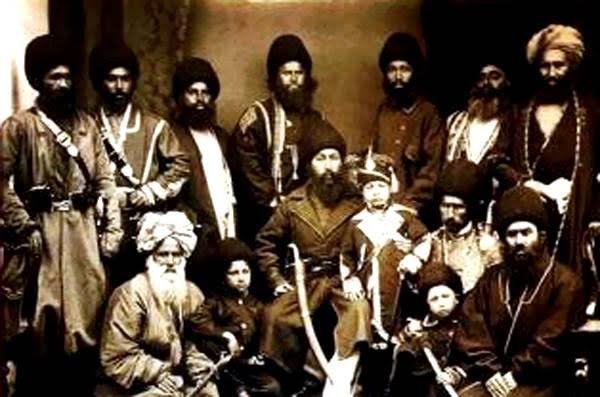
    The Pashtuns represent one of the most populous indigenous groups across South and Central Asia, predominantly in Afghanistan and Pakistan. Their social backbone relies on interconnected lineages, extended families, clans, and tribal alliances rather than a centralized political authority. From major confederations like the Durrani and Ghilzai to influential communities such as the Yusufzai, Afridi, Mohmand, Khattak, Wazir, and Mahsud, Pashtun society is a rich tapestry of overlapping regional, religious, and civic loyalties. At the core of their culture is Pashtunwali, an ancient honor code governing daily life through principles of hospitality, courage, asylum, and restorative justice. Historically, community issues and disputes were negotiated collectively through jirgas, or assemblies of local elders, maintaining order through consensus. Empire Builders and Cultural Crossroads Beyond tribal structure, Pashtuns have repeatedly reshaped the political landscape of the Indian subcontinent and Central Asia. Sultanate Dynasties: The Lodi dynasty established its rule over the Delhi Sultanate, paving the way for intricate South Asian governance structures. Administrative Reforms: Imperial leader Sher Shah Suri founded the Sur Empire in North India, pioneering sweeping reforms in taxation, infrastructure development, and currency. Empire Founding: In the 18th century, Mirwais Hotak challenged Safavid Persian dominance, while Ahmad Shah Durrani established the Durrani Empire in 1747, laying the groundwork for modern Afghanistan. This history is far more than military conquest. Pashtun territories served as vital crossroads where Persian, Turkic, Indian, and Islamic traditions converged. Consequently, their heritage spans beyond warrior traditions. It thrives in rich oral poetry, musical compositions, complex embroidery, craftsmanship, and trade networks. The Borderlands and Modern Challenges The 19th century brought prolonged conflict with British imperial forces along the northwestern frontier. A pivotal turning point arrived with the demarcation of the Durand Line in 1893. By drawing an artificial boundary between Afghanistan and British India (now Pakistan), the British divided ancestral Pashtun communities, establishing a geopolitically sensitive frontier that continues to spark debate and shape regional politics today.   In recent weeks, administrative re-alignments and border disputes in provinces like Balochistan and Khyber Pakhtunkhwa have reignited local debate. Prominent political and tribal leaders have voiced strong resistance to state restructuring, asserting that top-down administrative decisions risk erasing historical identities. Through renewed calls for broad political dialogue rather than bureaucratic divisions, modern Pashtun communities continue to rely on unified assemblies to safeguard their cultural heritage, self-determination, and historical voice in a changing region.

  • | |

    Egypt’s Salman Khalil defeats Pakistan’s Nasir Iqbal 

      Egypt’s Salman Khalil emerged victorious at the PN Fleet Club Open International Squash Championship after defeating Pakistan’s Nasir Iqbal in a thrilling final held at the Pakistan Navy Roshan Khan-Jahangir Khan Squash Complex in Karachi. The prestigious tournament, organized by the Sindh Squash Association, concluded with an impressive display of world-class squash and highlighted the growing of the event. Third-seeded Salman Khalil from Egypt outclassed Pakistan’s experienced player Nasir Iqbal in straight games to claim the championship title. Khalil secured the victory with game scores of 14-12, 11-3, and 13-11, demonstrating remarkable consistency, skill, and composure throughout the contest. Although Nasir Iqbal fought hard and received strong support from the home crowd, he was unable to overcome the Egyptian’s aggressive play and tactical brilliance. The final attracted several distinguished guests from Pakistan’s sports and military communities. Commander Karachi, Vice Admiral Faisal Amin, attended the event as the chief guest and distributed prizes among the winners and runners-up. The ceremony was also graced by the presence of Pakistan’s squash legend and former world champion Jahangir Khan, along with former Governor of Sindh Moinuddin Haider, who praised the high standard of competition and encouraged young players to pursue excellence in the sport. The championship featured a total prize purse of US$41,000 making it one of the most significant squash tournaments held in Pakistan this year. The event attracted talented players from different countries and provided local athletes with an opportunity to compete against international opponents on home soil. Speaking at the closing ceremony, Vice Admiral Faisal Amin expressed his satisfaction over the successful organization of the tournament. He said that hosting an international squash championship of this caliber was a positive step for Pakistan’s sporting landscape. He reaffirmed the Pakistan Navy’s commitment to promoting sports and supporting athletes through the organization of national and international competitions. According to him, such events help revive Pakistan’s rich sporting traditions while inspiring the younger generation to participate in healthy and competitive activities. Sindh Squash Association President Adnan Asad also addressed the audience during the prize distribution ceremony. He revealed that several more high-prize-money squash tournaments are being planned in the near future. He emphasized that the responsibility now lies with the players to work hard, improve their skills, and seize the opportunities being created for them. Asad expressed confidence that regular international competitions would contribute significantly to the development of Pakistani squash. Former world champion Jahangir Khan shared his hopes for the future of Pakistani squash. He said he dreams of seeing Pakistani players qualify for the Los Angeles Olympic Games and ultimately win the country’s first Olympic gold medal in squash. Jahangir stressed that achieving such success would require unwavering dedication, discipline, and hard work. He urged young players to focus solely on their training and performance if they aspire to become legends like Jahangir Khan and Jansher Khan, whose achievements once made Pakistan the dominant force in world squash. The successful conclusion of the PN Fleet Club Open International Squash Championship reflects Pakistan’s continued efforts to revive its historic legacy in squash by hosting international competitions, nurturing emerging talent, and providing athletes with valuable exposure at the highest level.

  • | | |

    PCB warns former cricketers over participation 

      The Pakistan Cricket Board (PCB) has taken serious notice of the participation of former Pakistani cricketers in the unauthorized Asian Legends League currently being held in Zambia. The board has announced strict disciplinary measures against any current or former player who participates in the event without obtaining prior approval through a No Objection Certificate (NOC). According to the PCB, the Asian Legends League is not recognized or approved by either the International Cricket Council (ICC) or the Zambia Cricket Union. As a result, the tournament is considered an unauthorized event, and players participating without official permission are deemed to be in violation of the board’s regulations. In an official statement, the PCB emphasized that all current and former Pakistani cricketers must obtain an NOC before taking part in any cricket event or league outside Pakistan. The board stressed that this requirement is in place to protect the integrity of the game, ensure player accountability, and maintain proper coordination with international cricket authorities. The PCB warned that any former cricketer found participating in the unauthorized league without receiving an NOC will face strict consequences. One of the key penalties announced by the board is a two-year ban on the issuance of any future NOCs. This means that players who violate the regulations will not be granted permission to participate in overseas cricket tournaments or exhibition events organized outside Pakistan during that period. In addition to restrictions on international participation, the PCB has also declared that individuals involved in the unauthorized league will be ineligible for coaching, mentoring, commentary, talent development, or any other official responsibilities associated with the Pakistan Cricket Board and the Pakistan Super League (PSL) for two years. The decision reflects the board’s intention to ensure that those associated with unauthorized competitions do not continue to benefit from official roles within Pakistan’s cricket structure. The board’s statement serves as a strong reminder that compliance with PCB regulations is mandatory for all Pakistani cricketers, regardless of whether they are active professionals or retired players. The NOC system is designed to regulate players’ participation in foreign leagues, safeguard contractual obligations, and ensure that events meet international standards and receive recognition from the relevant governing bodies. The PCB further advised all current and former players to verify the status of overseas tournaments before accepting invitations to participate. Players have been instructed to seek formal approval from the board in advance to avoid disciplinary action and ensure that the competitions they join are officially sanctioned. Cricket boards around the world often require players to obtain NOCs before participating in overseas leagues. These approvals help confirm that tournaments are legitimate, properly organized, and conducted under recognized cricketing authorities. The PCB’s latest decision reinforces its commitment to maintaining professionalism, protecting the reputation of Pakistani cricket, and ensuring that its players compete only in approved events. By announcing these strict measures, the Pakistan Cricket Board has sent a clear message that unauthorized participation in unrecognized tournaments will not be tolerated. The board hopes the policy will encourage greater discipline among players while preserving the credibility of Pakistan’s cricketing system. Going forward, all Pakistani cricketers are expected to strictly follow PCB regulations and obtain the necessary approvals before participating in any cricket event outside the country.

  • | | |

    Arshad Nadeem confirmed for Lausanne Diamond Leagu…

      Pakistan’s Olympic champion Arshad Nadeem has officially been included in the entry list for the Lausanne Diamond League one of the most prestigious athletics competitions in the world. The organizers released the official entry list for the event, which is scheduled to take place on August 21 in Lausanne, Switzerland. The competition is expected to feature many of the world’s finest javelin throwers, promising an exciting contest among elite athletes. Arshad Nadeem, who has become one of Pakistan’s greatest sporting icons following his remarkable achievements on the international stage, will compete against some of the biggest names in javelin throwing. His participation has generated significant excitement among Pakistani sports fans, who are eager to see him continue his outstanding form against the world’s best competitors. One of the biggest highlights of the event will be the much-anticipated rivalry between Arshad Nadeem and India’s Neeraj Chopra. The two Olympic stars have developed one of the most exciting rivalries in international athletics, consistently delivering high-quality performances whenever they compete. Their presence at the Lausanne Diamond League is expected to attract global attention, with athletics enthusiasts looking forward to another thrilling showdown. The competition will also feature an impressive lineup of world-class athletes. Two-time world champion Anderson Peters of Grenada has confirmed his participation and will be aiming to add another major victory to his impressive career. Former Olympic champion Thomas Röhler of Germany will also compete, bringing his vast experience and championship pedigree to the event. In addition, Trinidad and Tobago’s Olympic gold medalist Keshorn Walcott is included in the entry list, further strengthening the highly competitive field. Several other leading javelin throwers from around the world are also expected to take part. These include Romesh Pathirage of Sri Lanka, Curtis Thompson of the United States, Jakub Vadlejch of the Czech Republic, Julian Weber of Germany, and Simon Wieland all of whom have established themselves as strong competitors on the international athletics circuit. Their inclusion ensures that the Lausanne Diamond League will feature one of the strongest javelin fields of the season. The Lausanne Diamond League is recognized as one of the premier events in the annual Diamond League series, attracting Olympic champions, world champions, and top-ranked athletes from across the globe. Strong performances at these meetings not only boost athletes’ world rankings but also serve as valuable preparation for upcoming international championships. For Pakistan, Arshad Nadeem’s participation represents another significant milestone in the country’s growing presence in international athletics. His consistent performances have inspired a new generation of athletes and elevated the profile of track and field sports in Pakistan. Fans will be hoping he can once again deliver a memorable performance and further cement his reputation among the world’s elite javelin throwers. The Lausanne Diamond League will take place on August 21 in Lausanne, Switzerland where spectators can expect a thrilling contest featuring Olympic champions, world champions, and several of the finest javelin throwers from around the globe.