• |

    Veteran Indian actor Pradeep Rawat, passes away at 74

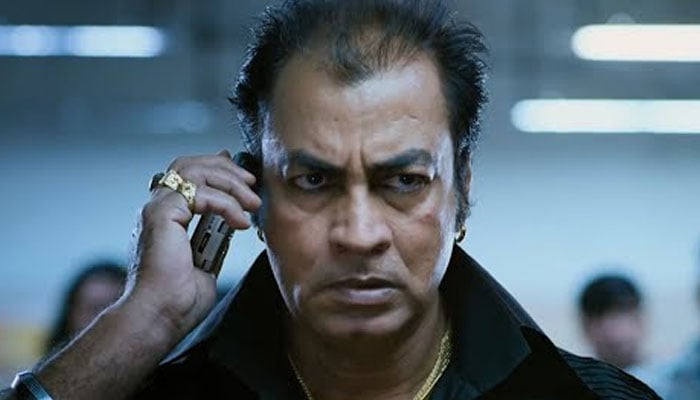
      Veteran Indian actor Pradeep Rawat, best known for his memorable performances in the blockbuster films Ghajini and Lagaan, has passed away at the age of 74 after a battle with cancer. His death marks the end of an illustrious career spanning several decades across Indian television and cinema. Rawat was widely admired for his commanding screen presence, deep voice, and exceptional portrayal of powerful villainous characters. According to Indian media reports, the veteran actor had been suffering from cancer and had been undergoing treatment in a hospital for the past month. Despite receiving medical care, his condition reportedly worsened after the disease relapsed. His manager, Siddharth Tiwari confirmed the heartbreaking news to the media, stating that Rawat had been battling cancer for some time and that the illness had returned aggressively. He passed away just a few hours before the announcement was made. Pradeep Rawat is survived by his wife and his son, Vikram Aditya, who are now mourning the loss of a beloved husband and father. Fans, colleagues, and members of the Indian film industry have also expressed their grief, remembering him as a talented actor and a humble individual who left a lasting impression on everyone he worked with. Actor Yashpal Sharma who worked alongside Rawat in the critically acclaimed film Lagaan, paid tribute to his late co-star by sharing a photograph of him on Instagram. In his emotional message, Sharma remembered Rawat as a remarkable performer and a wonderful human being whose contributions to Indian cinema will never be forgotten. Many other actors, filmmakers, and fans have also taken to social media to express their condolences and celebrate his extraordinary body of work. Pradeep Rawat began his acting journey on television by portraying Ashwatthama in legendary filmmaker B.R. Chopra’s iconic historical television series Mahabharat. His powerful performance in the role earned him nationwide recognition and established him as a talented performer capable of bringing complex characters to life. The success of the series opened the doors to a flourishing film career. Following his television success, Rawat transitioned into films, where he became one of the most recognizable faces for antagonist roles. His imposing physique, intense expressions, and distinctive voice made him a favorite choice for filmmakers looking for strong and memorable villains. Over the years, he built an impressive filmography in Hindi as well as South Indian cinema. Among his most celebrated performances was his role as the ruthless villain in Aamir Khan’s blockbuster Ghajini, where his intimidating screen presence contributed significantly to the film’s success. He also delivered a memorable performance as Deva in the Oscar-nominated film Lagaan. In addition, Rawat won widespread appreciation for his performances in Rowdy Rathore and the Telugu blockbuster Sye, where his portrayal of powerful antagonists earned praise from audiences and critics alike. Throughout his career, Pradeep Rawat remained one of India’s most respected character actors, admired for his professionalism, versatility, and dedication to his craft. His performances across television and film have left an enduring legacy that will continue to inspire future generations of actors. While he is no longer with us, his unforgettable roles and immense contribution to Indian entertainment will ensure that his memory lives on in the hearts of millions of fans around the world.

  • | |

    Three killed, four injured in family dispute shoot…

      At least three people were killed and four others sustained injuries in a shooting incident near Charsadda Adda in Peshawar, according to local police authorities. The tragic incident, which occurred following a heated domestic dispute, has shocked residents of the area and prompted an immediate police investigation. Police officials stated that the shooting took place after an argument between two groups of relatives escalated into a violent confrontation. What initially began as a disagreement over family matters quickly turned deadly when firearms were used. The exchange of gunfire resulted in the deaths of three individuals at the scene, while four others were injured and rushed to nearby hospitals for medical treatment. The condition of the injured has not yet been officially disclosed. Law enforcement authorities responded swiftly after receiving reports of the incident. Police teams reached the crime scene, secured the area, and began collecting evidence. The bodies of the deceased were shifted to a hospital for legal formalities and post-mortem examinations, while investigators interviewed witnesses to determine the exact sequence of events. According to the police, a formal case has been registered at Faqirabad Police Station, and efforts are underway to identify and arrest those responsible for the shooting. Authorities have launched a search operation to locate the suspects, who reportedly fled the scene immediately after the incident. Police officials expressed confidence that those involved would soon be brought to justice. Preliminary investigations indicate that both groups involved in the incident are closely related. Police believe the violence stemmed from a long-standing domestic dispute that escalated beyond control. Although the exact nature of the disagreement has not been officially revealed, investigators are examining all aspects of the family conflict to establish the motive behind the shooting. Family disputes turning violent remain a serious concern in various parts of Pakistan, where disagreements over property, inheritance, financial issues, or personal matters can sometimes escalate into deadly confrontations. Law enforcement agencies have repeatedly urged citizens to resolve conflicts through legal and peaceful means rather than resorting to violence. The incident has created an atmosphere of fear and sadness among local residents, many of whom expressed concern over the increasing use of firearms in personal disputes. Community members have called on authorities to ensure that those responsible are held accountable and to strengthen measures aimed at preventing similar tragedies in the future. Police officials emphasized that the investigation is still in its early stages and that additional details will be made public as evidence is collected and witness statements are recorded. Authorities are also reviewing forensic evidence from the crime scene to support the investigation. The tragic shooting serves as a reminder of the devastating consequences of unresolved family conflicts and the dangers associated with the misuse of weapons. As the investigation continues, the families of the victims await justice, while local authorities remain committed to apprehending the suspects and uncovering the full circumstances surrounding the incident. The police have assured the public that every effort is being made to complete the investigation promptly and transparently. Further updates are expected as the search for the accused continues and more information becomes available through the ongoing inquiry.

  • |

    Talks accelerate to fully reopen Strait of Hormuz 

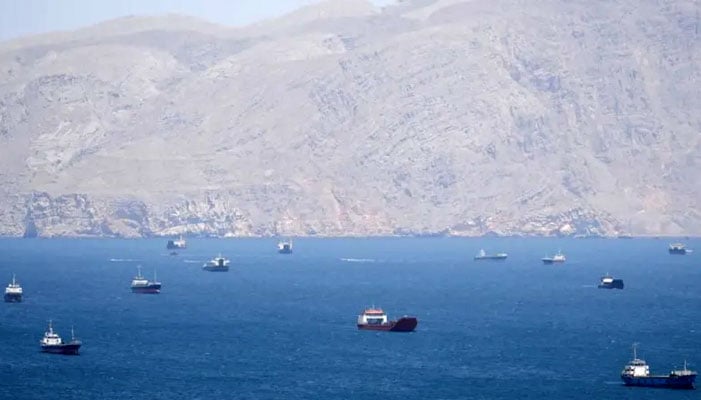
      Efforts to fully reopen the Strait of Hormuz, one of the world’s most strategically important maritime trade routes, are gaining momentum as diplomatic contacts between the United States and Iran continue to show encouraging progress. According to reports preparations are underway to restore unrestricted commercial navigation through the vital waterway, with an official announcement expected within the next few hours or by Wednesday. The Strait of Hormuz serves as a critical shipping corridor connecting the Persian Gulf to international waters, carrying a significant share of the world’s crude oil, liquefied natural gas, refined petroleum products, and other essential commodities. Any disruption in traffic through the strait has immediate consequences for global energy markets and international trade. Arab television channels have claimed that discussions aimed at fully reopening the waterway have advanced considerably. The reports suggest that diplomatic negotiations have entered their final stages and that an agreement could soon be announced, allowing commercial vessels to resume normal operations after a period of uncertainty. Earlier, U.S. Treasury Secretary Scott Bessent also expressed optimism regarding the ongoing negotiations. Speaking to media in Washington , he said there was a strong possibility that an agreement to reopen the Strait of Hormuz could be reached by Tuesday or Wednesday.Talks between Washington and Tehran are focused on ensuring the uninterrupted movement of commercial ships through the strategic passage while restoring stability to the region. During the interview, the Treasury Secretary noted that negotiations are continuing with the aim of normalizing the security situation in the Strait of Hormuz and guaranteeing safe passage for international shipping. He emphasized that both sides are engaged in discussions designed to reduce tensions and facilitate the free flow of maritime commerce. When asked whether Iran would be permitted to collect toll fees from vessels passing through the Strait of Hormuz, Bessent dismissed the possibility. He clarified that the proposed arrangement is based on the principle of complete freedom of navigation for all commercial vessels. According to him, the agreement is intended to ensure that ships from every nation can transit the waterway without facing additional charges or restrictions. If finalized, the agreement is expected to have far-reaching economic benefits. In addition to restoring the uninterrupted export of crude oil from Gulf producers, it would also enable the smooth transportation of fertilizers, refined petroleum products, industrial gases, and numerous other essential commodities. Industry experts believe that the reopening of the strait would significantly improve global supply chains that have been disrupted by regional tensions. Another major benefit of the proposed agreement would be the release of hundreds of commercial vessels currently delayed or stranded in the Persian Gulf due to security concerns. Allowing these ships to resume their voyages would ease congestion, reduce shipping costs, and improve delivery schedules for international trade. Economists suggest that a full reopening of the Strait of Hormuz could also help stabilize global energy markets. Increased supplies of crude oil and petroleum products would likely ease concerns over shortages, potentially leading to lower international oil prices. Reduced transportation costs could further contribute to price relief across several sectors, including manufacturing, agriculture, and consumer goods. While optimism surrounding the negotiations has grown, officials have yet to announce a formal agreement. Diplomatic efforts remain ongoing, and both governments are expected to continue discussions until a final framework is approved. Observers around the world are closely monitoring developments, as the outcome of these talks could have a significant impact on global trade, energy security, and regional stability. If the anticipated agreement is reached, it would mark an important diplomatic breakthrough, restoring confidence in one of the world’s busiest maritime corridors and helping normalize commercial activity throughout the Gulf region.

  • |

    Constitution, rule of law and strong defence key to Pakistan’s future, says Senator Abdul Qayyum

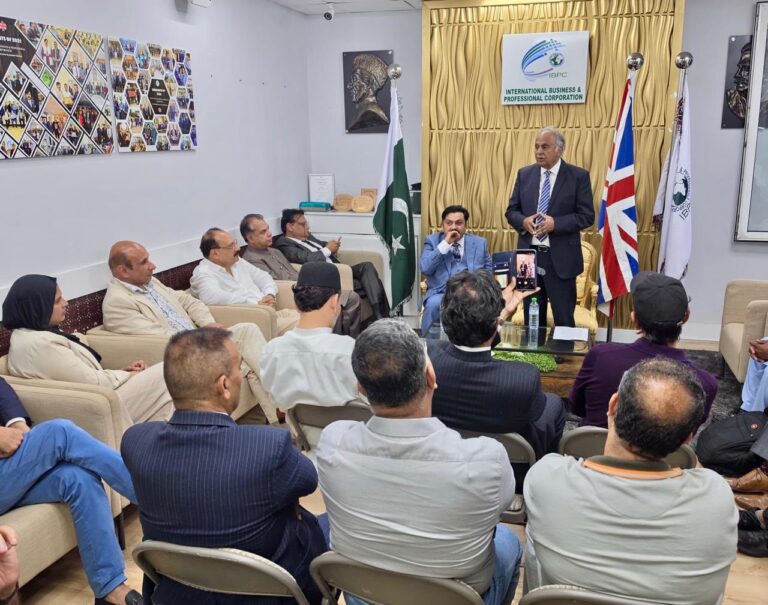
    LONDON:  Constitutional supremacy, the rule of law, a vibrant economy and a strong defence are the four pillars that will safeguard Pakistan’s sovereignty and ensure its long-term stability, former Chairman of the Senate Standing Committee on Defence Production Senator Lt Gen (R) Abdul Qayyum HI(M) said in London. Addressing a Pakistan Independence Day reception organised by the International Lawyers Club UK (ILCUK) in London to mark Pakistan’s 79th Independence Day, the President of the Pakistan Ex-Servicemen Society (PESS) said Pakistan’s independence was won through “immense sacrifices, visionary leadership and the constitutional struggle led by Quaid-e-Azam Muhammad Ali Jinnah.” “Among the greatest blessings of Allah Almighty is living as free citizens of an independent and sovereign Pakistan,” he said, adding that the country’s freedom “is not merely inherited but has to be continuously protected through unity, discipline and national resolve.” Paying tribute to Pakistan’s Armed Forces, Senator Abdul Qayyum said the military had repeatedly defended the country’s sovereignty and territorial integrity against external aggression, terrorism and hybrid threats. “Our Armed Forces have successfully confronted external aggression, terrorism and various hybrid threats because of the determination of our people and the sacrifices, professionalism and courage of our soldiers,” he said. “The nation takes pride in its internationally respected Armed Forces, which have repeatedly defended Pakistan’s sovereignty and territorial integrity.” He warned that Pakistan continued to face a range of internal and external challenges, including terrorism, foreign-sponsored insurgency, disinformation campaigns, sectarianism and political polarisation. He stressed that operations against terrorists and armed militants should be viewed as a constitutional responsibility of the state rather than political repression. “Action against armed militants, terrorists and those working against the state should not be misconstrued as repression, but rather as the constitutional responsibility of the state to protect the lives and property of its citizens,” he said. While acknowledging the importance of democratic freedoms, Senator Abdul Qayyum said freedom of expression must be exercised responsibly. “Freedom of expression and difference of opinion should never come at the expense of national security,” he said, adding that unity between the people, constitutional institutions and the Armed Forces remained “the strongest guarantee of Pakistan’s sovereignty, stability and democratic future.” Highlighting the historic contribution of lawyers to the Pakistan Movement, he said the legal fraternity had played a decisive role in achieving independence through constitutional means. He urged lawyers and barristers to continue defending the Constitution, upholding the rule of law and strengthening democratic institutions. Turning to Pakistan’s future priorities, the senator called for strict adherence to constitutional governance, separation of powers, an independent judiciary and impartial accountability. He also advocated comprehensive industrial and agricultural reforms, greater investment in education, science, research and artificial intelligence, modernisation of Pakistan’s defence capabilities and stronger border security. Referring to criticism of the military, Senator Abdul Qayyum said retired servicemen, pensioners of second-line forces and civilians associated with the defence sector stood firmly behind the Armed Forces. “Those who demonise this sacred institution in the national and international media do no service to the country,” he said, urging the media to report responsibly and avoid undermining institutions responsible for safeguarding Pakistan’s security. Concluding his address, Senator Abdul Qayyum called on Pakistanis at home and abroad to renew their commitment to strengthening national institutions, rebuilding the economy, educating future generations and honouring the sacrifices of the nation’s martyrs. “I am confident that through unity, collective effort and by placing national interests above political differences, Pakistan will emerge stronger, more resilient and more prosperous in the years ahead,” he said.

  • | |

    78 policemen suspended after Lahore station rape a…

    Punjab Police suspended 78 officials of Lahore’s Ghaziabad Police Station after an assistant sub-inspector (ASI) was arrested for allegedly sexually assaulting a mentally challenged young woman inside the police station. The action followed the registration of a First Information Report (FIR) against the accused under rape provisions of the Pakistan Penal Code and relevant sections of the Police Order 2002. Senior police authorities immediately took notice of the incident and ordered the arrest of the suspect. According to the complaint filed by the victim’s father, his 19 to 20-year-old daughter, who has a mental disability, left home on Sunday afternoon and did not return for some time. During the search, a local resident allegedly informed the family that a policeman in plain clothes had taken the girl away. The complainant said he rushed to the Ghaziabad Police Station, where he was told that his daughter had already been sent home. After returning home, he found her in distress. He alleged that she told him a police official had taken her to the station and sexually assaulted her. Following the complaint, police registered a case and arrested the accused ASI. Authorities also launched both criminal and departmental investigations into the matter. As part of disciplinary action, 78 police personnel, including the station house officer (SHO), sub-inspectors, assistant sub-inspectors, front desk officials and other staff members, were suspended over alleged negligence, poor supervision and failure to maintain discipline at the police station. All suspended officials have been directed to report to Police Lines until further orders. Police officials said maintaining discipline and ensuring a safe environment at police stations is the responsibility of every officer. They warned that negligence or irresponsible conduct would not be tolerated and pledged strict accountability at the police station level. A new SHO has been appointed to take charge of Ghaziabad Police Station while the investigation continues. Punjab Women Protection Authority Chairperson Hina Parvez Butt strongly condemned the incident, describing it as deeply disturbing and calling for strict legal action against those responsible. Police said further legal and departmental proceedings will be carried out after the investigation is completed.

  • | |

    Amnesty urges Pakistan to free Imran Khan

    Amnesty International has called on the Pakistani government to release former prime minister and Pakistan Tehreek-e-Insaf (PTI) founder Imran Khan as he completes three years in prison, urging authorities to restore his fundamental rights and ensure access to medical care, family members and legal counsel. In a statement issued ahead of the third anniversary of his imprisonment, Amnesty International’s South Asia office expressed concern over Imran Khan’s detention conditions, alleging that he has been denied a fair trial, kept in prolonged solitary confinement and restricted from meeting his relatives and lawyers. The organisation claimed that Imran has not been allowed to meet members of his family for several months and raised concerns over reports that his eyesight has worsened while in custody. It also said that both Imran Khan and his wife, Bushra Bibi, have faced prolonged restrictions on access to legal representatives. Amnesty urged the authorities to immediately restore the couple’s right to meet their lawyers and family members, provide appropriate medical treatment and end what it described as unlawful solitary confinement. The rights organisation also called on the government to ensure that planned public gatherings marking Imran Khan’s three years in detention are allowed to proceed peacefully. It stressed that citizens should be able to exercise their right to peaceful assembly without facing arbitrary restrictions or crackdowns. The appeal comes days after a United Nations special rapporteur also expressed concern over reports regarding Imran Khan’s health and urged authorities to provide him with humane treatment, proper medical care and access to doctors of his choice. Imran Khan has remained in Adiala Jail since August 2023. He is serving sentences in multiple cases, including the £190 million corruption case and the Toshakhana-II case, while also facing several other legal proceedings linked to the May 9, 2023 protests. PTI has repeatedly alleged that its founder is being denied adequate medical treatment, particularly for an eye condition, and has appealed to international human rights organisations to intervene. The party maintains that his constitutional rights and due process protections have been violated during his incarceration. The government has previously rejected allegations of mistreatment, maintaining that legal proceedings against Imran Khan are being conducted in accordance with the law.

  • | | | |

    Petrol down Rs3.39, diesel Rs4.07

    The federal government has announced another reduction in petroleum prices, lowering the rates of both petrol and high-speed diesel (HSD) effective August 5 under the recently introduced daily fuel pricing mechanism. According to a notification issued by the Ministry of Petroleum, the price of petrol has been reduced by Rs3.39 per litre, bringing the new rate to Rs328.56 per litre. The price of high-speed diesel has also been cut by Rs4.07 per litre, with the revised rate set at Rs385.86 per litre. The latest reduction follows a similar decrease announced a day earlier, reflecting continued adjustments under the government’s daily fuel price review system. The new pricing mechanism, introduced on July 17, determines fuel prices using a seven-day average of international oil market rates. The policy aims to align domestic petroleum prices more closely with global market trends and allow quicker adjustments in response to fluctuations in crude oil prices. Pakistan remains heavily dependent on imported crude oil and refined petroleum products, making local fuel prices highly sensitive to movements in international energy markets. Changes in global oil prices directly affect the country’s import bill, foreign exchange reserves and inflation. Energy analysts say international petroleum prices continue to be influenced by geopolitical developments, including tensions in the Middle East, decisions by OPEC+ countries, sanctions on major oil producers and disruptions in key global shipping routes. These factors can significantly impact crude oil prices and transportation costs, ultimately affecting domestic fuel prices in Pakistan.

  • | |

    Govt approves Rs13bn relief for PTV

    ISLAMABAD: The federal government has approved a Rs13 billion supplementary grant to help Pakistan Television Corporation (PTV) overcome its worsening financial difficulties, while also authorizing sovereign guarantees worth Rs34.6 billion for the Sialkot–Kharian Motorway project. The decisions were made during a virtual meeting of the Economic Coordination Committee (ECC), chaired by Finance Minister Muhammad Aurangzeb. The Ministry of Information and Broadcasting had requested Rs20 billion to cover PTV’s salaries, allowances, utility bills, and other essential operational expenses. However, the ECC approved Rs13 billion, which will be released in quarterly installments of approximately Rs3.25 billion. PTV, which operates under the Pakistan Television Corporation Act and is headed by Information Secretary Ashfaq Ahmed Khokhar as its Managing Director, has been facing mounting financial challenges. According to the Ministry of Finance’s latest report, the broadcaster’s revenue declined by 22 percent during fiscal year 2024-25, falling to Rs14.3 billion. The corporation also recorded a net loss of Rs639 million, placing it among Pakistan’s 20 largest loss-making state-owned enterprises. The ECC also cleared sovereign guarantees totaling Rs34.6 billion for the 69-kilometre Sialkot–Kharian Motorway project. The motorway is being developed under the Public-Private Partnership (PPP) model and was awarded in September 2021 to Sialkot Kharian Infrastructure Management (Private) Limited, a subsidiary of the Frontier Works Organization (FWO). The approved guarantees include Rs17.4 billion for Capital Viability Gap Funding, Rs10.3 billion to facilitate commercial borrowing, and nearly Rs7 billion for Operational Viability Gap Funding. In addition, the Ministry of Finance confirmed that the ECC authorized Rs27.62 billion in fresh sovereign guarantees and approved the rollover of Rs6.94 billion in existing operational viability funding to help the project achieve financial close under its revised financing structure. The government had already revised the PPP agreement for the motorway in February this year, requiring the concessionaire to complete financial arrangements within six months. Rising construction costs, inflation, higher interest rates, and design modifications prompted a restructuring of the project’s financial framework. As part of the revised agreement, the concession period has been extended from 25 years to 29 years. During the first year of operations, toll rates are expected to start at Rs4.1 per kilometre for cars, around Rs10 for minibuses, Rs13.7 for large buses, and Rs23 per kilometre for heavy trucks. The Ministry of Finance estimates that new sovereign guarantees worth Rs683 billion will be issued between April 2026 and June 2027 for various public projects and state-owned entities. Pakistan’s total sovereign guarantees currently stand at Rs4.4 trillion and are projected to exceed Rs5 trillion by June next year. More than Rs2.4 trillion of these guarantees support the power sector, while Rs895 billion have been allocated for commodity procurement and storage operations.

  • | |

    President and PM reaffirms support for Kashmir on …

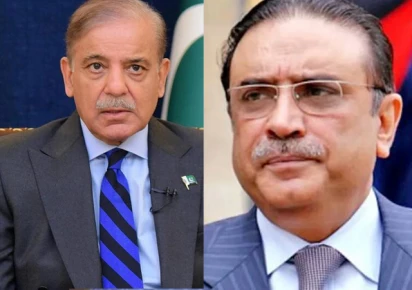
    ISLAMABAD: President Asif Ali Zardari and Prime Minister Shehbaz Sharif reaffirmed Pakistan’s support for the people of Kashmir on Kashmir Exploitation Day, urging the international community to play a more active role in resolving the longstanding dispute. In his message, President Zardari said lasting peace in South Asia depends on a peaceful and just settlement of the Jammu and Kashmir issue. He stated that India’s actions cannot alter the internationally recognized status of the dispute or weaken the determination of the Kashmiri people, adding that Pakistan will continue to stand firmly with them. Prime Minister Shehbaz Sharif said the measures introduced by India since August 2019 have led to increased repression and restrictions on fundamental freedoms in the region. He also accused India of attempting to alter the demographic composition of the occupied territory. The prime minister called on the international community to move beyond expressions of concern and play a responsible role in achieving a fair and lasting resolution to the Kashmir dispute. He also urged India to end alleged human rights violations in the occupied valley and reverse the unilateral measures introduced in August 2019.

  • | |

    Heavy rains trigger flooding in Chilas, 6 killed a…

    CHILAS: Torrential rains triggered flooding in Chilas, disrupting daily life, damaging farmland, and claiming lives as severe weather continued to affect several parts of Khyber Pakhtunkhwa. Floodwaters inundated streams and water channels, causing widespread destruction to agricultural land and crops. Authorities also closed the Babusar Road to all traffic after floodwaters made the route unsafe for travel. According to the Provincial Disaster Management Authority (PDMA), six people have lost their lives and another six have been injured in rain-related incidents across Khyber Pakhtunkhwa since July 29. The agency said at least 65 houses have also been damaged. Rain-related emergencies were reported in Abbottabad, Peshawar, Swat, Buner, Khyber, Chitral and several other districts, where rescue and relief efforts remain underway. Meanwhile, the Flood Forecasting Division in Lahore reported that low-level flooding continues at the Kalabagh, Chashma and Guddu barrages along the Indus River, with authorities closely monitoring the evolving situation.