• | | |

    Pakistan, US boost anti-terror partnership

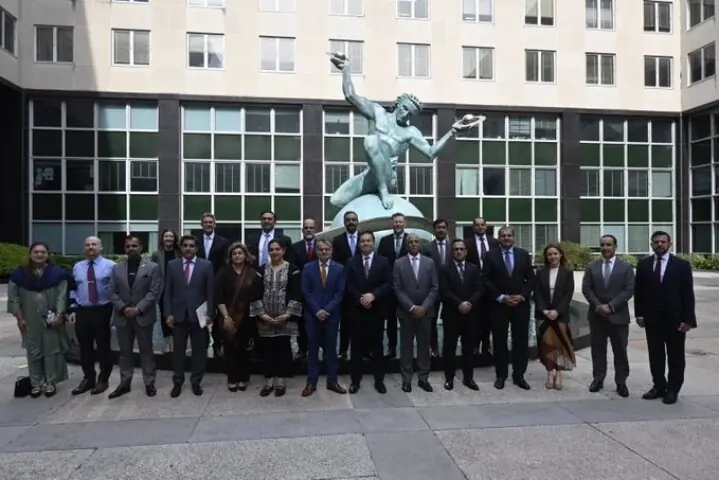
    Pakistan and the United States have reaffirmed their commitment to expanding cooperation against terrorism during the fourth round of the Pakistan-US Counterterrorism Dialogue held in Washington. The meeting brought together senior officials from both countries to discuss the changing regional and global security situation. The dialogue was led by Pakistan’s Special Secretary Ambassador Nabeel Munir and the US Coordinator for Counterterrorism, Ambassador Gregory LoGerfo. Both sides reviewed the current terrorist threat environment. They exchanged views on security challenges facing the region. Officials also explored practical ways to strengthen cooperation in tackling terrorism and violent extremism. A joint statement issued after the meeting said both countries share a common interest in defeating terrorist organisations. It added that Pakistan and the United States remain committed to working together to improve regional and international security. The discussions focused on strengthening border security and improving coordination between the two countries. Officials also discussed measures to disrupt terrorist financing and facilitation networks. They agreed that closer cooperation is essential to prevent terrorist groups from expanding their activities. During the dialogue, both delegations identified several militant organisations that continue to threaten regional peace and stability. These included ISIS-Khorasan (ISIS-K), Al Qaeda, Tehreek-i-Taliban Pakistan (TTP), and the Balochistan Liberation Army (BLA), along with affiliated groups. Both governments reaffirmed their determination to confront these organisations and protect their citizens from terrorism. The two countries also agreed to deepen cooperation through bilateral engagement and multilateral platforms. They stressed the importance of intelligence sharing, information exchange, and joint efforts to improve counterterrorism capabilities. Pakistan’s Foreign Office said the two sides held detailed discussions on regional and global terrorist threats. Both countries pledged to enhance collaboration in addressing security challenges and maintaining regional stability. The latest dialogue reflects improving relations between Islamabad and Washington after years of strained ties following the withdrawal of US forces from Afghanistan in 2021. Since then, both countries have gradually rebuilt engagement by focusing on areas of mutual interest instead of past differences. Besides counterterrorism, Pakistan and the United States have increased cooperation in trade, investment, climate change, and regional peace. Officials from both countries believe continued dialogue is essential to strengthen bilateral relations and promote long-term stability.


  • |

    Cross-party US legislators introduce resolution demanding prompt elections in Caracas

    A bipartisan group of US senators has introduced a resolution urging the swift organisation of free, transparent elections in Venezuela. The measure comes seven months after the American intervention that removed former President Nicolas Maduro and placed Vice President Delcy Rodriguez in charge as acting president. Spearheaded by Republican Senator Ted Cruz and Democratic Senator Jeanne Shaheen, the proposal demands the immediate release of political detainees and measures to protect political figures from violence or state retribution. The resolution highlights growing Congressional dissatisfaction with the current diplomatic stance of the White House, which lawmakers argue has failed to move the interim administration in Caracas toward establishing democratic processes. The action arrives as formal talks between the interim government and select opposition factions prepare to open without the inclusion of prominent opposition leader and Nobel Peace Prize laureate Maria Corina Machado. Machado, currently living in exile following post-election repression, has signaled intentions to return home to assist with national recovery following severe earthquakes, despite reluctance from Washington officials who argue her return could destabilise the fragile political environment. Senatorial leadership emphasised that restoring elected governance remains vital to regional security, cross-border cooperation, and international democratic norms.

  • | | | |

    US, Iran and Oman near interim Strait of Hormuz ag…

    WASHINGTON: A breakthrough agreement aimed at reopening the strategically vital Strait of Hormuz could be announced as early as Wednesday, with the United States, Iran and Oman reportedly nearing a temporary deal designed to restore maritime traffic and reinforce the fragile ceasefire between Washington and Tehran. According to a report by the US news website Axios, citing two regional sources and a US official, negotiations have reached their final stage after weeks of intensive diplomacy. The agreement is expected to provide a 60-day interim framework that could later be extended if both sides remain committed to its terms. Under the proposed arrangement, ships entering the Persian Gulf would travel through the northern shipping lane under Iranian oversight, while vessels leaving for the Arabian Sea would use the southern lane within Omani waters, coordinated in consultation with Iran. During the interim period, no tolls or transit fees would be imposed on commercial shipping. The deal also includes a commitment to clear naval mines from the central navigation channel within 30 days. Once the route is declared safe, it is expected to become the primary passage for two-way maritime traffic under a longer-term management framework jointly coordinated by Iran and Oman. The reported agreement would address some of Iran’s longstanding demands for a greater role in managing navigation through the strategic waterway, one of the world’s most important energy corridors through which a significant share of global oil and liquefied natural gas exports passes. Regional diplomatic efforts played a crucial role in bringing the parties closer to an understanding. Sources familiar with the talks said officials from Qatar, Pakistan and Saudi Arabia supported mediation efforts alongside Oman, while the White House remained actively involved throughout the negotiations. The report added that US envoy Steve Witkoff, Iranian Foreign Minister Abbas Araghchi, and Omani Foreign Minister Badr Albusaidi held several telephone discussions in recent days to finalize outstanding issues. Regional sources said Araghchi had agreed to the proposal in principle over the weekend, pending approval from Iran’s senior leadership and the Supreme National Security Council. A US official and another regional source indicated that Tehran completed its approval process on Tuesday, clearing the way for a formal announcement. If confirmed, the agreement could ease tensions in the Gulf, reduce risks to global energy supplies, and revive broader diplomatic efforts, including discussions on Iran’s nuclear programme and long-term regional stability.

  • | |

    Türkiye condemns Black Sea drone strikes on cargo…

    ISTANBUL: Türkiye has strongly condemned drone attacks on two commercial cargo vessels in the Black Sea, warning that continued assaults on civilian shipping could jeopardize international maritime trade and global food security. According to international media reports, the vessels were attacked shortly after departing Russia’s Black Sea port of Novorossiysk. Türkiye’s Foreign Ministry confirmed that several crew members were injured in the incidents and said their condition is being closely monitored. In a statement, the ministry expressed deep concern over the escalating tensions between Russia and Ukraine in the Black Sea, noting that repeated warnings about the risks to civilian navigation have gone unheeded. It stressed that disruptions to commercial shipping could have serious consequences for global trade routes and food supply chains. Ankara urged all parties involved in the conflict to take immediate and effective measures to safeguard freedom of navigation and ensure the safety of commercial vessels operating in the region. Reports identified the targeted ships as Yasir and Nadezhda, sailing under the flags of Panama and Cameroon, respectively. Although registered abroad, both vessels are reportedly owned by Turkish companies. The attacks come amid a steady rise in hostilities across the Black Sea, where commercial shipping has increasingly been caught in the crossfire of the Russia-Ukraine conflict. In late June, an attack near Crimea on a Turkish fishing boat left one person dead and four others injured, while another Turkish cargo ship was reportedly struck by a drone at the end of May. Meanwhile, separate security incidents have further heightened regional tensions. In the Russian-controlled Crimean city of Sevastopol, four people, including a soldier, were killed after a serviceman allegedly opened fire on both military personnel and civilians before being taken into custody. Authorities have launched an investigation into the motive behind the shooting. Elsewhere, Russian officials reported that a Ukrainian drone strike on the industrial area of Novoselki near Moscow killed five people and injured ten others. The attack also triggered multiple fires across the industrial zone. Analysts say the intensifying military activity in the Black Sea is increasing the risks to international commerce, energy transportation, and global food supplies, while further complicating efforts to ease the conflict between Russia and Ukraine.

  • |

    Brasilia reduces diplomatic presence in Buenos Aires following verbal attacks by Argentine leadership

    Brazil has formally downgraded its diplomatic representation in Argentina to the level of chargé d’affaires following renewed verbal insults directed by Argentine President Javier Milei toward Brazilian President Luiz Inácio Lula da Silva. The Ministry of Foreign Affairs confirmed that Brazilian Ambassador Julio Bitelli will not be returning to his post in Buenos Aires. The decision was triggered after Milei referred to the Brazilian head of state using derogatory terms, including calling him corrupt and an ex-convict, during a television interview with Argentine broadcaster LN+. Bitelli had initially been recalled late last month after Milei openly criticized Lula while appearing in São Paulo alongside opposition candidate Flavio Bolsonaro during the formal launch of his presidential campaign. Argentine Ambassador Daniel Raimondi was officially notified of the administrative downgrade in Brasília. The move marks a formal escalation in the deteriorating relations between South America’s two largest economies, whose leaders have not held a formal bilateral summit since Milei assumed office.

  • | |

    Pakistan wheat import faces Sindh opposition

    The Sindh government has strongly opposed the federal government’s decision to import wheat, warning that the move could hurt local farmers and weaken the domestic agriculture sector. Sindh Food Minister Makhdoom Mehboob-uz-Zaman said the province does not support wheat imports at a time when the country already has sufficient local production. He argued that bringing in imported wheat would reduce demand for locally grown crops and create financial difficulties for farmers who are already struggling with rising production costs. The minister also criticized the Punjab government for restricting the inter-provincial movement of wheat. According to him, Punjab currently has a surplus of around seven million metric tons of wheat, while Sindh faces a shortfall of nearly one million metric tons. He said that easing the movement of wheat between provinces would help address supply gaps without relying on imports. Makhdoom Mehboob-uz-Zaman added that the Sindh government plans to purchase wheat from the Pakistan Agricultural Storage and Services Corporation (PASSCO) to meet the province’s procurement target. He stressed that local resources should be utilized before considering foreign imports. Commenting on flour prices, the food minister said wheat flour in Karachi is currently selling between Rs130 and Rs140 per kilogram. He maintained that better coordination between the federal and provincial governments, along with the efficient distribution of locally available wheat, would help stabilize supplies and protect the interests of both consumers and farmers.

  • |

    New Delhi distances itself from scheduled online talk by ousted Bangladeshi leader Sheikh Hasina

    The Ministry of External Affairs in New Delhi has formally clarified that the Indian government maintains no connection to or responsibility for an upcoming online address by former Bangladeshi Prime Minister Sheikh Hasina. Officials confirmed that the press gathering is an entirely independent initiative arranged by a private press entity. The official statement came following direct enquiries from diplomatic authorities in Dhaka seeking clarity regarding New Delhi’s position. Sheikh Hasina, the ousted head of the Bangladesh Awami League, is scheduled to deliver a remote address on 5 August during an international media event hosted by the Foreign Correspondents’ Club of South Asia in New Delhi. The date coincides with the second anniversary of the mass student-led demonstrations that brought an end to her administration in 2024. Addressing the matter during a press briefing, an official spokesperson for the Indian foreign ministry emphasized that the gathering is strictly a private affair organised by the media body, adding that the state framework remains wholly unassociated with its coordination or proceedings.

  • |

    Kyiv rocked by massive Russian missile and drone assault

    More than 30 explosions shook Ukraine’s capital, Kyiv, during a fresh wave of Russian missile and drone attacks, according to Russian media reports. The strikes triggered large fires in several parts of the city, with thick smoke rising over parts of the capital as emergency crews rushed to contain the damage. Initial reports confirmed that at least one person lost their life, while five others suffered injuries. Authorities also activated air raid sirens across Kyiv and its surrounding suburbs, warning residents to seek shelter as the attacks continued. The latest assault caused significant disruption across the city and raised concerns about damage to civilian infrastructure. Emergency responders remained on the ground to extinguish fires, assist the injured, and assess the full extent of the destruction. Russian media claimed that Moscow’s forces used advanced precision-guided missiles and drones during the operation. The reports also stated that Ukraine’s air defense systems failed to intercept several of the incoming weapons, allowing multiple strikes to reach their intended targets. Ukrainian authorities have not immediately commented on those claims. The attack marks another escalation in the ongoing conflict, as both sides continue to exchange long-range strikes while fighting persists on several fronts.

  • | |

    MQM-P rivals move toward reconciliation 

    KARACHI: Signs of reconciliation have begun to emerge within the Muttahida Qaumi Movement-Pakistan (MQM-P) after a violent confrontation at the party’s Bahadurabad headquarters, with senior leaders initiating behind-the-scenes contacts to ease tensions and restore unity. Two days after the clash, senior party figures, including Federal Health Minister Syed Mustafa Kamal and Anees Qaimkhani, visited the party’s central office to discuss organizational affairs. Speaking to reporters, Mustafa Kamal rejected speculation of an internal power struggle, insisting that the party remained united despite recent events. According to sources, communication has been established between the two rival camps—one led by Mustafa Kamal and the other by Khalid Maqbool Siddiqui—in an effort to defuse tensions. A joint press conference is reportedly being considered as part of efforts to present a united front, although party leaders have neither confirmed nor denied the possibility. Notably, close associates of Siddiqui, who also serves as the party’s convener, did not attend the meeting at the headquarters. Despite the passage of two days since the confrontation, which reportedly involved a physical altercation and aerial firing, police have yet to register a First Information Report (FIR). Officials said no faction of the party has formally approached law enforcement to lodge a complaint. If neither side files a case, authorities are expected to register one on behalf of the state. Police sources said a draft FIR has already been prepared and is awaiting approval from senior officials before being formally registered. Meanwhile, law enforcement agencies have carried out raids and detained several MQM-P office-bearers and workers suspected of involvement in the violence. Officials said those currently in custody could face formal arrest once the FIR is registered, as investigations into the incident continue.

  • | |

    Iran says it is ready for war again

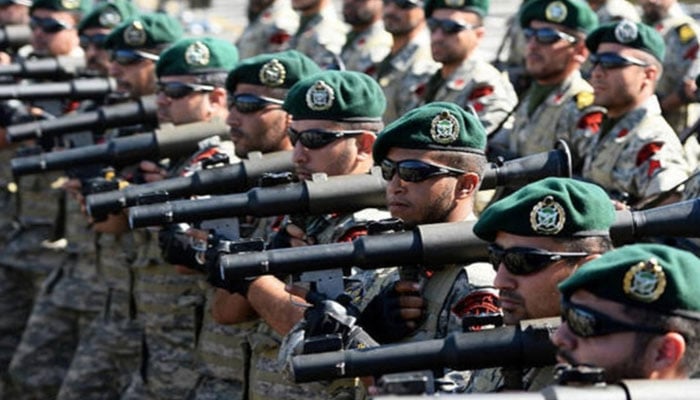
    Iran has claimed that it has significantly strengthened its military and defense capabilities during the ceasefire with the United States, warning that its armed forces are fully prepared if diplomacy fails and hostilities resume. Speaking to Iranian state television, a military spokesperson said the armed forces used every moment of the ceasefire to reinforce the country’s defenses. According to the spokesperson, Iran upgraded existing weapons, developed new air defense systems, restored facilities damaged during the conflict, and accelerated work on advanced military technologies. The spokesperson also revealed that Iran deployed a new generation of drones during the recent conflict. While officials did not disclose technical details, they said more information about the drones will be released at a later stage. According to Arab media reports, Iran’s acting defense minister said missile and drone production continued without interruption throughout the ceasefire. He claimed that drone manufacturing has increased to nearly three times its pre-war level, reflecting Tehran’s efforts to rapidly rebuild and expand its military capabilities. The acting defense minister also stated that the Iranian armed forces maintained their command structure despite the deaths of several senior military commanders. He added that revised battlefield strategies enabled Iranian forces to surprise their opponents during the conflict. Meanwhile, a spokesperson for the Islamic Revolutionary Guard Corps (IRGC) said Iran improved both the production speed and accuracy of its missile program during the ceasefire. However, officials declined to reveal the size of the country’s remaining weapons stockpiles or provide details about military losses suffered during the fighting. Several U.S. media outlets have also reported that Iran still possesses roughly 70 percent of its pre-war missile inventory and about 40 percent of its drone arsenal. Analysts believe those remaining capabilities could allow Tehran to sustain a prolonged campaign of asymmetric warfare if tensions escalate again. Arab media further reported that Iran could soon receive around 400 shoulder-fired air defense missile systems manufactured in China. However, both China and Pakistan have rejected those reports, while Iranian authorities have not issued any official comment on the claim. A former Iranian military commander also argued that thousands of U.S. and Israeli strikes failed to eliminate Iran’s military capabilities. He said the country continues to improve the range, precision, and destructive power of its domestically produced missiles while bringing newly developed weapons from underground missile and drone facilities into operational service. The latest statements highlight Iran’s determination to strengthen its military readiness despite international pressure, while also signaling that Tehran remains prepared for another confrontation if diplomatic efforts with Washington fail.