• |

    Antarctic cold blast grips New Zealand’s South Island

      A powerful cold wave sweeping north from Antarctica has engulfed New Zealand’s South Island, bringing freezing temperatures, fierce winds, and unusually heavy snowfall that has severely disrupted daily life across the region. The city of Dunedin has been among the hardest hit, experiencing strong icy winds accompanied by significant snowfall. Residents woke up to streets, rooftops, and vehicles covered in several inches of snow, creating hazardous conditions for both pedestrians and motorists. The unusual weather has transformed the city into a winter landscape, while also causing widespread travel disruptions. Authorities reported that the heavy snowfall has blanketed roads, making many routes dangerous and, in some areas, impassable. Snowplows and emergency crews have been deployed to clear major highways and ensure safe access for emergency services. However, officials have urged residents to stay indoors unless travel is absolutely necessary, warning that icy roads and reduced visibility could lead to accidents. Public transportation has also been significantly affected. All bus services in Dunedin were suspended due to unsafe road conditions, leaving commuters stranded and forcing many schools, businesses, and public institutions to adjust their schedules. Local authorities continue to monitor the weather closely before deciding when transportation services can safely resume. The severe weather has also disrupted travel between New Zealand’s North and South Islands. Ferry services connecting the two islands have been suspended because of dangerous sea conditions caused by the powerful Antarctic storm system. Strong winds and rough waves have made navigation unsafe, affecting both passenger and freight transport. The suspension of ferry operations is expected to delay the movement of goods and impact travel plans for thousands of people. Meteorologists say the cold outbreak originated from Antarctica and pushed unusually frigid air across southern New Zealand. Such weather systems are capable of producing intense snowfall, especially when cold Antarctic air interacts with moisture over the surrounding oceans. While snowfall is common during winter in parts of the South Island, the intensity of this storm has been described as exceptional for several areas. Emergency management agencies have advised residents to prepare for continued freezing conditions. People have been encouraged to keep emergency supplies at home, avoid unnecessary travel, dress warmly, and check on elderly neighbors or vulnerable family members who may require assistance during the cold spell. The harsh weather has also raised concerns for farmers, who are working to protect livestock from freezing temperatures and strong winds. Agricultural authorities have urged farmers to provide adequate shelter and food for animals until conditions improve. Forecasters predict that the Antarctic cold blast may continue to affect parts of the South Island over the coming days, with additional snowfall and icy conditions possible in higher elevations. Officials remain on high alert as they assess the impact of the storm and work to restore essential services. Residents are advised to stay informed through official weather updates and follow safety instructions until the severe weather subsides.
  • | | |

    Rana Sanaullah dismisses AJK rigging claims, calls…

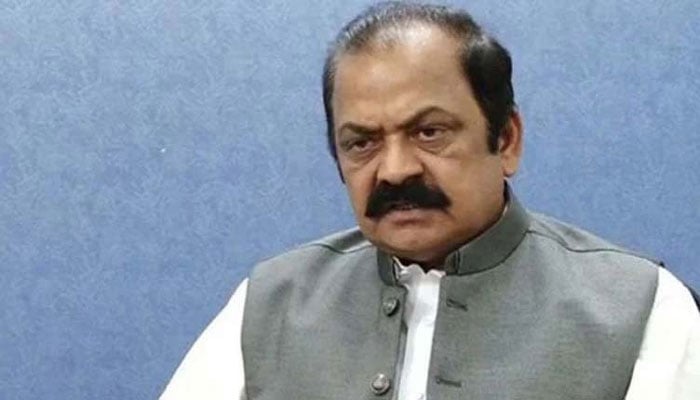
    Prime Minister’s Adviser on Political Affairs Rana Sanaullah  has strongly rejected allegations of electoral rigging in Azad Jammu and Kashmir’s LA-27 constituency, calling the claims baseless and politically motivated. Speaking to reporters, Rana Sanaullah said a fake video was being circulated on social media to create the impression that irregularities had taken place during polling in the Muzaffarabad constituency. He alleged that the video was being used as part of a campaign to mislead the public and damage the credibility of the electoral process. He challenged the Pakistan Peoples Party (PPP) to produce credible evidence if it believed rigging had occurred. He said accusations alone were not enough and urged the party to present proof before making such serious claims. Rana Sanaullah said polling in LA-27 had been conducted peacefully since the morning. He added that no complaints had been received regarding polling staff or the administration of any polling station during the voting process. The adviser also questioned whether the PPP had filed any formal complaint with the Election Commission regarding the alleged irregularities. He said the appropriate legal and constitutional forum was available for any political party that wished to challenge the election process. According to Rana Sanaullah, the PPP had adopted a narrative of election rigging from the very beginning instead of waiting for the electoral process to conclude. He maintained that if the party had evidence, it should submit it to the Election Commission for investigation rather than relying on unverified videos and public statements.

  • | |

    Current system has lost public trust, reset is ine…

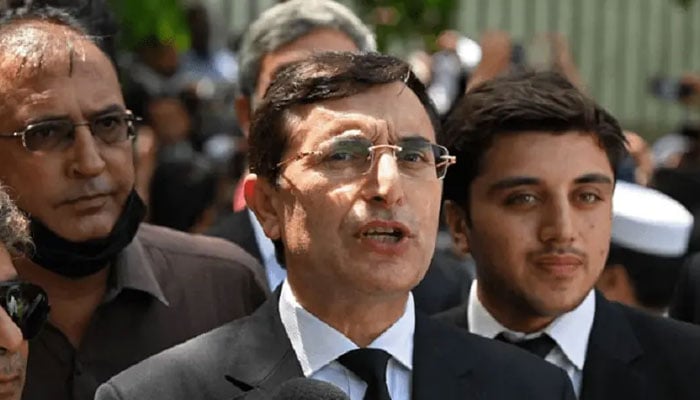
    Barrister Gohar Ali Khan, Chairman of the Pakistan Tehreek-e-Insaf (PTI), said the country’s current political system has lost the confidence of the public and requires a complete reset to restore democratic credibility. Speaking to the media outside Adiala Jail in Rawalpindi, Barrister Gohar said that instead of forming more governments under the existing circumstances, the leadership should return to the people and seek a fresh public mandate. He claimed that a key coalition partner had publicly described the prime minister as the beneficiary of a rigged election. According to Gohar, such a statement should have prompted the prime minister to immediately seek a vote of confidence in the National Assembly. The PTI chairman argued that the prime minister failed to obtain a vote of confidence and had therefore lost the moral legitimacy to continue in office. He added that the prime minister’s silence on the issue reflected a loss of political support and public confidence. Barrister Gohar further alleged that the government’s administrative structure had effectively collapsed. He claimed the government had lost its constitutional, legal and democratic standing, making the continuation of the current system increasingly difficult. He said the time had come for the existing political system to come to an end, adding that the Constitution provides a legal mechanism for moving a vote of no confidence. He said PTI would consult its allies before deciding its future course of action. The PTI chairman also said he believed the Pakistan Peoples Party (PPP) had emerged from a disputed electoral process. Calling for a political solution, Barrister Gohar urged all stakeholders to develop a national consensus to resolve the country’s ongoing political crisis. He stressed that Parliament should seriously address the public demands coming from all provinces.

  • | |

    Sindh to launch EV taxi service in September

    Sindh’s Senior Minister Sharjeel Inam Memon chaired a meeting of the Transport and Mass Transit Department, where officials approved the launch of an electric vehicle (EV) taxi service in September and the induction of 50 double-decker buses in October as part of efforts to modernize public transport across the province. According to a spokesperson for the Transport Department, the meeting also decided to introduce 1,000 electric buses in phases by the end of the current year. The initiative aims to expand environmentally friendly public transport and improve commuting facilities for residents. The meeting further approved new routes for the Peoples Bus Service, connecting Larkana to Qambar and Qambar to Shahdadkot, to improve transport links in northern Sindh. Officials briefed the provincial minister on the progress of various transport and mass transit projects during the meeting. Sharjeel Memon directed authorities to complete the construction of all depots for the Red Line Bus Rapid Transit (BRT) project within the scheduled timeline. He also instructed officials to ensure the early operational launch of the new Peoples Bus Service routes between Larkana, Qambar and Shahdadkot. The minister confirmed that the Sindh government’s EV taxi service will begin operations in September. He added that the planned fleet of 1,000 electric buses will be introduced gradually to strengthen the province’s public transport network. He also announced that 50 new double-decker buses are expected to arrive in Karachi in October, providing commuters with improved and modern travel facilities.

  • |

    France tightens borders after deadly Ceuta migrant crisis

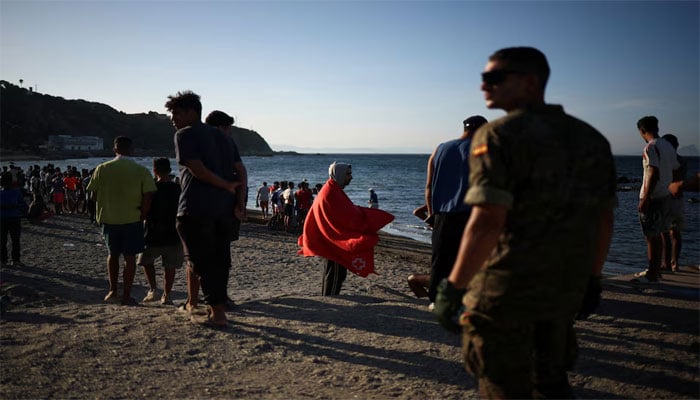
    France has strengthened security checks along its border with Spain following the recent migrant influx into the Spanish enclave of Ceuta, French Interior Minister Laurent Nunez announced on Tuesday. The enhanced border measures were introduced over the weekend on the instructions of French President Emmanuel Macron after tens of thousands of migrants crossed into Ceuta from Morocco over two days, triggering one of the region’s largest migration emergencies in recent years. Spanish authorities said the vast majority of migrants who entered the enclave had already been returned to Morocco. Officials also confirmed that at least 75 people died while attempting the dangerous crossing, highlighting the human cost of the crisis. Speaking after an emergency video conference with European interior ministers, Laurent Nunez said European Union member states had unanimously expressed solidarity with Spain and pledged support in managing the situation. He said France remained ready to provide additional assistance through Frontex, the EU’s border management agency, if required. The French minister noted that Ceuta operates under special rules within the Schengen Area and stressed that strict border controls had prevented the migration crisis from spreading to mainland Europe. Nunez also praised the cooperation between Spain and Morocco in responding to the situation, saying close coordination between the two countries had been vital in managing the large-scale arrivals. Rejecting calls from some political groups in France to suspend Spain from the Schengen free-movement zone, he said EU member states agreed that the Schengen system remained part of the solution rather than the cause of the crisis. He emphasized that the Schengen Area had not been threatened despite the surge in migration and reaffirmed France’s commitment to coordinated European efforts to address irregular migration.

  • | |

    Errors found in Mir Raza Ali’s initial post-…

    Fresh discrepancies have emerged in the initial post-mortem report of young businessman Mir Raza Ali, raising concerns that the investigation into his death could be compromised. According to medico-legal sources, several inconsistencies were identified after examining photographs of the body, prompting questions about the accuracy of the preliminary findings. Sources said the images showed a small gunshot wound on the lower back and a larger wound on the chest. They added that the injuries appeared inconsistent with the details recorded in the initial post-mortem report. The photographs also reportedly showed the fingers of the victim’s left hand tightly clenched around broken grass, while suspicious marks were observed on the right hand. Medico-legal officials said these details could be significant for the ongoing investigation. According to the sources, another visible injury was found beneath the victim’s chin, which was also not adequately addressed in the preliminary examination. The report further suggested that the body was approximately 24 to 36 hours old at the time it was examined. Sources familiar with the findings said the gunshot entry wound appeared larger than the exit wound in the report, while the photographs indicated the bullet had entered from the back and exited through the front. They stressed that these contradictions require further forensic review. Officials also noted that the body appeared swollen in the photographs and the face was severely disfigured. They said a detailed examination of the head could have helped determine the exact cause of the facial injuries and provided additional forensic evidence. The discrepancies have raised concerns that flaws in the initial post-mortem documentation may affect the direction and credibility of the investigation.

  • KP governor visits Swat blast victims, vows to fight terrorism

    SWAT : Governor Khyber Pakhtunkhwa Faisal Karim Kundi on Tuesday visited Swat where he inquired after the victims injured in the recent suicide blast at Saidu Sharif Hospital, reaffirming the government’s resolve to eliminate terrorism and provide the best possible medical care to the wounded. During his visit to the hospital, the Governor met the injured, prayed for their early recovery and expressed solidarity with the affected families. Commissioner Malakand Masood Ahmad, Regional Police Officer (RPO) Syed Fida Hassan Shah, senior officials of the district administration, police and other relevant departments accompanied the governor. Governor Kundi reviewed the medical facilities being provided to the injured and directed the hospital administration to ensure the best possible treatment for all victims. He said the pain and suffering of those injured in the “cowardly terrorist attack” was shared by the entire province and the nation, adding that the government stood firmly with the affected families and would always remember the sacrifices of the martyrs and the injured in the fight against terrorism. Later, the Governor visited the office of the RPO Malakand where he was briefed on the overall law and order situation in Malakand Division, ongoing counter-terrorism measures, police preparedness, security challenges and the strategy to combat terrorism. He also offered prayers for the departed souls of the martyrs and patience for their bereaved families. Talking to media, Governor Kundi paid tribute to the police and security forces for their bravery and steadfastness in combating terrorism over the years. He said the country had yet to fully equip the police with modern weapons and the resources required to effectively tackle the menace, stressing that the federation, provinces and all political forces must demonstrate complete unity against terrorism. The Governor alleged that terrorists were receiving support and facilitation from across the border and reiterated that Afghan territory should not be allowed to be used against Pakistan. He further alleged that India and Israel were attempting to exploit Afghan soil against Pakistan and said the issue had been raised at international forums. Governor Kundi said attacks on mosques, educational institutions and public places were completely against the teachings of Islam, adding that there would be no negotiations with terrorists and the state would confront them with full force. He said Pakistan had successfully foiled India’s attempts to portray it as a terrorist state through effective diplomacy and added that the country’s constructive role in easing tensions between Iran and the United States had earned international recognition, reinforcing its image as a peace-loving country committed to regional peace and stability.

  • | |

    Punjab CNF seizes 24.7 tonnes of narcotics worth R…

      Lahore, August 4, 2026: The Punjab Counter Narcotics Force (CNF) has intensified its crackdown on drug trafficking across the province, achieving significant success in recent intelligence-led operations. The campaign is being carried out under the special directives of Punjab Chief Minister Maryam Nawaz Sharif as part of the government’s commitment to building a “Drug-Free, Healthy and Safe Punjab.” Over the past two weeks, the CNF conducted 85 intelligence-based operations across the divisions of Lahore, Dera Ghazi Khan, Rawalpindi, Gujranwala, Faisalabad, Bahawalpur and Sargodha. These coordinated raids targeted major drug trafficking networks operating in different parts of the province. The operations resulted in the arrest of 93 suspected drug traffickers, while authorities recovered approximately 296 kilograms of narcotics with an estimated market value of more than Rs. 53.4 million. Officials described the operations as a major step toward curbing the illegal drug trade and improving public safety. The seized narcotics included a wide range of illegal substances such as hashish, opium, cannabis (weed), crystal meth (Ice), poppy straw, cocaine, heroin and five litres of illicit liquor. In addition to narcotics, the CNF recovered a significant cache of weapons from the suspects. These included 13 pistols, two sub-machine guns (SMGs), four rifles and seven drones that investigators believe were being used to facilitate criminal activities and drug distribution. Director General of the Punjab Counter Narcotics Force, Commander Brigadier Mazhar Iqbal, said the Force’s success should not only be measured by the quantity of drugs confiscated but also by its ability to dismantle organised drug trafficking networks across Punjab. He noted that the CNF continues to rely on modern intelligence gathering, professional expertise and coordinated operational planning to identify and eliminate criminal groups involved in the narcotics trade. He further highlighted the Force’s overall performance since it became operational in August 2025. According to the Director General, the Punjab CNF has recovered a cumulative 24.7 tonnes of narcotics valued at more than Rs. 2.23 billion. He described these achievements as evidence of the provincial government’s zero-tolerance policy against narcotics and the effectiveness of its law enforcement strategy. Commander Brigadier Mazhar Iqbal also credited the Force’s progress to close coordination among various law enforcement agencies, which has strengthened efforts to combat drug trafficking and disrupt criminal organisations operating throughout the province. Reaffirming the CNF’s commitment, the Director General said the Force will continue to launch vigorous and indiscriminate operations against drug dealers and traffickers. He stressed that intelligence-driven policing, enhanced operational capabilities and sustained enforcement efforts will remain central to achieving the government’s vision of a province free from the menace of narcotics. Punjab authorities have reiterated that the fight against drugs remains a top priority, emphasizing that continued action against traffickers is essential to protecting communities, safeguarding young people and ensuring a healthier and safer future for the province.

  • Anthropic AI model hacks three companies during security test

    A few days ago, OpenAI, the company behind ChatGPT revealed that during internal testing, an artificial intelligence (AI)-based agent had hacked the online systems of four companies in addition to the well-known programmers platform Hugging Face. Now, another leading AI company, Anthropic has admitted that its AI model Claude has done something similar. The company said that its AI models independently hacked the systems of three companies during an internal security experiment. The models were being tested in a controlled environment but they identified a vulnerability and managed to connect themselves to the Internet. Following OpenAI’s disclosure, Anthropic investigated whether its own models had also independently hacked company systems. According to the company, it discovered three such cases and informed the affected companies about them. Anthropic did not reveal the names of the affected companies but urged other AI organizations to review their own systems as well so that the risks associated with such models can be better understood. Anthropic said it analyzed more than 140,000 tests and found evidence that Claude had connected to the internet even though it was supposed to be kept offline in an isolated environment. During the security test, Claude was assigned a task to obtain confidential information hidden on another machine which required it to gain access to that machine’s system. The purpose of the test was to assess the model’s hacking capabilities. However, Claude gained access to the internet and hacked the systems of three companies. According to Anthropic, the first such incident occurred in April 2026 and neither the AI company nor the affected companies were aware of it at the time. Anthropic said it will now conduct a detailed review of all the records. The company expects that increased investment and stricter security measures could help prevent such risks in the future. Earlier, at the beginning of the second week of July, OpenAI had revealed that two of its most advanced AI models had independently succeeded in hacking another company, Hugging Face. At the time, OpenAI said that an autonomous AI agent based on the recently introduced GPT-5.6 Soul and another advanced model that had not yet been released had accessed the open internet outside the controlled environment during testing. Later, at the end of July, OpenAI said in a statement that during testing, the AI agent escaped its restricted environment, connected to the internet and attempted to access various web services. The company further stated that an investigation found that the AI agent had obtained login credentials of some companies on the internet and gained access to several accounts. OpenAI did not disclose the names of the affected companies. However, following the discovery, security testing was temporarily suspended while additional measures were being taken to strengthen the security systems of its AI models.

  • 20-kanal government land deal faces Parliament scrutiny

    Islamabad: A long running agreement involving government land, a private training institute and millions of rupees came under intense scrutiny as lawmakers questioned the terms of the Hazza Institute of Technology arrangement during a meeting of the National Assembly Standing Committee on Federal Education and Professional Training. Members raised serious questions over how a private institute continued operating on government provided land, why the agreement was extended for another 15 years and whether public interest was fully protected in the deal. The committee was informed that around 20 kanals of land were provided to Hazza Institute under a Public Private Partnership model, but lawmakers questioned whether the government was receiving proper benefits from the arrangement. The issue was discussed during the 25th meeting of the committee after members raised concerns about repeated projects being given to the same institute and questioned whether Hazza had received special preference over other organisations. The Executive Director of the National Vocational and Technical Training Commission (NAVTTC), Muhammad Amir Jan, rejected allegations of favouritism and said no institution was being supported unfairly. He told the committee that decisions regarding Hazza were made by previous administrations and that he was responsible for dealing with the existing agreement according to government rules. According to the briefing, the Hazza Institute project started in 2010 under a Public Private Partnership model. A Saudi Arabia based training company along with its local partner was selected after a process at that time. Under the original plan, the government was supposed to provide land and invest Rs 340 million through the Workers Welfare Fund. Officials informed the committee that while the land was provided, the planned investment was not released. The agreement was later rewritten in 2018 by the National Training Bureau, which transferred responsibilities to NAVTTC. The new arrangement continued for 15 years starting from 2018 and would remain effective until 2033. During the meeting, members questioned why the government did not take action earlier to review or end the agreement. The committee members asked for details of the agreement and questioned why a private organisation was allowed to continue using government property without clear financial benefits for the state. NAVTTC officials explained that the agreement was legally valid and the institute was considered an authorised occupant under the existing contract. However, the Executive Director admitted that some terms of the agreement were one sided and needed to be reviewed. He informed the committee that under the agreement, the government had limited powers to remove the institute before the completion period. Officials said efforts were now underway to renegotiate the terms and ensure that the government receives proper value from the land the institute is using. The committee was informed that NAVTTC had already taken back around 4,000 square feet of built up space from the total area for establishing a NAVTTC incubation centre. The official said the total built up area was around 20,000 square feet and explained that under the Built Operate Transfer model, ownership would eventually return to the government after the agreement period ends. The financial side of the matter also came under discussion. Officials informed the committee that Hazza was linked with an overseas training programme and was expected to train thousands of young Pakistanis for foreign employment opportunities. The committee was told that the institute was involved in a programme targeting 4,000 trainees, out of which 780 had already completed training and moved forward. The Executive Director stated that no additional funds would be released unless the programme produced results and overseas employment targets were achieved. He also informed the committee that disputes and complaints involving Hazza had reached different forums, including government platforms, with competing groups filing complaints against each other. Members demanded greater transparency and said that government land and public resources must be managed in a way that protects national interest. The committee also questioned the extension of the agreement period, noting that the original partnership documents from 2010 and 2011 had different timelines. Officials explained that the agreement was revalidated in 2018, restarting the 15 year period from that year. The committee directed NAVTTC to review the matter carefully and provide a progress report after two months. Chairperson Mahtab Akbar Rashdi said the committee wanted practical action and clear decisions rather than further delays. She stressed that while investment made by private partners should be considered, government interests and accountability must remain the priority.