• The Addiction of Social Media

    By Saba Bakhtiyar I am writing this letter to share important information with you that today is the age of technology. Mobile phones and the internet have made our lives easier. But one big drawback of this technology is social media addiction. Facebook, WhatsApp, Instagram, TikTok, and YouTube have connected people together, and many people have become addicted to them. What is social media addiction? When someone spends too much time on social media and feels restless without it, that is called social media addiction. In this condition, people think that if they do not check their phones, they will be left behind by the world. People also use social media to overcome their loneliness. However, many people are unaware that this habit can turn out to be dangerous for them. It can affect mental health, cause depression, lead to a lack of sleep, create distance in families and relationships, and reduce students’ attention towards education, which is another big problem. Social media is a tool. If we use it wisely, it helps us. If we misuse it, it harms us. Seeing perfect lives online makes people feel insecure about their own lives, and it has also increased online harassment and hate comments. Moreover, notifications and reels distract people from their work and studies. They are so busy on social media that they are not interested in their personal work. Due to social media, it is affecting people a lot. People share too much personal information, which can be misused. As well as this, many people are addicted to checking their phones every few minutes. The most dangerous thing is that nowadays small children are using mobile phones, and it is affecting them a lot. Their eyes are affected due to excessive phone use. Children can also easily access inappropriate content online, and they spend less time playing outdoor games. Parents should set screen time limits for their children and give them outdoor games and books instead of mobile phones. A mobile phone is a tool, not a toy for small children. Parents must guide them. People should also stay away from their mobile phones as much as possible. It is a very huge problem for people. They should use mobile phones, but within limits. Set a daily time limit for social media use, and follow pages that teach you, not just entertain you. Do not use your mobile phone all the time because it is very harmful.

  • A Better Tomorrow Starts Today

    By Nazaink Majid Everyone dreams of a better future, but dreams only come true when we take action today. Every good choice we make, every lesson, and every small effort we put in helps build a brighter tomorrow. Instead of waiting for the perfect time we should start making positive changes today. “A Better Tomorrow Starts Today” reminds us that if we want to change our future, we must begin in the present. Every small step taken today brings us closer to the life we aspire to achieve. Every day presents us with countless choices. Some may seem small, such as waking up early, completing our work on time, reading a book, or helping someone in need. However, these small decisions gradually shape our character and determine our future. Success is not the result of one extraordinary action but of many ordinary actions repeated consistently. Those who use today wisely are the ones who enjoy a better tomorrow. A healthy future begins with healthy choices. Eating nutritious foods, exercising regularly, maintaining good hygiene, and getting enough sleep improve both physical and mental well-being. Likewise, avoiding harmful habits such as procrastination, laziness, and excessive screen time helps individuals become more productive. Small healthy routines practiced everyday lead to long-term benefits. Creating a better tomorrow is not only a personal responsibility but also a social one. Every individual can contribute to society by showing kindness, respecting others, and helping people in need. At the same time, protecting the environment is essential for future generations. Planting trees, keeping our surrounding clean, reducing plastic waste, conserving water, are simple action that have a lasting impact. A sustainable future begins with responsible actions taken today. Life is filled with challenges and setbacks, but challenges should not discourage us. Instead, they should inspire us to grow stronger and wiser. Every failure teaches valuable lessons, and every difficulty provides an opportunity to improve. Successful people are not those who never fail but those who continue moving forward despite failure. Determination, patience, and resilience transform today’s struggles into tomorrow’s achievements. A better tomorrow is built not only through success but also through strong values. Kindness, honesty, responsibility create trust and strengthen relationships. Positive values practiced daily create lasting change. A better tomorrow is not a distant dream – it is the result of what we choose today. Every positive action, every lesson learned, every kind word spoken, and every responsible decision contributes to a brighter future. Instead of waiting for the perfect moment, we should begin now. By working hard, caring for others, protecting our environment and believing in our ability to improve, we can recreate a future filled with hope and opportunity. The journey toward a better tomorrow begin with a single step taken today.

  • Poor State of Education in Balochistan

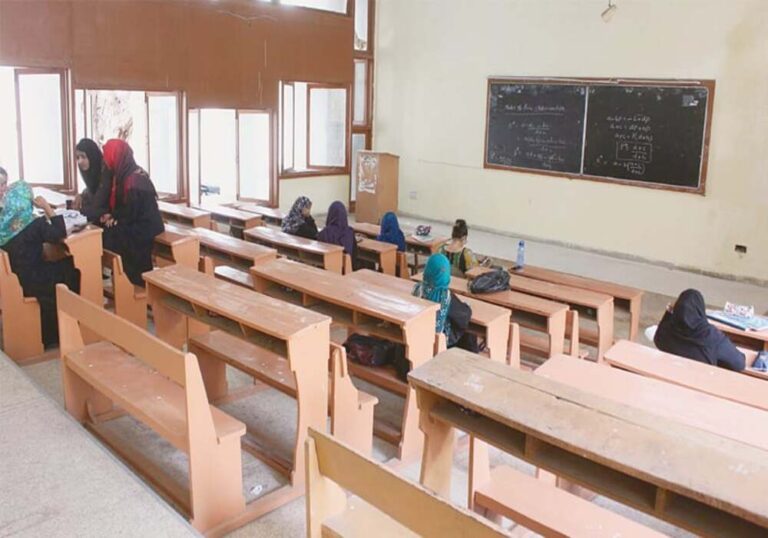
    By Shayhaq Siraj Balochistan, despite being the largest province of Pakistan, continues to suffer from a deeply neglected education system. Thousands of children are still out of school, while those enrolled often face a lack of basic facilities. Many schools exist only on paper, and in several areas, buildings are either in ruins or completely absent. One of the most pressing issues is the shortage of qualified teachers. In rural districts such as Kech and Turbat, students are deprived of quality instruction, leading to poor academic performance and high dropout rates. Additionally, the absence of proper monitoring allows ghost teachers and mismanagement to persist unchecked. The situation is further worsened by a lack of infrastructure. Schools without electricity, clean drinking water, and furniture are a common sight. In extreme weather conditions, students are forced to study in unbearable environments, which discourages attendance and learning. Education is the backbone of any society, yet it remains a low priority in Balochistan. Immediate steps must be taken by the government to improve school facilities, recruit trained teachers, and ensure strict accountability. Without urgent reforms, the future of an entire generation remains at risk.

  • Save the Lungs of Islamabad: Why Shakarparian Can …

    To watch Shakarparian today is to mourn a broken promise. Not a fleeting vow, but a masterplan—conceived with purpose, codified on paper, and abandoned by design. I went through archives at Bazar Road, Iqbal Hall G-7, poring over the original master plan drawn up in 1960 by the great Greek architect and city planner Konstantinos Apostolos Doxiadis and his team. It was there that I first understood what Shakarparian was always meant to be. Doxiadis and his fellow planners did not design this triangle-shaped green expanse near Zero Point as an afterthought, a leftover patch of land between roads. They designated it, deliberately and explicitly, as the lungs of Islamabad — a temperature regulator, a natural sound barrier, a groundwater recharge zone, and a protective forest without which the city’s clean air was never meant to exist. This was not sentiment. This was engineering. And we have spent the decades since betraying it. Islamabad in 1961 was home to barely 117,000 people. Today it holds well over 2.4 million. That growth was not an accident — it was, in part, the very success of Doxiadis’s vision: a green, livable, breathable capital that drew people in from across the country and beyond. But success has a cruel irony here, because the same city that grew because of its green lungs has spent decades quietly cutting into them. Between 1961 and 2024, Islamabad’s temperature has already climbed by 5 degrees Celsius, with projections warning of a further 0.7 degrees by 2039 and 2.2 degrees by 2069. This is the urban heat island effect, and it is not an abstraction — it is Doxiadis’s temperature regulator being dismantled, piece by piece, exactly as he warned it must not be. Shakarparian itself covers roughly 1,376 hectares, formally absorbed into the Margalla Hills National Park in 1980, sitting almost at the very heart of the capital — an emerald set into the city’s crown, as it deserves to be called. A biodiversity survey conducted in November 2014 found 155 animal species sheltering within it: 23 species of mammals, 104 species of birds spanning 16 orders and 42 families, 22 species of reptiles, and 6 species of amphibians. The same survey catalogued more than 661 plant species across 28 families, with six distinct dominant vegetation communities knitting the forest floor together. This is not a park. This is a living, breathing ecological archive sitting in the geographic center of a national capital — a rarity almost nowhere else replicated in the world. It was Roedad Khan — the legendary civil servant and statesman — who understood the fragility of this inheritance early enough to act. In 1989 he founded the Margalla Hills Society, and for decades that institution has done more than most government departments to keep the wider Margalla ecosystem intact. But Shakarparian, sitting apart within it, has not been so fortunate. It has instead become a recurring casualty of the very authority meant to protect it — the Capital Development Authority itself. Piece by piece, lease by lease, CDA has allowed Shakarparian’s protective forest cover to be carved away. Look at what now occupies ground that was meant to remain forest: the Parade Ground, the Pak-China Friendship Centre, the Islamabad Club, the Gun and Country Club, Lok Virsa, an open-air theatre, and a string of upscale hotels and restaurants. Each addition was, in its own file, justified. Together, they are a forest reduced to a backdrop for institutions that no longer need it and increasingly cannot coexist with it. This has happened in direct violation of Regulation 4(3)(b) of the ICT Zoning Regulations of Islamabad, which exists for the explicit purpose of preventing exactly this kind of land-use change, allegedly under sustained political pressure. Satellite imagery from Landsat and Sentinel spanning the last twenty years tells the story without need for further commentary: the southwest region of Shakarparian shows a stark, measurable retreat of forest cover. The judiciary, at least once, was willing to look squarely at this. On January 11, 2022, the Islamabad High Court delivered its verdict in Prof. Zahid Baig Mirza versus Capital Development Authority, and the ruling was unambiguous: the shifting of the Parade Ground into Zone 3, the widening of roads through the forest, and the construction of the China Friendship Centre inside Shakarparian all violated the ICT Zoning Regulations. It was, on paper, a vindication of everything Doxiadis intended and everything CDA had ignored. A court verdict that is not enforced, however, is simply another document gathering dust the way the original master plan itself so nearly did. And here I have to say something that will not make me popular in certain circles of this city: the NGO sector stationed in Islamabad has failed Shakarparian as thoroughly as CDA has bulldozed it. The single biggest failure of these organizations is that they will not raise their own voice — they wait, always, for the government to raise it first, as though advocacy requires official permission. That is not activism. That is choreography. Too many of these NGOs are, in practice, family businesses wearing the language of conservation: leadership passed quietly within the same households for years, boards that never rotate, and a business model built not around planting a single tree in Shakarparian but around producing glossy reports, attending conferences, and mastering the art of recycling the same handful of buzzwords — resilience, sustainability, nature-based solutions — into slightly different sentences for slightly different donors. They are experts in rephrasing a crisis. They are not experts in stopping one. When the chainsaws reached the H-8 green belt, it was a lone campaigner and a worried student who spoke up first, not the well-funded organisations whose entire mandate is supposed to be exactly this. This failure is made worse by the fact that the government itself is not short of obligations it has already signed onto. Pakistan is a party to the Convention on Biological Diversity, which binds it to conserve representative ecosystems and halt biodiversity loss

  • | |

    Kabal bomber identified, probe intensifies

    SWAT: Khyber Pakhtunkhwa Inspector General of Police Zulfiqar Hameed has confirmed that authorities have identified the suicide bomber responsible for the deadly attack near Kabal Police Station in Swat, as investigators continue efforts to uncover the network behind the assault. Speaking to the media in Swat, the provincial police chief announced that a Joint Investigation Team (JIT) would be formed to conduct a comprehensive probe into the bombing. He also confirmed that the families of the police personnel martyred in the attack would receive the government’s martyrs’ compensation package. According to the IGP, intelligence agencies had already been alert to potential security threats, prompting heightened security measures around the police station. He said vigilant police officers intercepted the suicide attacker before he could reach his intended target, triggering the explosion. Zulfiqar Hameed praised the courage of the police personnel and reiterated the force’s commitment to strengthening its operational capabilities. He noted that while terrorist groups continue to reorganize, security forces are actively pursuing militants and will not allow them to regain a foothold in the province. The police chief confirmed that the identity of the suicide bomber has been established, while investigations are ongoing to identify his accomplices and determine the circumstances surrounding the attack. The blast near Kabal Police Station claimed the lives of several people, including police personnel, and left many others injured.

  • | |

    Middle East braces for intense heatwave as tempera…

    DUBAI: A fresh wave of extreme heat is set to grip the Middle East this week, with temperatures forecast to approach 50 degrees Celsius across several countries, prompting weather authorities to issue alerts over dangerous conditions. The UAE’s National Center of Meteorology (NCM) has warned that the coming days will bring soaring temperatures across the region, particularly affecting the United Arab Emirates, Iraq, Kuwait, and eastern Saudi Arabia, where prolonged exposure to the heat could pose serious health risks. According to meteorologists, desert regions in the UAE are expected to experience the highest temperatures, with some areas likely to approach the 50°C mark. Authorities have urged residents to avoid unnecessary outdoor activities during peak afternoon hours and to remain well hydrated. The latest forecasts indicate that Al Shawamekh in Abu Dhabi has already recorded temperatures exceeding 50°C, highlighting the intensity of the current weather conditions. Kuwait is also expected to experience extreme heat, with temperatures predicted to reach 48°C in the coming days, while parts of Iraq and eastern Saudi Arabia are likely to face similarly scorching conditions. Despite the widespread heat, forecasters say some eastern and southern parts of the UAE, including Fujairah, could receive rainfall by Thursday as unstable weather develops over mountainous regions. The weather authority has also issued warnings for strong winds, reduced visibility, and dust storms, which may affect road travel and outdoor activities across several parts of the region. Health experts advise people to stay indoors whenever possible, drink plenty of water, wear light-colored clothing and avoid prolonged exposure to direct sunlight, particularly during midday when temperatures are expected to peak. The renewed heatwave follows a summer of record-breaking temperatures across several parts of the world, with climate scientists warning that extreme weather events are becoming more frequent and intense due to global climate change. Governments across the Gulf have increasingly introduced measures to protect workers and residents during the hottest months, including restrictions on outdoor labor during peak daytime hours and expanded public awareness campaigns on heat-related illnesses. As the latest heatwave builds across the region, authorities continue to monitor weather conditions closely while urging the public to follow official safety advisories. With temperatures expected to remain exceptionally high over the coming days, residents are being encouraged to take extra precautions to minimize the risk of heat exhaustion and heatstroke.

  • Reclaiming the Republic: AI-Driven Governance, Eco…

    I grew up in Rawalpindi Cantt, where my father served as the principal of St. Mary’s Cambridge High School. Though my professional journey has carried me across continents and I now reside in the United States, my heart beats unyielding rhythm with the 260 million Pakistanis who are my true country fellows. Every night in my dreams, I walk the familiar streets of Rawalpindi. I graduated from Islamabad Model College, and to this day, the majestic Margalla Hills grace the screen of my laptop as a constant reminder of home. As a young student, I stood with pride to sing our National Anthem: “Pak sar zamin shaad bad, Kishwar-e-hasin shad bad, Tu nishaan-e-azm-e-ali shaan, Arz-e-Pakistan! Markaz-e-yaqin shaad bad.” That sacred pledge of resolve, faith, and devotion remains embedded in my soul, driving my lifelong conviction in the destiny of our homeland. Over a professional career spanning three decades across Asia, Europe, Africa, North America, and Russia, I have observed the mechanics of statecraft, economic transformation, and human capital under diverse political systems. Through these global experiences, one reality has become undeniably clear: the Pakistani nation possesses an extraordinary, high-caliber intellectual capacity that matches—and frequently surpasses—the finest minds anywhere in the world. From the scientific and medical sectors in Europe to the dynamic technology ecosystems of the United States, Pakistani professionals consistently perform at the highest echelons of innovation, corporate leadership, medicine, engineering, and public service. United States Presidents have repeatedly and publicly commended the invaluable contributions of the vibrant Pakistani diaspora to American infrastructure, economic vitality, and technological advancement. When placed within transparent, rule-of-law-based systems, Pakistani talent routinely excels. The foundational problem facing Pakistan today is not a deficit of human intelligence or natural resources, but a deep-seated structural crisis within its governing institutions. The primary obstacle preventing Pakistan from realizing its true global standing is systemic corruption, the deliberate destruction of meritocracy, and a reckless deficit of vision among its political leadership. For decades, the national political landscape has been dominated by self-serving figures who lack both statesmanship and the basic literacy required to navigate the twenty-first century. We live in an era defined by artificial intelligence, digital economies, and high-tech governance, yet the traditional political leadership remains largely ignorant of technologies like AI, machine learning, and modern public administration. Their approach to power focuses heavily on short-term patronage, wealth accumulation, and personal preservation, while ignoring the core developmental needs of the population. This total lack of strategic vision directly fuels the socio-political unrest observed across key regions, including Azad Jammu & Kashmir, Balochistan, and Khyber Pakhtunkhwa. The grievances in these areas are fundamentally economic and administrative, born from decades of neglect, broken promises, and predatory governance. Greedy political elites have consistently exploited local resources and suppressed institutional development, leaving local populations disenfranchised and impoverished. When regional populations are denied basic justice, modern infrastructure, quality education, and economic dignity, instability naturally follows. The issues facing these provinces cannot be resolved through superficial political arrangements or force alone. They demand genuine administrative devolution, economic fairness, and an absolute end to elite political exploitation. Pakistan’s growing population, rapid urbanization, and regional economic disparities further justify a serious evaluation of its overall administrative structure. Creating smaller, manageable administrative units or new provinces can bring government directly to the people. However, redrawing boundaries alone is not a magic solution. If corrupt practices, political interference, and weak institutional capacity persist, new administrative divisions will only multiply secretariats, ministries, and state expenditures without improving the daily lives of citizens. Any restructuring must be guided by objective criteria, rigorous economic planning, and transparent public participation, ensuring that power shifts completely down to local municipal and union council levels. To break the longstanding cycle of administrative decay, Pakistan requires an aggressive shift in its approach to governance and elite accountability. The country must adopt an uncompromising strategy similar to the Saudi Arabia model initiated by Crown Prince Mohammed bin Salman (MBS)—a decisive, systemic crackdown on institutional corruption and elite financial impunity. Every asset, real estate portfolio, and offshore account illegally acquired abroad by corrupt politicians, bureaucrats, and public officials must be systematically traced, frozen, and confiscated under international legal frameworks. Returning these stolen billions to the national treasury is not merely a moral imperative; it is an urgent economic necessity. A nation cannot thrive while its financial reserves are continuously drained to fund luxury lifestyles in foreign capitals. Achieving financial integrity and self-reliance is the essential prerequisite for building true national strength. History demonstrates that economic power is the absolute mother of military power and national sovereignty. No state can maintain a robust, modern defense apparatus over the long term without a self-sustaining economy, a strong currency, and a productive technological base. By recovering looted public wealth and redirecting it toward national infrastructure, energy independence, industrial output, and digital education, Pakistan can rapidly eliminate its dependence on foreign debt and assert its sovereignty on the global stage. True economic independence grants a nation unyielding leverage in international affairs. The path forward demands an urgent transition to AI-driven good governance and digital administration. Human discretion in public procurement, land record management, tax collection, customs clearance, and civil service recruitment must be systematically replaced with automated, algorithmic systems that eliminate bribery and political patronage. Artificial intelligence platforms can optimize public spending, track state resource distribution in real time, monitor civic projects, and guarantee complete transparency across every tier of government. When civil service recruitment, performance evaluations, and judicial tracking are governed by objective data frameworks rather than political influence, absolute meritocracy will return to state institutions. Furthermore, national development requires a structured investment in human capital. Establishing dedicated leadership academies and technical institutes will ensure that the next generation of public administrators is versed in high-tech policy design, data analytics, global trade dynamics, and financial management. Nations such as Singapore, South Korea, Estonia, and Rwanda have proven that rapid transformation does not require unlimited natural wealth. It demands disciplined execution, unyielding meritocracy, technologically integrated institutions, and transparent leadership.

  • Beyond Public Finance: Towards Constitutional Poli…

    The preceding parts of this series began with a simple question: why do technically sound economic and tax reforms repeatedly fail in Pakistan? The answer cannot be found in tax rates, revenue targets or administrative capacity alone. Pakistan’s fiscal failures arise from the constitutional and political order within which taxation, expenditure, borrowing and distribution take place.  The country does not merely have an inefficient tax system. It has a fiscal state whose incentives favour immediate extraction, selective enforcement, negotiated privilege and recurring external dependence. The previous part IX applied this framework to contemporary proposals for closing Pakistan’s tax gap. Empirical estimates of untaxed capacity, sectoral inequality and revenue potential are valuable.  Data tell us where disparities exist and what additional resources might theoretically be mobilised. However, data do not explain why those disparities have survived repeated reform efforts, nor why the same burdens continue to fall upon documented businesses, salaried persons and ordinary consumers. That explanation lies beyond public finance. Constitutional Political Economy (CPE) begins from the recognition that the state is not an abstract guardian automatically pursuing collective welfare. It consists of institutions and individuals responding to incentives, protecting authority, bargaining over resources and operating within formal and informal rules.  Fiscal outcomes reflect the distribution of political power as much as principles of efficiency or equity. Pakistan’s tax crisis is the fiscal expression of that political order. Revenue without a fiscal compact A sustainable tax system rests upon a fiscal compact between citizen and state. Citizens contribute according to lawful and reasonably distributed burdens. The state, in return, provides security, justice, education, healthcare, infrastructure, economic opportunity and protection against vulnerability.  Pakistan has progressively weakened both sides of that compact. The state demands more from those already visible while tolerating privileges for those capable of political resistance.  Citizens encounter taxes in electricity bills, fuel prices, banking transactions, telecommunications, imports, contracts and ordinary consumption. Much of this extraction occurs without determining their actual income or ability to pay. Public services remain inadequate and uneven. Taxpayers are then told that services cannot improve because revenue is insufficient. The state responds to the resulting mistrust with more withholding, surveillance and coercion.  This creates a destructive cycle: weak services reduce consent; declining consent increases reliance on coercive collection; coercion deepens mistrust; mistrust encourages informality; and informality becomes the justification for still more transaction-based taxation. A fiscal compact cannot be created through fear. Restoring income taxation The first requirement is to restore the meaning of income tax. Income taxation should ordinarily measure net income after legitimate costs and losses and impose liability according to capacity to pay. Pakistan has instead constructed a vast structure of advance, minimum, final, presumptive and withholding taxes imposed upon transactions, turnover and gross receipts. This structure is administratively convenient. It allows the state to collect through banks, employers, utilities, import authorities and private businesses without developing the institutional capacity to determine real income. Its convenience is precisely the problem. Withholding should remain where deduction at source is logically connected with the recipient’s income and operates as an adjustable advance—principally salaries, dividends and profit on debt. It should not function as a substitute for return-based taxation, proper assessment and intelligent audit. Turnover cannot permanently replace income. A business earning a narrow margin cannot justly be taxed in the same manner as one earning extraordinary profits merely because both record similar receipts. Minimum and presumptive regimes penalise investment, distort business structures and convert losses into taxable events. The objective should not be abolition of withholding overnight. It should be a legislated transition towards a system in which withholding becomes limited, adjustable and subordinate to final determination of income. A genuine value added tax The second requirement is restoration of sales tax as a genuine value added tax. Pakistan has retained the vocabulary of VAT while repeatedly breaking its chain through exemptions, special schedules, blocked credits, fixed regimes, multiple rates and arbitrary restrictions. The result is cascading, litigation, refund accumulation and a bias against documented production. A genuine VAT should apply through a broad and coherent base, a substantially lower standard rate and unrestricted adjustment of legitimate input tax.  Exemptions should be confined to carefully identified necessities and public-interest activities. Refunds should be treated as taxpayers’ money, not as an unofficial source of financing for the state. The constitutional division between sales tax on goods and services need not condemn businesses to fragmented administration. Harmonised definitions, a common return, integrated registration, shared information and an agreed clearing mechanism can preserve provincial taxing authority while reducing compliance costs. Coordination is essential. Re-centralisation is not. Pakistan’s federation was not designed solely for administrative convenience. Article 160 of the Constitution protects the distribution of specified revenues between the Federation and provinces, while Article 140A requires devolution of political, administrative and financial responsibility to elected local governments.  Fiscal reform must strengthen all three levels of constitutional government rather than treating provinces and local bodies as spending agencies dependent upon federal discretion.  Ending taxation through labels A constitutional fiscal order must also respect the actual nature of each levy. Parliament cannot convert a provincial tax into a federal tax merely by attaching a different label. Nor can the executive create a new taxable event through rules, notifications or administrative directions where the legislature has not imposed one. Article 77 requires federal taxation to rest upon parliamentary authority. Articles 4, 24 and 25 bring legality, protection against arbitrary deprivation and equality into the same constitutional inquiry. Legislative enactment is indispensable, but enactment alone does not validate a levy that exceeds legislative competence, discriminates irrationally or denies due process.  The annual Finance Act should not be used as a container for major structural changes receiving limited parliamentary examination. Essential elements of a tax—the subject, person liable, measure, rate and taxable event—must be stated clearly in primary legislation. Delegated legislation may implement the law. It cannot become an alternative legislature. Expenditure is the other side of taxation The debate over Pakistan’s tax-to-GDP ratio often proceeds as though every additional rupee

  • | |

    Rakhi Sawant gets emotional about her Pakistani fans

    Rakhi Sawant has always been one of Indian entertainment’s most unfiltered personalities, and a recent interview with BBC Hindi has given her fans on both sides of the border a moment to genuinely pause and reflect. In the interview, the actress and digital influencer spoke with visible emotion about her Pakistani fans, delivering a remarkably candid account of a connection that has quietly shaped her personal life in ways she had perhaps not expected. Sawant, who now follows Islam and has spoken openly about her affection for Muslims, did not approach the subject diplomatically or with the kind of measured language public figures typically deploy when navigating Indo-Pakistani sentiment. She spoke from personal experience, and the honesty of what she said has resonated widely. “They love me a lot,” she said, speaking of her Pakistani fans. “We Pakistanis and Hindus share a love-and-hate relationship, but whenever something happens to me, Pakistanis reach out first. Sometimes I have a fever, and no one from India shows up, but they come and take me to the hospital.” The admission was striking in its specificity. She was not speaking in generalities about cultural warmth or neighbourly affection. She was describing concrete acts of care at moments of genuine vulnerability, people showing up when she was unwell, accompanying her to hospital, filling a gap that others had left empty. She continued with equal candour, acknowledging the political narrative that frames the two countries as adversaries while making clear that her personal experience simply did not match that framing. “I know they are our enemy, our country’s enemy, but what’s true is true,” she said. “They love me a lot. I am just a neighbour residing in this building, and as neighbours, they are always there for me.” The online reaction to the interview has been overwhelmingly warm and has prompted a broader conversation that goes well beyond Sawant herself. Both Pakistani and Indian viewers flooded the comments to express agreement with the sentiment she was articulating. The most consistent thread running through the responses was the distinction between the political relationship that governments maintain and the human relationships that ordinary people choose to build across that same divide. Commenters from both countries wrote that neither people were each other’s real enemies, and that it was politicians who constructed and maintained the hostility that defined the official relationship between India and Pakistan. People on the ground, many argued, wanted something different entirely. Rakhi Sawant’s emotional honesty in this interview did not resolve any political realities. But it gave voice to something that is rarely said plainly enough in either country: that the warmth that exists between people when it is allowed to breathe is real, and sometimes shows up most clearly when someone needs to be taken to hospital and someone else simply decides to come.

  • | |

    Tabish Hashmi called out on using Kashmir for publicity

    Tabish Hashmi has built his public profile on warmth, humour and a reputation for speaking his mind. His show Hasna Mana Hai made him a household name, and his film debut in Aag Lagay Basti Mein widened that profile further. But a sequence of events over the past few days has placed him at the centre of a controversy that cuts deeper than most he has faced, because it touches on something Pakistani audiences take very seriously: the sincerity of public voices when they speak on Kashmir. The sequence began when Hashmi posted on his Instagram announcing that Hasna Mana Hai had come to an end. The announcement landed at a moment of heightened public emotion, coinciding directly with his video in support of Kashmiri protesters who were demonstrating against what they described as unrest and violence in the region. The timing created an obvious and powerful impression in the minds of many followers: that his show had been shut down as a consequence of his stand on Kashmir. The response was immediate. Hashmi received an outpouring of solidarity and support from social media, with many people praising him for paying a professional price for speaking up. Then came the reveal. It turned out that Hasna Mana Hai had not been cancelled at all. The show’s set was simply being redesigned and renovated. The announcement of the show’s end was a marketing exercise to generate excitement around the new set reveal, and the Kashmir video had been used in proximity to that announcement in a way that allowed the association to form organically in the public mind without being explicitly stated. Content creator and commentator Ali Arif was among the most visible voices to call out what had happened. In a video addressing the controversy, he went through the sequence of events and pointed out precisely what Hashmi had done: posted a video about Kashmir, allowed the public to connect it to his show’s apparent end, absorbed the sympathy and support that followed, and then revealed the whole thing was a set change. He criticised Hashmi specifically for not clarifying the situation while the solidarity was pouring in, arguing that the failure to correct the impression was itself the problem. The public reaction was sharp and widely shared. “This is what is wrong with this nation. Using a tragedy for your gain,” wrote one person. Another said simply, “Such a sad state of affairs.” A third was even more pointed: “He made a mockery of taking a stand.” The controversy has prompted a genuine conversation about the ethics of celebrity activism in Pakistan, particularly when serious political or humanitarian situations are in the vicinity of promotional content. Whether the proximity of the Kashmir video and the show announcement was deliberate or poor timing, the result has been a significant erosion of goodwill from an audience that had, until this week, been squarely in Hashmi’s corner.