rahul gandhi detained
|

Rahul Gandhi detained during protest outside PM Modi’s residence

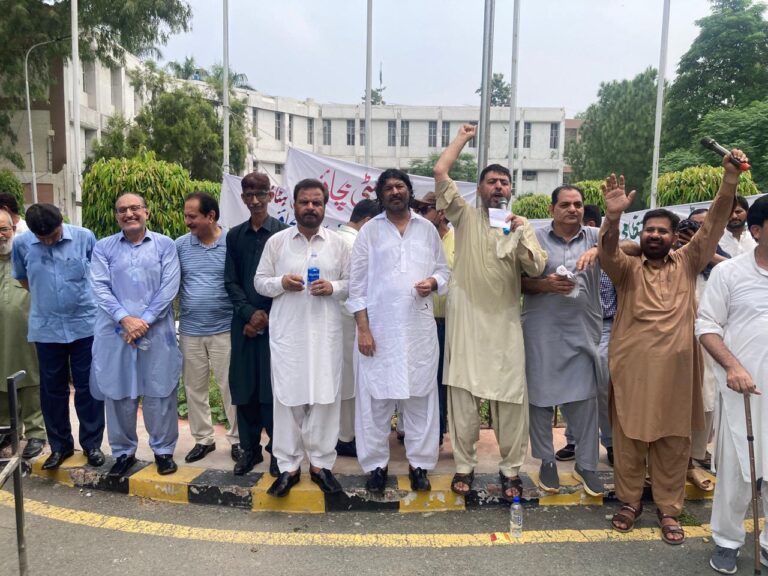
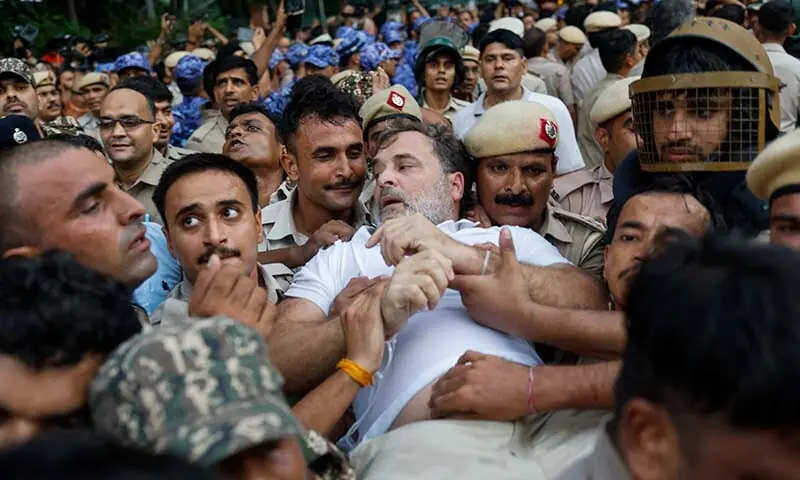
Indian opposition leader Rahul Gandhi was detained by Delhi Police on Tuesday while leading a protest march towards Prime Minister Narendra Modi’s official residence in New Delhi. His detention came as opposition parties intensified their campaign over the government’s handling of student protests and alleged examination irregularities.

Congress leader Priyanka Gandhi and Samajwadi Party chief Akhilesh Yadav were also taken into custody during the demonstration. The opposition leaders were demanding Prime Minister Modi’s resignation following the police crackdown on students protesting for education reforms.

Before his detention, Rahul Gandhi accused the government of refusing to take responsibility for the crisis. He said the administration was avoiding accountability and was unwilling to hold a parliamentary debate on the issue. He also alleged that the future of India’s youth had been damaged due to repeated failures in the education system.

Videos from the protest showed Gandhi resisting detention as police officers attempted to remove him from the protest site. Reports said he suffered minor injuries during the scuffle with security personnel.

The protest followed large-scale demonstrations in New Delhi a day earlier. Thousands of students and activists gathered to demand the resignation of Education Minister Dharmendra Pradhan and called for major reforms to India’s examination system.

The protests were organised by the Cockroach Janata Party (CJP), a movement that has gained massive popularity through social media since its launch earlier this year. The group says it will continue nationwide demonstrations until its demands are accepted.

Police used tear gas and batons to stop protesters from marching towards parliament on Monday. Violent clashes broke out between demonstrators and security forces. Authorities said more than 170 people were injured during the unrest, including over 100 police personnel. Dozens of protesters also sustained injuries.

Police accused some protesters of violent behaviour during the clashes. Protest organisers strongly rejected the allegations. They claimed security forces used excessive force against peaceful demonstrators and injured hundreds of students.

CJP founder Abhijeet Dipke urged supporters not to lose hope despite the crackdown. He said the movement would continue peacefully and would not end until the education minister stepped down and meaningful reforms were introduced.

Many protesters remained at the Jantar Mantar protest site on Tuesday. They pledged to continue demonstrations until the government addressed their concerns.

The issue also disrupted parliament. Opposition lawmakers demanded an immediate discussion on the police action against students, forcing the proceedings to be temporarily adjourned.

Similar Posts

  • | |

    Maryam hits back at Bilawal with video proof

    Punjab Senior Minister Maryam Aurangzeb has responded to criticism by Pakistan Peoples Party (PPP) Chairman Bilawal Bhutto Zardari by releasing video footage showcasing the condition of roads, streets, and sanitation in several cities across Punjab. The response followed Bilawal’s address at an election rally in Azad Jammu and Kashmir (AJK), where he questioned the state of development and municipal services in different parts of Punjab. During his speech, Bilawal raised concerns about the condition of cities beyond Lahore and asked whether residents of other districts were receiving the same level of attention and development. Soon after the speech, Maryam Aurangzeb shared a series of videos on social media. The footage focused on the same cities mentioned by Bilawal. According to her, the videos were intended to present the actual situation on the ground and respond directly to the questions raised during the rally. The videos highlighted roads, streets, and cleanliness operations in different districts. They showed paved roads, cleaned streets, and sanitation activities carried out by local authorities. Maryam Aurangzeb maintained that the footage reflected the provincial government’s ongoing efforts to improve infrastructure and public services across Punjab. She gave special attention to Vehari and Kasur, two districts specifically mentioned by Bilawal in his speech. To answer his criticism, she shared separate videos from both cities. The footage displayed roads, residential streets, and cleanliness arrangements, which she described as evidence of the government’s development work. Maryam Aurangzeb said the videos served as visual proof of the progress made in Punjab. She maintained that the provincial government was working to improve civic facilities in both major cities and smaller districts, rather than focusing only on Lahore. https://x.com/i/status/2079953668946976948

  • | |

    Wasim Akram’s Rs250,000 reward for missing pet draws attention

    Former Pakistan cricket captain Wasim Akram and his wife Shaniera Akram have been reunited with their beloved pet dog, Duke, after launching a public appeal that offered a Rs250,000 reward for information leading to his safe return. The couple’s emotional search for their five-month-old black German Shepherd attracted widespread attention on social media after Shaniera shared a missing poster on Instagram, urging people to help find the young puppy. The appeal quickly spread across different platforms, with fans, celebrities and animal lovers joining the search. According to the poster, Duke was last seen in DHA Phase 8, Karachi. The notice described him as a male, solid black, long-coated German Shepherd puppy and announced a cash reward of Rs250,000 for the person who found and safely returned him. It also requested people to check parks, gardens, rooftops, garages, neighbourhoods and speak to local security guards for possible sightings. Sharing the appeal on Instagram, Shaniera Akram wrote: “Please help us find our baby boy. Last seen in phase 8 on Sunday. He’s only 5 months old and must be so scared.” She added that someone may have picked him up believing they were helping him. “Someone may have picked him up for safety or knows someone who has him. We are offering reward for anyone who can help bring him home, so pls call the number on the poster if you have seen or know anything about our boy Duke.” Ending the emotional message, she appealed to followers to continue sharing the post. “Please help us spread the word. We are just devastated.” The post generated thousands of reactions, with many expressing sympathy for the family and resharing the missing notice in hopes of locating Duke as quickly as possible. Fortunately, the search ended on a positive note when two individuals found Duke and safely returned him to the Akram family. According to reports, the family honoured its promise and handed over the announced Rs250,000 reward to the people who brought the puppy home safely. News of Duke’s recovery was welcomed by supporters who had followed the search over the previous days. Pictures of the puppy after his return also circulated online, with many celebrating the happy reunion. The incident, however, also sparked mixed reactions on social media. While many users congratulated the family and said only pet owners could truly understand the emotional distress of losing an animal, others debated the size of the reward and compared it with broader social issues. One social media user wrote, “Only a pet lover can understand this pain.” Another commented, “Wasim Akram should distribute sweets now.” Others questioned the public attention surrounding the incident, leading to a wider online discussion about pets, privilege and public priorities. Despite the differing opinions, the outcome brought relief to the Akram family, who thanked everyone who shared the appeal and helped spread awareness. Duke’s safe return marked the end of an emotional search and highlighted how quickly social media can mobilise communities when families seek help locating missing pets.

  • |

    Iran sent IRGC commanders to aid Houthis: report

    Iran is alleged to have flown senior Islamic Revolutionary Guard Corps (IRGC) commanders, military advisers and missile- and drone-related equipment to Yemen earlier this month in a move that could significantly strengthen the military capabilities of the Houthi movement, according to multiple sources familiar with the matter. The reported transfer is believed to have taken place on July 13 aboard a Mahan Air flight that departed from Tehran. Sources said the aircraft was originally scheduled to land in the Houthi-controlled capital, Sanaa, but was forced to divert to the Red Sea port city of Hodeidah after military activity disrupted operations at Sanaa International Airport. According to the sources, between 10 and 21 IRGC personnel, including senior commanders, were on board the aircraft. They claimed the mission included military advisers tasked with providing operational support and training on advanced missile systems. The flight was also reportedly carrying missile components, drone-related equipment and gold, which the sources alleged was intended to finance Houthi military operations. The reported shipment has raised fresh concerns that Tehran may be expanding its military support for the group amid growing regional tensions. Officials from Yemen’s internationally recognised government said intelligence indicated that Iranian military experts had arrived to strengthen Houthi capabilities. They claimed the advisers were expected to improve the group’s ability to launch attacks against international shipping in the Red Sea and the strategic Bab al-Mandab Strait, one of the world’s busiest maritime trade routes. Regional security analysts also supported the claims, saying the shipment allegedly included components for short- and medium-range missiles as well as drone systems similar to those previously used in attacks across the Gulf region. The reported deployment came only days before the Houthis announced a naval blockade targeting Saudi Arabia. The group later claimed responsibility for attacks on Saudi oil tankers operating in the Red Sea, further escalating tensions and increasing fears over global energy supplies and maritime security. Despite the allegations, both Iran and the Houthi movement strongly denied the reports. A Houthi media official who said he was among the passengers on the flight insisted that everyone on board was a civilian and rejected claims that military personnel or weapons had been transported. Iran has also repeatedly denied supplying advanced weapons to the Houthis or directing their military operations. Iranian officials maintain that the Yemeni group independently develops its own military capabilities and makes its own operational decisions. According to Iranian officials, the July 13 flight was organised to return a Houthi delegation and Yemeni civilians who had travelled to Tehran earlier in the month. They said the passengers included people who had attended a funeral ceremony as well as Yemenis who had received medical treatment in Iran. The allegations have emerged at a time of heightened confrontation across the Middle East, where attacks involving the United States, Iran, Israel and Iran-backed groups have intensified. Growing instability has already disrupted commercial shipping through the Strait of Hormuz and the Red Sea, contributing to rising oil prices and increasing uncertainty in global financial markets.

  • | |

    Senate health subcommittee discusses A-Level, FSc …

    Pakistan’s Senate Health Subcommittee held an important meeting to discuss concerns surrounding the Medical and Dental College Admission Test (MDCAT), the country’s medical education policies, and the increasing number of students pursuing medical education abroad. The session was chaired by Senator Samina Zehri, the convener of the subcommittee, and attended by Federal Health Minister Mustafa Kamal, Senator Anusha Rahman, Senator Shahzaib, and officials from the Pakistan Medical and Dental Council (PMDC). During the meeting, Senator Samina Zehri highlighted the significant differences between Pakistan’s FSc (Faculty of Science) education system and the internationally recognized A-Level qualification. She remarked that Pakistan’s education system is well known for its challenges and that the disparity between the two academic streams should not be overlooked when formulating admission policies for medical colleges. Responding to these concerns, Federal Health Minister Mustafa Kamal stated that the MDCAT examination is designed in a way that does not favor either A-Level or FSc students. He explained that the test includes questions that can be answered by candidates from both educational backgrounds, ensuring fairness in the admission process. According to the minister, the examination aims to assess students’ knowledge and aptitude rather than the curriculum they have studied. Mustafa Kamal further suggested that a detailed analysis should be conducted to determine how students from different educational backgrounds perform in the MDCAT. He pointed out that approximately 95,000 students had passed the examination and proposed collecting data from the past five years to determine how many successful candidates came from A-Level and FSc backgrounds. Such data, he said, would provide evidence-based insights for future policy decisions. The minister also assured members of the committee that the details of the assessment committee responsible for the MDCAT would be submitted within 24 hours. In response, Senator Anusha Rahman stated that the Senate committee was currently assisting the ministry in reviewing the admission process and therefore required complete information about the committee members involved in preparing and evaluating the examination. Following the discussion, Federal Health Minister Mustafa Kamal formally assured the committee that all requested information regarding the assessment committee would be provided within the promised timeframe. During the meeting, Senator Anusha Rahman also called for a review of the Pakistan Medical and Dental Council’s (PMDC) current policies. She emphasized the need to reassess regulations to ensure they effectively address the concerns of students and maintain the credibility of Pakistan’s medical education system. Senator Shahzaib raised another important issue regarding Pakistani students who intend to pursue higher medical education abroad. He questioned why graduates of Pakistani universities who plan to enroll in medical institutions overseas are still required to take the MDCAT. Referring to a recently issued advertisement, he noted that the existing policy appears to require these students to pass the admission test even if they have no intention of studying medicine within Pakistan. In response, Health Minister Mustafa Kamal acknowledged the concern and assured the committee that the policy would be reviewed. Senator Anusha Rahman added that while reviewing the policy, authorities should also ensure that students planning to study abroad avoid enrolling in institutions that have been identified as “red-flag” universities or those lacking proper accreditation. The Chairman of the PMDC Reforms Committee informed the meeting that students intending to study medicine overseas are required to register with the PMDC before leaving the country. This registration process, he explained, helps the regulatory body monitor students and maintain standards for foreign medical qualifications. Highlighting another major concern, Health Minister Mustafa Kamal stated that around 40,000 Pakistani students travel abroad each year for medical education, taking an estimated US$800 million out of the country. He stressed that this represents a significant financial outflow and underlined the importance of strengthening Pakistan’s own medical education system. However, Senator Anusha Rahman offered a different perspective, arguing that many of these students eventually return to Pakistan after completing their education and contribute to the country’s economy through their professional earnings. She suggested that while the government should improve local opportunities, it should also recognize the long-term benefits that internationally educated professionals can bring back to Pakistan.

  • | |

    Customs seize cameras and electronics worth Rs5.5m…

    Customs officials at Jinnah International Airport in Karachi have seized a large quantity of electronic goods from a passenger arriving from Dubai. According to customs sources, the passenger was intercepted during a routine check at the airport. Officials recovered 29 cameras from the passenger. The seized items also included five camera lenses. The consignment contained 19 digital cameras. Customs officials also found 10 fitness bands among the electronic goods. Other electronic items were also recovered during the inspection. The total value of the seized goods has been estimated at around Rs5.5 million. Customs officials are examining the recovered items as part of the ongoing investigation. The authorities are also checking the passenger’s travel and import details. The action was carried out at Jinnah International Airport, one of the country’s busiest entry points for international passengers. Officials regularly conduct inspections of incoming passengers to prevent the illegal movement of commercial goods and other undeclared items. The latest seizure highlights the continued monitoring of international arrivals at Karachi airport. Customs authorities are taking action when passengers are found carrying goods that require declaration or clearance under applicable rules.

  • | |

    Nawaz Sharif to lead key Murree meeting

    Prime Minister Shehbaz Sharif has arrived in Murree from Islamabad as the Pakistan Muslim League-Nawaz (PML-N) prepares to hold an important consultative meeting on the political situation in Azad Jammu and Kashmir. The meeting will be chaired by PML-N President Nawaz Sharif at the Government House in Murree. Senior party leadership is expected to discuss the formation of the government in Azad Kashmir and finalise the party’s strategy for the next phase of the political process. Hamza Shehbaz has also reached Kashmir Point in Murree to participate in the meeting. Prime Minister Shehbaz Sharif and Punjab Chief Minister Maryam Nawaz are also scheduled to attend, along with federal ministers and other senior PML-N leaders. The newly elected PML-N members of the Azad Jammu and Kashmir Legislative Assembly have also been invited to the session. Their participation is expected to help the party leadership assess the political situation and discuss possible arrangements for forming the next government. The meeting comes as the PML-N moves forward with consultations following the recent political developments in Azad Kashmir. Party leaders are expected to exchange views on government formation, parliamentary coordination and the future political roadmap. Nawaz Sharif is likely to receive briefings from party leaders and elected representatives during the meeting. The leadership will also consider the names and arrangements linked to the formation of the new administration.

Leave a Reply

Your email address will not be published. Required fields are marked *