officials met iranbacked
|

US officials met Iran-backed Houthis in Oman over the weekend, sources say

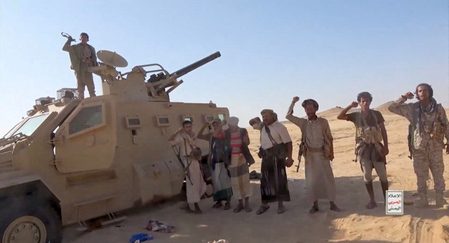
US officials met representatives of Yemen’s Houthis in Oman over the weekend, five sources familiar with the matter said, days after the Iran-backed militia seized a strategic stretch of the Red Sea coast in a sweeping offensive that routed Saudi-backed forces.

The meeting, which has not been made public, was held at the US embassy in Muscat, three of the sources said on the condition of anonymity. Two sources said that Oman’s government, a longtime regional mediator, helped organize the meeting.

The Trump administration designated the Houthis a “foreign terrorist organization” in March 2025, criminalizing support for the group. But Washington has negotiated with them since, reaching a ceasefire in May last year after bombing the group for two months to halt a campaign of attacks on Red Sea shipping.
Must Read

Saudis pound Yemen as Houthis solidify gains in new theater of Middle East war


Saudis pound Yemen as Houthis solidify gains in new theater of Middle East war

President Donald Trump said on Saturday, September 12, the Houthis had phoned his administration asking the United States to keep out of the Yemen war. Vice President JD Vance said on Monday the US was in direct contact with the group, without giving details.

In the meeting, which one source said took place on Sunday, September 13, the Houthis told US officials they had no intention of attacking American vessels and that they were committed to the 2025 ceasefire with the US, two sources said.

One of the sources, a Yemeni, said the militia group also said they would not attack Israeli ships or any commercial vessels, except those belonging to Saudi Arabia.

According to two of the sources, the US side was represented by embassy personnel.

One of those sources said the Houthi delegation included a senior official based in Muscat who is under US sanctions, Mohammad Abdulsalam. 

Another source confirmed Abdulsalam’s presence along with that of another senior Houthi official, Abdelmalik al-Ajiri.

Responding to questions, a State Department spokesperson said: “We have no comment on this specific reported meeting.”

The spokesperson also said safeguarding freedom of navigation in the Red Sea and preventing the export of terrorism from the Middle East were core US interests.

Oman’s embassy in the US and senior Houthi official Abdulsalam did not respond to requests for comment.

The Houthis last week seized effective control of Yemen’s entire Red Sea coastline, including the historic port of Mocha, and Perim Island in the Bab el-Mandeb, or “Gate of Tears” strait, at the sea’s mouth.

The Houthis, who seized Yemen’s capital in 2014, have fought against a Saudi-led coalition for more than a decade. The war had quieted under a ceasefire in recent years, but fighting resumed in July when the Houthis declared a blockade on Saudi shipping in the Red Sea in response to a Saudi blockade of Yemeni ports.

Saudi Arabia’s de facto ruler Crown Prince Mohammed bin Salman called Trump last week seeking US military support amid the dramatic Houthi advances. Reuters has reported that Washington told Riyadh it would not get directly involved. – Rappler.com

Similar Posts

  • | | | | |

    Iran displays wreckage of US, Israeli aircraft in …

    Iran’s Islamic Revolutionary Guard Corps (IRGC) has put the wreckage of US and Israeli aircraft on public display, offering a dramatic glimpse of the military hardware Tehran says was destroyed during the recent war. Images released by Iranian state-linked media show sections of aircraft arranged as part of an exhibition, including what has been identified as the remains of a US F-15 fighter jet. The display reportedly includes the aircraft’s ejection seat, canopy and part of its tail. The exhibition appears designed not only to showcase recovered wreckage but also to underline Iran’s claims about the effectiveness of its air-defence capabilities during the conflict. The appearance of the F-15 debris is particularly significant. Recent reporting has identified the wreckage as belonging to an F-15E Strike Eagle, while Iranian authorities have presented it as evidence of a successful engagement against US airpower. However, claims surrounding aircraft losses have been contested throughout the conflict. In earlier incidents, Iranian officials announced that US aircraft had been destroyed, while American officials disputed some of the claims. Independent identification of battlefield wreckage has also sometimes proved difficult. Iranian forces have previously showcased captured or downed US military equipment as symbols of resistance. A similar exhibition in Tehran in 2019 displayed wreckage of a US Global Hawk drone claimed to have been shot down by Iran. The latest display comes after Iran also claimed on July 30 that three US F-35 fighter jets had been destroyed at Jordan’s Al Azraq airbase. That claim has not been independently established. By placing the aircraft remnants on display, Tehran is turning battlefield debris into a powerful political and military message—one intended to demonstrate that even advanced American and Israeli aircraft can be targeted during wartime. The exhibition is likely to fuel further debate over the scale of aircraft losses during the conflict and the competing narratives presented by Iran, the US and Israel.

  • | |

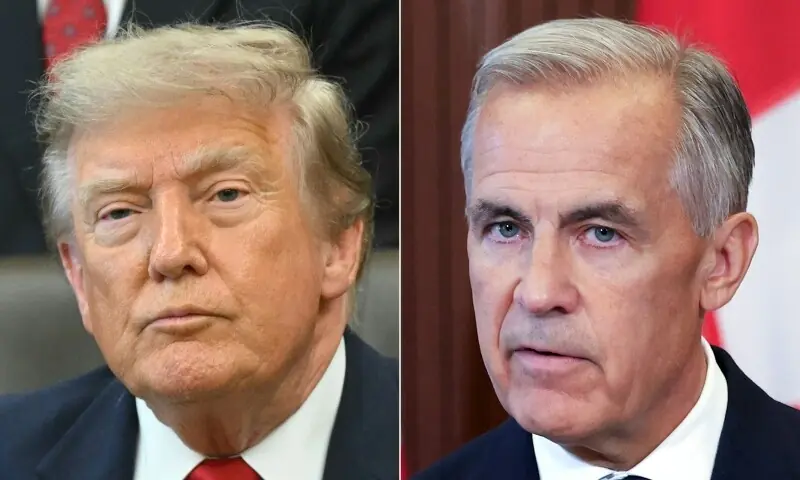
    Trump hits back at Canada as tariff war escalates

    WASHINGTON: US President Donald Trump has lashed out at Canada after Prime Minister Mark Carney announced retaliatory tariffs on American goods, deepening a trade dispute that threatens to further strain economic ties between the two neighbouring countries. Trump responded sharply on Sunday after Canada confirmed that new tariffs targeting US products would take effect on September 8. “Canada wants the benefits of being a state, without being one!!!” Trump said in a post on Truth Social, while also accusing Canada of imposing heavy tariffs on American farmers for years. The latest escalation follows the introduction of new US tariffs covering around $20 billion worth of Canadian goods. The measures, which took effect on Saturday, impose tariffs of up to 50 per cent and affect products ranging from hockey sticks and cement to other Canadian exports. Carney announced Canada’s response a day earlier, saying Ottawa would impose new tariffs particularly targeting American steel and dairy products. The Canadian prime minister described the situation in unusually forceful terms, saying the country had effectively been “attacked” and was responding accordingly. The confrontation follows the collapse of recent trade negotiations between Washington and Ottawa. Earlier discussions had appeared more constructive, with Trump saying he believed the United States could reach an agreement with Canada and pointing to his positive relationship with Carney. But Carney said the latest US demands had crossed a line. According to the Canadian leader, Washington proposed terms that were “uneconomic” and “unfair” while undermining the benefits Canada expected from a potential agreement. Ottawa ultimately rejected the proposal. US Trade Representative Jamieson Greer offered a different account of the negotiations. He told The New York Times that Washington had offered to reduce tariffs on Canadian steel, aluminium and automobiles while also removing a recently imposed tariff on Canadian lumber. Greer said the proposed measures would have provided Canada with exceptionally favourable treatment compared with other US trading partners. However, the offer failed to produce a breakthrough. Greer also told Fox News that Washington was preparing measures in response to Canada’s retaliation, signalling that the dispute could escalate further rather than return immediately to the negotiating table. A senior US official described the latest talks as candid but not acrimonious, suggesting that despite the increasingly hostile public statements, both sides had maintained communication during negotiations. The economic stakes are significant. The United States and Canada share one of the world’s largest trading relationships, with businesses and consumers on both sides relying heavily on cross-border commerce. The latest tariffs could therefore raise costs for companies, disrupt supply chains and put additional pressure on industries already facing uncertainty. With Canadian counter-tariffs scheduled to take effect in September, attention will now turn to whether Washington and Ottawa can find a compromise before the measures trigger a wider trade confrontation.

  • | |

    Pakistan’s military tightens grip on Islamis…

    Munir’s family background feeds into this shift as well. He is the son of an imam and considers himself a devout, conservative Muslim, and religious identity remains deeply woven into Pakistan’s state institutions. Even so, he has pushed the country toward international engagement through cryptocurrency partnerships, foreign investment deals, a mediating role in the conflict between the United States and Iran, and a mutual defence pact with Saudi Arabia. Data shared with a foreign news agency by the Armed Conflict Location and Event Data Project, a group that tracks conflict incidents worldwide, shows the scale of the shift. Pakistan averaged more than seven blasphemy related riots or attacks annually between 2021 and 2024, but recorded only one such incident over the past twelve months. Economic pressure appears to have played a significant role in prompting the crackdown. Two Pakistani government sources said officials grew alarmed during the summer of 2025 that rising hostility from fundamentalist groups toward France and other European countries threatened to jeopardize a European Union duty waiver covering Pakistani exports. Nearly a third of Pakistan’s total exports go to the EU, and losing that preferential access could have dealt a severe blow to the national economy. Neither the European Commission nor Pakistan’s commerce ministry responded to requests for comment on the matter. Washington has added its own pressure over religious freedom concerns. The US Commission on International Religious Freedom, a government watchdog, recommended last year that Pakistan be placed back on a list of countries of particular concern due to its blasphemy laws, a designation Islamabad has firmly rejected. Analyst Abdul Basit of Singapore’s S. Rajaratnam School of International Studies said worsening insurgent violence in Balochistan and Khyber Pakhtunkhwa, Pakistan’s two most mineral rich provinces, likely added urgency to Munir’s campaign, particularly since he has pitched foreign investment in the country’s mining sector to American officials over the past year. Basit noted that religious groups have lost favor within the state’s priorities, though he cautioned that the militias driving these regional insurgencies are not formally tied to the newly banned Islamist organizations, even if both draw recruits from the same pool of young, radicalized men. Elizabeth Threlkeld, who directs the Stimson Center’s South Asia program, said the open question going forward is whether Pakistan can sustain this level of focus over time. Crackdown targets country’s largest fundamentalist movement The largest of the groups swept up in the crackdown, Tehreek e Labbaik Pakistan, built its identity around the slogan “Death to blasphemers” before authorities banned it late last year. Many of its leaders now sit in jail, its mosques have been sealed shut and its financial accounts frozen. A previously undisclosed government document that laid the groundwork for the ban argued the organization had become a serious threat to Pakistan by damaging both domestic stability and the country’s standing internationally. A spokesperson for the group pointed to a statement it issued last year describing the ban as illegal and unconstitutional. The move against Tehreek e Labbaik follows earlier crackdowns on groups such as Lashkar e Taiba and Jaish e Muhammad, which Pakistan pursued under pressure from the Financial Action Task Force, the international body that monitors terrorism financing. Basit linked the newest crackdown to a period of internal reflection within Pakistan over its historical backing of the Afghan Taliban, whom Islamabad now blames for stoking Islamist insurgencies against the Pakistani state from across the border. The Taliban government in Kabul has dismissed that accusation as baseless, and a spokesperson for its foreign ministry declined to comment further, describing Pakistan’s crackdown as an internal matter. For Pakistan’s Christian, Shia and Ahmadi communities, the change in atmosphere has been dramatic. In the past, suspects in blasphemy related killings, including police officers, were sometimes greeted with rose petals or celebratory receptions, and individuals accused of burning churches or minority mosques often received public praise. Blasphemy remains a capital offense under Pakistani law, and even a rumor of an accusation has historically been enough to spark riots or lynchings. Human rights organizations say victims’ families have rarely obtained justice, since judges and lawyers have often been too frightened to take on such cases. Officer Malik said everyone who confronted the crowd during last month’s incident in Karachi felt genuine fear. The Christian family targeted that day was eventually moved to safety, and an initial investigation has since found the accusations against them to be false. Group’s military links trace back a decade Tehreek e Labbaik formed in 2015 while its founder was imprisoned for shooting and killing a Pakistani provincial governor in 2011 over his support for a Christian woman accused of blasphemy. That gunman, a former police bodyguard, was later convicted and executed months after the group’s founding. Analysts have long suspected the group’s creation received at least tacit support from Pakistan’s military establishment, including its intelligence services, as a tool to keep civilian governments and mainstream political parties in check. Following violent riots led by the group in 2017, then army chief General Qamar Javed Bajwa referred to its protesters as the country’s own people. Pakistan’s Supreme Court later ordered the military and intelligence agencies to stay out of politics but stopped short of directly tying them to the organization. Analysts and former officials say the effects of years of tolerance for the group will not disappear simply because of a ban, and that the shock felt by its supporters could still trigger backlash. Ihsan Ghani, who served as Pakistan’s counter terrorism chief during the 2017 riots, said he worries the group could resurface at full strength if its usefulness to the state changes again. He compared decades of state backed nurturing of the movement to something that cannot simply be switched on and off at will. Within Pakistan’s minority communities, the sudden shift still feels fragile. One of the Christian women rescued during last month’s incident in Karachi said she and her family are now physically safe, but admitted the fear has not fully faded.

Leave a Reply

Your email address will not be published. Required fields are marked *