youtube tightens policies

YouTube tightens policies on AI-generated videos

YouTube has announced stricter policies for artificial intelligence (AI)-generated videos in an effort to curb low-quality and harmful content and prevent such videos from generating revenue.

The company said the move comes as more creators are using AI tools to produce videos making it necessary to clarify its existing policies.

According to YouTube, these are not entirely new rules. Instead, the company has updated the wording of its policies to make them clearer and easier for creators to understand.

The revised guidelines place greater emphasis on AI-generated content that is repetitive, mass-produced or designed to manipulate or negatively influence viewers.

YouTube said that while some of these videos may remain on the platform, they will not be eligible for monetization and will not be recommended to users.

The company emphasized that creators should focus on quality, originality and context when producing AI-assisted content.

YouTube also said it is working to distinguish useful and creative AI-generated content from AI-generated spam.

According to the company, spam refers to videos that are uploaded in large numbers without meaningful effort, originality or consideration for quality.

YouTube stressed that using AI tools is acceptable but creators are expected to include genuine human creativity and value in their videos.

In its official statement, the company said that the latest update mainly provides clearer explanations of existing policies ensuring that creators are not caught off guard by sudden enforcement actions or policy crackdowns.


Similar Posts

  • Facebook introduces free verified badge with selfie verification

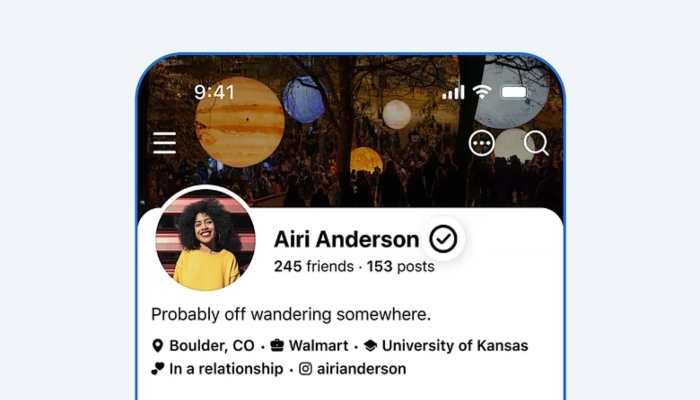
    Meta announced in February 2023 that Facebook and Instagram users could obtain a verified account (blue checkmark) by paying a monthly subscription fee. Since then, users around the world have been able to subscribe to receive the blue verification badge. However, Meta has now introduced a new way for users to receive a free verification badge on their Facebook profiles, making the process much more accessible. The company has launched a new Facebook Verified program that uses a selfie-based facial recognition check along with a review of the user’s current profile photos. According to Meta, the entire verification process takes only a few minutes to complete. The program is available only to users who are 18 years of age or older. Once a user successfully passes the selfie verification, a verified badge will appear next to their profile name across various Facebook services. Unlike the paid blue checkmark, this free badge simply confirms that the profile belongs to a real person. It does not certify the person’s credibility or trustworthiness. The best part is that this verification badge is available free of charge.

  • Google introduces selfie video verification for account login

    Google has introduced a new selfie video sign-in feature for account recovery. With this feature, users will be able to use a short video of themselves to log in to or recover their accounts. The purpose of this new feature is to help prevent issues such as deepfake-based fraud and account hacking. While announcing the selfie video verification feature, Google said that it has been designed as an alternative sign-in method. It can also be used for account recovery when other traditional login methods are not available. To use this feature, users will have to record a short video of themselves. Google will securely store this video recording and later, live videos will be used to verify the user’s identity during the sign-in process. During login, users will have to move their heads in real time so that attempts to use deepfake videos or static images for fraud can be prevented. Google further stated that the stored video will be protected through encryption and users will be able to delete their selfie video at any time from their account dashboard. The rollout of this feature has started and it will gradually become available worldwide. To access this feature, users need to go to their Google Account Settings, select Security & Sign-in and then choose Selfie Video. After that, users will need to use their phone or computer camera and follow the on-screen instructions including moving their head as directed.

  • WhatsApp adds AI photo expansion feature for Android

    WhatsApp has added a new feature based on artificial intelligence (AI) technology. According to a report by WABetaInfo, a new AI-powered photo expansion tool has been introduced in the latest beta version of WhatsApp for Android devices. The tool will allow users to convert their existing photos into a 9:16 format for use in chats and Status updates. The feature will be available in WhatsApp’s image-drawing editor. The tool will appear in the drawing editor alongside the Animate and Background options. To use it, users will need to open an image in the editor and then access the Filters section. Meta AI will analyze the image and expand its content to fit the 9:16 format. If users are not satisfied with the result, they can use the tool again. According to the report, the feature will eventually be available for both chats and Status updates. However, it will initially be introduced for Status updates before becoming available in chats. As mentioned above, the feature is currently available in the beta version so it is difficult to say when it will be rolled out to all WhatsApp users.

  • |

    EU fines Google $1 billion over competition violations

    The European Union has imposed a heavy fine on Google for allegedly using its dominance in the search engine sector to suppress other companies. According to a statement issued by the European Commission, Google illegally used its dominant position in the search engine market to reduce competition. The statement said that Google has been fined €890 million (around $1 billion) for this violation. The move is expected to increase trade tensions between the European Union and the United States as the Trump administration has warned of possible retaliatory measures and described EU trade policies as “unfair.” According to the European Commission, Google unfairly used its dominant search engine position to promote its own services including shopping, travel, gaming and other platforms reaching more users. The commission stated that Google placed its own services higher in search results while pushing competing services lower. The statement further explained that under the European Union’s Digital Markets Act, technology companies cannot show such biased behavior toward their own services and must follow transparent, fair and non-discriminatory policies. The European Commission also accused Google of unfairly preventing developers from informing users about alternative payment options on the Google Play Store as this could reduce Google’s service fees. This action was also considered a violation of the Digital Markets Act which aims to prevent large technology companies from establishing monopolies. According to the statement, Google must comply with the decision within 60 days otherwise additional penalties may be imposed. On the other hand, Google said in a statement that the decision would harm European consumers. This is not the first time the European Union has fined Google. In 2018, the EU imposed a $4.7 billion fine on Google over the alleged abuse of its dominance in the Android mobile operating system market and Google’s final appeal against the decision was rejected. In 2017, Google was fined $2.8 billion for abusing its dominance in the search sector while in 2024 its final appeal was also rejected.

  • WhatsApp launches AI scam detection feature for users

    WhatsApp is introducing a new feature powered by artificial intelligence (AI) technology to help protect users from scams. According to a report, the AI-powered scam detection feature is designed to help identify potentially fraudulent chats. The feature will use on-device AI to flag suspicious conversations while messages will continue to be protected by end-to-end encryption. According to the report, the feature works by downloading a machine-learning model directly onto the user’s smartphone. The model analyzes WhatsApp messages from people whose phone numbers are not saved in the user’s contacts. It examines the conversation style and language to assess whether the interaction could potentially be a scam. If the system identifies a chat as potentially fraudulent, WhatsApp will display a warning to the user. The other person involved in the conversation will not be notified about the warning. After seeing the warning, users can choose to block or report the sender, continue the conversation or mark the chat as trusted. Once a chat is marked as trusted, WhatsApp will stop displaying scam alerts for that conversation. According to the company, the AI model has been trained to identify fraudulent activity. Meta also stated that the AI model will not compromise users privacy and the company will not have access to users’ messages.

  • |

    10 technologies replaced by smartphones

    Smartphones are now found in almost everyone’s hands but their rise has also rendered many once-popular technologies obsolete. At the beginning of the 21st century, personal computers, home internet and mobile phones became widely accessible. Few could have imagined that, within a few years, all these technologies would merge into a single device that would transform nearly every aspect of daily life. That device is the smartphone. It serves as a flashlight, bank account manager, weather forecaster, fitness tracker, camera and much more. One of the smartphone’s greatest strengths is its ability to combine multiple functions into a single, easy-to-use device. As a result, many older technologies have largely disappeared. Here are ten of them: 1. Landline phones Landline phones were among the first technologies to be replaced by smartphones. Once common in nearly every home, they have become largely unnecessary because smartphones provide calling capabilities along with numerous internet-based communication apps. 2. Digital cameras Between 2008 and 2021, sales of compact digital cameras declined by more than 97 percent. Modern smartphones feature increasingly advanced cameras eliminating the need for many people to purchase separate digital cameras. 3. Calculators Pocket calculators were once essential tools for students and professionals. Today, every smartphone includes a built-in calculator while dedicated apps can solve even complex mathematical problems. 4. Alarm clocks Traditional alarm clocks have become much less common because smartphones include customizable alarm features allowing users to choose sounds, adjust volume and set multiple alarms. They also function as clocks reducing the need for separate timepieces. 5. Walkie-talkies Walkie-talkies were widely used in workplaces for instant communication. Smartphones now offer voice calls, messaging and group chats providing far more advanced communication options. 6. MP3 players Before smartphones, MP3 players were the preferred way to listen to music. Smartphones now allow users to store songs or stream millions of tracks through music apps without downloading them. 7. Radios Radio was once the primary source of music and news. Today, smartphones can stream live radio stations as well as podcasts and online audio services. 8. Compact Discs (CDs) CD sales peaked in 2002 and remained popular even after the arrival of devices like the iPod. However, smartphones and online streaming services have largely eliminated the need for physical music discs. 9. GPS devices Dedicated GPS navigation systems were once common in vehicles. Today, smartphones include built-in GPS sensors and navigation apps such as Google Maps making standalone GPS devices largely unnecessary. 10. Feature phones Basic mobile phones were once highly desirable and even considered status symbols. However, smartphones have almost completely replaced them leaving feature phones with only a small share of the market.

Leave a Reply

Your email address will not be published. Required fields are marked *