government announces crackdown
|

UK government announces crackdown on subscription traps 


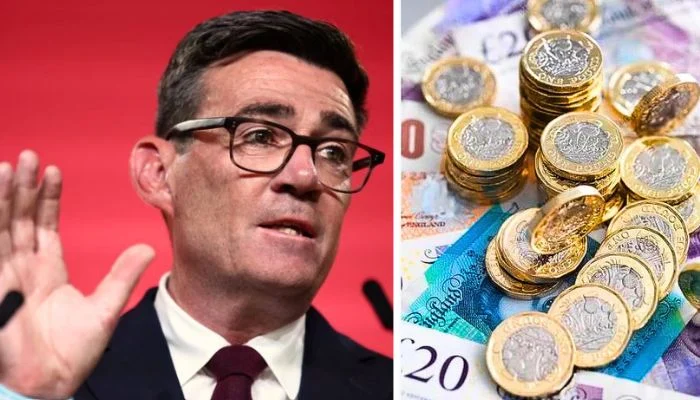
British Prime Minister Andy Burnham has announced a new package of measures aimed at easing financial pressure on households as the UK continues to face concerns over the cost of living. The government says it will take action against business practices that can leave consumers paying more than expected, including misleading discounts and difficult-to-cancel subscriptions.

The measures form part of Burnham’s wider “everyday fixes” agenda, which focuses on addressing common financial frustrations faced by families across the country. One of the first priorities will be an accelerated crackdown on so-called “subscription traps”, under which consumers can find themselves automatically paying for services they no longer want.

The government also plans to tackle misleading pricing practices used by retailers. These include fake “was” prices, invented reductions and misleading recommended retail prices that can make a product appear to offer a much larger discount than it actually does.

The changes are intended to prevent businesses from artificially increasing the price of an item before reducing it, creating the impression that shoppers are receiving a significant bargain.

Burnham said consumers should be able to trust the discounts advertised to them, particularly at a time when household budgets remain under pressure. He argued that if a product is promoted as being half price, customers should be confident that they are genuinely receiving a 50% reduction.

Subscription services are another major focus of the government’s plans. According to government figures, there are approximately 155 million active subscriptions across the UK, while unwanted subscriptions cost consumers around £1.6 billion every year.

The average consumer has several subscriptions, ranging from streaming and entertainment services to magazines, beauty products and other recurring services. Under the new rules, companies will be required to provide clearer information before customers sign up and remind them when free or discounted trials are approaching their end.

Businesses will also have to make cancellation procedures significantly easier. Consumers who sign up online will be able to cancel through a straightforward online process rather than being forced to navigate lengthy telephone calls or complicated cancellation systems.

Another important protection will be a 14-day cooling-off period following the end of certain trials or the renewal of long-term contracts. This will give customers additional time to reconsider a subscription and leave if they no longer want it.

The government estimates that consumers could save an average of £14 a month for every unwanted subscription they successfully cancel early. Overall, the wider consumer-protection measures are expected to provide substantial financial benefits to households.

The subscription rules are being brought forward from the previous timetable, with the government aiming for the new protections to take effect in January 2027. The changes are designed to give consumers greater control over their spending while putting greater responsibility on companies to make their pricing and cancellation policies transparent.

Burnham has described the measures as an effort to make everyday life fairer and less frustrating for British families. While the reforms will not resolve every aspect of the cost-of-living pressures facing households, the government says they are intended to deliver practical savings and prevent consumers from being caught out by unfair commercial practices.
Similar Posts

  • |

    US announces visa curbs on cybercrime suspects

    The United States has announced a new visa restriction policy targeting foreign nationals accused of involvement in cybercrime, online fraud and other cyber-enabled criminal activities. The new measures will apply to people who are directly involved in such crimes or who knowingly assist criminal networks. The policy specifically covers online scams, cyber fraud and sextortion. US Secretary of State Marco Rubio said the policy was introduced as part of the Trump administration’s broader campaign against cybercrime and fraud targeting American citizens. The move follows an executive order signed by President Donald Trump aimed at combating cybercrime, financial fraud and schemes that exploit US citizens. According to the US State Department, online investment scams have become a major threat to Americans. The department said US citizens lost at least $10 billion to scams in 2024. Officials also raised concerns about criminal organisations operating across borders. Some scam operations are allegedly linked to transnational criminal groups and are associated with money laundering, corruption and human trafficking. The US government also highlighted the growing threat of sextortion. American children have reportedly been targeted by overseas criminals who use online platforms to manipulate and blackmail victims. Under the new policy, visa restrictions can be imposed on foreign nationals found responsible for or complicit in cybercrime and cyber-enabled criminal activities. In certain cases, immediate family members of individuals involved in such activities may also face visa restrictions. The policy has been introduced under Section 212(a)(3)(C) of the US Immigration and Nationality Act. The administration said visa restrictions would form part of a wider effort to disrupt international scam networks. Other measures could include sanctions, criminal prosecutions, asset seizures and extradition requests. Washington also plans to strengthen cooperation with international law enforcement agencies to identify and dismantle criminal networks operating across borders. Rubio said the United States would pursue individuals who target Americans through cybercrime and fraudulent schemes. The administration said the new restrictions were intended to increase the consequences for criminals and those who help them operate

  • | |

    PML-N France marks Independence Day

    PARIS: Pakistan Muslim League-Nawaz (PML-N) France organized a ceremony to mark Pakistan’s 79th Independence Day, bringing together party officials, members of the Pakistani community and supporters to celebrate the country’s national day. The ceremony, held at the local level, was presided over by PML-N France President Mian Muhammad Hanif. In his address, Hanif extended Independence Day greetings to Pakistanis in France and paid tribute to the spirit of unity and patriotism among the Pakistani community abroad. He said Pakistan had gained greater recognition and respect internationally under the leadership of Prime Minister Shehbaz Sharif, stressing the need for collective efforts to preserve the country’s standing and support its continued development. Hanif urged Pakistanis to remain united and contribute to building a stronger and more prosperous Pakistan. He said progress and stability would help create better opportunities for the younger generation, enabling Pakistanis living abroad to move forward with greater confidence and pride in their homeland. The ceremony also featured speeches by the president of the PML-N France Women’s Wing, other party office-bearers and individuals seeking future organizational positions. Speakers highlighted the importance of Pakistan’s Independence Day and emphasized the role of overseas Pakistanis in supporting the country and strengthening national unity. A large number of members of the Pakistani community attended the event, reflecting their strong attachment to Pakistan and their enthusiasm for celebrating the national occasion. PML-N Azad Kashmir leader Raja Ashfaq Hussain thanked the media, organizers and participants for their presence and support. He reaffirmed the party’s commitment to celebrating Independence Day in France with the same enthusiasm and patriotic spirit in the years ahead. The event concluded with renewed expressions of solidarity with Pakistan and a pledge to continue promoting unity, progress and a positive image of the country among the Pakistani diaspora.

  • | | |

    Asif signals possible US-Iran deal amid Hormuz talks

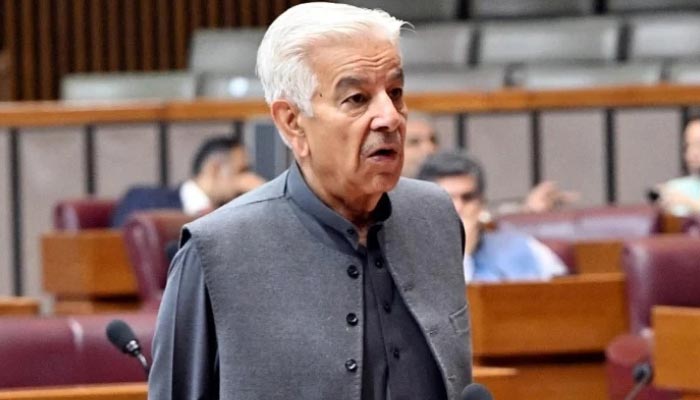
    ISLAMABAD: Defence Minister Khawaja Asif has said the United States and Iran may be moving closer to an agreement as diplomatic efforts continue to resolve the conflict and ease restrictions around the Strait of Hormuz. Speaking to Bloomberg, Asif said recent developments had created renewed hopes for a possible peace arrangement. He said signals over the past two to three days suggested that Washington and Tehran were approaching “some sort of an arrangement.” His comments came as Qatar said separate discussions between Oman and Iran regarding the management of the Strait of Hormuz had reached an advanced stage. The waterway remains at the centre of the crisis. It is a major route for global energy supplies, with a significant share of the world’s oil and liquefied natural gas shipments passing through it. Pakistan and Qatar have been involved in diplomatic efforts aimed at reducing tensions between Iran and the United States. Pakistan has continued contacts with Iranian officials as part of these mediation efforts. On Tuesday, Iranian Foreign Minister Abbas Araghchi met Pakistan’s Interior Minister Mohsin Naqvi in Tehran. Details of their discussion were not immediately disclosed, but the meeting came amid renewed diplomatic activity over the conflict. Iran has previously said it was working with Oman on arrangements for shipping through the Strait of Hormuz. Tehran has maintained that reopening the waterway fully would depend on the United States meeting several conditions. Those demands include compensation, an easing of sanctions and guarantees against further military action, according to Iranian officials. Araghchi has said Iran and the US are not holding direct negotiations. Messages are instead being exchanged through intermediaries. US President Donald Trump has also raised the issue of compensation. He said Washington would seek payments from Iran for damage and casualties allegedly caused over several decades. Despite the diplomatic activity, tensions remain high in regional waters. Four crew members were reportedly killed in a suspected attack on a cargo vessel near the Bab el-Mandeb Strait. The incident was blamed on Houthi forces, although the group had not immediately claimed responsibility. A separate container ship was also reportedly struck while sailing through the Gulf of Oman near Pakistan. Initial reports indicated that the incident may have involved US military action. The developments have increased concerns over the safety of commercial shipping in the region. Oil prices also remained elevated because of uncertainty surrounding the Strait of Hormuz. Prices eased on Tuesday after reaching a one-week high earlier in the session as investors responded to signs of possible diplomatic progress. The crisis has placed pressure on Washington and Tehran to find a political solution. Any agreement that reduces tensions and restores normal shipping through Hormuz could have a major impact on global energy markets.

  • | | |

    Hezbollah slams Israel talks as ‘humiliation’

    Hezbollah Secretary-General Sheikh Naim Qassem has strongly criticized direct negotiations between Lebanon and Israel, describing the dialogue as a series of “concessions” that have failed to serve Lebanon’s national interests. Speaking during an Arbaeen commemoration in the Lebanese city of Baalbek, Qassem said the ongoing negotiations had brought “humiliation and repeated compromises” rather than meaningful progress. He urged Lebanese leaders to avoid external pressure and instead pursue policies that safeguard the country’s sovereignty. The Hezbollah chief also criticized President Joseph Aoun, claiming the president had failed to play a neutral and unifying role during the current political situation. Qassem argued that Lebanon’s leadership should engage in dialogue with domestic political forces rather than making concessions to achieve foreign policy objectives. He further claimed that Israeli attacks were halted only after a memorandum linked to efforts between Iran and the United States helped reduce tensions. According to Qassem, Lebanon’s political leadership would not achieve lasting stability by following policies influenced by outside powers. Meanwhile, Iranian President Masoud Pezeshkian reiterated that Iran remains committed to defending its territorial integrity but has no intention of expanding the ongoing conflict beyond its borders. Addressing a gathering in Tehran, Pezeshkian said Iran would continue protecting its national security while focusing on strengthening internal unity. He stressed that a united society would leave no opportunity for foreign interference or attempts to create divisions within the country. The latest statements come as uncertainty continues over possible diplomatic contacts between Iran and the United States. US President Donald Trump recently said discussions with Tehran were underway and described them as a final opportunity to reach an agreement. However, Iranian officials denied that any negotiations were currently taking place or that formal meetings had been scheduled. The conflicting statements have added to uncertainty over future diplomatic efforts to ease regional tensions. The regional situation has also affected global energy markets. Saudi energy giant Aramco reported a sharp rise in second-quarter earnings, saying higher oil prices and supply disruptions linked to the regional conflict significantly boosted its financial performance. The company said it maintained production despite challenging conditions across the region.

  • | |

    Trump halts Iran strike, pushes for deal

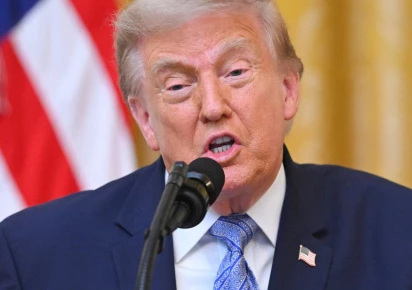
    US President Donald Trump has announced that he is postponing plans for a new military strike against Iran, saying he is giving diplomacy another opportunity to resolve tensions over Tehran’s nuclear programme and restore navigation through the Strait of Hormuz. In a statement posted on his social media platform, Trump said Iran, along with other countries in the Middle East, had requested additional time to finalize an agreement aimed at reopening the strategic waterway and addressing international concerns over Iran’s nuclear activities. Trump said he had agreed to suspend military action for the time being, provided that negotiations lead to a rapid and meaningful agreement. He added that the decision was made in the interest of regional stability, global security and the future prosperity of Iran. He also claimed that Israel supports the diplomatic approach, although Israeli officials had not publicly commented on the statement. Despite the temporary pause, tensions remain high across the region. Iranian officials warned that any military action by the United States or its allies would trigger an immediate and decisive response. Tehran maintained that it would defend its sovereignty against any form of aggression. Iranian Foreign Minister Abbas Araqchi held separate telephone conversations with senior officials from Pakistan, Türkiye and Saudi Arabia to discuss the rapidly evolving regional situation. During the talks, he warned that any attack on Iran would have serious consequences for regional peace and stability. Araqchi also stressed that Iran would respond proportionately if the United States, Israel or any regional country participated in military action against Iranian territory. The discussions focused on preventing further escalation and encouraging diplomatic efforts to avoid a wider conflict. Meanwhile, Saudi Crown Prince Mohammed bin Salman also held talks with President Trump to seek clarification on Washington’s plans regarding Iran. Although officials confirmed that the conversation took place, no further details were released. Iranian media affiliated with the country’s security establishment warned that attacks on Iran’s energy infrastructure could result in retaliatory strikes against oil and gas facilities across the Gulf region. The warning has heightened concerns among energy producers and international markets. President Trump acknowledged that negotiations remain difficult and admitted that his confidence in reaching an agreement has weakened. However, he said his administration continues to pursue diplomatic engagement before considering further military action. Senior US officials remain involved in efforts to secure a negotiated settlement. The conflict has already had a significant impact on global energy markets. Fighting between US, Israeli and Iranian forces has disrupted regional stability and increased uncertainty over international oil supplies. The Strait of Hormuz remains one of the world’s most important shipping routes for crude oil exports. Continued security threats have reduced commercial shipping through the passage, raising concerns over global energy supplies and increasing pressure on oil prices. Analysts say prolonged instability in the Gulf could further affect international markets if diplomatic efforts fail. Rising oil prices have already placed additional economic pressure on many countries dependent on imported energy. Regional security concerns have also expanded beyond the Strait of Hormuz. Maritime authorities reported separate incidents involving commercial vessels near Oman, including damage to a tanker after it was struck by an unidentified projectile. Another vessel reported a nearby explosion but escaped without damage.

Leave a Reply

Your email address will not be published. Required fields are marked *