supreme court reserves
|

Supreme Court reserves verdict on diyat amount

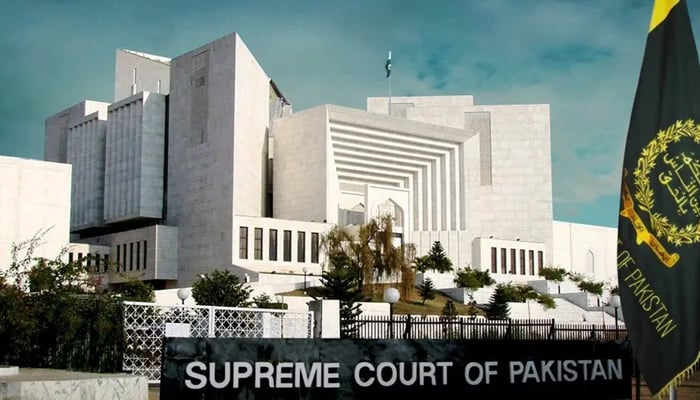
The Supreme Court of Pakistan has reserved its decision on an important legal question concerning the determination of diyat, or blood money, in murder cases.

A bench of the apex court reserved the verdict while hearing an appeal filed by convict Nadeem Khan. The case focuses on the amount of diyat payable and the point in time that should be used to determine its value.

During the hearing, the convict’s lawyer argued that his client had already completed his prison sentence for the murder conviction and was now serving additional imprisonment because he had not paid the required diyat.

Prosecutor Arshad Hussain told the court that the case was the first of its kind and that a High Court judgment already exists regarding the determination of the amount. He informed the court that the current diyat amount stands at around Rs197 million (Rs19.7 million).

Justice Hashim Kakar asked whether the diyat should be calculated according to its value at the time of the offence, the accused’s arrest, or the time of conviction and sentencing.

Justice Salahuddin remarked that making the financial consequences of murder more serious might discourage people from committing such offences. He also noted that Saudi Arabia continues to use 100 camels as the traditional basis for diyat.

Justice Ishtiaq Ibrahim observed that delays in deciding cases reflect shortcomings in the justice system and said an accused should not suffer because of institutional delays.

In response, Prosecutor Arshad Hussain argued that certain legal matters, such as determining a person’s age, are assessed from the time of arrest, suggesting that a similar principle could apply in determining the relevant period for diyat.

The Supreme Court directed all prosecutors concerned to submit their written arguments on the matter. After receiving the submissions, the court will issue its decision on how and when the amount of diyat should be determined.

Similar Posts

  • Thailand Cuts Diesel and Gasohol Prices for Songkran

    BANGKOK — Fuel supplies will remain adequate throughout the Songkran holiday period, while retail oil prices were set to fall from Saturday after the Oil Fuel Fund Executive Committee approved cuts to levy rates, Energy Minister Akanat Promphan announced. Refining Margins to Be Lowered, Diesel Set to Drop by 2.14 Baht Speaking on Saturday, Akanat […]

  • | |

    Nawaz interviews candidates for AJK reserved seats

    Pakistan Muslim League-Nawaz (PML-N) leadership has accelerated consultations over the formation of the next government in Azad Jammu and Kashmir (AJK), with party supremo Nawaz Sharif and Punjab Chief Minister Maryam Nawaz interviewing candidates for reserved seats. The interviews were held in Murree on Sunday for five women’s reserved seats in the AJK Legislative Assembly. PML-N AJK regional president Shah Ghulam Qadir and Prime Minister’s Adviser on Political Affairs Rana Sanaullah also attended the meeting. The party leadership reviewed the profiles of several women seeking PML-N tickets. The interviews reportedly lasted between five and 10 minutes for each candidate. Among those interviewed were Maryam Kashmiri, president of the PML-N AJK Women’s Wing, secretary general Nasira Azeem Khan, former reserved-seat MLA Sehrish Qamar, former Assembly member Nisara Abbasi, Maryam Idrees, Maria Iqbal Tarana and Zareeda Nisar. The widow of late Raja Abid Khan of Dadyal also appeared before the leadership. Her son, Raja Shoaib Abid, had withdrawn from the electoral contest in support of PML-N candidate and MLA-elect Chaudhry Azhar Sadiq. The PML-N leadership praised the participation of women in the recent AJK elections. The party said women had played an active and important role in the electoral process and described their involvement as a positive development for democracy. The PML-N has emerged as the largest party following the recent AJK elections. It secured 25 directly elected seats and has the support of an allied member. Based on its strength in the Assembly, the party is expected to win four of the five reserved seats for women. The party is also expected to secure the remaining three reserved seats allocated to religious scholars or Mashaikh, overseas state subjects, and technocrats and other professionals. The AJK Election Commission has scheduled polling for all eight reserved seats for August 24. The voting will take place at the AJK Legislative Assembly Hall in Muzaffarabad from 10am to 1pm. Candidates will submit nomination papers on August 20. The scrutiny process will be completed the same day, while appeals against decisions regarding nominations can be filed on August 21. The Election Commission will hear the appeals on August 22. Candidates will have until August 23 to withdraw their nominations, after which the final list of contestants will be issued. The AJK Assembly comprises 53 members. Of these, 45 are elected through direct voting, while eight seats are reserved for specific categories. However, elections could not be held in seven constituencies because of the law and order situation in parts of Poonch and Sudhnoti districts. As a result, 38 directly elected members will take part in the process of electing candidates to the reserved seats. Meanwhile, the Election Commission also issued notifications confirming the victories of PPP candidate Sardar Ziaul Qamar and PML-N candidate Sardar Mir Akbar in Bagh district. Qamar was declared successful from LA-15 Central Bagh, while Akbar was declared the returned candidate from LA-16 Eastern Bagh. Their notifications formally completed the electoral process in the two constituencies.

  • | | |

    Parliament should focus on Pakistan’s real c…

    Pakistan is an Islamic republic whose Constitution defines not only the structure of the state but also its ideological foundation. It explicitly states that the country should create an environment in which Muslims can live their lives in accordance with the teachings of the Quran and Sunnah. Against this constitutional backdrop, it is surprising that the issue of women wearing the abaya—or an Islamic financial institution including the abaya in its employee dress code—has become a matter of concern for a parliamentary committee. This naturally raises an important question: Who is setting the country’s priorities, and are these truly the issues that deserve Parliament’s attention? Pakistan continues to face pressing challenges, including rising inflation, unemployment, an unequal tax system, a struggling economy, and serious shortcomings in education and healthcare. These are the issues that directly affect the daily lives of millions of citizens. If a parliamentary standing committee, whose primary responsibility is financial oversight, chooses to focus instead on the dress code of Islamic banks, it is reasonable for the public to question whether legislative priorities are aligned with the country’s most urgent needs. The debate also raises questions about consistency. Critics have objected to the abaya as part of an institutional dress code, yet there is little discussion about uniforms in many government departments that follow Western styles of dress. Women serving in the police, the Federal Investigation Agency (FIA), and several other public institutions are commonly required to wear trousers and shirts as part of their official uniforms. If clothing is to become a matter of parliamentary debate, then similar standards should apply across the board. Selective criticism can create the perception of bias. Supporters of Islamic dress codes argue that the issue extends beyond clothing itself and reflects broader concerns about cultural and religious identity. From this perspective, the concern is not simply about the abaya but about a mindset that views visible expressions of religious identity as obstacles to modernization. They question whether institutions with an Islamic identity should be expected to abandon their traditions in the name of progress. This leads to a broader debate: Who defines what it means to be modern? Does modernization necessarily require reducing the public expression of religious values or adopting Western cultural norms? For institutions operating within Pakistan’s Islamic banking framework, supporters argue that their identity is rooted not only in financial principles but also in ethical and religious values. If such institutions adopt internal policies that comply with Pakistani law and reflect constitutional and religious principles, they contend that those choices should be respected. The discussion also draws comparisons with international examples. In countries such as France, restrictions on religious clothing have generated significant criticism from human rights advocates. Supporters of religious freedom argue that Pakistan, which was established with a distinct religious and cultural identity, should carefully consider whether adopting similar approaches is consistent with its own constitutional framework and historical foundations. Ultimately, the central argument is that Parliament should devote its time and resources to addressing issues that directly affect governance, economic stability, and public welfare. Matters of personal attire, religious belief, and institutional identity, many argue, should not become subjects of unnecessary official intervention when the country faces far more pressing social and economic challenges.

  • | |

    UK opens fully funded scholarships, startup fellow…

    The United Kingdom has invited applications from Pakistani students, professionals and entrepreneurs for its fully funded Chevening Scholarships, Chevening Oxford Centre for Islamic Studies (OCIS) Fellowship and Commonwealth Startup Fellowship. In a statement issued on Tuesday, the British High Commission said the programmes aim to help talented Pakistanis gain access to world-class education, strengthen professional skills and build international networks. The Chevening Scholarship offers fully funded one-year master’s degree programmes at leading UK universities for individuals who demonstrate leadership potential, professional achievements and a commitment to creating positive change in their communities. The Chevening Oxford Centre for Islamic Studies Fellowship is designed for mid-career academics and professionals. It provides an opportunity to conduct independent research at the University of Oxford while engaging with scholars from around the world. The Commonwealth Startup Fellowship targets promising entrepreneurs, helping them develop innovative businesses through mentorship, expert guidance and training in the UK. The programme also supports participants in preparing their ventures for future growth and expansion. British High Commissioner to Pakistan Jane Marriott said Pakistan has an abundance of talented individuals, and these programmes are designed to equip them with the skills, knowledge and global connections needed to lead organisations, expand businesses and address major global challenges. She advised applicants to submit original applications based on their own experiences, ambitions and ideas, warning that the use of AI-generated responses could lead to disqualification during the selection process. The High Commission said all three programmes cover major expenses, including airfare, tuition fees, visa costs and living allowances, allowing selected candidates to focus entirely on their studies or professional development. Beyond academic and career opportunities, participants will also gain international exposure, experience different cultures and establish long-term professional relationships with leaders and experts from across the globe. According to the British High Commission, Pakistan has produced more than 2,000 Chevening alumni who are serving in government, business, academia, media and civil society. Worldwide, the Chevening network includes numerous influential leaders, including several current and former heads of state and government. Applications for the Commonwealth Startup Fellowship opened on August 3 and will remain open until September 1, while applications for the Chevening Scholarship and the OCIS Fellowship are also currently being accepted through their respective official application portals.

  • Only 7% government school students enter top colleges

    Karachi – The standard of education in Karachi’s government schools has declined to a worrying level with only 7 percent of students admitted to top government colleges this year coming from government schools. Questions are being raised over the quality of education in Karachi’s government schools. Sources in the Education Department have revealed that the admission rate of government school students in top government colleges is extremely low. As many as 93 percent of admissions in Karachi’s government colleges were secured by students from private schools. According to Education Department sources, a total of 13,211 students were admitted to Karachi’s top 10 government colleges. However, only 947 students among them came from government schools. According to the sources, at Adamjee Government Science College, only 28 government school students were admitted out of a total of 613 admissions. At DJ Sindh Government Science College, only 44 government school students secured admission out of 1,258 admissions. Similarly, Delhi Government Science College admitted 801 students of whom only 28 were from government schools. At Government Boys College Nazimabad, only 60 government school students were admitted out of a total of 1,317 admissions.

  • | |

    Nestle turns to AI to build products for weight lo…

    Nestle is working to convert the rapid rise of GLP-1 weight loss drugs from a business threat into an opportunity, deploying artificial intelligence and nutritional research to develop products aimed at the millions of consumers now taking medications like Ozempic and Wegovy. The fast growing adoption of drugs made by Novo Nordisk and Eli Lilly has raised concerns among investors that appetite suppressing medications could permanently dent demand for packaged foods, snacks and beverages. Nestle sees the same trend differently, believing the drugs are creating a new market for products that address the side effects associated with rapid weight loss. Chief Technology Officer Stefan Palzer told a foreign news agency that Nestle is using artificial intelligence and other technology to analyze clinical research, identify effective nutrient combinations and build products tailored specifically to GLP-1 users. He said the company believes its existing product portfolio positions it well to capture what he described as a major opportunity. Materials shown to reporters outlined side effects tied to rapid weight loss, including muscle loss and the loss of facial volume sometimes referred to informally as Ozempic face, along with areas where Nestle believes its products could help address those issues. The GLP-1 drug market remains dominated by Eli Lilly’s Mounjaro and Zepbound alongside Novo Nordisk’s Wegovy and Ozempic. Roughly 16 million Americans currently take GLP-1 medications, according to Boston Consulting Group, a number expected to grow significantly by the end of the decade. Nestle’s strategy centers on developing products suited to the needs of weight loss drug users while relying on AI to speed up research, product development and consumer analysis. Addressing side effects directly Palzer said Nestle scientists have spent time studying the downstream effects of rapid weight loss and building products intended to help consumers manage them. The company uses AI tools to process large volumes of clinical research and identify nutrient combinations that may support muscle health, hydration and overall nutritional intake. Nestle has already begun adding collagen protein to products under its Vital Proteins brand to address concerns about skin, hair and nail health linked to rapid weight loss. In the United States, Nestle’s business created the Boost Advanced Nutrition Shake, marketed as containing 35 grams of protein to support muscle health during weight loss. In Asia and Australia, the company introduced a higher protein version of its Milo malt drink called Milo PRO High Protein. Rival ice cream makers are grappling with similar pressures, shifting toward higher protein products, smaller portions and simpler ingredient lists. An AI powered recipe database Artificial intelligence plays an increasingly central role throughout Nestle’s product development process. The company has built internal systems to analyze scientific literature, simulate consumer behavior, spot emerging trends and help product developers navigate a database containing roughly 120,000 recipes. One such tool, an internal platform called Food Genie, helps scientists and developers predict how recipes might perform and identify opportunities for reformulation, according to Palzer. He said the scale of Nestle’s recipe database gives the company an advantage, noting that a smaller company with only a thousand recipes would struggle to model and predict outcomes using AI, since the technology depends heavily on large volumes of data. Nestle is also testing AI driven consumer simulations designed to predict how shoppers will respond to new products and health claims before they reach store shelves, and the company uses AI to monitor social media activity and identify emerging consumer trends. Palzer said the technology helps distinguish genuine, lasting trends from short term noise around particular topics, and said he expects AI to play a growing role in that kind of trend analysis going forward. Skepticism remains among some experts Not everyone is convinced specialized products offer meaningful advantages over conventional food. Amanda Avery, an associate professor of nutrition and dietetics at the University of Nottingham in central England, said it is unfortunate that consumers keep turning to new, more expensive products that often contain the same protein and nutrients found in whole, fresh foods. She noted that meat, fish, eggs, dairy, beans, nuts and pulses remain relatively affordable sources of protein and other nutrients. Even so, Avery said she expects products marketed specifically to GLP-1 users to find a ready customer base, acknowledging that marketing exerts significant influence over consumer choices and suggesting Nestle has likely done its homework before entering the space.

Leave a Reply

Your email address will not be published. Required fields are marked *