mqmp calls administrative
|

MQM-P calls for administrative units based on popu…

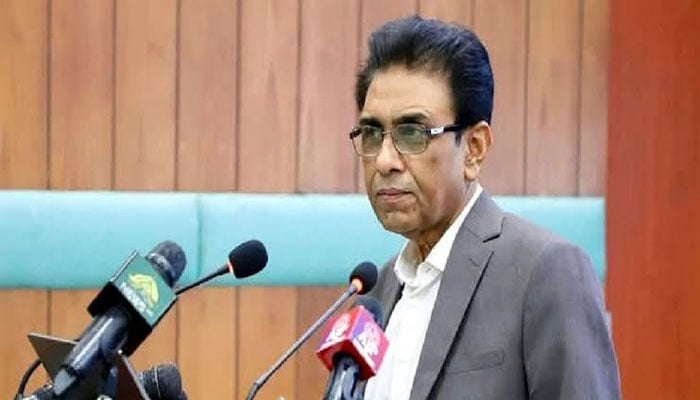
Muttahida Qaumi Movement-Pakistan (MQM-P) Chairman Dr Khalid Maqbool Siddiqui has called for the creation of new administrative units across Pakistan based on population size, arguing that the country needs a more effective system of governance to meet the needs of its growing population.

Speaking at a press conference in Karachi, Siddiqui said the business community across the country had also raised concerns similar to those voiced by his party regarding the existing administrative structure. He argued that Pakistan’s administrative system needed reforms to ensure better governance and a more balanced distribution of resources.

Siddiqui said the provincial structure had changed after the abolition of the One Unit system, but the country had failed to restore an administrative framework that fully addressed the needs of its population. He stressed that his party’s demand for new administrative units did not target the country’s territorial integrity or seek to undermine the existing provinces.

“We demand the creation of administrative units in Pakistan according to the population,” Siddiqui said, emphasizing that the objective was to improve administration and ensure that people received better public services.

Addressing concerns over the boundaries of potential new administrative units, the MQM-P chief said his party had never called for a debate over the division of Pakistan’s territory. He described Pakistan as the “motherland” and said all four provinces remained an integral part of the country.

Siddiqui maintained that the country itself was indivisible, while the Constitution allowed for changes in the administrative structure. He said the Constitution provided a mechanism for altering provincial boundaries and creating new administrative arrangements, although he believed the existing procedure had become impractical under current circumstances.

The MQM-P chairman also pointed to the significance of August 1, the beginning of Pakistan’s independence month. He said the month carried a strong ideological connection with the creation of Pakistan and should encourage political leaders to discuss reforms aimed at strengthening the country.

Siddiqui further revealed that his party had already introduced a constitutional amendment in the National Assembly to address the issue. He argued that Pakistan needed to revisit its administrative framework and consider reforms that could make governance more efficient and bring government closer to the people.

The MQM-P has repeatedly advocated the creation of additional administrative units, maintaining that a more decentralized system could improve governance, facilitate service delivery and ensure a fairer distribution of resources. The demand, however, remains a politically sensitive issue, particularly in the context of debates over provincial boundaries and autonomy.

Similar Posts

  • | | | |

    Iran’s supreme leader Mojtaba Khamenei names Bag…

    TEHRAN: Iran’s Supreme Leader Ayatollah Mojtaba Khamenei has reshuffled two key positions in the country’s security and political establishment, appointing Mohammad Bagher Zolghadr as his political adviser and former Islamic Revolutionary Guard Corps (IRGC) commander Mohsen Rezaei as his representative on the Supreme National Security Council (SNSC). The appointments were announced through messages attributed to Khamenei on social media on Sunday, according to reports, placing two veteran figures with extensive military and political experience in prominent roles at a sensitive moment for Tehran. In his message to Zolghadr, Khamenei cited his “valuable experience” while appointing him as a political adviser. Zolghadr has held several senior positions in Iran’s security establishment and previously served as secretary of the SNSC. The move follows Zolghadr’s departure from the council’s top administrative position. Reports said Rezaei has been appointed to replace him as secretary of the powerful security body, while also serving as Khamenei’s representative on the council. Rezaei is a veteran figure in Iran’s political and military establishment. He served as commander of the IRGC for much of the Iran-Iraq war era and has held a range of senior political positions. He has also previously run for Iran’s presidency. The latest appointments are drawing attention because the SNSC plays a central role in coordinating Iran’s defence, security and foreign-policy decisions. Although the council is formally chaired by President Masoud Pezeshkian, its work brings together senior political, military and security institutions. The timing of the reshuffle is particularly significant as Iran faces continuing pressure over regional security and negotiations surrounding the Strait of Hormuz. Recent diplomatic efforts have focused on arrangements for shipping through the strategically important waterway, making changes within Tehran’s security leadership especially closely watched. Both Zolghadr and Rezaei are associated with Iran’s security establishment and have extensive experience in military affairs. Analysts are therefore likely to watch closely for any indication that the appointments could affect Tehran’s approach to negotiations, regional security or relations with the United States. The reshuffle also strengthens the role of figures with longstanding links to the IRGC within the leadership structure. Rezaei had already served as a military adviser to Mojtaba Khamenei before taking on the latest assignment. For Zolghadr, the new position keeps him within the senior leadership circle despite his exit from the SNSC secretaryship. His experience in security and political affairs could allow him to continue playing a role in shaping policy from the Supreme Leader’s office. The appointments come at a critical time for Iran, with international attention focused on Tehran’s security posture and the future of the Strait of Hormuz. Whether the changes represent a broader adjustment in Iran’s negotiating strategy remains to be seen, but the elevation of two experienced security figures is likely to keep Tehran’s next moves under close scrutiny.

  • | | |

    Pakistan needs hard governance to defeat terror: D…

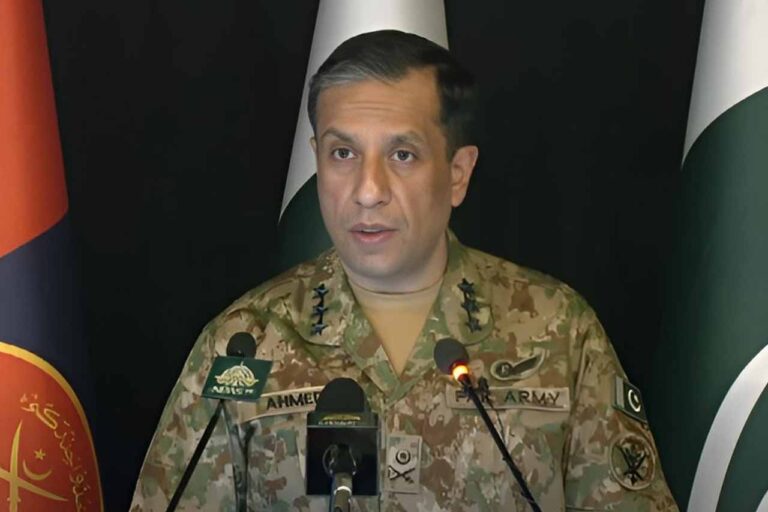
    Director General of Inter-Services Public Relations (ISPR) Lieutenant General Ahmed Sharif Chaudhry has said Pakistan must become a “hard state” where the Constitution and law are applied equally to everyone, stressing that strong governance is essential to defeating terrorism and ensuring lasting peace. He rejected claims that the security situation in Balochistan is worsening, calling them part of a deliberate campaign to create a false perception about the province. Addressing a detailed press conference on Friday, the military spokesperson said Pakistan’s security forces continue to make significant gains against terrorism through sustained intelligence-based operations across the country. Lt Gen Chaudhry said a total of 40,348 intelligence-based operations (IBOs) have been carried out so far this year by the armed forces, police, intelligence agencies and civil armed forces. More than 31,000 of these operations were conducted in Balochistan, reflecting the state’s continued focus on restoring peace in the province. He said Pakistan recorded 3,145 terrorism-related incidents during 2026. Of these, 1,971 incidents occurred in Khyber Pakhtunkhwa, 1,148 in Balochistan and 26 in other parts of the country. The ISPR chief said security forces killed 2,084 confirmed terrorists during operations this year, describing it as the highest average in the country’s history. On average, around 10 terrorists have been eliminated every day, while nearly 200 intelligence-based operations are conducted daily. Highlighting the sacrifices made in the fight against terrorism, Lt Gen Chaudhry said 819 Pakistanis lost their lives in terrorism-related incidents this year. The victims included 303 military personnel, 194 members of police and civil armed forces, and 322 civilians. He also revealed that 28 suicide attacks had taken place across the country during the year. According to him, most of these attacks involved Afghan nationals or individuals linked to groups operating from Afghan territory. The military spokesperson said the rise in terrorist attacks should not be viewed as a sign of weakness. Instead, he argued that militant groups have intensified attacks because of increasing pressure from proactive security operations and repeated battlefield setbacks. Lt Gen Chaudhry also accused the Afghan Taliban administration of allowing terrorist groups to operate from Afghan soil, claiming cross-border support remains a major factor behind terrorism inside Pakistan. Explaining his vision of a “hard state,” he said it does not mean military rule. Rather, it refers to a country where institutions function according to the Constitution, laws are enforced fairly, and no individual or group stands above the law. Referring to Article 5 of Pakistan’s Constitution, he said loyalty to the state and obedience to the Constitution are fundamental duties of every citizen. He added that discussions about rights must also include recognition of civic responsibilities. Speaking specifically about Balochistan, Lt Gen Chaudhry said the province’s real challenge lies with certain elites and tribal leaders who seek to preserve the existing power structure. He alleged that some influential groups oppose educational and economic progress because they fear losing their traditional influence. He further claimed that some individuals benefit from illegal activities, including smuggling and other criminal networks, and promote unrest whenever the state strengthens law enforcement or cracks down on such activities. The military spokesperson reiterated that Pakistan would not negotiate with terrorist groups or those using violence for political purposes. Instead, he said the armed forces would continue engaging directly with the people of Balochistan, whom he described as the province’s true stakeholders. Lt Gen Chaudhry also alleged that hostile foreign powers are attempting to exploit Balochistan’s strategic location and natural resources by supporting anti-state elements in collaboration with local actors opposed to reforms and development. Discussing the issue of missing persons, he said the Commission of Inquiry on Enforced Disappearances has received 10,901 complaints since its establishment. Of these, 9,372 cases have been resolved, with 4,896 individuals returning home, around 1,030 found in prisons, 308 confirmed dead, and nearly 2,400 complaints determined to be incorrectly reported. He added that 2,933 complaints originated from Balochistan, of which 2,767 have already been resolved.

  • | |

    372 honoured with Pakistan Civil Awards on Indepen…

        ISLAMABAD: The Government of Pakistan has announced the Pakistan Civil Awards 2026 honouring 372 Pakistani citizens, overseas Pakistanis and foreign nationals for their outstanding achievements, services and acts of courage in various fields. The awards were announced on August 14, 2026 on the occasion of Independence Day, by the President of Pakistan. According to an official press release issued by the Cabinet Division, the honours recognise individuals who have demonstrated exceptional performance, excellence, dedication and bravery. The awards will formally be conferred at an Investiture Ceremony on Pakistan Day, March 23, 2027. The recipients come from diverse fields, including science, engineering, education, medicine, literature, arts, sports, journalism, social welfare, philanthropy and public service. A significant number have also been recognised for gallantry and sacrifices made while performing their duties. Among scientists, Dr Shahid Mahmud has been selected for the Hilal-i-Imtiaz in Science (I.T.), while Prof Dr Syed Zafar Ilyas and Prof Dr Mudassir Asrar will receive the Sitara-i-Imtiaz. Several other scientists, including Dr Sajjad Hussain, Prof Dr Aneela Zameer Jaffery and Dr Urooj Saeed, have been selected for the Tamgha-i-Imtiaz. Engineers Dr Muhammad Sadiq and Prof Dr Naeem-ul-Haq Tariq have also been named for the award. In education, Prof Sheikh Imtiaz Ali (late) has received the Nishan-i-Imtiaz posthumously. Lt Gen (retd) Moazzam Ejaz has been selected for the Hilal-i-Imtiaz, while other educators and researchers have been recognised with Sitara-i-Imtiaz and Tamgha-i-Imtiaz. The government has also honoured numerous doctors and health professionals. Prof Faisal Saud Dar has been selected for the Hilal-i-Imtiaz, while the late Prof Dr Tahir Shamsi has been awarded the Sitara-i-Imtiaz posthumously for his contributions to bone marrow transplantation. The arts category includes actors, singers, musicians, painters and theatre personalities. Sultana Siddiqi has been selected for the Hilal-i-Imtiaz, while Nisho Begum, Iftikhar Ahmed Thakur, Syed Fasih Uddin Soharwardhy, Shakir Hussain, Taranam Naz and Saira John Peter are among those receiving the Sitara-i-Imtiaz. Numerous performers and traditional artists have also been recognised through the Presidential Award for Pride of Performance and Tamgha-i-Imtiaz. Literary figures have also featured prominently. Asad Muhammad Khan has been selected for the Nishan-i-Imtiaz for his contributions to fiction, drama and poetry, while Ejaz Rahim and Muhammad Khurshid Ul Hasan Rizvi will receive the Hilal-i-Imtiaz. Sports personalities, including wrestler Bashir Bhola, shooter Kishmala Talat, squash player Noor Zaman, boxer Muhammad Waseem and cricketer Sadiq Muhammad, have also been recognised. Journalists Muhammad Saleh Zaafir and Haji Nawaz Raza have been selected for the Sitara-i-Imtiaz, while several other media professionals will receive Pride of Performance and Tamgha-i-Imtiaz awards. Public service remains one of the largest categories, with Muhammad Ishaq Dar, Mohsin Naqvi, Muhammad Aurangzeb, Ahad Khan Cheema and Bilal Azhar Kayani selected for the Nishan-i-Imtiaz. The list also includes numerous military personnel, police officers and civilians recognised for bravery. Forty-three individuals have been named for the Sitara-i-Shuja’at, with many receiving the honour posthumously for sacrificing their lives in the line of duty. Several foreign nationals have also been honoured for their services to Pakistan. Sheikha Fatima bint Mubarak has been selected for the Nishan-i-Pakistan, while other international figures have been chosen for various civil awards. The government has separately recognised overseas Pakistanis for their contributions, with recipients selected for honours including the Nishan-i-Imtiaz, Hilal-i-Imtiaz, Sitara-i-Imtiaz and Tamgha-i-Imtiaz. The official notification was issued by Cabinet Secretary Kamran Ali Afzal on August 14. The awards will be formally presented on March 23, 2027.

  • | | |

    Nawaz urges unity between government, military

    Pakistan Muslim League-Nawaz (PML-N) President Nawaz Sharif has urged party leaders to avoid any actions or statements that could create the impression of differences between Prime Minister Shehbaz Sharif’s government and Chief of Army Staff Field Marshal Syed Asim Munir. According to sources, Nawaz Sharif told senior party members that Pakistan is currently facing significant economic, political and security challenges, making it essential to maintain national stability and institutional harmony. The development came after senior PML-N leaders reportedly conveyed their reservations to Nawaz Sharif regarding recent remarks made by Interior Minister Mohsin Naqvi about the country’s system. Sources said Nawaz Sharif advised party leaders to exercise restraint and avoid public statements that could fuel unnecessary controversy or create the perception of tensions between key state institutions. He stressed that the country’s national interest requires close coordination and mutual understanding among institutions, particularly at a time when Pakistan is confronting multiple internal and external challenges. According to the sources, Nawaz Sharif emphasised that maintaining harmony between the civilian government and the military leadership is essential for political stability, effective governance and addressing the country’s pressing issues. He urged party leaders to remain focused on national priorities and act responsibly in their public engagements.

  • | |

    Expensive sugar export decision raises concerns

      Lahore: The federal Ministry of Industries and Production has reportedly allowed the export of sugar that was imported at a higher cost, raising concerns over potential losses to the national exchequer. Sources within the ministry said the government has yet to approve the export of around 250,000 tonnes of locally produced sugar, which is available at a comparatively lower cost. Instead, authorities have decided to permit the export of only 100,000 tonnes, a move that industry sources have described as disappointing. According to the sources, the decision could create further difficulties for the sugar industry and affect the procurement of sugarcane from farmers. Sugar mill owners have already warned the Ministry of Industries and Production that they may face difficulties purchasing the upcoming sugarcane crop under the current circumstances. The sources expressed concern that allowing the export of expensive imported sugar while holding back cheaper locally produced stocks could increase financial pressure on the country. They also questioned the rationale behind exporting only 100,000 tonnes when a significantly larger quantity of locally produced sugar remains available. Sugar industry stakeholders have warned that the situation could affect the entire supply chain, particularly farmers who depend on sugar mills for the purchase of their sugarcane crop. If mills struggle to sell their existing stocks or face financial constraints, they may find it difficult to make timely purchases from growers. The development has also raised questions about the government’s sugar management policy, particularly its approach to balancing domestic availability, imports, exports and the interests of farmers and millers. Industry representatives are now seeking a clearer policy to prevent disruptions in sugarcane procurement and avoid further losses to the national economy.

  • | |

    Khawaja Asif calls bureaucracy Pakistan’s real r…

    ISLAMABAD: Defence Minister Khawaja Asif has criticised Pakistan’s bureaucracy. He described it as the country’s “real and permanent rulers.” Asif said bureaucrats had remained largely beyond effective accountability during Pakistan’s 78-year history. He said politicians had faced accountability on numerous occasions. Other powerful groups had also been held accountable at different times. However, he said it was difficult to find similar examples involving senior bureaucrats. The defence minister made the remarks while sharing a social media post about alleged financial corruption involving a senior bureaucrat. Asif said the bureaucracy had gradually become a powerful and largely untouchable class. He questioned why bureaucrats had not been subjected to the same level of scrutiny as politicians. According to Asif, politicians themselves were partly responsible for the situation. He said political leaders had failed to establish an effective system to hold the bureaucracy accountable. The minister also referred to a former bureaucratic ruler while discussing the influence of senior officials in Pakistan. He said the former official used highly inappropriate and insulting language against politicians. Despite this behaviour, politicians continued to tolerate him, according to Asif. Asif’s comments highlight his criticism of the imbalance in accountability among powerful sections of Pakistani society. His remarks also raise questions about the role of the bureaucracy in governance and decision-making. The minister maintained that stronger accountability was needed for all powerful groups. He suggested that politicians could not blame bureaucrats alone for the existing system because political leaders had also contributed to its continuation.

Leave a Reply

Your email address will not be published. Required fields are marked *