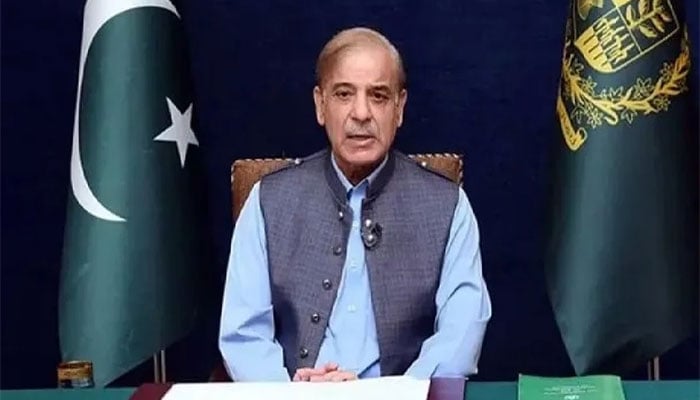
shehbaz sharif reviews
| |

PM Shehbaz Sharif reviews implementation of nation…


Prime Minister Shehbaz Sharif chaired a high-level meeting to review the implementation of Pakistan’s National Integrated Digital Policy Framework, with discussions focusing on strengthening digital governance, expanding the digital economy, and improving public services through modern technology.

During the meeting, the prime minister directed the relevant authorities to take immediate steps to make the facilities of the National Data Center, “Sky 47,” available to all federal government institutions. He emphasized that the initiative would serve as a cornerstone of Pakistan’s digital transformation strategy and significantly improve the efficiency of government operations.

Shehbaz Sharif said the National Data Center would function as a centralized platform for storing and managing data from all government institutions. He explained that maintaining a unified data infrastructure would eliminate the need for individual departments to establish separate data centers, resulting in substantial savings of public resources while ensuring greater coordination and improved data security.

The prime minister highlighted the role of the Pakistan Digital Authority in leading the country’s digital transformation. He said the authority was providing an effective direction for the delivery of government services and citizen-centric facilities. According to him, the implementation of the National Digital Vision would play a key role in building a modern, integrated, and technologically advanced society capable of meeting future challenges.

Appreciating the progress made so far in promoting digital governance, the digital economy, and digital public services, Shehbaz Sharif instructed officials to strengthen international partnerships under the National Integrated Digital Policy. He stressed the importance of increasing collaboration with global technology partners and ensuring Pakistan’s effective representation at international digital forums to benefit from global expertise and innovation.

The prime minister further directed that the National Digital Vision should be implemented across multiple sectors, including healthcare, agriculture, public utilities, housing, and small and medium-sized enterprises (SMEs). He noted that the adoption of digital technologies in these sectors would improve service delivery, enhance efficiency, and provide citizens with faster, more reliable, and transparent access to government services.

He also instructed authorities to accelerate efforts to provide better digital facilities to the public without delay. According to the prime minister, the introduction of a Digital ID system would allow citizens to access multiple government services through a single, integrated platform. This initiative is expected to simplify administrative procedures, reduce paperwork, improve transparency, and make public services more accessible for people across the country.

The meeting also decided that a session of the National Digital Commission would be convened in the near future. The commission will engage provincial governments and other key stakeholders to ensure coordinated implementation of the National Digital Policy across Pakistan. Officials said the collaborative approach would help align federal and provincial initiatives while accelerating the country’s digital transformation agenda.

Several senior cabinet members and government officials attended the meeting, including Minister for Planning Ahsan Iqbal, Minister for Economic Affairs Ahad Cheema, Finance Minister Muhammad Aurangzeb, Commerce Minister Jam Kamal Khan, Law Minister Azam Nazeer Tarar, Information Minister Atta Tarar, National Health Minister Mustafa Kamal, Federal Minister for Information Technology Shaza Fatima Khawaja, Minister of State Bilal Azhar Kayani, and State Bank of Pakistan Governor Jameel Ahmad, along with other senior officials.

The meeting reaffirmed the government’s commitment to creating a digitally connected Pakistan by modernizing public administration, strengthening the digital economy, and ensuring that technology-driven services improve the daily lives of citizens while supporting sustainable economic growth.


Similar Posts

  • |

    Pakistan’s total debt burden nears Rs84 trillion as government borrowing rises

    Pakistan’s total government debt stock climbed to a record level of nearly Rs84 trillion by the end of June 2026, highlighting the growing financial burden facing the country amid continued reliance on domestic and external borrowing. According to the latest data released by the State Bank of Pakistan (SBP), the federal government’s total debt increased by 7.4% on a year-on-year basis during the fiscal year ended June 2026. The central government’s debt stood at Rs83,642 billion in June 2026, compared with Rs77,888 billion recorded in June 2025. The debt stock also increased significantly on a monthly basis, rising from Rs81,955 billion in May 2026. The latest figures indicate that the government’s debt increased by around Rs5,754 billion, or Rs5.75 trillion, over the course of the fiscal year. Domestic debt remains major component Domestic borrowing accounted for the largest portion of the government’s total debt. According to SBP data, the federal government’s domestic debt rose by 9.1% year-on-year to Rs59,441 billion by June 2026. The increase reflects continued dependence on the domestic financial market to meet the government’s financing requirements, including budgetary needs and debt-servicing obligations. Meanwhile, the federal government’s external debt increased by 3.3% during the year, reaching Rs24,201 billion by June 2026. Although the growth in external debt remained comparatively lower than domestic borrowing, the foreign-currency component continues to place pressure on the country’s external financing position, particularly when debt repayments coincide with periods of weak foreign exchange inflows. Debt servicing poses growing challenge The continued rise in the debt stock is also raising concerns about the government’s ability to manage debt-servicing costs while creating fiscal space for development spending and public services. A growing share of government revenues is required to meet interest and principal repayment obligations, limiting the resources available for infrastructure, social development and other productive investments. Economic experts have warned that if the debt trajectory is not brought under control, the rising burden could turn into a “debt trap” for the economy. They argue that reducing dependence on borrowing would require stronger revenue mobilisation, greater fiscal discipline, higher exports and sustained economic growth. Improving the efficiency of public spending and reducing reliance on debt-financed expenditures could also help contain the pressure.

  • |

    Samay Raina reacts after India’s Got Latent episode leak

    Comedian Samay Raina has appealed to fans to support creators through official platforms after a members-only bonus episode of India’s Got Latent Season 2 was leaked online just hours after its release. The exclusive episode, which was made available only to paid YouTube members, reportedly surfaced on multiple unauthorized platforms shortly after it went live. Clips from the show, as well as the complete episode, quickly spread across social media and file-sharing websites, allowing many users to watch it without purchasing a membership. The bonus episode features a star-studded lineup, including actor and television host Raghav Juyal, comedian and reality TV winner Munawar Faruqui, content creator Niharika NM, and comedian-writer Rohan Joshi. It was intended to be exclusive content for paying subscribers who support the show through YouTube memberships. Following the leak, Samay Raina addressed the issue through his Instagram stories, asking viewers not to consume pirated versions of the episode. Instead, he encouraged fans to watch the content through official channels so that the creators and everyone involved in producing the show receive proper support. In his message, Samay admitted that he understood why some people rely on piracy because he had done the same during his college years. He revealed that when he was a student and could not afford to pay for entertainment, he often downloaded movies and other content through torrent websites. However, the comedian explained that his perspective changed after he started earning his own income. He said that now he prefers to purchase games through official platforms like Steam and watches movies and shows on legitimate streaming services because he believes creators deserve to be compensated for their work. Speaking directly to his audience, Samay said that anyone who wants to watch the complete bonus episode can subscribe to his YouTube membership through the link available in his Instagram bio. He emphasized that purchasing a membership is the right way to access exclusive content and helps support the people behind the production. The comedian also shared that many fans had informed him they had already watched the episode through torrent websites or Google Drive links. Responding to those messages, Samay reiterated that while he once depended on piracy due to financial limitations, he now makes a conscious effort to pay for the content he enjoys because it supports the entertainment industry and encourages creators to continue producing quality work. The incident has once again highlighted the ongoing challenge of digital piracy faced by online creators and streaming platforms. Despite the availability of subscription-based services and exclusive memberships, leaked content continues to spread rapidly across the internet, often within hours of release. Samay Raina’s response has drawn attention for its balanced approach, as he acknowledged his own past experiences while encouraging fans to make ethical choices if they are financially able. His message serves as a reminder that paying for official content directly supports creators, performers, editors, and production teams who invest significant time and effort into bringing entertainment to audiences.

  • |

    Selena Gomez back in London to wrap Hulu filming after romantic birthday getaway

    Selena Gomez is back to work after a memorable birthday week spent with husband Benny Blanco. The singer and actress, who has been based separately from him since May due to work commitments, has resumed filming for her Hulu series. On Tuesday, July 28, Selena was spotted walking through London, having just returned from a romantic trip to Italy to get back to wrapping up her show. She appeared cheerful despite the chilly UK weather, stopping to wave and greet fans along the way. In photos that have since gone viral, courtesy of Hello, Selena is seen bundled up in layers, sipping on a soft drink while out and about. For her remaining scenes in the upcoming season, she was dressed in a long maroon coat paired with a brown-and-black sweater, finished off with matching leggings and leather shoes. Despite his own hectic schedule, Benny made time to fly out to London to celebrate his wife’s birthday, since she’s currently based there temporarily for filming. The two reunited on July 22 to mark her 34th birthday, notably her first as a married couple, with the celebrations taking place in Italy. New photos show the couple enjoying a relaxed day on a yacht along the French Riviera, riding jet skis together while safety staff supervised nearby. Selena also shared glimpses of the trip on her Instagram, giving fans a look at their getaway. The trip marked a rare stretch of time together after months of being apart due to their respective schedules, and it also helped put an end to speculation that the couple might be heading for a split. Selena is currently working on the sixth season of Only Murders in the Building, having started filming earlier this year alongside co-stars Steve Martin and Martin Short. The new season is expected to premiere later this year, giving fans another round of the mystery-comedy series to look forward to.

  • | |

    Trump vows heavy strikes on Iran’s Pickaxe M…

    President Donald Trump said Monday that US forces will hit the Pickaxe Mountain area, located near Iran’s already heavily damaged Natanz uranium enrichment facility, very heavily in the near future. Trump had threatened the site last week, saying the United States was going to take out Pickaxe Mountain, a heavily fortified location tied to Iran’s nuclear program that contains two deeply buried tunnel complexes. He also said Tuesday that Tehran wanted to meet desperately, adding that Washington has no interest until Iran shows readiness to engage in a meaningful way. Facing mounting political pressure at home over rising gasoline prices since the war began, and with Iran having effectively closed the Strait of Hormuz, Trump defended the latest strikes as a response to the deaths of American service members killed in recent Iranian attacks. He wrote on social media Monday that Iran will pay many times over every time it kills an American soldier, saying he had passed the directive to Secretary of War Pete Hegseth, Joint Chiefs Chairman Daniel Caine and every military leader. The broader conflict has killed thousands of civilians, most of them in Iran and Lebanon, where Israeli forces have occupied part of the country following attacks by Hezbollah fighters who said they acted in solidarity with Tehran. Lebanese President Joseph Aoun met Trump at the White House Tuesday, thanking him for what he called a historic achievement in signing a Lebanon Israel framework agreement. Aoun said he had looked forward to the visit for a long time and that the region is due for stability and security. Trump said he would speak with Hezbollah if Aoun wanted him to, noting he has already communicated with the group through intermediaries in June and secured a pledge that it would not attack Israel, a first for any US president given Hezbollah’s designation as a terrorist organization. Trump also addressed threats from Yemen’s Houthi movement to block Red Sea shipping, saying the United States would take care of business if the group follows through on a naval blockade. Two oil tankers carrying Saudi crude toward Asia reversed course in the Red Sea Tuesday after Houthi threats, diverting toward the Suez Canal, though Saudi Arabia’s Red Sea port of Yanbu continued operating normally. The Houthis said Monday they were imposing an immediate maritime embargo against Saudi Arabia, citing what they called an unjust and oppressive siege imposed on Yemen for nearly 12 years. The Saudi led coalition in Yemen said it would respond with force and began protective measures for ships transiting the Bab el Mandeb Strait, a critical route for Saudi oil exports following the effective closure of Hormuz. Yemen’s defence minister said separately that the government’s army stood ready to end what he called the Houthi coup, while clashes between government forces and Houthi fighters have resumed in parts of the country. Iran’s Revolutionary Guards said two oil tankers exploded after attempting to pass through the Strait of Hormuz via an unsafe route, a claim that followed a similar Sunday statement describing an accident involving two vessels in the same area, though it remains unclear whether the incidents were connected. A separate vessel was struck by an unidentified projectile off Oman’s coast near the strait, according to the United Kingdom Maritime Trade Operations agency. Inside Iran, explosions were reported in Tabriz, Chabahar, Konarak, Bandar Mahshahr and Bandar Imam Khomeini, with one person killed and several wounded southwest of Tabriz, state media reported. Iran’s Guards said they targeted US aircraft at Jordan’s Aqaba airport with ballistic missiles, along with military assets at Kuwait’s Al Adiri camp and Ali Al Salem Air Base, and additional positions in Syria. Air raid sirens sounded repeatedly in Bahrain throughout Monday, and Kuwait’s army said early Tuesday that its air defenses had again intercepted Iranian drones. Kuwait also said Iran struck its power and desalination infrastructure for a fourth consecutive day, sparking fires at several critical facilities that authorities have since extinguished while damage assessments and repairs continue. The United Arab Emirates condemned Iranian strikes on Bahrain, Kuwait and Jordan as a flagrant violation of sovereignty and pledged full solidarity with the three nations. A separate vessel was struck by an unknown projectile off the UAE coast near Dibba, damaging its steering gear, though all crew members remained safe. Iranian state media quoted a military source as saying the Strait of Hormuz will stay closed as long as US strikes continue, with the source describing the waterway as fully under Iranian military control. Iran’s Guards also claimed a strike on central data infrastructure belonging to Amazon in Bahrain, a claim that could not be independently verified. Amid the widening conflict, the Association of Southeast Asian Nations called Tuesday for maximum restraint and an immediate halt to hostilities between Washington and Tehran, warning that continued fighting undermines mediation efforts and diminishes prospects for a peaceful resolution. A senior Iranian official said Tehran had received a proposal from mediators for a ten day ceasefire aimed at salvaging the interim agreement reached in June, though no further details were provided. Pakistani officials said Iran’s interior minister had asked Islamabad to resume its mediation role, and he later traveled to Pakistan for additional talks, continuing a diplomatic effort that Pakistan and Qatar have led since the earlier memorandum of understanding was signed. Separately, Britain’s new government faces pressure from Washington to maintain American access to strategic military bases including RAF Fairford and the Diego Garcia base on Chagos Island, according to a British newspaper report, with Trump said to be pressing new Prime Minister Andy Burnham on the issue shortly after Burnham took office this week.

  • | | |

    Rana Sanaullah dismisses AJK rigging claims, calls…

    Prime Minister’s Adviser on Political Affairs Rana Sanaullah  has strongly rejected allegations of electoral rigging in Azad Jammu and Kashmir’s LA-27 constituency, calling the claims baseless and politically motivated. Speaking to reporters, Rana Sanaullah said a fake video was being circulated on social media to create the impression that irregularities had taken place during polling in the Muzaffarabad constituency. He alleged that the video was being used as part of a campaign to mislead the public and damage the credibility of the electoral process. He challenged the Pakistan Peoples Party (PPP) to produce credible evidence if it believed rigging had occurred. He said accusations alone were not enough and urged the party to present proof before making such serious claims. Rana Sanaullah said polling in LA-27 had been conducted peacefully since the morning. He added that no complaints had been received regarding polling staff or the administration of any polling station during the voting process. The adviser also questioned whether the PPP had filed any formal complaint with the Election Commission regarding the alleged irregularities. He said the appropriate legal and constitutional forum was available for any political party that wished to challenge the election process. According to Rana Sanaullah, the PPP had adopted a narrative of election rigging from the very beginning instead of waiting for the electoral process to conclude. He maintained that if the party had evidence, it should submit it to the Election Commission for investigation rather than relying on unverified videos and public statements.

  • | |

    Ishaq Dar, Turkish foreign minister discuss region…

      ISLAMABAD: Deputy Prime Minister and Foreign Minister Ishaq Dar held a telephone conversation with Turkish Foreign Minister Hakan Fidan on Sunday night, during which the two sides discussed recent developments in the region and reaffirmed their commitment to strengthening cooperation on issues of mutual interest. According to Pakistan’s Ministry of Foreign Affairs, the two foreign ministers agreed that dialogue and diplomacy remained the most effective means of addressing regional challenges and promoting peace and stability. The conversation took place as Pakistan continues its diplomatic engagement with regional and international partners amid the ongoing conflict involving the United States, Israel and Iran. Islamabad has increasingly emerged as an important diplomatic channel in efforts aimed at reducing tensions and encouraging negotiations between the parties. Dar has recently held discussions with several senior diplomats regarding the rapidly changing regional situation. Last week, he met US Chargé d’Affaires Natalie Baker, British High Commissioner to Pakistan Jane Marriott, Chinese Ambassador Jiang Zaidong and Pakistan’s Ambassador-designate to Sweden Ahmed Amjad Ali. During these meetings, the foreign minister exchanged views with the diplomats on regional developments and Pakistan’s efforts to contribute to peace and stability. Dar emphasized that the Islamabad Memorandum of Understanding must be implemented in both letter and spirit, describing this as the most appropriate way forward. He also reiterated Pakistan’s commitment to regional peace, security and diplomatic engagement. Dar recently held a joint press conference with Norwegian Foreign Minister Espen Barth Eide, who praised Pakistan’s role during the US-Iran conflict. Eide particularly acknowledged the efforts of Prime Minister Shehbaz Sharif, Ishaq Dar and Chief of Defence Forces Field Marshal Asim Munir during delegation-level discussions held in Islamabad. The Norwegian foreign minister said Pakistan had taken on a significant responsibility by offering Islamabad not only as a venue for negotiations but also as a facilitator between Washington and Tehran. Eide described Pakistan’s diplomatic efforts as a service to the international community and expressed strong support for the role Islamabad had assumed since the conflict began on February 28. The latest diplomatic contacts also come against the backdrop of a major regional security development: the signing of the Makkah Joint Defence Agreement by Pakistan, Saudi Arabia and Turkiye on August 7. The trilateral agreement has been described as a defensive security framework designed to strengthen collective deterrence, expand military cooperation and contribute to regional stability. The agreement has attracted considerable attention because of the growing security challenges in the region and the evolving strategic relationships among Pakistan, Saudi Arabia and Turkiye. The Makkah agreement follows the Strategic Mutual Defence Agreement signed between Pakistan and Saudi Arabia last year. That pact established a stronger bilateral security relationship and stated that aggression against either country would be regarded as aggression against both. The latest developments indicate that Pakistan is seeking to strengthen diplomatic and security partnerships while maintaining its stated preference for dialogue and peaceful resolution of regional disputes. Dar’s conversation with Fidan further reflects the close relationship between Islamabad and Ankara, particularly on regional security and diplomatic matters. Both countries have consistently emphasized the importance of cooperation, consultation and peaceful negotiations in addressing regional crises. Their latest discussion is expected to contribute to continued coordination as tensions across the region remain high.

Leave a Reply

Your email address will not be published. Required fields are marked *