
russia charges telegram
|

Russia charges Telegram founder Pavel Durov over alleged terror facilitation

MOSCOW: Russia’s Federal Security Service (FSB) has charged Telegram founder Pavel Durov with allegedly facilitating terrorist activities and issued an international arrest warrant for him.

The FSB announced the charges on Wednesday. It accused Telegram of failing to remove content that was allegedly used by Ukrainian intelligence-linked groups and terrorist and extremist organisations.

According to the Russian security agency, the material was allegedly used to prepare and coordinate acts of sabotage, terrorism, mass killings and cyber-fraud operations inside Russia.

The allegations have not been independently established, and Durov has not publicly responded to the charges.

Soon after the announcement, Telegram’s official account on X posted an image of Durov making an obscene gesture. The post did not include an explanation or detailed response to the Russian allegations.

Telegram is an encrypted messaging platform founded by Durov in 2013. The service has grown into one of the world’s largest messaging applications, with more than one billion users.

The platform is widely used in both Russia and Ukraine and has played a significant role in communication during the Russia-Ukraine war.

Russian authorities have repeatedly sought to restrict Telegram’s operations. The government has also promoted its own state-backed messaging service, MAX.

Despite previous attempts to limit Telegram, Russian state institutions continue to use the platform. The Kremlin and the Russian Defence Ministry remain active on Telegram and regularly publish official updates.

Durov was born in Russia but now holds French and Emirati citizenship. Before creating Telegram, he founded VKontakte, a major Russian social networking platform often described as the country’s equivalent of Facebook.

He sold his remaining stake in VKontakte in 2014 after facing increasing pressure from Russian authorities.

The latest Russian case comes as Durov is also facing legal scrutiny in France.

French authorities are investigating allegations that Telegram failed to adequately tackle criminal activity on its platform and did not sufficiently cooperate with law enforcement agencies.

Durov has denied wrongdoing in the French case.

Russia’s latest move was preceded by reports earlier this year that Durov was already being investigated in connection with a terrorism-related case.

In April, Durov said on Telegram that a summons addressed to “Suspect P.V. Durov” had been delivered to an apartment in Russia where he had lived about two decades ago.

He responded sarcastically at the time, suggesting that the authorities could be targeting him for defending constitutional protections related to freedom of speech and private correspondence.

Durov’s current location was not immediately confirmed.

A post on his Telegram channel in May indicated that he was in Dubai. On July 23, he said he had been impressed by Georgia and hoped to return there soon.

Similar Posts

  • |

    Joe Root returns as England Test captain, Fleming takes coaching charge

    England have made major changes to their Test setup, appointing Joe Root as captain for a second stint and naming former New Zealand skipper Stephen Fleming as head coach. The decisions come after Brendon McCullum was removed from the Test coaching role and Ben Stokes stepped away from international cricket earlier this month. Root, 35, previously led England in 64 Test matches between 2017 and 2022. He briefly returned to captaincy during the recent series against New Zealand and has now been given the responsibility of guiding England’s next generation of Test players. The Yorkshire batter is among the greatest run-scorers in Test history, sitting second on the all-time list behind India legend Sachin Tendulkar with more than 14,000 runs. Expressing his delight at the appointment, Root said leading England in Test cricket remains a great honour and challenge. He added that he is excited to work with the team and help develop emerging talent. Root also praised Fleming, describing him as an outstanding leader with deep knowledge of the game. Fleming, who enjoyed a successful coaching career with Chennai Super Kings in the Indian Premier League, has been appointed to lead England’s Test side. Under his guidance, Chennai won five IPL titles, making him one of the most respected coaches in world cricket. The 53-year-old said his focus would be on immediate success while also building a strong foundation for England’s long-term future. He expressed excitement about working with Root and helping him succeed in his second spell as captain. England’s next Test assignment will be a three-match series against Pakistan, starting on August 19. Marcus Trescothick will handle coaching duties on an interim basis before Fleming officially takes charge later this year. England men’s cricket managing director Rob Key praised Fleming’s appointment, saying he has the experience and leadership qualities needed to turn England’s promising squad into a world-class team.

  • | | |

    Pakistan pushes stronger ties with Belarus, Centra…

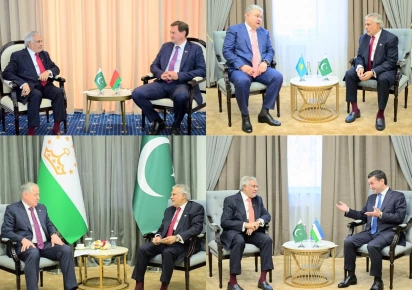
    Pakistan has renewed its commitment to strengthening relations with Belarus and Central Asian countries. Deputy Prime Minister and Foreign Minister Ishaq Dar held separate meetings with the foreign ministers of Belarus, Kazakhstan, Tajikistan and Uzbekistan in Cholpon-Ata, Kyrgyzstan. The meetings were held on the sidelines of the Shanghai Cooperation Organisation (SCO) Council of Foreign Ministers meeting.The discussions focused on bilateral relations, trade, investment, regional connectivity and security. Dar met Belarusian Foreign Minister Maxim Ryzhenkov and reviewed the progress of relations between the two countries.The two sides agreed to expand cooperation in several important areas. These include trade, investment, defence, agriculture, technology and workforce exchanges.They also discussed ways to strengthen economic ties and increase bilateral business activity. Pakistan and Belarus are also preparing for the next session of their Joint Ministerial Commission.The ninth session is scheduled to take place in Islamabad on August 11 and 12, 2026. The two countries are expected to use the meeting to explore new areas of cooperation.Dar and Ryzhenkov also discussed regional developments. The Belarusian foreign minister appreciated Pakistan’s diplomatic efforts to support dialogue and promote peace and stability in the region. Dar also met Kazakhstan’s Foreign Minister Yermek Kosherbayev.The two ministers reviewed the positive progress in relations between Pakistan and Kazakhstan. They agreed to accelerate the implementation of agreements reached during recent high-level exchanges.A key focus was the implementation of 37 memorandums of understanding signed during a high-level visit. The two countries also agreed to increase cooperation in trade, investment, transport, energy and regional connectivity. People-to-people contacts and cooperation at international forums were also discussed.Kosherbayev appreciated Pakistan’s efforts to support regional peace and diplomacy. He also invited Dar to visit Kazakhstan.The Pakistani foreign minister accepted the invitation and said the visit would take place at a mutually convenient time. In another meeting, Dar held talks with Tajik Foreign Minister Sirojiddin Muhriddin.Both sides described Pakistan-Tajikistan relations as close and longstanding. They agreed to further expand cooperation in several sectors.These include trade, investment, energy, connectivity and culture. The two ministers also highlighted the importance of stronger people-to-people contacts.They agreed that regular high-level exchanges could help deepen bilateral relations. The two sides also discussed regional and global developments.They stressed the importance of cooperation through international and multilateral platforms. Tajikistan also expressed support for Pakistan’s efforts to promote peace and the peaceful resolution of regional issues.Dar also met Uzbek Foreign Minister Bakhtiyor Saidov. The two ministers reaffirmed the importance of the Pakistan-Uzbekistan strategic partnership. They reviewed progress in bilateral cooperation.Trade, investment, connectivity, energy, culture and people-to-people relations were among the key areas discussed. Dar and Saidov also stressed the importance of stronger links between the business communities of both countries. They said closer business engagement could help increase trade and investment.The two ministers also discussed the implementation of understandings reached during Uzbek President Shavkat Mirziyoyev’s recent visit to Pakistan. They agreed that existing agreements should be converted into practical projects through timely implementation. Regional and global developments were also discussed.Saidov appreciated Pakistan’s diplomatic efforts to promote regional peace and stability. Both sides expressed hope that dialogue and diplomacy would continue to support lasting peace in the region. Dar’s meetings took place during his visit to Kyrgyzstan for the SCO Council of Foreign Ministers meeting. Pakistan used the diplomatic engagement to highlight its longstanding relations with SCO member states. Islamabad also reaffirmed its readiness to assume the SCO chairmanship for 2026–27.Pakistan has expressed its intention to promote greater cooperation among member states. The focus will include socioeconomic development, regional connectivity and mutual economic benefits. Dar also attended an informal dinner hosted by Kyrgyz Foreign Minister Zheenbek Kulubaev for visiting dignitaries. During the visit, Dar met Kyrgyz President Sadyr Zhaparov and conveyed greetings from Pakistan’s leadership.He expressed Islamabad’s desire to strengthen cooperation with Kyrgyzstan across different sectors. Dar later led Pakistan’s delegation at the SCO ministerial meeting. In his national statement, he reaffirmed Pakistan’s commitment to the SCO Charter and the principles of the Shanghai Spirit.These principles include mutual trust, mutual respect, shared prosperity and development. Pakistan has also invited SCO member states to attend the SCO Council of Heads of State summit in Pakistan next year.The government says Islamabad’s upcoming SCO leadership will provide an opportunity to strengthen regional cooperation and deepen economic and diplomatic ties with member states.

  • | |

    New provinces a national issue, says Aleem Khan

    ISLAMABAD: Federal Minister and President of the Istehkam-e-Pakistan Party (IPP) Abdul Aleem Khan has said the creation of new provinces is a national issue and should not be sacrificed for political interests or expediency. In a statement, Aleem Khan said people across the country wanted new provinces to be created on an administrative basis. He said the IPP would continue raising its voice for the issue at every forum. The federal minister said the prevailing circumstances clearly demanded a new working order across the country. He urged politicians to take ownership of the demand for new provinces while fulfilling their responsibilities. Aleem Khan said political leaders needed to focus on resolving public problems instead of protecting their personal influence and authority. He stressed that the creation of new provinces was a national matter and should not become a victim of political considerations. The IPP president said there was nothing wrong with dividing each of the four existing provinces into four administrative units, if this helped improve governance and addressed public issues. He also expressed support for the creation of South Punjab and Bahawalpur provinces. Aleem Khan said the Istehkam-e-Pakistan Party also supported the demand for a Hazara province. He noted that voices were also being raised for new provinces in Punjab and Sindh. He said demands for a Hazara province had been raised in the Khyber Pakhtunkhwa Assembly since 2010. Aleem Khan welcomed the fact that major political parties in Khyber Pakhtunkhwa were now supporting the creation of a Hazara province. He said the debate over new provinces should be approached as a matter of better administration, public welfare and effective governance rather than narrow political interests.

  • | |

    Two children killed, mother injured as dilapidated…

    A tragic incident occurred in Chak 33 SP, a village in Pakistan’s Pakpattan district, where the roof of an old and dilapidated house collapsed during heavy rainfall, claiming the lives of two young children and leaving their mother seriously injured. The heartbreaking accident has once again highlighted the dangers posed by weak and poorly maintained structures, particularly during the monsoon season when continuous rain often weakens aging buildings. According to rescue officials, the incident took place while rain was falling in the area. The roof of the deteriorating house suddenly gave way, trapping members of the family beneath the debris. Neighbors rushed to the scene immediately after hearing the loud crash and attempted to help the victims before emergency rescue teams arrived. Rescue personnel quickly launched an operation to remove the debris and recover those trapped inside the collapsed house. After an intensive rescue effort, two children were pulled from the rubble but were found to have died from their injuries. Their mother, who was also trapped under the collapsed roof, was rescued alive but sustained serious injuries. Rescue sources confirmed that the bodies of the deceased children and the injured woman were shifted to a nearby hospital. Medical teams provided emergency treatment to the injured mother, while the children’s bodies were handed over for the necessary legal and medical procedures before being released to the family for burial. The tragic deaths have left the local community in deep shock and mourning. Residents gathered at the site to assist rescue workers and expressed grief over the heartbreaking loss of two innocent lives. Many locals also voiced concerns about the condition of old houses in the area, noting that numerous families continue to live in unsafe structures because they cannot afford repairs or reconstruction. Heavy monsoon rains frequently expose the vulnerability of aging homes across many parts of Pakistan. Weak roofs and deteriorating walls become increasingly unstable after prolonged rainfall, increasing the risk of collapse. Such incidents often result in injuries, fatalities, and significant property damage, particularly in rural areas where many houses are built with older construction materials and receive little maintenance. Authorities have repeatedly advised residents living in damaged or structurally weak buildings to take precautionary measures during periods of heavy rainfall. However, financial constraints often prevent families from repairing or rebuilding their homes, leaving them exposed to life-threatening risks whenever severe weather strikes. Disaster management experts stress the importance of inspecting old buildings before and during the monsoon season. Timely repairs, stronger construction standards, and public awareness campaigns can help reduce the likelihood of similar tragedies. Local administrations are also encouraged to identify vulnerable structures and provide assistance to families living in hazardous conditions. The incident in Chak 33 SP serves as another painful reminder of the devastating consequences that aging infrastructure and extreme weather can have on vulnerable communities. As the injured mother continues to receive medical treatment, the family and the entire village are grieving the loss of the two children whose lives were cut short in the tragic roof collapse. The unfortunate event underscores the urgent need for improved housing safety measures and greater support for families residing in unsafe homes, particularly during Pakistan’s annual monsoon season.

  • | |

    Chilling details of Nancy Guthrie’s first ra…

    The investigation into the alleged kidnapping of Nancy Guthrie has taken a chilling turn as details of the first ransom note sent to her family have been revealed. The note, which authorities have described as both genuine and threatening, was addressed to Nancy’s daughter, Savannah, and contained warnings that have left investigators and the public on edge. Crime journalist Briana Whitney, speaking on the Crime Junkie podcast, revealed the terrifying message allegedly sent to Savannah. The most chilling line in the note read: “It is in the best interest of everyone to have this completed as soon as possible.” Whitney, reading from the ransom message, further detailed the captors’ demands: “You will not be able to contact me from here on out. There will be no negotiation. Do not play games. Law enforcement will not be able to help you.” The note, which was sent shortly after Nancy was last seen at home on January 31, has dominated the investigation. While some ransom notes were reportedly deemed to be hoaxes, authorities confirmed that others were genuine, adding to the complexity of the case. Investigators have yet to produce a suspect in the alleged kidnapping, leaving the family and the public seeking answers. The ransom notes have been central to the case, with authorities reportedly keeping many details under wraps to avoid compromising the investigation. However, the release of these chilling details has shed new light on the threats faced by the Guthrie family. The note’s warning that law enforcement would not be able to help and that there would be no negotiation suggests a calculated effort by the captors to isolate Savannah and exert maximum pressure on the family. Nancy Guthrie’s disappearance has sparked widespread concern, with her family making several public pleas for her safe return. The investigation remains ongoing, with authorities urging anyone with information to come forward. The release of the ransom note details has reignited public interest in the case, with many hoping that the new information will lead to a breakthrough. As the investigation continues, the Guthrie family remains in the spotlight, their ordeal serving as a stark reminder of the terror faced by families of kidnapping victims. The chilling words of the ransom note have left an indelible mark on the case, underscoring the urgency of finding Nancy and bringing her captors to justice. The public awaits further developments, hoping for a resolution that will bring closure to the family and accountability for those responsible.

  • | | |

    Parliament should focus on Pakistan’s real c…

    Pakistan is an Islamic republic whose Constitution defines not only the structure of the state but also its ideological foundation. It explicitly states that the country should create an environment in which Muslims can live their lives in accordance with the teachings of the Quran and Sunnah. Against this constitutional backdrop, it is surprising that the issue of women wearing the abaya—or an Islamic financial institution including the abaya in its employee dress code—has become a matter of concern for a parliamentary committee. This naturally raises an important question: Who is setting the country’s priorities, and are these truly the issues that deserve Parliament’s attention? Pakistan continues to face pressing challenges, including rising inflation, unemployment, an unequal tax system, a struggling economy, and serious shortcomings in education and healthcare. These are the issues that directly affect the daily lives of millions of citizens. If a parliamentary standing committee, whose primary responsibility is financial oversight, chooses to focus instead on the dress code of Islamic banks, it is reasonable for the public to question whether legislative priorities are aligned with the country’s most urgent needs. The debate also raises questions about consistency. Critics have objected to the abaya as part of an institutional dress code, yet there is little discussion about uniforms in many government departments that follow Western styles of dress. Women serving in the police, the Federal Investigation Agency (FIA), and several other public institutions are commonly required to wear trousers and shirts as part of their official uniforms. If clothing is to become a matter of parliamentary debate, then similar standards should apply across the board. Selective criticism can create the perception of bias. Supporters of Islamic dress codes argue that the issue extends beyond clothing itself and reflects broader concerns about cultural and religious identity. From this perspective, the concern is not simply about the abaya but about a mindset that views visible expressions of religious identity as obstacles to modernization. They question whether institutions with an Islamic identity should be expected to abandon their traditions in the name of progress. This leads to a broader debate: Who defines what it means to be modern? Does modernization necessarily require reducing the public expression of religious values or adopting Western cultural norms? For institutions operating within Pakistan’s Islamic banking framework, supporters argue that their identity is rooted not only in financial principles but also in ethical and religious values. If such institutions adopt internal policies that comply with Pakistani law and reflect constitutional and religious principles, they contend that those choices should be respected. The discussion also draws comparisons with international examples. In countries such as France, restrictions on religious clothing have generated significant criticism from human rights advocates. Supporters of religious freedom argue that Pakistan, which was established with a distinct religious and cultural identity, should carefully consider whether adopting similar approaches is consistent with its own constitutional framework and historical foundations. Ultimately, the central argument is that Parliament should devote its time and resources to addressing issues that directly affect governance, economic stability, and public welfare. Matters of personal attire, religious belief, and institutional identity, many argue, should not become subjects of unnecessary official intervention when the country faces far more pressing social and economic challenges.

Leave a Reply

Your email address will not be published. Required fields are marked *