iran rejects proposals
| | |

Iran rejects US proposals over ‘Excessive Demands’

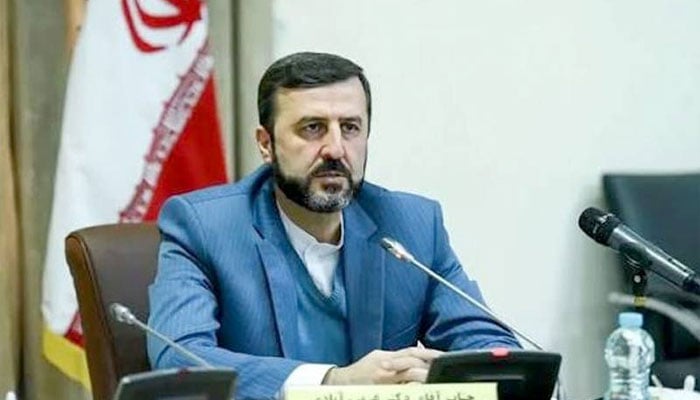
Iran has rejected proposals put forward by the United States during indirect negotiations, Iranian Deputy Foreign Minister Kazem Gharibabadi said, citing what Tehran described as excessive and unacceptable demands from Washington.

Speaking about the recent diplomatic contacts, Gharibabadi said the talks initially began in Islamabad through intermediaries. According to him, the US side presented a plan that included demands Iran could not accept, prompting the Iranian delegation to reject the proposal outright.

Gharibabadi said Washington had warned that rejecting the plan would effectively end the negotiations and lead to the withdrawal of the US delegation. He added that the talks ultimately ended in exactly that manner, with the American delegation leaving the discussions.

The Iranian deputy foreign minister stressed that Tehran neither insisted on continuing the negotiations nor asked the US delegation to remain at the table. He described Iran’s position as an example of what he called “dignified diplomacy,” arguing that Tehran would not compromise on what it considers its fundamental principles.

Gharibabadi also discussed developments surrounding the Strait of Hormuz, a vital international shipping route. He said diplomatic discussions also took place in Oman after Iran moved to close the strait.

According to the Iranian official, an Omani delegation proposed keeping a southern route open to allow ships to pass while Iran and Oman continued discussions. The proposal reportedly suggested that the route could later be closed depending on the outcome of the talks. However, Gharibabadi said Iran did not accept the proposal.

He maintained that Iran had made its position clear from the beginning of the conflict and would not agree to arrangements that it believes undermine its stated principles.

Gharibabadi further said Iran’s policy of keeping the Strait of Hormuz closed remains unchanged. He presented the decision as another example of Tehran’s approach to what he described as “dignified diplomacy,” signalling that Iran intends to maintain its position despite continued diplomatic efforts and international pressure.
Similar Posts

  • |

    Democratic support for Israel weakens as Gaza war deepens political divide in US

    For decades, support for Israel was one of the few foreign policy issues that united both major political parties in the United States. That long standing consensus is now showing signs of breaking down as growing criticism of Israel’s military actions in Gaza, the conflict with Iran and Prime Minister Benjamin Netanyahu’s close relationship with Republican leaders reshape opinion within the Democratic Party. Public support for Israel among Democratic voters has fallen sharply in recent years. More Democratic candidates are openly criticizing Israeli government policies and several have built successful election campaigns around calls to reassess Washington’s military and diplomatic support for its longtime ally. The shift has become increasingly visible in Congress, where many lawmakers who once backed military assistance without question are now calling for restrictions or major changes. The change was highlighted this month when nearly half of House Democrats voted in favor of an amendment that sought to block military aid to Israel. Although the proposal ultimately failed, the level of support marked a significant departure from previous years when similar measures would have attracted little backing. Israel receives $3.8 billion in annual US military assistance and has also secured billions of dollars in additional emergency funding over the past several years. Democratic leaders remain divided over the issue. House Democratic Leader Hakeem Jeffries opposed the amendment, arguing that it was too broad. However, senior party figures including former House Speaker Nancy Pelosi and House Democratic Whip Katherine Clark voted in support of it. The differing positions reflect an increasingly difficult debate within the party over whether military assistance should continue without conditions, be limited to defensive equipment or be suspended altogether. Senator Chris Coons, the top Democrat on the Senate Foreign Relations Committee, expressed hope that Israel’s upcoming elections could improve relations between the two allies. He suggested that new political leadership in Israel might help restore bipartisan support in Washington and move beyond the current period of tension. Coons also argued that Netanyahu has prolonged conflicts for political reasons, a claim that adds to the growing criticism from within the Democratic Party. Recent polling shows how public opinion has shifted. A Quinnipiac University survey conducted in June found that nearly half of all American voters believe the United States is too supportive of Israel. Among Democrats, that figure rose to 66 percent, a dramatic increase compared with the results recorded when the question was first asked in 2017. Israel’s ambassador to the United Nations, Danny Danon, dismissed concerns that bipartisan backing is disappearing. He said that despite intense political debate, support for Israel continues to remain strong across large sections of both major parties. The issue has become especially important in Michigan’s Democratic Senate primary, where voters are choosing between candidates with sharply different positions on Israel. Representative Haley Stevens has defended close ties with Israel and argues that the relationship strengthens economic growth and national security. Her opponent, Abdul El-Sayed, has strongly criticized continued military support and says American resources should be invested at home rather than funding Israel’s military campaign. The debate follows nearly three years of conflict that began after Hamas launched its October 2023 attack on Israel, killing around 1,200 people and taking hundreds hostage. Since then, Gaza health authorities say more than 73,000 Palestinians have been killed during Israel’s military operations. Israel rejects accusations of genocide and maintains that it is fighting Hamas while taking measures to reduce civilian casualties. Political analysts say the war has significantly influenced younger Democratic voters, many of whom have become more critical of Israeli government policies. Campus protests and growing public demonstrations have increased pressure on Democratic leaders to reconsider traditional positions on military aid. Some observers also believe the issue contributed to divisions within the party during the 2024 presidential election campaign. The debate is spreading beyond Michigan into congressional races across states including New York, Florida and Colorado, where candidates are increasingly making Israel a central campaign issue. Progressive organizations argue that opposition is directed mainly at Netanyahu’s government rather than Israel itself, while more traditional pro-Israel groups continue to defend the alliance. Despite the growing disagreement, many Democratic lawmakers continue to support Israel’s right to exist and defend itself. However, an increasing number are questioning the policies of the current Israeli leadership and calling for greater humanitarian assistance to Palestinians, signaling that the party’s approach to one of America’s closest allies is undergoing a significant transformation.

  • | | |

    Russia, Pakistan advance Moscow-Karachi rail link

    Russia and Pakistan are working to launch a new freight railway service connecting Moscow with Pakistan, Russian Ambassador to Islamabad Albert P. Khorev has said. The proposed rail link is aimed at improving trade connectivity between the two countries and creating a more direct overland route for the movement of goods. In comments published by the Russian newspaper Izvestia on August 8, Khorev said Moscow and Islamabad were jointly working on launching freight railway services along the Moscow-Faisalabad and Moscow-Karachi corridors. The proposed routes would operate in both directions, allowing goods to be transported between Russia and Pakistan through a dedicated rail-based trade network. Khorev said the possibility of including Belarus in the project was also being examined. If the Belarusian side joins the initiative, the route could provide a wider connection across parts of Eastern Europe and South Asia. The project has faced delays because of changing geopolitical conditions in the region. According to the Russian ambassador, heightened geopolitical tensions during 2025 and early 2026 resulted in several postponements to the planned launch. Despite the delays, work on the project is continuing. Khorev said the countries involved are currently finalising a contract covering the required freight railway services. At the same time, officials are identifying companies in the countries along the proposed route that could use the railway network to transport commercial cargo. The identification of potential cargo owners is considered an important step before the service can begin. A stable volume of goods would be needed to make the railway corridor commercially viable. The Moscow-Karachi route could provide Pakistani and Russian businesses with another option for moving goods between the two markets. It could also reduce reliance on traditional maritime routes for certain types of cargo. The Moscow-Faisalabad corridor would provide a direct connection to one of Pakistan’s major industrial and commercial centres. Faisalabad is an important manufacturing hub, particularly for textiles and other export-oriented industries. For Russia, improved rail connectivity with Pakistan could open additional opportunities for trade with South Asia. Pakistani businesses could also gain access to wider markets through connections with Russia and potentially Belarus. The possible involvement of Belarus could further expand the corridor’s geographical reach. It may also strengthen transport cooperation among the countries involved. However, the project still requires the completion of commercial and logistical arrangements before the first freight service can be launched. The parties are therefore focusing on finalising the service contract and securing interest from companies that can provide regular cargo for the route. The proposed railway initiative is part of broader efforts by Russia and Pakistan to strengthen economic and transport cooperation.

  • | | | |

    US strikes Iran for 13th night as Trump escalates threats

    The United States carried out fresh air strikes on Iran for the 13th consecutive night, further intensifying the military confrontation between the two countries. The latest attacks came as US President Donald Trump warned that Washington is prepared to launch even larger military operations if Iran continues targeting American interests and regional allies. According to the US military, the strikes targeted facilities linked to Iran’s Islamic Revolutionary Guard Corps (IRGC). Officials said the operation was intended to reduce Iran’s military capabilities and protect commercial shipping routes and US forces operating in the Middle East. Reports from Iran said explosions were heard in several parts of the country. Blasts were reported on Qeshm Island as well as in Khuzestan province. Missile strikes were also reported in the cities of Andimeshk and Omidiyeh. In the southern port city of Bandar Abbas, local media reported that attacks on a residential neighbourhood injured at least two civilians. Speaking earlier, President Trump said he was considering the largest military operation against Iran since the conflict began. He stated that preparations were complete and that a final decision could be taken soon if Iran continued its attacks on US allies and military assets in the region. The latest American strikes followed another round of Iranian missile and drone attacks on Bahrain, Kuwait and Jordan. Iranian military officials said the attacks targeted US military facilities stationed in those countries. Tehran described the strikes as retaliation for continued US attacks on Iranian territory and infrastructure. Iran also claimed responsibility for striking a telecommunications tower in Kuwait. Iranian officials said the attack was carried out in response to previous US strikes on communication facilities inside Iran. Kuwaiti authorities later confirmed that hostile drones also targeted the Abdali border crossing with Iraq, raising security concerns along the frontier. Iranian Foreign Minister Abbas Araghchi warned that the country would continue responding to every attack under an “eye for an eye” policy. Military officials said Iran’s retaliatory operations would continue for as long as American forces targeted Iranian infrastructure and coastal areas. The conflict has now spread beyond Iran and the United States, increasing fears of a wider regional war. Yemen’s Houthi movement claimed responsibility for attacks on two Saudi oil tankers in the Red Sea. The group warned that additional energy infrastructure could also become a target if the conflict continues. The growing violence has disrupted security across key maritime routes, including the Strait of Hormuz and the Bab al-Mandeb Strait, both of which are among the world’s most important oil shipping corridors. Continued attacks have increased risks to commercial shipping and raised concerns over global energy supplies. The worsening conflict has also pushed international oil prices above $100 per barrel, reflecting fears of prolonged supply disruptions. Analysts warned that further escalation could place additional pressure on the global economy by increasing fuel prices, disrupting trade and creating greater uncertainty in international energy markets.

  • |

    UK rejects E1 settlement plan

    LONDON: British Foreign Secretary Ed Miliband has strongly opposed Israel’s plan to invite tenders for the construction of 1,200 new homes under the controversial E1 settlement project, warning that the move could seriously undermine prospects for a future Palestinian state and the two-state solution. The British government has urged Israel to immediately withdraw the E1 plan, cancel the construction tenders and halt the expansion of Israeli settlements in the occupied West Bank. A UK government spokesperson said Israeli settlement activity violates international law and remains a major obstacle to achieving lasting peace in the region. The government stressed that continued settlement expansion could further weaken efforts to establish a viable and geographically connected Palestinian state. Miliband said Britain would continue to strongly support a two-state solution, arguing that it offers the best path toward lasting peace, security and stability for both Palestinians and Israelis. The E1 area, located east of Jerusalem in the occupied West Bank, has long been a sensitive issue because large-scale settlement development there could divide Palestinian communities and complicate the possibility of creating a contiguous Palestinian state. The British government’s latest warning comes amid continued international concern over settlement expansion in the occupied Palestinian territories and its potential impact on future peace negotiations.

  • |

    7.4-magnitude quake hits Colombia, killing 26

    A powerful earthquake struck western Colombia on Monday, leaving at least 26 people dead and causing widespread damage across several cities. The United States Geological Survey recorded the earthquake at magnitude 7.4. It struck at around 7:34am local time, with its epicentre near San José del Palmar in the Chocó region at a depth of about 107 kilometres. The tremor was felt across much of Colombia and in neighbouring Venezuela, Ecuador and Panama. Authorities warned residents to remain alert as aftershocks were recorded following the main earthquake. Local officials reported deaths in several parts of the country. Three children were among those killed in Calima El Darién after a wall collapsed. Other fatalities were reported in Zarzal, Buenaventura, Manizales and Pereira. Pereira officials reported 18 deaths, while authorities in Manizales confirmed additional fatalities. Rescue teams continued assessing the situation as reports of casualties and damage were updated. Cali was among the worst-affected cities. Mayor Alejandro Eder said at least 20 buildings had collapsed, with people reportedly trapped under the rubble. He requested additional rescue personnel from Bogotá and Medellín to assist emergency teams. Residents were urged to leave buildings if they noticed major cracks or believed the structures were unsafe. Serious damage was also reported in Quibdó, the capital of Chocó. Regional authorities said several people were injured and buildings were damaged. Rescue workers were deployed to assess affected areas and search for people who may be trapped. Manizales also suffered significant structural damage. Images and videos showed part of the Cathedral Basilica’s clocktower leaning dangerously. A five-storey building was also seen collapsing as people evacuated nearby areas. The earthquake caused panic in Bogotá, where residents rushed out of homes and workplaces. Emergency sirens sounded across parts of the capital. People gathered in streets as buildings and traffic lights shook during the tremor. Bogotá authorities initially reported cracks in some structures but said there was no immediate indication of major infrastructure damage. The earthquake also disrupted air travel. Colombia’s civil aviation authority suspended operations at several airports after damage was reported at facilities in Pereira, Manizales, Quibdó, Armenia, Cartago and Buenaventura. Operations at Popayán airport were also suspended because of volcanic ash. Officials said the Colombian Geological Service recorded two aftershocks, measuring 2.8 and 4.8. The stronger aftershock was widely felt. Colombian authorities described the earthquake as the strongest recorded in the country in roughly a decade. Emergency agencies continued damage assessments while rescue operations remained underway. President Abelardo De La Espriella said he had taken direct charge of the emergency response. He ordered the creation of a unified command centre to coordinate rescue and relief efforts and said he would travel to Pereira to monitor the situation. The disaster comes less than two months after powerful earthquakes struck Venezuela on June 24. Those quakes killed more than 6,100 people and caused extensive destruction.

  • |

    Arab and Palestinian groups urge global action to protect Jerusalem and Al Aqsa Mosque

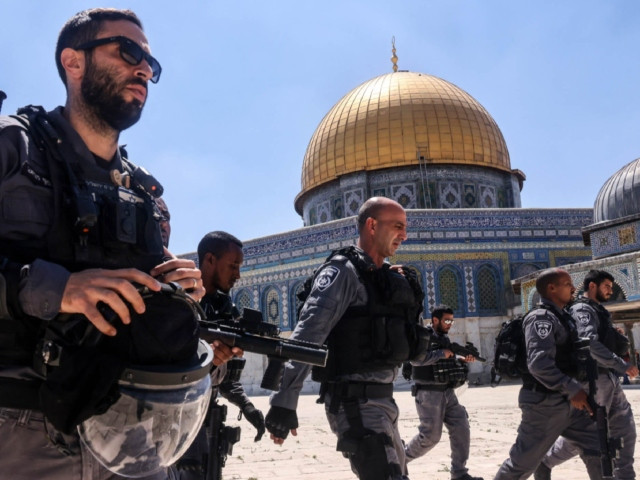
    Fourteen Arab and Palestinian organisations have issued an urgent appeal calling for immediate international action to protect occupied East Jerusalem and the Al Aqsa Mosque, warning that recent Israeli measures are threatening the city’s religious heritage and historic identity. The groups said the situation has reached a critical stage and argued that stronger global intervention is needed to prevent further escalation. In a joint statement released on Wednesday, the organisations expressed concern over what they described as increasing Israeli actions aimed at changing the existing status of Jerusalem and its holy sites. They said recent developments have targeted not only Al Aqsa Mosque but also the Palestinian residents of Jerusalem and the city’s Arab, Islamic, and Christian character. Al Aqsa Mosque is considered Islam’s third holiest site. The same area is also revered by Jews as the Temple Mount, believed to be the location of two ancient Jewish temples. Israel captured East Jerusalem during the 1967 Arab Israeli war and later declared the entire city its capital in 1980, a move that has not been recognised by most of the international community. According to the appeal, Israeli authorities have allowed an increase in visits to the Al Aqsa compound by Jewish groups under police protection. The organisations claimed these actions, along with restrictions placed on Muslim worshippers, are attempts to alter the long standing arrangements governing access to the holy site. The statement also raised concerns about attacks on worshippers, restrictions placed on religious leaders, and measures targeting guards responsible for protecting the mosque. The groups argued that these actions undermine freedom of worship and threaten the historical and legal status of one of Islam’s most important religious landmarks. Beyond the mosque itself, the organisations accused Israel of expanding settlements, demolishing Palestinian homes, revoking residency rights, carrying out excavations around the Old City, and increasing pressure on both Islamic and Christian religious sites. They warned that these policies are changing the city’s demographic and cultural landscape while placing Jerusalem’s diverse religious heritage at risk. The appeal also highlighted concerns over the city’s Christian community. It said restrictions affecting churches, religious institutions, and Christian leaders threaten the long established Christian presence in Jerusalem and weaken the city’s multicultural identity. The organisations argued that international statements of concern are no longer enough to address the situation. They called for coordinated political, legal, and human rights efforts to stop actions they consider violations of international law. They also urged governments and international institutions to ensure accountability and prevent further changes to the city’s status. The statement specifically called on Jordan, which holds custodial responsibilities for Jerusalem’s Islamic and Christian holy sites, to intensify diplomatic efforts and encourage stronger international engagement. The groups said Jordan’s role remains essential in defending the religious and historical significance of the city’s sacred places. Describing Jerusalem as a shared historical, cultural, and religious responsibility, the organisations stressed that protecting the city requires practical measures rather than symbolic declarations. They said preserving the rights of its residents and safeguarding its holy sites should remain an international priority. The appeal was signed by several organisations, including the Popular Conference for Palestinians Abroad, the Al Quds International Institution, the Arab National Congress, the European Palestinian Conference, and the Islamic National Conference. The statement comes as tensions continue to rise across the occupied West Bank, where Israeli military raids and settler related violence have increased since the start of the Gaza conflict in October 2023. Palestinian officials say thousands of people have been injured or arrested during this period, while violence has intensified further following recent deadly clashes near Nablus involving Palestinians, Israeli settlers, and Israeli forces.

Leave a Reply

Your email address will not be published. Required fields are marked *