

zelensky alleges russia
|

Zelensky alleges Russia shared satellite intelligence with Iran to target US bases

Ukrainian President Volodymyr Zelensky has accused Russia of helping Iran identify US military positions in the Gulf by providing satellite intelligence, adding another layer of tension to the already strained relationship between Moscow, Tehran, and Kyiv. His remarks come as Ukraine and Iran exchange fresh accusations following an attack on an Iranian vessel in the Caspian Sea.

In a statement shared on social media, Zelensky claimed that Ukraine had observed increased Russian satellite monitoring of Gulf countries and American military installations since the beginning of July. According to him, the satellite images were later used by Iran, with a noticeable connection between the timing of the surveillance and Iranian attacks. He alleged that the imagery was gathered before strikes to assist with planning and then again afterward to evaluate the extent of the damage. While Zelensky did not release evidence to support the claim, he insisted the pattern was clear and significant.

The allegations surfaced shortly after Ukraine announced a series of long range military operations in the Caspian Sea. Zelensky said Ukrainian forces had successfully struck vessels carrying military cargo linked to Iran as well as a warship. Ukrainian intelligence later stated that drones had targeted sanctioned cargo ships allegedly involved in transporting military equipment between Iran and Russia. The operation marked one of Kyiv’s most direct actions against assets connected to Tehran and reflected Ukraine’s growing willingness to challenge countries it believes are supporting Russia’s war effort.

Iran reacted strongly to the reported strikes. The Iranian Foreign Ministry summoned Ukraine’s senior diplomat in Tehran to protest what it described as a hostile and unlawful attack. Iranian officials said one sailor was killed and several others were injured when a commercial vessel exploded following the strike. The ministry rejected any suggestion that Iran had played a role in the war between Russia and Ukraine and insisted the country had remained outside the conflict.

Iranian Foreign Minister Abbas Araghchi also condemned the attack, describing it as a serious violation of the United Nations Charter. He claimed the operation had been carried out to advance Israeli interests and accused Kyiv of trying to draw Europe deeper into the regional conflict. Araghchi said he had discussed the matter with European Union foreign policy chief Kaja Kallas and Russian Foreign Minister Sergei Lavrov, warning that Iran would not allow the incident to pass without a response.

Zelensky’s latest accusations regarding Russian support for Iran are not entirely new. Earlier reports citing US officials claimed that Moscow had shared intelligence with Tehran about American military positions in the Middle East during the recent conflict involving Iran and the United States. Those reports also suggested that China could have played a supporting role, although no public evidence has confirmed those claims.

The issue has also created mixed messages within the US government. During a congressional hearing, US Defence Secretary Pete Hegseth acknowledged that Russia and China were helping Iran in different ways. He said there was clear cooperation among American rivals but declined to discuss the full extent of that support, arguing that the details should remain classified for security reasons.

Only days later, however, President Donald Trump publicly disagreed with that assessment. Writing on his Truth Social platform, Trump said he did not believe Russia or China had assisted Iran. He stated that both Russian President Vladimir Putin and Chinese President Xi Jinping had assured him they were not involved in supporting Iranian military operations.

Despite those conflicting views, Zelensky maintained that Russian satellite activity offered direct evidence of cooperation. He specifically pointed to satellite surveillance conducted on July 19 and 20, claiming Russian satellites closely monitored four air bases used by the United States in Bahrain, Jordan, and Kuwait. According to the Ukrainian leader, the timing of those observations raised serious concerns about Russia’s role in helping Iran monitor American military assets in the region.
Similar Posts

  • | |

    Rana Sanaullah rejects PPP claim over AJK worker?…

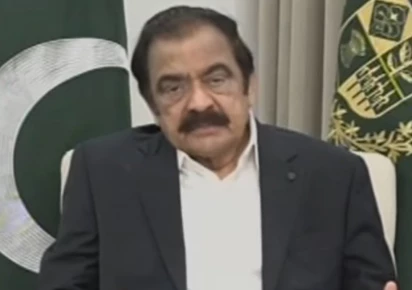
    Special Assistant to Prime Minister for Political Affairs Rana Sanaullah has rejected Pakistan Peoples Party (PPP) Chairman Bilawal Bhutto Zardari’s claim about the death of a party worker during the Azad Jammu and Kashmir (AJK) elections. Rana Sanaullah said Bilawal Bhutto had not received complete information about the incident. He said the PPP worker was killed during an exchange of fire between two groups. He also clarified that the PML-N candidate was not present at the scene when the firing took place. The incident occurred in the Nikyal area of Kotli during the first phase of the AJK Legislative Assembly elections. Rana Sanaullah said tensions had already existed between the two sides in the area. He said the dispute was not limited to election day. He recalled an earlier incident involving a PML-N election rally. According to him, the rally had come under fire. One PML-N worker was killed in that incident, while four others were injured. Rana Sanaullah said another firing incident during polling resulted in one death and injuries to several people. He described the incidents as isolated. He said no major incident had been reported across AJK apart from the Nikyal incident. The PML-N leader also praised the overall election arrangements. He said authorities had made satisfactory preparations to facilitate polling and maintain security. The comments came after Bilawal Bhutto expressed concern over the death of a PPP worker in Nikyal. Bilawal had questioned the authorities over the incident. He also asked where the relevant officials were and demanded action over the death of his party worker. The incident added to political tensions during the first phase of the AJK elections. Political parties had already raised concerns about alleged disruptions and security issues at some polling stations. Meanwhile, Punjab Information Minister Azma Bukhari said the people of AJK had rejected calls for unrest. She said voters had chosen the democratic process instead. According to Bukhari, polling was taking place despite attempts to create disorder. Bukhari also highlighted the performance of the Punjab government. She said the provincial government’s development work was being discussed among voters in AJK. She referred to the government’s response to heavy monsoon rains in Punjab. Bukhari said Lahore received several hours of continuous rainfall. She claimed that underpasses were cleared within a few hours. She also said government officials and administrative teams remained present in the field during the rain. The minister said monsoon rains had also caused rising water levels in Punjab’s rivers. She said authorities were monitoring the situation continuously. According to Bukhari, a central digital control room has been established for round-the-clock monitoring. She said the system was being used to track the situation and coordinate the government’s response. Bukhari also spoke about the Punjab Beautification Programme. She said plans were being made to shift hanging utility wires underground. The programme is aimed at improving the appearance and infrastructure of urban areas, according to the minister. The political statements came as vote counting began after polling ended in the first phase of the AJK elections. The first phase covered 13 constituencies in Mirpur Division. The constituencies are spread across Mirpur, Kotli and Bhimber. Election authorities have said that security arrangements were put in place to protect voters and election staff.

  • | | |

    One missed bill enough for Lesco to pull the plug?…

    The month of July brings heat and humidity to Lahore. It also brings frequent power cuts, mainly from weather related issues. When it rains, and the atmosphere is muggy, power breakdown occurs and people expect that power will return soon after it goes. But there is a different kind of fear. This fear grows when a house sits dark while every other house on the street still has light. This means the power meter has been disconnected. Recent reports say that field staff of the Lahore Electric Supply Company (LESCO), have been harassing consumers. These reports say that officials are disconnecting power for people who have missed just one month of bill payment. This goes against the normal rule. Under the normal rule, a meter can only be disconnected after two months of non-payment. LESCO spokesperson Rabia Qadir has denied these reports. She said the company has not received any complaint about this issue. She said that rules made by the National Electric Power Regulatory Authority (Nepra), protect the rights and safety of consumers. Under these rules, a meter cannot be disconnected simply because one month of bill payment was missed. She also said that Lesco has not received any formal complaint against any sub-divisional officer, executive engineer, or lineman of any of its circle regarding such incidents. However, she said that some linemen may try to scare or pressure consumers. These linemen may threaten to disconnect a meter if the consumer does not pay the outstanding bill right away. She said this could happen in some cases and this was not the company’s policy. But she stressed that Lesco has a consumer complaint cell. All complaints are recorded there. She said that according to these records, no such complaint has come in. The situation on the ground appears more complicated. This reporter visited the consumer cell at the office of the Lesco chief officer. Several consumers were present there. Their complaints were about different issues. Some wanted correction of industrial bills. Others reported broken meters. When asked about the reports of meters being cut for a single month of default, one officer gave an important detail. They said this practice usually happens in June or July. They said the ministry gives instructions during these months to speed up bill recovery. The goal is to reduce financial losses. Staff at the office suggested that a proper response should come from Lesco Chief Executive Officer Ramzan Butt or his public relations office. However, the public relations office said that Ramzan Butt was in Islamabad for a meeting at the time. This problem is not limited to LESCO areas. Similar reports have come from areas covered by the Multan Electric Power Company. In Muzaffargarh, consumers who missed one month of payment received strict warnings from field staff. These staff members told consumers to avoid another default. If they defaulted again, they were told, their meters would be disconnected. According to the rules, a power connection cannot be cut through meter removal unless bills for both the current and the previous month remain unpaid. Yet for several months now, Lesco teams have continued cutting connections even when only one month of payment was missing. Other than power severe threats, the other main issue people face is take notice of a major problem in the new electricity bill format. The Pakistan Hosiery Manufacturers and Exporters Association in a letter to the prime minister said the revised bill has removed a lot of information that consumers used to see. He said this makes it hard for people to check their meter readings, units consumed, tariff calculations and other charges on their own. They say the changes seem to have been made without following the proper process set by the National Electric Power Regulatory Authority, known as NEPRA. No formal request for changing the bill format was filed with NEPRA and that consumers were never asked for their objections, nor were they given a chance to take part in a public hearing before the change was made. They say that bills are supposed to show the date when the connection or meter was installed, but this information is now missing. The removal of the meter reading snapshot is a serious problem, because consumers can no longer check if the reading used for their bill matches the actual reading at their home. Also, information about the meter reader, along with the date and time of the reading, has also disappeared. They say that when a meter is changed, the bill should show a snapshot of the final reading from the old meter, but distribution companies are not properly doing this. The new bills carry a QR code instead, but this cannot replace information that should be clearly printed on the bill itself. Many senior citizens, people living in rural areas, and low income households may not have smartphones or the internet access needed to scan a QR code. Economist and corporate lawyer Dr Ikramul Haq commented on this situation. He said that the conduct of power distribution companies is not simply a small technical mistake. He called it as a form of pressure against ordinary citizens. These citizens are already struggling with rising prices, high electricity rates, and falling purchasing power. He said that reports of field teams arriving at homes, treating consumers badly, and threatening immediate disconnection show the real human cost of this careless approach. He added that in some cases, meters were removed without any prior notice being given. Dr said explained that the legal position on this matter is very clear. Under the revised Consumer Service Manual issued by Nepra, electricity cannot be disconnected only because the bill for the current or previous month remains unpaid. A notice of seven days must be given along with the bill for the second month of default. Only after this notice period passes, and the default continues, can disconnection take place. He said that removing a meter involves even more safeguards under the rules. He

  • | | |

    Khawaja Asif alleges money laundering network oper…

    Defence Minister Khawaja Asif has claimed that businesses established in Portugal by individuals linked to politics and the real estate sector are being used to facilitate money laundering from Pakistan. In a statement, the minister said that several people associated with political circles and the property business have set up commercial operations in Portugal. According to him, these businesses are allegedly providing services that enable money to be transferred out of Pakistan through illegal channels. Khawaja Asif further alleged that the same network is also involved in arranging documents for individuals seeking citizenship-related facilities in Portugal. He claimed that the businesses are being used not only for financial transactions but also to assist applicants in obtaining the paperwork required for immigration and citizenship purposes. The defence minister did not identify any individuals or organisations allegedly involved in the activities. He also did not present evidence to support the claims during his statement. His remarks come as authorities continue to focus on tackling financial crimes, including money laundering and the illegal movement of funds abroad. The allegations are expected to draw attention to the activities of overseas business networks and the use of foreign countries for financial transactions.

  • | | |

    PCB introduces comprehensive fitness policy for do…

      The Pakistan Cricket Board (PCB) has introduced a comprehensive domestic cricket fitness policy for the 2026-27 season, making physical fitness a key requirement for players representing regional, departmental, district, and zonal teams across the country. The newly announced policy has been designed to improve players’ overall fitness standards and ensure they are better prepared for the physical demands of modern cricket. Covering athletes from junior age-group competitions to first-class domestic cricket, the framework aims to establish a consistent and measurable fitness system throughout Pakistan’s domestic structure. The fitness programme has been developed by PCB Director of Sports and Exercise Medicine Javed Mughal. It follows a structured two-tier model that has been designed to align with international cricket standards while remaining practical, reliable, and easy to implement across different levels of the domestic game. The testing procedures have been created to produce consistent and repeatable results, allowing coaches and trainers to accurately monitor players’ physical progress. Under the new system, Tier 1 will apply to players representing the country’s 20 regional teams, eight departmental first-class sides, and more than 25 Grade-II departmental teams. These players will be required to complete 11 separate fitness tests, providing a total of 17 scoring opportunities during the assessment process. Tier 2 has been introduced for players competing in senior district cricket, U19 district teams, and regional U17 and U15 squads. Participants in this category will undergo eight different fitness tests, offering a maximum of 12 scoring opportunities. The PCB has also established a clear scoring system to determine whether a player passes or fails the assessment. In Tier 1, players may receive up to seven red scores and still meet the required fitness standard. However, recording eight or more red scores will result in a failed assessment. Those who fail will be allowed one opportunity to retake the test. Similarly, Tier 2 players will fail the assessment if they receive six or more red scores. The board hopes that the grading system will encourage players to maintain high fitness standards while also identifying areas requiring improvement. Fitness monitoring will not end after the initial assessment. Players who successfully complete the testing process will undergo another round of fitness evaluations approximately six months later. The purpose of the follow-up assessment is to measure each player’s progress and ensure that fitness levels continue to improve throughout the season. According to the PCB, every player is expected to demonstrate measurable improvement compared to their initial baseline results. The board believes continuous assessment will promote long-term physical development rather than one-time preparation for testing. The policy also outlines the procedure for players who do not meet the required benchmarks. Instead of repeating only the failed components, any player who fails the assessment will be required to complete the entire fitness testing programme again. This approach is intended to ensure overall physical readiness rather than focusing on individual weaknesses. The responsibility for conducting the assessments will rest with PCB-approved strength and conditioning coaches. These coaches will supervise fitness testing at every level of domestic cricket and submit the results to the National Cricket Academy along with the PCB’s Medical and Sports Science Department for evaluation and record-keeping. With this initiative, the PCB aims to strengthen the fitness culture within domestic cricket, enhance player performance, and create a stronger pathway for athletes aspiring to represent Pakistan at the international level.

  • | | |

    ECC to review Rs1.34 hike in dealers’ margin

    ISLAMABAD: The Economic Coordination Committee (ECC) is set to consider a proposal to increase the margin of petroleum dealers. The meeting will be held on Friday evening. Federal Finance Minister will chair the session. The meeting is scheduled for 6pm. According to sources, the increase in petroleum dealers’ margins is the only item on the agenda. The committee will examine a proposal for a Rs1.34 per litre increase. Petroleum dealers currently receive a margin of Rs8.64 per litre on petroleum products. If approved, the proposed increase will raise the margin to Rs9.98 per litre. The proposal comes after discussions between the government and representatives of petroleum dealers. During those talks, the government had assured dealers that their margin would be increased. Dealers have been seeking an adjustment in their margin amid rising operational expenses. They argue that higher costs have affected the profitability of their businesses. The ECC will review the proposal and decide whether the increase should be approved. The committee’s decision will determine the next steps for implementing the proposed adjustment. Any increase in the dealers’ margin could also affect the overall pricing structure of petroleum products. The final impact will depend on how the government incorporates the additional margin into the pricing mechanism.

  • |

    Karachi braces for cloudy, humid weather

    Karachi is expected to witness cloudy and humid weather over the next 24 hours, with light drizzle likely in some areas during the morning and evening, according to the latest forecast issued by the Pakistan Meteorological Department (PMD) on Monday. The Met Office said daytime temperatures in the port city are expected to remain between 33°C and 35°C, while the minimum temperature recorded early Monday was 28°C. Humidity levels remained high at 78 percent, making weather conditions feel warmer than the actual temperature. Sea breezes continued to blow across the city at a speed of around 15 kilometres per hour, providing some relief from the humid conditions. Weather officials said intermittent drizzle could occur in isolated parts of Karachi, particularly during the early morning and after sunset, although no widespread rainfall is expected. Meanwhile, the PMD has projected that August 2026 is likely to be drier than usual across much of Pakistan, with rainfall expected to remain below the long-term average in most regions. The monthly climate outlook, released on July 31, was prepared using forecasts generated by 10 internationally recognised seasonal climate prediction models, providing a comprehensive assessment of expected weather trends during the month. According to the department, large-scale climate patterns are expected to play a significant role in shaping weather conditions across the country. The El Niño-Southern Oscillation (ENSO) is currently in a positive phase and is likely to continue through August, while the Indian Ocean Dipole (IOD) has also shifted into a positive phase. Meteorologists say the combination of these climate systems is expected to suppress rainfall in many parts of Pakistan. As a result, below-average rainfall is forecast for most regions of the country. The greatest rainfall deficits are expected over northeastern and central Punjab, extending into adjoining parts of Khyber Pakhtunkhwa and Azad Jammu and Kashmir, as well as southeastern Sindh. In contrast, parts of Gilgit-Baltistan are expected to receive rainfall closer to normal levels during the month, making it one of the few regions where precipitation is not forecast to decline significantly. The PMD has also warned that temperatures across Pakistan are likely to remain above seasonal averages throughout August. The most pronounced rise in temperatures is expected over eastern Gilgit-Baltistan, central and northeastern Punjab, adjoining areas of Khyber Pakhtunkhwa, and northern Balochistan.

Leave a Reply

Your email address will not be published. Required fields are marked *