field marshal asim
| |

Field Marshal Asim Munir, Iranian foreign minister…

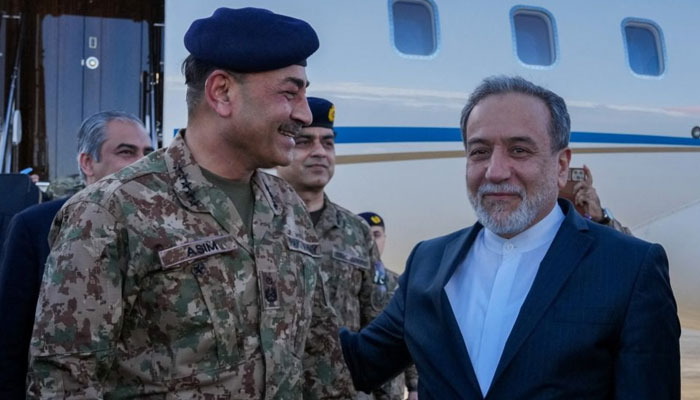
Pakistan’s Chief of Defence Forces, Field Marshal Asim Munir, held a telephone conversation with Iranian Foreign Minister Abbas Araghchi, during which the two officials discussed the evolving situation in the region.

According to Iranian media, the conversation took place a day earlier and focused on regional developments and matters of mutual interest.

Meanwhile, Iranian Foreign Ministry spokesperson Esmail Baghaei said that Field Marshal Asim Munir is scheduled to visit Iran on Monday.

Baghaei described the visit as part of Pakistan’s continued efforts to promote peace and stability in the region. He said the visit would also provide an opportunity to further strengthen relations between Pakistan and Iran.

During his visit, the Pakistani Chief of Defence Forces is expected to meet senior Iranian officials and hold discussions on bilateral ties as well as regional developments.

The upcoming visit comes amid heightened regional tensions and growing diplomatic efforts by countries in the region to promote dialogue and stability.

The telephone conversation between Field Marshal Munir and Araghchi ahead of the visit is expected to provide further momentum to bilateral engagement between Islamabad and Tehran.

Pakistan and Iran share close geographical, economic and security ties, with both countries regularly discussing border security, regional developments and broader cooperation.

Similar Posts

  • | |

    PM Shehbaz Sharif orders digital system to end oil…

    ISLAMABAD: Prime Minister Shehbaz Sharif has directed the implementation of a modern digital monitoring system in Pakistan’s oil and gas sector, aiming to eliminate profiteering, hoarding and improve transparency across the energy supply chain. The directive came during a meeting in Islamabad where the prime minister met a delegation led by the World Bank’s country director. The delegation presented a set of policy recommendations focused on strengthening governance, improving regulatory oversight and enhancing efficiency in the country’s energy sector. During the meeting, Prime Minister Shehbaz instructed the relevant authorities to establish a committee to review the World Bank’s recommendations and submit practical proposals for implementation. The committee is expected to evaluate the report and identify reforms that could modernize the sector while protecting consumers. The prime minister also issued specific instructions to the Oil and Gas Regulatory Authority (OGRA) to introduce an advanced digital system capable of monitoring the movement, storage and distribution of petroleum products. The initiative is intended to increase transparency, curb illegal practices and prevent artificial shortages caused by hoarding. Officials said the digital platform is expected to strengthen regulatory oversight by enabling authorities to monitor supply chains in real time, making it more difficult for unscrupulous elements to manipulate fuel availability or earn unlawful profits through price distortions. The government believes greater digital integration will improve accountability, ensure a more reliable supply of petroleum products and build public confidence in the country’s energy market. Officials also hope the move will support broader economic reforms by promoting fair competition and reducing opportunities for market abuse. The meeting reflects the government’s continued focus on improving governance in key economic sectors through technology-driven reforms. Energy experts say stronger digital oversight could help streamline operations, enhance regulatory compliance and provide consumers with greater protection against unfair pricing and supply disruptions. The government is expected to announce further details regarding the implementation timeline after the review committee completes its assessment of the World Bank’s recommendations.

  • |

    Modi says he forgives students over protest slogans

    Indian Prime Minister Narendra Modi has said he forgives students who shouted abusive slogans against him during last month’s nationwide demonstrations, describing them as “misled children” who should be guided instead of punished. Speaking in a video message, Modi said the protesters had used offensive language against him and his late mother during the demonstrations. Despite that, he said he did not want young people to face legal action or social persecution, stressing that they should be shown the “right path” rather than dragged into lengthy court proceedings. The protests emerged after controversy surrounding the National Eligibility cum Entrance Test (NEET), one of India’s largest competitive examinations. The movement gained momentum after the exam was cancelled because of a paper leak, forcing more than two million students to retake the test. What began as an online campaign for education reforms quickly developed into a nationwide protest movement, drawing thousands of students onto the streets. The demonstrations eventually ended after the Indian government accepted several key demands, including the resignation of the education minister. Authorities also announced that criminal cases against protesters would not be pursued. However, reports indicate that police in several states later registered cases against hundreds of demonstrators, particularly those accused of clashing with security personnel or participating in protests where anti-government slogans were raised. The development has sparked criticism from opposition parties and student groups, who argue that it contradicts the government’s earlier assurances. The protests were accompanied by clashes between demonstrators and security forces in several cities. In New Delhi, police used tear gas, baton charges and other crowd-control measures to stop protesters attempting to march towards parliament. Some student activists have also alleged that participants, particularly female protesters, became targets of online harassment and threats on social media following the demonstrations. Rights advocates have expressed concern over the growing hostility directed at student activists during the protest movement. The opposition has intensified pressure on the government, demanding accountability for the police response to the demonstrations. Critics have also questioned the continued registration of cases against protesters despite earlier commitments to withdraw legal action. Meanwhile, the Indian government has introduced legislation aimed at strengthening laws against examination fraud. The proposed bill seeks tougher penalties, including longer prison terms and heavier fines, for those involved in examination paper leaks.

  • |

    Govinda recalls how he inspired Salman Khan before Partner

    Indian actor Govinda once opened up about a difficult phase in Salman Khan’s life before the two actors came together for their successful comedy film Partner. According to Govinda, Salman was going through a period of personal pain and emotional distress at the time, which had made him unusually quiet and withdrawn. Recalling their interaction before the shooting of the 2007 film, Govinda said he felt the need to speak to Salman and encourage him. He believed that when a person is struggling with personal issues, whether related to love, expectations or disappointment, it can become difficult for anyone else to help them overcome their emotions. Govinda remembered telling Salman that he had spent enough time focusing on things outside himself and now needed to look inward. He encouraged the actor to concentrate on his own well-being and work on rebuilding his confidence. The veteran actor also spoke to Salman about his physical fitness. Govinda recalled that he himself was going through a challenging period and weighed around 114 kilograms after stepping away from politics. Despite his own struggles, he tried to motivate Salman and remind him of his potential. Govinda reportedly told Salman that he did not look like a typical hero at that point because he appeared unhappy and sad. Rather than allowing himself to remain trapped in that difficult phase, Salman was encouraged to move forward and regain his confidence. According to Govinda, Salman asked him what he should do next. In response, Govinda advised him to exercise regularly for several hours each day. He also reminded Salman of the qualities that made him special as an actor and a leading man. Govinda compared Salman’s potential with that of legendary actor Dharmendra. He believed Salman had been blessed with a supportive family, a good appearance, personality and the qualities needed to become a major star. His advice was not simply about improving Salman’s physical appearance but also about helping him rediscover his confidence and strength. Govinda further recalled making a prediction about Salman’s career at the time. He told him that he believed he would continue to rule the film industry for the next 10 years. Looking back, Govinda said Salman ultimately proved that prediction right through his continued success and popularity. Their professional association later became particularly memorable through Partner, directed by David Dhawan. Released on July 20, 2007, the romantic comedy starred Salman Khan and Govinda in the lead roles, with the two actors developing a popular on-screen partnership. The film went on to become a notable commercial success and remains remembered for the chemistry and comic timing between its two leading stars. Govinda’s recollection of his conversations with Salman offers another glimpse into the relationship between the actors before they appeared together on screen. His advice also reflected the importance of self-confidence, discipline and perseverance during difficult periods. For Salman, that phase eventually became part of a larger journey that saw him strengthen his image as one of Bollywood’s most prominent stars.

  • |

    Unesco reports 2.4 million Afghan girls barred from secondary education under Taliban rule

    Roughly 2.4 million Afghan girls have been systematically denied access to secondary education since the Taliban regained power in 2021, the United Nations Educational, Scientific and Cultural Organisation (Unesco) announced, urging an immediate end to the policy. The UN agency noted that the number of girls excluded from high school has grown by 200,000 over the past year and warned that the figure could reach nearly four million by 2030 if the restrictions remain in place. Afghanistan remains the only country in the world where female students are formally prohibited from attending school beyond the primary level. The current restrictions mark a stark reversal of educational progress achieved over the preceding two decades. In 2001, female enrolment was severely limited, but by 2021, nearly one million girls were actively attending secondary schools across the country. Beyond human rights concerns, Unesco highlighted the severe long-term economic fallout, estimating that the prohibition on female education and employment could cost the Afghan economy $9.6 billion (£7.5 billion) by 2066. The wider educational landscape in Afghanistan faces critical systemic strain. More than half of primary-school-aged children are out of school entirely, and over 90 per cent of 10-year-olds are unable to read basic text. Infrastructure deficits, including widespread shortages of clean drinking water, sanitation, and heating, alongside recurrent natural disasters continue to exacerbate the ongoing crisis.

  • | |

    IHC declares Mazari, Chatha sentence suspension pl…

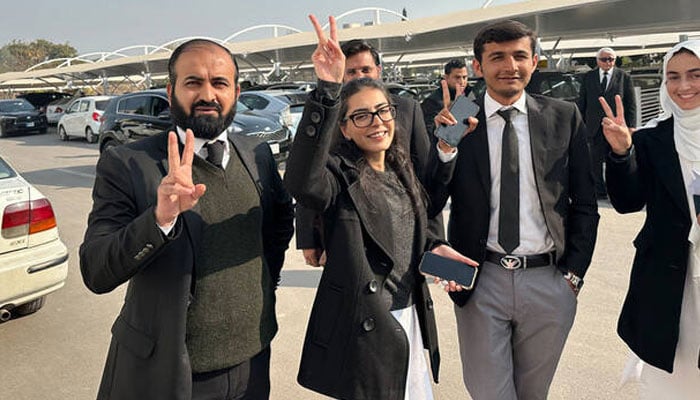
    The Islamabad High Court has declared admissible the petitions seeking suspension of sentences of Imaan Mazari and Hadi Chatha, who were convicted by a trial court in the controversial tweets case. Justice Muhammad Azam Khan of the Islamabad High Court issued a reserved verdict, rejecting a miscellaneous application filed by the prosecution challenging the admissibility of the petitions. The court had reserved its decision yesterday after hearing arguments from both sides. The prosecution had argued that the petitions for suspension of sentence filed by Imaan Mazari and Hadi Chatha were premature. It is pertinent to mention that Additional Sessions Judge Muhammad Afzal Majoka had sentenced both Imaan Mazari and Hadi Chatha to a total of 17 years in prison each under the Prevention of Electronic Crimes Act (PECA). Both convicts have approached the Islamabad High Court seeking suspension of their sentences. Earlier, The Islamabad High Court on Friday reserved its decision on whether petitions seeking the suspension of prison sentences awarded to lawyers and human rights activists Imaan Zainab Mazari-Hazir and Hadi Ali Chattha can proceed. The petitions relate to the couple’s convictions in a case involving alleged controversial social media posts under the Prevention of Electronic Crimes Act (PECA). The hearing was conducted by Justice Muhammad Azam Khan, who considered preliminary arguments from both the prosecution and the defence before reserving his ruling on the maintainability of the petitions. During the proceedings, lawyers representing the National Cyber Crime Investigation Agency (NCCIA) argued that the requests for suspension of sentence had been filed too early. They maintained that the court should first decide the prosecution’s objection challenging the admissibility of the petitions before considering any request for relief

  • |

    Bank of Punjab Board approves Up to Rs30bn equity injection by Punjab government

    LAHORE: The Board of Directors of The Bank of Punjab (BOP) has approved a proposal for an equity injection of up to Rs30 billion by the Government of Punjab, a move aimed at strengthening the bank’s capital position and supporting its next phase of expansion. The decision was taken at a board meeting held on August 7, 2026. Under the proposal, the Punjab government will subscribe to ordinary shares to be issued by the bank through a mechanism other than a rights issue. The proposed transaction will not take effect immediately and remains conditional on obtaining all required statutory, corporate, shareholder and regulatory approvals. According to the bank, the planned capital injection is an important step in its broader transformation strategy and will provide additional financial capacity to support sustainable growth across its key business segments. Share issuance price The ordinary shares will initially be issued at Rs38.20 per share. However, if the market price of BOP shares is higher than this amount at the time of issuance, the shares will be issued at the prevailing market price plus a premium of 5 percent. As a result, Rs38.20 will serve as the minimum or floor price for the proposed share issuance. The transaction is expected to reinforce the bank’s capital base and provide greater flexibility to manage balance-sheet expansion while maintaining prudent financial and risk-management standards. BOP expands its market presence The Bank of Punjab has undergone significant changes in recent years, with the institution expanding its balance sheet, improving financial performance and strengthening its position across several sectors of Pakistan’s economy. The bank has developed a strong presence in areas including small and medium-sized enterprise (SME) financing, agricultural lending, affordable housing, digital banking and credit cards. It has also increased its focus on women’s participation and leadership in banking and financial services. BOP is further expanding its activities in commercial and corporate banking, particularly in areas linked to export-oriented businesses. The bank said these business segments have positioned it as an important participant in supporting economic activity, employment creation and financial inclusion across the country. Capital requirements rise with expansion Despite the bank’s growth, the rapid expansion of its operations has increased pressure on its existing capital base. BOP said its capital position has historically remained relatively limited compared with the size of its operations and the growth opportunities available to the institution. The proposed Rs30 billion injection is therefore expected to provide the bank with additional capacity to expand its core businesses while maintaining financial resilience. The additional capital could also enable BOP to increase its low-cost deposit base and grow lending operations without facing the same level of capital constraints. The bank said strengthening its capital position would allow it to pursue growth while maintaining a balanced and prudent approach to balance-sheet management. Strong financial performance The proposed capital injection comes as BOP continues to report strong underlying financial performance. During 2025, the bank recorded revenue growth of around 29 percent, while its earnings increased by more than 40 percent year on year. The bank also witnessed significant appreciation in the value of its shares during the period. According to the bank, the proposed capital raise should therefore be viewed primarily as growth capital rather than a measure aimed at addressing immediate financial weakness. The additional equity is expected to provide the financial foundation required for BOP to continue expanding its operations and investing in new business opportunities. International expansion in focus Another important component of the bank’s future strategy is its international expansion. The capital injection is expected to support the next phase of BOP’s growth, including an international venture that has recently received approval from the State Bank of Pakistan. The move could provide the bank with an opportunity to broaden its geographical footprint and develop new sources of business and revenue. With the proposed equity injection, BOP aims to strengthen its financial position, support expansion in priority sectors and improve its ability to serve businesses, consumers and other customers as demand for banking and financial services continues to grow.

Leave a Reply

Your email address will not be published. Required fields are marked *