بلاگز

  • Omega-3 linked to better lungs

    A new medical study suggests that omega-3 fatty acids may do more than protect the heart and brain. Researchers say these healthy fats could also help keep the lungs working well for a longer time by slowing the natural decline in lung function. Omega-3 fatty acids are found in foods such as oily fish, fish oil supplements walnuts, flaxseeds chia seeds vegetable oils and fortified foods. They are already known for their anti inflammatory effects and may help lower the risk of heart disease stroke and some types of cancer. Now scientists believe they may also play an important role in supporting lung health. The study was published in the American Journal of Respiratory and Critical Care Medicine. The research was led by Dr. Patricia A. Cassano from Cornell University in New York. She explained that while many studies have looked at how diet affects heart disease and cancer much less research has focused on how nutrition influences lung health. To explore this researchers carried out two separate studies. The first study followed 15,063 adults in the United States with an average age of 56. Most participants were healthy and had no diagnosed lung disease when the study began. They were monitored for between seven and 20 years. Researchers found that people with higher levels of omega-3 fatty acids in their blood experienced a slower decline in lung function over time. In the second study scientists analyzed genetic data from more than 500,000 people in Europe. They examined genetic markers linked to omega-3 levels in the blood and found the same pattern. Higher omega-3 levels were associated with better lung function and healthier lungs. Although the findings are encouraging experts say omega-3 supplements should not be seen as a cure or a replacement for medical treatment. A balanced diet regular exercise avoiding smoking and following medical advice remain the best ways to protect lung health.

  • Too much TV may speed up brain aging

    Spending long hours  watching television may be harmful to your brain over time according to a new study from the United States. Researchers at the University of Southern California found that people who spent more time in front of the TV were more likely to develop brain changes linked to aging and memory problems. The study included more than 1,700 adults with an average age of 53. Participants reported how many hours they watched TV each day. Researchers also performed MRI brain scans at the start of the study and again about 20 years later. After following the participants for more than two decades the researchers found that those who watched the most TV showed greater brain changes associated with aging stroke cognitive decline and dementia. The study also found that these individuals had a smaller volume in brain areas responsible for memory thinking and visual processing compared to people who watched less television. However the researchers noted that not all sitting activities affect the brain in the same way. They said the type of activity matters. Sitting while working reading or doing mentally engaging tasks did not show the same level of negative brain changes as spending long hours watching TV. The researchers explained that people spend nearly half of their waking hours sitting making it important to understand how different activities affect brain health. They also noted that women often combine TV watching with household chores while men are more likely to sit continuously and watch television for long periods. In today’s world many people also use multiple screens at the same time which may further increase the effects of a sedentary lifestyle. The researchers stressed that the study does not prove that watching TV directly causes brain decline. The findings are based on participants’ self reported habits so more research is needed to confirm the link.

  • 3 Houseplants that may attract lizards

    Lizards often appear in homes during the summer especially in kitchens bathrooms and near indoor plants. While they are usually harmless many people find them unpleasant. They can also become a hygiene concern if they come into contact with food. Experts say some houseplants may attract lizards because they provide cool damp and shaded places where the reptiles like to hide. One of the most common plants is the money plant. Its large leaves and moist soil create a cool environment making it a favorite hiding place for lizards. If the vine grows up a wall or support lizards may climb and rest among the leaves. Another plant that may attract lizards is jasmine. The plant offers a cool leafy space and some experts believe its dense growth makes it a comfortable shelter for lizards. Marigold plants may also attract them. Their thick leaves create shade giving lizards a safe place to hide during hot weather. The good news is that you do not need to remove these plants. There are a few simple home remedies that may help keep lizards away. Placing camphor tablets near plant pots is one popular method because lizards dislike their strong smell. You can also place half an onion or a few garlic cloves near the pots as their odor may help repel lizards. Another natural option is bay leaves whose strong scent is believed to discourage lizards from staying near plants. Experts also recommend keeping the area around plants clean. Dry leaves weeds and garden waste can attract insects which are the main food source for lizards. By reducing insects and maintaining good hygiene around your plants and home you can also reduce the chances of lizards appearing.

  • Important of Diplomacy in Modern Conflicts

    By Dhani Bux Wassan Peace cannot be kept by force it can be achieved by understanding (Albert Einstein). In an increasingly interconnected world, disputes and tensions among nations have become more complex, involving geopolitical rivalries, ethnic and religious conflicts, ideological differences, civil unrest, and cyber warfare. These challenges threaten global peace and stability, and destroy the hustle and bustle of cities, turning them into ashes. These assaults lead to violence against innocent people . Amidst humanitarian crises and violence, diplomacy plays a crucial role in maintaining global peace, stability, and mutual prosperity among nations. Diplomacy is the most effective way to mediate disputes among nations through negotiations and table talks, preventing major conflicts and saving thousands of innocent lives. It is a manifestation of wisdom and dialogue. Modern conflicts are far more violent and complex than traditional wars. They arise from the struggle for power, competition over resources, territorial disputes, political instability, nationalism, separatism, and economic inequality. These conflicts have transformed cities into ruins, leaving streets littered with debris and countless lives lost. Millions of people have been displaced, deprived of education, healthcare, and shelter, and forced to live in extreme poverty. They have also left mothers, fathers, sisters, brothers, and children waiting in vain for their loved ones who never returned from the battlefield. Now, let us turn our attention to the Israel–Palestine war. Since October 7, 2023, the conflict has continued for more than 1,000 days. According to the Gaza Health Ministry, more than 73,000 Palestinians have lost their lives, while millions have been displaced and face severe humanitarian conditions. Similarly, the Russia–Ukraine war has continued for more than 1,600 days. The conflict has destroyed homes, schools, hospitals, and vital infrastructure, forcing millions to flee their homes and seek refuge in neighboring countries. History reminds us that when regional conflicts escalate into world wars, the world loses its path to peace. The First and Second World Wars claimed millions of lives and devastated entire nations. If diplomacy fails and violence prevails, humanity risks repeating the tragedies of the past. Therefore, dialogue, cooperation, and peaceful negotiation remain the only sustainable path. As modern conflicts continue to grow the importance of diplomacy cannot be overstated. Diplomacy provides nations with a peaceful means of resolving disputes through dialogue and compromise rather than violence. It prevents misunderstandings from escalating into armed conflicts and helps build trust and cooperation among nations. Strong diplomatic relations create a stable environment that encourages economic growth, attracts foreign investment, expands trade, and creates employment opportunities. Moreover, diplomacy facilitates humanitarian assistance, strengthens regional cooperation, and promotes lasting peace.In an increasingly interconnected world, it remains the most effective instrument for achieving peace, stability, and shared prosperity. History demonstrate that diplomacy repeatedly succeeded where military cops failed .The Camp David Accords (1978) ended decades of hostility between Egypt and Israel, proving that persistent dialogue can transform long-standing enemies into peace partners. Similarly, the Good Friday Agreement (1998) brought an end to years of violence in Northern Ireland through negotiation and political compromise. The Dayton Peace Agreement (1995) ended the devastating Bosnian War, while the Indus Waters Treaty (1960) between Pakistan and India has endured despite multiple wars, demonstrating that diplomatic agreements can survive even during periods of intense political tension. These examples illustrate that meaningful dialogue, mutual respect, and sustained negotiations often achieve what military force cannot. As former UN Secretary-General Kofi Annan wisely observed, “More than ever before in human history, we share a common destiny. We can master it only if we face it together.” In modern world conflicts strengthening diplomacy is essential for building a peaceful, stable, and prosperous future. Governments should prioritize dialogue over confrontation, invest in skilled diplomacy, and promote mutual trust through regular communication. International organizations, regional alliances, and civil society also have an important role in facilitating peaceful negotiations and resolving disputes before they escalate into violence. At the same time, nations must uphold international law, respect sovereignty, and work together to address shared challenges such as climate change, terrorism and cyber threats. By embracing cooperation instead of conflict, diplomacy can prevent wars, protect human lives, and lay the foundation for lasting global peace and sustainable development. To conclude, diplomacy remains the cornerstone of peace and stability in an increasingly turbulent world. While modern conflicts have become more complex due to geopolitical rivalries, technological advancements, and transnational threats, dialogue and cooperation continue to offer the most effective path to lasting solutions. Military force may end battles, but only diplomacy can build enduring peace, restore trust, and promote mutual understanding among nations. As global challenges continue to transcend borders, the international community must strengthen diplomatic institutions, uphold international law, and foster a culture of cooperation. A peaceful and prosperous future depends not on the power of weapons, but on the wisdom of dialogue and the commitment to resolve differences through diplomacy. (The writer is Larkana Cadet College student)

  • Punjab Clean Water Program

    By Saif Awan   Water is a tremendous blessing—a truth best understood by those for whom it remains a rare commodity even in this modern era. Across Pakistan, including several regions in Punjab, safe drinking water is still inaccessible to many. Local residents are often forced to travel miles just to fulfill their basic water needs. Even in Karachi, the country’s economic hub, clean drinking water remains scarce. Access to clean water is a fundamental necessity, fully appreciated only by those who yearn for it or those who truly grasp its importance. Among basic amenities, safe drinking water holds the utmost priority. Clean water directly impacts not only human health but also education, the economy, the environment, and the overall quality of life. In Punjab, several regions still lack access to safe drinking water. Settlement clusters in Southern Punjab, Cholistan, Thal, and the foothills of Koh-e-Suleman have historically faced a severe water crisis. For decades, millions of residents in these areas have been forced to consume groundwater that contains levels of salts, arsenic, fluoride, and other hazardous contaminants far exceeding international safety limits. Consequently, gastrointestinal, liver, kidney, skin, and bone diseases are widespread, while children’s physical development is severely compromised. To ensure the public has access to safe, high-quality drinking water, Chief Minister of Punjab Maryam Nawaz has launched the **”Chief Minister Clean Water Program.”** The Punjab government has allocated PKR 8 billion for this initiative in the current fiscal year’s budget. Under this program, 5,600 water filtration plants are being installed across various regions of Punjab. All these filtration plants will undergo digital geo-tagging to facilitate continuous performance evaluation and real-time monitoring. This project is far more than a routine development scheme; it is a vital public health, social welfare, and human dignity initiative aimed at bringing clean water to regions that have lacked this basic facility for years. In several districts of Punjab, poor groundwater quality has been a critical concern for decades. High levels of Total Dissolved Solids (TDS), arsenic, fluoride, and nitrates not only affect the taste of water but also inflict long-term adverse health effects. In the first phase of the Chief Minister Clean Water Program, areas facing the most acute water shortages were selected, specifically in Khushab, Dera Ghazi Khan, Rahim Yar Khan, and Bahawalnagar. State-of-the-art water bottling plants have been established in these districts, where water undergoes multi-stage purification in accordance with international standards. This purified water is then filled into 19-liter bottles and distributed to citizens free of cost. This initiative is especially transformative for families who previously had to travel several kilometers daily to fetch water or were forced to consume contaminated water. The Punjab Saaf Pani Authority has deployed cutting-edge, internationally imported machinery for the project. Each plant features an advanced multi-stage purification system combined with rigorous laboratory testing to ensure that every drop delivered meets World Health Organization (WHO) standards. A single plant has the capacity to fill approximately 150 bottles per hour. Operating for just ten hours a day, one plant can cater to thousands of families daily. Alongside this, an advanced management system has been established to monitor plant efficiency, water quality, and the supply chain to ensure an uninterrupted supply of clean water to citizens. A standout feature of this program is that the water bottling plants are powered by **Solar Energy**. This initiative will significantly reduce electricity costs while contributing to environmental conservation, carbon footprint reduction, and the realization of global Sustainable Development Goals (SDGs). Consequently, experts regard this project not merely as a water delivery scheme, but as a comprehensive strategy integrating health, environmental protection, and sustainable development. Another key aspect of the initiative is its tailored design to accommodate elderly citizens, women, and persons with disabilities who cannot carry or fetch water from distant sources. Large water bottles will be delivered to designated distribution points, allowing residents to collect clean water easily. Additional distribution centers will be established in proportion to population density in each district to maximize public benefit. The selection of the four initial districts—Dera Ghazi Khan, Khushab, Rahim Yar Khan, and Bahawalnagar—was not coincidental, but based on scientific and technical assessments. Groundwater in these regions has long been deemed unfit for human consumption. In many areas, TDS levels far exceed global standards, while the presence of hazardous elements such as arsenic, fluoride, and nitrates remains a constant concern. The Chief Minister Clean Water Program is projected to benefit over 29 million citizens in the coming years. Initial results have been highly encouraging, and the government plans to phase this model into other districts, ensuring every citizen across the province gains access to safe, quality drinking water. If the project maintains its current momentum and standard, it will evolve from a government scheme into a benchmark model for public health, social welfare, and sustainable development in Punjab. Chief Minister Maryam Nawaz’s “Chief Minister Clean Water Program” is a direct effort to translate this vision into reality. By delivering quality drinking water to millions in remote and underdeveloped areas, its impact will extend well beyond healthcare to encompass education, the economy, the environment, and overall living standards. The true success of any public project lies not in its announcement, but in its long-term outcomes. If the program continues to maintain transparency, quality, and steady expansion, it holds the potential to become a role model for safe water delivery across Punjab and all of Pakistan. If every drop of clean water protects a family from illness, enables a child to pursue an education in good health, relieves a mother from the grueling task of fetching water from afar, and affords an elderly person a dignified life—then this is not merely a development project, but the beginning of a genuine transformation in human lives.

  • How to stay cool and avoid heat stroke

    As temperatures continue to rise health experts are warning people to take extra care during hot and humid weather. Extreme heat can affect daily life and also increase the risk of serious health problems if proper precautions are not taken. According to the U.S. National Institutes of Health (NIH) the body naturally cools itself by sweating. However when the weather is extremely hot or humid this cooling system becomes less effective. This can lead to heat related illnesses such as heat cramps heat swelling (edema) and heat stroke which can be life threatening. Experts say the most important step is to stay hydrated. Dr. Wendell Porter from the University of Florida recommends drinking water regularly throughout the day. When the body does not have enough water it cannot produce enough sweat to cool itself. Taking a cool shower or bath is another effective way to lower body temperature. Placing a cold towel or an ice pack on the neck and wrists can also help cool the body quickly because blood vessels are close to the skin in these areas. Health experts also suggest keeping your home as cool as possible. Open windows early in the morning to let in fresh air then close them and draw curtains or blinds once the sun gets stronger. Use fans to push hot air outside and turn on kitchen and bathroom exhaust fans to remove heat and humidity. At night wear light cotton clothes and use cotton bedsheets because they allow better airflow and help keep you comfortable. If your home has a basement it may be a cooler place to sleep during heatwaves.  Closing the doors of unused rooms can also help keep cool air in the areas you use most. Experts recommend using LED light bulbs instead of traditional bulbs because they produce less heat and use less electricity. While cold treats like ice cream may feel refreshing, foods and drinks high in sugar should be limited because they can make it harder for the body to stay cool. Finally experts advise avoiding unnecessary outdoor activities during the hottest hours of the day. Drink plenty of water stay in shaded or cool places whenever possible and follow these simple tips to reduce the risk of heat-related illnesses.

  • Rabies still kills thousands in Pakistan

    Every year millions of people in Pakistan are bitten by dogs, and thousands are believed to die from  rabies a deadly viral disease that can almost always be prevented with timely treatment. Health experts say Pakistan still does not have a strong nationwide system to track rabies cases. Because of this around 5,000 people are estimated to lose their lives each year after being bitten by rabid dogs. Rabies is a viral infection that attacks the brain and nervous system.  Once symptoms appear the disease is almost always fatal with a survival rate of less than 1%. The first signs of rabies usually develop about six weeks after a bite from an infected animal. Common symptoms include fever headache body aches a sore throat and difficulty swallowing.  As the disease progresses it becomes much more dangerous. Children living in rural areas and on the outskirts of cities are among the most affected groups. A study published in the international journal Acta Tropica found that the high number of rabies cases in Pakistan is linked to low public awareness delays in seeking medical care and weak disease prevention efforts. Health experts say that immediate medical treatment after a dog bite including wound cleaning and timely vaccination can prevent rabies. They also welcomed the federal government’s recent in principle approval of the National Rabies Prevention and Control Framework calling it an important step toward improving rabies prevention and saving lives.

  • Chickenpox cases rise in Gaza

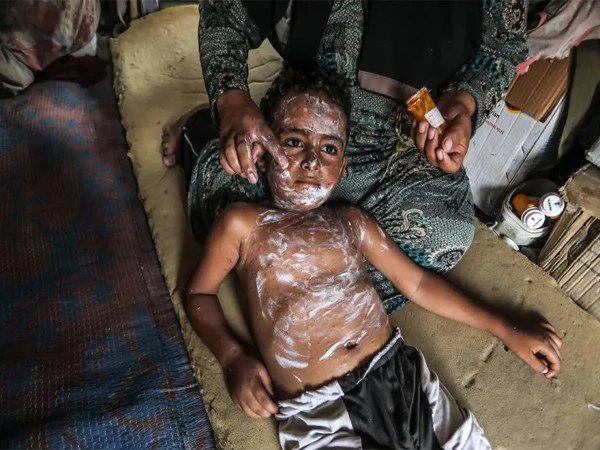
    The United Nations has warned that chickenpox cases are increasing among displaced children in Gaza. Around 9,300 cases have been reported over the past two weeks with more than half recorded in Khan Younis. According to the UN Office for the Coordination of Humanitarian Affairs (OCHA) overcrowded displacement camps piles of garbage limited access to clean water and damaged sewage systems are creating ideal conditions for infectious diseases to spread. As a result chickenpox is becoming a serious public health concern. The UN said respiratory illnesses and skin diseases remain the most common health problems in Gaza. Waterborne diseases are also increasing especially in the Khan Younis area due to poor sanitation and contaminated water. Last week alone more than 18,000 new cases of skin-related illnesses including chickenpox external parasitic skin infections and impetigo were reported. The report also said Gaza’s healthcare system has been badly damaged by the ongoing war. Many hospitals and medical facilities have been destroyed or damaged while shortages of medicines fuel and medical supplies continue to affect healthcare services. According to the Palestinian Ministry of Health, since the war began more than 73,250 Palestinians have been killed and 173,751 injured. The ministry also said that around 90% of Gaza’s infrastructure has been damaged or completely destroyed.

  • Stay safe this monsoon

    The monsoon season brings cool weather fresh air and beautiful rainfall making it a favorite time of the year for many people. However it also comes with several risks. In Pakistan especially in cities like Karachi heavy rain can cause water to collect on roads making travel dangerous and increasing the risk of accidents. Experts say that following a few simple safety tips can help prevent serious incidents during the rainy season. One of the biggest dangers during rain is electricity. Never touch fallen power lines or electrical equipment with bare hands.  Parents should also teach children to stay away from broken or exposed electric wires. It is also a good idea to unplug electrical appliances that are not in use during heavy rain. Drivers should avoid parking vehicles under power poles or overhead electric wires as strong winds and heavy rain can damage them and create dangerous situations. People walking outdoors should be careful as well. Whenever possible use dry sidewalks and avoid walking through standing water. Flooded roads may hide open drains or fallen electric wires making them extremely dangerous. If you need to go outside while it is raining, carry an umbrella or wear a raincoat to stay dry and reduce the risk of catching seasonal illnesses. Health experts also recommend keeping a basic first aid kit at home so that minor injuries or emergencies can be treated quickly until medical help is available. Rainwater that remains stagnant for several days can become a breeding ground for mosquitoes increasing the risk of diseases such as dengue malaria and skin infections. To stay safe make sure rainwater does not collect around your home or in  nearby streets. Experts say that taking these simple precautions can help protect lives and allow people to enjoy the beauty of the monsoon season more safely.

  • More than sunshine for Vitamin D

    Vitamin D is important for strong bones a healthy immune system and many other body functions. It is often called the “sunshine vitamin” because the body can produce it when the skin is exposed to sunlight. However a new study suggests that spending more time in the sun may not be enough to raise vitamin D levels especially for people who already have a deficiency. The study published in the European Journal of Clinical Nutrition, followed 299 older adults most of whom had low vitamin D levels. During the summer participants spent more time outdoors so researchers could see whether sunlight increased their vitamin D. The researchers found that sunlight alone had only a limited effect on vitamin D levels in people with a deficiency. They said that eating vitamin D-rich foods such as fatty fish and fortified dairy products and taking supplements when needed are more effective ways to improve vitamin D levels. Most adults need about 1,500 to 2,000 IU of vitamin D each day, depending on their health needs and medical advice. Vitamin D plays an important role in keeping bones strong supporting the immune system and may also help lower the risk of certain long-term health conditions. Experts estimate that around one billion people worldwide have low vitamin D levels.