कारोबार

  • | | | |

    Russia, COMSTECH seek stronger cooperation in scie…

    Russia and the Organisation of Islamic Cooperation’s Standing Committee on Scientific and Technological Cooperation (COMSTECH) have discussed new opportunities to expand collaboration in science, technology and higher education. Russian Ambassador Albert P. Khorev received a COMSTECH delegation on August 12. The delegation was led by COMSTECH Coordinator General Professor Dr M. Iqbal Choudhary. The meeting focused on strengthening cooperation between Russia and COMSTECH, particularly in areas of scientific research and academic development. Russia participates in the OIC as an observer state. Professor Iqbal Choudhary highlighted existing cooperation between COMSTECH and Russian institutions. He specifically mentioned collaboration with Kazan Federal University and the Russian Association of Earthquake Engineering and Protection against Natural and Man-Made Hazards. The participants identified considerable potential for expanding academic links between the two sides. They discussed stronger partnerships between universities, increased scholarship opportunities and joint research projects in fundamental sciences. Both sides also stressed the need to speed up implementation of initiatives previously agreed upon under their bilateral working mechanism. These initiatives were discussed during the first meeting of the Working Group on Cooperation between COMSTECH and the Russian Federation in science, technology and higher education. The meeting was held in Kazan on May 13, 2026, on the sidelines of the international economic forum Russia–Islamic World: KazanForum. Ambassador Khorev reaffirmed Moscow’s interest in expanding its engagement with the OIC and Muslim-majority countries. He also highlighted the importance of cooperation with Pakistan. The participants noted that stronger scientific and academic links between Russia and COMSTECH could also contribute to closer Russia-Pakistan relations, particularly through education, research and technological cooperation. The two sides agreed to maintain regular communication and provide necessary support for implementing joint initiatives and projects.

  • | | |

    KP Cabinet increases Ehsaas Naujawan programme to …

    PESHAWAR: The Khyber Pakhtunkhwa cabinet has approved an increase of Rs2 billion in the size of the Ehsaas Naujawan Programme, taking its total allocation from Rs3 billion to Rs5 billion. The decisions were taken during a cabinet meeting chaired by Chief Minister Sohail Afridi in Peshawar. Officials said the additional funding would strengthen the provincial government’s youth-focused initiatives and provide greater support to young people. The cabinet also approved a grant-in-aid for Langlands School and College in Chitral. A separate grant was approved for model schools in the merged districts. The meeting also focused on improving access to education. The cabinet approved an interdepartmental memorandum of understanding aimed at reducing the number of children who remain out of school. Another major decision was taken regarding textbooks. From the financial year 2027-28, students from grades six to eight across the province will receive textbooks free of cost. The cabinet also approved financial assistance for the treatment of 21 patients. The move is aimed at helping patients facing difficulties in meeting medical expenses. In another important decision, the provincial cabinet approved the Khyber Pakhtunkhwa Public-Private Partnership Authority Bill 2026. The legislation is intended to strengthen the framework for public-private cooperation in development projects. The cabinet also approved stipend slots for house jobs in government hospitals. It further approved an increase in stipends for doctors completing their house jobs, along with additional grants for the programme.

  • |

    Pension crisis hits Pak PWD workers as Committee orders urgent action

    Islamabad: Retired employees of the dissolved Pak PWD and families of workers who died during service are still waiting for pension benefits after being adjusted in the Capital Development Authority, the Senate Standing Committee on Housing and Works was told. The committee expressed serious concern over the delay and ordered the Ministry of Interior to send the case to the Prime Minister within three days for a final decision. The committee said the matter should be settled on humanitarian grounds and without further delay. The meeting, chaired by Senator Nasir Mehmood, reviewed the implementation of earlier directions concerning the adjustment, salaries and pension matters of employees of the former Pakistan Public Works Department. The Secretary of the Ministry of Housing and Works told the committee that all employees of the dissolved department had now been adjusted according to the committee’s directions. The committee learned that the employees were receiving their salaries and allowances. The chairman appreciated senior officials of the concerned ministries for completing the adjustment process. However, serious problems remain over pensions. The committee was told that former Pak PWD employees who were adjusted into the CDA and later retired had still not received their pension benefits. The same problem also affected employees who died during service, leaving their families waiting for benefits. Officials told the committee that the pension cases remained pending because government departments held differing views on the legal and administrative status of the adjusted employees. The Finance Division was providing budget for salaries and allowances but had not provided funds for pensions or medical reimbursement, the committee was informed. Members questioned how employees could be transferred to another organisation yet fail to receive all benefits normally connected with their service. The committee stressed that the adjustment of Pak PWD employees had been made under directions of the Federal Cabinet. It said the employees should therefore receive all related rights, benefits and privileges instead of receiving salaries alone. The committee was informed that the Ministry of Interior had prepared a summary for the Prime Minister. Officials explained that the Finance Division’s opinion binds ministries and divisions. Because of this, the dispute could only be finally resolved through a decision by the Prime Minister or the Federal Cabinet. After a detailed discussion, the committee unanimously decided that the issue should not remain pending. Chairman Senator Nasir Mehmood directed the Ministry of Interior to submit the summary to the Prime Minister within three days. The committee said retired employees and families of deceased workers should not continue suffering because of differences between government departments over rules and interpretation. Senator Nasir Mehmood said the committee supported the affected employees and would continue to pursue their cases until their legitimate issues were resolved. The final decision now depends on the Prime Minister or the Federal Cabinet after the Interior Ministry submits the summary.

  • | | |

    Pakistan’s debt growth falls to 20-year low: Fin…

    ISLAMABAD: Pakistan’s Finance Ministry has reported a significant slowdown in the country’s debt growth, saying the rate of increase fell to its lowest level in two decades during fiscal year 2025-26. According to the ministry, Pakistan’s debt increased by only 7.7 per cent during 2025-26, compared with an average annual growth rate of around 16 per cent over the past 20 years. The ministry said the country’s debt-to-GDP ratio also improved, falling to 68.3 per cent from 75 per cent in fiscal year 2022-23. Between 2019 and 2021, the ratio had remained between 86 and 88 per cent. Pakistan’s external debt-to-GDP ratio also declined to 21.5 per cent, which the ministry described as the lowest level in nine years. The country’s foreign exchange reserves have meanwhile increased substantially, rising from $2.9 billion to $18.4 billion, according to the ministry. The Finance Ministry said Pakistan also repaid Rs4.72 trillion in debt ahead of schedule. It added that annual interest expenditure on government debt declined by nearly Rs2 trillion. The burden of interest payments on government revenue also fell sharply, from 61 per cent to 35 per cent, indicating an improvement in the government’s fiscal position. The ministry further said Pakistan has recorded a primary budget surplus for three consecutive years, reflecting continued efforts to strengthen fiscal management and control expenditure. Pakistan has also returned to international capital markets after a four-year gap. The country’s Panda Bond reportedly attracted demand nearly five times higher than the amount offered, indicating strong investor interest. The ministry also highlighted Pakistan’s improved credit outlook. S&P Global Ratings has maintained Pakistan’s rating at B with a stable outlook, with the ministry describing the current rating as the agency’s highest level for Pakistan in nearly nine years.

  • |

    Government adjusted petrol and diesel rates

    The federal government has announced the rate of petrol by Re0.94 per litre while raising high-speed diesel (HSD) by Re0.54 per litre. Under the newly adjusted tariffs, petrol will now sell at Rs324.98 per litre, whereas HSD will cost consumers Rs382.79 per litre. Despite these minor shifts, significant fiscal levies remain embedded in local pump prices, with taxes and duties standing at Rs114 per litre for petrol and Rs100 per litre for diesel. According to official directives issued by the Petroleum Division, the revised rates take effect immediately for August 13. This latest decision highlights a broader downward trend from the historic spikes observed earlier this year. Fuel prices experienced an unprecedented surge following the breakout of the US-Iran conflict in late February. HSD, which traded around Rs281 per litre before the geopolitical crisis, climbed sharply to reach an all-time peak of Rs520.35 on April 3 before gradually retreating. Similarly, petrol prices escalated from Rs266 in early March to a maximum height of Rs458.41 on the same April date before cooling down to present levels. In a structural shift to handle ongoing market volatility, Petroleum Minister Ali Pervaiz Malik revealed that fuel pricing will transition to a daily adjustment mechanism. While the government had temporarily relied on weekly pricing revisions and targeted subsidy schemes since March to buffer against Middle Eastern supply disruptions, authority over price setting has now been formally handed over to the Oil and Gas Regulatory Authority (OGRA). Under the approval of the Prime Minister and the federal cabinet, OGRA will directly track daily international market fluctuations to determine local retail costs. However, this policy pivot has met swift pushback from commercial stakeholders. The All Pakistan Dealers Association strongly rejected the transition to daily rate changes, warning that the organization is formulating a formal protest strategy to oppose the decision.   The economic stakes of these pricing shifts remain high across every level of society. Petrol costs directly influence everyday commuters, small vehicle operators, rickshaw drivers, and motorcycle owners, placing immediate financial pressure on middle- and lower-income households when rates rise. On the other hand, diesel price movements carry a broader inflationary impact, as HSD powers heavy transport fleets, agricultural machinery, power generation plants, and industrial backup generators. Together, petrol and diesel form the bedrock of the national energy supply and state revenue, generating massive combined monthly sales of 700,000 to 800,000 tonnes, compared to a meager 10,000 tonnes of monthly demand for kerosene. Daily adjustments will now determine how these vital economic drivers impact consumers nationwide.

  • |

    Oil prices rise as US-Iran uncertainty and shipping attacks raise supply concerns

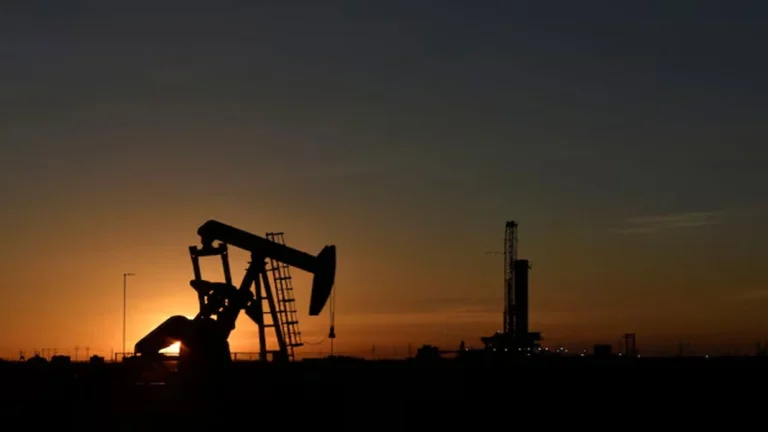
    BEIJING: Global oil prices advanced on Wednesday as uncertainty surrounding a potential peace agreement between the United States and Iran, coupled with attacks on commercial shipping in key Middle Eastern waterways, heightened concerns about disruptions to crude supplies. At 0553 GMT, Brent crude futures had gained 75 cents, or 0.84%, to reach $89.66 per barrel. US West Texas Intermediate (WTI) crude rose 72 cents, or 0.87%, to $83.92 a barrel. Both benchmarks had climbed by more than $1 earlier in the session. The latest gains followed a strong rally on Tuesday, when both Brent and WTI settled more than $1 higher, reaching their highest closing levels since July 31. Oil prices had already surged around 5% on Monday as market participants became increasingly sceptical about the prospects of a US-Iran agreement to end the conflict. Concerns intensified after US President Donald Trump issued a fresh demand that Iran compensate people killed in wars, attacks and protests. Market analysts said the latest developments have left energy markets highly sensitive to changes in the US-Iran narrative. “The Middle East is increasingly becoming a seesaw between ‘deal’ and ‘war’,” said Priyanka Sachdeva, head of market insights at Phillip Nova in Singapore, describing the resulting price swings as a pendulum moving between roughly $70 and $90 a barrel. Shipping Disruptions Add to Market Pressure Concerns over the safety of crude shipments were also reinforced after the United States and Yemen’s Iran-aligned Houthis reported separate attacks involving shipping in the Strait of Hormuz and the Bab el-Mandeb Strait. The Strait of Hormuz is one of the world’s most important energy transit routes, making any prolonged disruption there a major concern for global oil markets. Iranian security official Mohsen Rezaei said the strategic waterway would remain closed unless Washington accepted Tehran’s conditions for ending the conflict. Those demands reportedly include the release of frozen Iranian assets and an end to other regional conflicts. Trump, meanwhile, has continued to send mixed signals about the US response, alternating between warnings of a tougher military approach and suggestions that an agreement could still be reached. The uncertainty has contributed to sharp swings in crude prices as traders attempt to assess whether the conflict will escalate or move towards negotiations. Sachdeva said markets could increasingly become accustomed to the frequent changes in the geopolitical narrative, creating a highly volatile environment for short-term traders and speculators. Hormuz Traffic Falls Sharply Shipping data highlighted the scale of the disruption. The number of vessels passing through the Strait of Hormuz fell to only eight on Tuesday, according to shipping data cited in market reports. That compares with an estimated 125 to 140 vessels a day before the conflict, underscoring the extent to which security concerns have affected maritime traffic through the strategic waterway. A sustained reduction in shipping through Hormuz could have significant implications for global energy markets because the route handles a substantial share of international oil shipments. US Crude Inventories in Focus Despite geopolitical concerns, developments in the United States provided a counterweight to the bullish sentiment. A Reuters poll released on Tuesday had indicated that US crude and fuel inventories were expected to decline during the week ended August 7. However, market sources citing data from the American Petroleum Institute (API) reported a substantial increase in US crude stocks. According to the sources, US crude inventories increased by approximately 9.1 million barrels last week. Gasoline stocks declined by around 1.5 million barrels, while distillate inventories fell by approximately 596,000 barrels. The reported crude build was considerably larger than market expectations. If confirmed by official figures, the increase could ease concerns over tightness in the US oil market and potentially limit further price gains. Haitong Futures said in a market note that the unexpectedly large increase in crude inventories could reduce some of the supply-related pressure currently supporting oil prices. EIA Data Awaited Investors are now awaiting official inventory figures from the US Energy Information Administration (EIA), the statistical arm of the US Department of Energy. The EIA’s weekly petroleum report is scheduled for release at 10:30 a.m. Eastern Time (1430 GMT) on Wednesday. Market participants will closely examine the data for signs of changes in crude production, refinery activity, gasoline demand and commercial inventories. Any significant deviation from the API figures could trigger additional volatility in oil prices. Longer-Term Supply Risks Remain Beyond the immediate market reaction, longer-term concerns over Middle Eastern supply disruptions continue to provide support to crude prices. The EIA has estimated that disruptions to Middle Eastern crude supplies could amount to approximately 600,000 barrels per day and persist through the end of 2027. With geopolitical tensions still unresolved and shipping activity through major regional waterways significantly reduced, traders are expected to remain highly sensitive to developments involving the United States, Iran and regional armed groups.

  • |

    Gold prices rise ahead of US inflation data

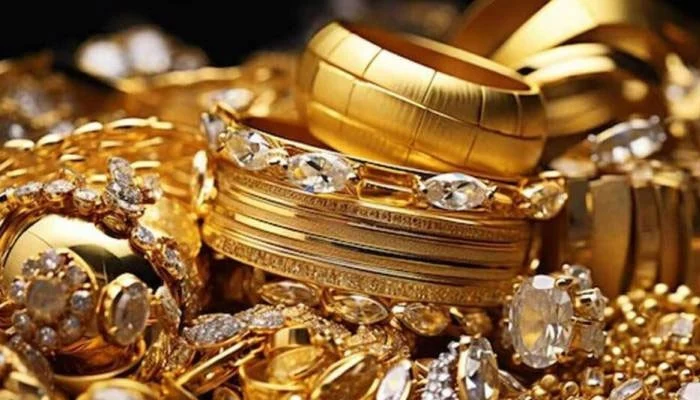
    Gold prices advanced nearly 1% on Wednesday as investors reduced expectations of further monetary tightening by the US Federal Reserve and turned their attention to upcoming inflation figures that could provide fresh clues about the central bank’s next policy move. Spot gold rose 0.9% to $4,406.34 per ounce by 0330 GMT, while US gold futures for December delivery gained 0.6% to $4,466.70. The precious metal remained supported after recording strong gains in recent sessions, although prices faced technical resistance around the 100-day moving average. Gold had climbed to a 10-week high on Tuesday before retreating from the key technical level near $4,387 per ounce, marking its second decline this month. Market analysts said changing expectations for US interest rates were providing an important boost to bullion. “The primary driver for gold is the reduction in pricing of rate hikes by the Fed,” said Kelvin Wong, senior market analyst at OANDA. He added that gold had also benefited from a technical breakout above the $4,200 level late last week, which helped strengthen upward momentum and encouraged further buying. Weaker jobs data shifts Fed expectations Gold’s recent rally has been supported by signs of cooling in the US labour market. Bullion recorded its strongest weekly performance since January on Friday after employment data came in weaker than expected, prompting traders to reassess expectations for further interest-rate increases. According to the CME FedWatch Tool, markets were pricing in roughly a 50% probability of a rate hike in September, compared with about 60% before the release of the jobs report. Investors are now awaiting the latest US Consumer Price Index figures, due later on Wednesday. The inflation report could have a significant impact on expectations for the Federal Reserve’s upcoming decisions. A softer-than-expected inflation reading could reinforce expectations for a less aggressive monetary policy stance, potentially providing additional support to gold. Conversely, stronger inflation could revive concerns about higher interest rates and put pressure on non-yielding assets. Gold typically benefits from lower interest rates because bullion does not generate interest income. When borrowing costs and bond yields decline, the opportunity cost of holding gold tends to fall, making the metal more attractive to investors. However, Chicago Federal Reserve President Austan Goolsbee has cautioned that inflation remains a key concern. He said he was more worried about inflation remaining excessively high than about weakness in the labour market, highlighting the challenge facing policymakers as they balance price stability against employment conditions. Geopolitical tensions add to safe-haven demand Geopolitical developments in the Middle East also remained an important factor for financial markets. Oil prices extended their gains after the United States and Yemen’s Iran-aligned Houthi movement reported separate attacks involving shipping on Tuesday. At the same time, hopes for an agreement to end the conflict involving Iran appeared to weaken. Iran has indicated that the Strait of Hormuz would remain closed unless Washington agrees to its conditions, raising concerns over the potential impact on global energy supplies. The Strait of Hormuz is a critical route for international oil shipments, and any prolonged disruption could increase energy prices and intensify inflationary pressures worldwide. Such uncertainty can also encourage demand for traditional safe-haven assets such as gold. Silver, platinum and palladium also advance Other precious metals followed gold higher during Wednesday’s session. Spot silver gained 1.2% to $65.46 per ounce. The metal remained below Tuesday’s peak, which marked its highest level since June 22. Platinum also strengthened, rising 0.6% to $1,754.10 per ounce, while palladium advanced 0.8% to $1,370.86.

  • |

    Pakistan moves to revive Steel Mills after earlier liquidation decision

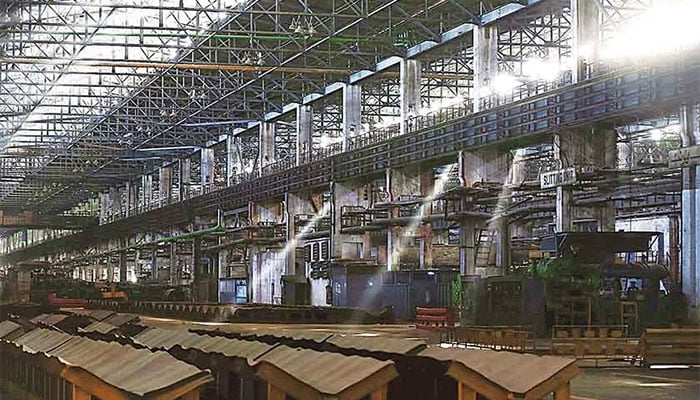
    The federal government has revived plans to restore Pakistan Steel Mills (PSM), signaling a major policy shift after previously deciding to wind up the loss-making state-owned enterprise. The development follows renewed interest from international parties in bringing the dormant steel producer back into operation, with Russian company Industrial Engineering LLC emerging as a key potential partner for the revival, modernisation and restructuring of the mill. Well-informed sources said the government has initiated consultations with the Russian firm to assess the technical, financial and operational requirements for restoring PSM’s production capacity. Two protocols have already been signed between Industrial Engineering LLC and Pakistan Steel Mills under the Ministry of Industries and Production. The first agreement was signed in Moscow on July 10, 2025, and provides a framework for cooperation on the revival, modernisation and restructuring of PSM. The second protocol was signed on November 26, 2025, during the 10th session of the Pakistan-Russia Intergovernmental Commission. The second agreement focuses on assessing the operational and capital expenditure required to restart manufacturing activities at the steel mill. Feasibility assessment under way According to sources, the authorities have also carried out an exercise to calculate production costs and evaluate the commercial viability of restarting PSM. The assessment is expected to help determine whether the mill can operate sustainably and compete in the domestic and international steel markets after years of inactivity. The findings will form the basis for recommendations to the government before a final decision is taken on the future structure and operations of the enterprise. Sources said the relevant authority would submit recommendations to the Cabinet Committee on State-Owned Enterprises (CCoSOEs), seeking an end to the liquidation process and approval to pursue the revival option with the participation of international investors. The move represents a reversal of the government’s earlier policy. Government had approved liquidation In May 2024, the Special Investment Facilitation Council (SIFC) had decided to scrap Pakistan Steel Mills after efforts to find a buyer failed to produce a viable offer. The Cabinet Committee on Rightsizing subsequently approved the liquidation of the existing mill in August 2024. However, the government has now shifted its focus towards rehabilitation, apparently encouraged by renewed international interest and the possibility of securing foreign technical and financial support. A formal summary regarding the proposed policy shift has been submitted to the Ministry of Industries and Production for consideration, sources said. A parliamentary secretary also indicated that the government’s policy direction had changed and that efforts were now being made to restore PSM to operational status. He said the timeline agreed upon with the Russian company would be followed, with the relevant departments expected to take further steps after completion of the ongoing assessments. Power minister signals renewed revival efforts Separately, Minister for Power Sardar Awais Leghari said recommendations for reviving Pakistan’s dormant steel giant would soon be presented to policymakers, reinforcing indications that the government is seriously reconsidering the future of PSM. Speaking at a webinar titled “Pakistan-Russia: Strengthening Trade, Education and Energy Collaboration,” jointly organised by the University of World Civilizations Moscow (UWCM) and the Institute of Regional Studies (IRS), Leghari highlighted the growing momentum in Pakistan-Russia relations. He said bilateral ties had strengthened over the past two decades on the basis of mutual trust, respect and a shared interest in regional stability. The minister’s remarks come as Pakistan explores greater Russian involvement in key economic and industrial sectors, including the possible rehabilitation of PSM. Financial burden remains a challenge Pakistan Steel Mills has remained largely dormant for years, creating a continuing financial burden for the government. Following the earlier decision to wind up the enterprise, the government has continued to bear the salaries and other expenses of its remaining employees. Meanwhile, some of the mill’s liabilities and operating costs have been met through proceeds generated from the sale of scrap. The proposed revival could therefore provide an opportunity to turn the idle industrial asset into a productive enterprise while reducing the recurring financial burden on the national exchequer. However, the government is expected to carefully evaluate the mill’s outstanding liabilities, infrastructure requirements, production costs, technology needs and long-term market prospects before committing substantial public resources. If the revival plan moves forward with foreign participation, the project could also open the door to new investment, technology transfer and employment opportunities in Pakistan’s steel and related industrial sectors.

  • | |

    Pakistan auto sales jump 80% in July

    Pakistan’s automobile sector started fiscal year 2026-27 on a strong note, with overall vehicle sales rising nearly 80% year-on-year in July 2026, according to data from the Pakistan Automotive Manufacturers Association (PAMA). Sales of cars, light commercial vehicles, vans, jeeps and electric vehicles reached 19,818 units during the month, compared with 11,034 units in July 2025. However, sales fell 13% month-on-month from the 22,741 units recorded in June. Analysts attributed the annual increase to stronger passenger-car demand, new vehicle launches, the entry of new manufacturers and growing auto financing. Leena Abid of Arif Habib Limited said passenger-car sales led the overall growth, jumping 141% year-on-year. She noted that June had benefited from pre-budget purchases, while uncertainty over the new Auto Policy affected bookings in July. Pak Suzuki recorded the highest sales at 10,120 units, representing a 175% year-on-year increase, although its sales declined 12% from June. Indus Motor Company sold 5,089 units, up 53% annually and 45% from the previous month. Honda Atlas Cars reported 2,640 units, marking a 76% annual increase but an 11% monthly decline. Sazgar Engineering sold 663 passenger vehicles. The two-wheeler market also performed strongly, with industry sales increasing 39% year-on-year to around 169,713 units, although volumes slipped slightly from June. Atlas Honda continued to dominate the segment. Commercial vehicles also recorded substantial annual growth. Truck sales surged 169% year-on-year, while bus sales increased 14%. Ghandhara Automobiles sold 111 trucks, up 247% annually and 31% month-on-month. Ghandhara Industries reported 424 units, a 212% year-on-year increase. Meanwhile, tractor sales rose 4% year-on-year to 1,242 units but plunged 59% from June. Al-Ghazi Tractors sold 414 units, up 29% annually, while Millat Tractors recorded 828 units, down 5% year-on-year. Analysts expect market performance to remain closely linked to the new Auto Policy, financing conditions and consumer demand in the coming months.

  • |

    CPEC 2.0: Pakistan, China shift focus to B2B investment

    ISLAMABAD: Pakistan and China are moving toward a more business-driven model of cooperation under the second phase of the China-Pakistan Economic Corridor (CPEC), with greater emphasis on Business-to-Business (B2B) partnerships, industrial development, exports and productivity rather than large-scale Government-to-Government (G2G) financing. The development emerged during a high-level Chinese delegation’s visit to the CPEC Secretariat, where discussions focused on strengthening industrial and commercial ties between the two countries. According to an official statement issued by the Ministry of Planning on Tuesday, the Chinese delegation was headed by Sun Dongsheng, Senior Advisor, Economic Affairs Press. The delegation met Federal Minister for Planning, Development and Special Initiatives Ahsan Iqbal, along with senior policymakers and development experts. The talks centred on ways to advance B2B and industrial cooperation under CPEC 2.0, reflecting a broader shift in the corridor’s priorities from infrastructure-led development toward industrialisation, exports, technology and private-sector participation. From infrastructure to industrialisation During the meeting, Ahsan Iqbal briefed the Chinese delegation on the government’s Uraan Pakistan economic transformation programme and outlined Islamabad’s priorities for the next phase of CPEC. The minister proposed closer cooperation with Chinese institutions, including counterparts of the National Centre of New Manufacturing, to benefit from China’s experience in advanced manufacturing, innovation, automation and robotics. He said Pakistan needed to strengthen its productive capacity and adopt modern technologies to remain competitive in the era of Industrial Revolution 4.0 and prepare for the emerging Industrial Revolution 5.0. Ahsan Iqbal identified Pakistan’s limited export base as one of the country’s major economic challenges. According to the minister, repeated attempts to accelerate economic growth have struggled to generate sustainable momentum because productive sectors have not been sufficiently integrated with export markets. He stressed that the government’s priority was therefore to turn agriculture, manufacturing and other productive sectors into stronger sources of exports and foreign exchange. Pakistan seeks greater access to Chinese market The minister also called for greater facilitation of Pakistani exports to China, highlighting the considerable gap between the two countries’ trade potential. He noted that China imports goods worth around $2.6 trillion annually, whereas Pakistan’s exports to the Chinese market remain close to $3 billion. Ahsan said Pakistan needed to increase its presence in the Chinese market by improving production standards, competitiveness and the ability of domestic businesses to meet international demand. He expressed the expectation that CPEC 2.0 could help Pakistan address what he described as its “export deficit”, just as the first phase of the corridor contributed to addressing the country’s energy shortfall. CPEC enters a new phase Under CPEC’s first phase, China committed substantial financing to infrastructure, energy and other development projects in Pakistan. Nearly $30 billion was invested in infrastructure and power-sector projects, including independent power producers. However, the focus is now increasingly shifting toward private-sector-led cooperation. Islamabad continues to pursue financing for selected road and motorway projects, but China has yet to demonstrate readiness to finance the long-delayed Main Line-1 (ML-1) railway upgrade, which had previously been regarded as one of CPEC’s flagship projects. The latest consultations indicate that CPEC 2.0 is expected to rely more heavily on commercial partnerships between Pakistani and Chinese companies. The government has already been encouraging enterprises from both countries to explore joint ventures and investment opportunities in sectors including manufacturing, agriculture and mining. Ahsan Iqbal said recent agreements between Pakistani and Chinese companies showed that B2B cooperation was beginning to gain momentum. He expressed confidence that stronger business-to-business engagement would support the modernisation of Pakistan’s industrial and agricultural sectors while creating opportunities for investment, employment and exports. China stresses productive capacity Sun Dongsheng reaffirmed the importance China attaches to its longstanding relationship with Pakistan and highlighted the achievements of CPEC’s first phase. He called for further cooperation in industrial and agricultural development, particularly in strengthening Pakistan’s productive capacity. The Chinese delegation also stressed the importance of involving small and medium-sized manufacturing enterprises in bilateral economic cooperation. Greater enterprise-to-enterprise engagement, according to the delegation, could help create commercially sustainable partnerships and expand opportunities for businesses in both countries. The discussions also focused on technology transfer, innovation, skills development and the creation of stronger industrial linkages. Five Corridors aligned with Uraan Pakistan Officials also discussed the strategic relationship between the Five Corridors of CPEC 2.0 and Pakistan’s 5Es framework under Uraan Pakistan. The government’s 5Es framework focuses on exports, e-Pakistan, environment and climate change, energy and infrastructure, and equity and empowerment. The participants stressed that alignment between the two initiatives needed to translate into concrete economic outcomes, including new enterprises, technology adoption, innovation, employment opportunities, skills development, increased exports and higher investment. The delegation was also briefed on the progress achieved during CPEC Phase I and Pakistan’s priorities for the second phase. The consultations suggest that the next stage of CPEC will increasingly be measured not only by the volume of infrastructure investment but also by its ability to improve Pakistan’s industrial competitiveness, expand exports, attract private investment and create sustainable employment.