कारोबार

  • |

    Pakistan, US move closer to finalising reciprocal trade framework

    Pakistan and the United States have reaffirmed their commitment to finalising a reciprocal trade framework at the earliest, signalling significant progress in negotiations aimed at strengthening bilateral trade, investment, and long-term economic cooperation. The renewed commitment was expressed during a virtual meeting held on Wednesday between Pakistan’s Finance Minister Muhammad Aurangzeb and United States Trade Representative (USTR) Ambassador Jamieson Greer. The two sides reviewed the progress made by their negotiating teams and discussed the remaining steps required to conclude the proposed agreement. According to an official statement, both countries acknowledged that negotiations have advanced substantially in recent months and reiterated their shared determination to complete the reciprocal trade framework as soon as possible. During the meeting, Finance Minister Muhammad Aurangzeb referred to the recent discussions held in Washington, D.C., and appreciated the constructive approach adopted by both negotiating teams. He said the steady progress reflects the mutual commitment of Pakistan and the United States to deepen economic ties and expand commercial cooperation. The finance minister stressed that maintaining the current momentum in negotiations is crucial for Pakistan’s broader economic agenda. He noted that a stronger trade and investment partnership with the United States would support Pakistan’s export-led growth strategy, improve economic resilience, attract foreign investment, and create new business opportunities for companies in both countries. Aurangzeb also highlighted the importance of continued collaboration with the US Export-Import Bank (EXIM Bank), saying enhanced financial cooperation could facilitate trade, encourage investment, and strengthen business-to-business engagement between the two countries. On the US side, Ambassador Jamieson Greer acknowledged Pakistan’s consistent engagement throughout the negotiation process and appreciated the progress achieved on key labour and regulatory reforms. He particularly welcomed Pakistan’s efforts to strengthen compliance with international labour standards, including measures related to preventing forced labour. The US trade representative reaffirmed Washington’s commitment to advancing bilateral trade discussions and expressed confidence that the remaining issues could be resolved through continued technical-level consultations between the two sides. Finance Minister Aurangzeb emphasised the need for close coordination between officials from both countries and called for accelerated technical discussions to build on the progress already achieved. He said timely completion of the agreement would open new avenues for economic cooperation and strengthen long-term bilateral relations. Both delegations expressed satisfaction over the pace of negotiations and agreed to continue regular engagement to finalise the outstanding elements of the reciprocal trade framework. The officials reaffirmed their shared objective of concluding the agreement in the near future, paving the way for stronger trade, investment, and economic collaboration between Pakistan and the United States.

  • |

    Pakistan seeks $1.3 billion Chinese loan refinancing to strengthen forex reserves

    Pakistan has formally approached China to refinance a $1.3 billion commercial loan, as the government continues efforts to strengthen the country’s foreign exchange reserves and meet its external financing obligations. According to officials familiar with the matter, negotiations between Pakistani and Chinese authorities are currently in progress to finalise the terms and conditions of the refinancing arrangement. Once the discussions are completed, the funds are expected to be disbursed later this month. The anticipated inflow is expected to provide much-needed support to Pakistan’s foreign exchange reserves, which remain under pressure due to significant external debt repayments and ongoing financing requirements. The refinancing would also help ease short-term liquidity pressures while supporting the country’s broader macroeconomic stability. Sources revealed that Pakistan repaid approximately $2.2 billion in external debt during July, including the settlement of the $1.3 billion Chinese commercial loan. The government’s request for refinancing is aimed at replacing the repaid amount, ensuring that reserve levels remain stable without placing additional strain on the country’s external account. The move comes as Islamabad continues to pursue a strategy of securing rollover agreements and refinancing facilities from friendly countries and international partners to meet its debt servicing commitments. Maintaining adequate foreign exchange reserves has remained a key priority for economic managers as Pakistan seeks to strengthen investor confidence and sustain financial stability. Economic experts believe that successful refinancing of the Chinese loan would provide temporary relief to the country’s external financing position while allowing policymakers greater flexibility in managing upcoming debt obligations. Officials said talks with Chinese financial institutions are progressing positively, although the final timeline will depend on the completion of documentation and agreement on financing terms. The refinancing request also reflects Pakistan’s ongoing efforts to manage its external debt profile prudently amid global economic uncertainties and higher financing costs in international markets.

  • |

    Khairpur Lithium discovery boosts industry plans

    Pakistan has taken a significant step towards developing its first indigenous lithium industry after the discovery of high-quality lithium reserves in Sindh’s Khairpur districtPakistan has taken a significant step towards developing its first indigenous lithium industry after the discovery of high-quality lithium reserves in Sindh’s Khairpur district, opening new opportunities for the country’s mineral and industrial sectors. In a major development, the Oil and Gas Development Company Limited (OGDCL) has entered into a strategic agreement with the Pakistan Institute of Nuclear Science and Technology (PINSTECH) to jointly develop technology for the commercial-scale extraction of lithium from geothermal brine. The collaboration follows the successful identification of high-grade lithium in samples collected from a well located in Khairpur. The discovery is being viewed as a breakthrough that could reduce Pakistan’s dependence on imported lithium while creating new investment and industrial opportunities. Under the agreement, OGDCL and PINSTECH will work together to design and develop advanced extraction technologies capable of recovering lithium efficiently from geothermal brine. The initiative is expected to pave the way for the establishment of a domestic lithium processing industry, supporting the growing global demand for the critical mineral. Lithium is considered one of the world’s most valuable strategic minerals due to its extensive use in rechargeable batteries for electric vehicles, mobile phones, laptops, renewable energy storage systems, and other advanced technologies. As global demand continues to rise, countries with commercially viable lithium resources are increasingly focusing on developing local production capabilities. Officials believe the partnership will strengthen Pakistan’s mineral exploration efforts, promote scientific research, and encourage technology-driven industrial development. The project is also expected to contribute to economic growth by attracting investment, generating employment opportunities, and enhancing the country’s position in the global critical minerals market.

  • |

    SNGPL faces billions in losses after LPG air-mix project abandoned

    Pakistan’s state-owned gas utility, Sui Northern Gas Pipelines Limited (SNGPL), has incurred losses worth billions of rupees after a major liquefied petroleum gas (LPG) air-mix project was shelved despite substantial investments in land, equipment, and infrastructure. The issue surfaced during a recent meeting of the Economic Coordination Committee (ECC), where the Ministry of Energy (Petroleum Division) presented a detailed briefing on the fate of the long-delayed project and proposed options for utilising the idle assets. The LPG air-mix initiative was originally approved between 2016 and 2018 under the Pakistan Muslim League-Nawaz (PML-N) government to provide gas to remote and mountainous regions where extending conventional natural gas pipelines was either technically challenging or financially unviable. The project envisioned the installation of 16 LPG air-mix plants, backed by an estimated government subsidy of around Rs16 billion. However, after the Pakistan Tehreek-e-Insaf (PTI) government assumed office, concerns over the project’s financial sustainability prompted a review. In March 2020, the Petroleum Division informed the ECC that the scheme required substantial government support and would place an additional financial burden on already struggling gas companies. The committee was presented with two options: continue the project with government subsidies or abandon it altogether. On March 25, 2020, the ECC decided to halt the installation of all LPG air-mix plants where construction had not yet commenced. Despite this decision, SNGPL had already acquired land, imported specialised equipment, and completed procurement for several planned facilities, resulting in significant sunk costs. The Petroleum Division later sought clarification regarding three proposed plants in Drosh, Ayun, and Chitral, where procurement activities had already been completed. In December 2020, the ECC directed SNGPL to discontinue these projects as well and dispose of the purchased land and equipment through an open and transparent process while minimising financial losses. According to officials, SNGPL subsequently issued tenders on three separate occasions to sell the unused assets. However, the company failed to receive any serious offers. As a result, the equipment remains stored in Lahore, while the sale of land is still awaiting approval from the Board of Revenue, Khyber Pakhtunkhwa. The Petroleum Division informed the ECC that SNGPL now estimates approximately Rs60 million will be required merely to conduct an operational health assessment of the idle machinery before any future use can be considered. The original project was estimated to cost Rs2.775 billion over a 15-year period. Of this amount, Rs943 million was allocated for plant installation, land acquisition, and civil works, while another Rs1.832 billion was earmarked for developing a gas distribution network capable of serving around 12,000 consumers in Chitral. Financial projections prepared at the time painted a challenging picture. SNGPL estimated an annual revenue shortfall of Rs419 million in the first year, increasing to approximately Rs815 million by the sixth year. In addition, the cost of producing synthetic natural gas through the LPG air-mix system was projected at nearly Rs25,000 per million British thermal units (mmBtu) during the initial year of operations. Despite these concerns, the Petroleum Division has now proposed a revised and more cost-effective plan. Officials told the ECC that by redesigning the project, optimising engineering specifications, and utilising existing company resources, the overall capital requirement could be reduced significantly to Rs1.779 billion. The revised proposal includes cutting civil construction costs and using surplus pipeline materials already available in SNGPL’s inventory. The company also believes operational expenses can be lowered by reducing unaccounted-for-gas (UFG) losses based on operational experience from similar facilities in Gilgit, while also improving fuel and power efficiency. Under the updated estimates, the annual revenue deficit could decline to Rs119 million in the first year, rising to Rs432 million by the sixth year. Likewise, the cost of producing synthetic natural gas could be brought down to around Rs7,229 per mmBtu, assuming an initial consumer base of approximately 2,000 households. To avoid further financial losses and make productive use of equipment already purchased, the Petroleum Division has recommended that one LPG air-mix plant be established in Chitral, subject to a technical health assessment of the stored equipment and approval from the original equipment vendor.

  • | | |

    Rising chip costs may increase phone prices in Pak…

    The rising cost of semiconductor chips in the global market could lead to another increase in mobile phone prices in Pakistan, as smartphone manufacturers continue to face higher production expenses. Industry experts say the global technology sector is experiencing a sharp rise in the cost of key components used in smartphones. The increasing demand for advanced semiconductor chips, particularly those used in artificial intelligence (AI) data centres, has placed significant pressure on chip manufacturers and global supply chains. In addition to AI-related demand, the prices of memory chips, silicon wafers, chip packaging materials and other electronic components have also increased. These factors have raised the overall cost of manufacturing smartphones, forcing companies to review their pricing strategies. The impact is being felt across the international mobile industry. Manufacturers are facing higher production costs, while suppliers are adjusting prices to cope with increased manufacturing expenses. As a result, smartphone companies are expected to pass part of the additional cost on to consumers. Pakistan’s mobile phone market is closely linked to global supply chains because most smartphones and their components are imported. Any increase in international production costs is likely to affect the prices of devices sold in the local market. Industry analysts say consumers may have to pay more for both premium and mid-range smartphones if the trend continues. They added that the exact increase will depend on international market conditions, import costs and currency exchange rates in the coming months. The expected rise would come at a time when consumers are already dealing with higher prices for electronic goods due to inflation and increased import expenses. A further increase in smartphone prices could reduce purchasing power and slow demand in the local market.

  • |

    Pakistan targets 90% clean electricity by 2035, says Awais Leghari

    Federal Minister for Power Awais Leghari outlined Pakistan’s long-term strategy to transform its electricity sector, setting an ambitious target of raising the share of clean energy in the national power mix to 90 percent by 2035. The announcement came during the Solar, Storage and Flexibility 2026 Conference, where the minister also highlighted key policy hurdles, including restrictions under Pakistan’s International Monetary Fund (IMF) programme that are delaying the introduction of a market-based electricity pricing mechanism. Speaking at the conference on Tuesday, Leghari said the government was pursuing a major shift in energy policy by moving away from a traditional generation-focused model towards a system centred on grid flexibility, energy security, battery storage and domestic manufacturing. He said the new approach is designed to reduce Pakistan’s dependence on imported fuels, shield consumers from volatile global energy prices and maximise the benefits of the country’s rapidly expanding solar sector. The minister said Pakistan has witnessed remarkable growth in rooftop solar installations, with nearly 38 gigawatts of distributed solar capacity now installed through private consumer investment. He described the rapid adoption of rooftop solar as one of the country’s biggest energy success stories but cautioned that it has also created new challenges for the national power system. According to Leghari, Pakistan generates significant amounts of electricity from solar energy during daylight hours, yet the absence of sufficient battery storage infrastructure prevents that surplus electricity from being utilised during evening peak demand. He stressed that without modern storage systems, the country would continue to struggle with balancing electricity supply and demand despite having abundant renewable energy resources. Referring to disruptions in Re-gasified Liquefied Natural Gas (RLNG) supplies earlier this year, the minister said the episode exposed Pakistan’s continued dependence on imported fuels. He noted that the interruption in fuel supplies led to electricity shortages and load shedding even though ample solar power was available during the daytime, highlighting the urgent need for large-scale energy storage. “Battery storage is no longer an optional technology—it has become a strategic national asset that is essential for ensuring Pakistan’s energy sovereignty,” Leghari said. He noted that clean energy sources, including hydropower, nuclear, wind and solar, currently contribute approximately 55 percent of Pakistan’s total electricity generation. However, he warned that achieving the government’s renewable energy targets would require significant investment in battery storage systems, transmission infrastructure and power market reforms. The minister emphasised that expanding renewable generation alone would not be sufficient unless supported by a modern electricity network capable of storing and transmitting clean energy efficiently. To support the country’s long-term energy transition, Leghari announced a three-point strategy. The plan includes expanding battery energy storage systems across the national grid, encouraging local battery manufacturing and assembly to reduce reliance on imports while creating employment opportunities, and introducing regulatory reforms aimed at providing long-term certainty and confidence for domestic and foreign investors. During a question-and-answer session following his address, the minister also disclosed that Pakistan’s commitments under the IMF programme currently limit the government’s ability to introduce a fully flexible, market-based electricity tariff system. He explained that the government has been in discussions with the IMF for several months regarding the introduction of a time-of-use tariff, under which electricity prices would vary according to the actual cost of power generation at different hours of the day. Such a system, he said, would encourage consumers to shift electricity consumption to off-peak periods, reduce pressure on the national grid and help integrate renewable energy more efficiently.

  • |

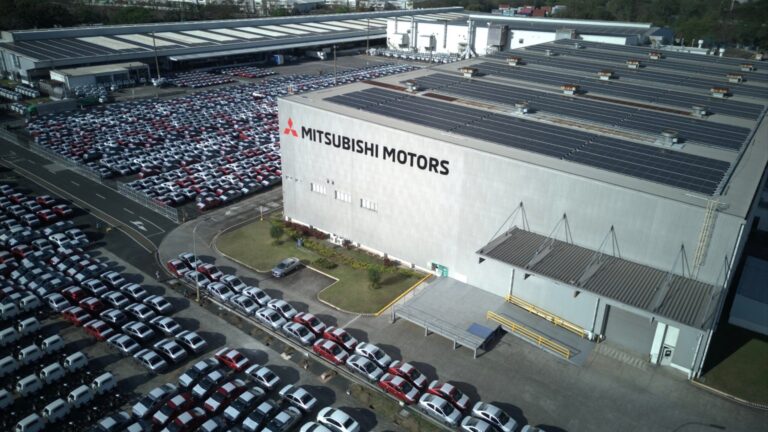
    Pakistan’s auto tax policy sparks industry divide over EV incentives

    LAHORE: Pakistan’s automobile industry is witnessing growing divisions over the government’s taxation policy for vehicles, with local manufacturers warning that the current framework unfairly benefits expensive imported and premium new energy vehicles (NEVs) while placing a heavier tax burden on affordable cars purchased by middle-income families. The controversy has intensified following the government’s decision to introduce a range of fiscal incentives for new energy vehicles, including battery electric vehicles (BEVs), plug-in hybrid electric vehicles (PHEVs) and range-extended electric vehicles (REEVs). While the policy is designed to accelerate Pakistan’s transition towards cleaner transportation and reduce reliance on fossil fuels, established local assemblers argue that the incentives are skewed in favour of luxury vehicle buyers instead of promoting affordable green mobility. Industry representatives say the taxation gap between conventional locally assembled vehicles and premium electric vehicles has widened considerably, raising concerns over fairness, competitiveness and the long-term sustainability of Pakistan’s domestic automobile manufacturing sector. According to industry estimates, a locally assembled Suzuki Alto—one of the country’s most affordable passenger vehicles priced at around Rs3 million—bears nearly Rs550,000 in taxes, including sales tax, federal excise duty (FED) and the recently introduced New Energy Vehicle (NEV) levy. In contrast, a premium REEV costing close to Rs10 million reportedly attracts sales tax of only around Rs100,000 while remaining exempt from both the federal excise duty and the NEV levy. The tax disparity has triggered criticism from domestic manufacturers, who argue that the current structure effectively penalises middle-income consumers while offering generous incentives to buyers of high-end imported vehicles. Local Assemblers Raise Concerns Pak Suzuki Motor Company spokesperson Ikhlaq Virk said the taxation framework has created an uneven competitive environment that disadvantages affordable vehicles widely used by Pakistani families. He said entry-level models such as the Alto and Cultus serve as essential transportation for the country’s middle class but receive no meaningful tax relief despite their affordability. Virk further noted that premium hybrid and electric vehicles, valued at nearly Rs10 million or more, continue to enjoy substantial concessions under the government’s clean mobility policy. He also pointed to reports suggesting that the sales tax on certain plug-in hybrid and hybrid electric vehicles could be reduced from 25 percent to 18 percent after changes introduced through the Finance Bill, arguing that such relief would primarily benefit affluent consumers rather than encouraging mass-market adoption. IMF Programme Adds Complexity The debate comes at a time when Pakistan remains under an International Monetary Fund (IMF) programme, which has required the government to increase tax revenues, rationalise subsidies and implement fiscal reforms to stabilise the economy. Against this backdrop, industry stakeholders argue that taxation policies should strike a balance between environmental objectives and economic realities, ensuring that clean energy initiatives do not disproportionately favour a small segment of wealthy consumers. The discussion has also reopened a broader policy debate over whether Pakistan’s green mobility strategy should focus solely on reducing emissions or also safeguard domestic manufacturing, employment and industrial investment. Analysts Call for Balanced Incentives Automobile industry experts believe Pakistan’s transition towards cleaner transportation is necessary, but they stress that government incentives should encourage widespread adoption instead of being concentrated in the luxury vehicle segment. Yousuf M. Farooq, Director Research at Chase Securities, said environmental goals should be pursued alongside industrial development and economic sustainability. He noted that while encouraging cleaner transportation is an important national objective, incentive programmes should also consider vehicle affordability, localisation, environmental benefits and the contribution of manufacturers to Pakistan’s economy. Farooq emphasised the need for a consistent taxation framework across all vehicle categories, including conventional internal combustion engine vehicles, hybrids, plug-in hybrids and range-extended electric vehicles, while maintaining adequate protection for local assembly operations and the domestic auto parts industry. He added that environmental incentives should not undermine the competitiveness of local manufacturers or threaten employment generated by Pakistan’s automotive sector. Local Industry Fears Investment Slowdown Pakistan’s automobile industry has invested billions of rupees over the past three decades in assembly plants, localisation programmes and vendor development. The sector supports hundreds of component manufacturers and provides employment to thousands of skilled workers across the country. Industry stakeholders warn that if imported premium electric vehicles continue to enjoy significantly lower taxation than locally assembled conventional vehicles, future investment in domestic manufacturing could slow, weakening Pakistan’s automotive supply chain and localisation efforts. Manufacturers believe a prolonged imbalance may discourage further expansion by existing assemblers while affecting the viability of local parts suppliers that have developed alongside the country’s automobile industry. Government’s Green Mobility Vision Supporters of the government’s policy argue that Pakistan cannot afford to lag behind the global transition towards electric mobility. Many countries are offering tax incentives, subsidies and policy support to encourage electric vehicle adoption, reduce dependence on imported petroleum products and lower carbon emissions. Pakistan, which spends billions of dollars annually on fuel imports, could also benefit from increased electrification of its transport sector by reducing its import bill and improving environmental sustainability over the long term. However, industry observers believe the core issue is not whether electric vehicles deserve policy support but how those incentives should be structured.

  • |

    Trinasolar eyes Pakistan’s battery storage boom

    Pakistan has built one of the world’s fastest-growing distributed solar markets. According to recent research by Ember and Renewables First, it is estimated that Pakistan has approximately 38GW of distributed solar capacity across residential, commercial, industrial and agricultural sectors. As this installed solar base grows, the next challenge is making that energy more flexible and available when businesses need it most. Trina Storage, Trinasolar’s global battery energy storage business, says Pakistan’s expanding solar base is increasing interest in solar-plus-storage, particularly for utility-scale and microgrids for commercial & industrial (C&I). A Renewables First report estimates that Pakistan imported 4.6 GWh of BESS in 2025, representing 220% year-on-year growth. Rather than replacing existing solar assets, well-designed solar-plus-storage systems can help businesses optimize renewable energy use, improve operational flexibility and support more resilient energy management strategies, depending on each site’s design and operating requirements. However, adding BESS to an existing solar installation is not a simple plug-and-play exercise. Projects require careful assessment of the site’s electrical architecture, inverter configuration, demand profile, equipment compatibility, energy management system, safety requirements and commercial objectives. For many retrofit projects, an AC-coupled approach provides a practical solution by allowing battery storage to operate alongside an existing PV system through its own Power Conversion System (PCS), helping retain much of the original solar infrastructure. Compatibility must still be assessed at system level, including electrical interfaces, communications, controls and compliance with the applicable IEC and UL standards. Designed for utility-scale and C&I applications, Trina Storage’s Elementa Series is compatible and is designed for integration within solar-plus-storage systems using Trina or third-party equipment, with compatibility assessed according to the project architecture. Beyond supplying technology, Trinasolar can work with customers and EPC partners to assess system compatibility, determine the most suitable BESS configuration and develop an operating strategy aligned with each site’s technical and commercial requirements. Trinasolar’s energy storage expertise builds on its long-established presence in Pakistan’s solar market, where the company has supplied more than 500MW of 700W+ modules across commercial, industrial and residential applications and recently introduced the Vertex N G3 760W series. Globally, Trina Storage, established in 2015, has achieved BloombergNEF Tier 1 Energy Storage Manufacturer status for 10 consecutive quarters and is expected to surpass 30 GWh of cumulative shipments by the first half of 2026. Its latest 6.25MWh Elementa 3 platform combines advanced battery technology, intelligent thermal management and integrated safety features for large-scale energy storage applications. “Pakistan has already built a strong solar foundation. The next phase is to consider how battery storage can be integrated with those assets to make renewable electricity available across a wider range of operating conditions. That requires careful assessment of the existing equipment, the site’s load profile and the role the battery is expected to perform. Trinasolar’s PV experience and Trina Storage’s global BESS capabilities give us a useful perspective across both sides of that system,” said Edison Zhou, Head of Pakistan, Trinasolar.

  • |

    CDA launches Rs5.07bn Six-Lane Road project from Faizabad to Koral Chowk

    The Capital Development Authority (CDA) has accelerated plans to construct a new six-lane carriageway along Service Road East, approving a project worth Rs5.072 billion aimed at easing chronic traffic congestion on the Islamabad Expressway and improving connectivity between Faizabad and Koral Chowk. The 9.25-kilometre road will run parallel to the Islamabad Expressway, extending from Faizabad to Koral Chowk near Gulberg Housing Society. Once completed, the new corridor is expected to provide motorists with an alternative route, reducing travel time on one of the capital’s busiest transport arteries while facilitating smoother traffic movement for commuters travelling to Islamabad and Rawalpindi. Officials said the project forms part of the CDA’s broader strategy to upgrade the capital’s road infrastructure in response to increasing traffic volumes and rapid urban expansion in surrounding residential and commercial areas. According to official sources, the new carriageway is expected to improve access to several housing societies and neighbourhoods located along the eastern side of the Islamabad Expressway. Authorities believe the project will not only ease traffic bottlenecks but also stimulate commercial development by increasing the value of properties and attracting new businesses along the corridor. To facilitate construction, the CDA has earmarked approximately Rs500 million for the relocation of critical utility infrastructure. This includes fibre-optic networks operated by the Islamabad Police Safe City Project, the Strategic Plans Division (SPD), Sui Northern Gas Pipelines Limited (SNGPL), and the Islamabad Electric Supply Company (IESCO). Sources said extensive utility shifting will be required before the main construction work can proceed at full pace. The project involves relocating 11kV electricity distribution lines, shifting 242 electricity poles, and relocating 248 graves that fall within the road alignment. Earthwork activities have already begun at selected locations. The road project also incorporates environmental protection measures. Officials said engineers have planned the preservation of 22 underground water channels, natural streams, and stormwater drains located along the proposed route to minimise environmental disruption and maintain the area’s natural drainage system. A breakdown of utility relocation costs shows that around Rs406 million has been allocated for IESCO infrastructure, Rs87.3 million for shifting Safe City fibre-optic networks, and approximately Rs6 million for relocating SPD facilities. Work on these utility relocation components is expected to commence after the completion of technical and administrative formalities. A senior CDA official said the authority has revised the project’s completion timeline, reducing the original target of 12 months to between six and eight months. However, the official acknowledged that the timely relocation of utilities remains the biggest hurdle and will largely determine whether the revised deadline can be achieved.

  • |

    Pakistan, Japan agree to expand development cooperation

    Pakistan and Japan have reaffirmed their commitment to strengthening long-standing development cooperation, with both sides agreeing to expand collaboration in economic reforms, mineral development, technical training, and human resource development during a high-level meeting in Islamabad. The understanding was reached during a meeting between Prime Minister Shehbaz Sharif and a nine-member delegation led by Japan International Cooperation Agency (JICA) President Dr. Tanaka Akihiko. Welcoming the delegation, Prime Minister Shehbaz Sharif described the seven-decade partnership between Pakistan and Japan as a cornerstone of bilateral relations, expressing confidence that the JICA president’s visit would inject fresh momentum into cooperation between the two countries. The prime minister highlighted the government’s ongoing economic reform agenda, stating that Pakistan had successfully navigated a challenging economic period through coordinated efforts and was now focused on achieving sustainable and inclusive economic growth. He said the government’s reform programme had produced encouraging results, noting that national revenues had doubled over the past three years. According to the prime minister, these improvements were creating greater fiscal space for investment in development priorities and public welfare. Shehbaz Sharif emphasized that equipping young people with modern skills and technical education remains one of the government’s foremost priorities. He said the administration is also committed to creating quality employment opportunities and promoting the economic empowerment of women as part of its broader development strategy. During the meeting, the prime minister welcomed JICA’s technical assistance in Pakistan’s minerals sector, describing the cooperation as timely given the country’s vast untapped mineral resources. He also appreciated JICA’s collaboration with the Small and Medium Industrial Development Authority (SMIDA), saying such partnerships would help strengthen industrial capacity, improve productivity, and boost Pakistan’s exports. The discussions also covered ways to broaden bilateral cooperation in areas including infrastructure development, capacity building, vocational training, and investment promotion. Both sides acknowledged the importance of expanding technical collaboration to support Pakistan’s long-term economic transformation. JICA President Dr. Tanaka Akihiko thanked Prime Minister Shehbaz Sharif for his warm welcome and appreciation, reaffirming Japan’s commitment to supporting Pakistan’s development journey. He noted that JICA and Pakistan share a long-standing partnership built on mutual trust and cooperation, adding that the agency remains ready to further expand its engagement across multiple sectors, including economic development, human resource development, and technical cooperation.